
What makes a profession? — eight attributes
A printable companion to this Module 1 lecture.
Read the handout text
Accounting Ahead | Original study resource | accountingahead.com.au
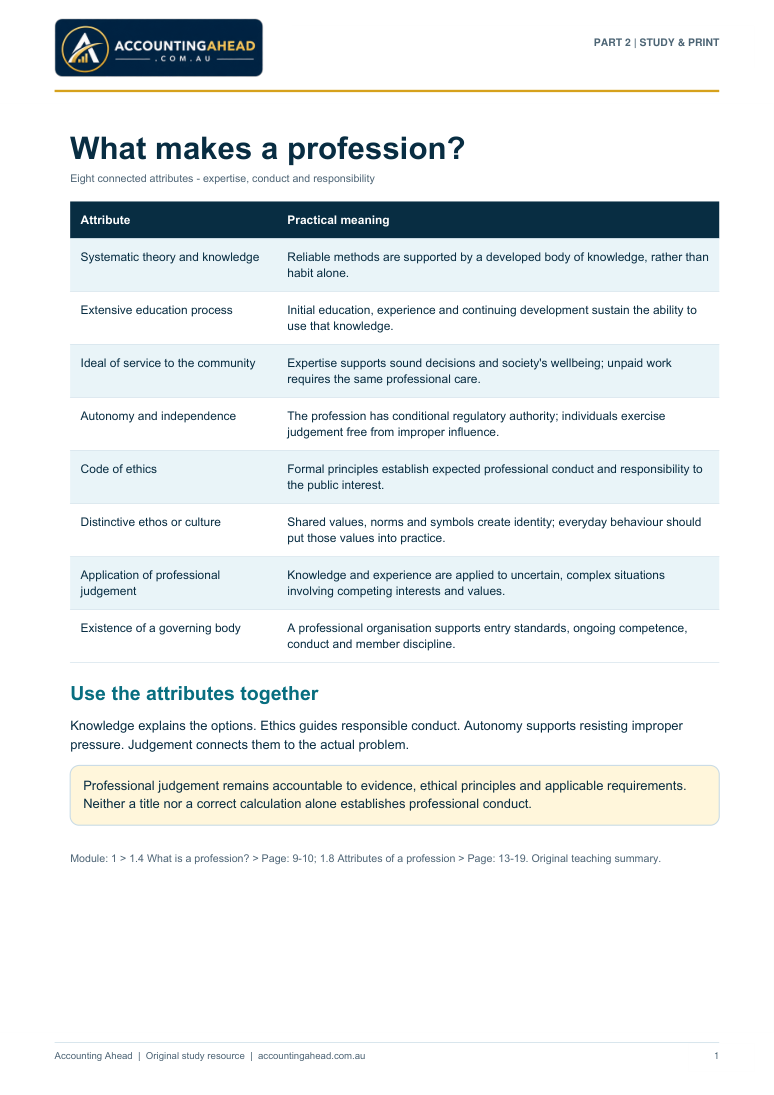
What makes a profession?
Eight connected attributes - expertise, conduct and responsibility
Attribute
Practical meaning
Systematic theory and knowledge
Reliable methods are supported by a developed body of knowledge, rather than
habit alone.
Extensive education process
Initial education, experience and continuing development sustain the ability to
use that knowledge.
Ideal of service to the community
Expertise supports sound decisions and society's wellbeing; unpaid work
requires the same professional care.
Autonomy and independence
The profession has conditional regulatory authority; individuals exercise
judgement free from improper influence.
Code of ethics
Formal principles establish expected professional conduct and responsibility to
the public interest.
Distinctive ethos or culture
Shared values, norms and symbols create identity; everyday behaviour should
put those values into practice.
Application of professional
judgement
Knowledge and experience are applied to uncertain, complex situations
involving competing interests and values.
Existence of a governing body
A professional organisation supports entry standards, ongoing competence,
conduct and member discipline.
Use the attributes together
Knowledge explains the options. Ethics guides responsible conduct. Autonomy supports resisting improper
pressure. Judgement connects them to the actual problem.
Professional judgement remains accountable to evidence, ethical principles and applicable requirements.
Neither a title nor a correct calculation alone establishes professional conduct.
Module: 1 > 1.4 What is a profession? > Page: 9-10; 1.8 Attributes of a profession > Page: 13-19. Original teaching summary.
PART 2 | STUDY & PRINT
1