Module 1 · Accounting and society
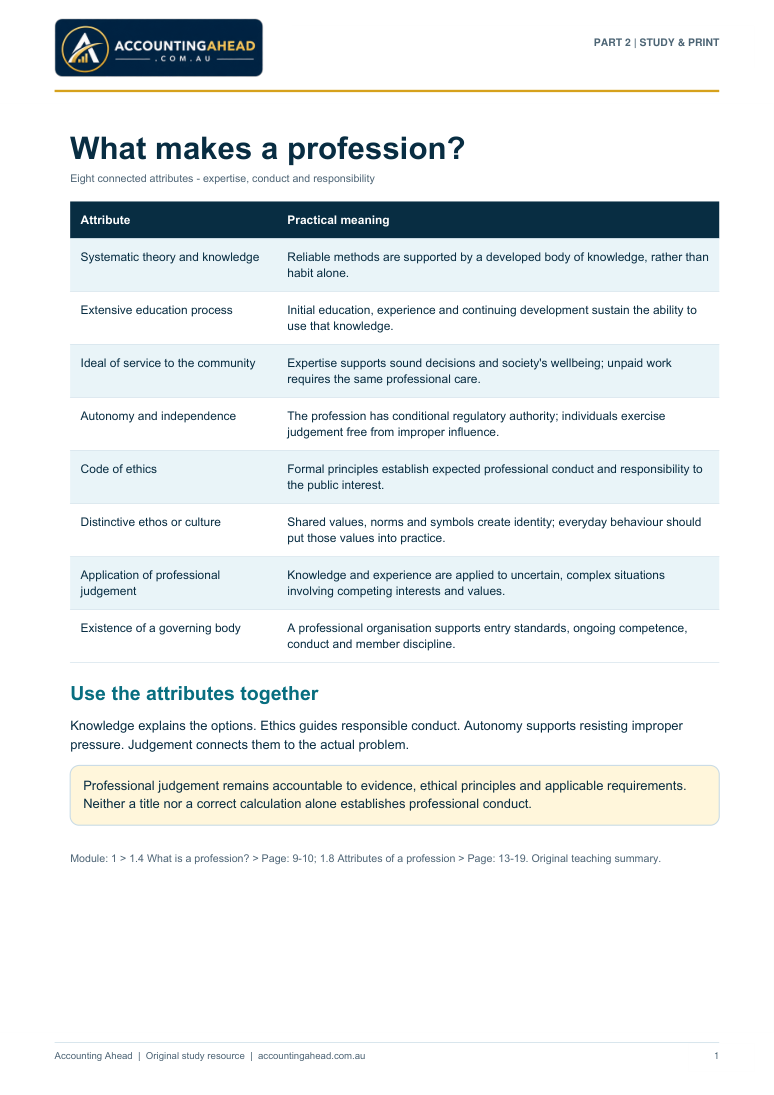
Part 2 · What makes a profession?
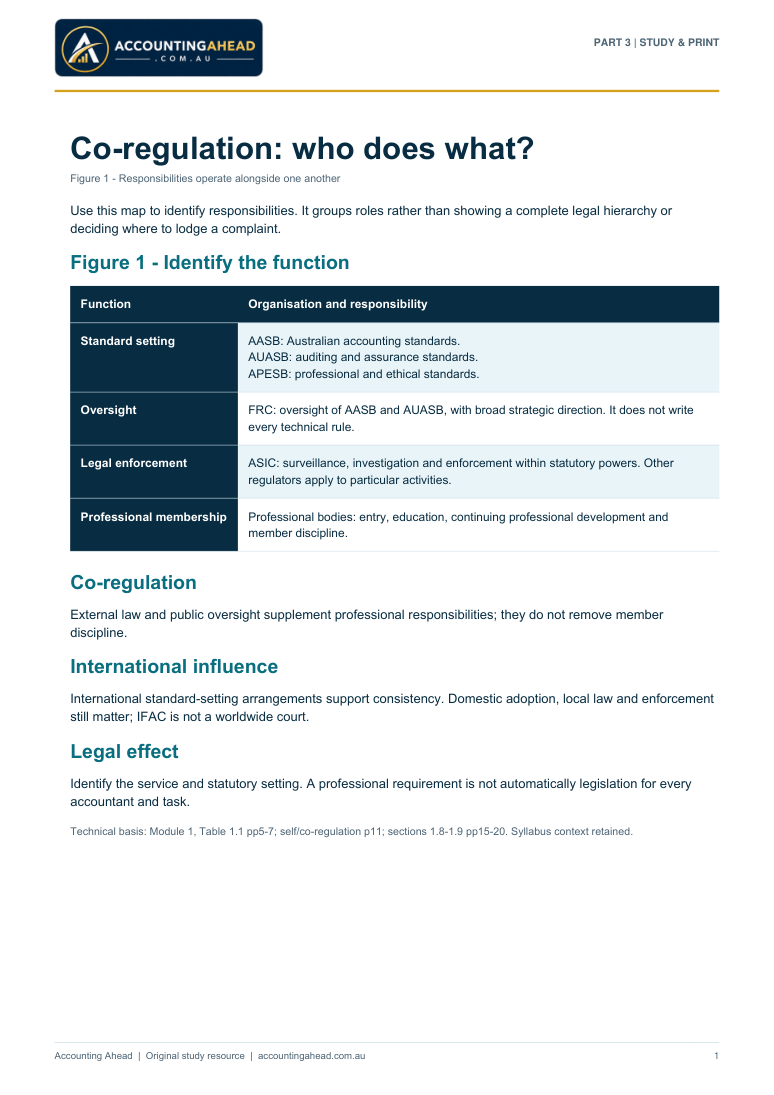
Part 3 · Co-regulation: who does what?
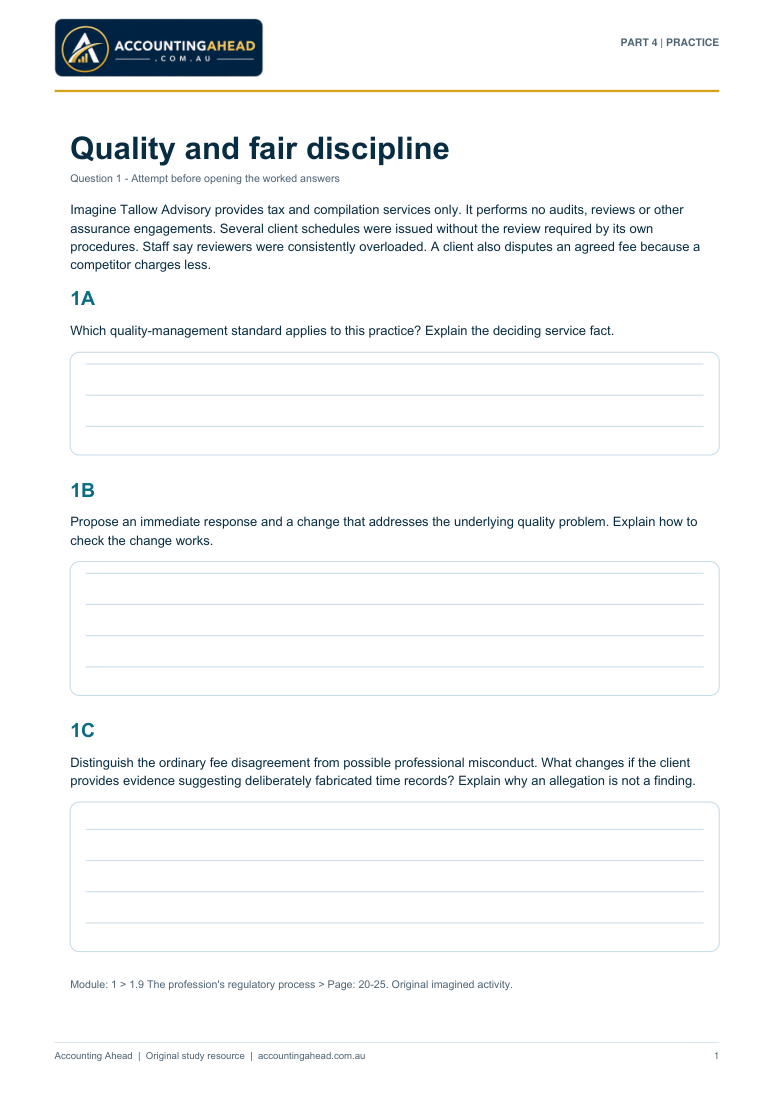
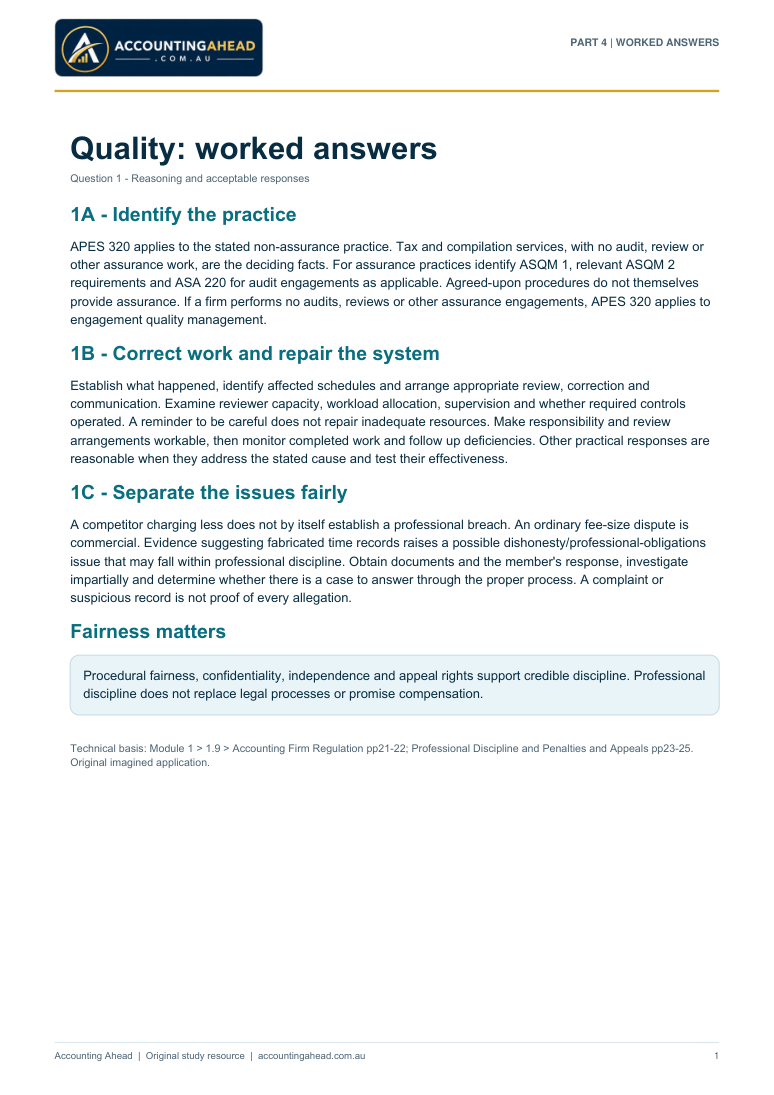
Part 4 · Quality management and fair discipline
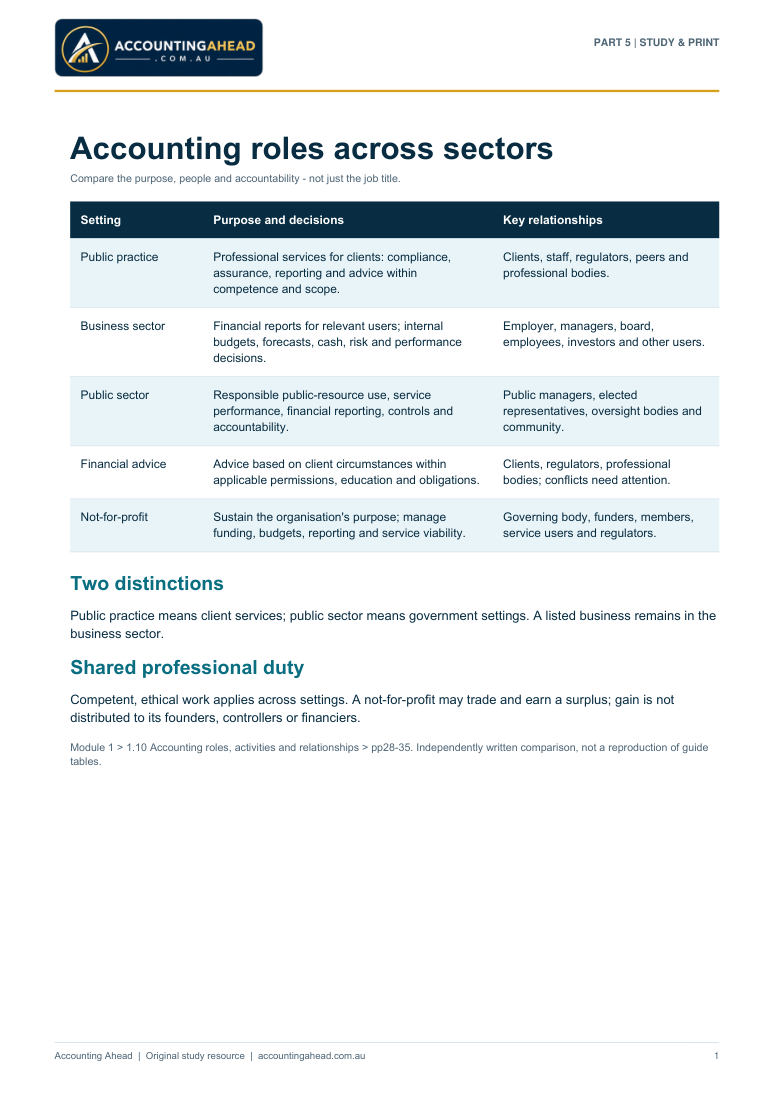
Part 5 · Accounting roles across sectors
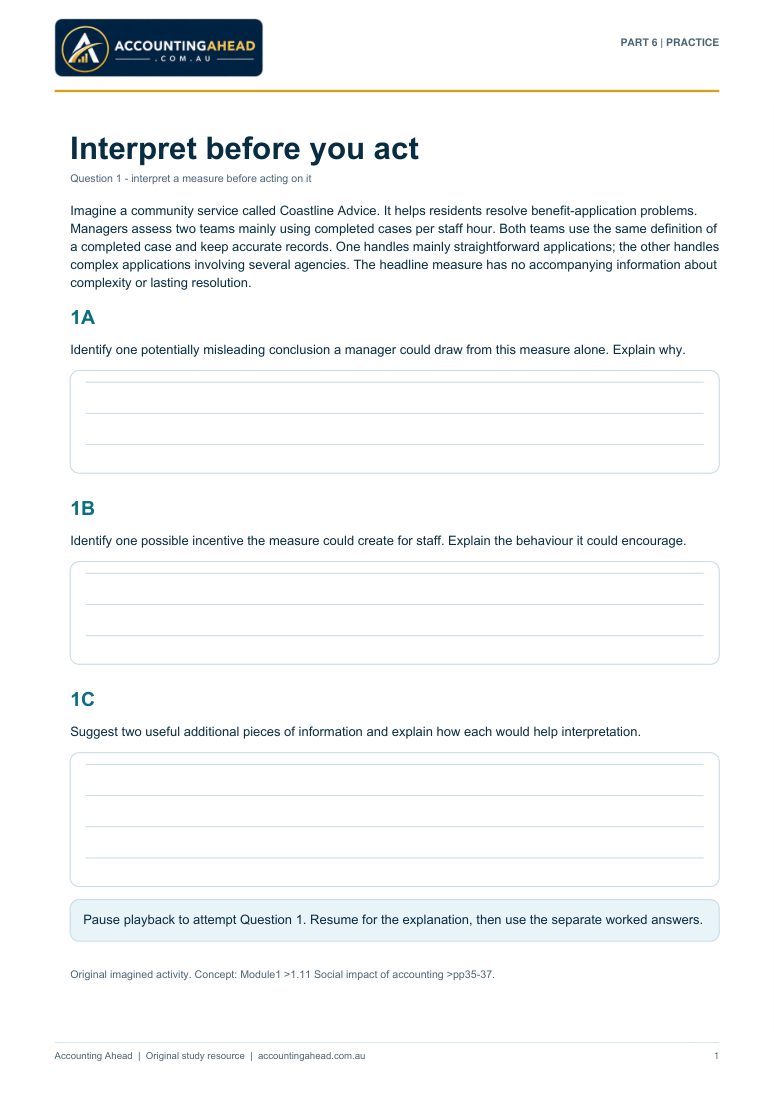
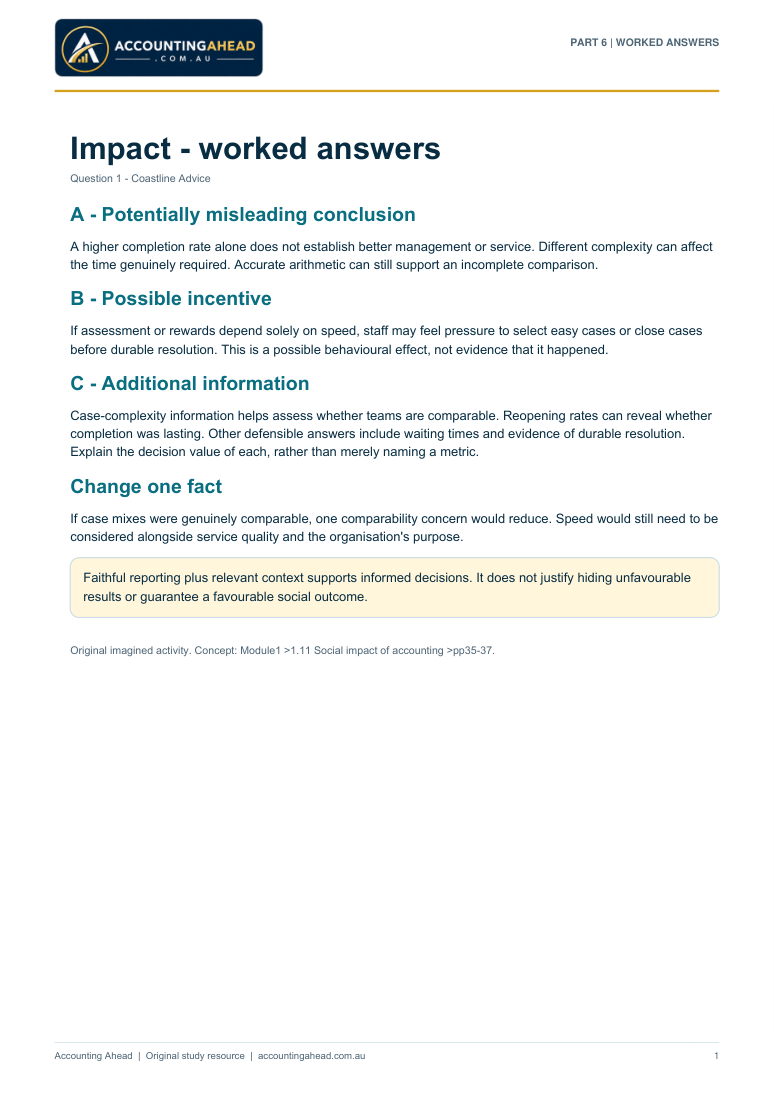
Part 6 · How accounting changes society
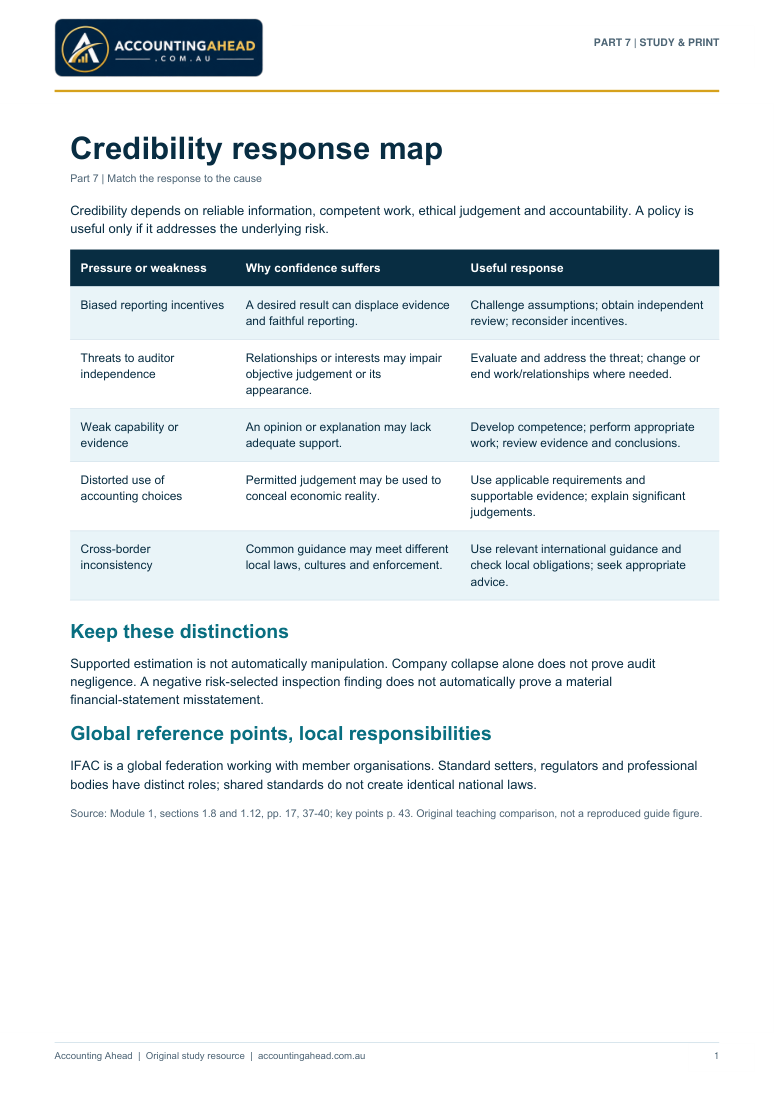
Part 7 · Credibility in a global profession
Module 2 · Ethics
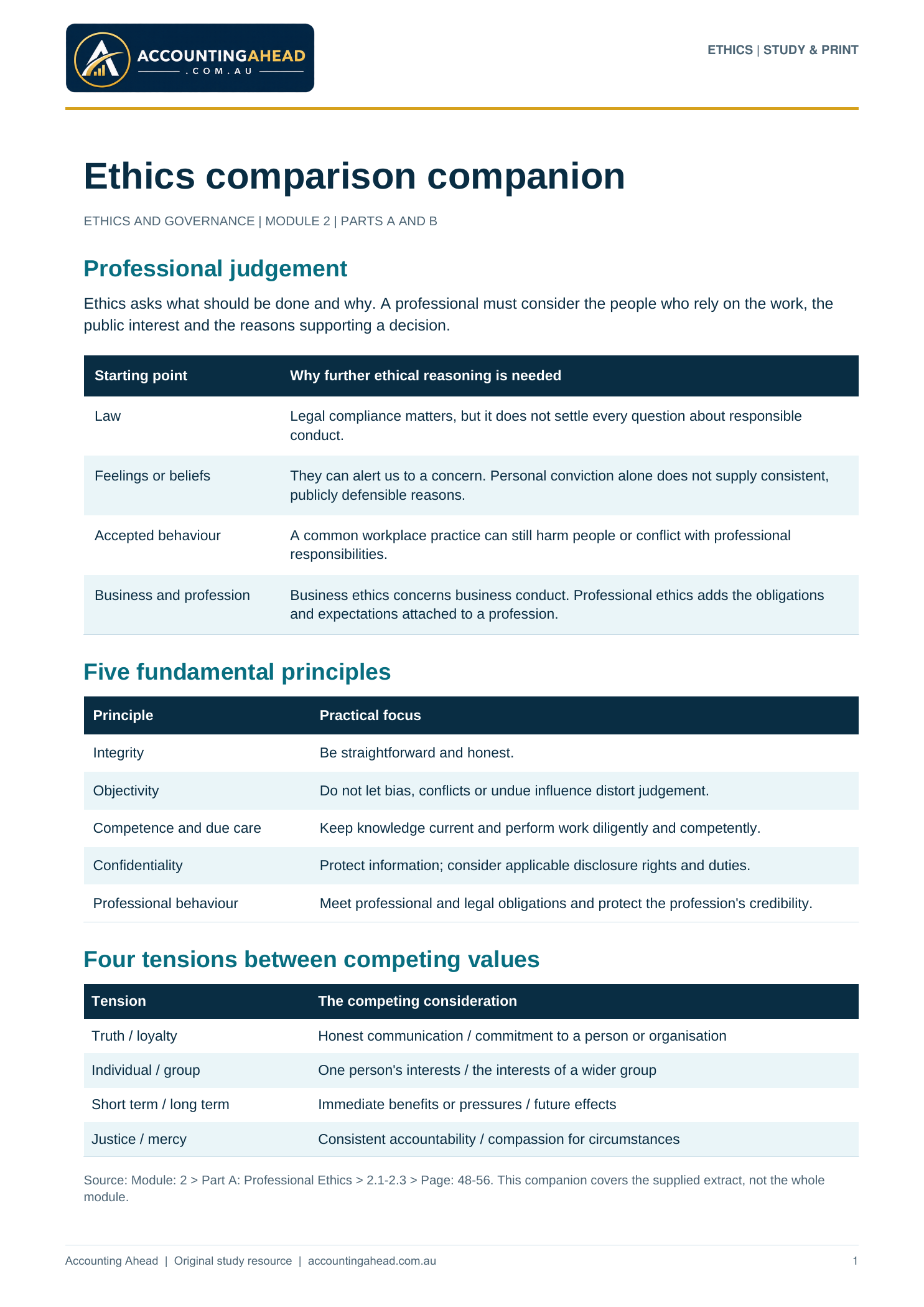
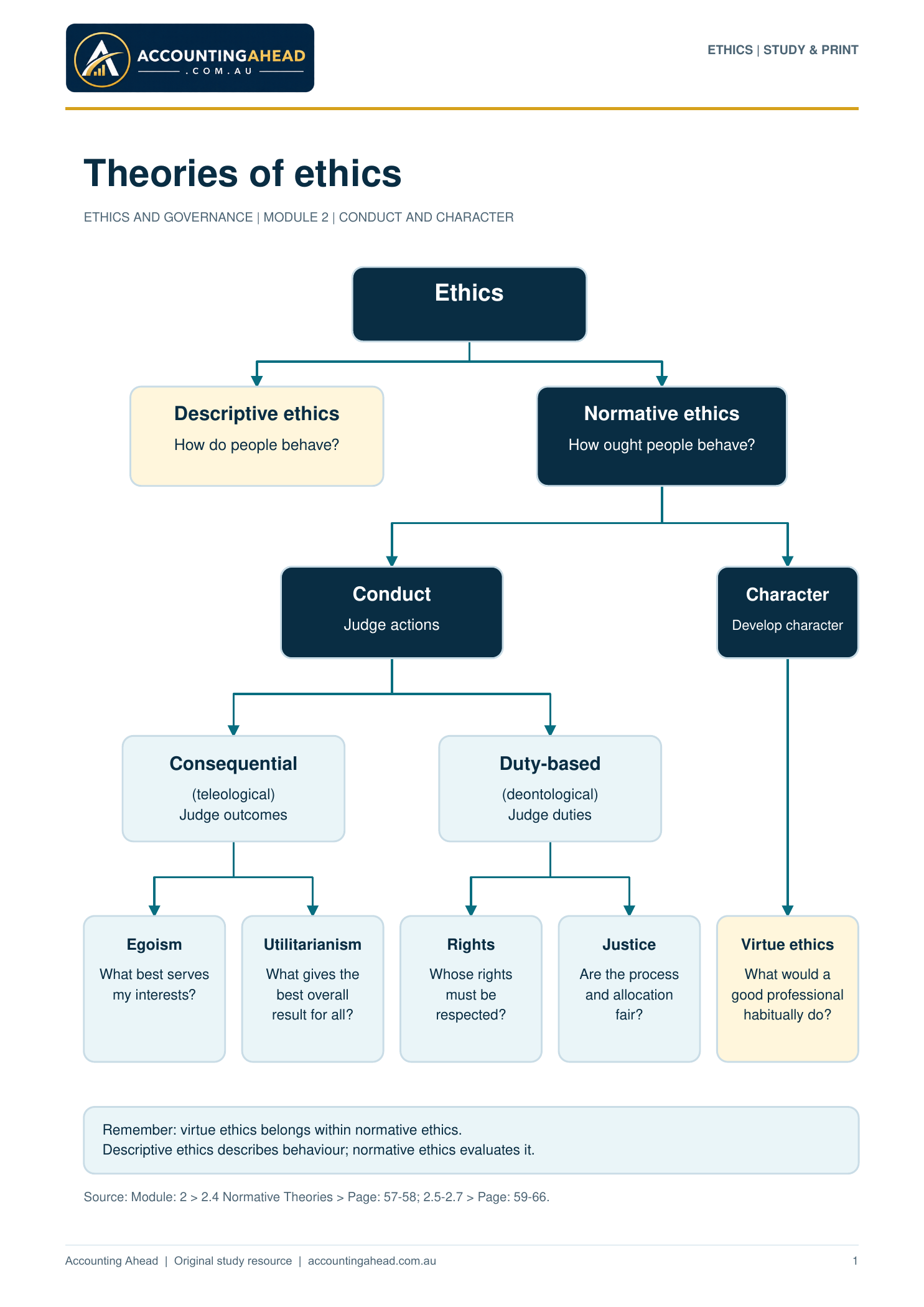
Part 1.1 · Professional ethics and ethical theories
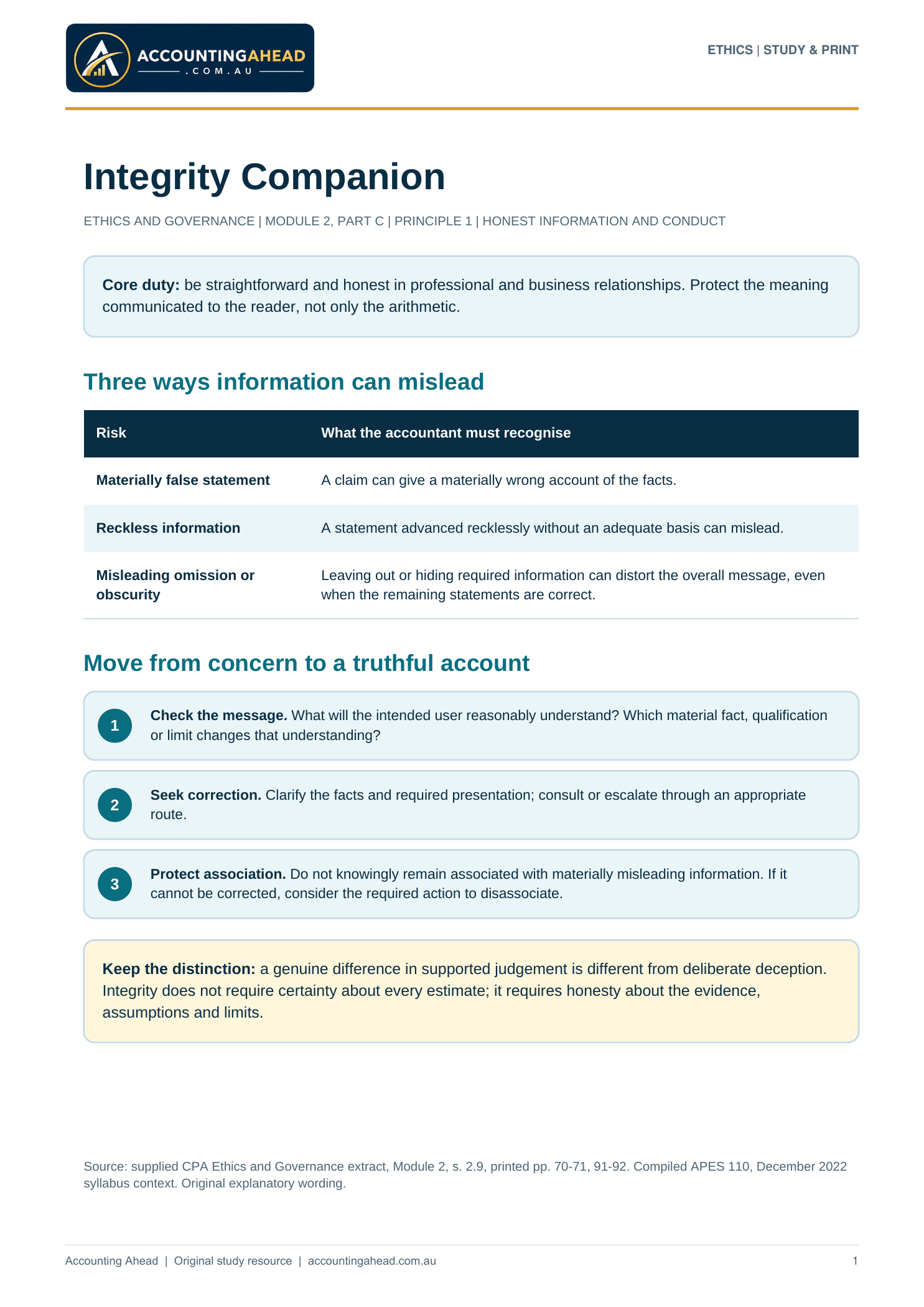
Part 2.1 · Integrity and honest communication
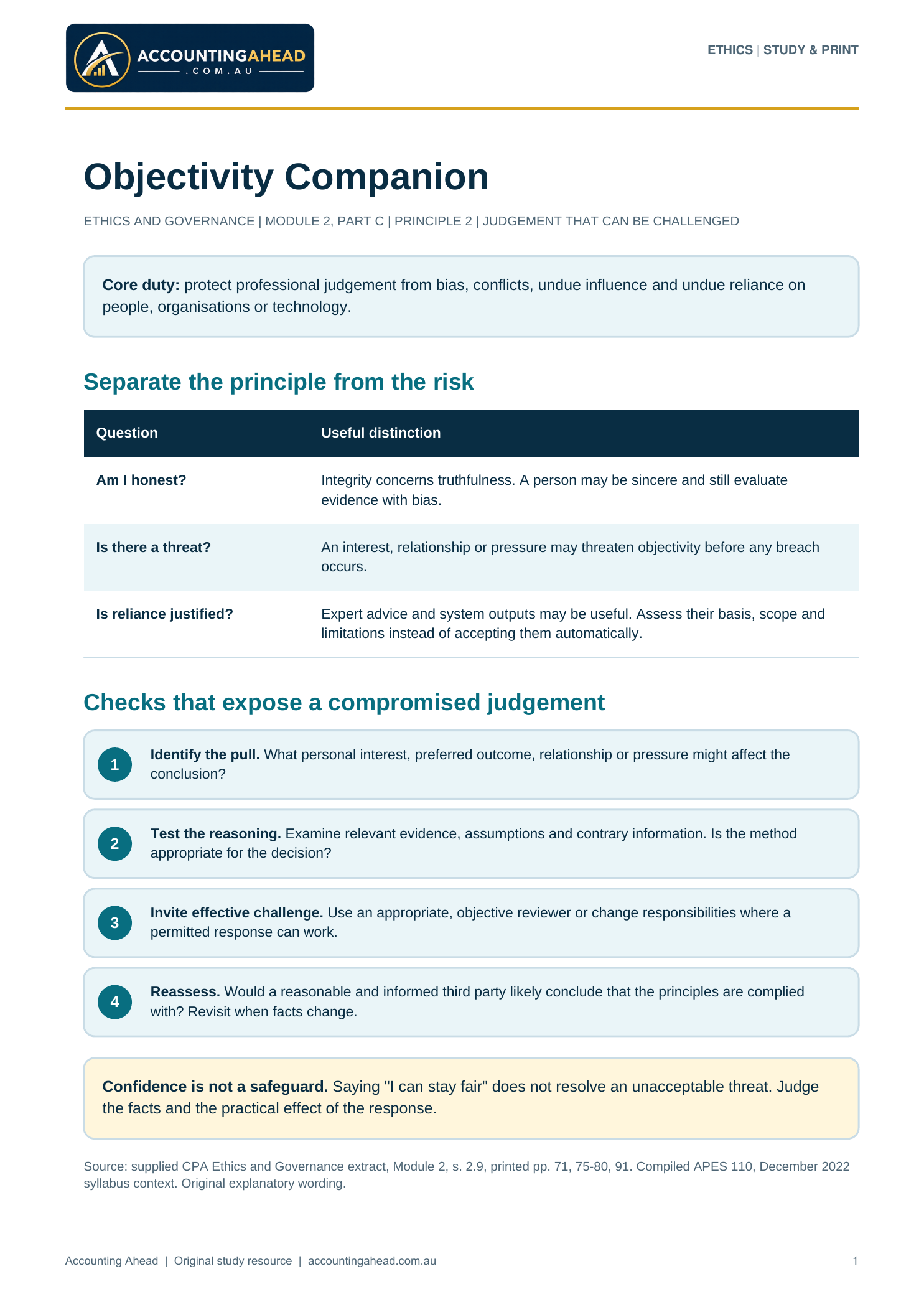
Part 2.2 · Objectivity and protecting judgement
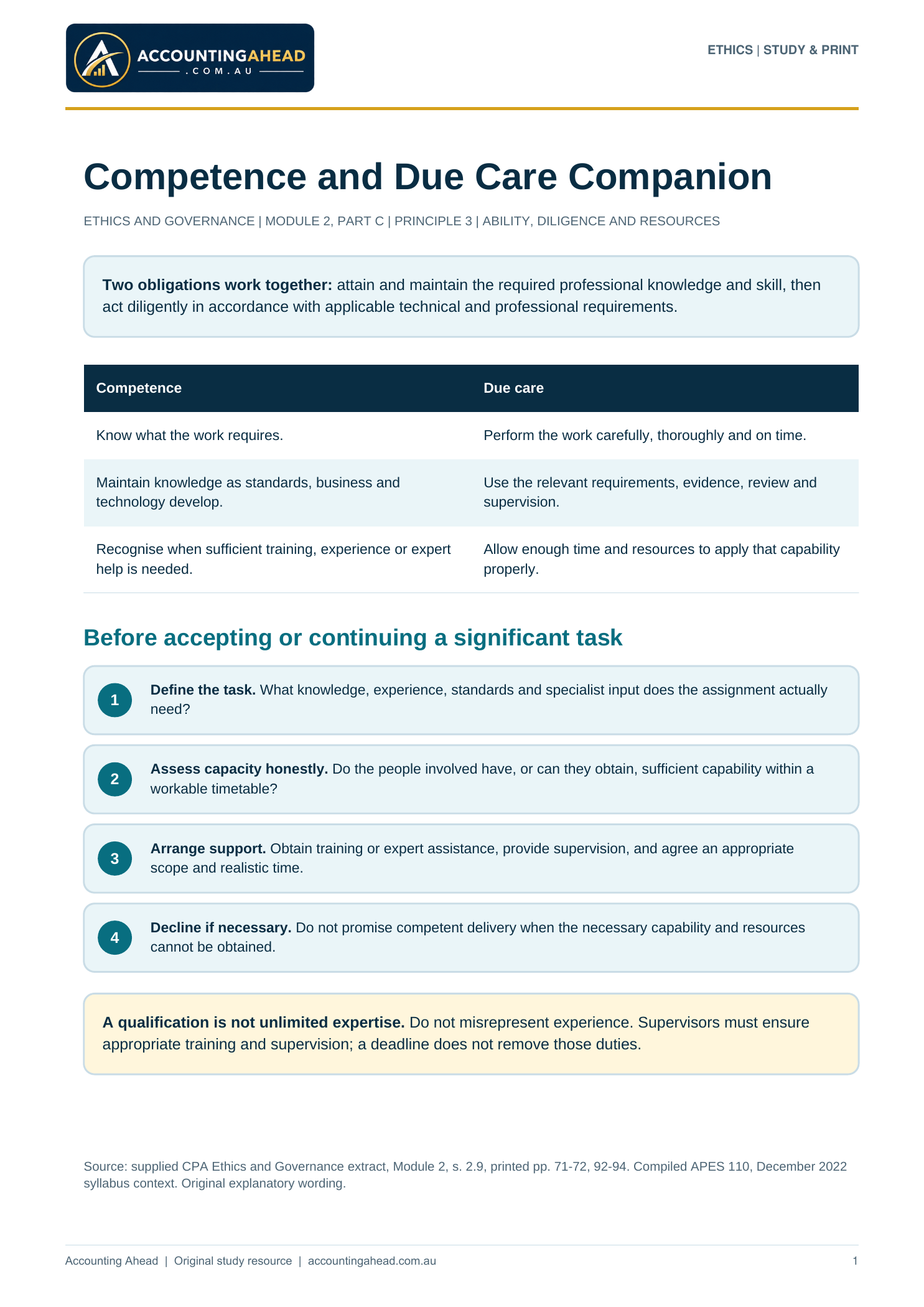
Part 2.3 · Professional competence and due care
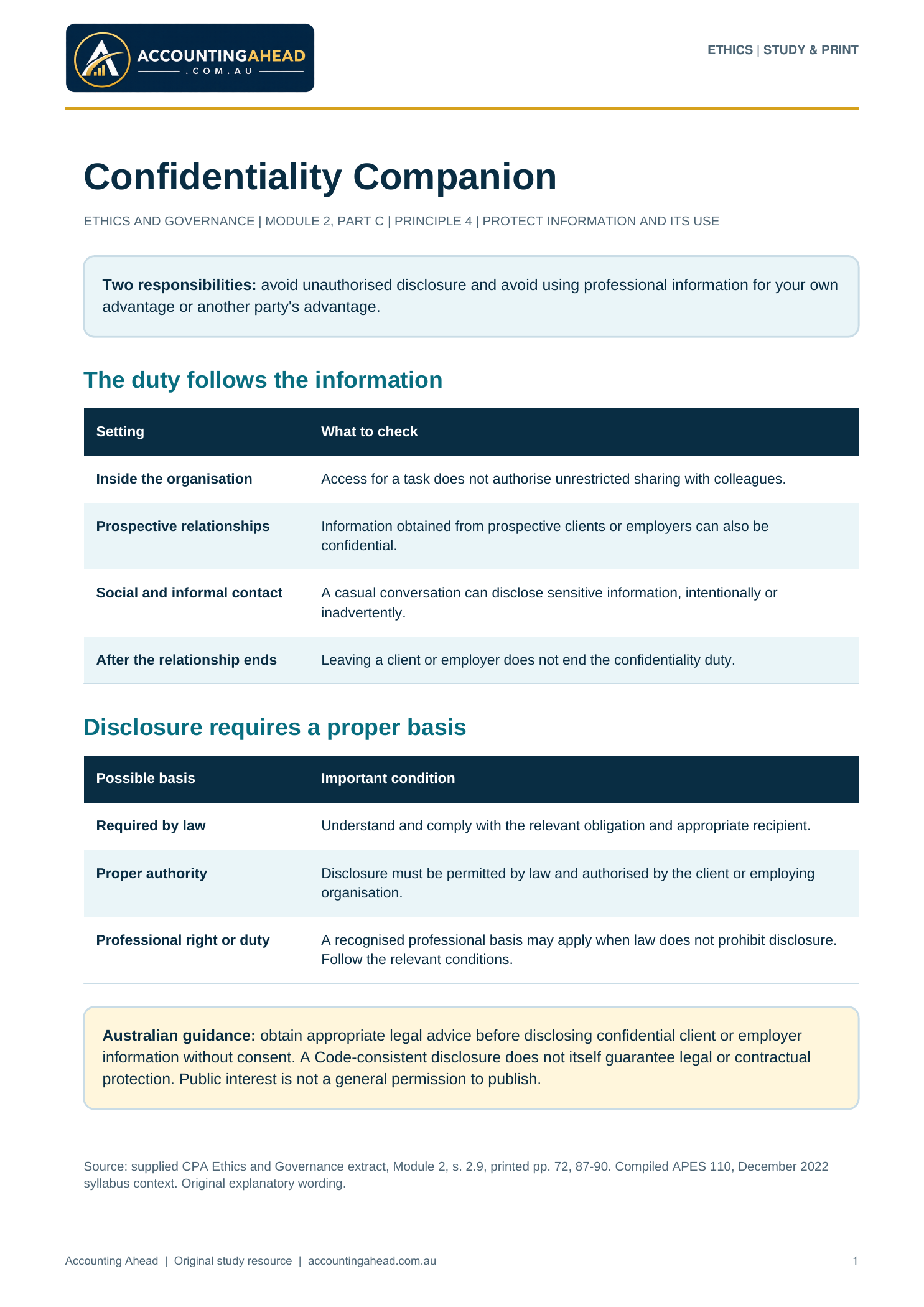
Part 2.4 · Confidentiality: access, use and disclosure
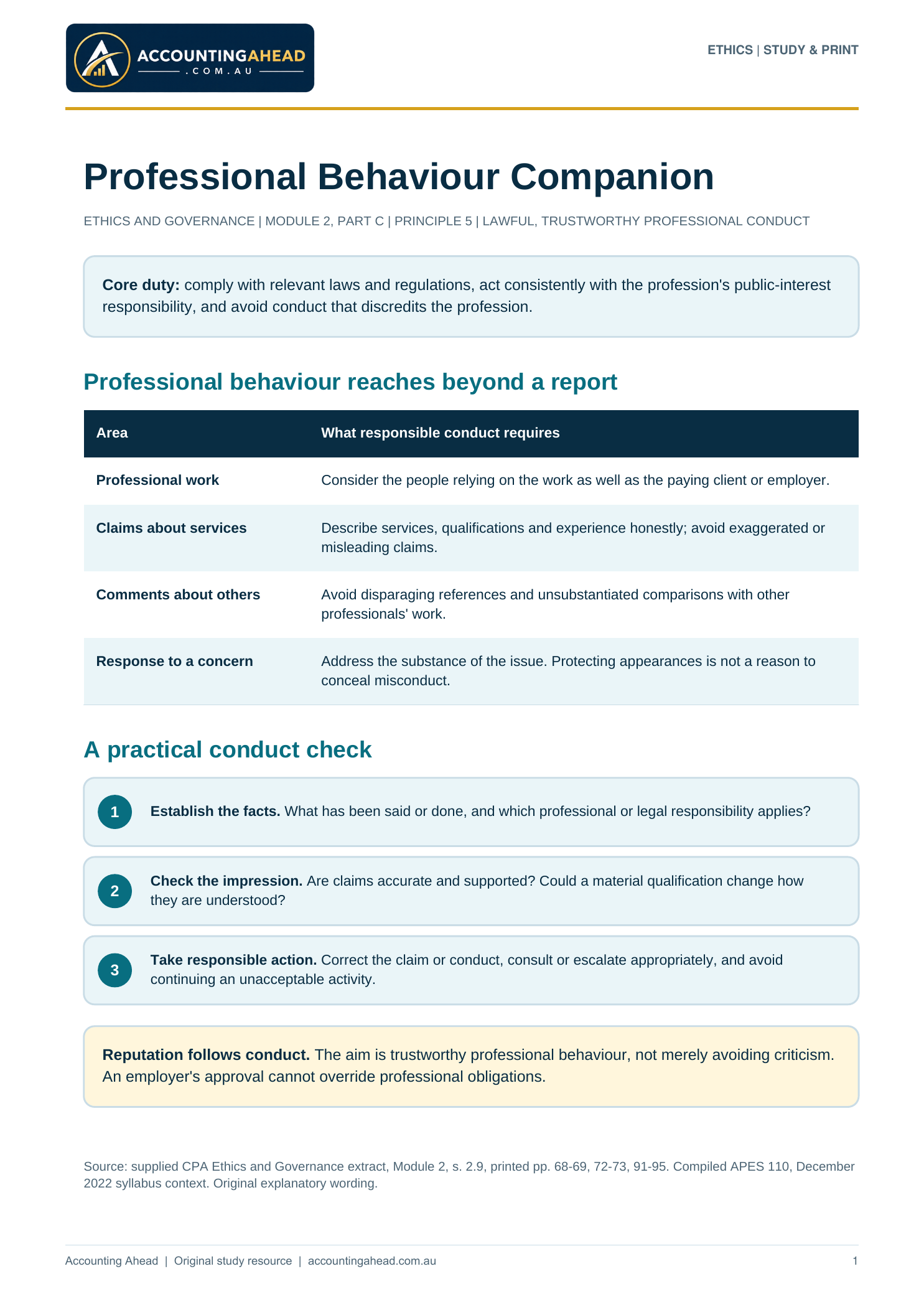
Part 2.5 · Professional behaviour and public trust
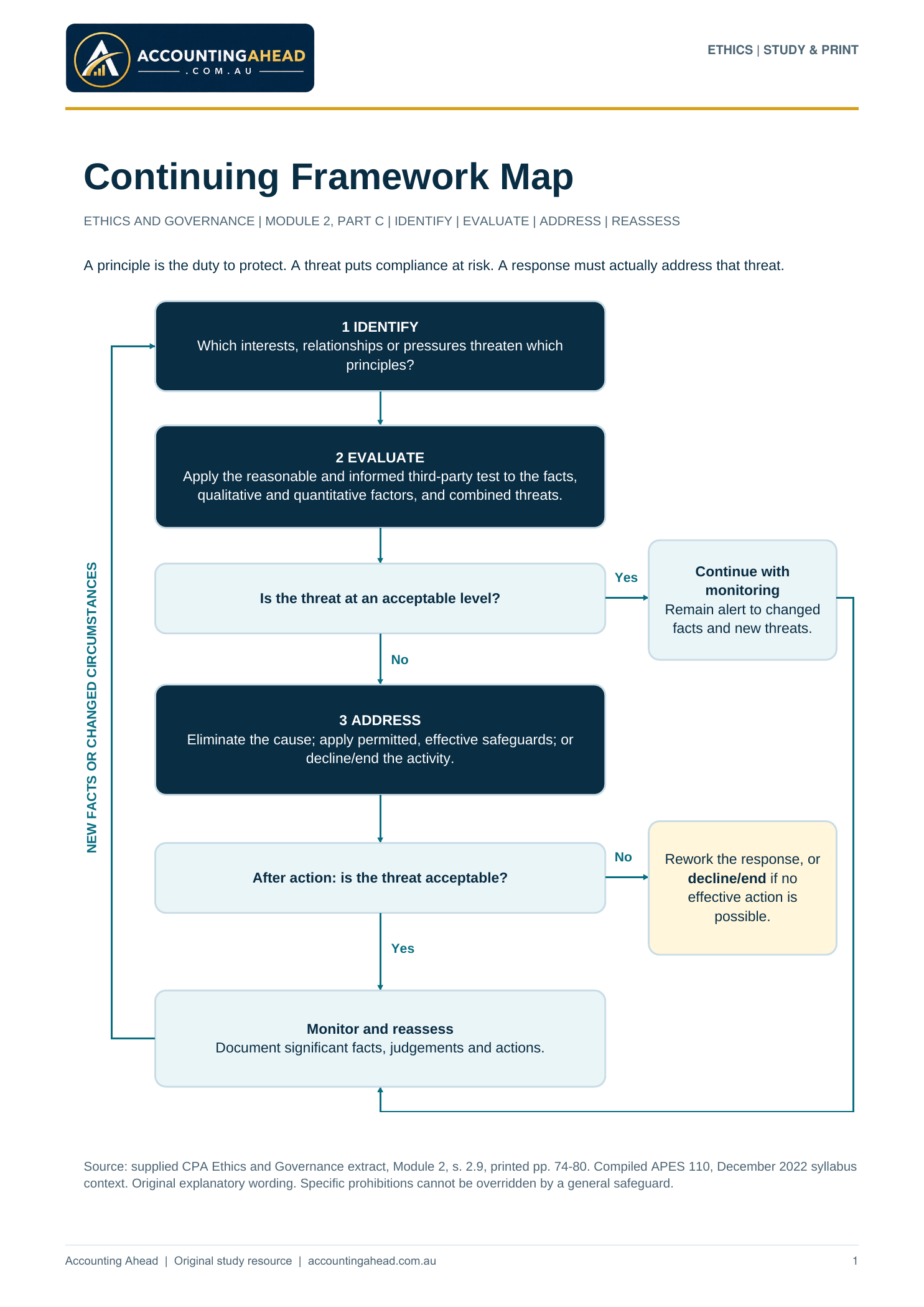
Part 2.6 · The continuing ethical framework
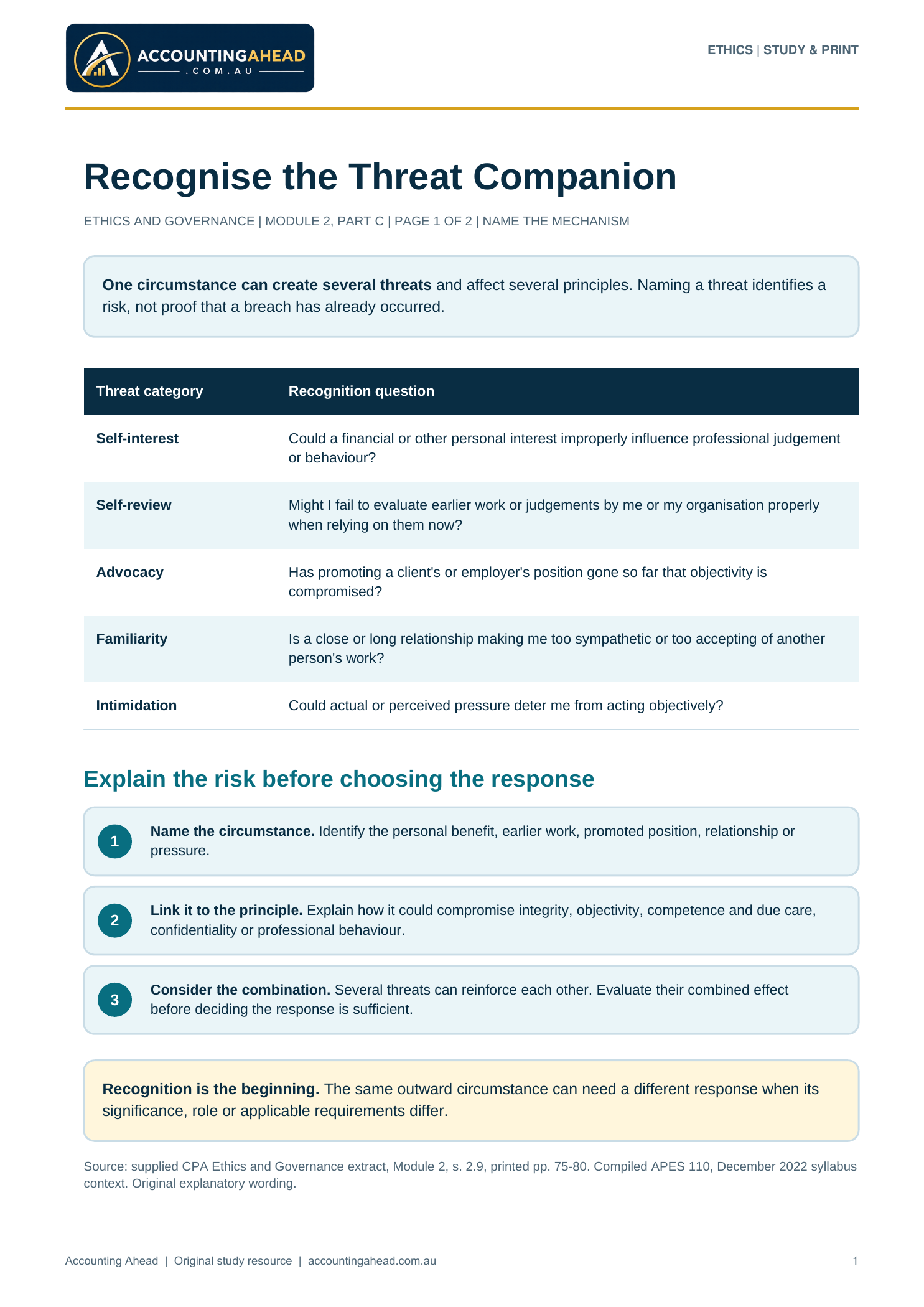
Part 2.7 · Threats, conflicts, incentives and gifts
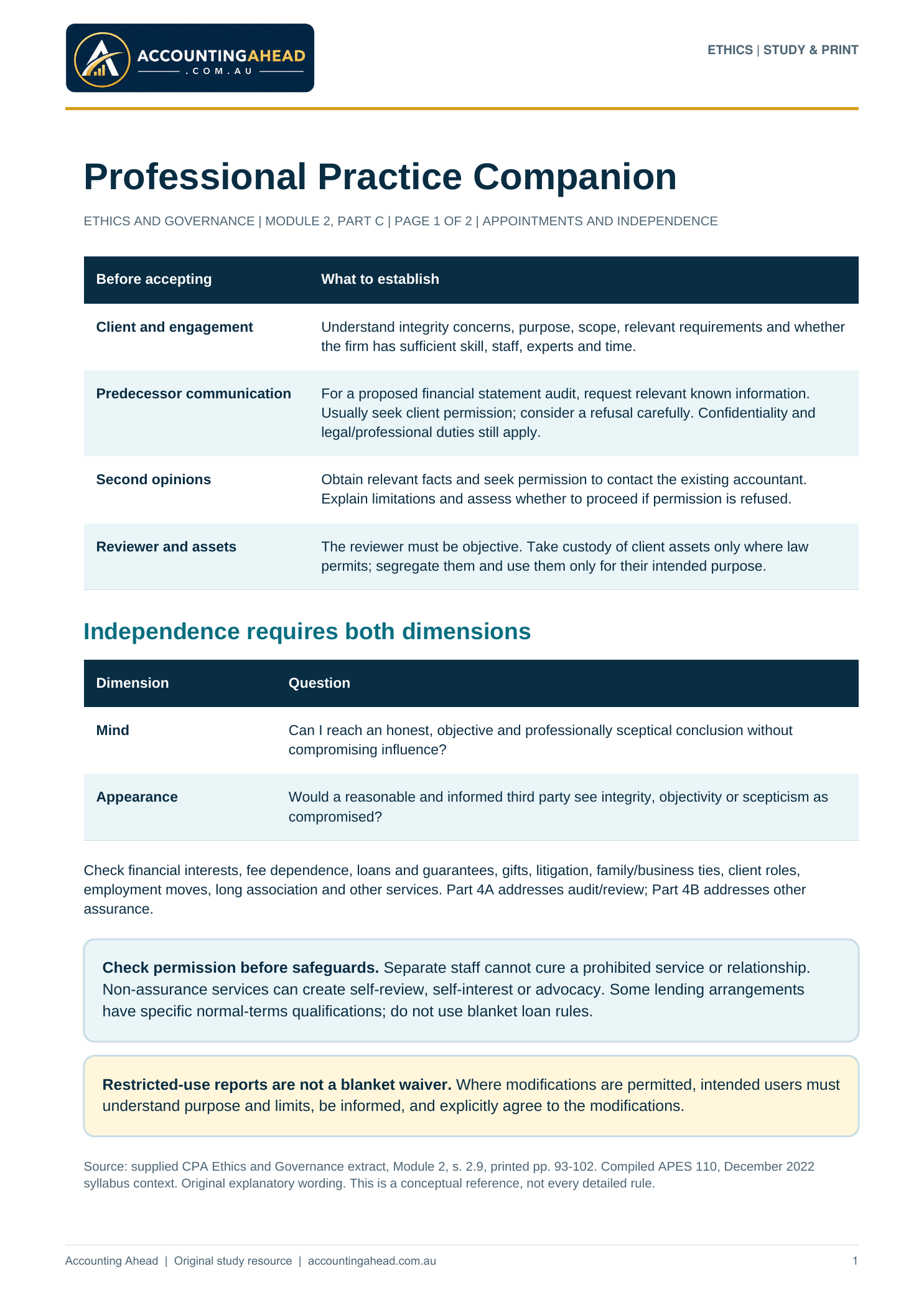
Part 2.8 · Appointments, independence and NOCLAR
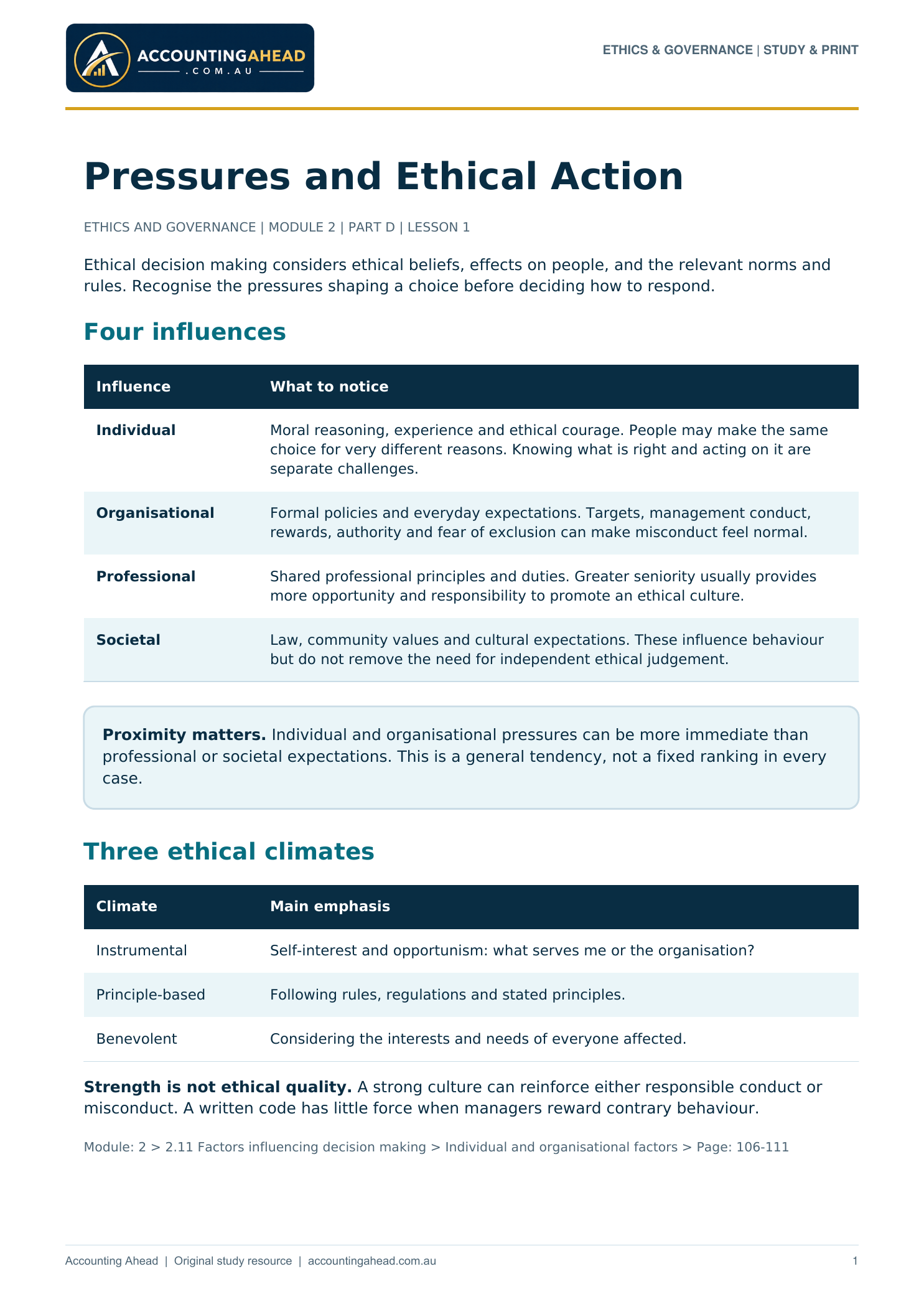
Part 3.1 · Pressures, culture and ethical action
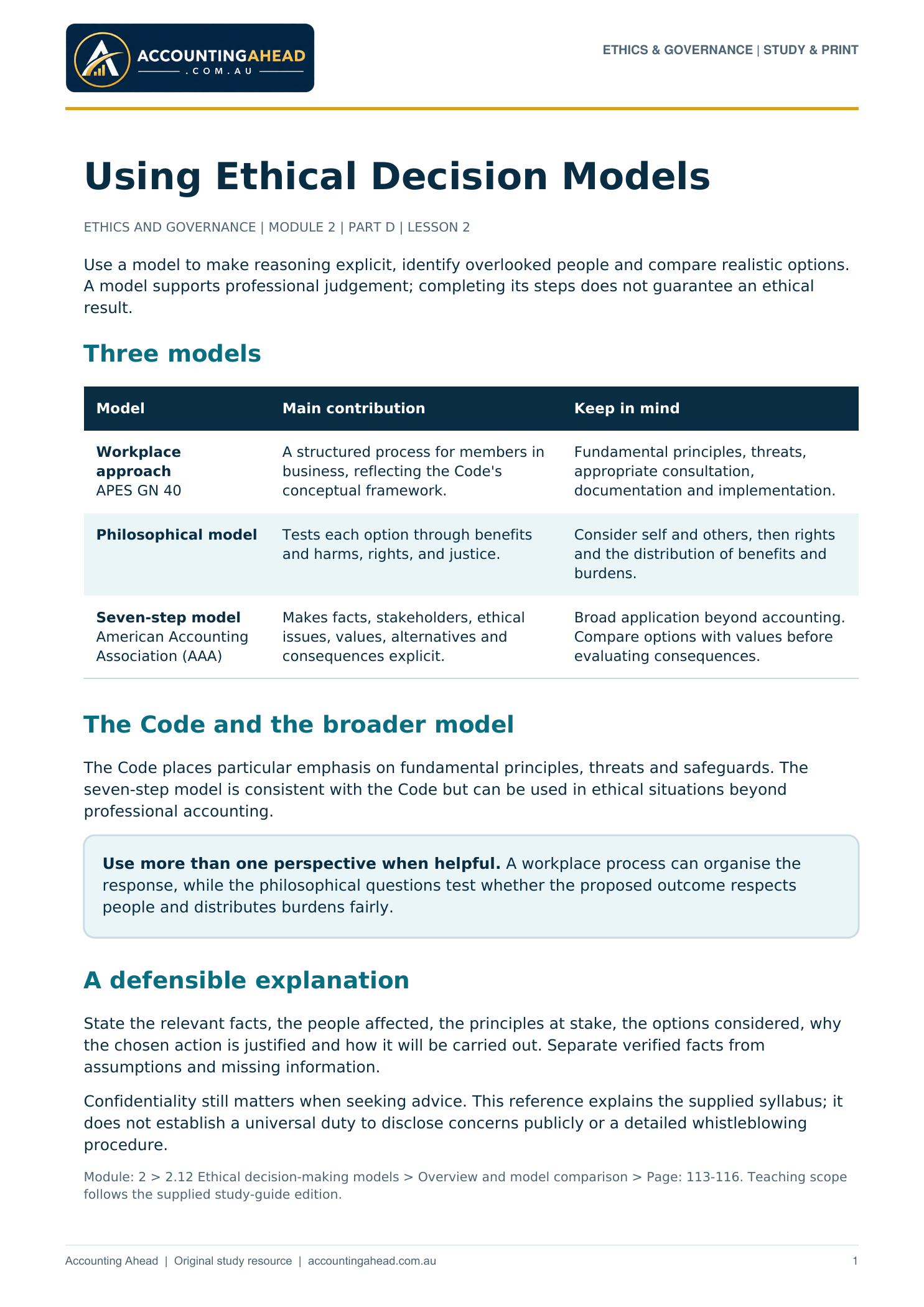
Part 3.2 · Using ethical decision models
Module 3 · Governance concepts
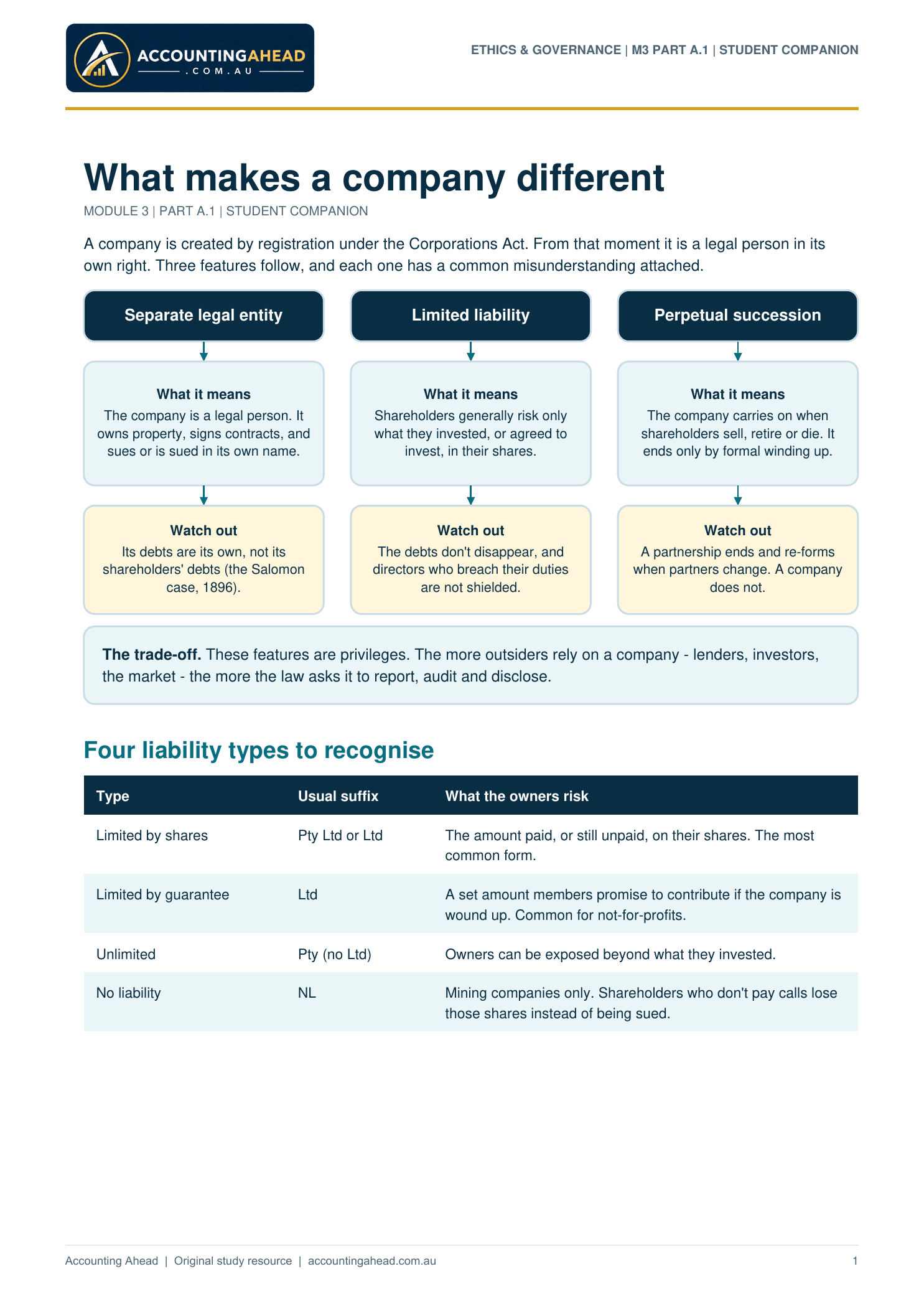
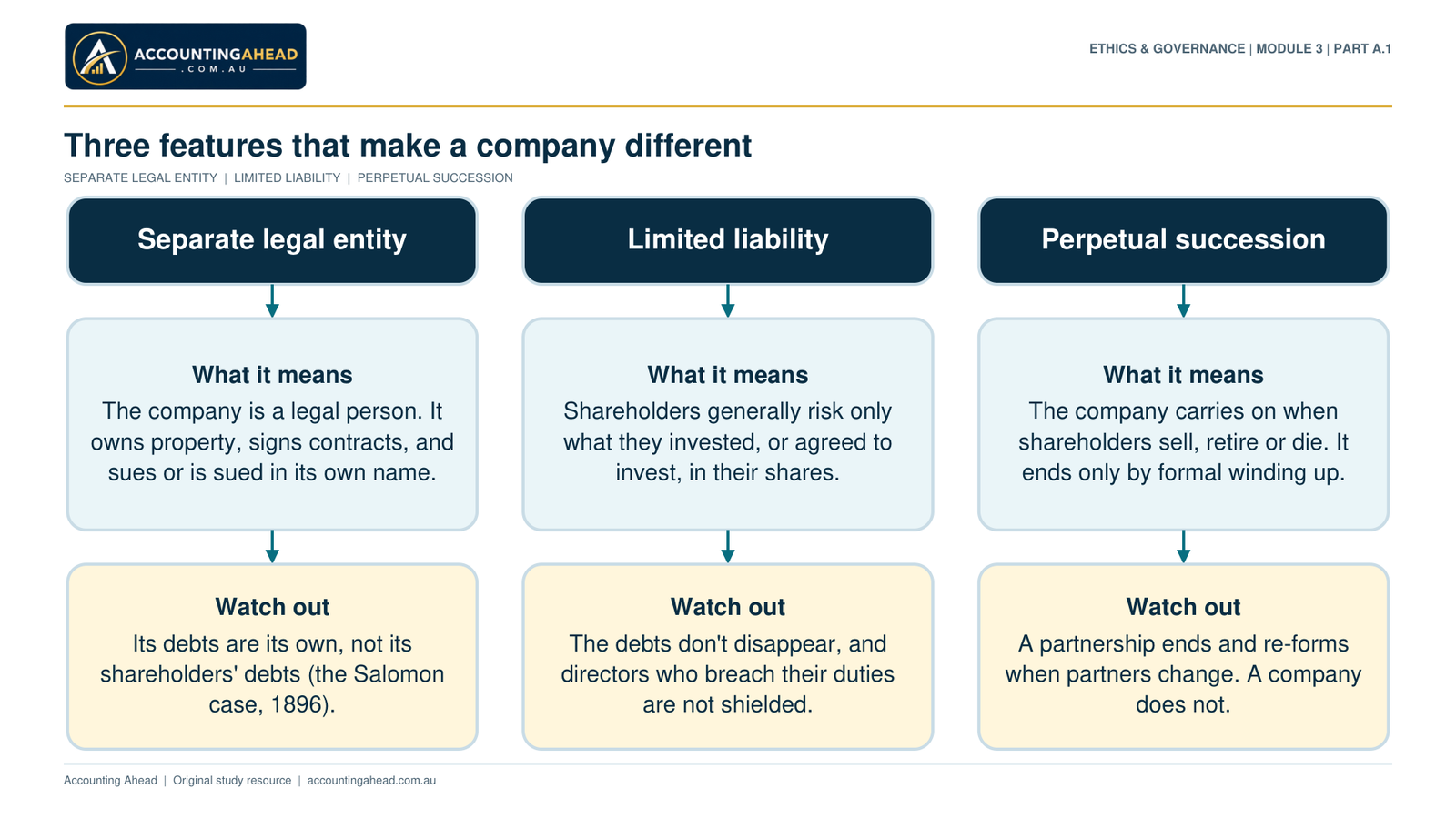
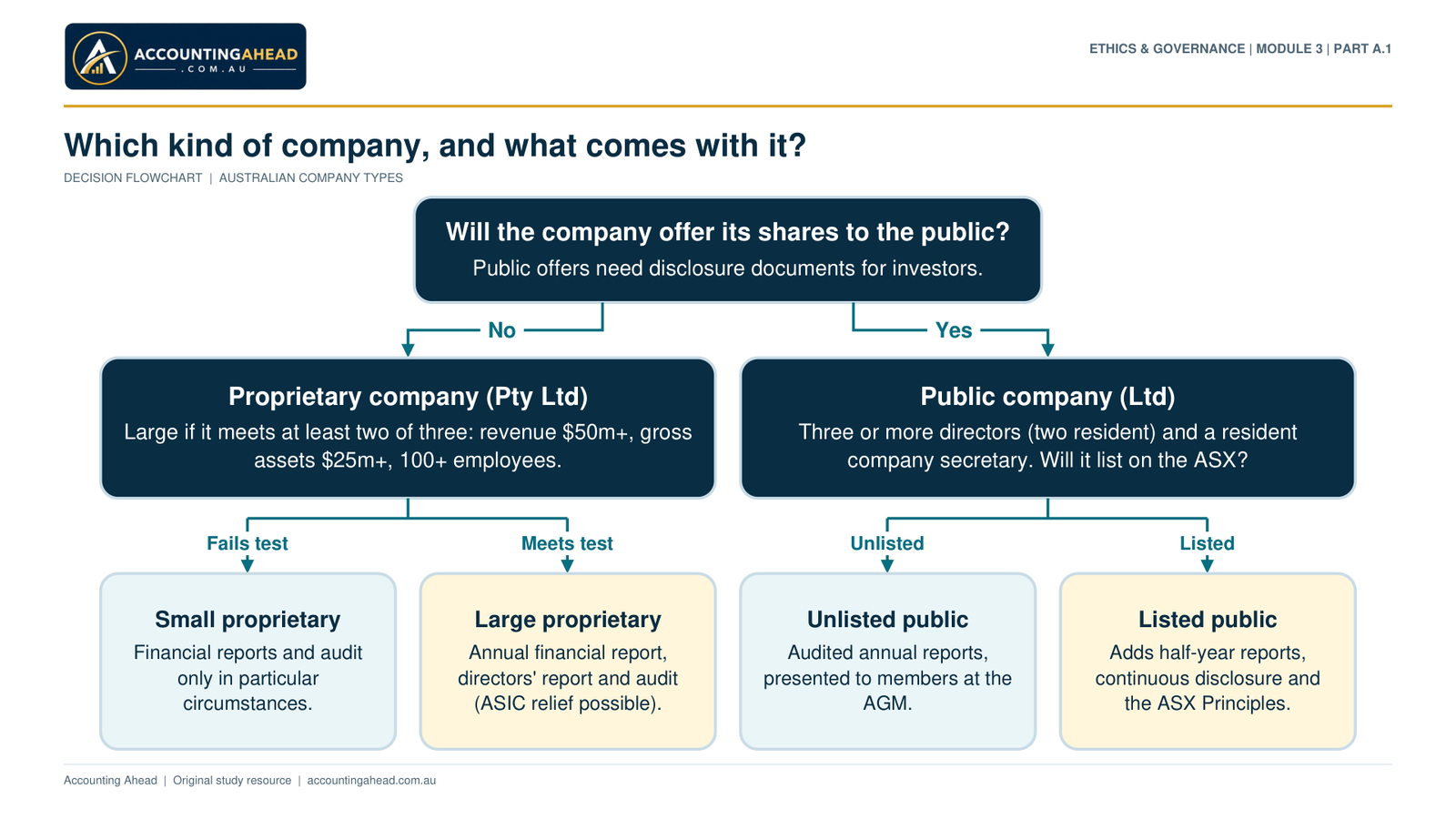
Part A.1 · Corporations and company types
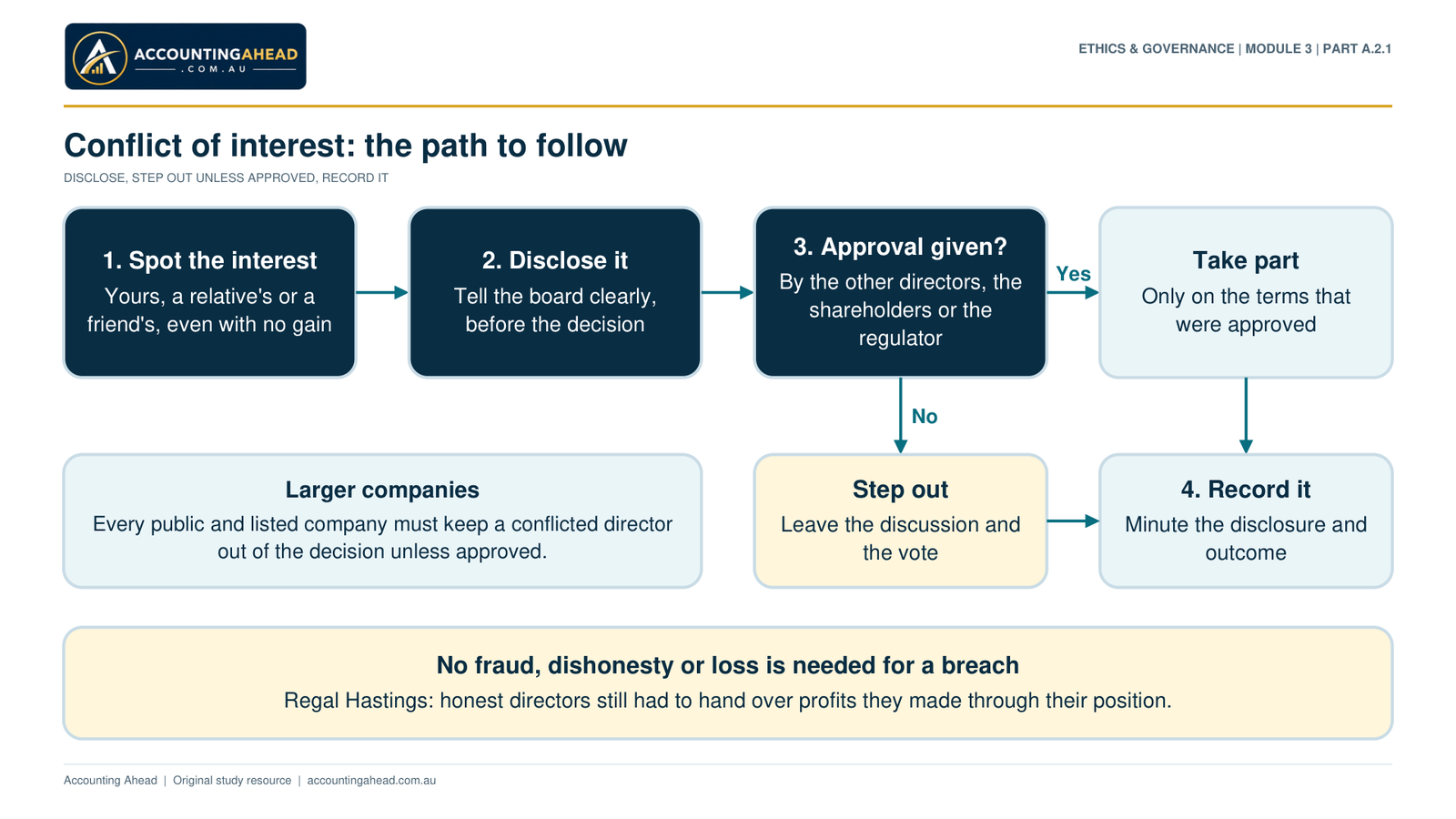
Part A.2.1 · Directors’ duties: conflicts of interest
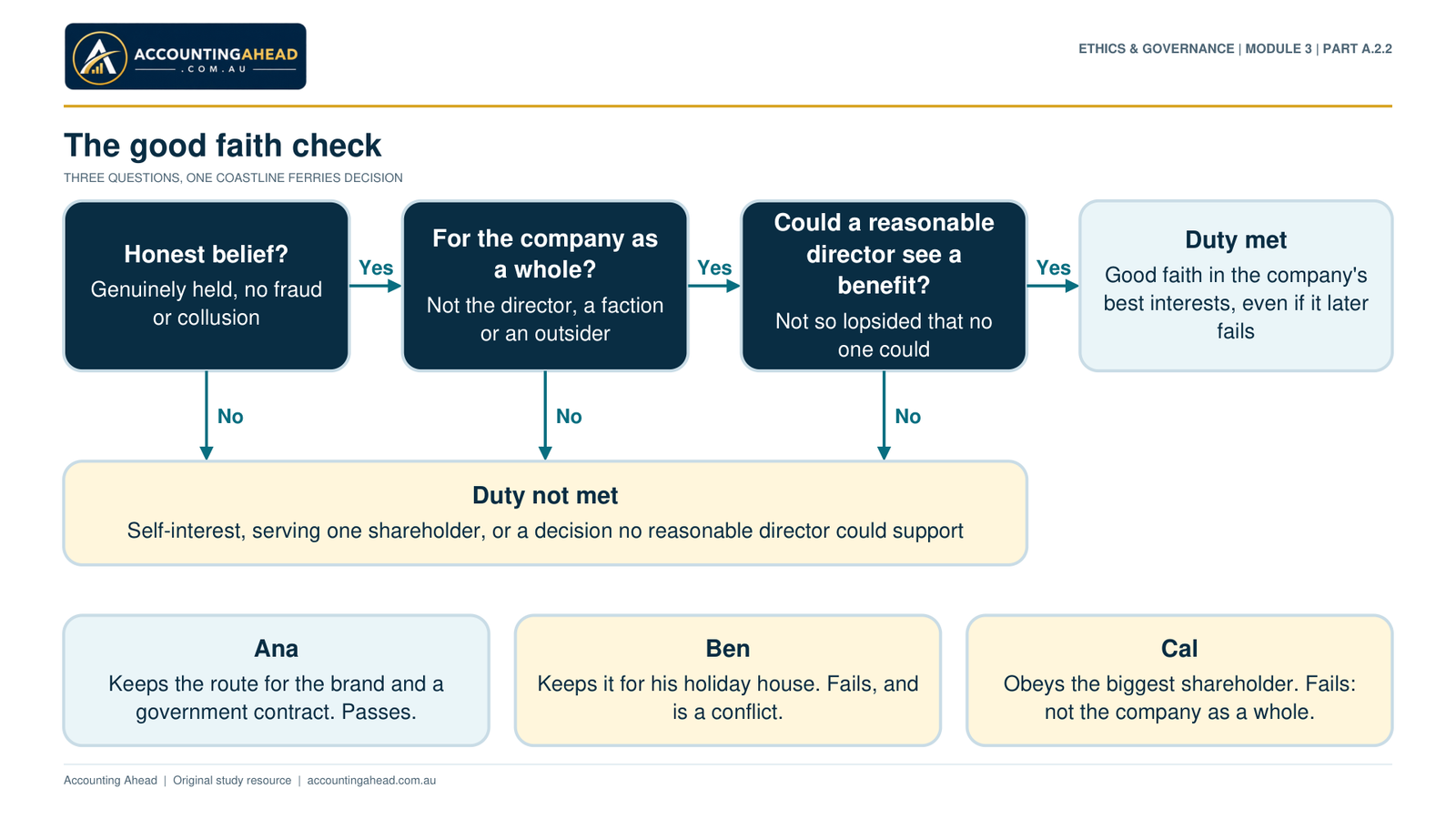
Part A.2.2 · Directors’ duties: good faith and best interests
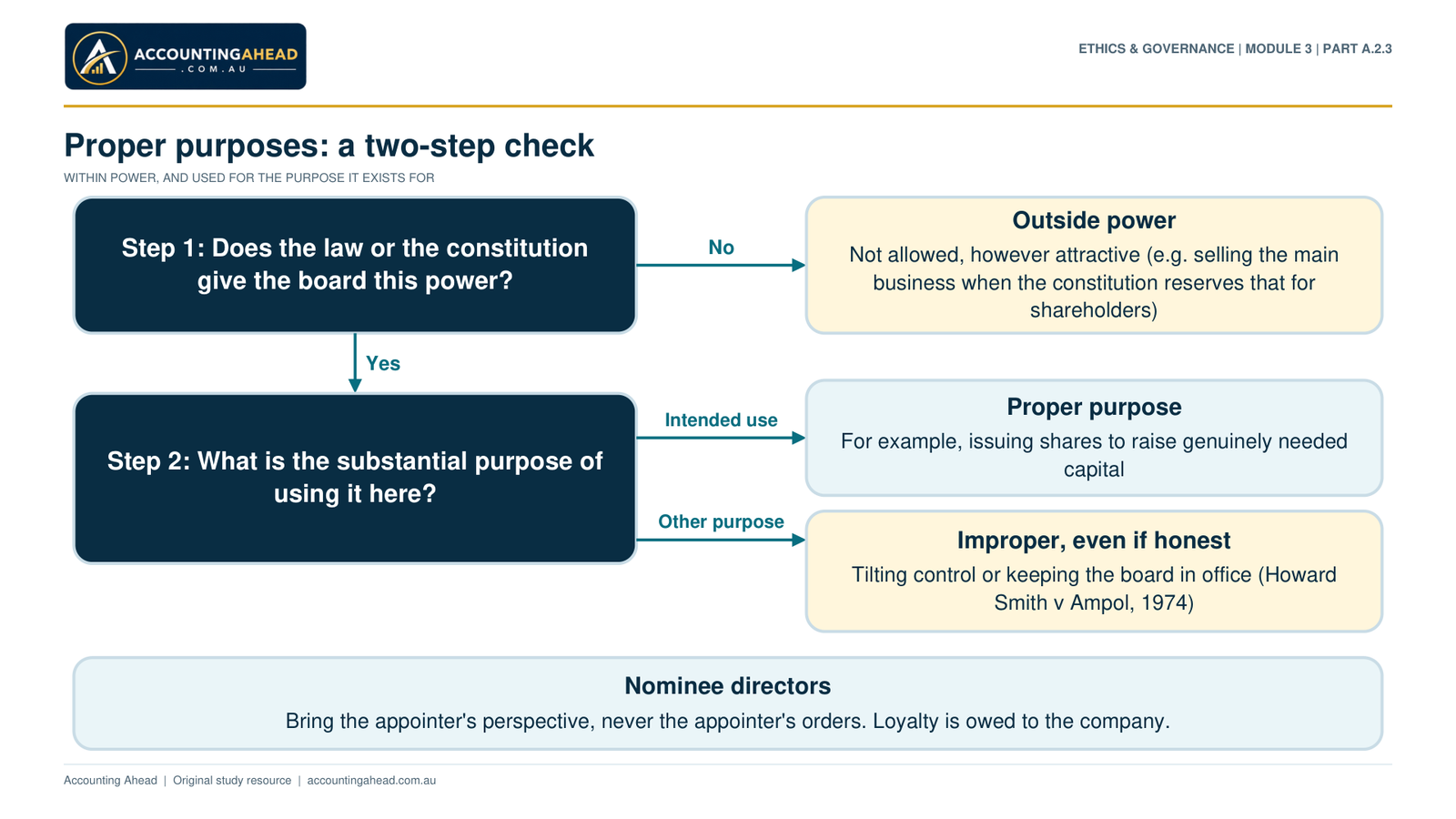
Part A.2.3 · Directors’ duties: proper purposes
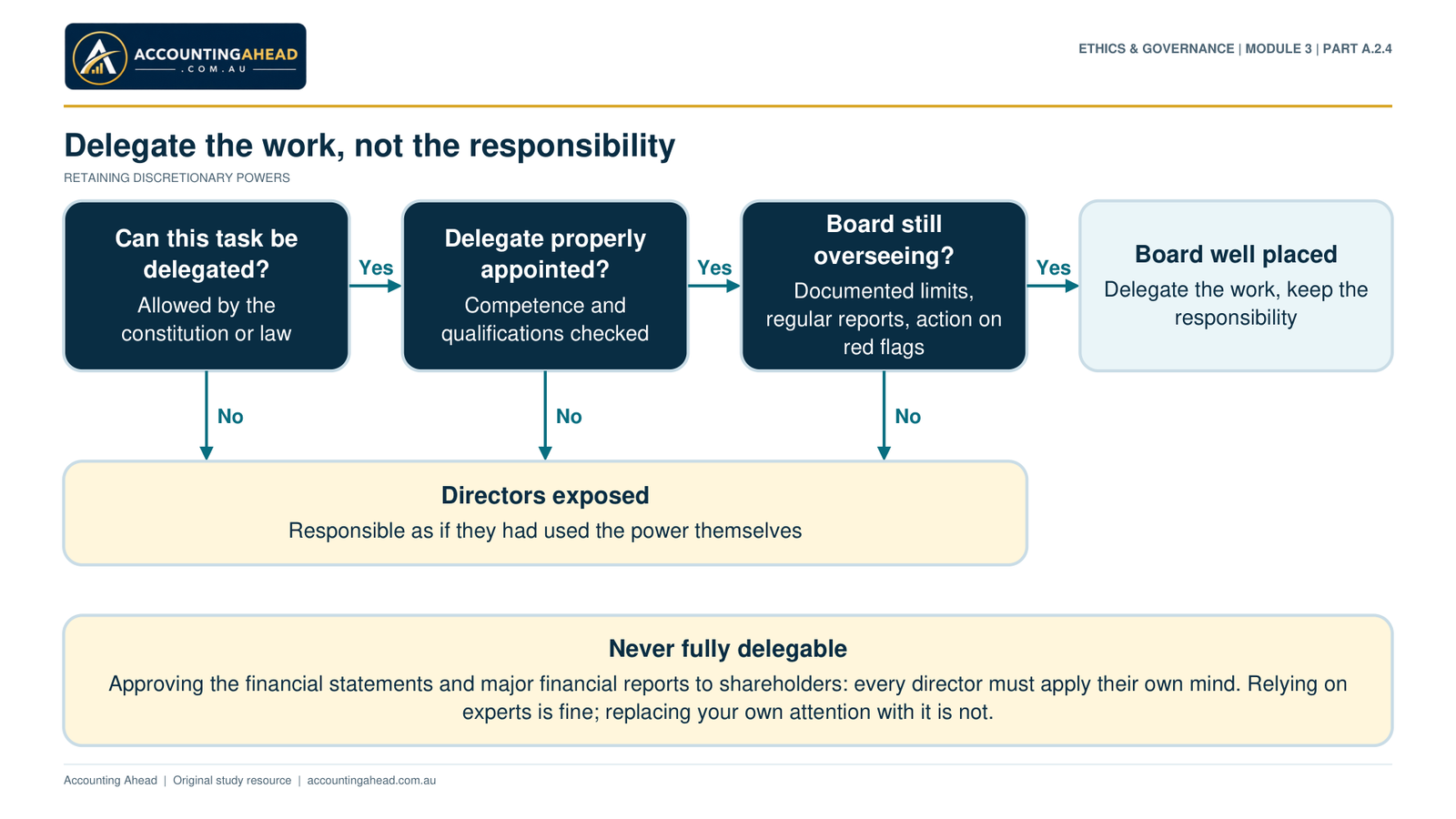
Part A.2.4 · Directors’ duties: discretion and delegation
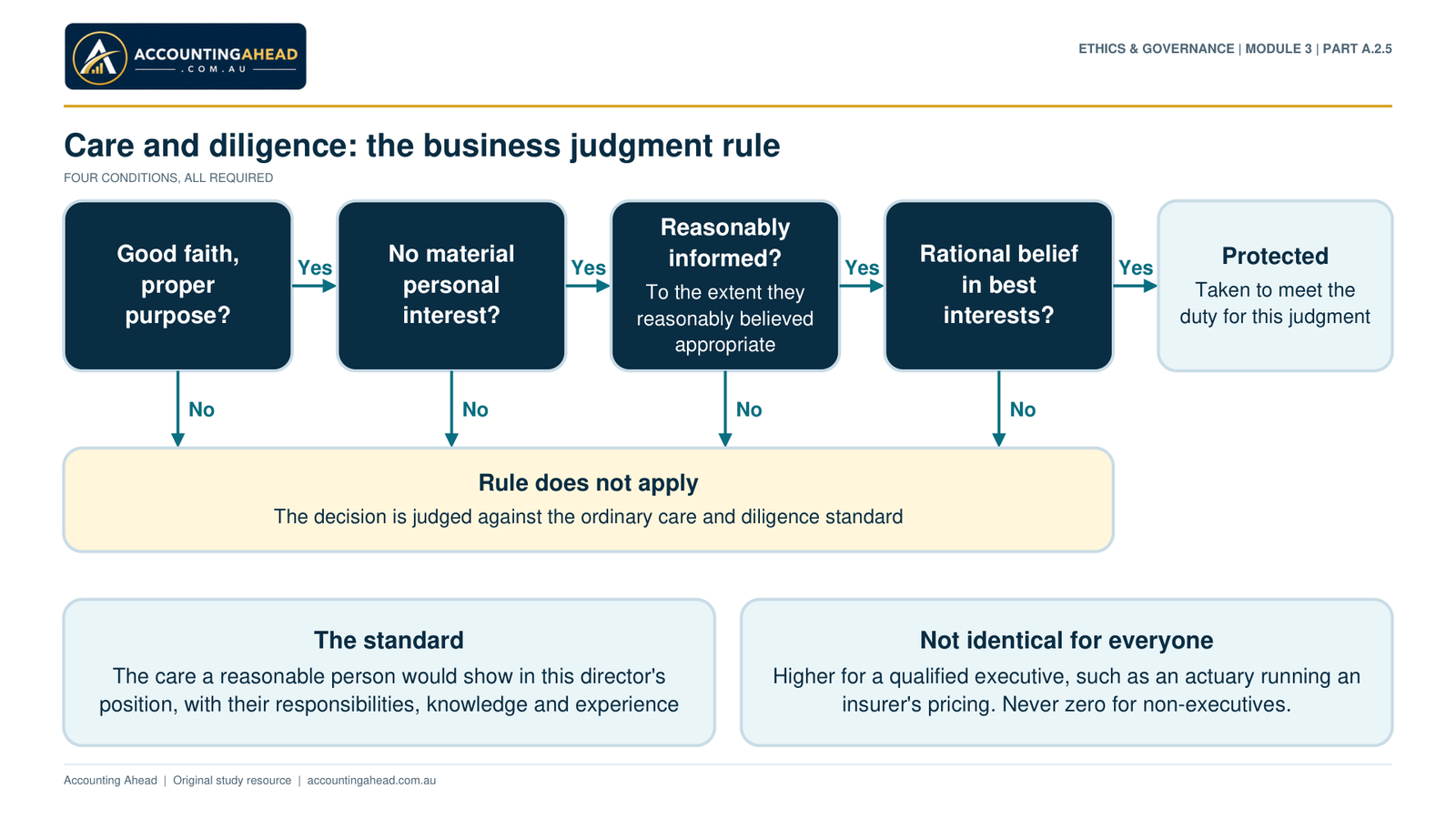
Part A.2.5 · Directors’ duties: care and diligence
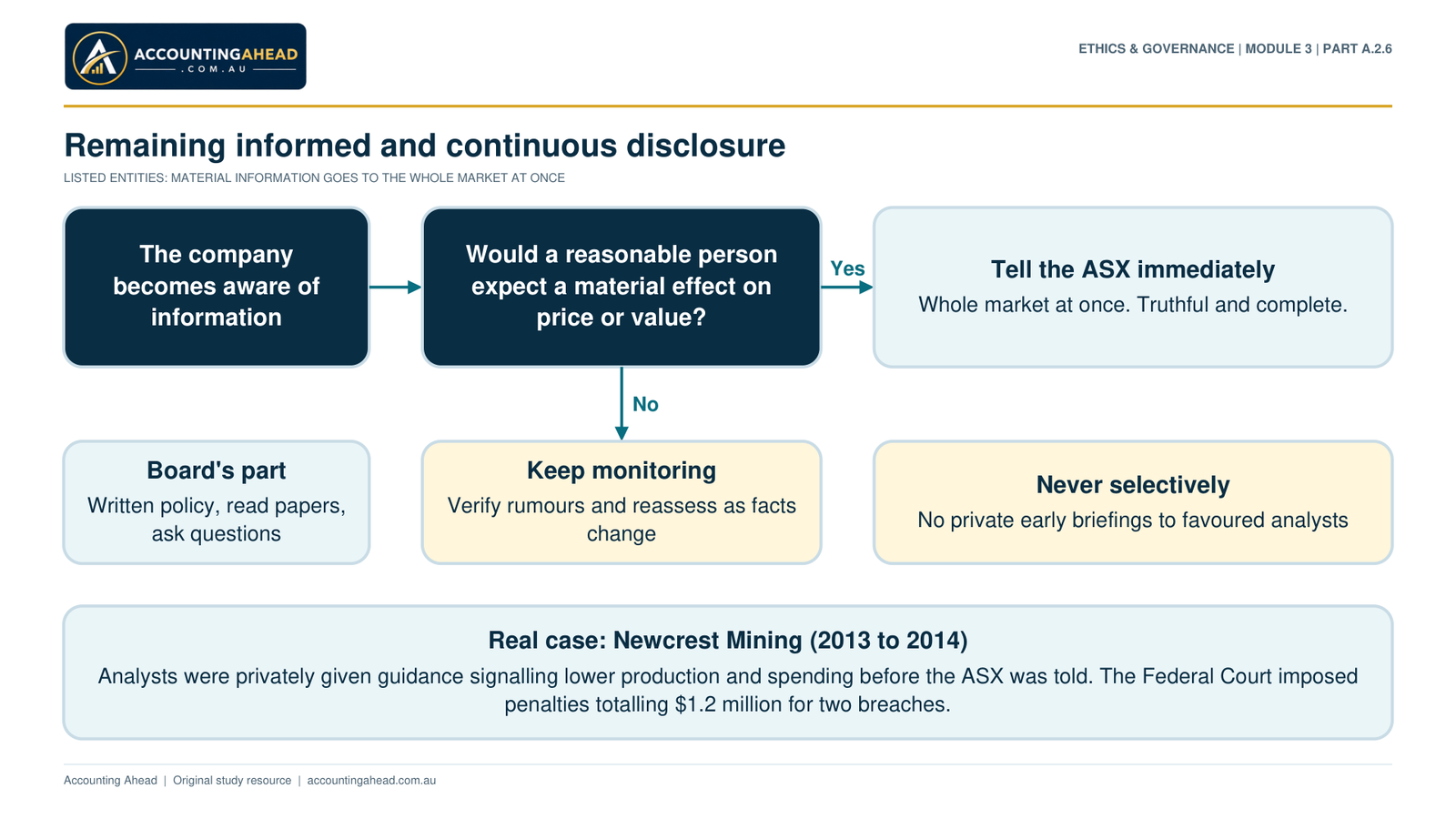
Part A.2.6 · Directors’ duties: remaining informed
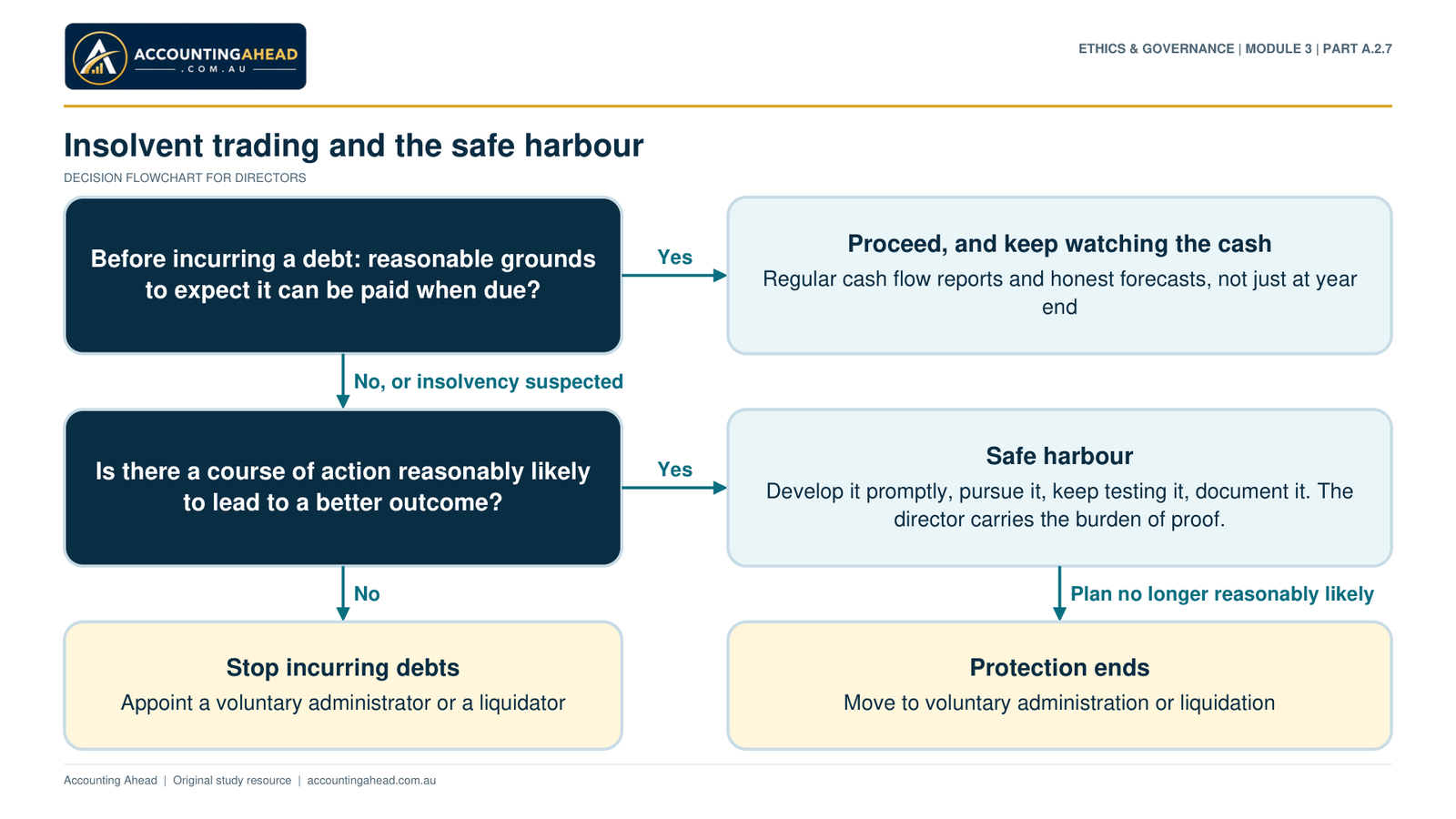
Part A.2.7 · Directors’ duties: insolvency and safe harbour
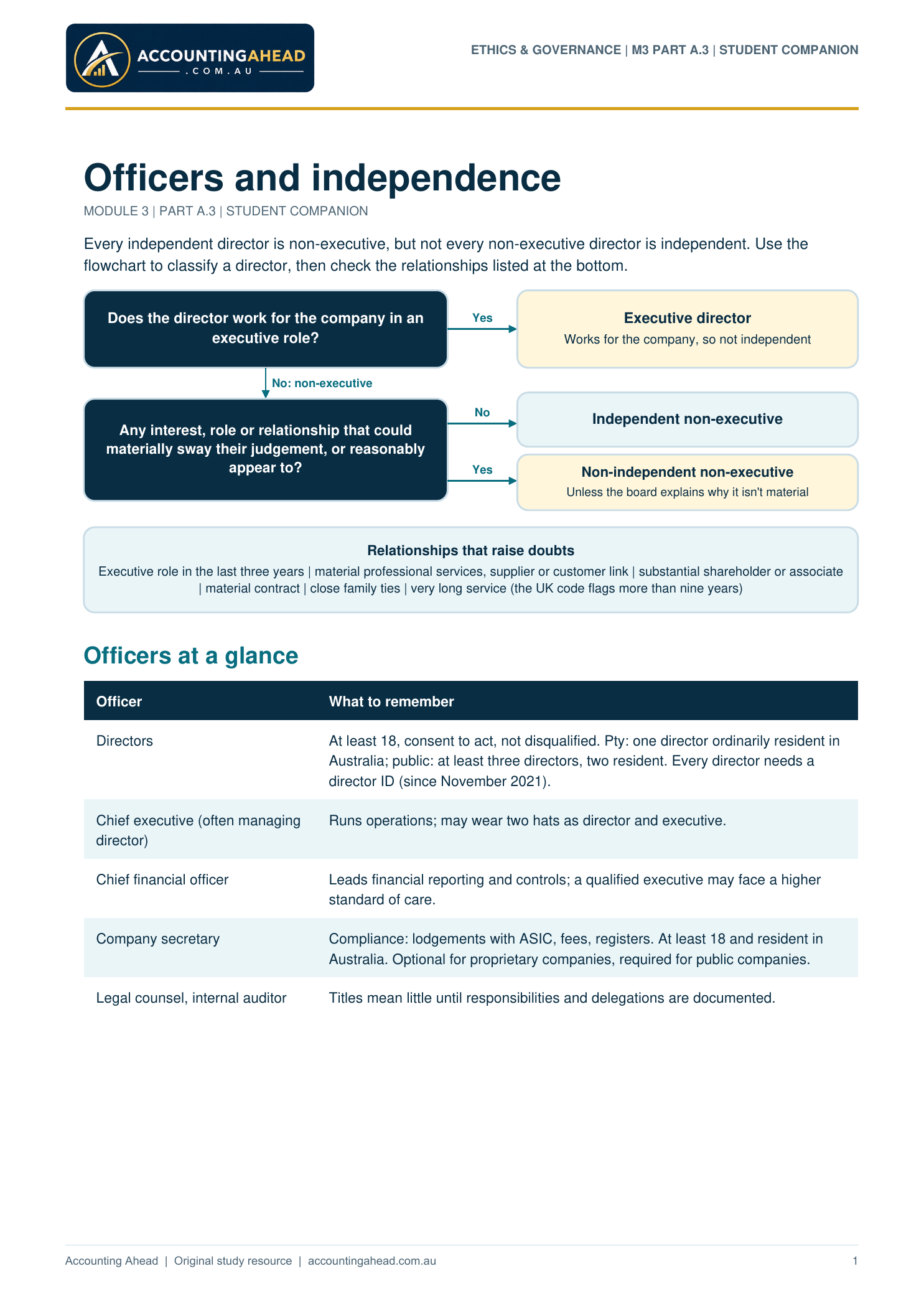
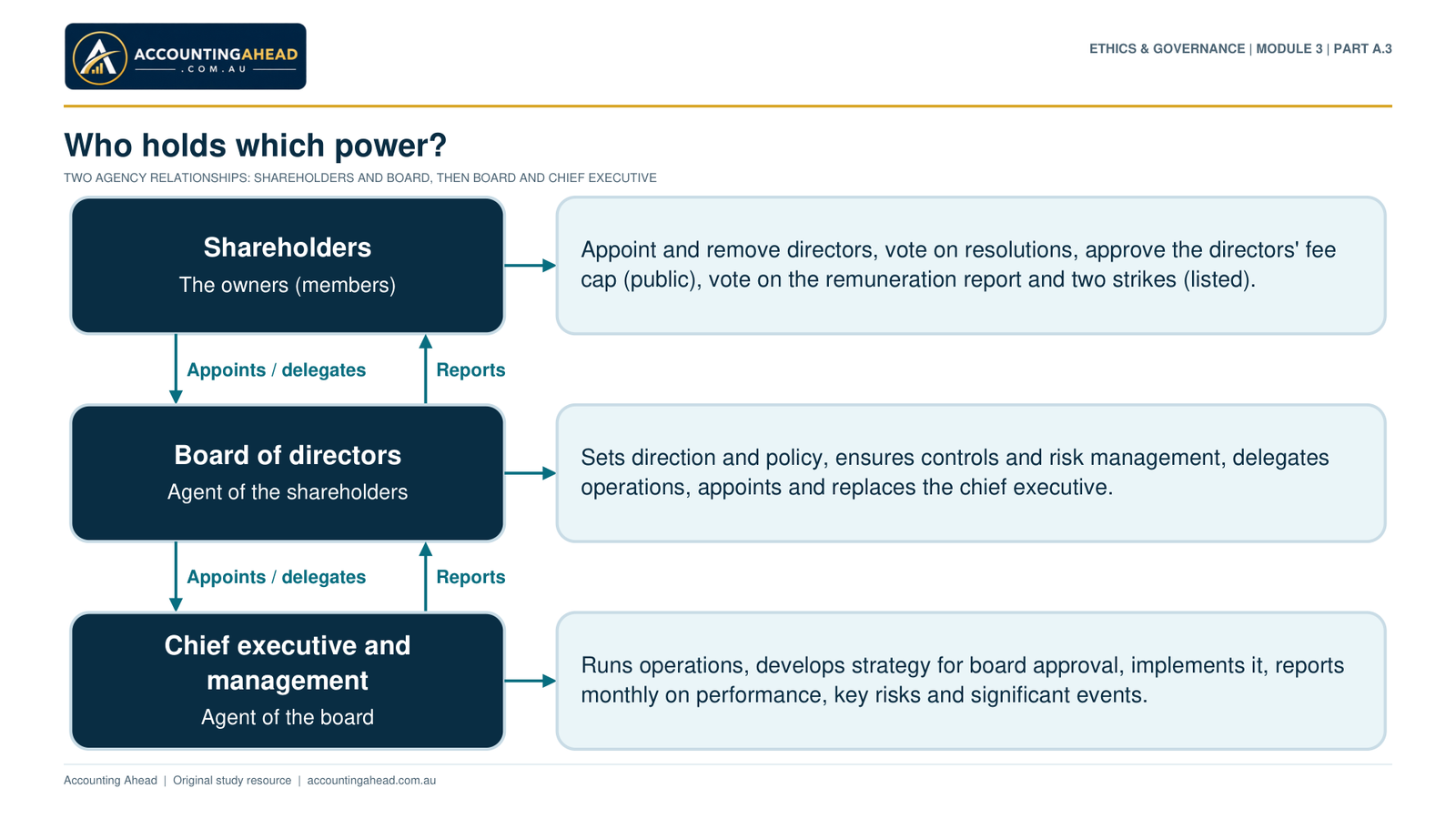
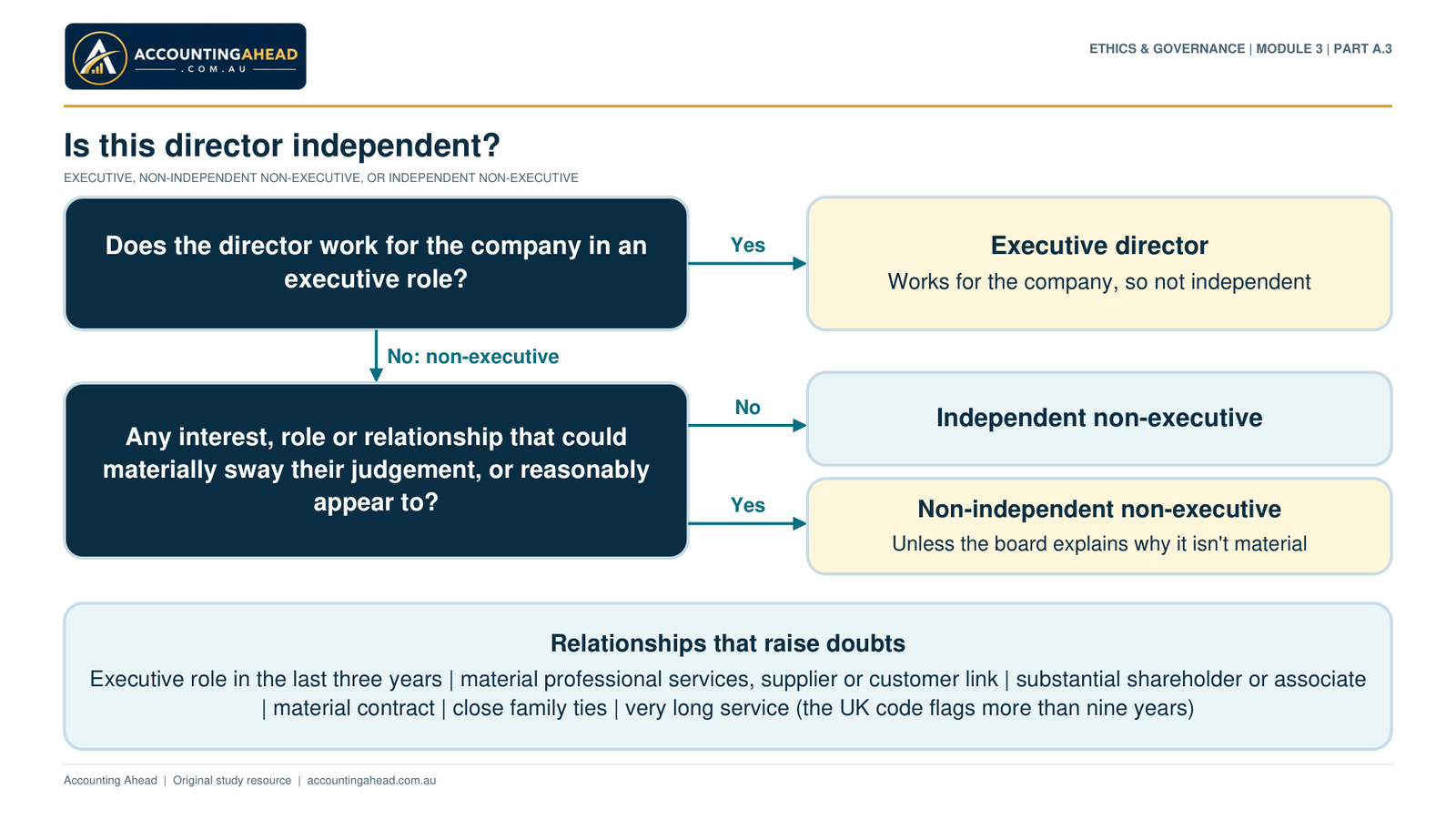
Part A.3 · Officers, independence and company powers
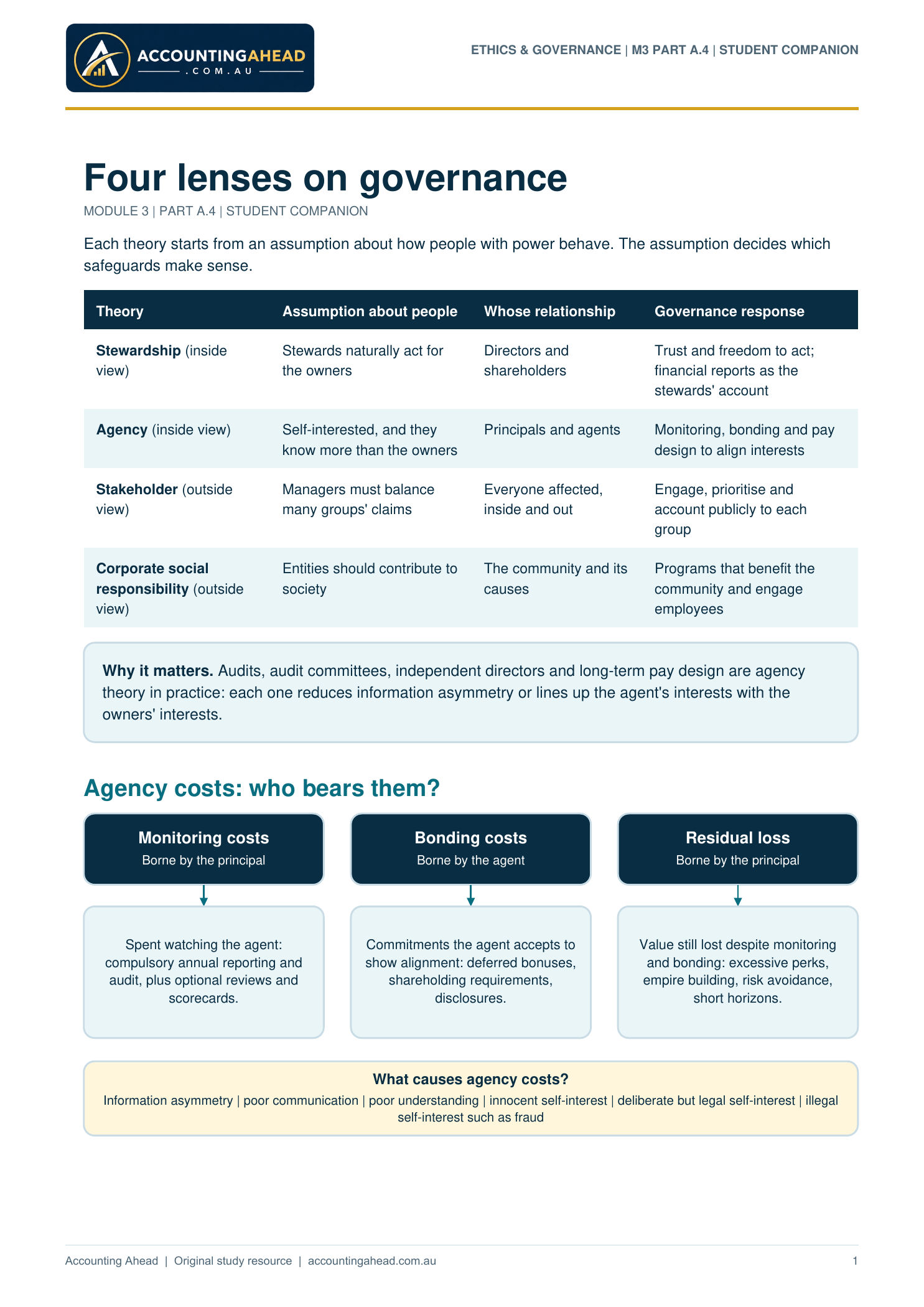
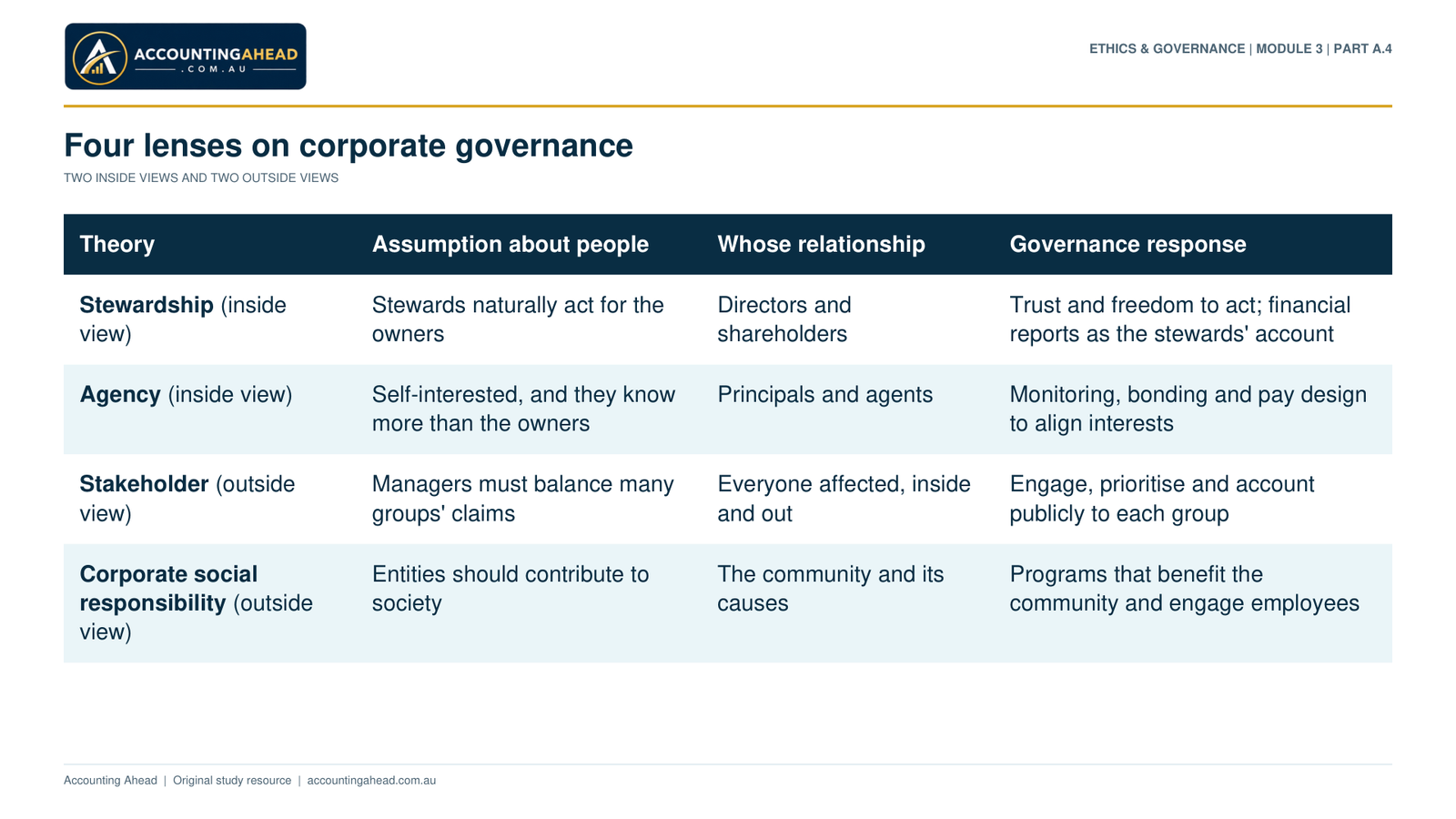
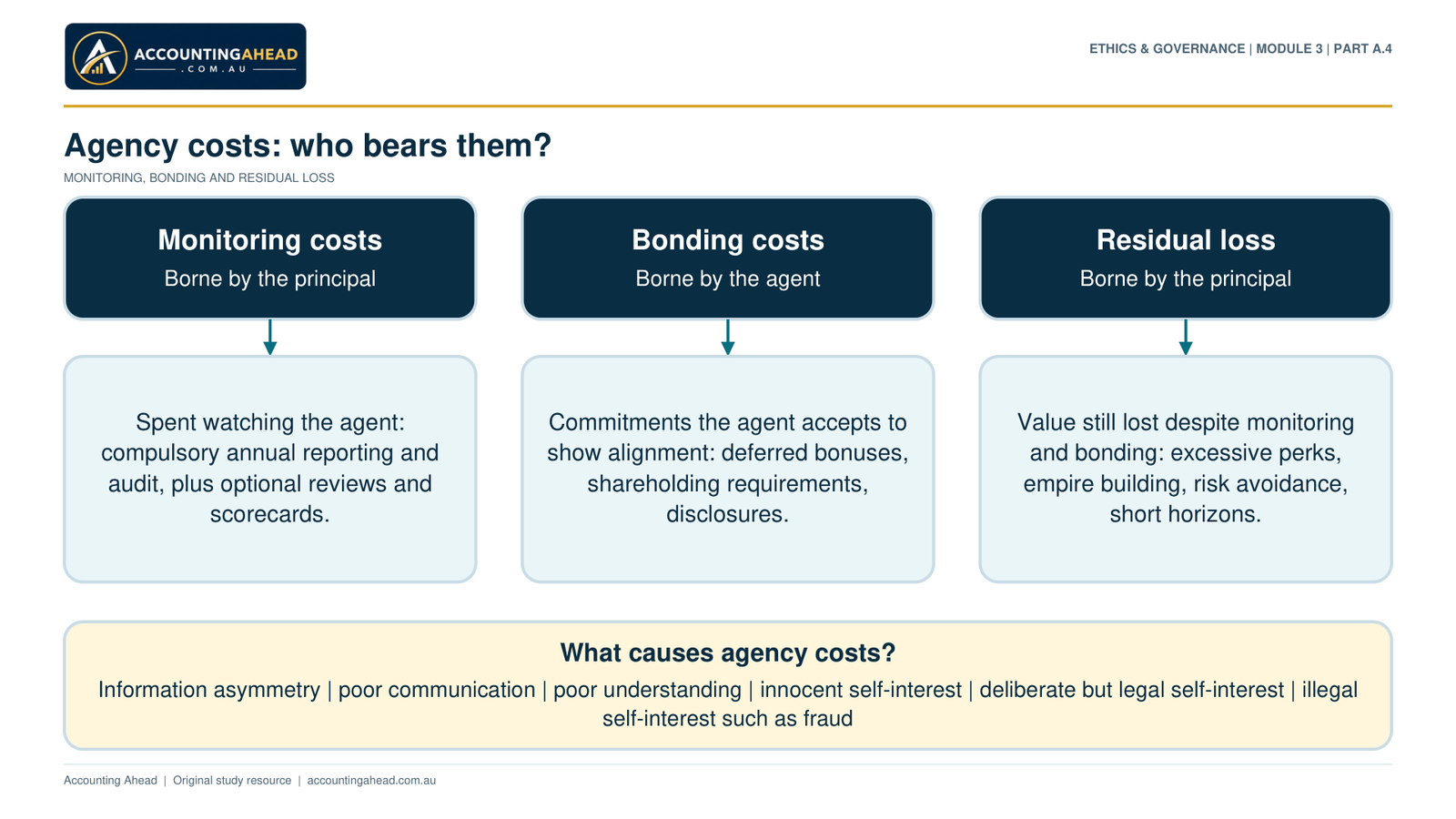
Part A.4 · Four theories of corporate governance
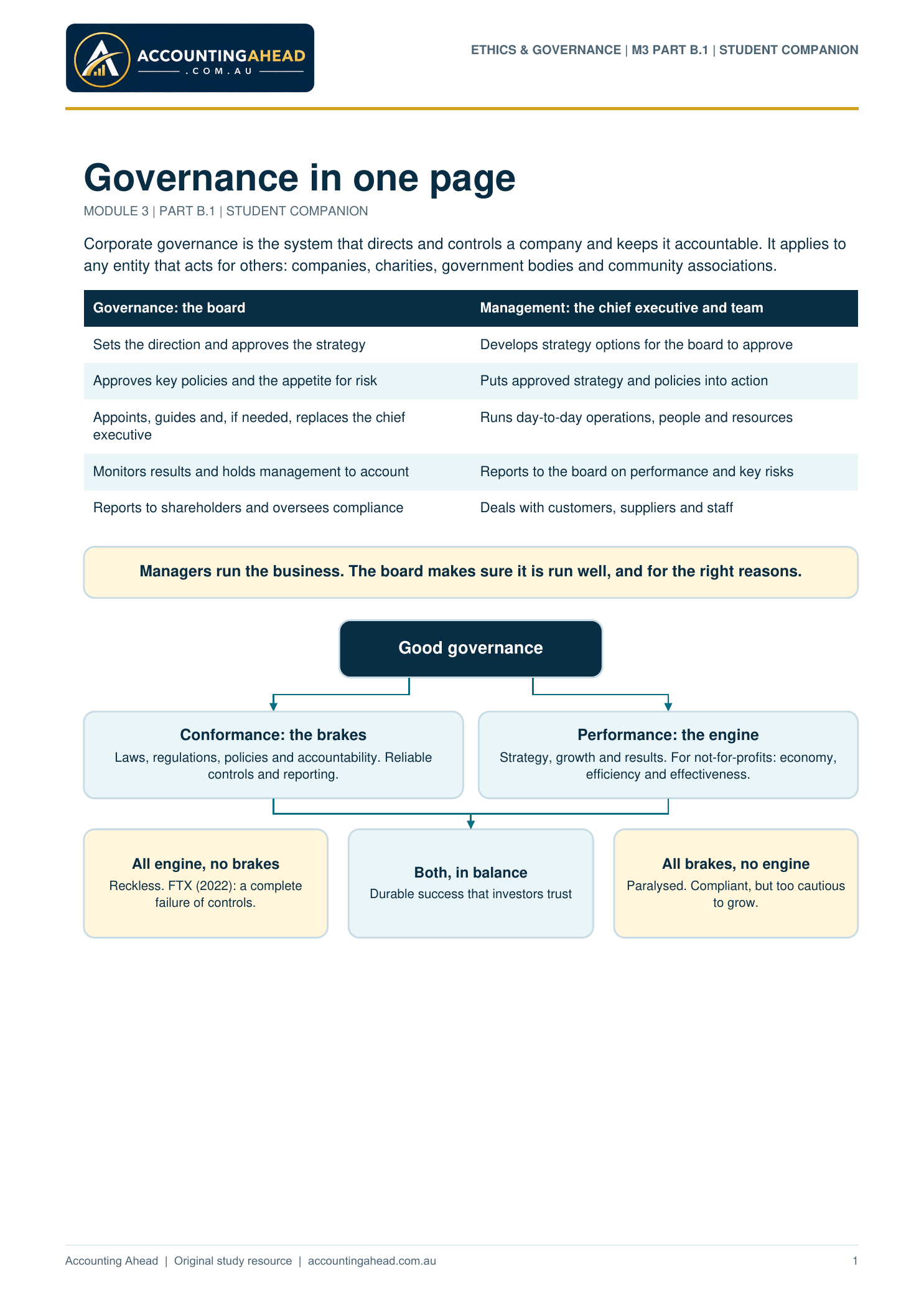
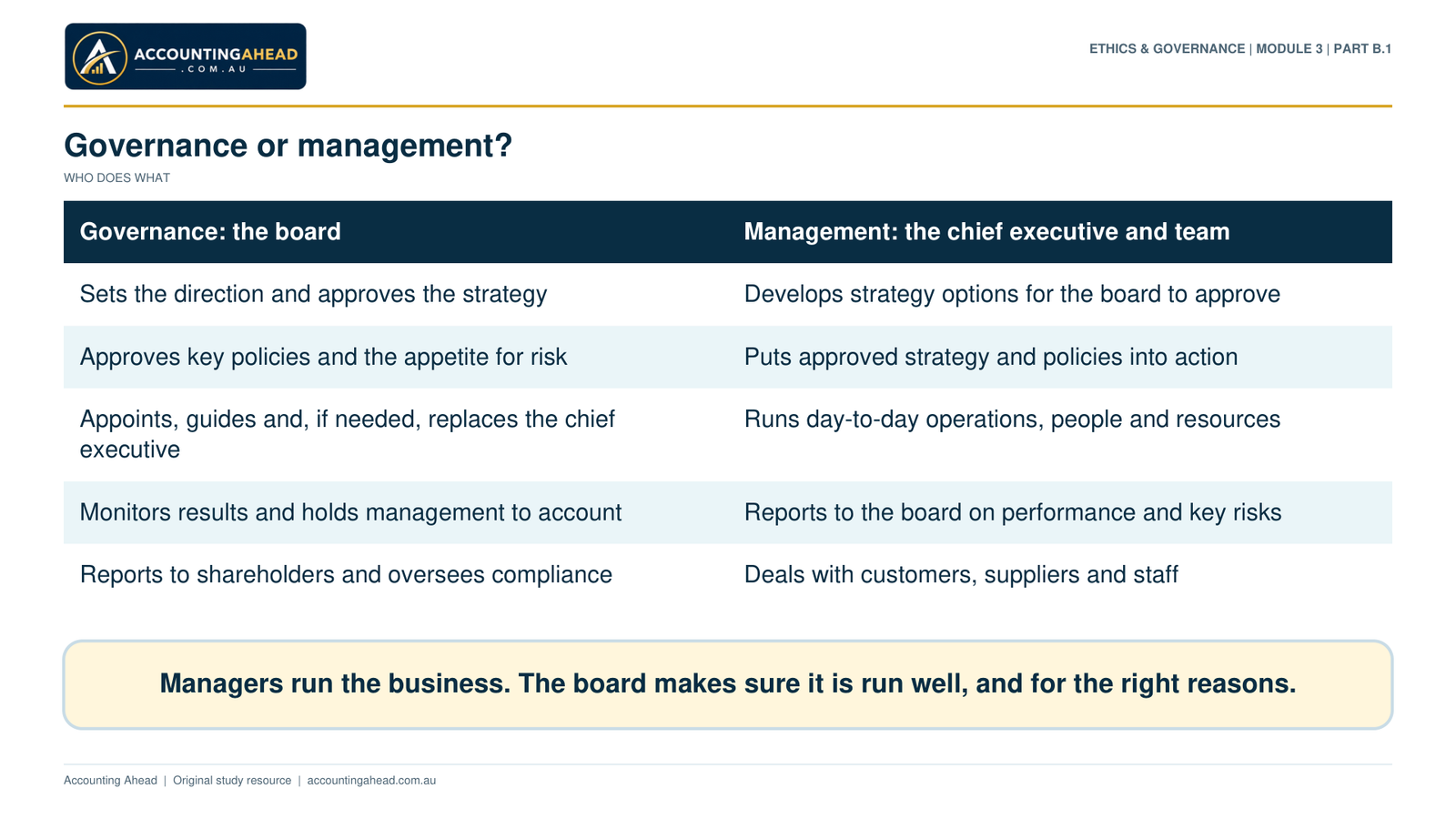
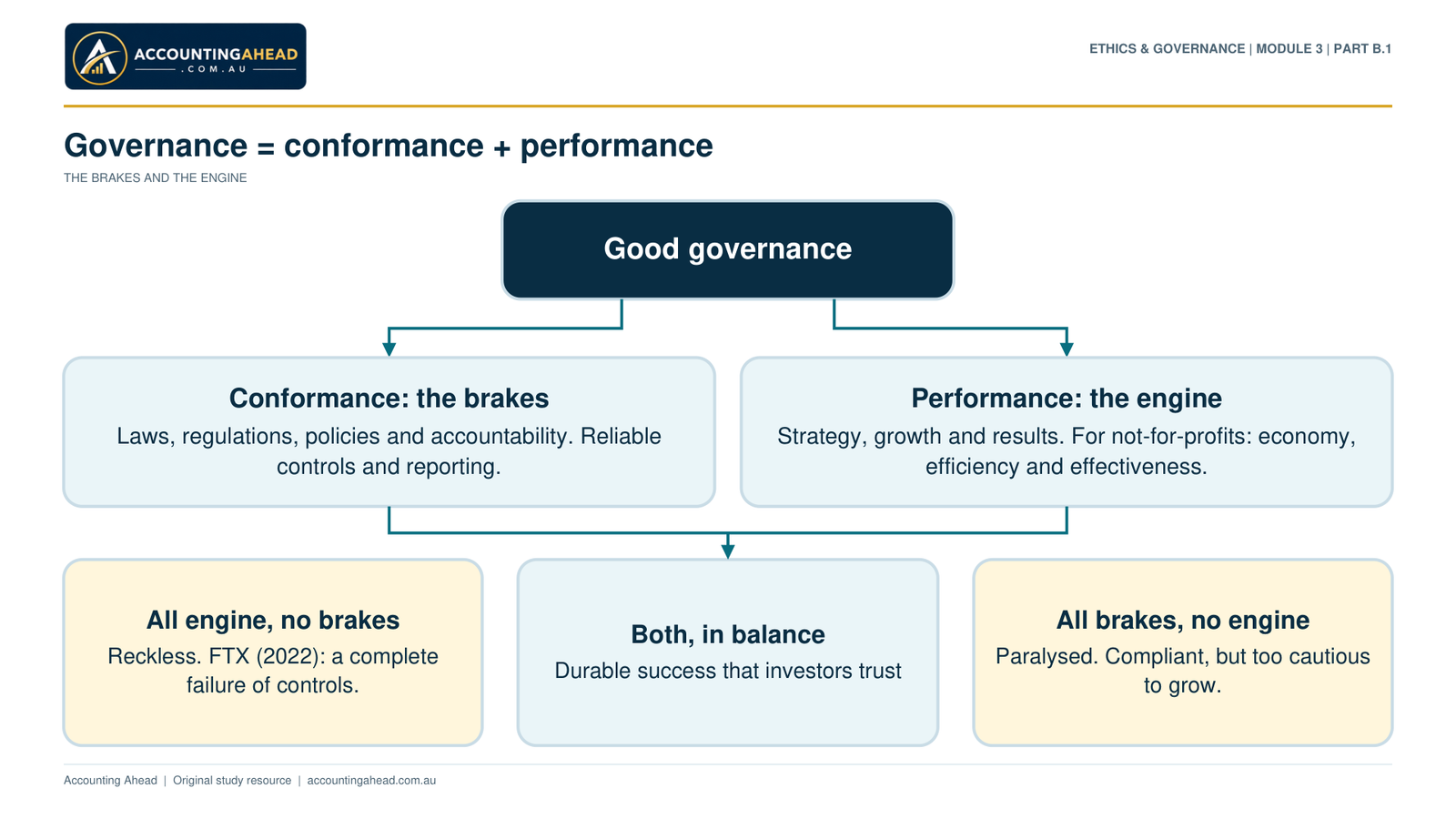
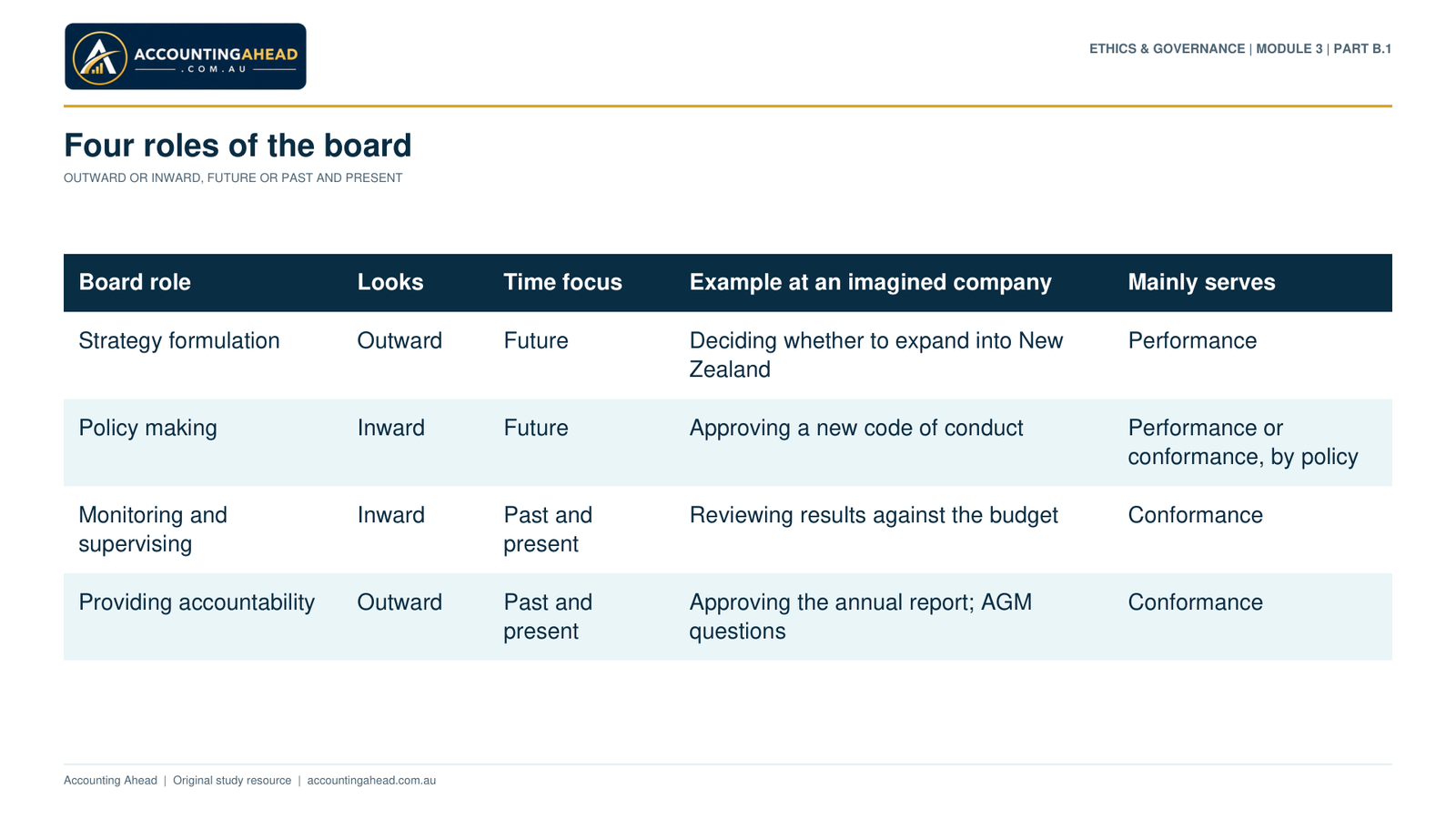
Part B.1 · What governance is and why it matters
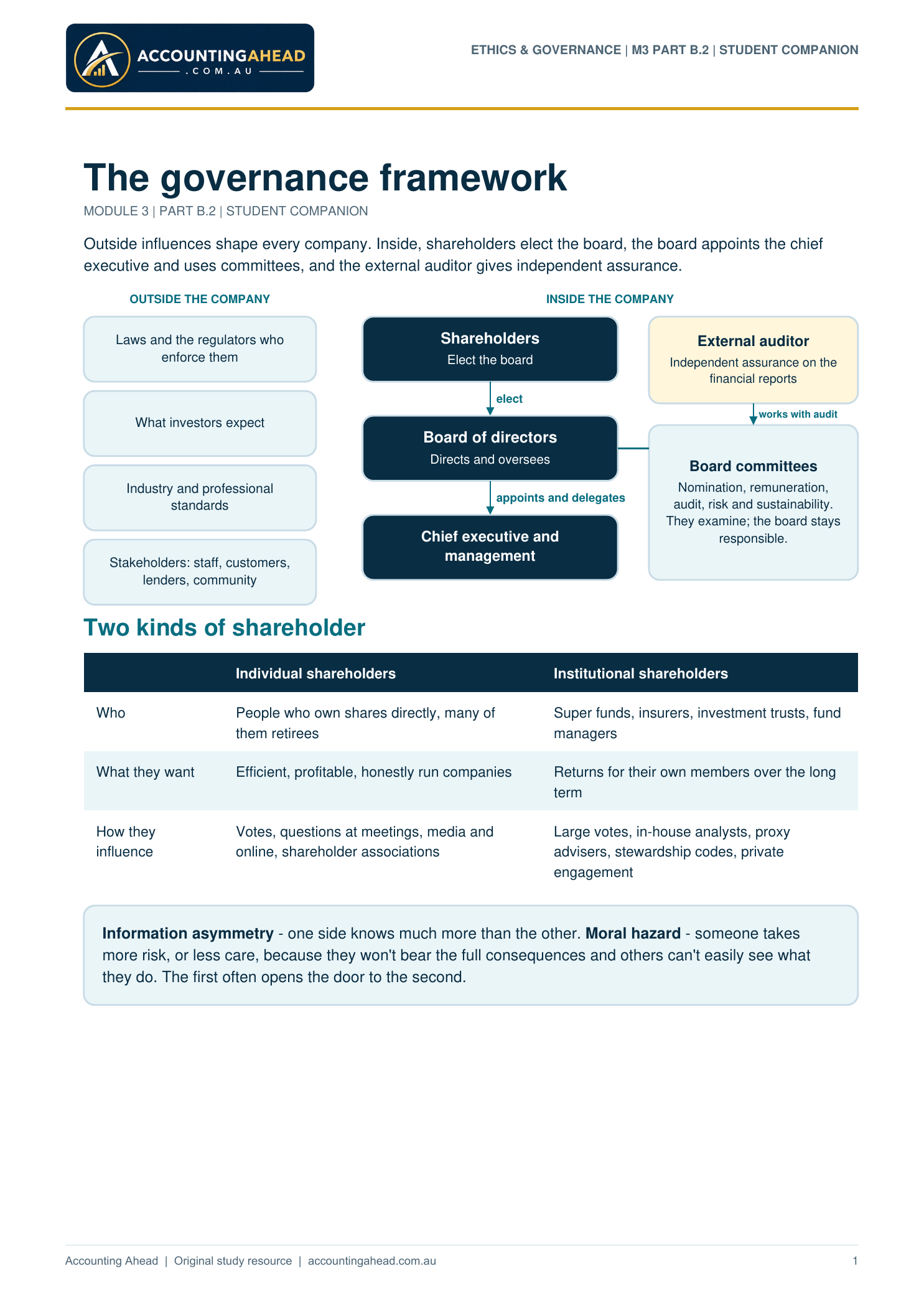
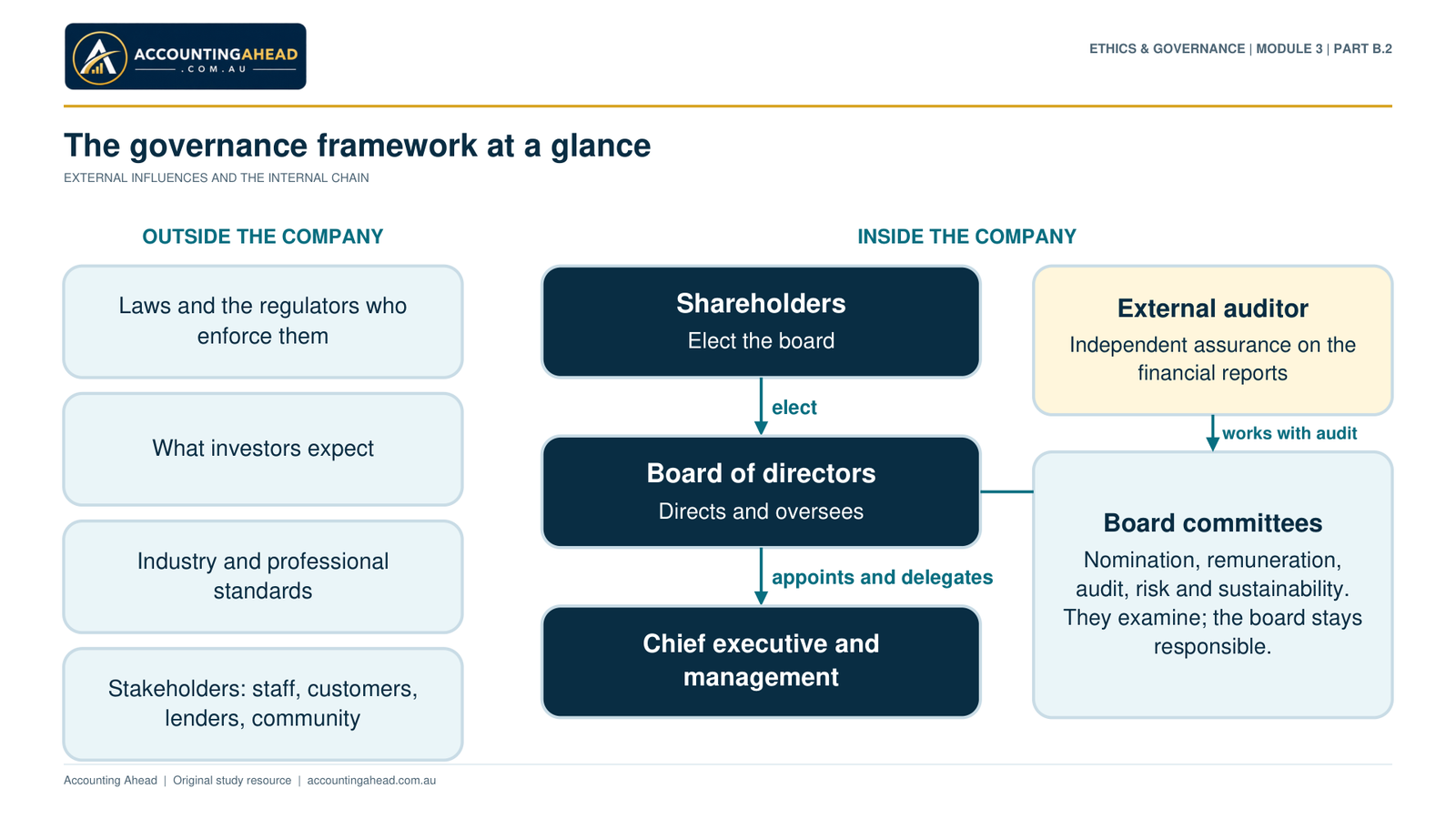
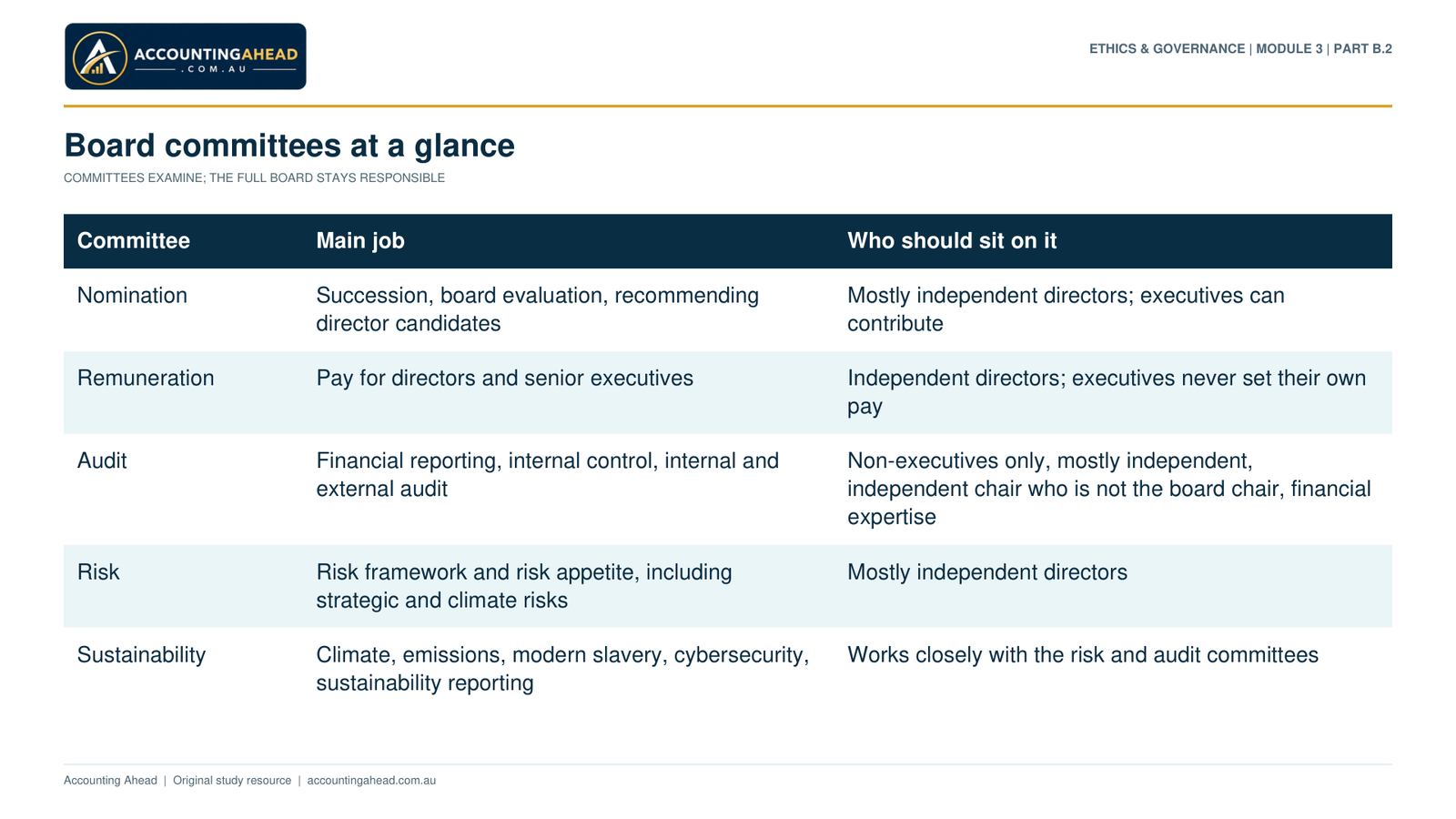
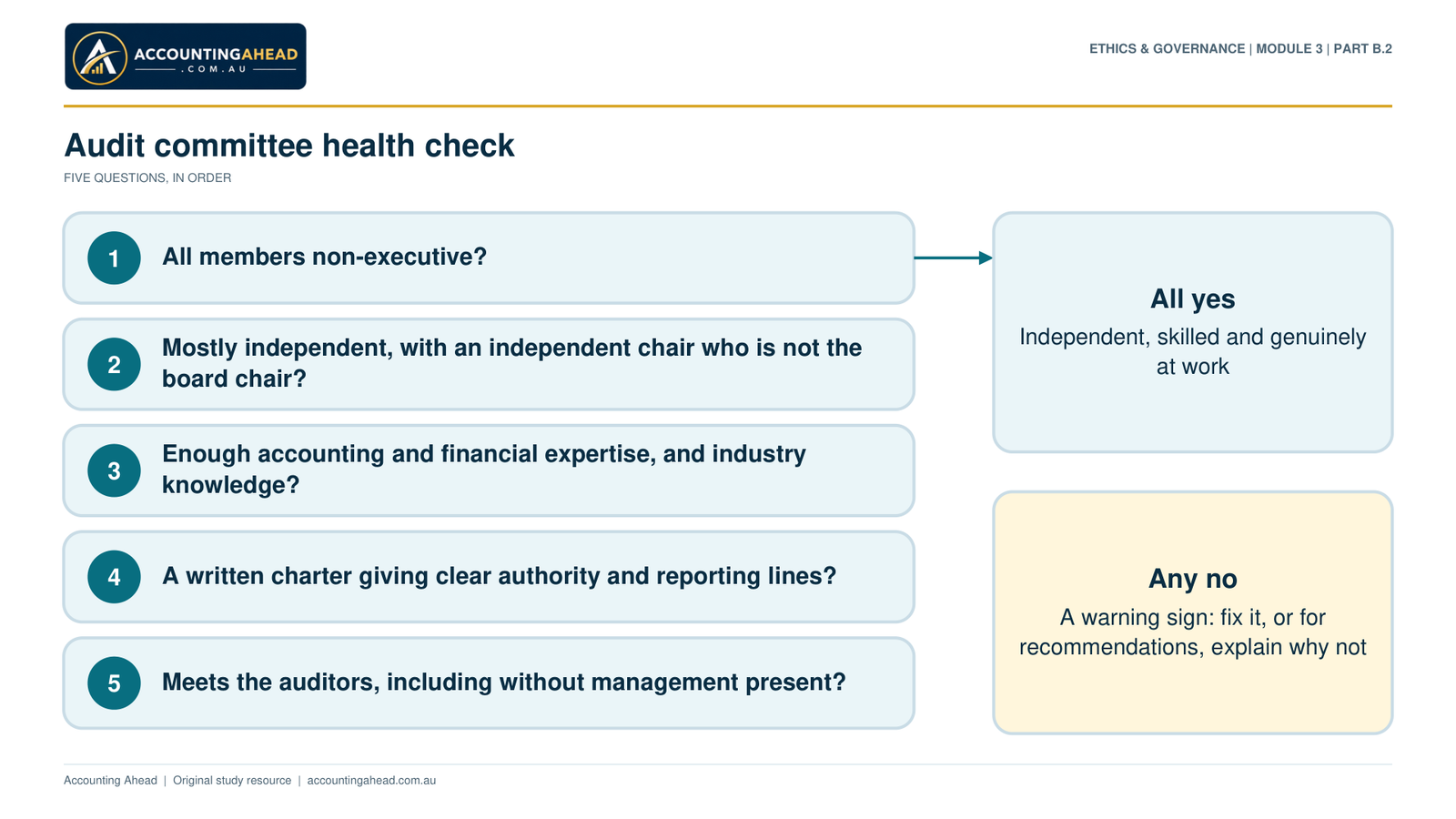
Part B.2 · Shareholders, boards and board committees
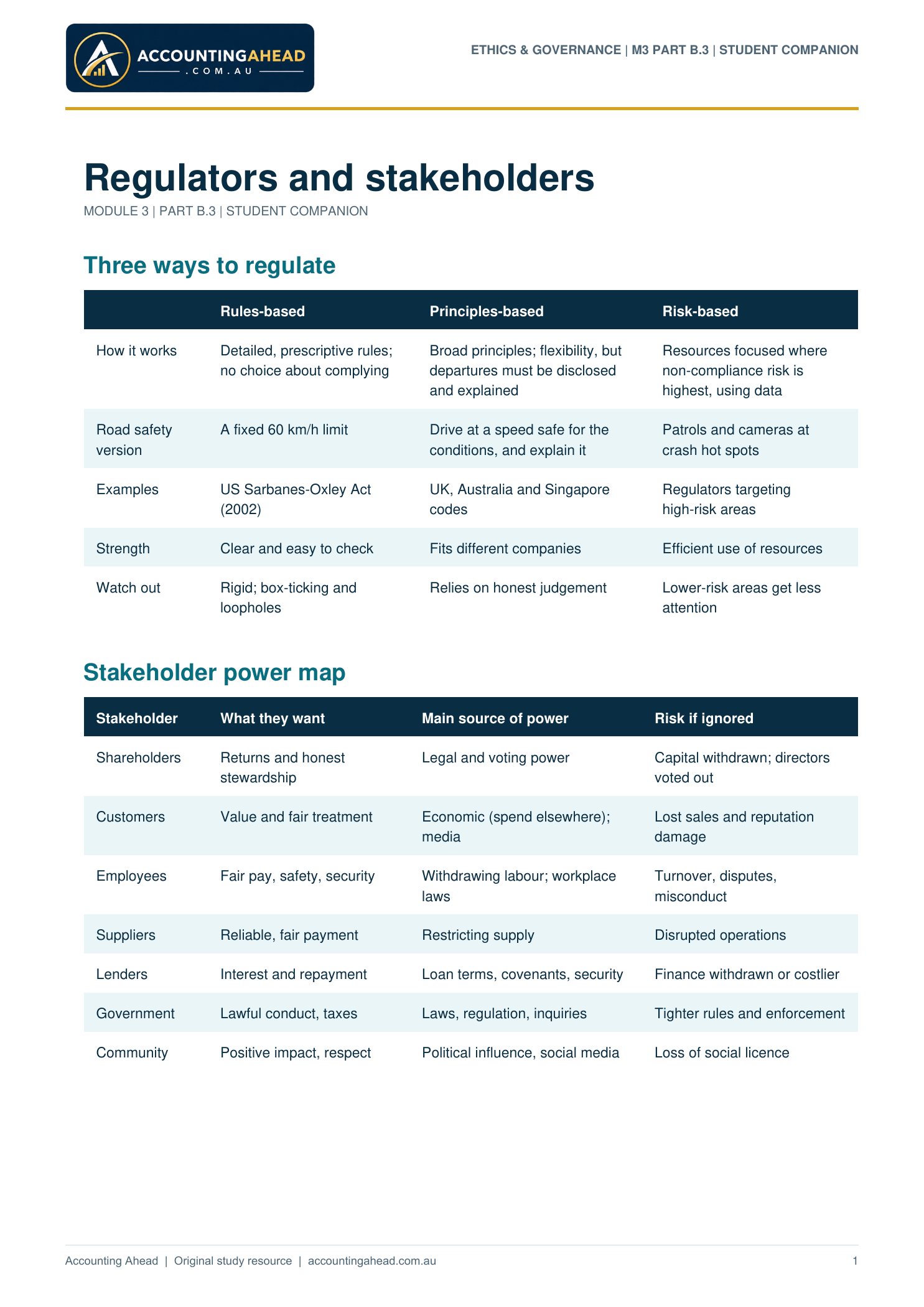
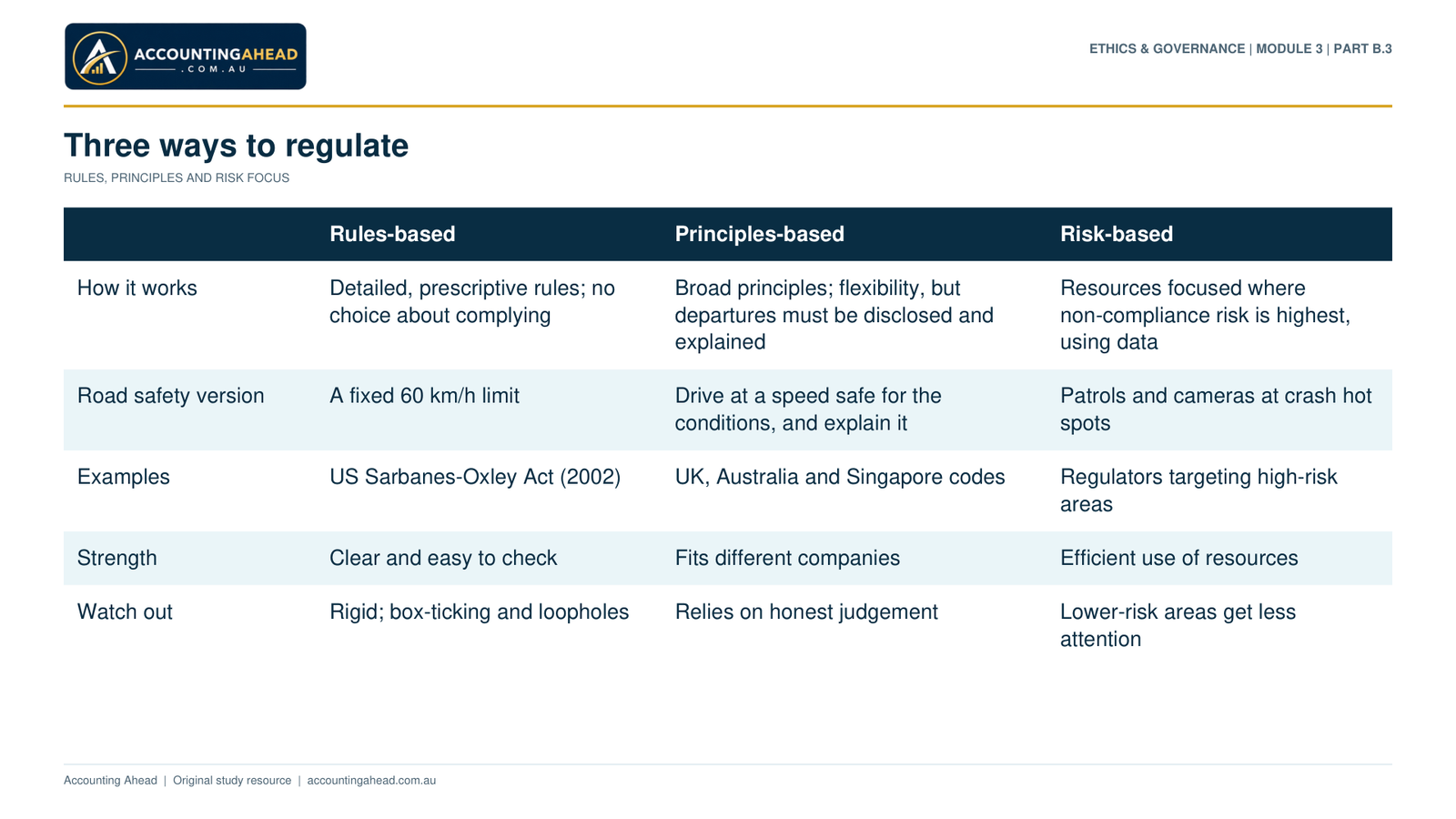
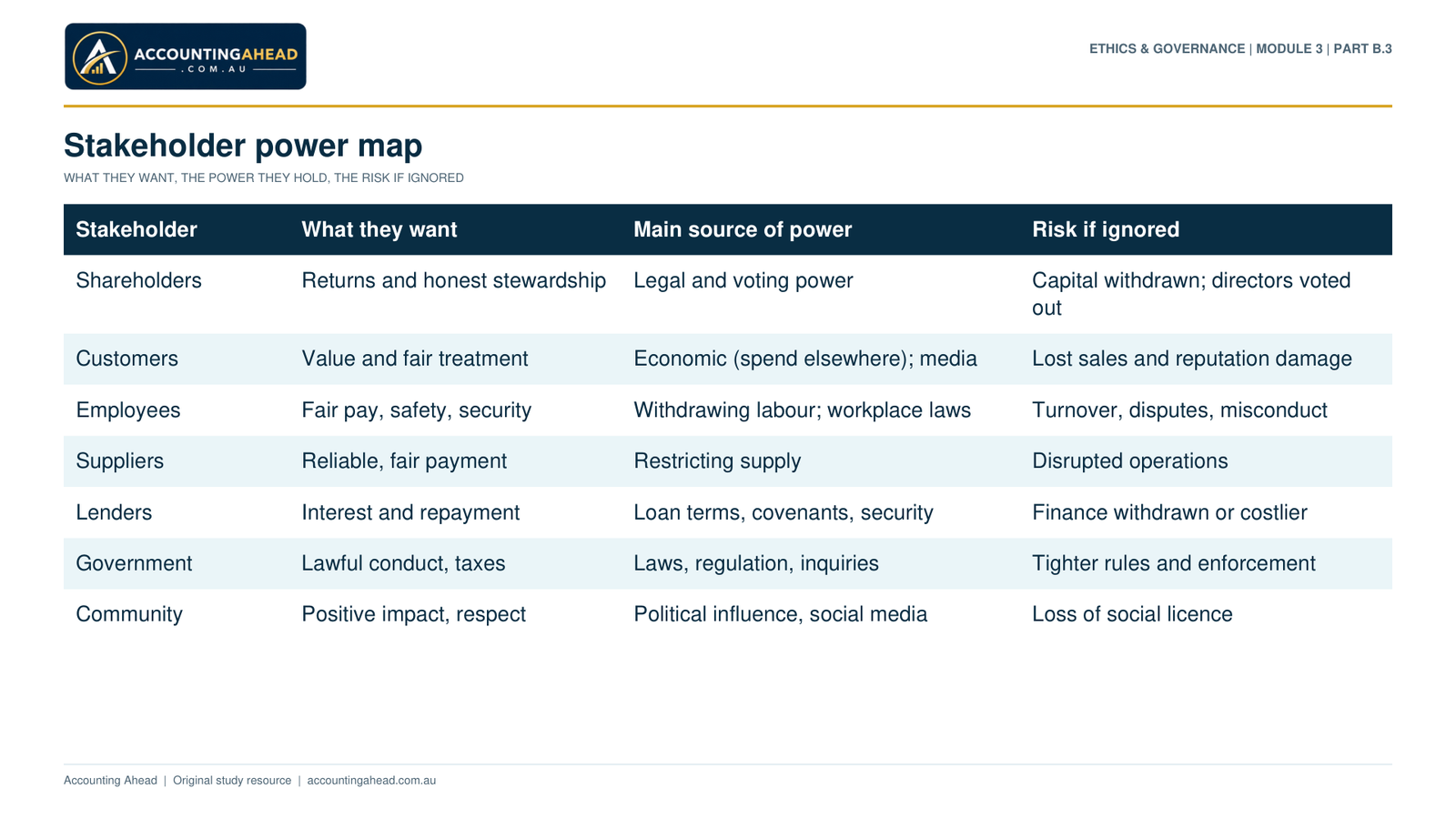
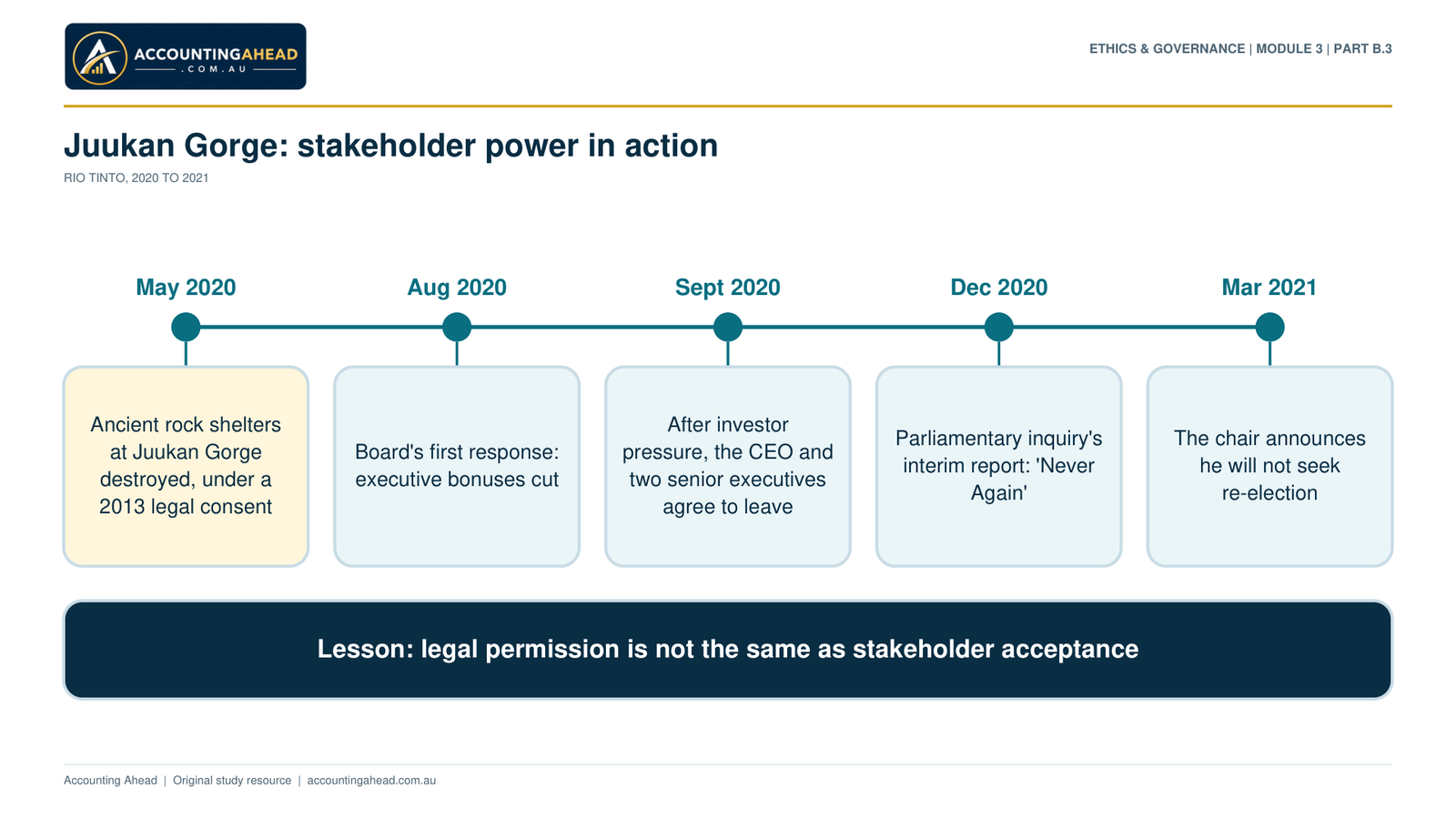
Part B.3 · Auditors, regulators and stakeholders
Part C.1 · International approaches to governance
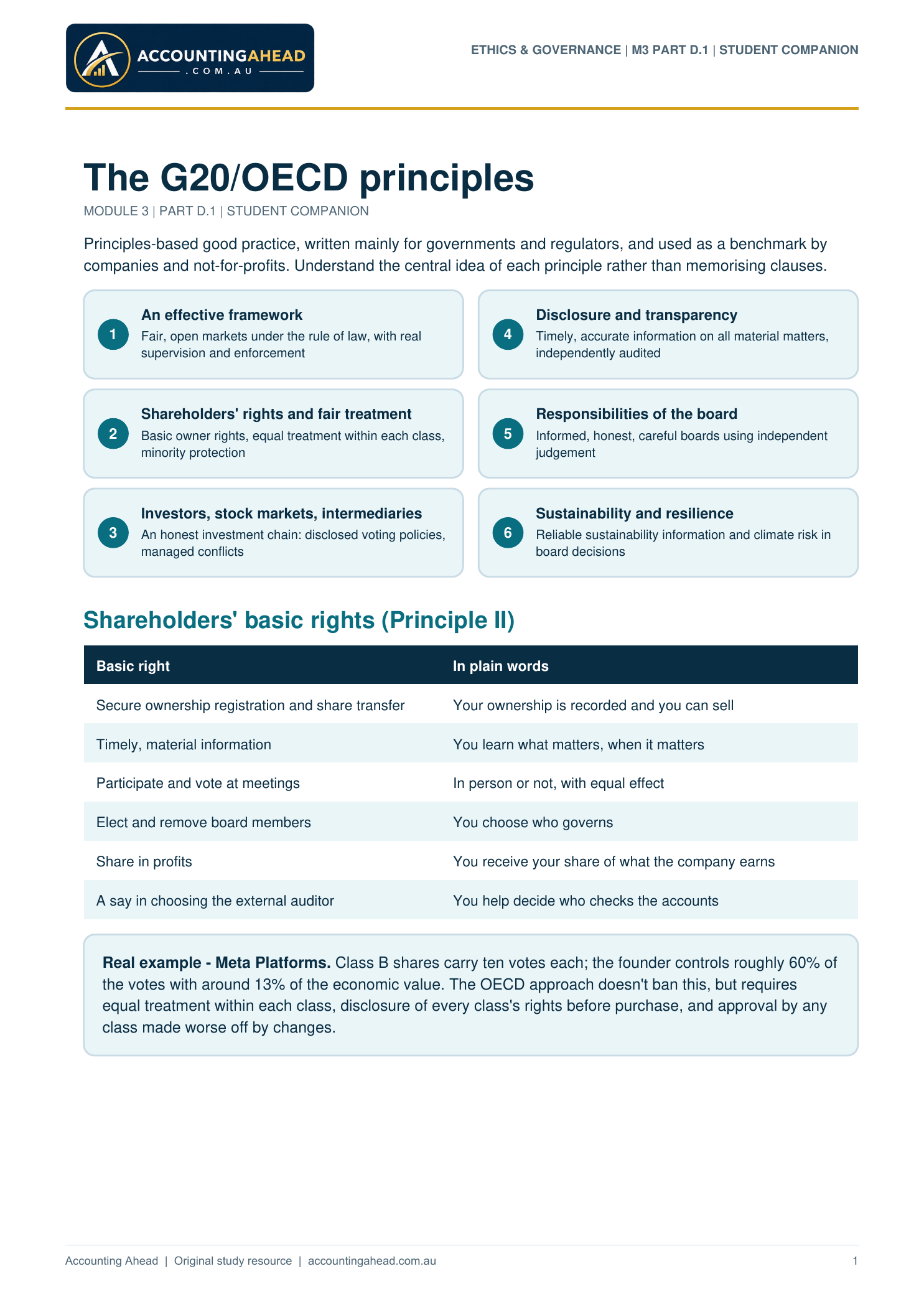
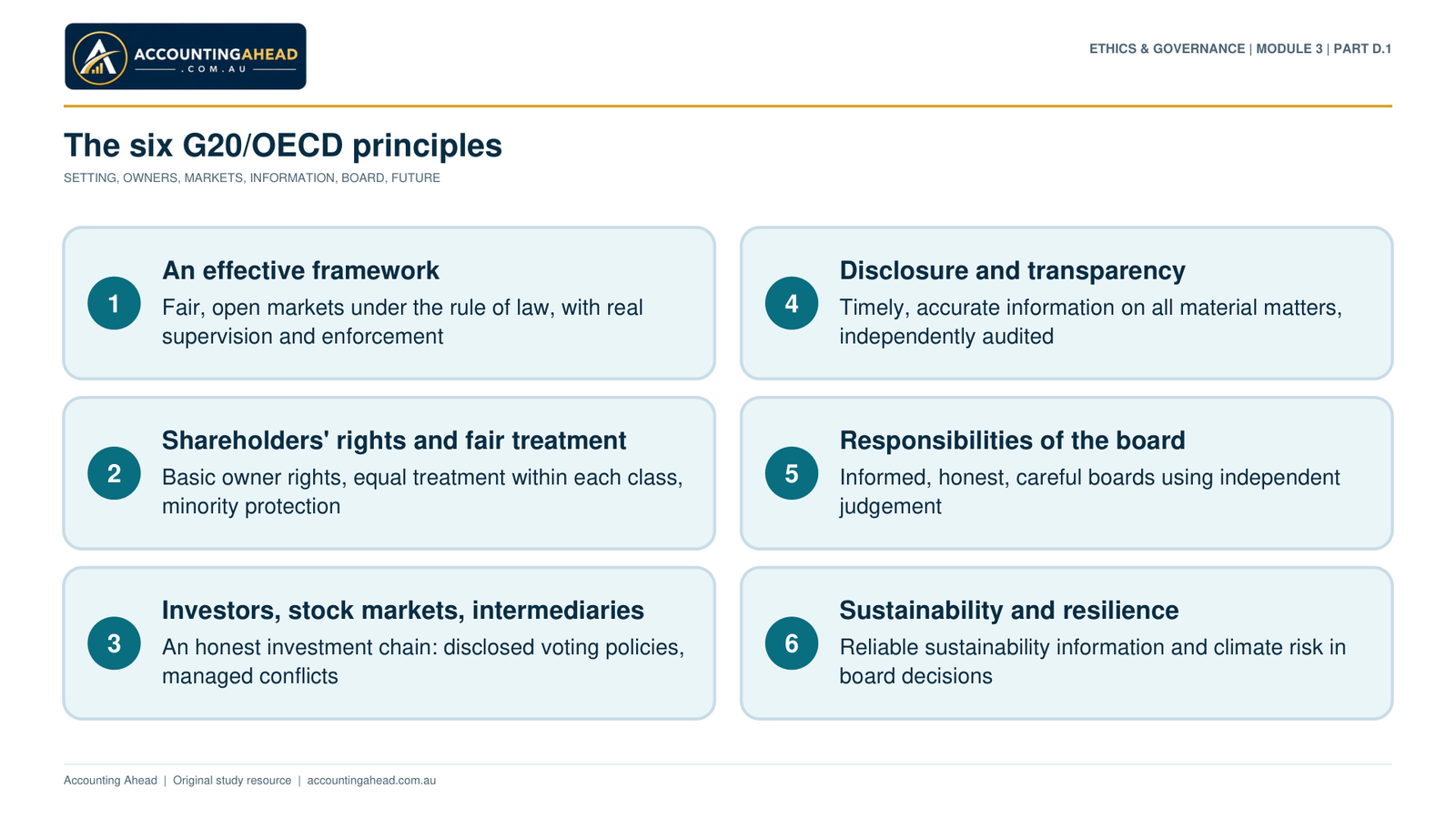
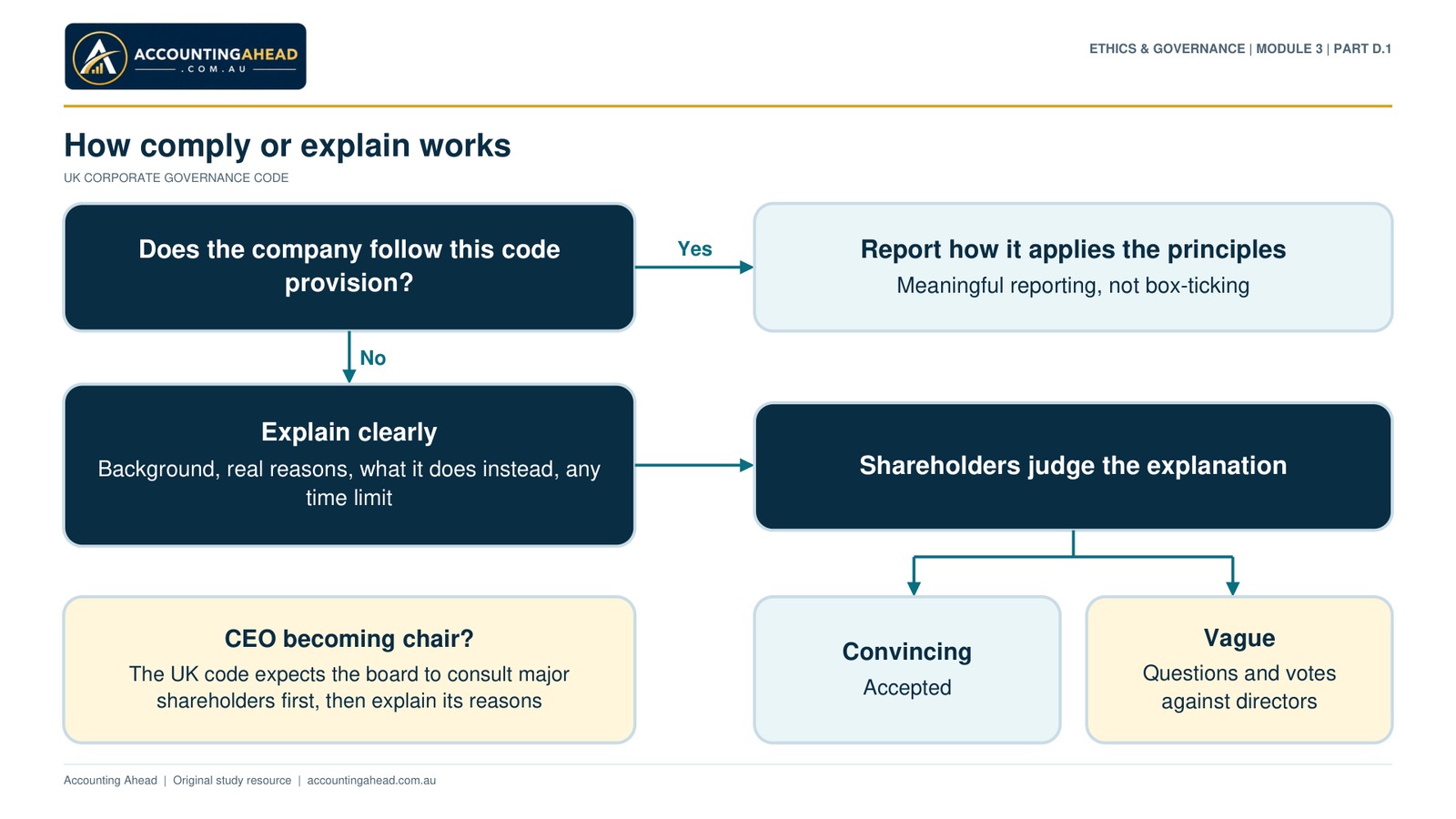
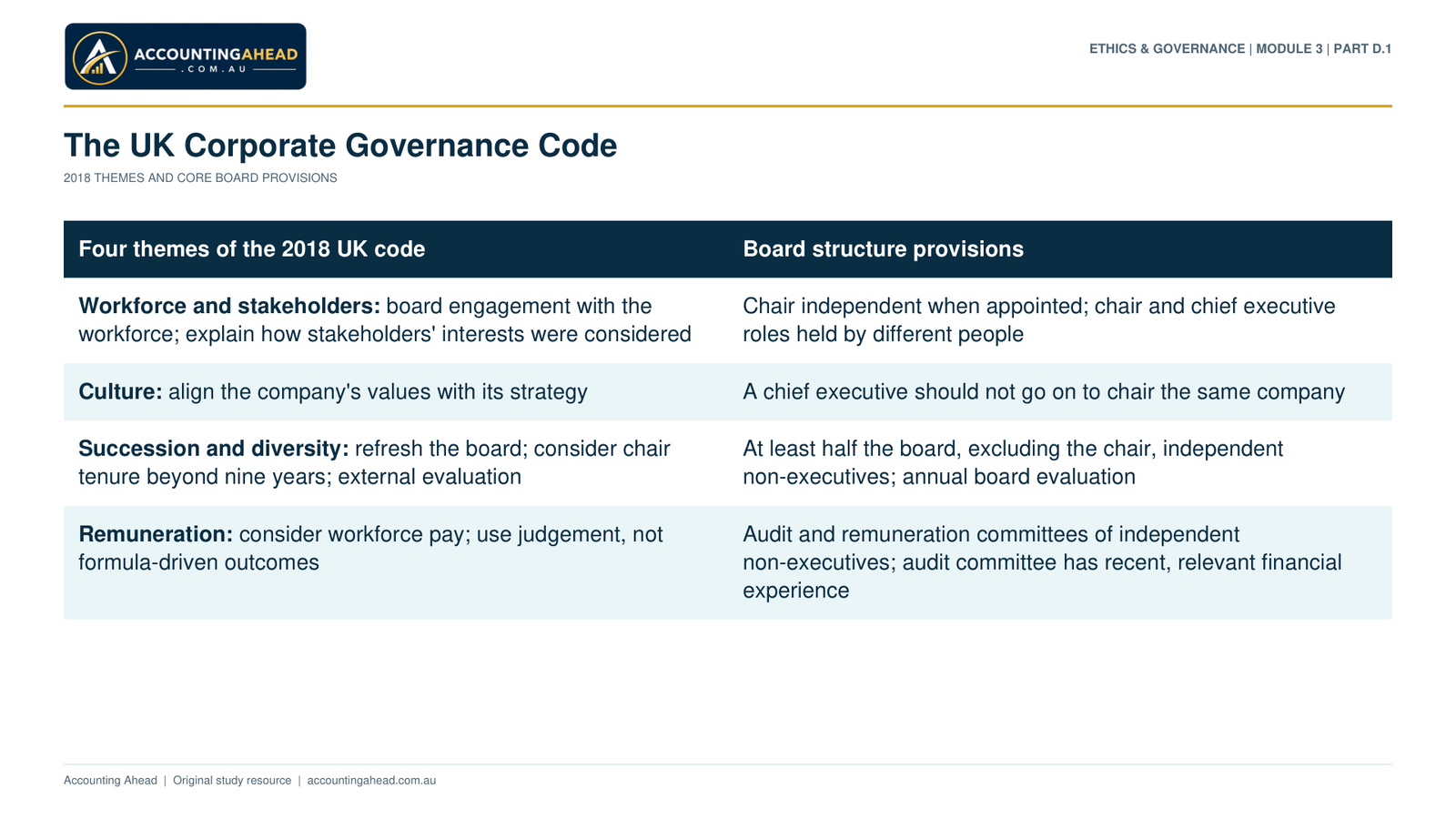
Part D.1 · OECD principles and the UK Code
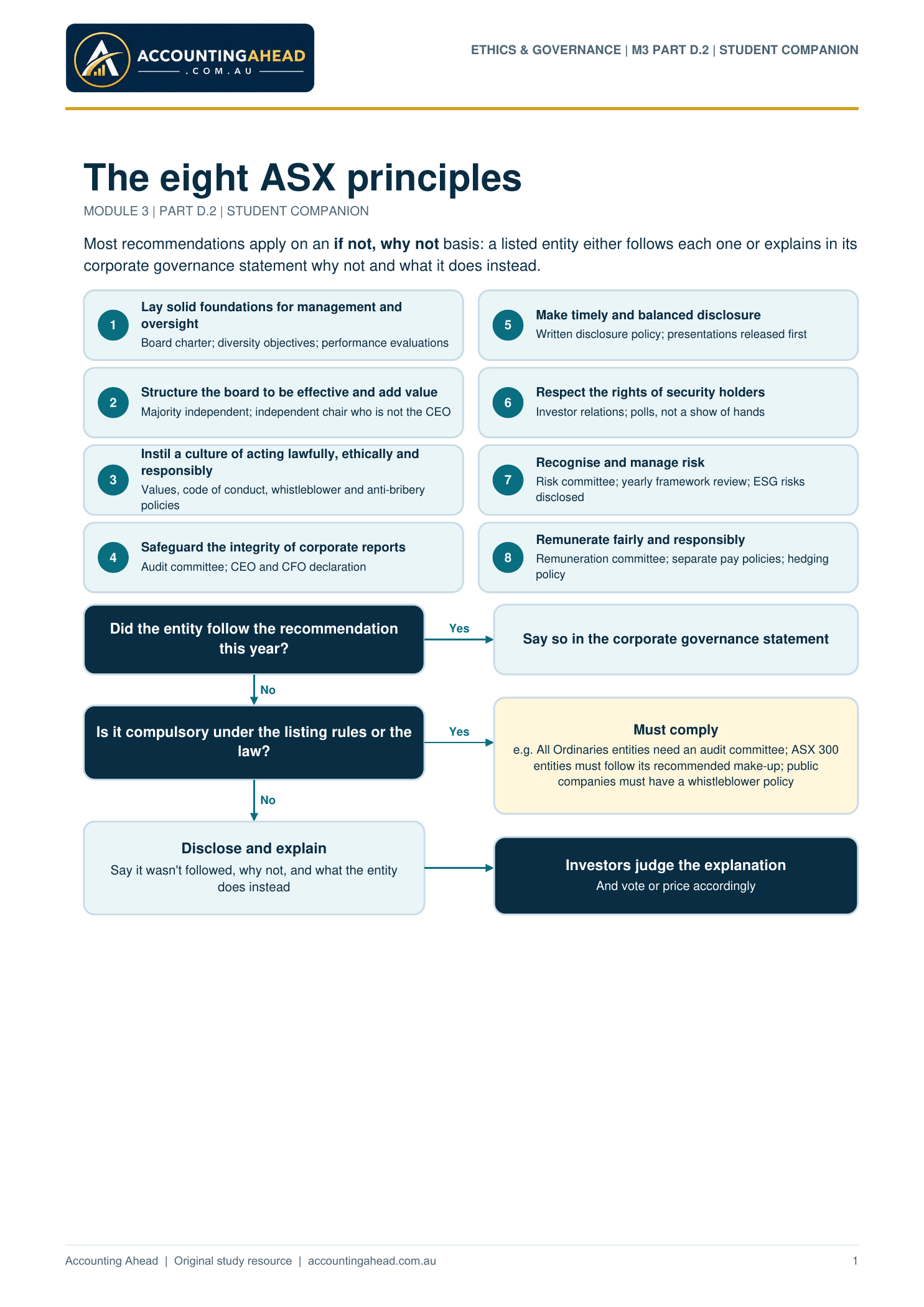
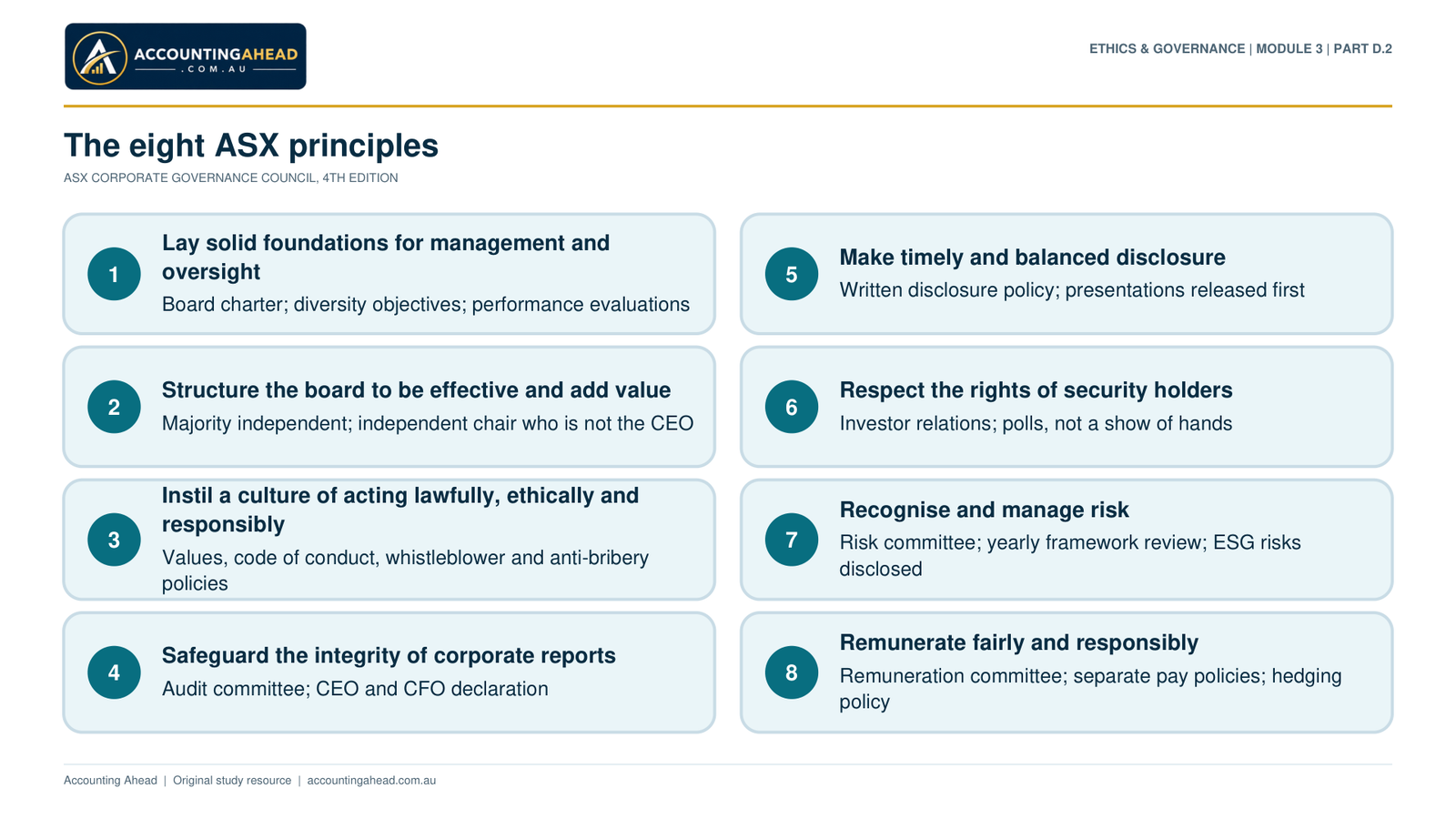
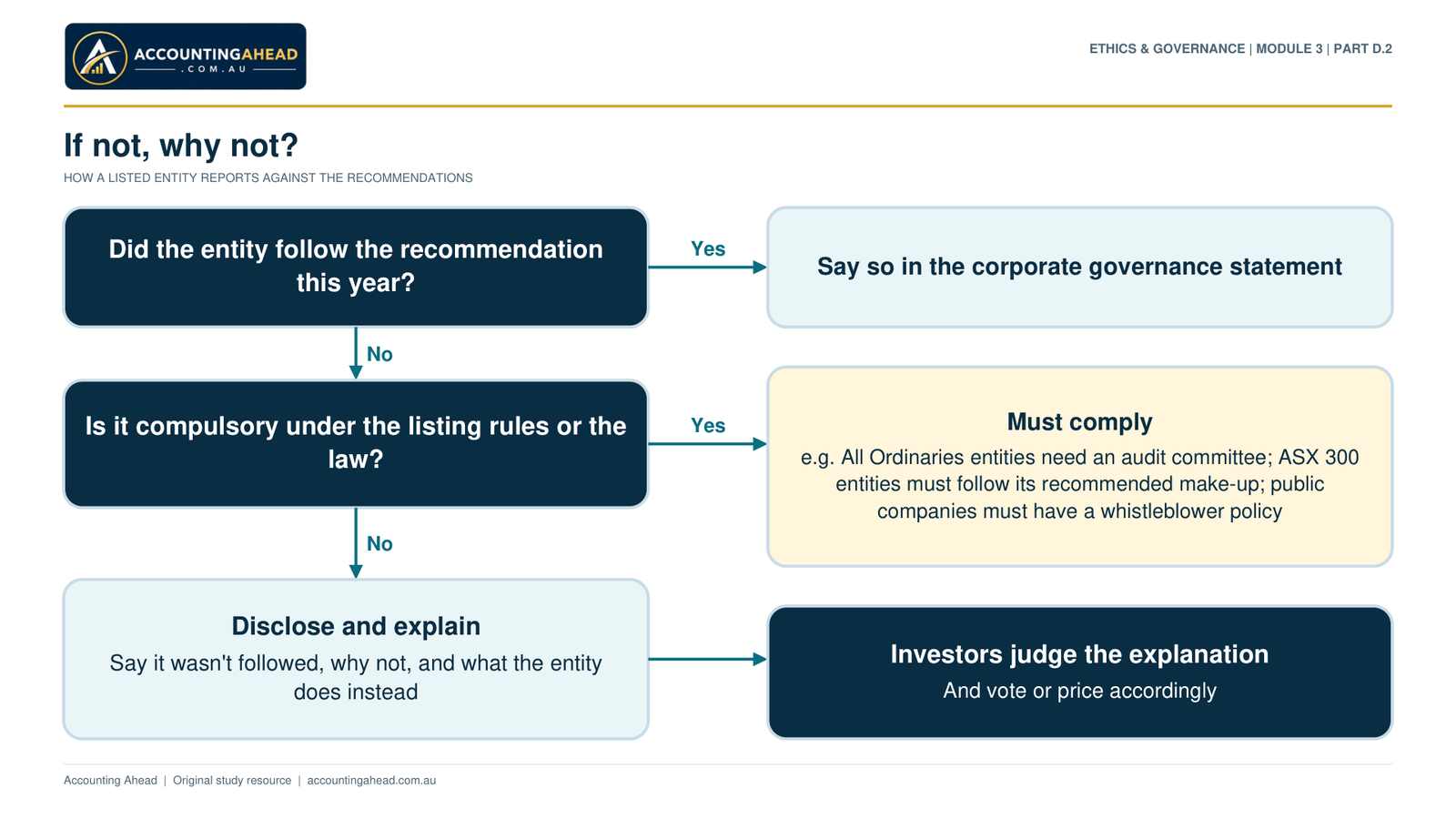
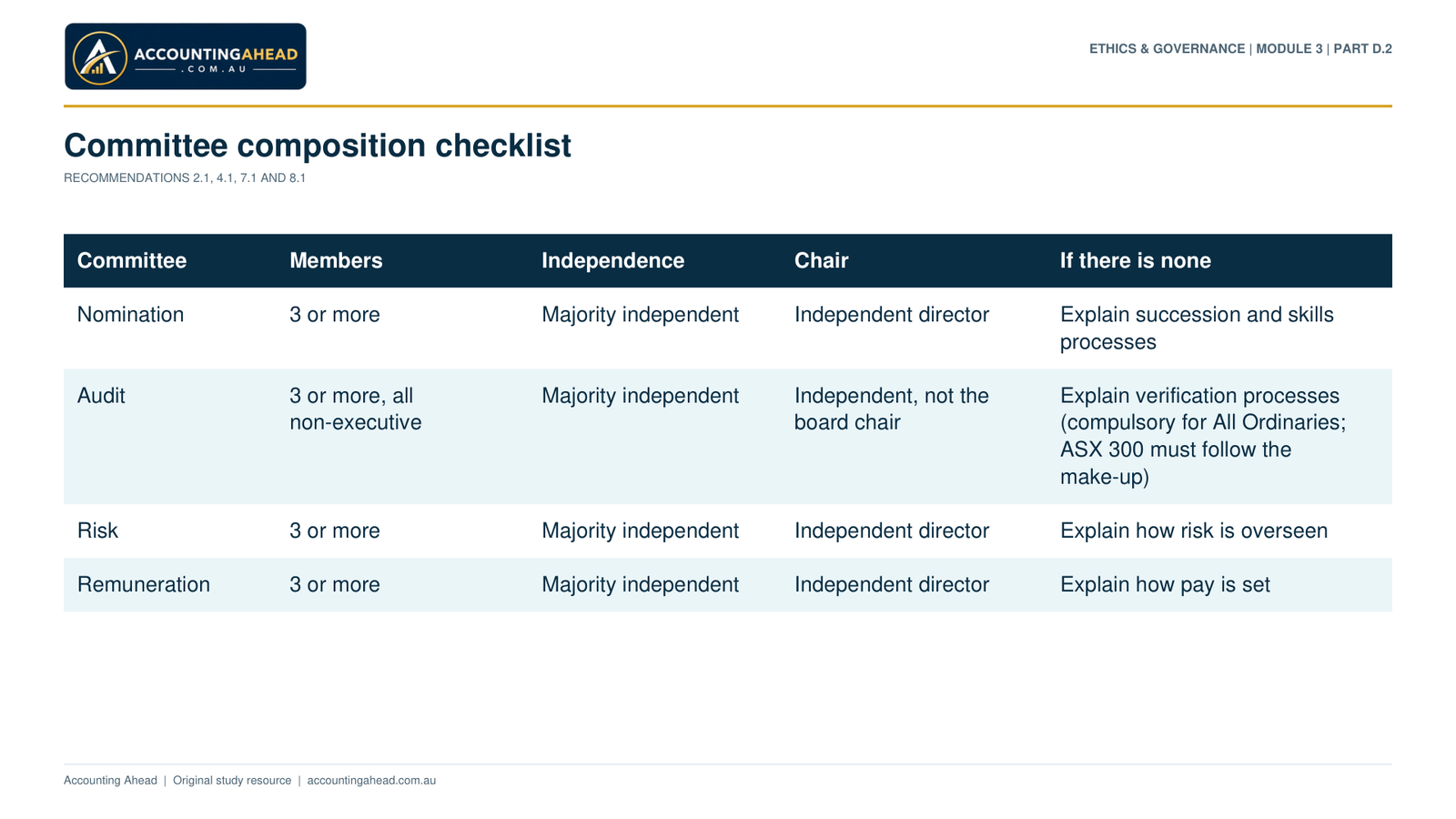
Part D.2 · ASX governance principles in practice
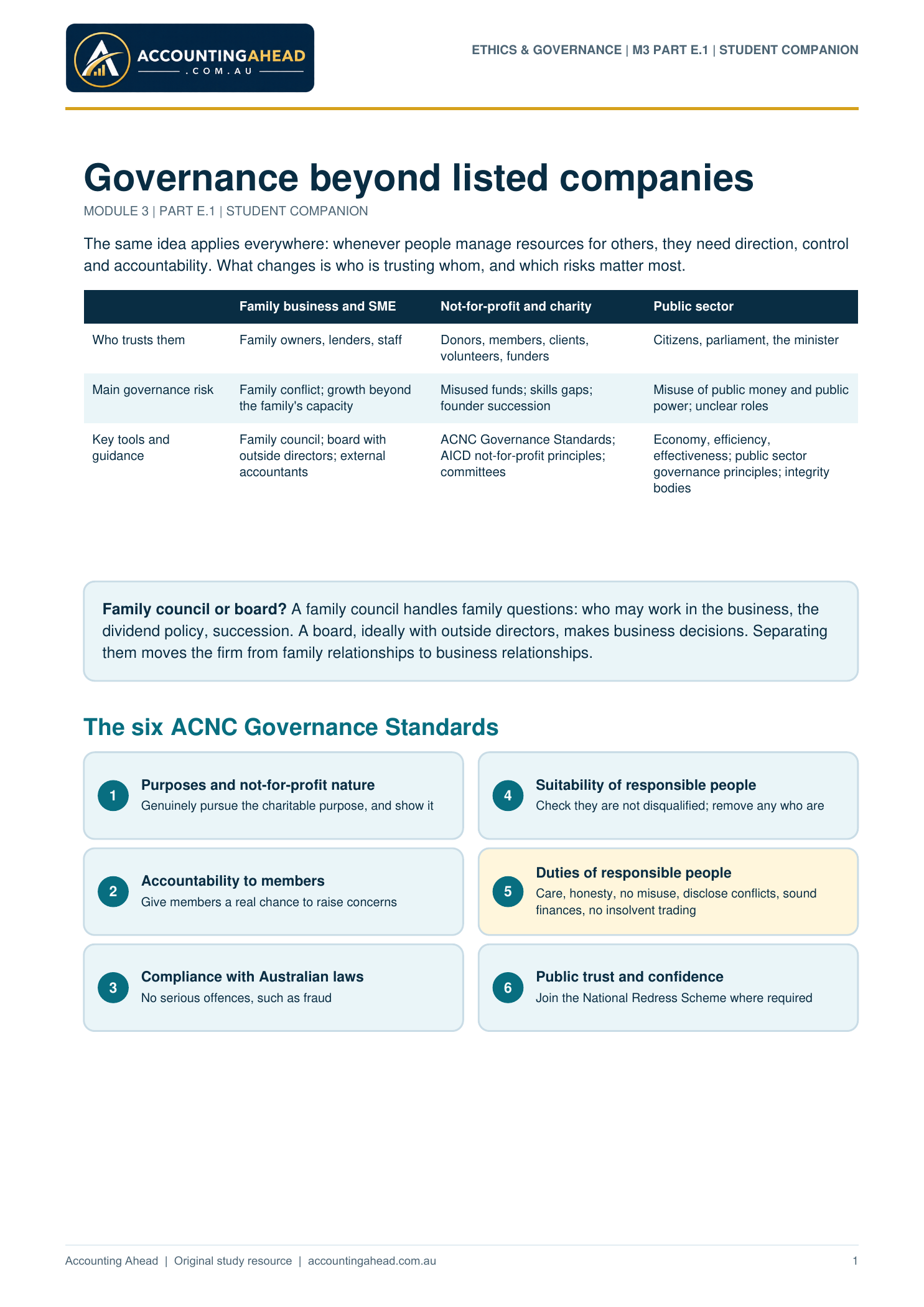
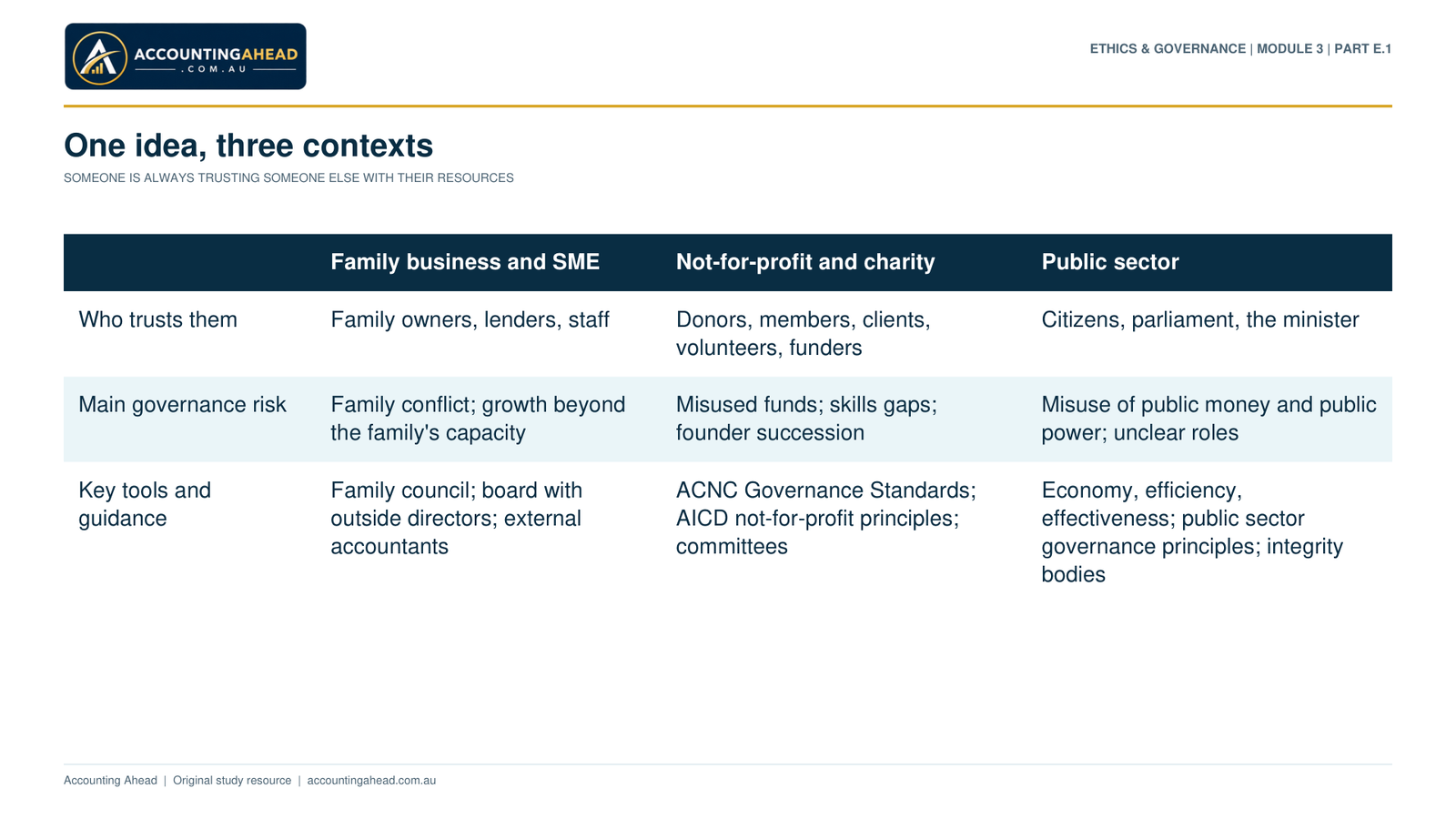
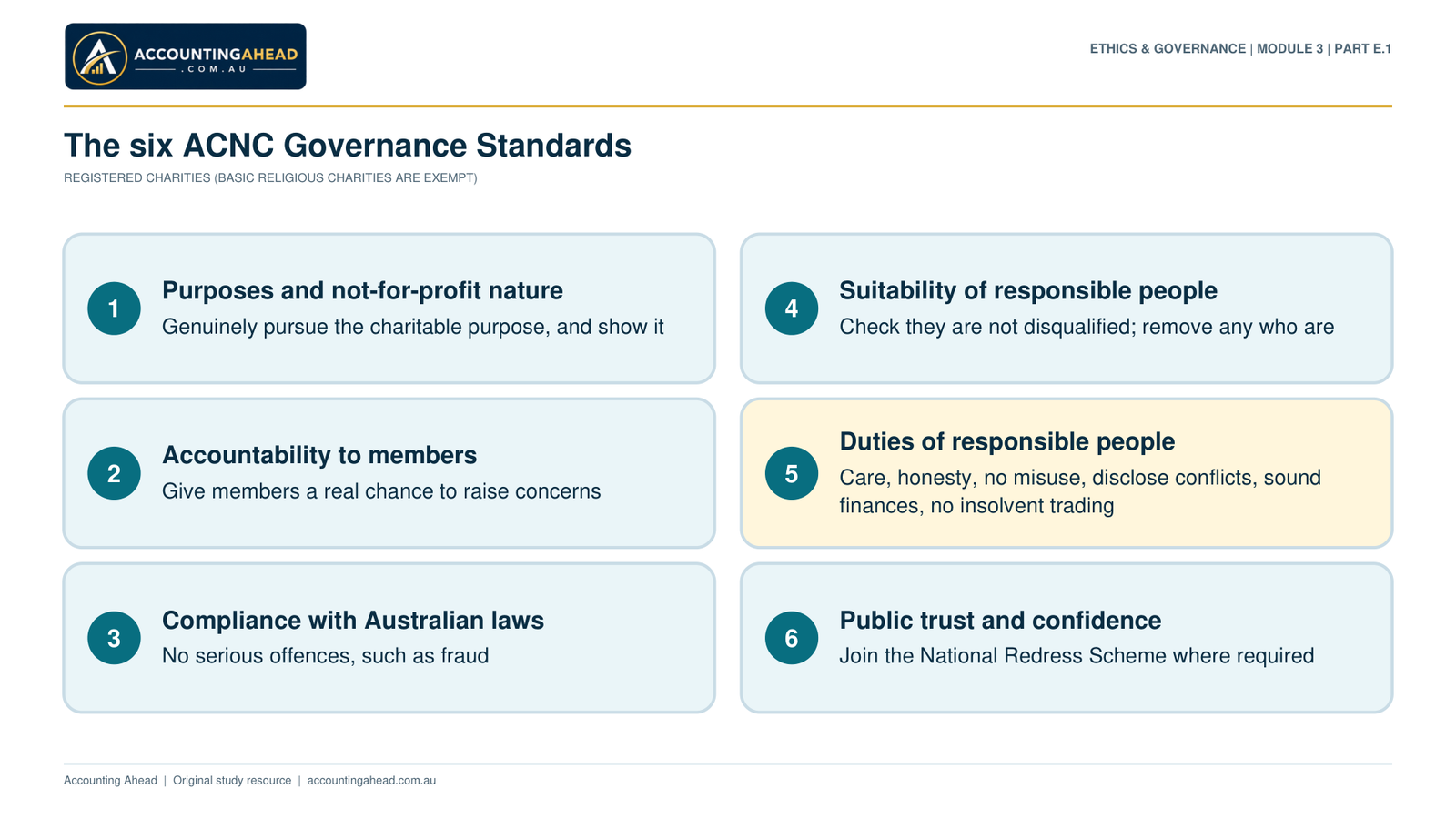
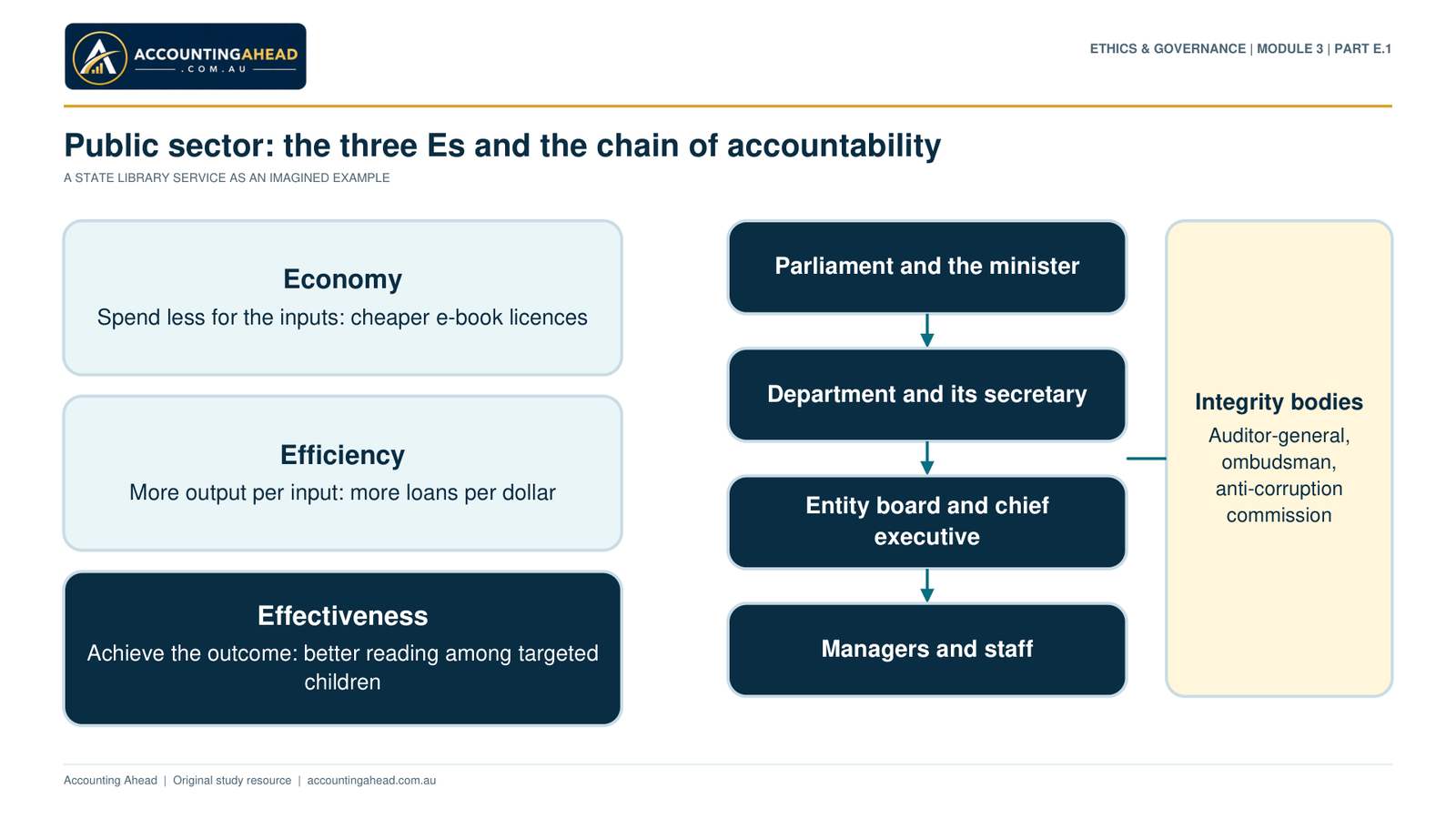
Part E.1 · Governance beyond listed companies
Module 4 · Governance in practice
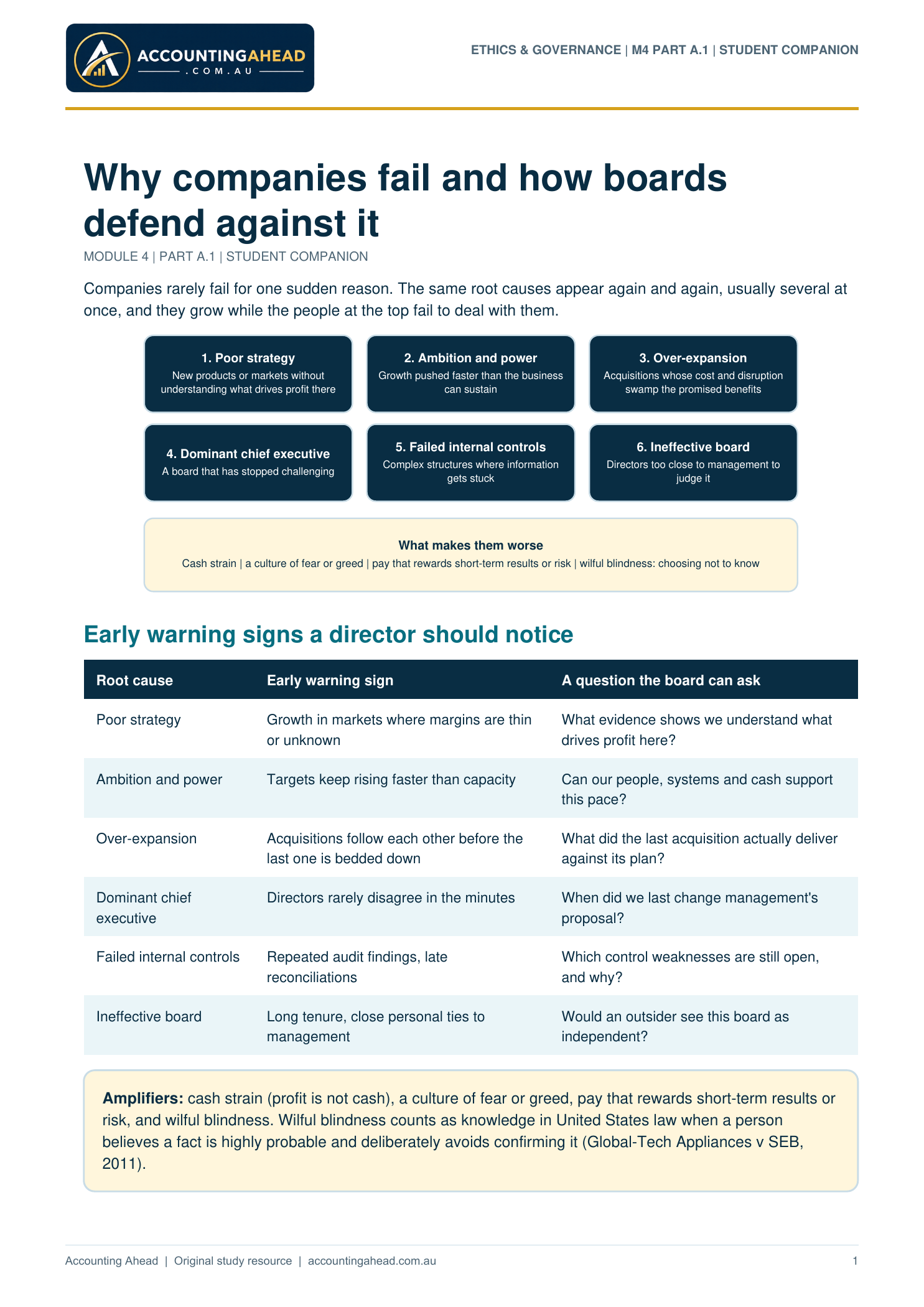
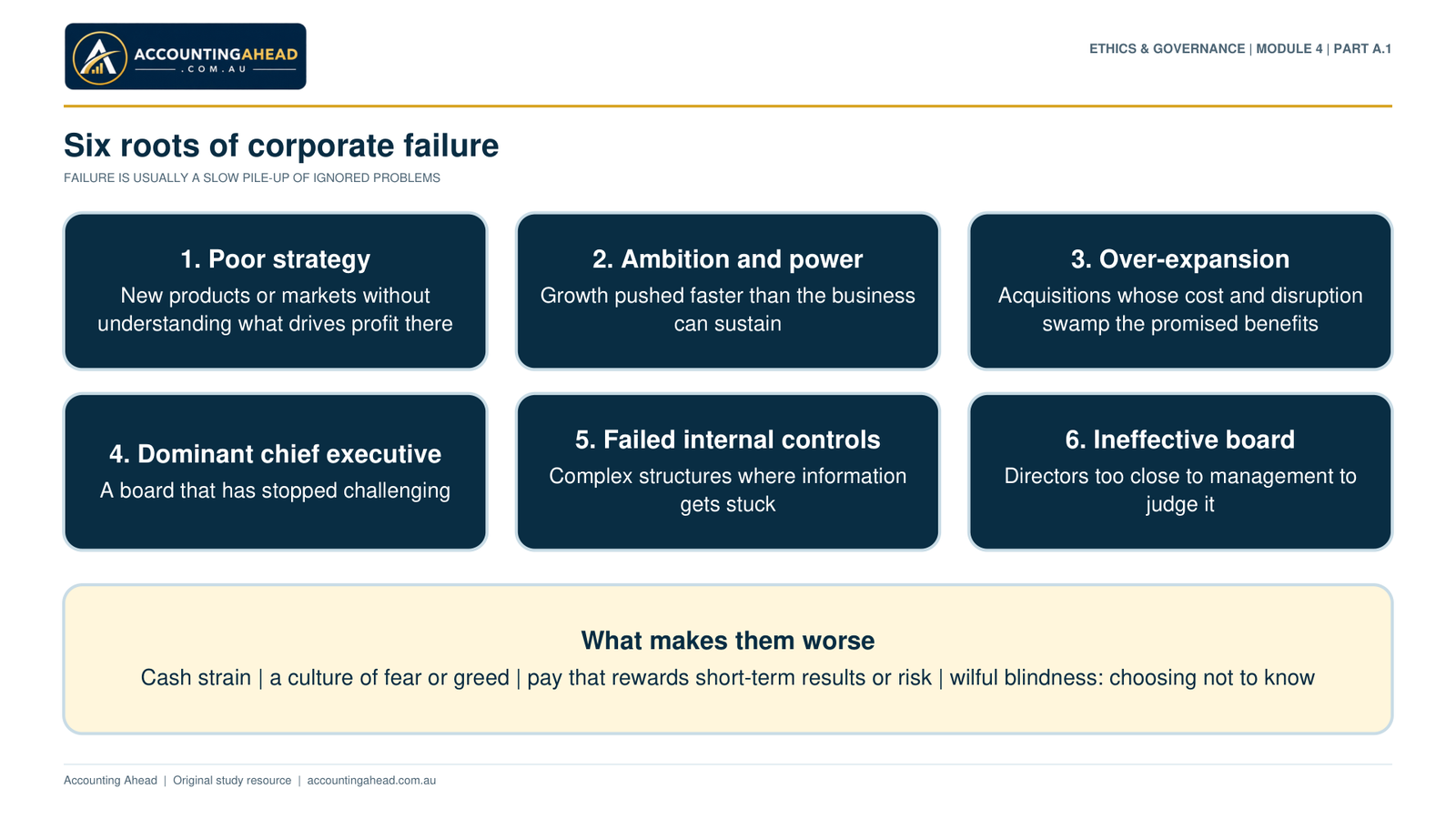
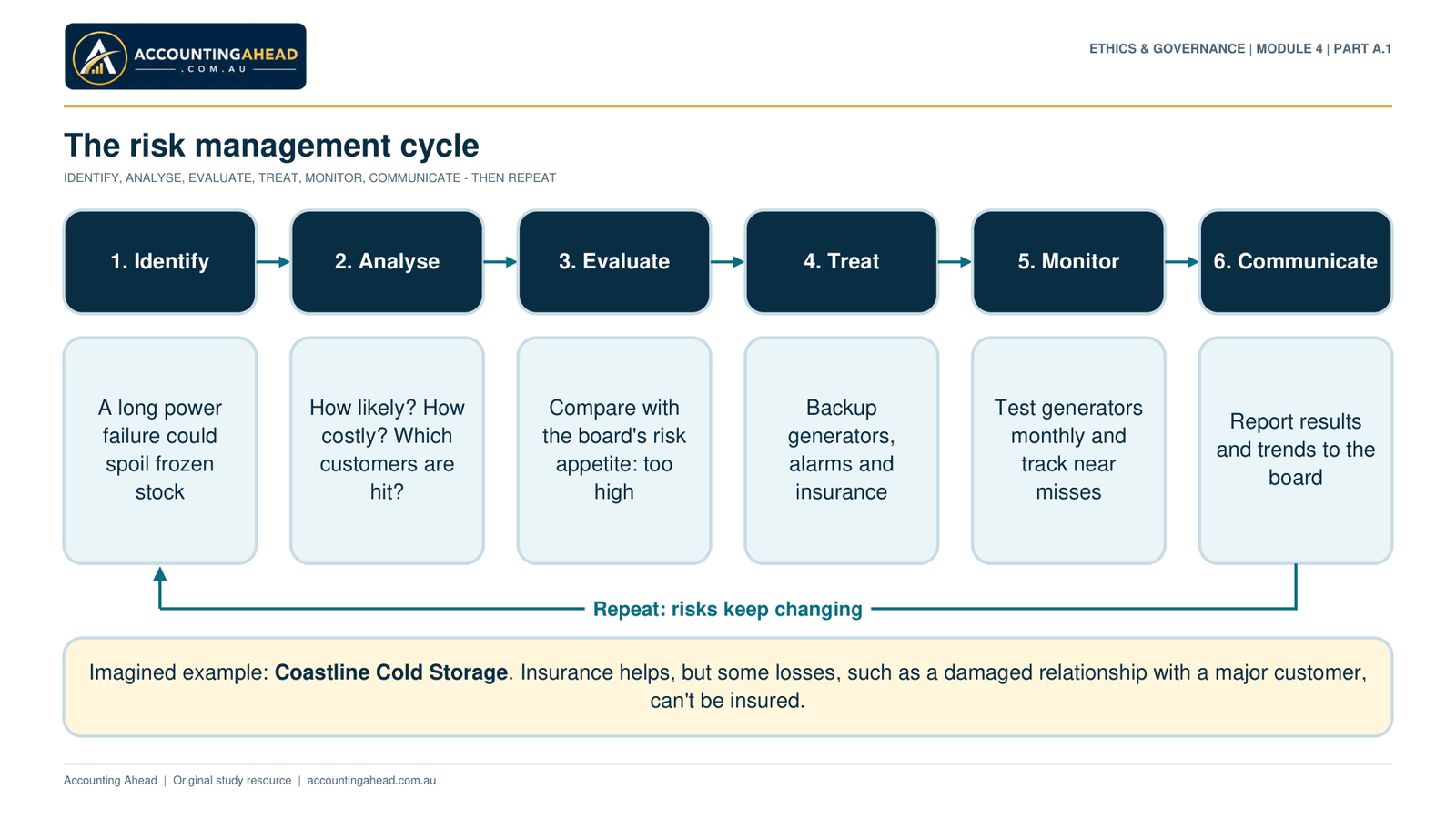
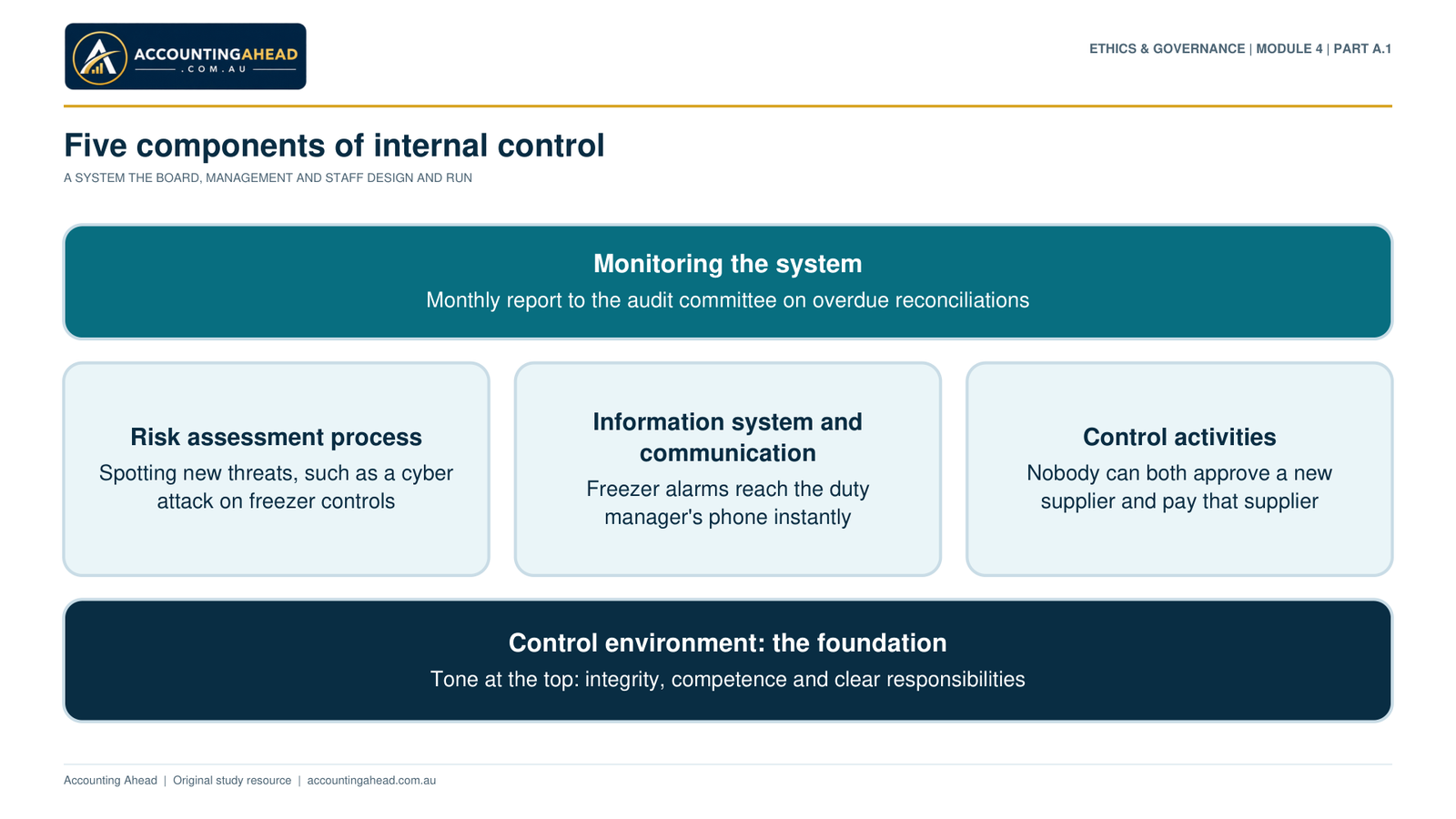
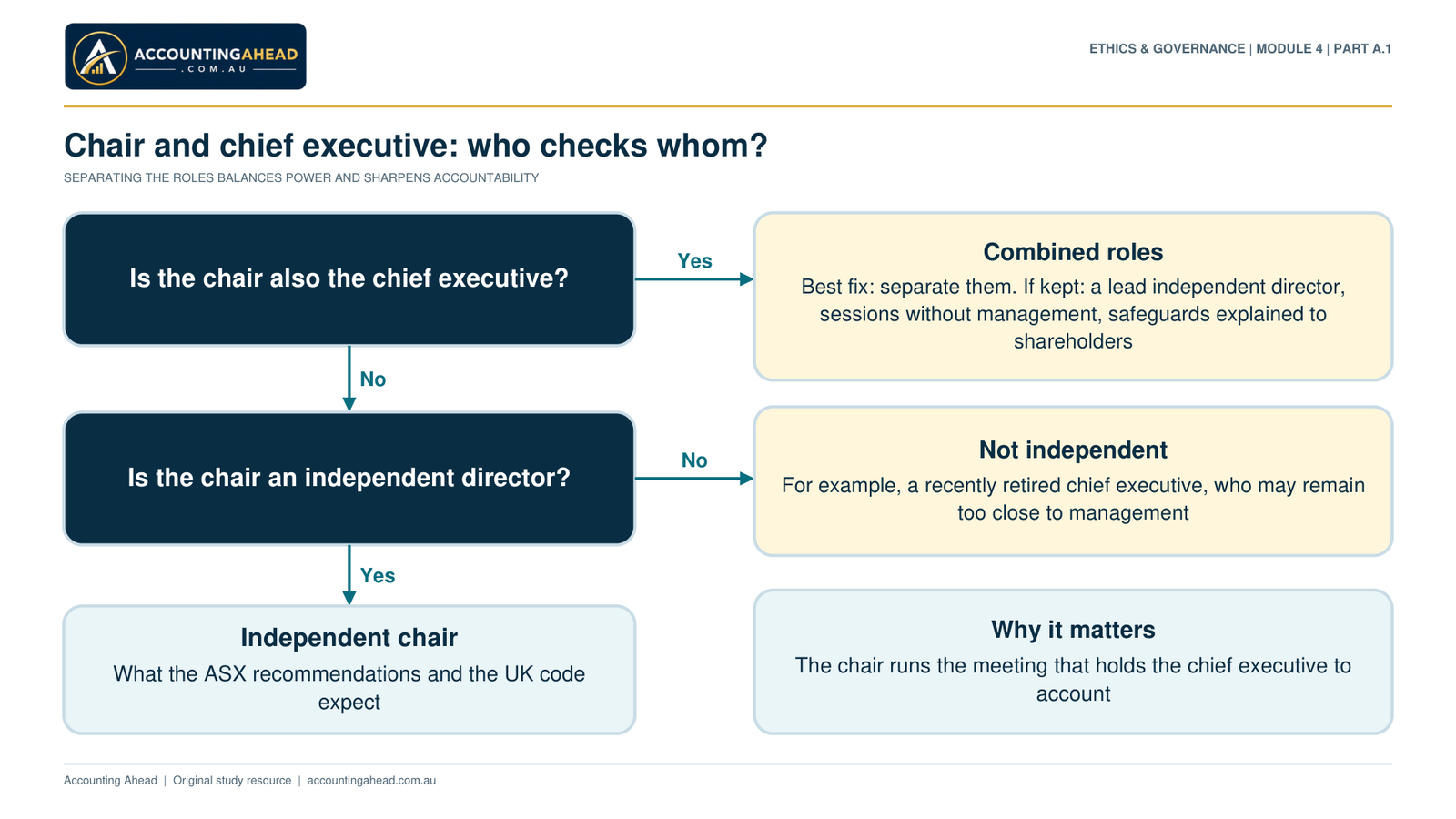
Part A.1 · Why companies fail and how boards respond
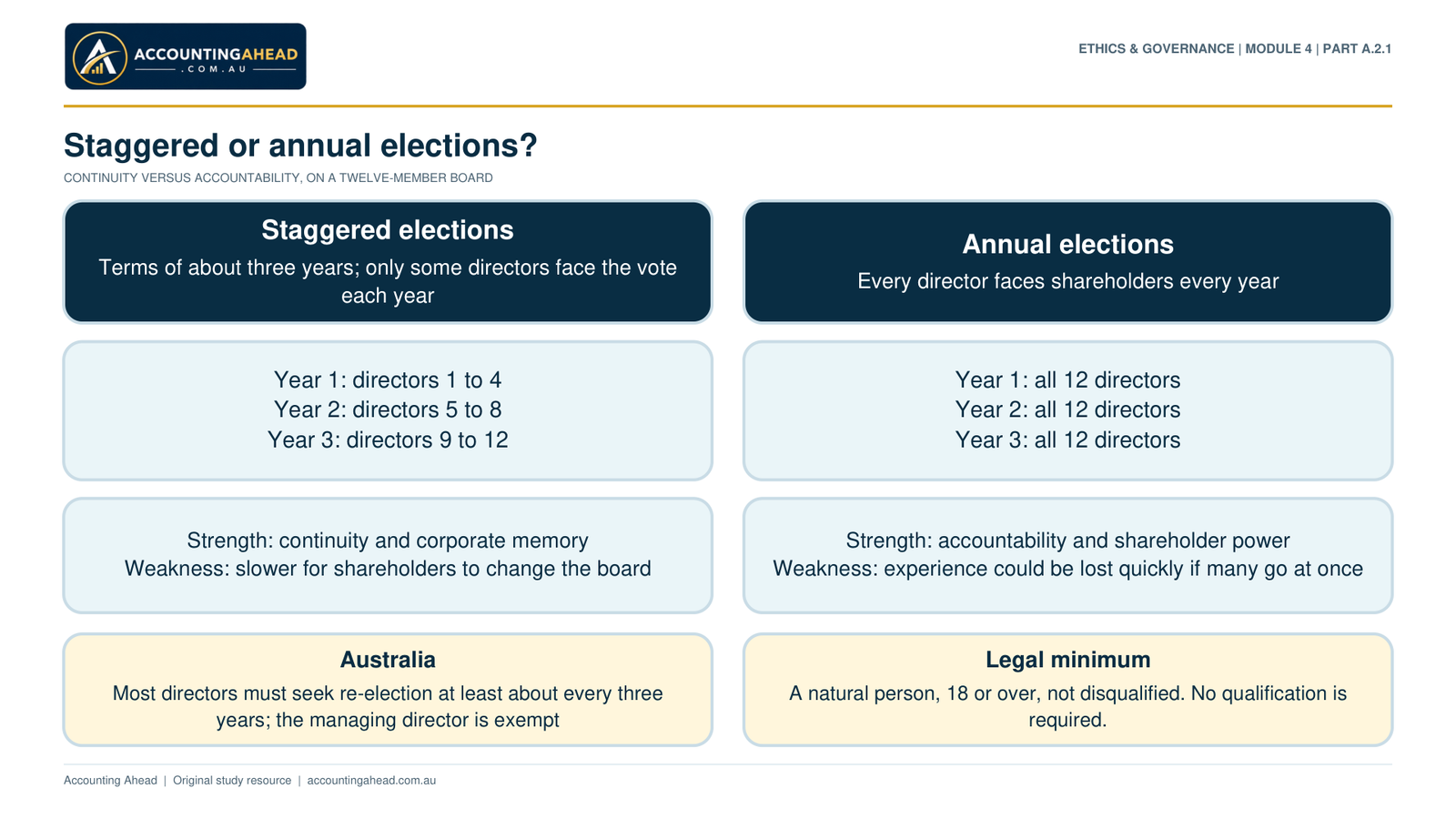
Part A.2.1 · Appointing and electing directors
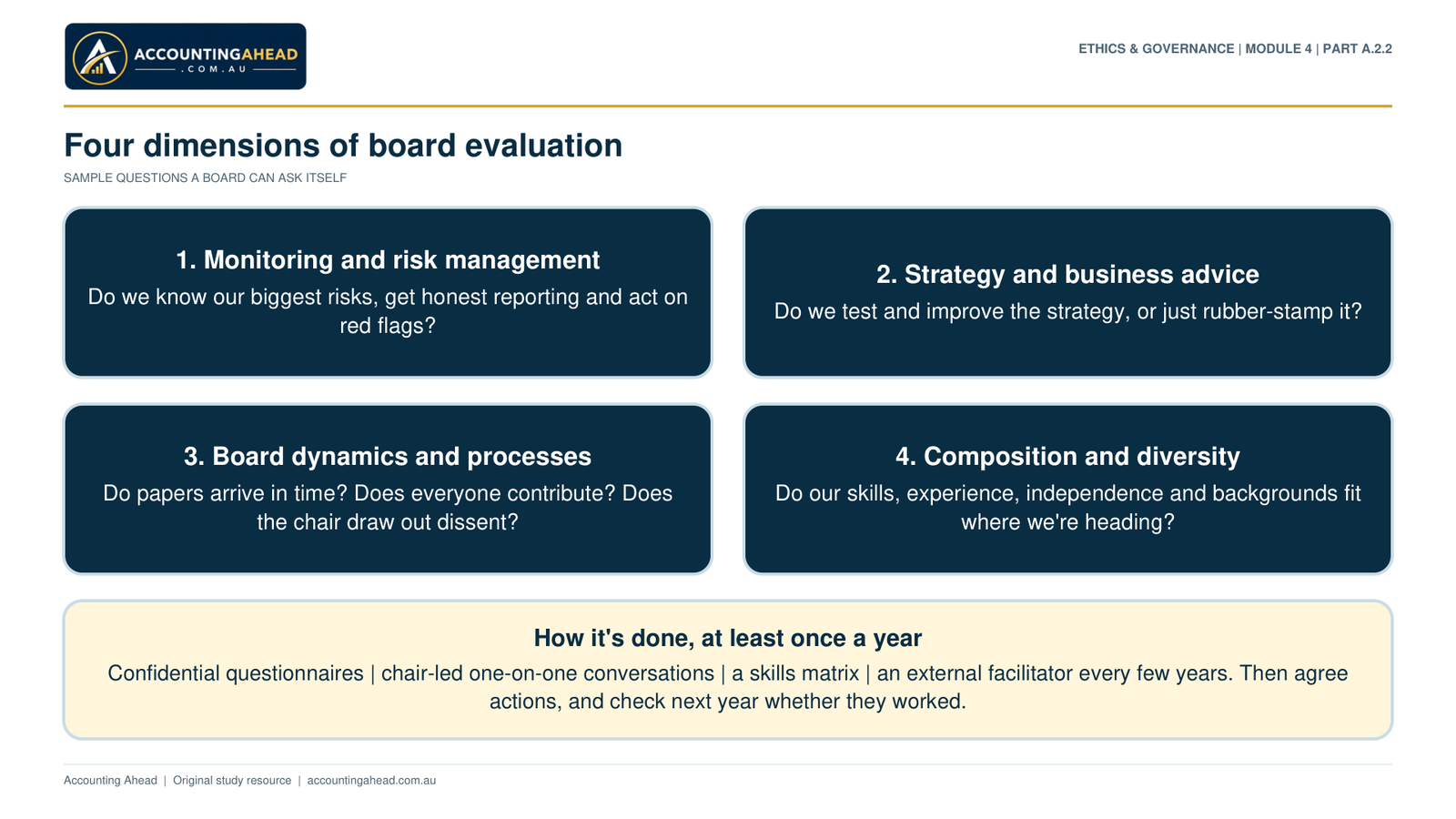
Part A.2.2 · Evaluating board performance
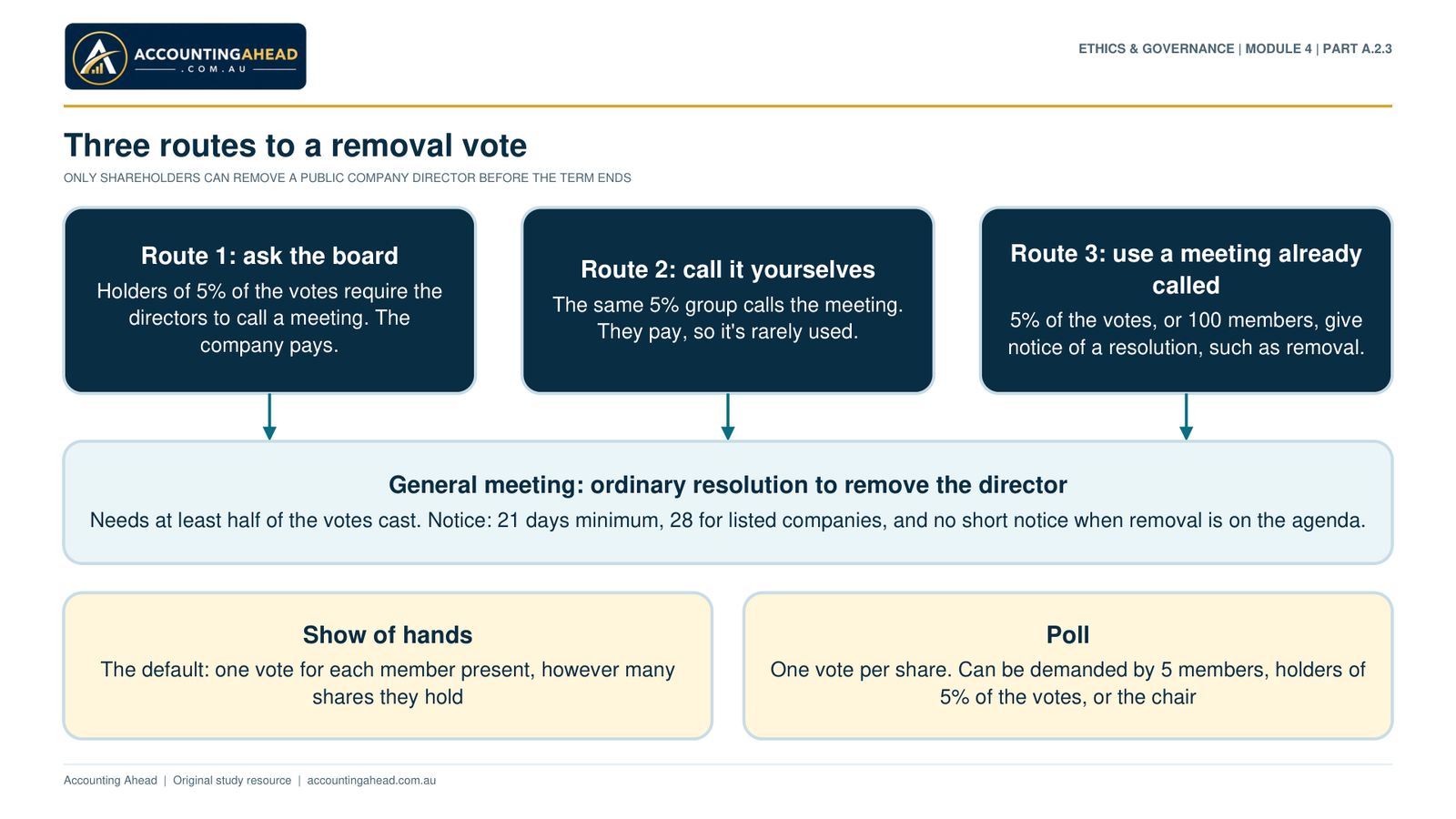
Part A.2.3 · Director resignation, removal and voting
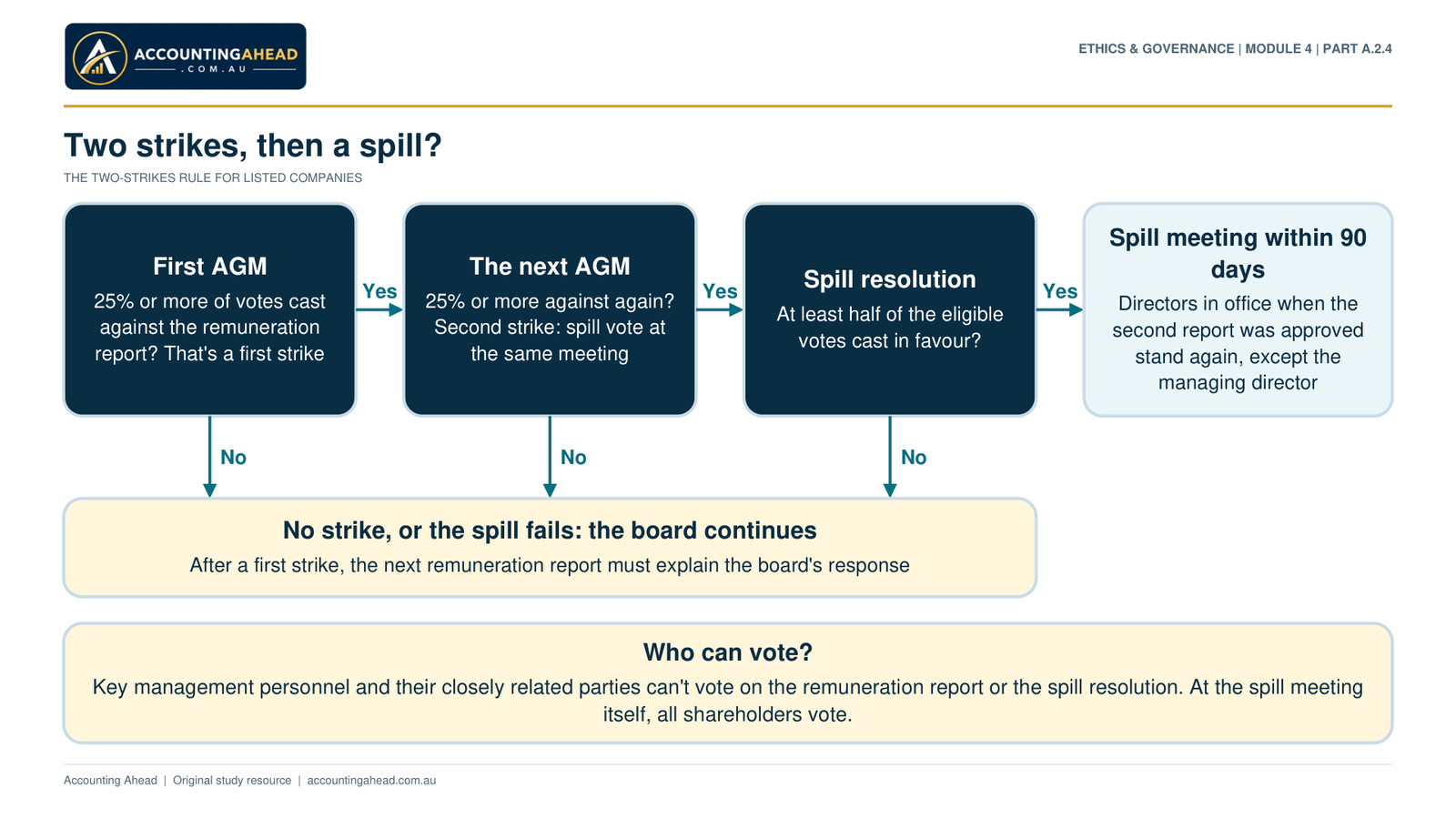
Part A.2.4 · The two-strikes rule and board spills
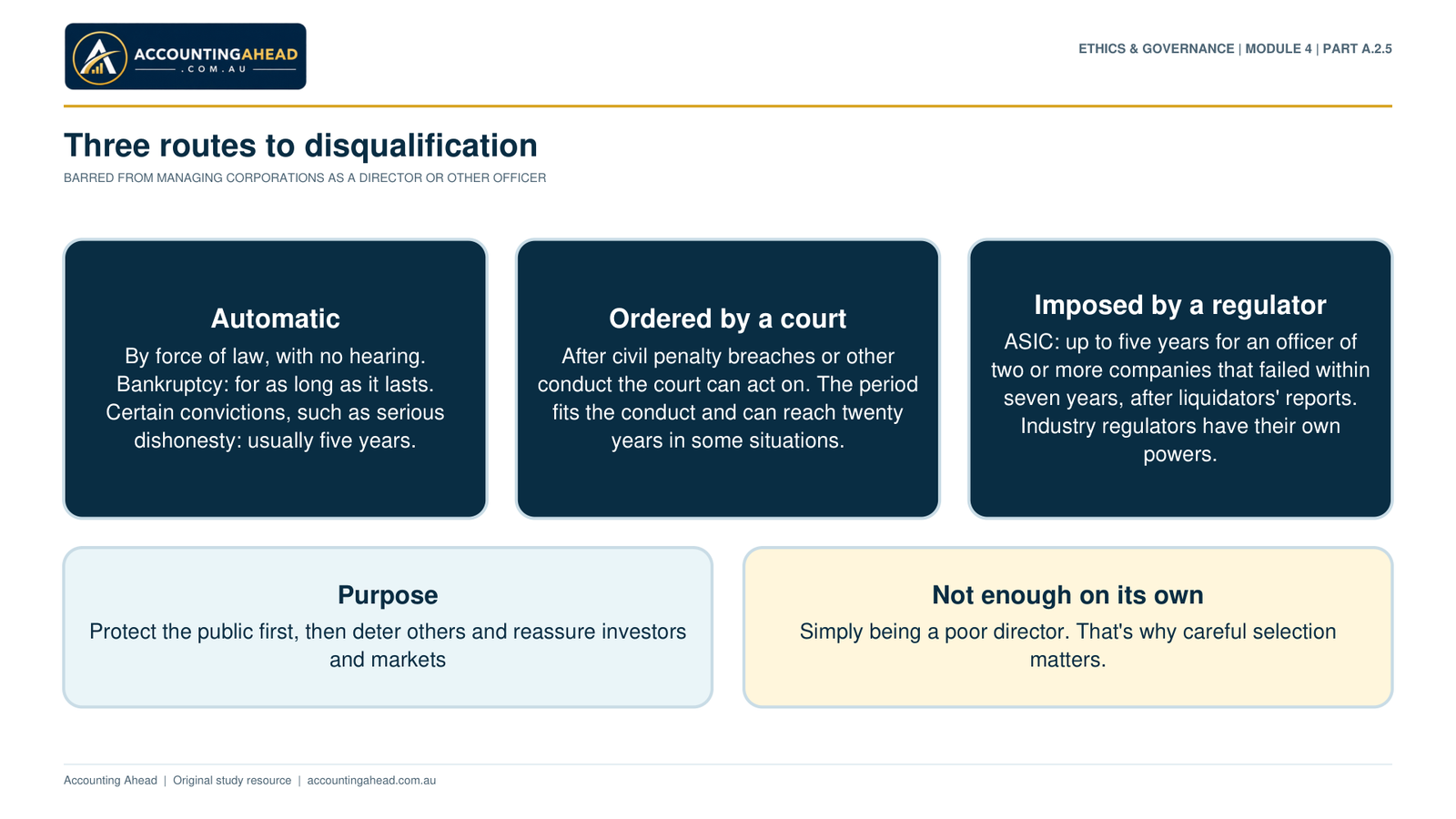
Part A.2.5 · Director disqualification
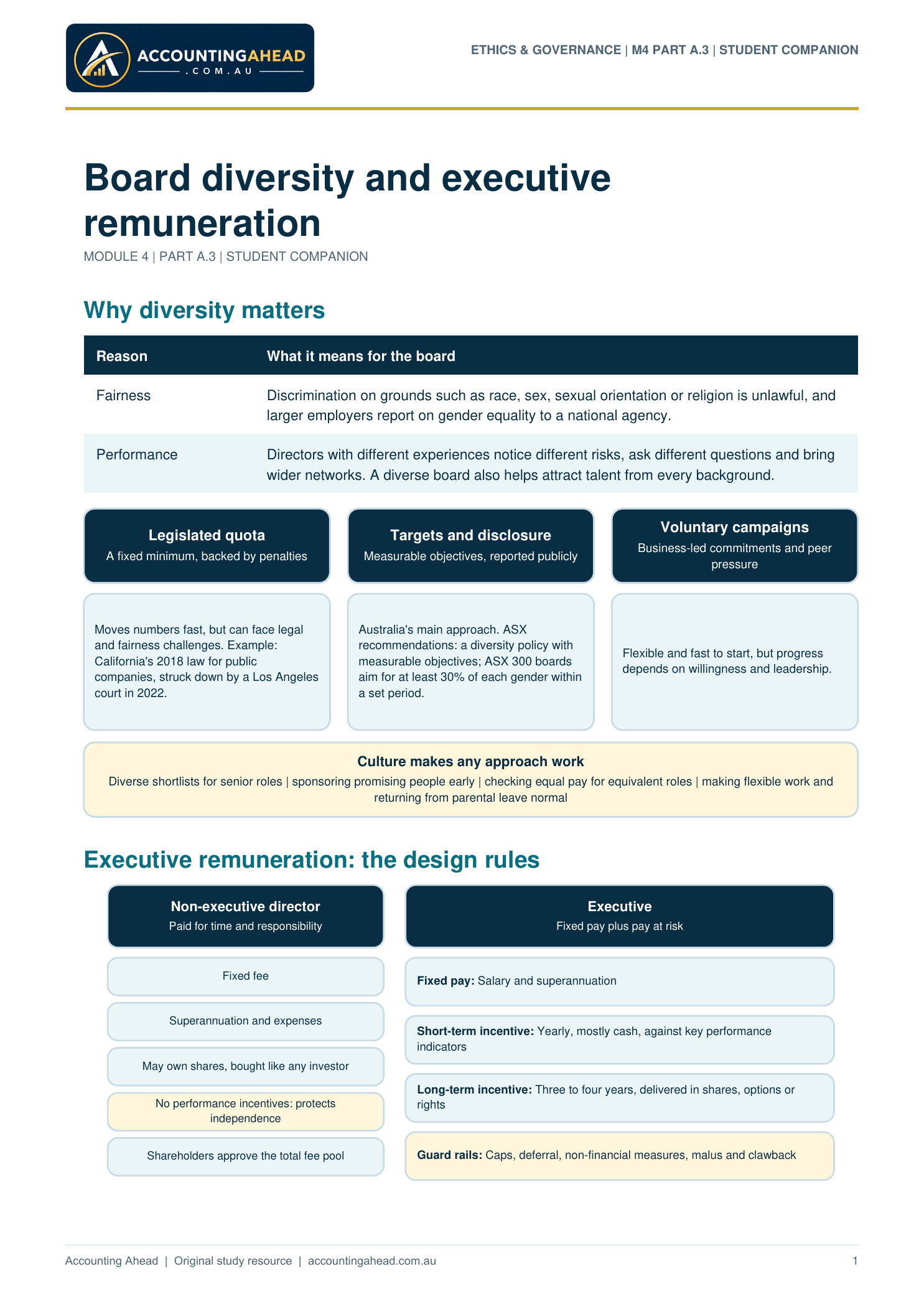
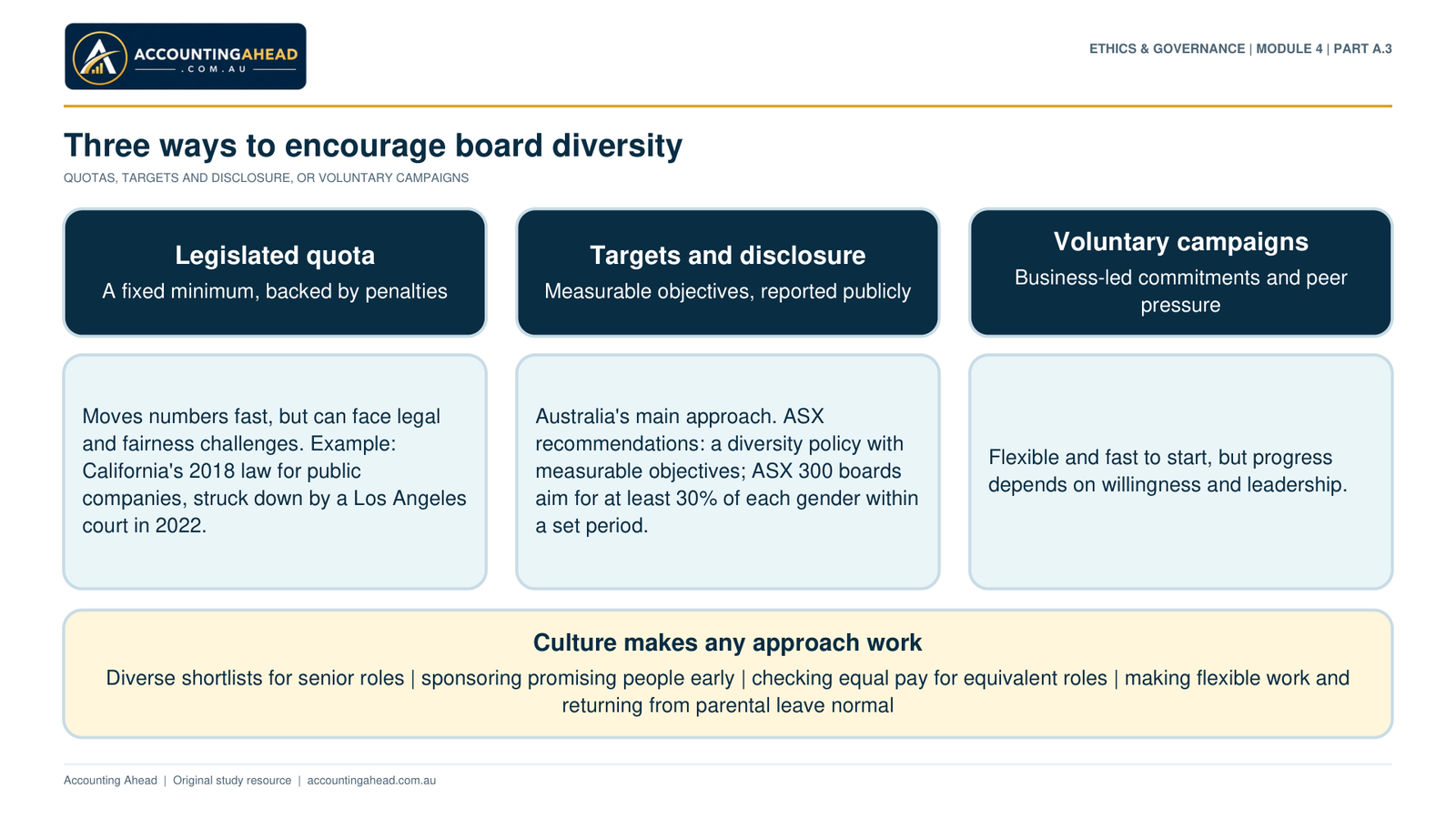
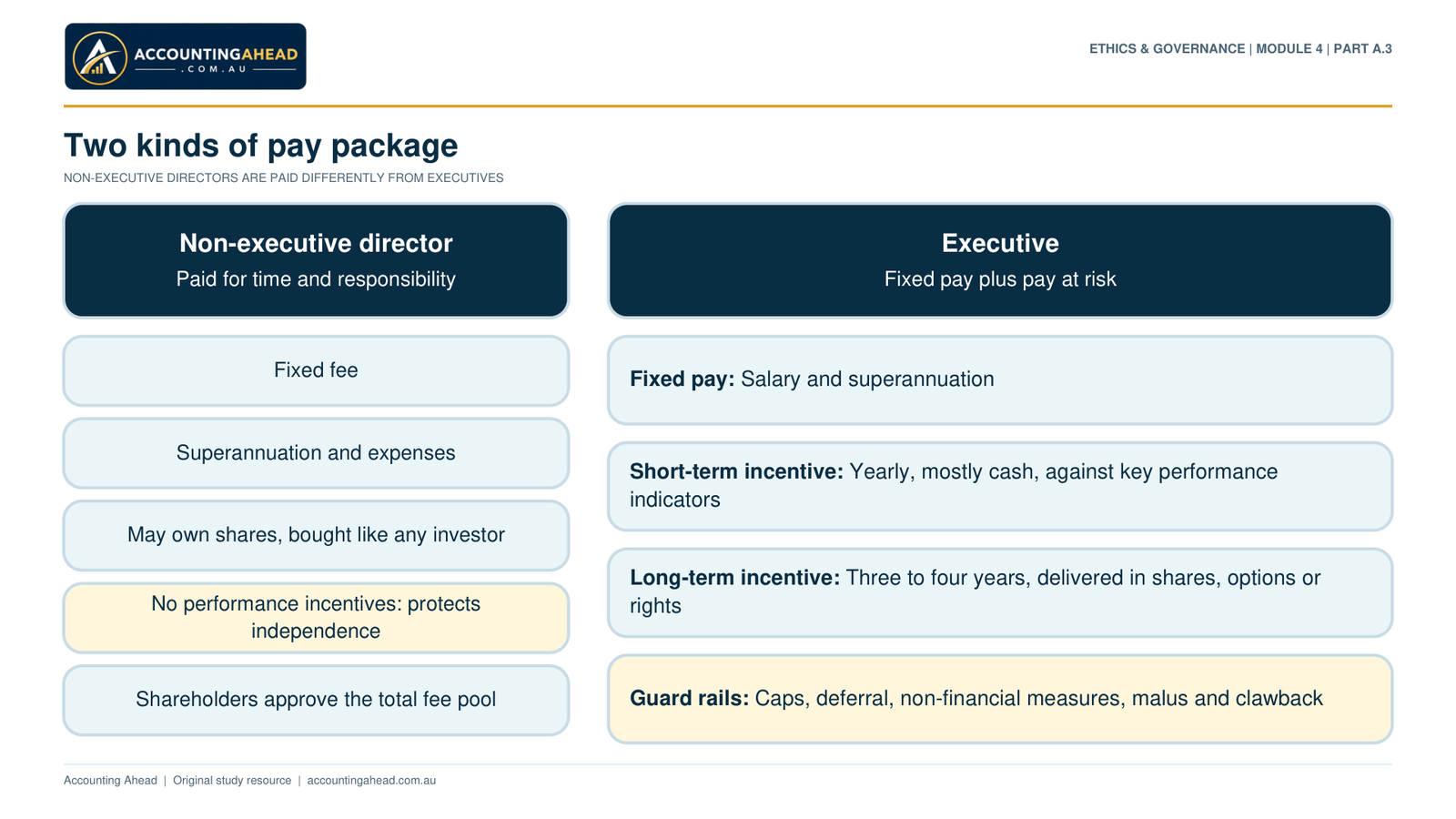
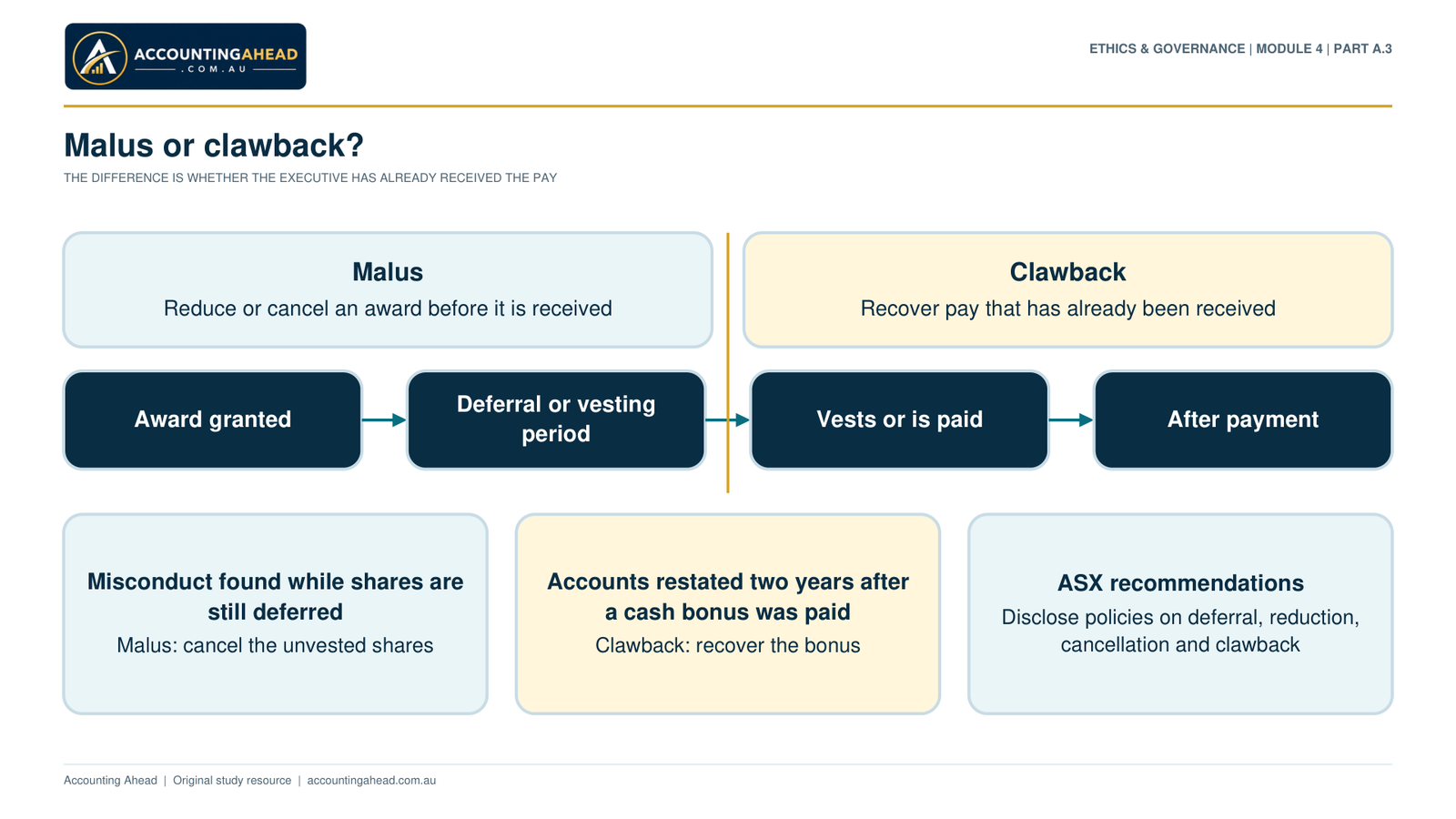
Part A.3 · Board diversity and executive remuneration
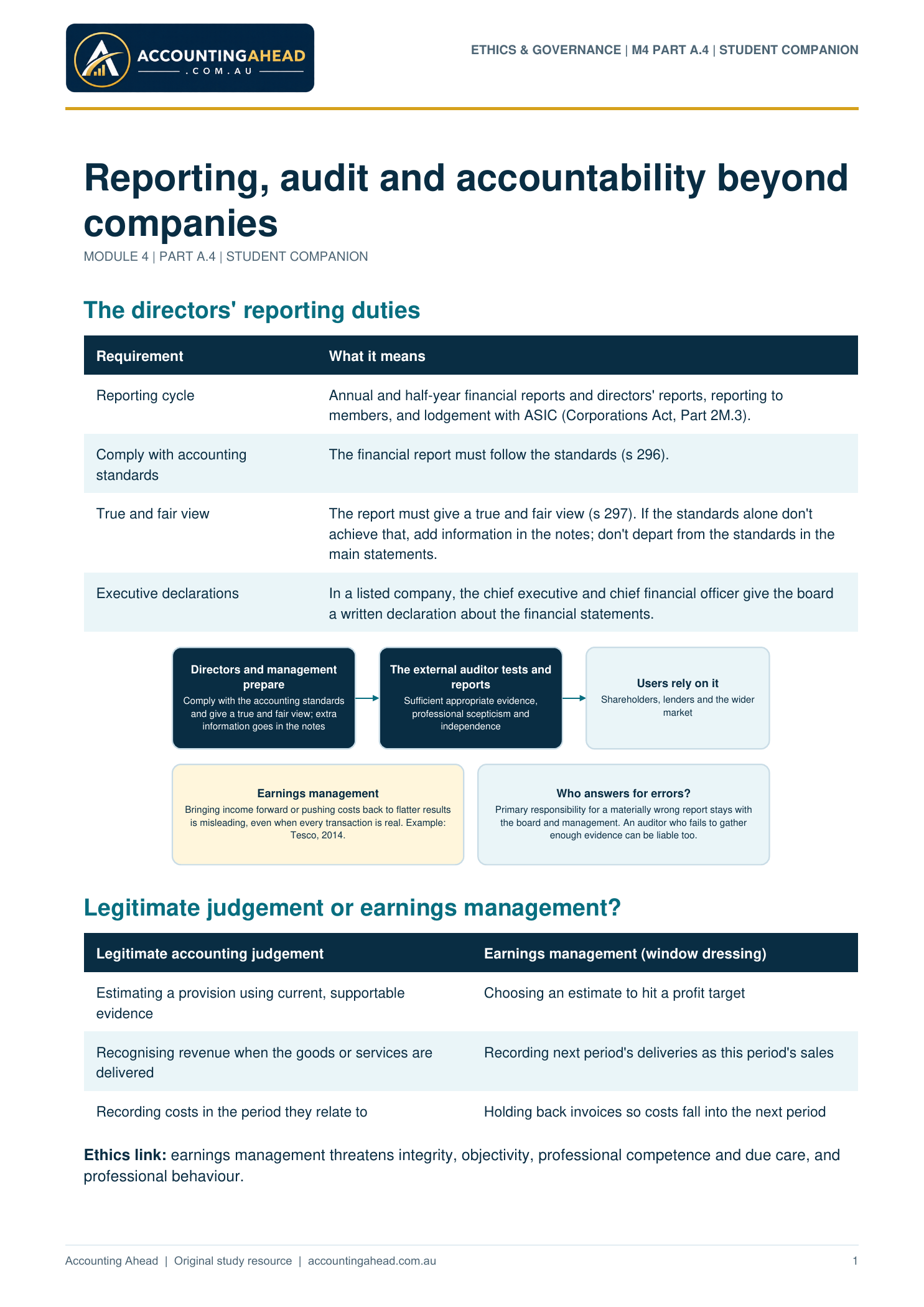
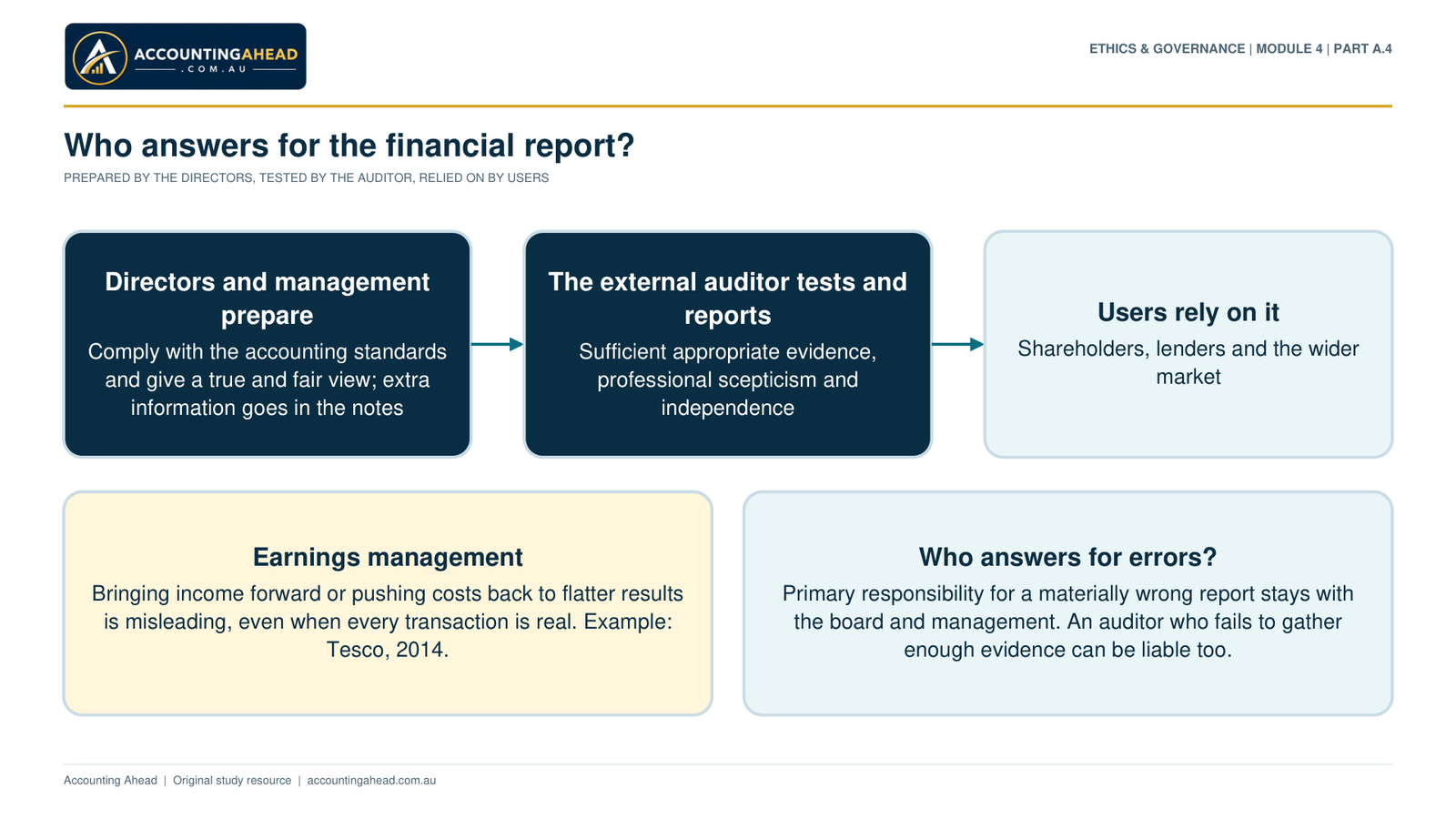
Part A.4 · Financial reporting, audit and wider accountability
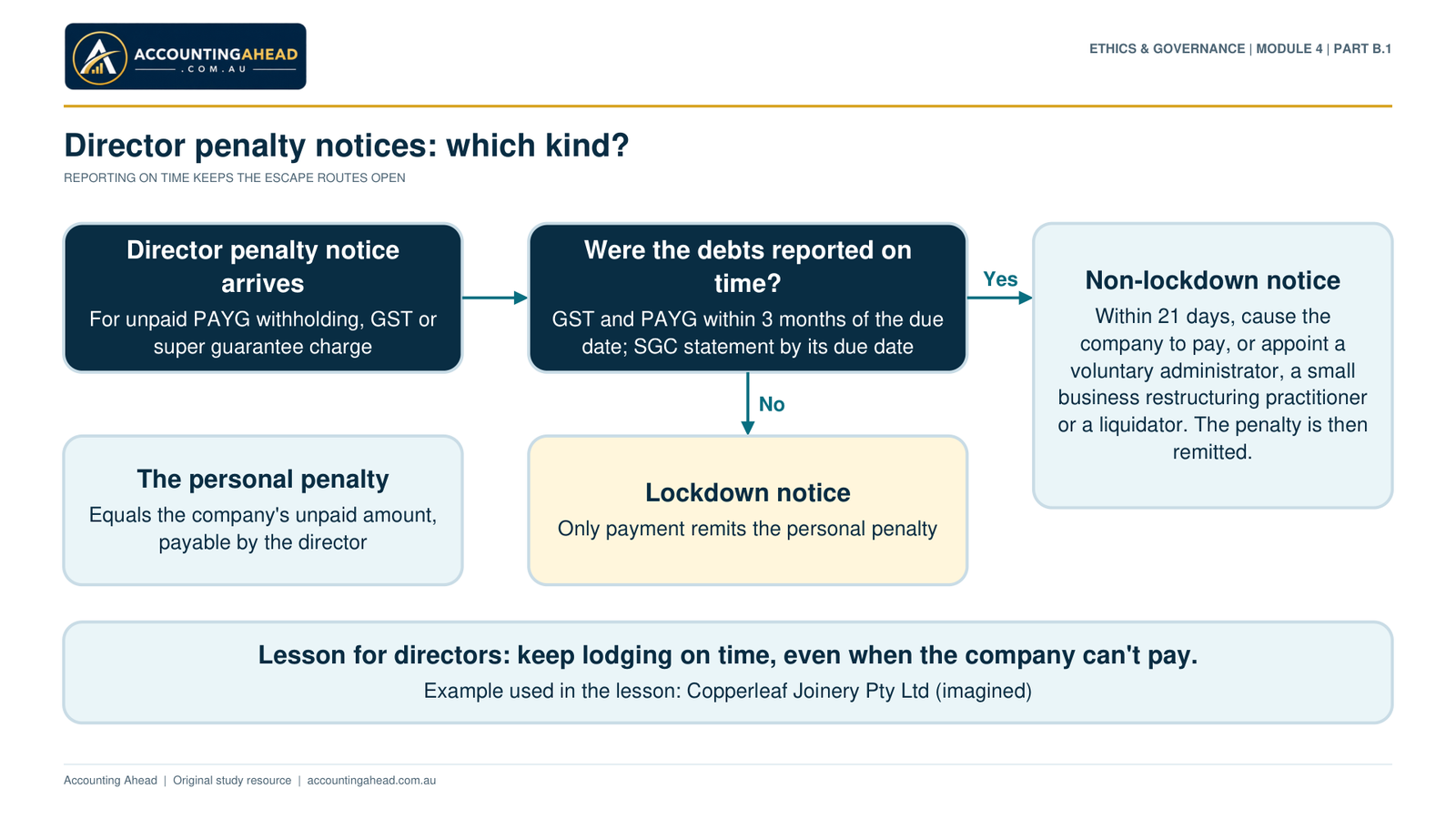
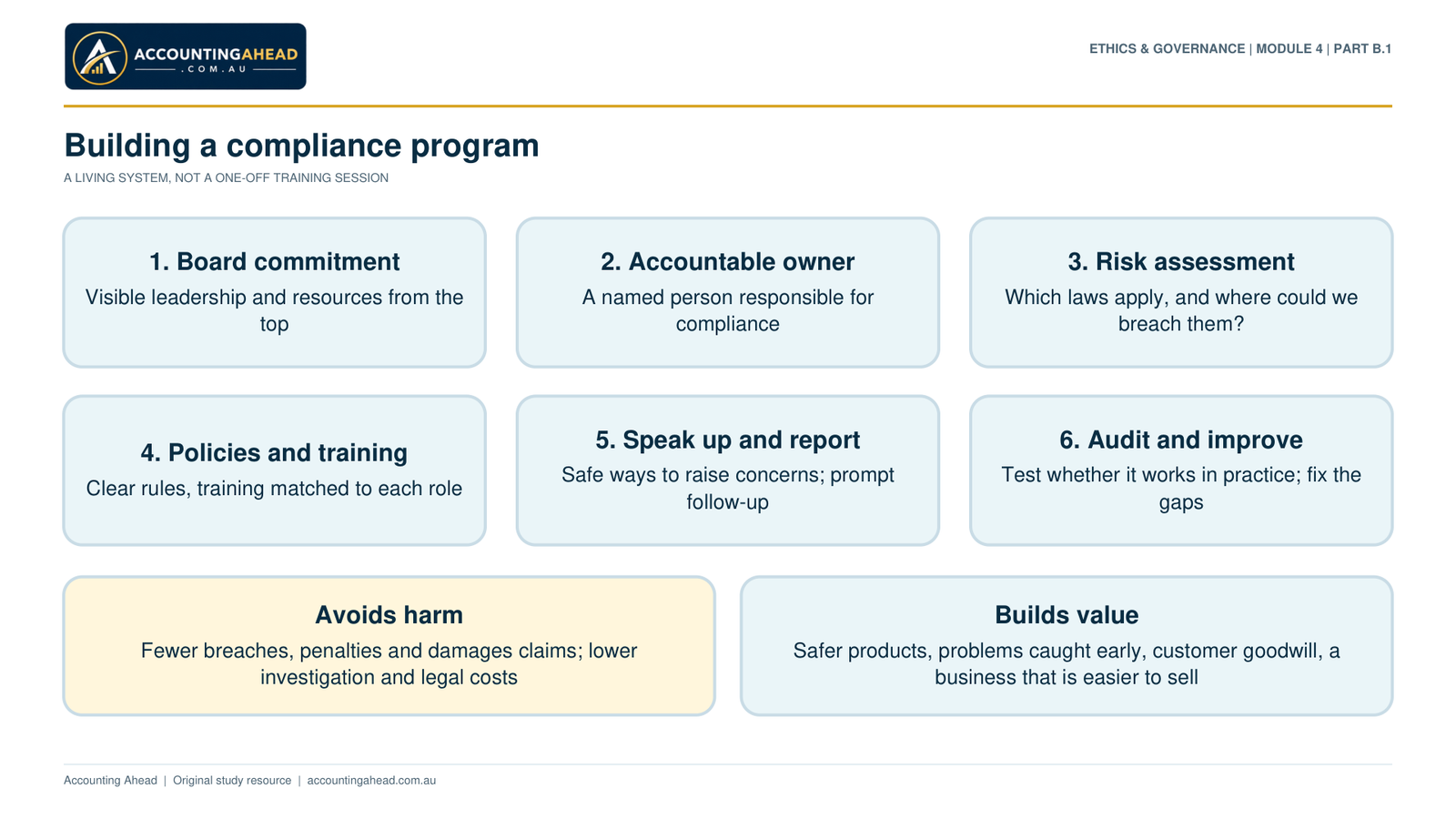
Part B.1 · Legal systems, penalties and compliance
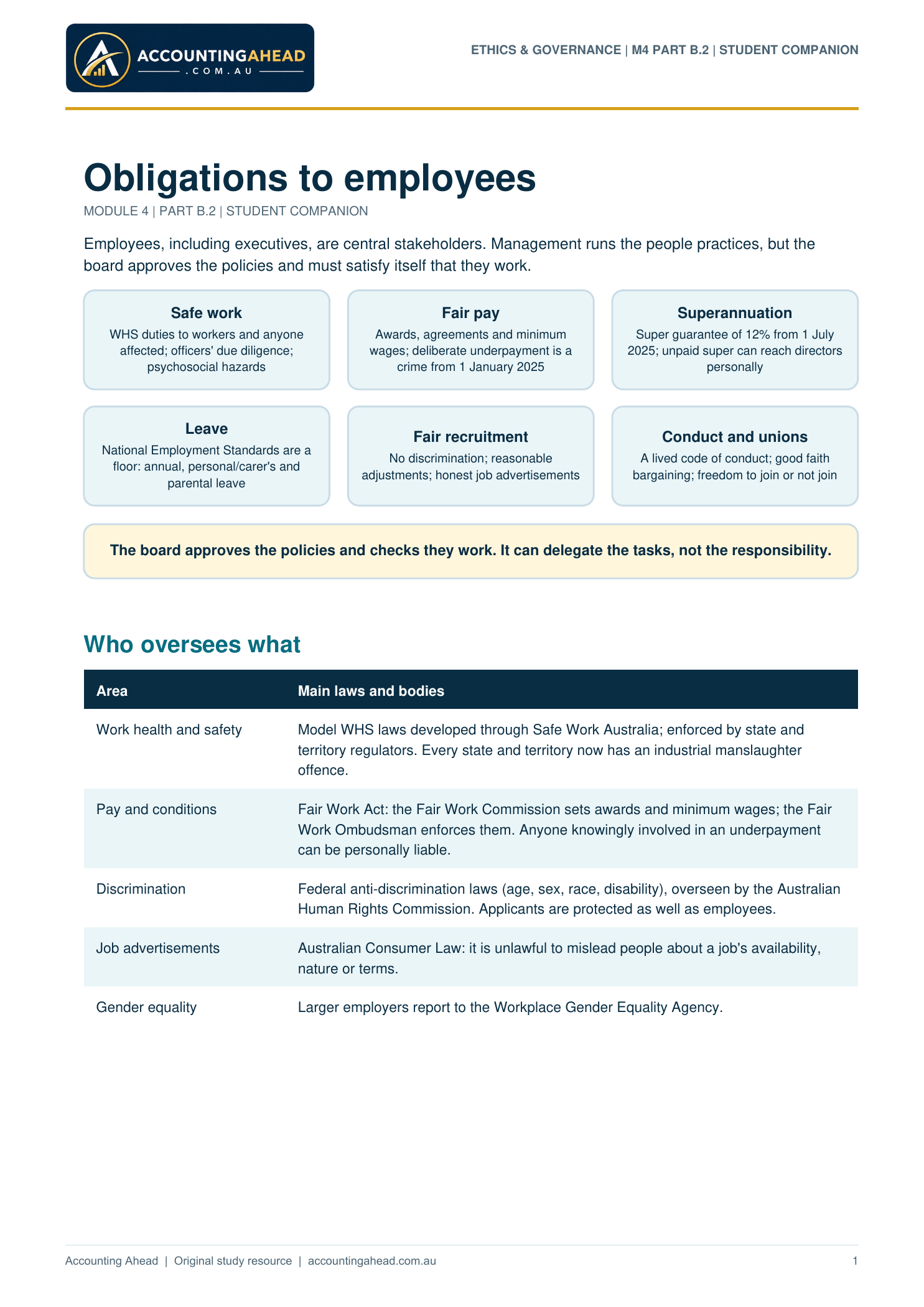
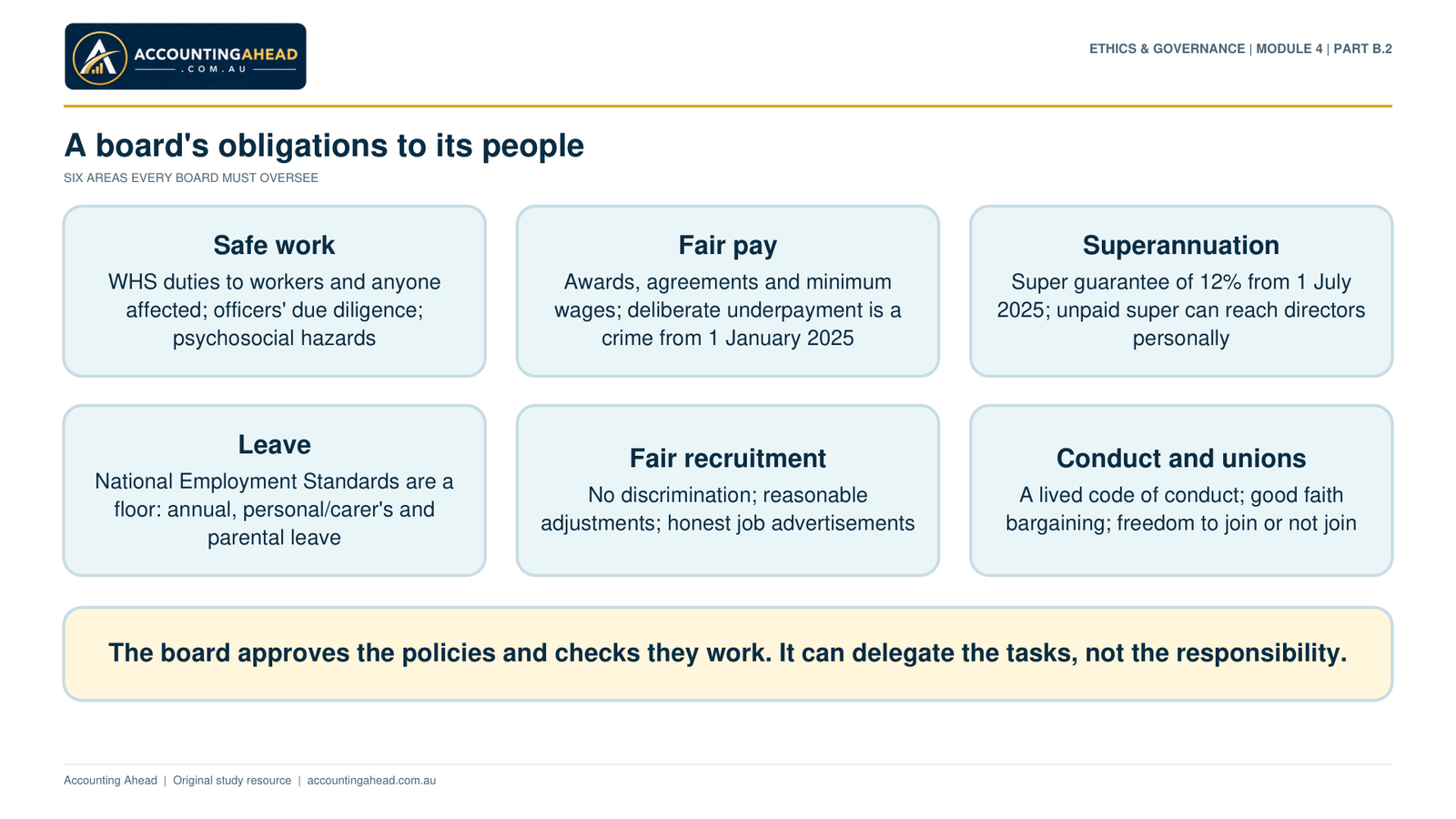
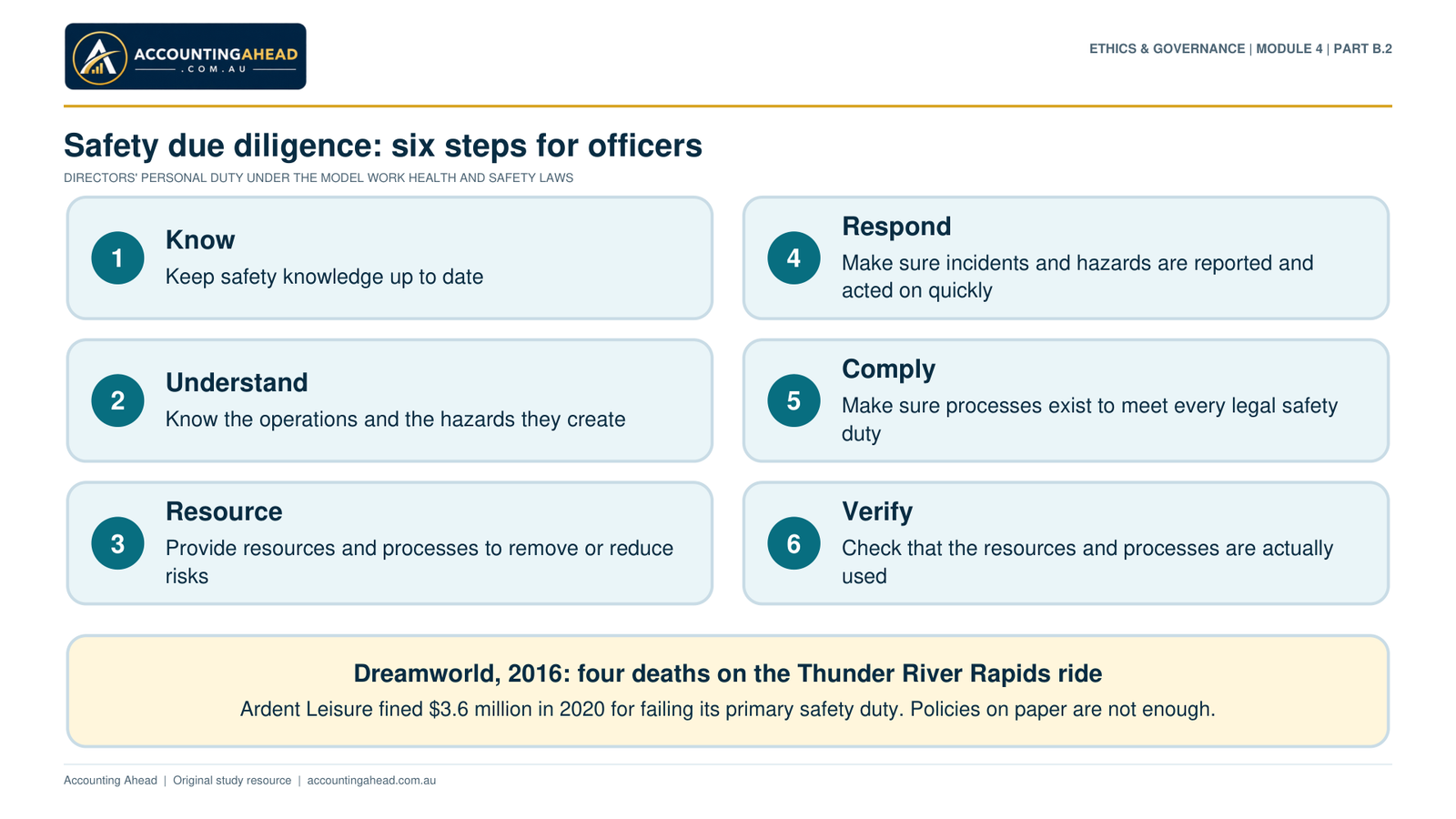
Part B.2 · Employee obligations and board oversight
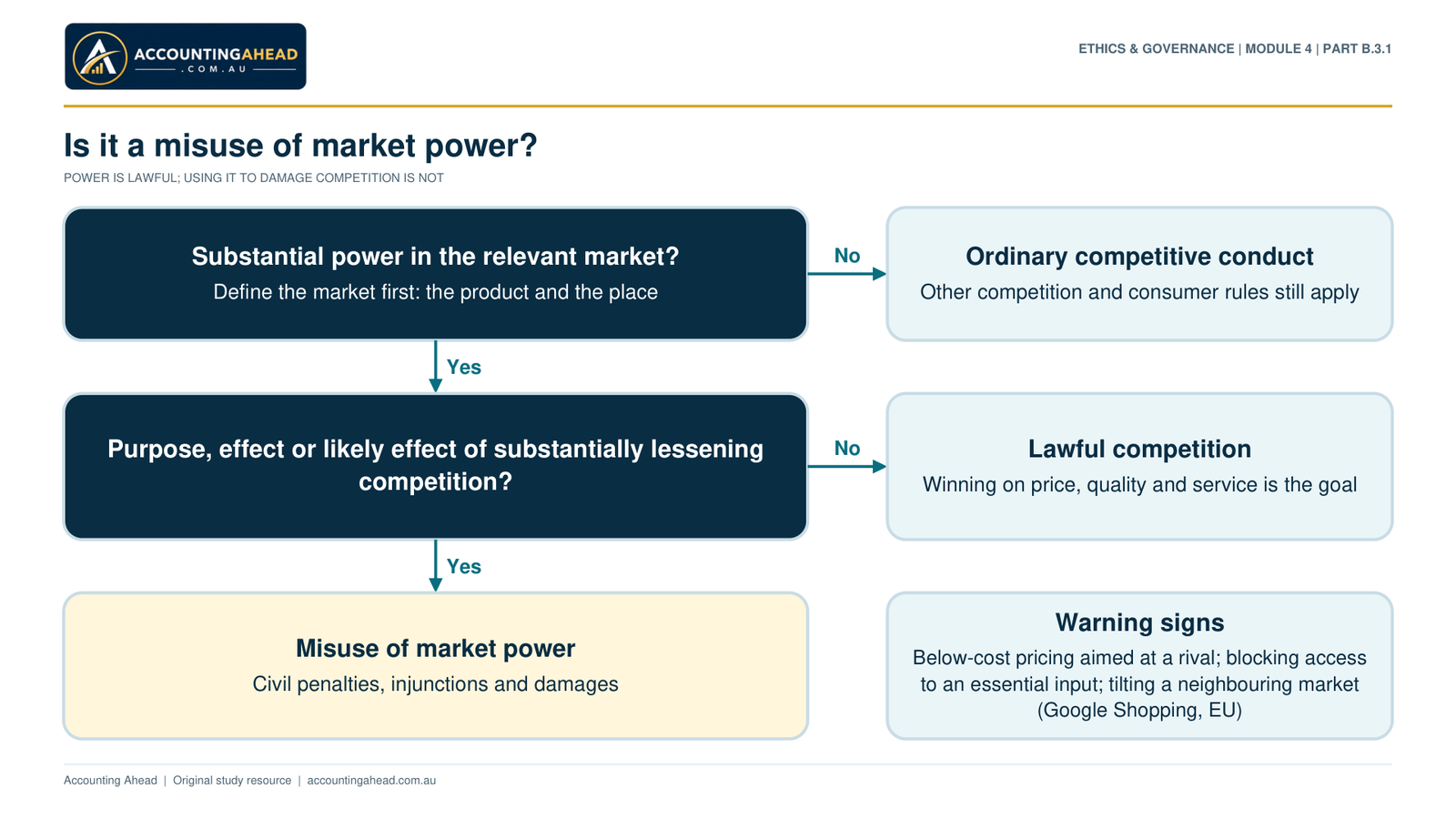
Part B.3.1 · Workable competition and market power
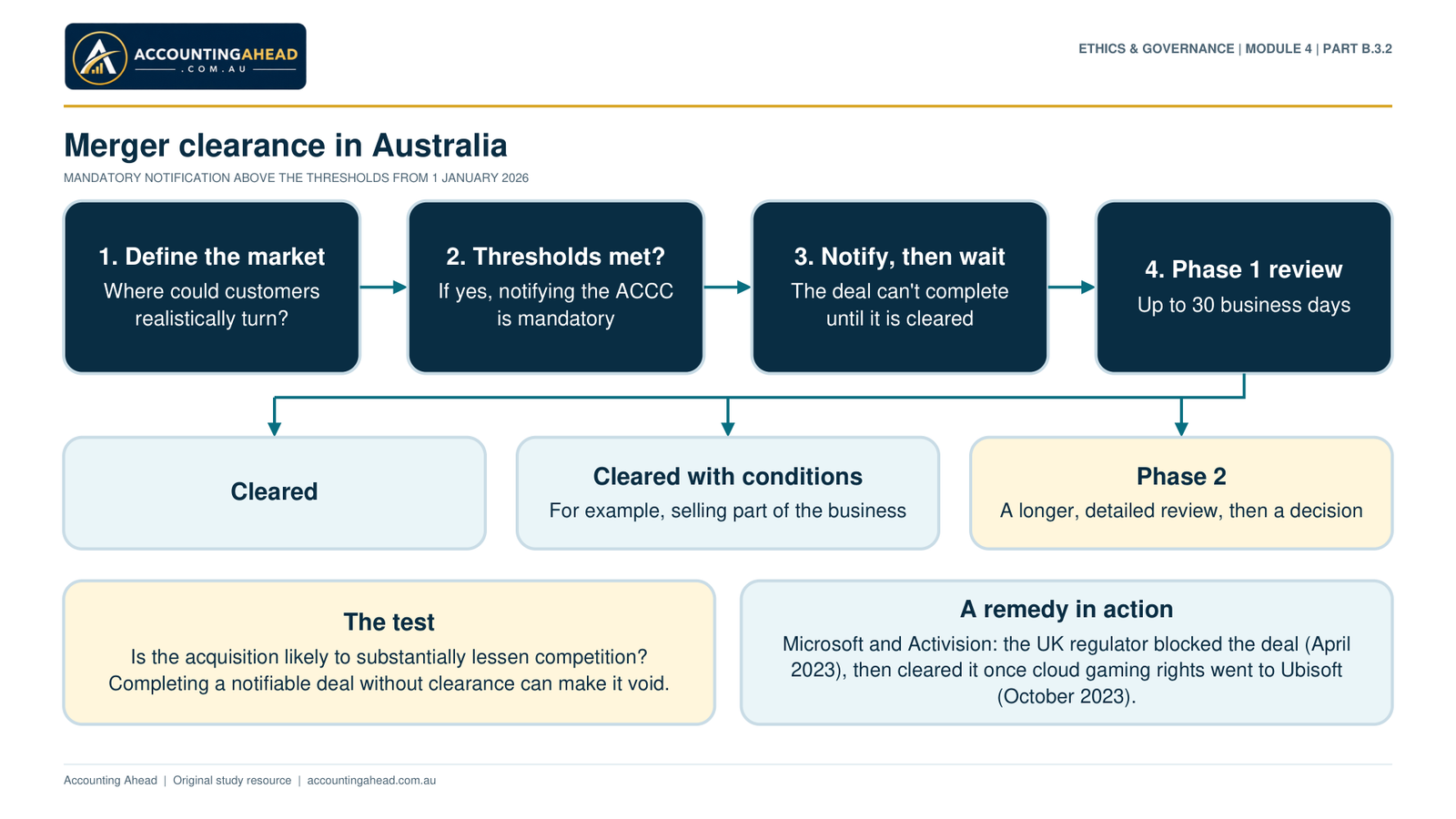
Part B.3.2 · Mergers and the relevant market
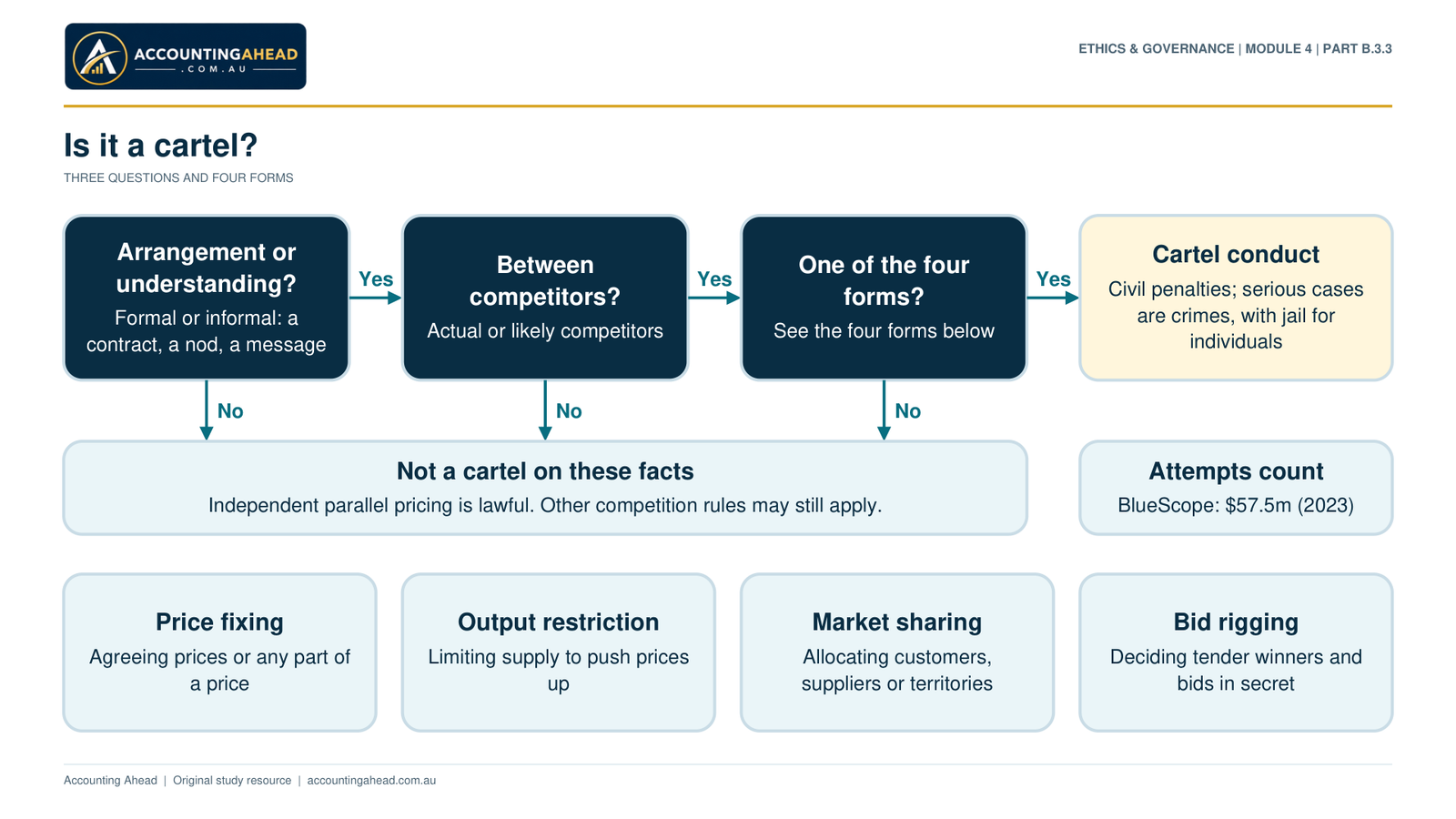
Part B.3.3 · Cartels and prohibited coordination
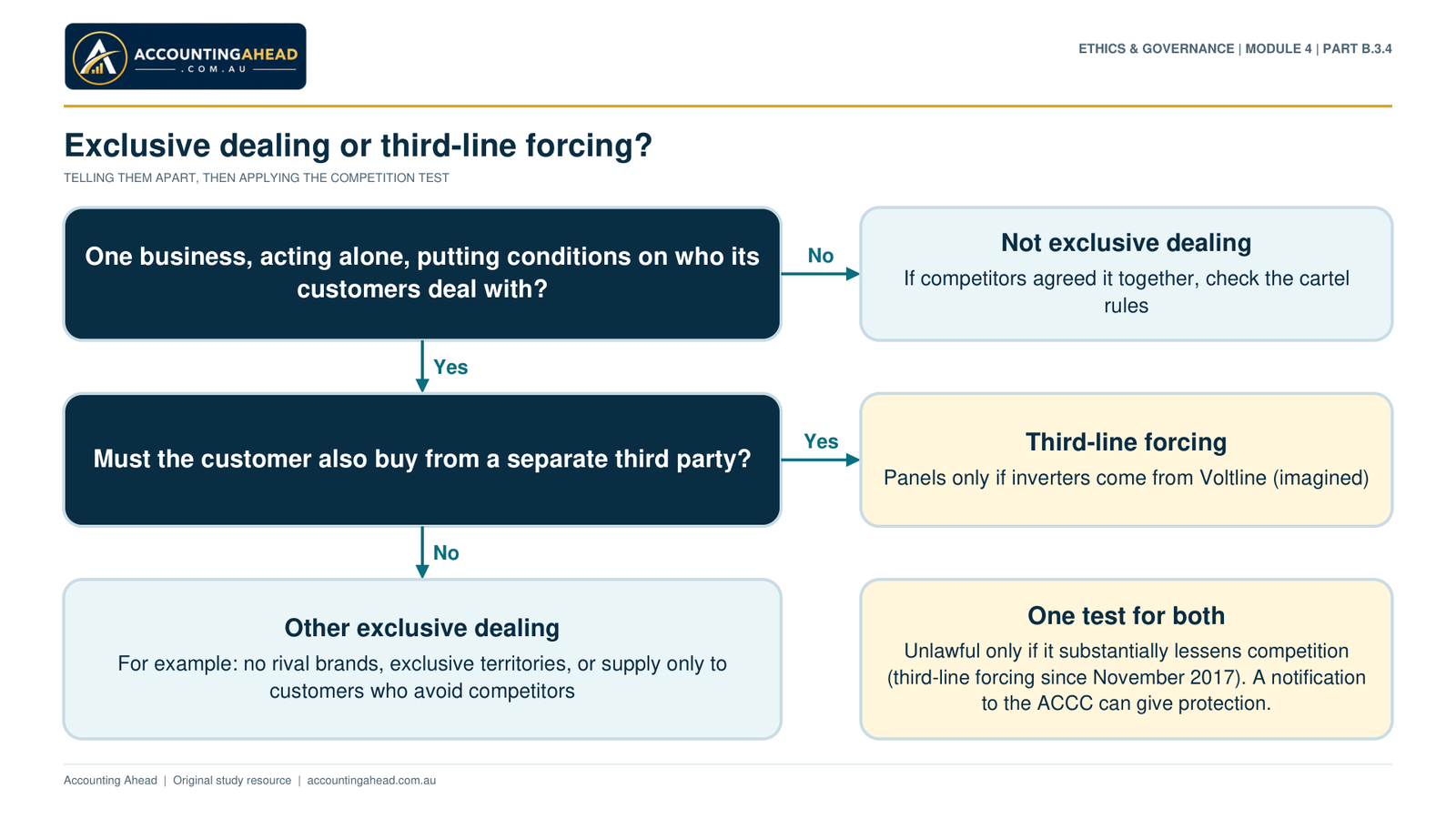
Part B.3.4 · Exclusive dealing and third-line forcing
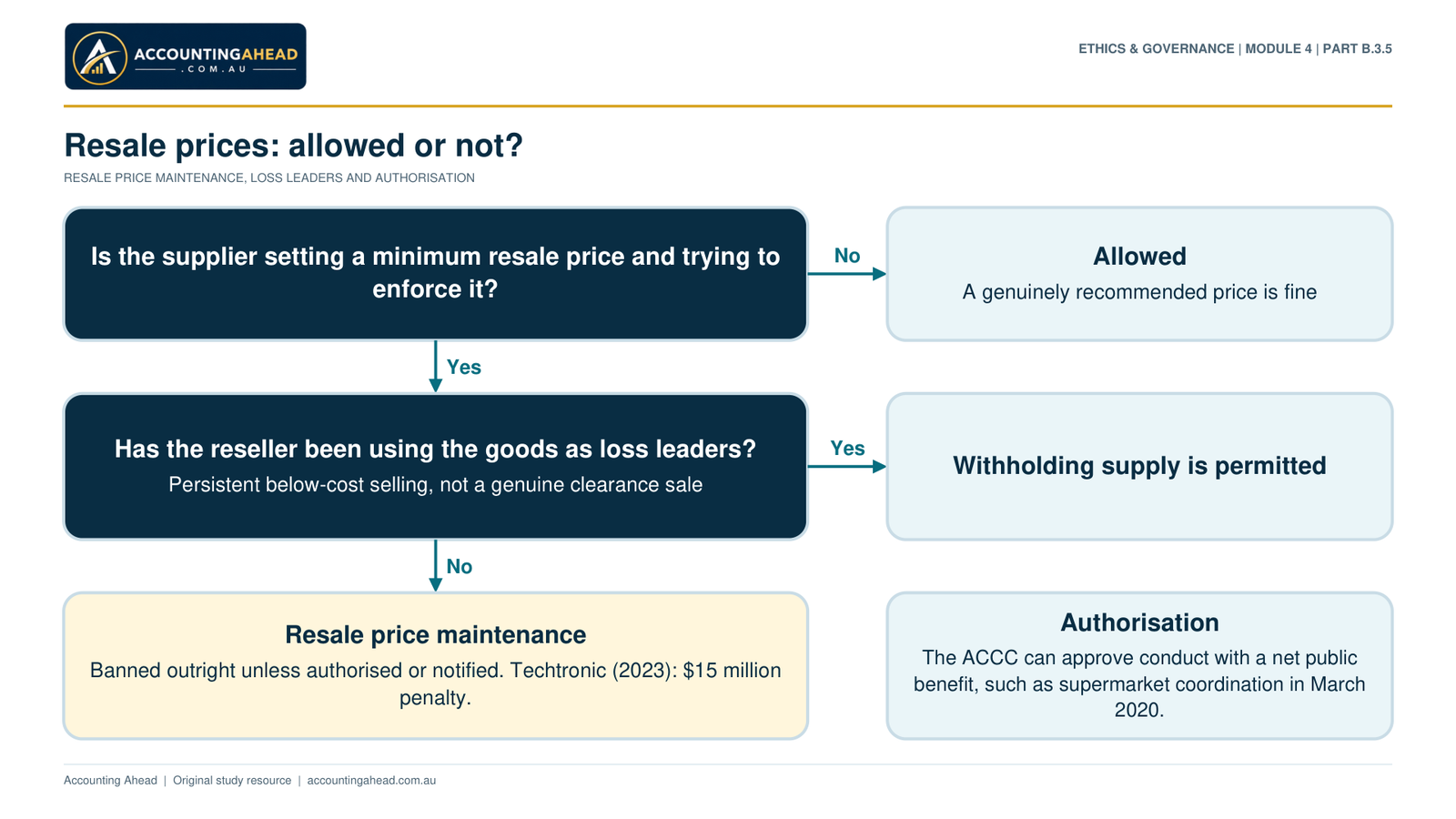
Part B.3.5 · Resale price maintenance and authorisation
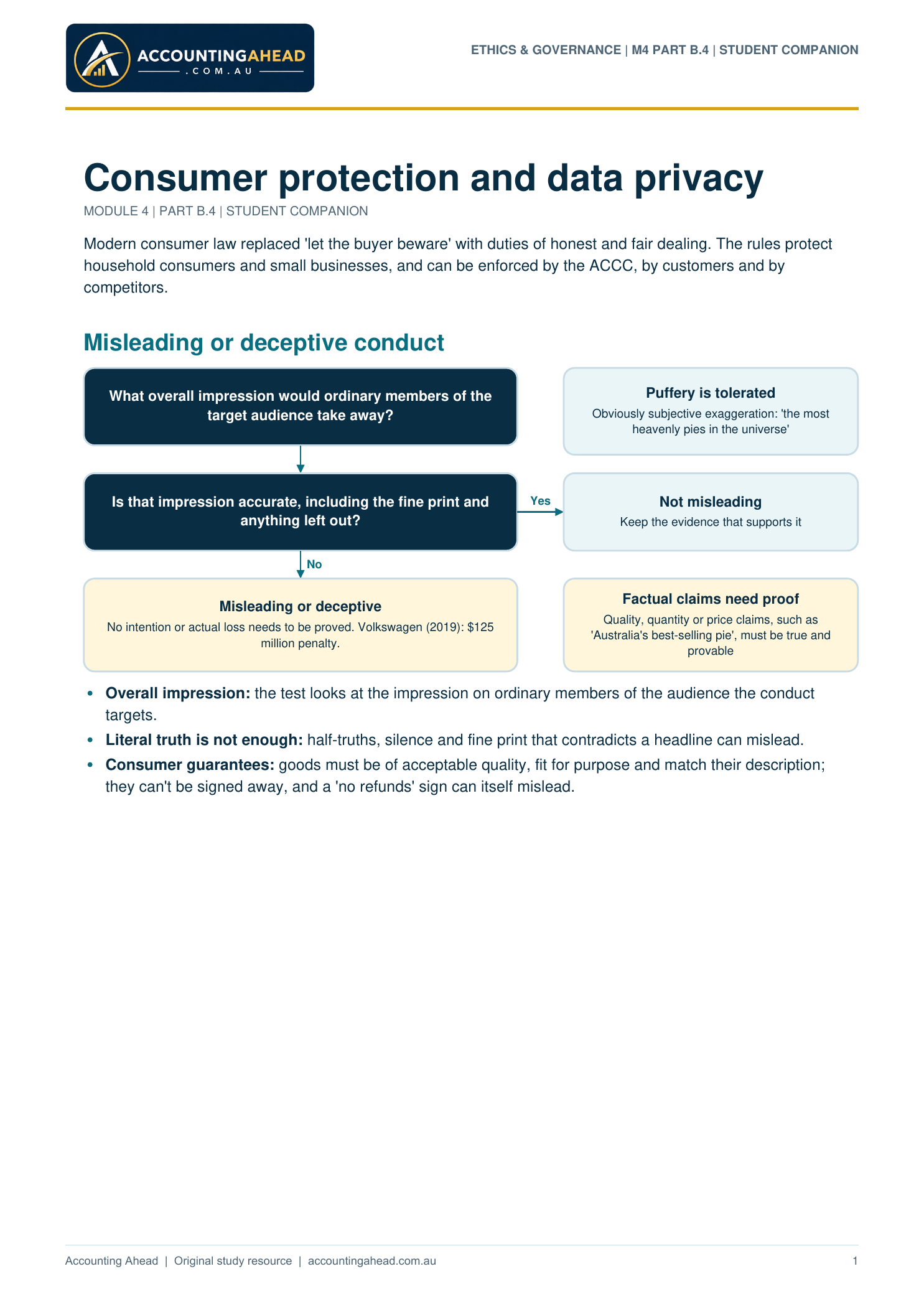
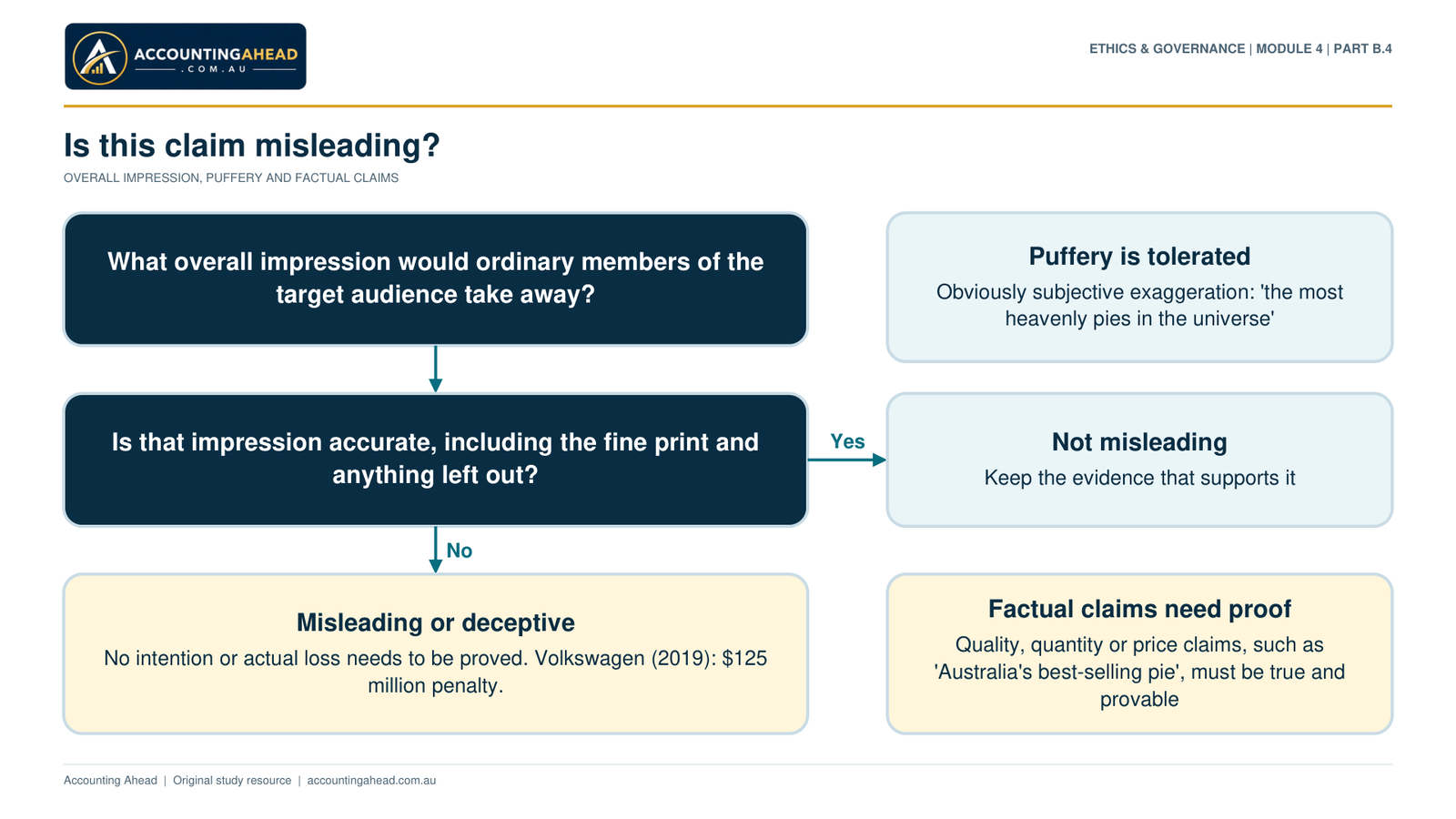
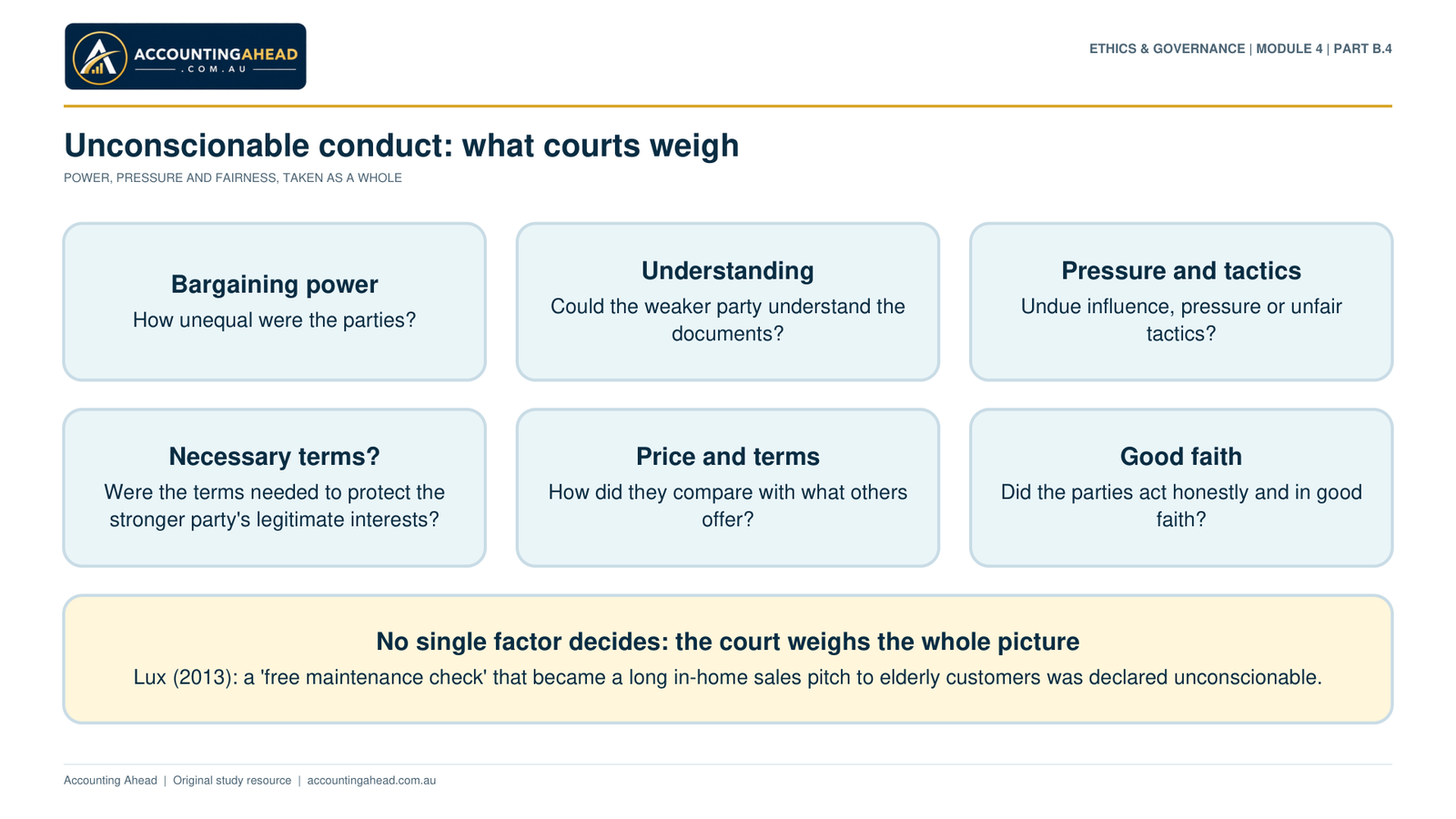
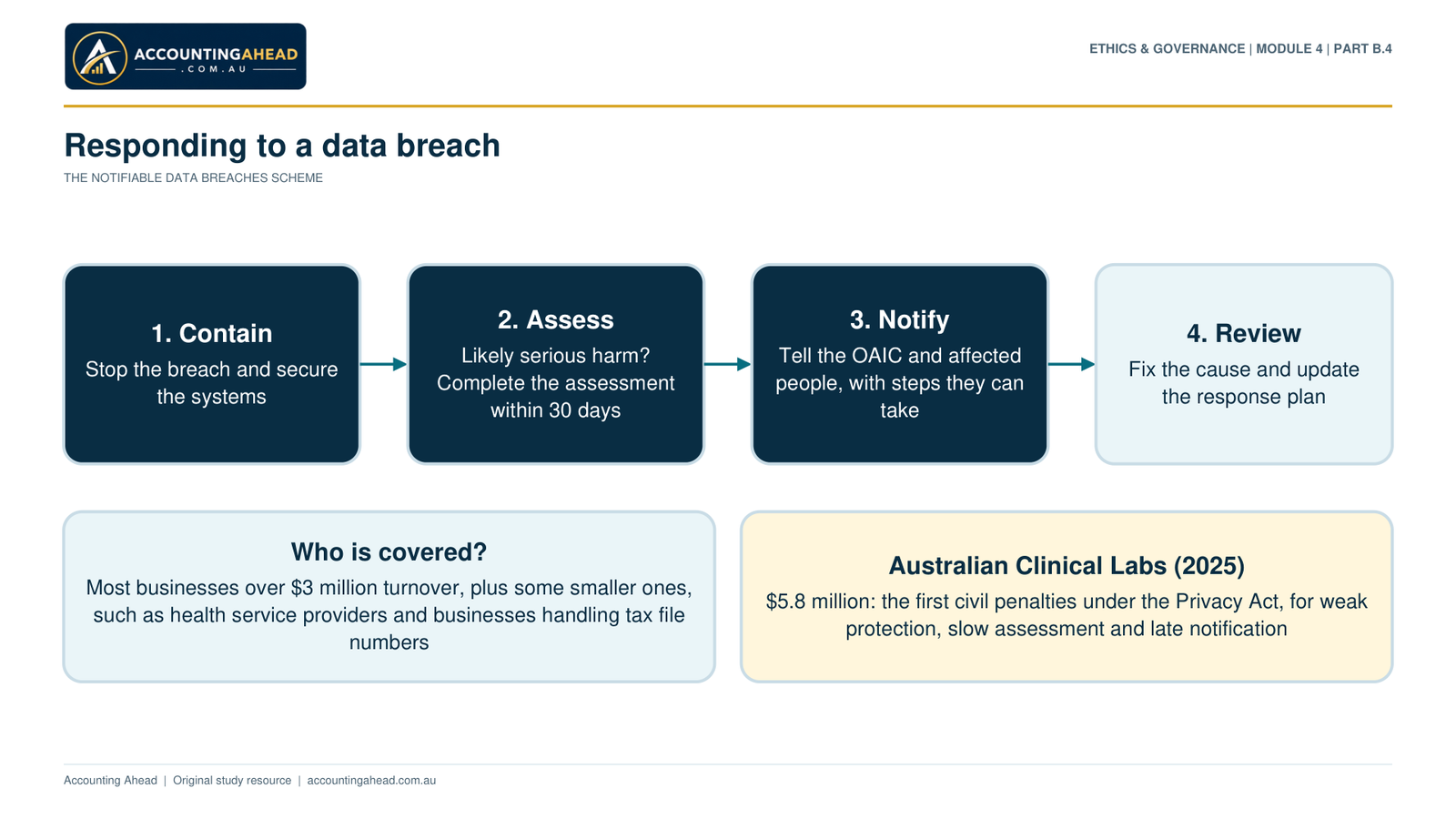
Part B.4 · Consumers, privacy and information duties
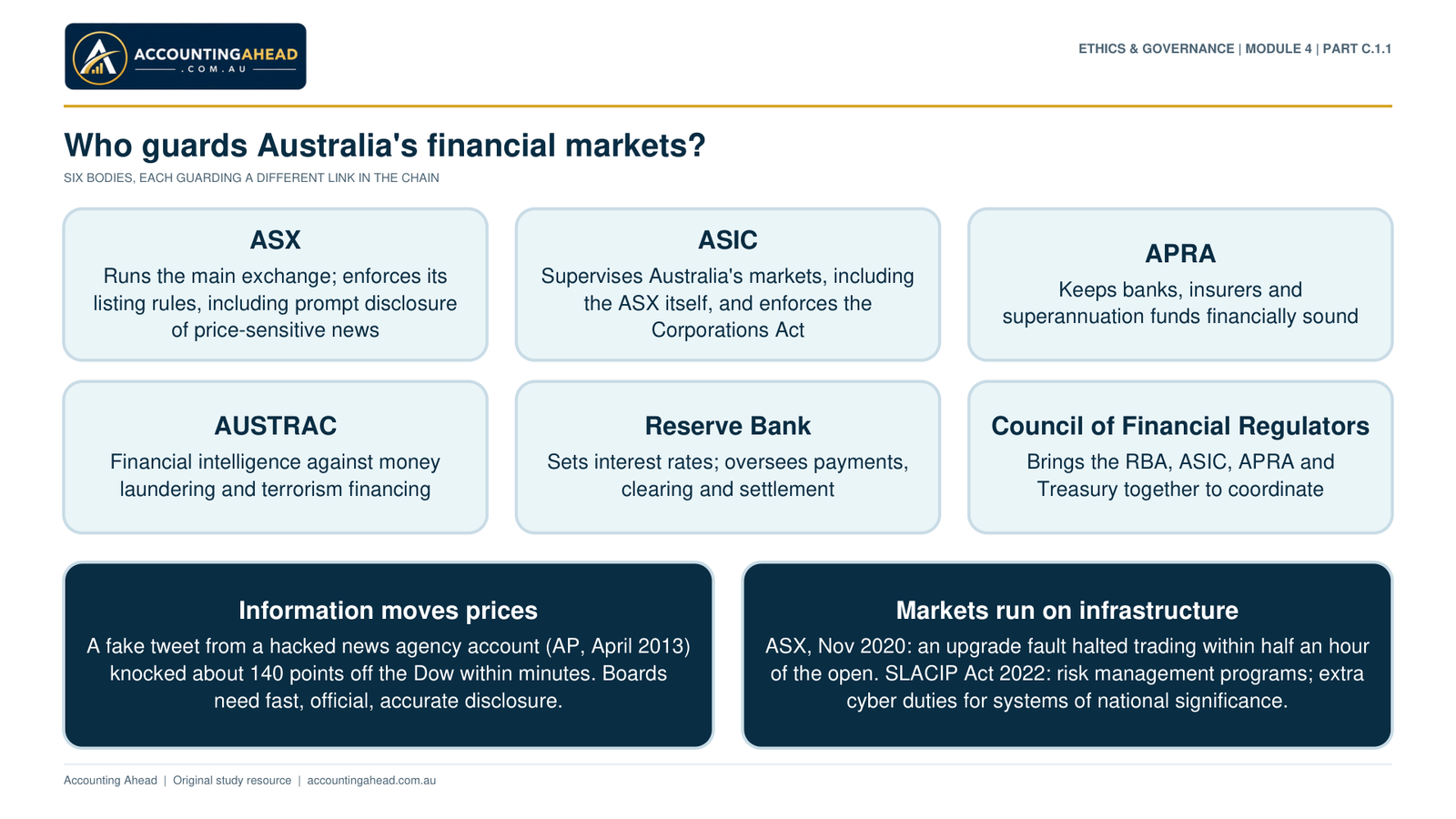
Part C.1.1 · Financial markets, regulators and information
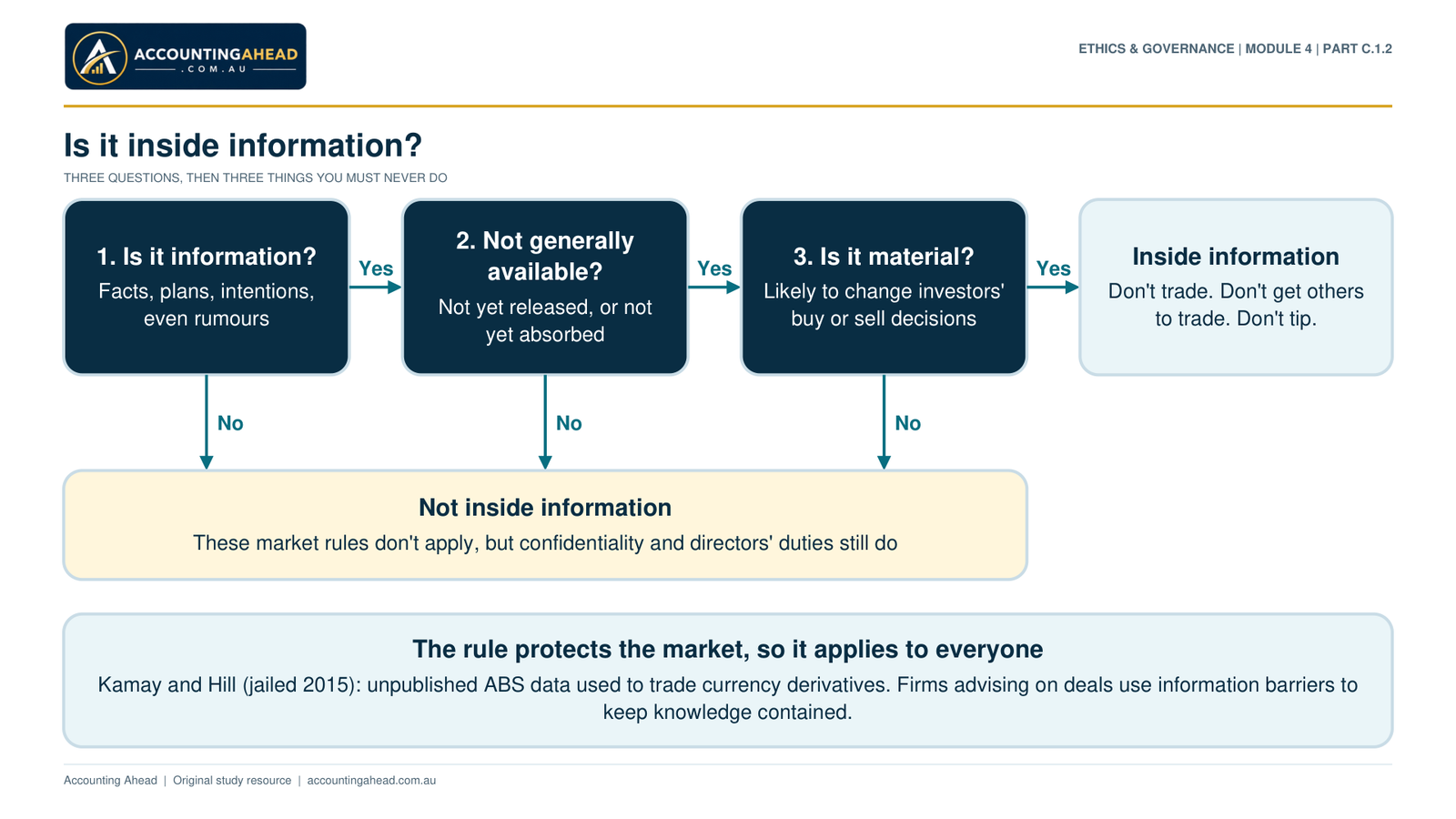
Part C.1.2 · Inside information and trading controls
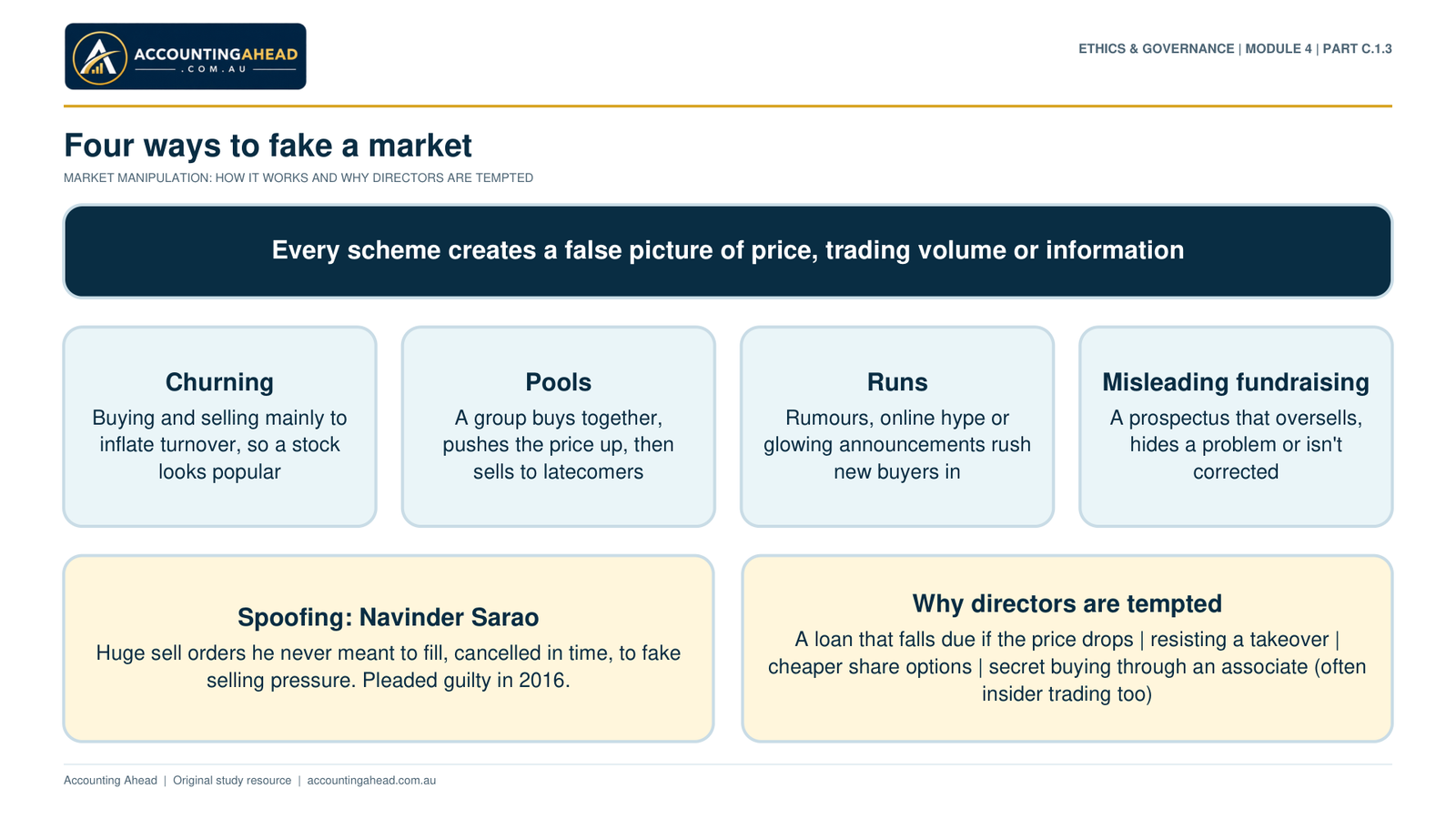
Part C.1.3 · Market manipulation and fundraising disclosure
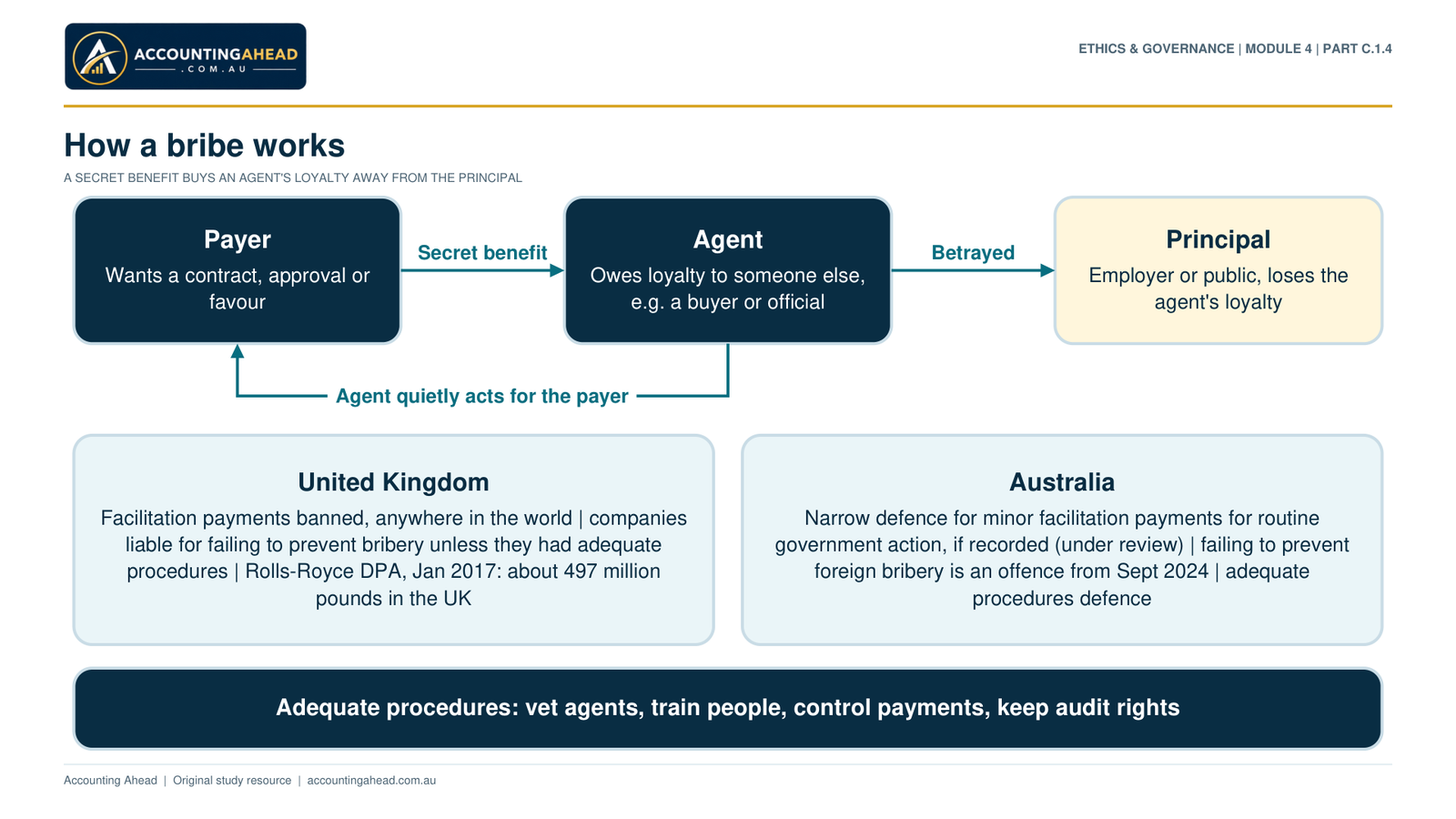
Part C.1.4 · Bribery and third-party risk
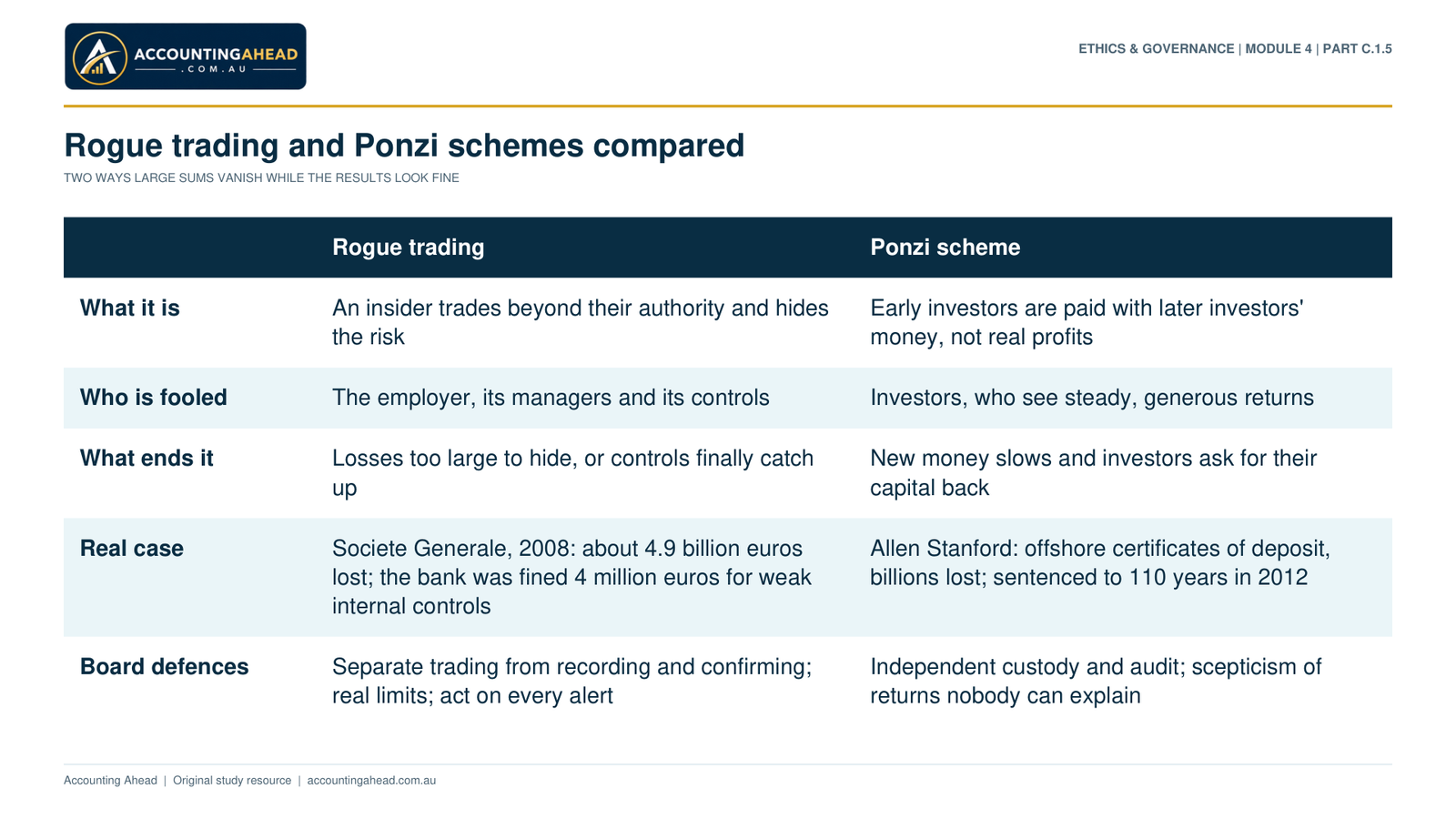
Part C.1.5 · Rogue trading and Ponzi schemes
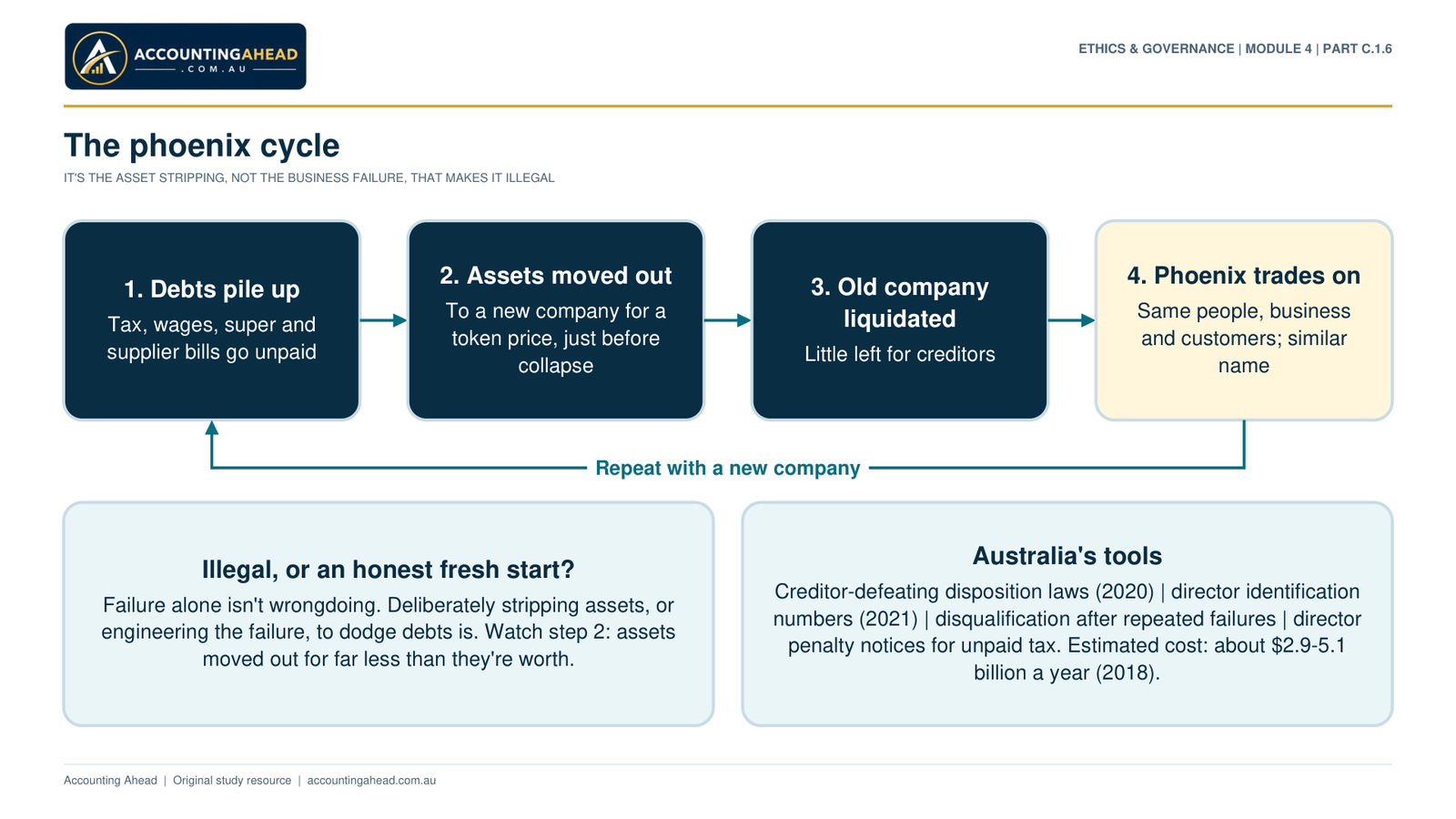
Part C.1.6 · Illegal phoenix activity
Part C.2 · Representation, speaking up and honest disclosure
Module 5 · Corporate accountability
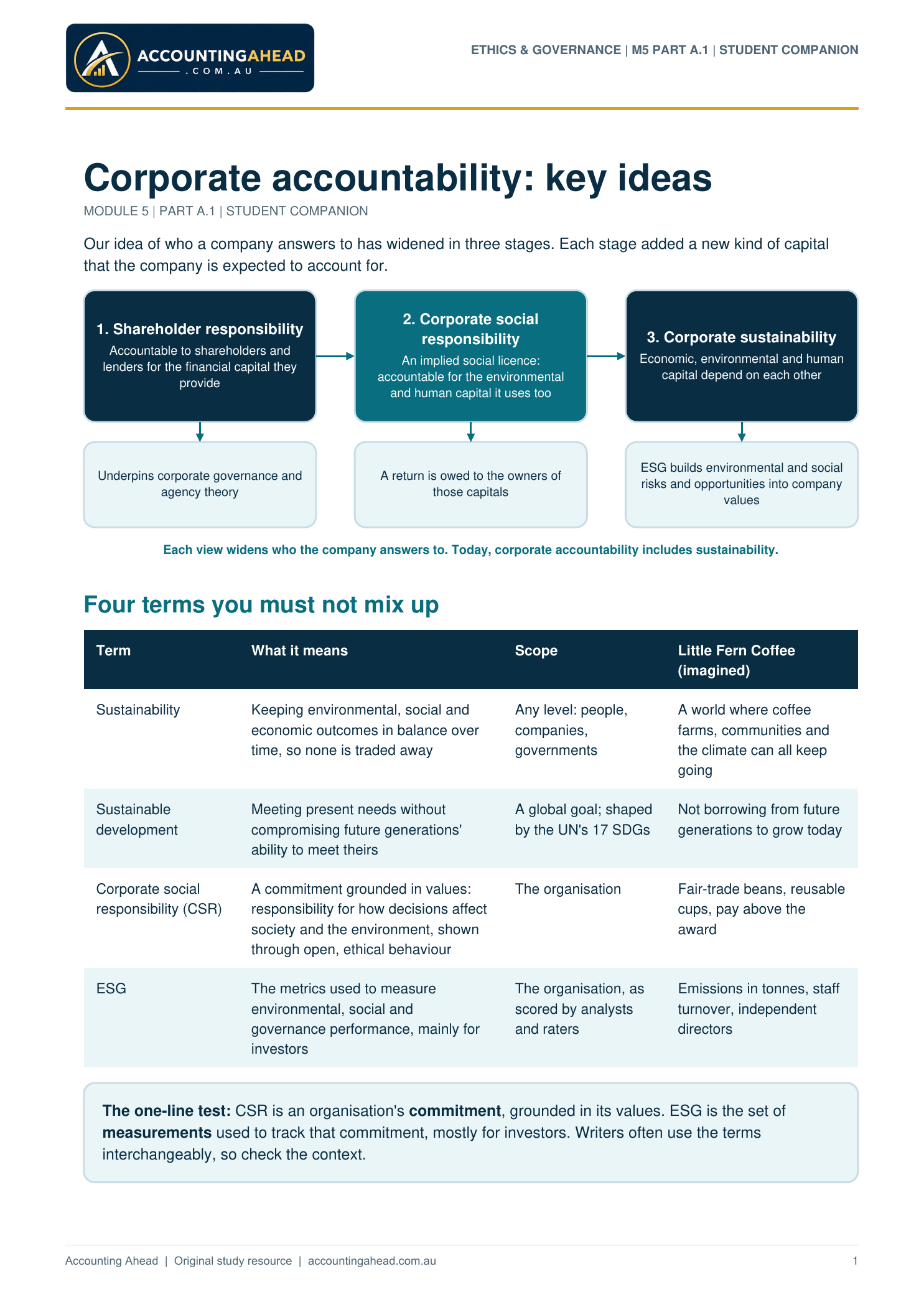
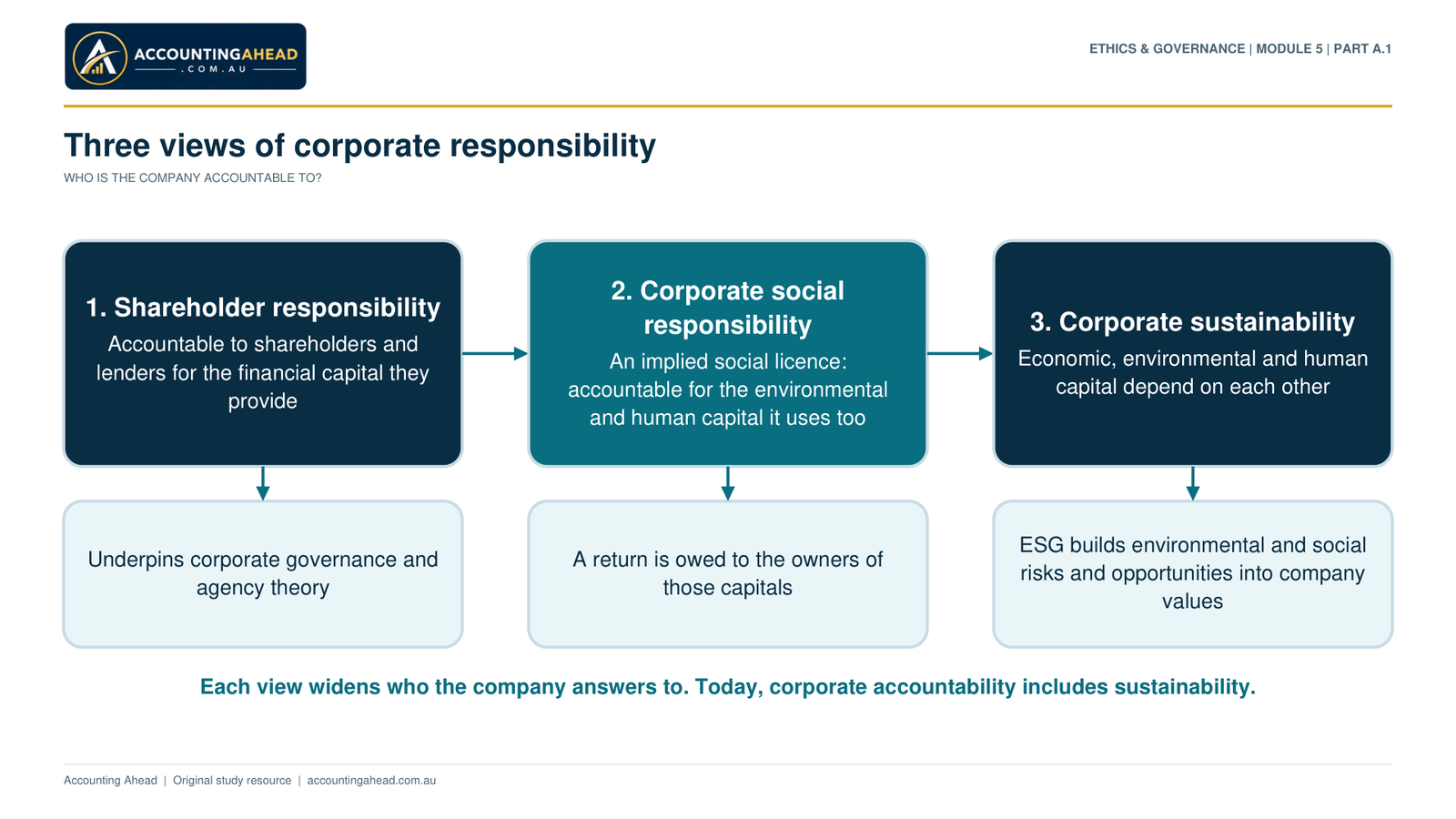
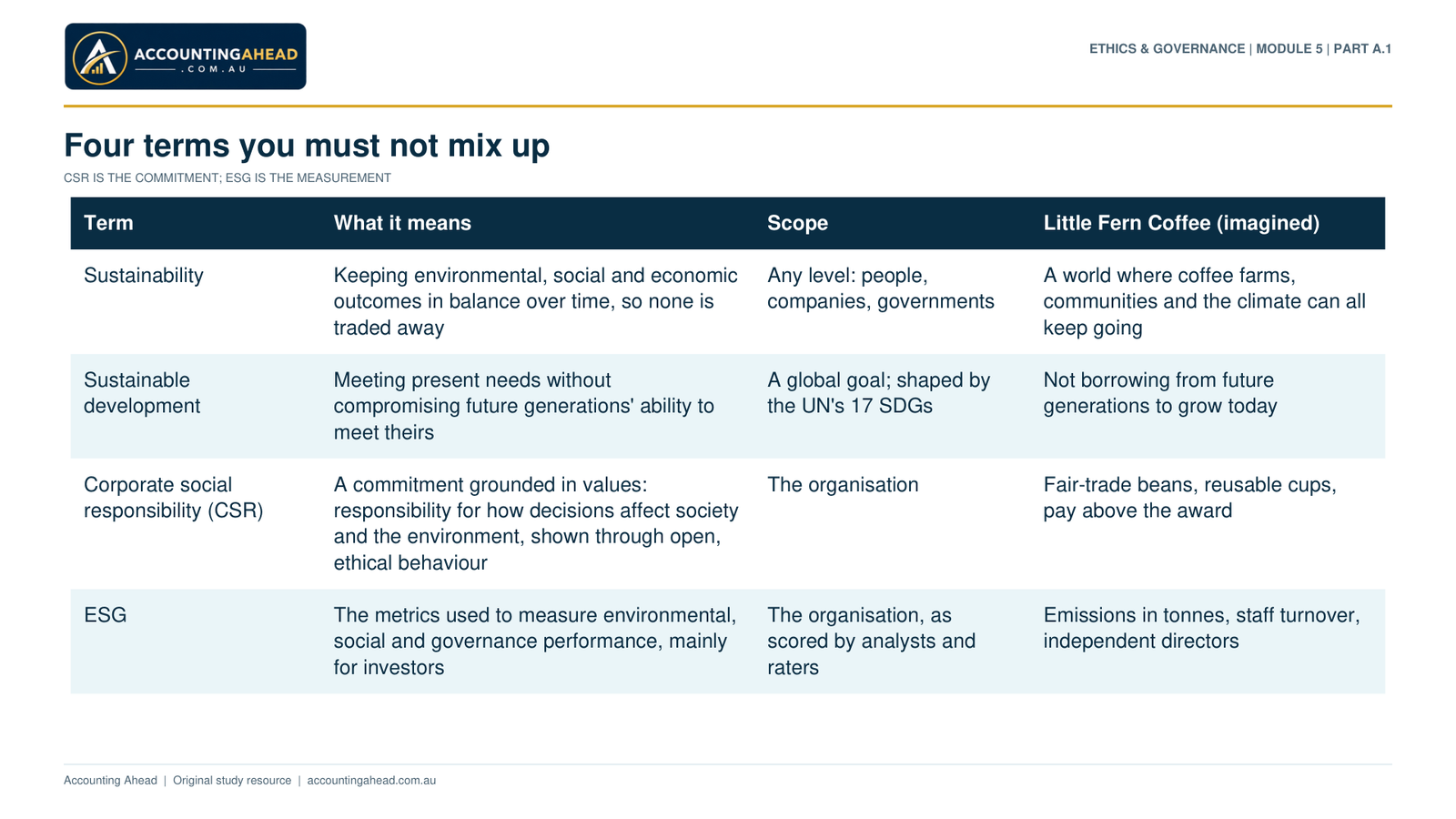
Part A.1 · Corporate accountability, CSR, ESG and sustainability
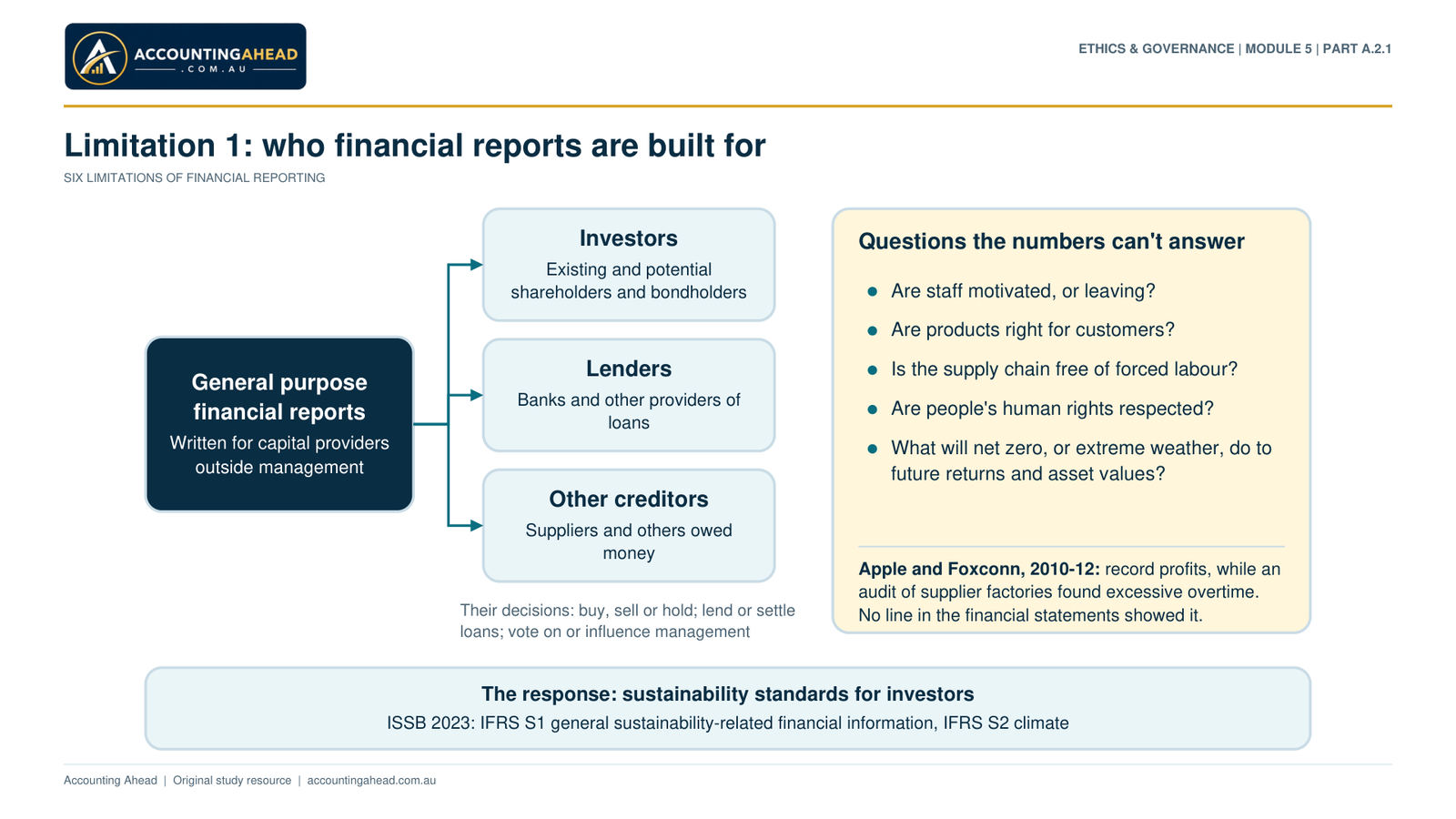
Part A.2.1 · The scope of financial reporting
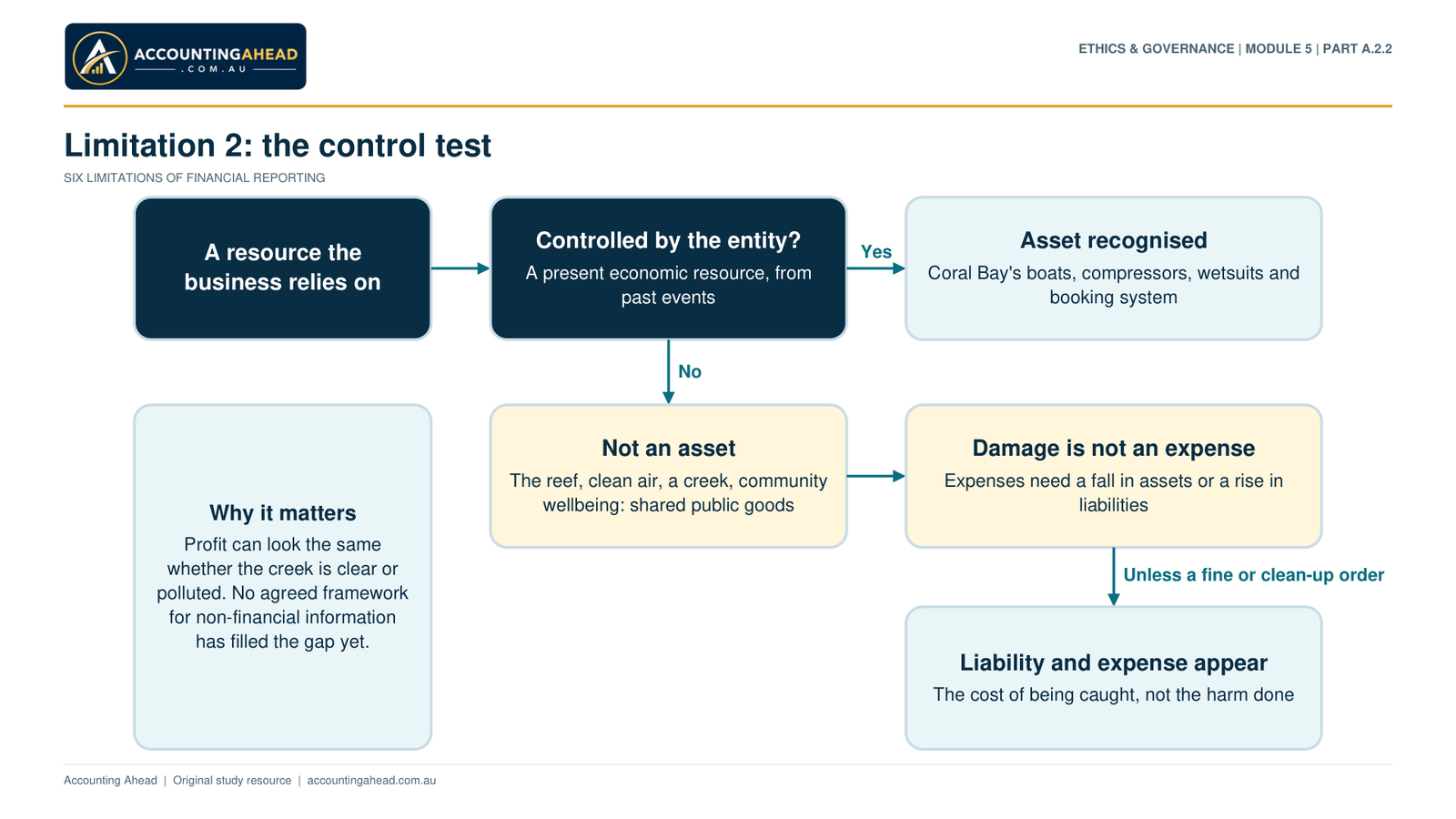
Part A.2.2 · The control test and public goods
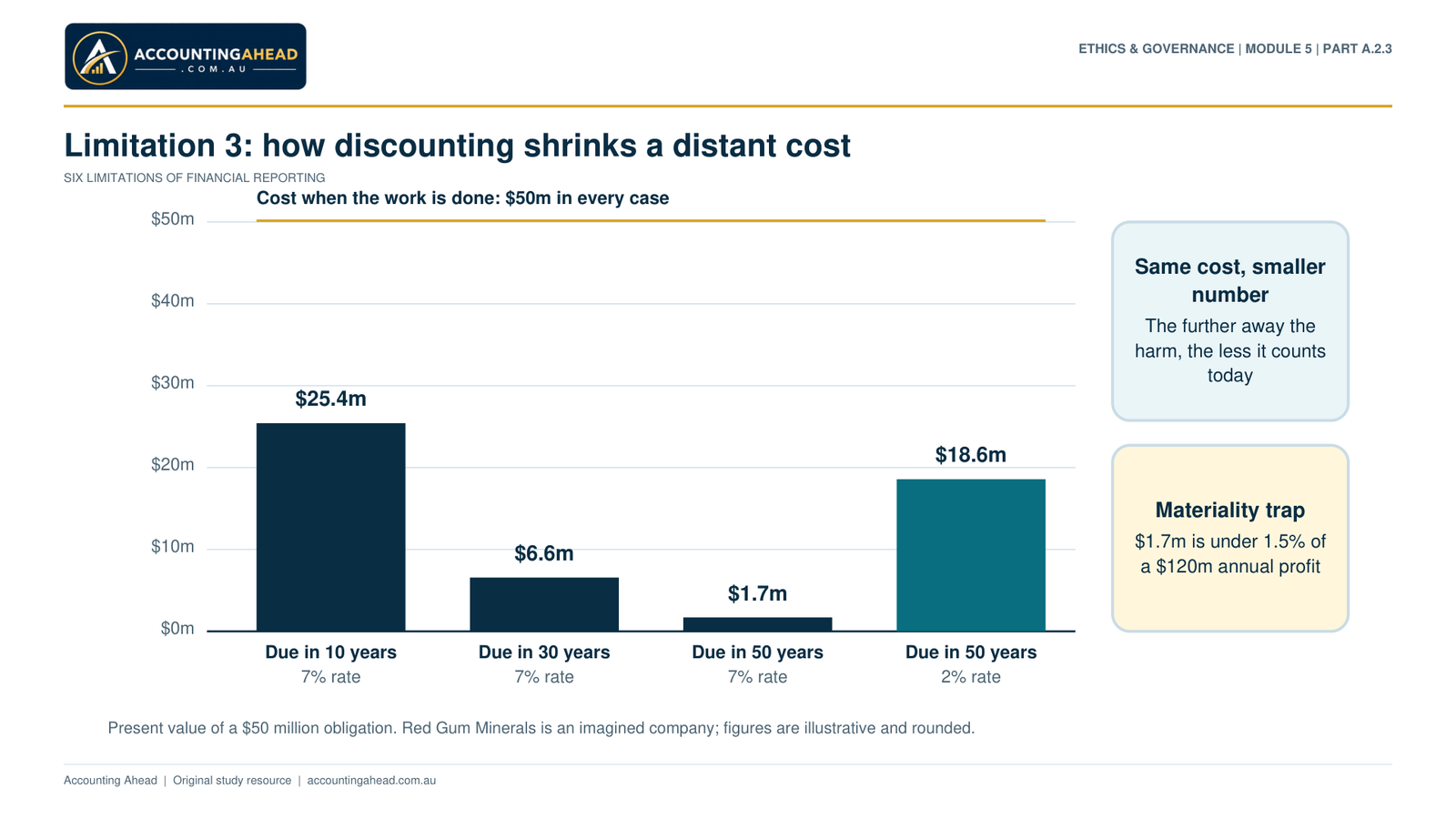
Part A.2.3 · Discounting future environmental costs
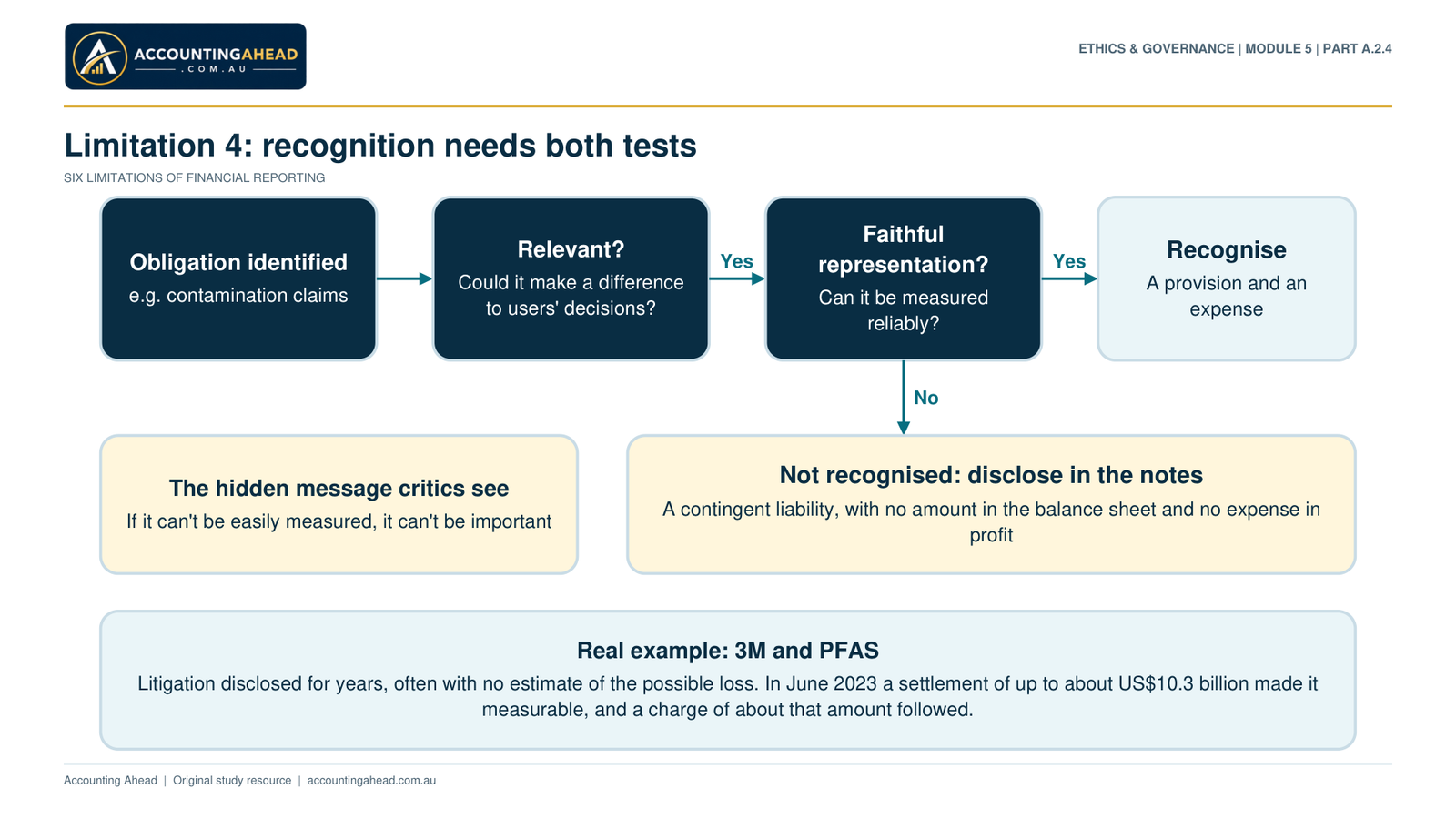
Part A.2.4 · Recognition and uncertain obligations
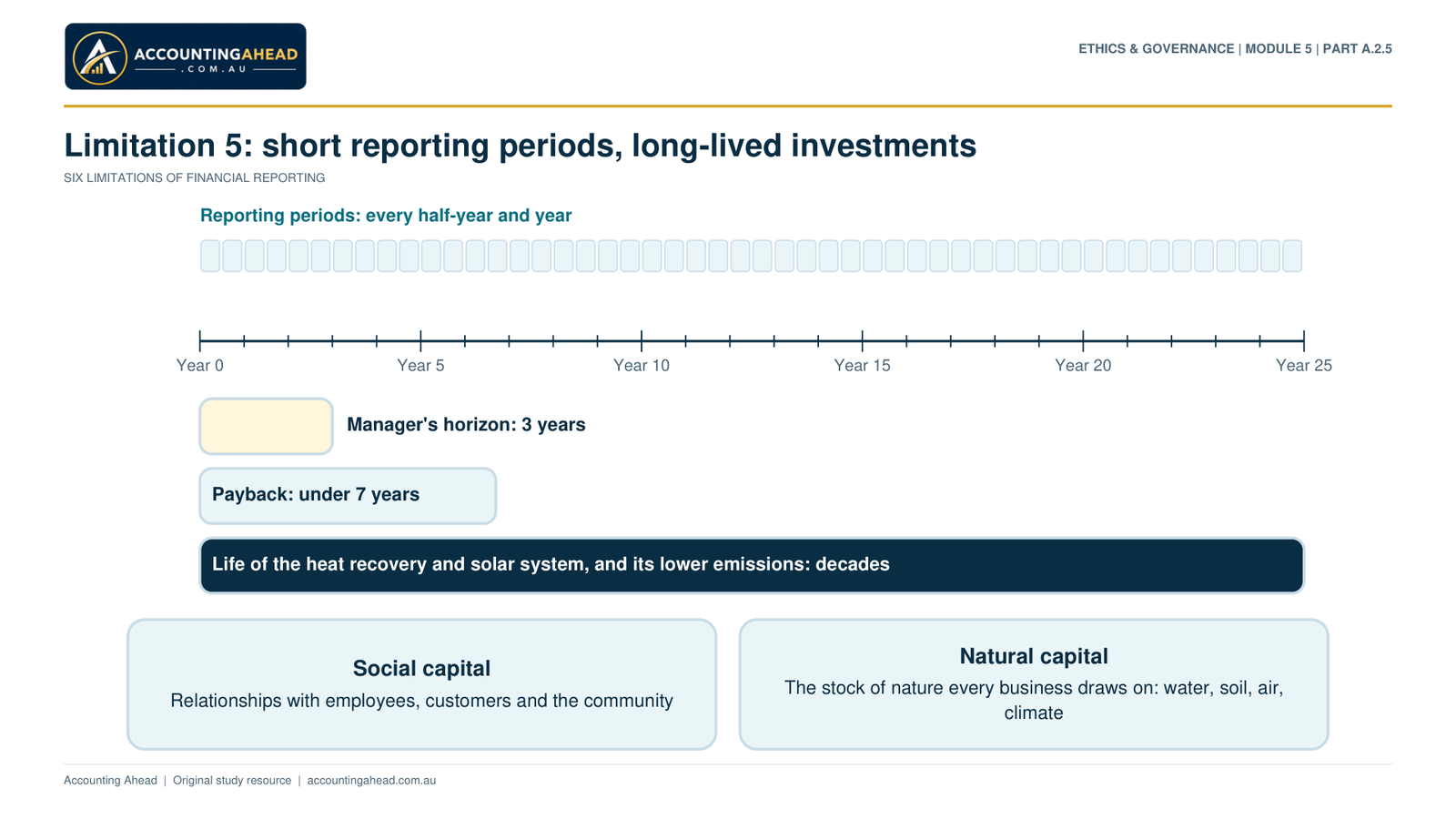
Part A.2.5 · Short reporting periods and long-term decisions
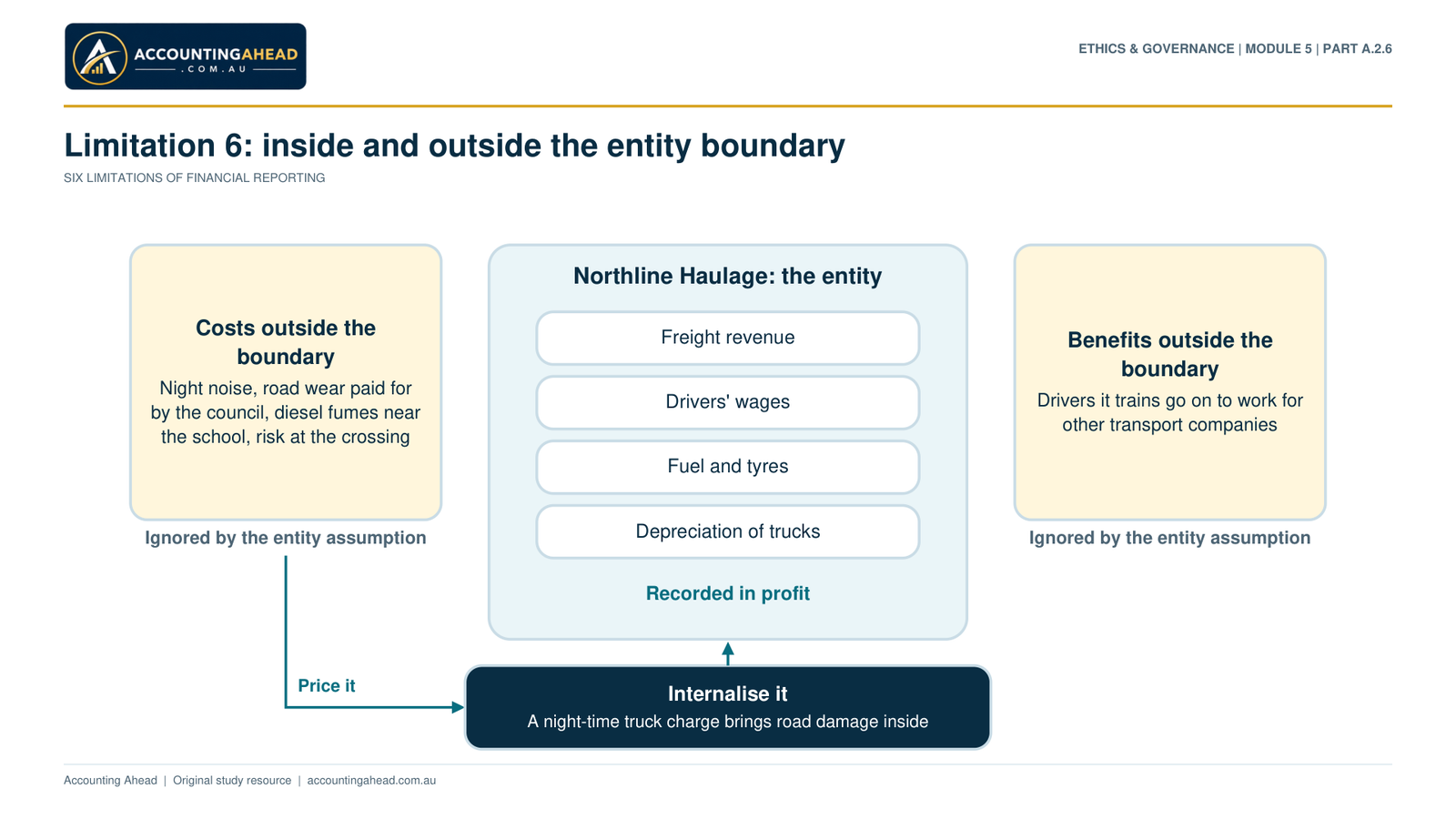
Part A.2.6 · The entity boundary and externalities
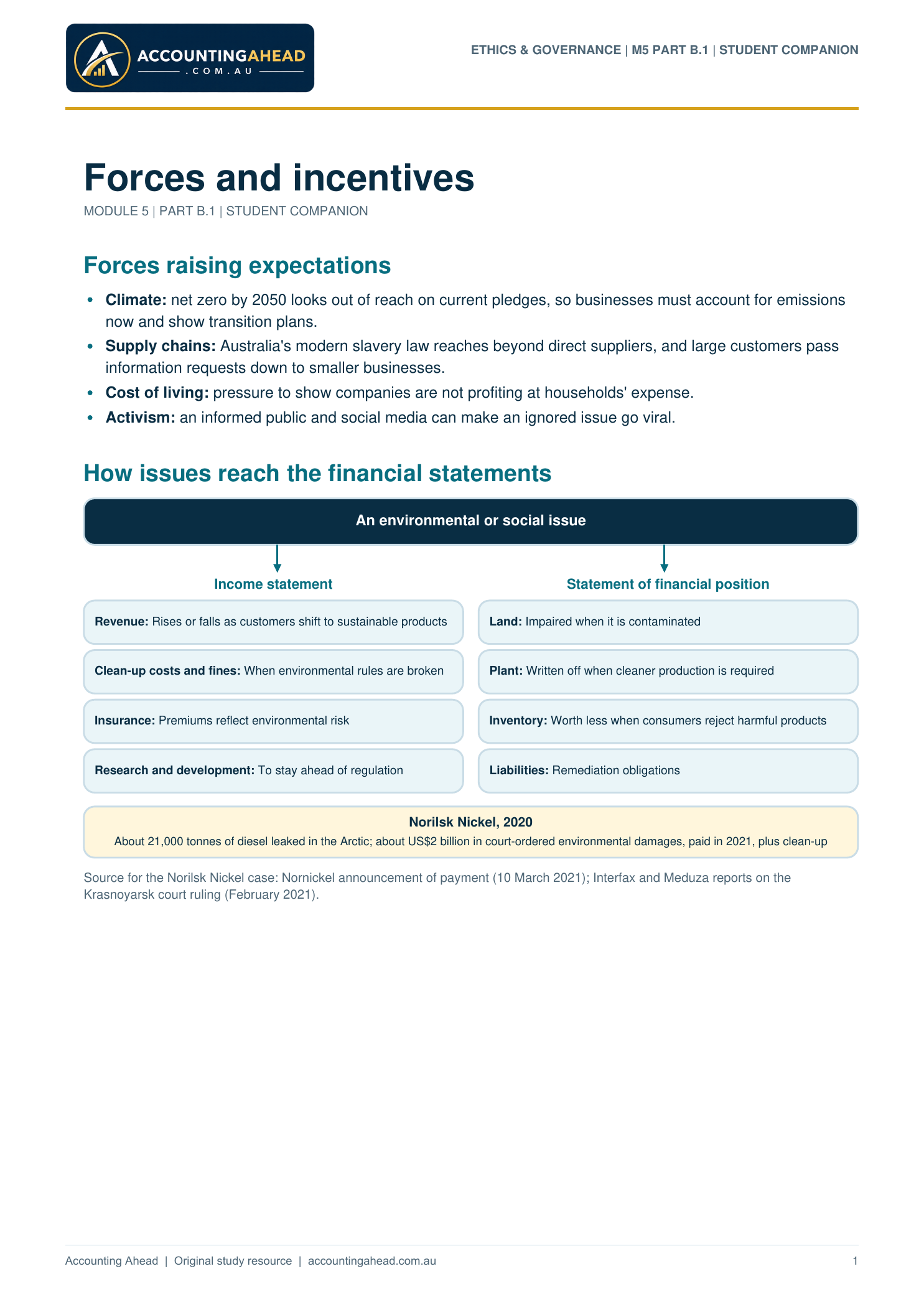
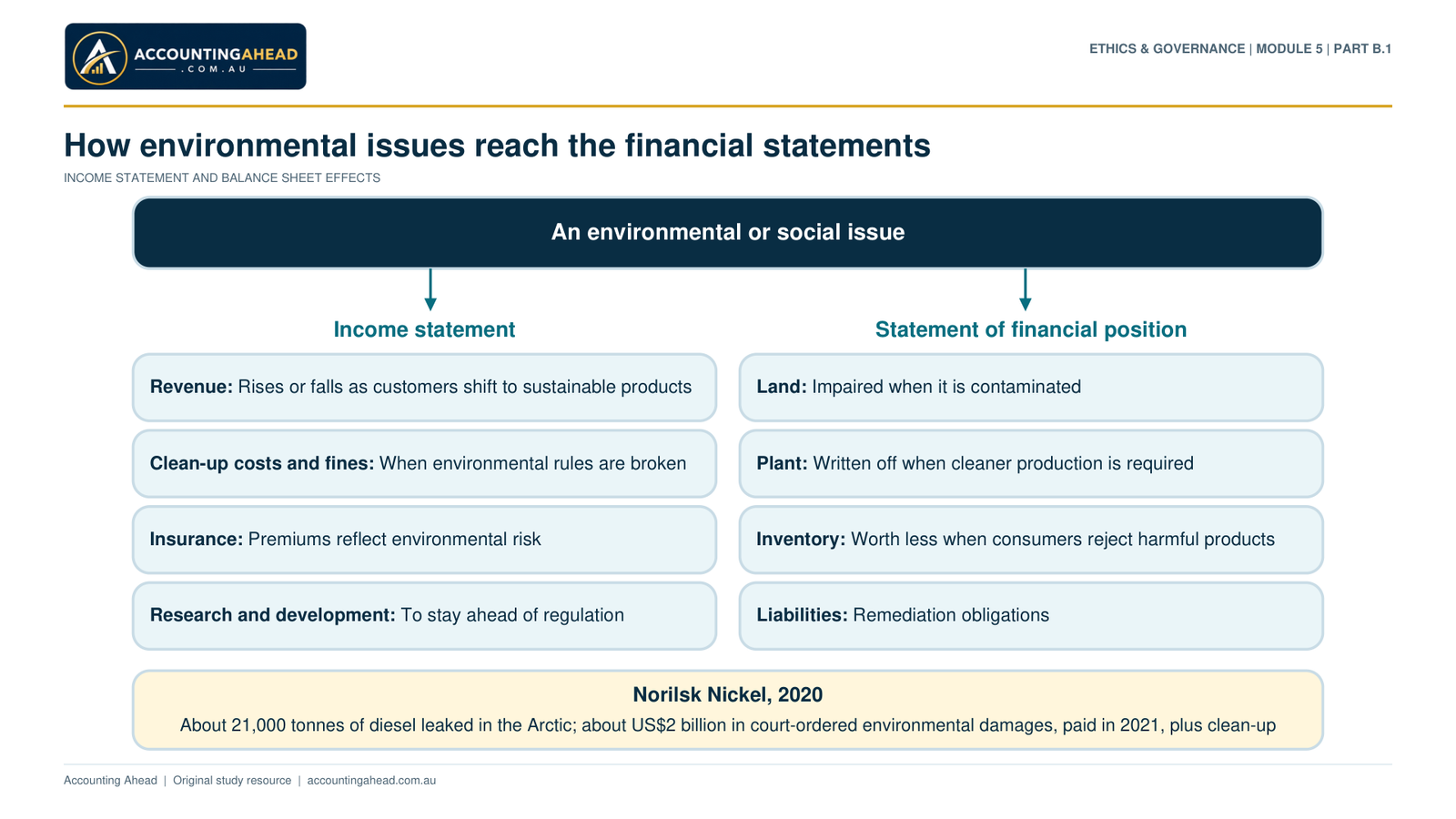
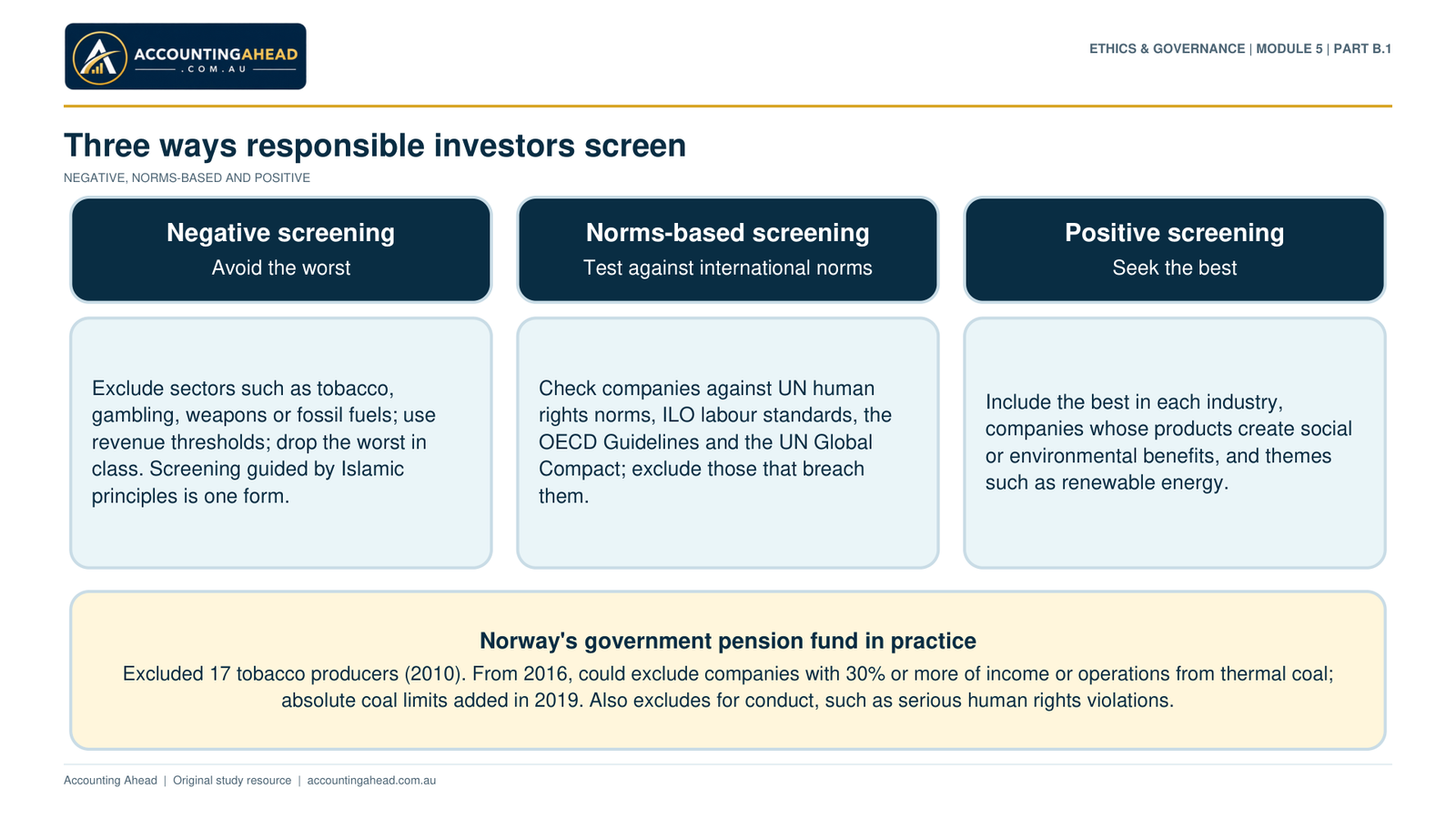
Part B.1 · Forces driving sustainability reporting
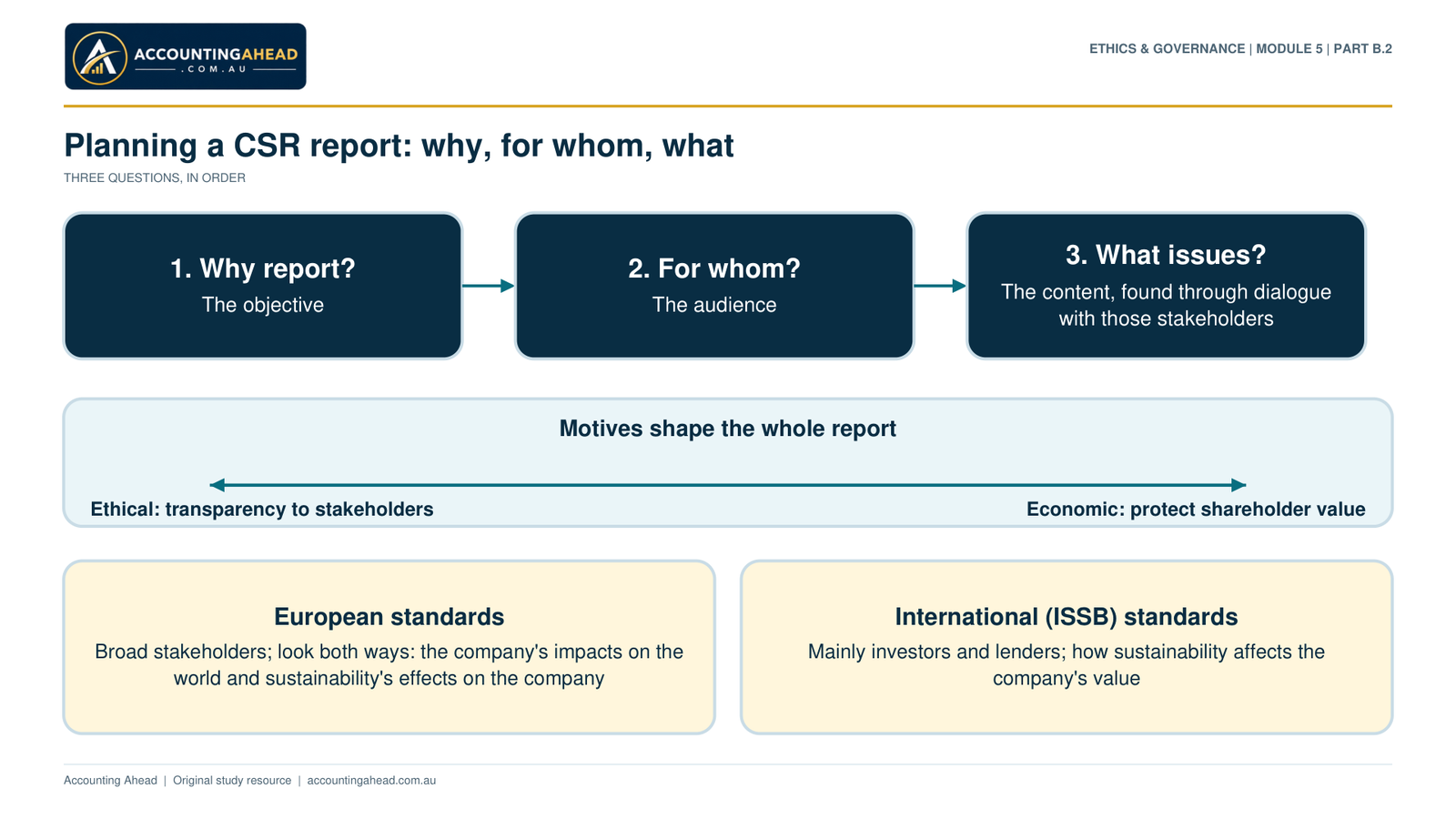
Part B.2 · Who business is responsible to
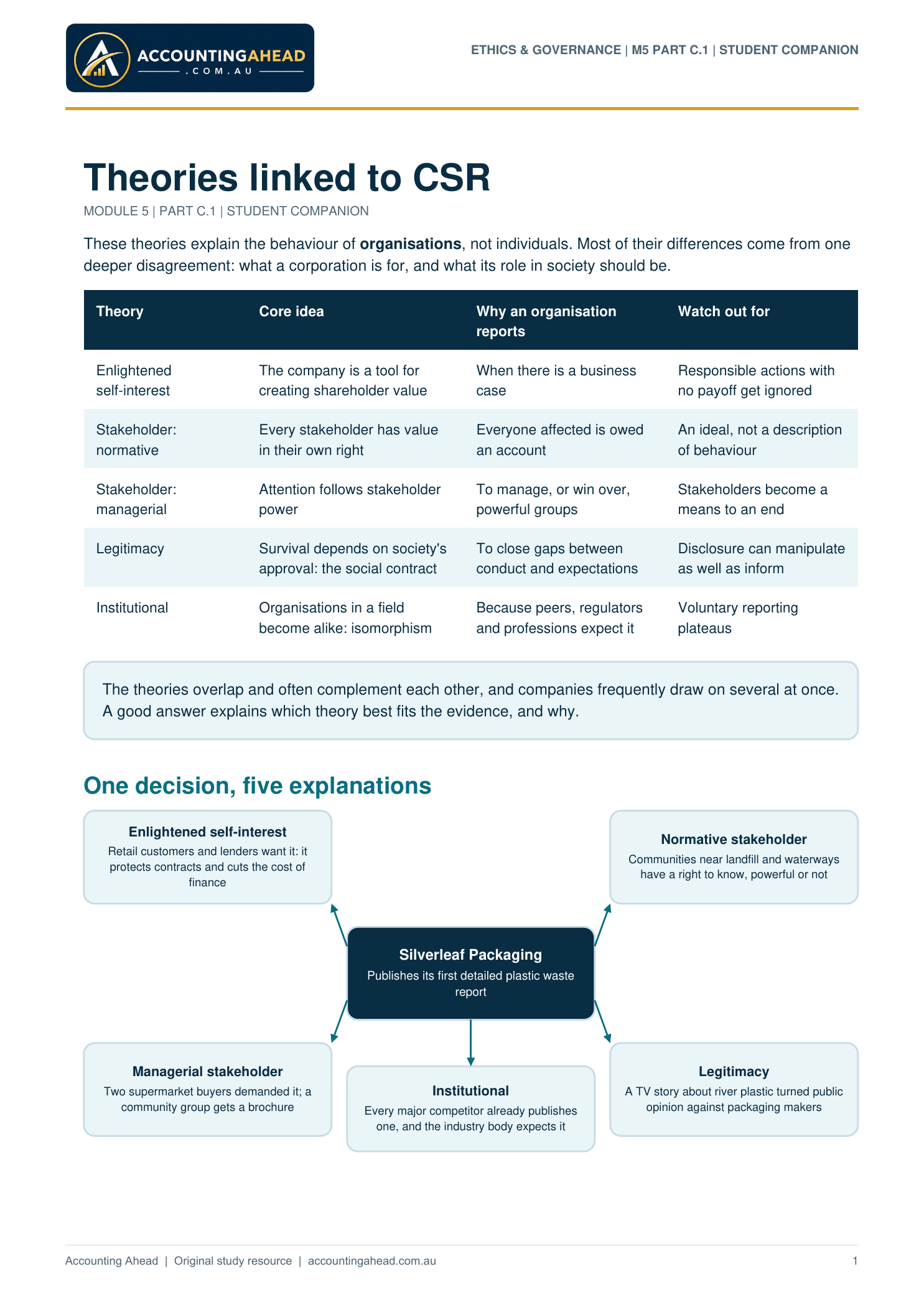
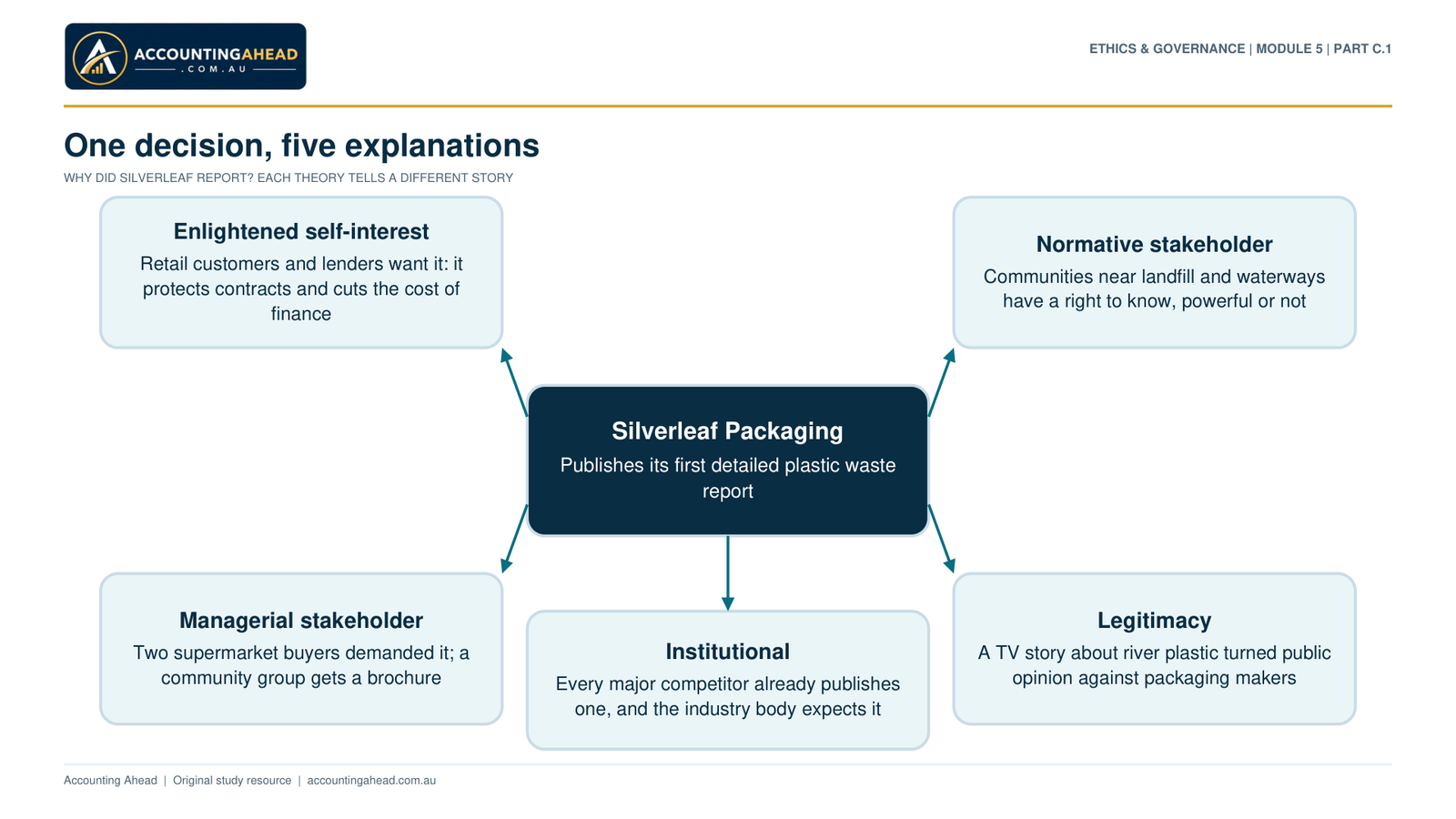
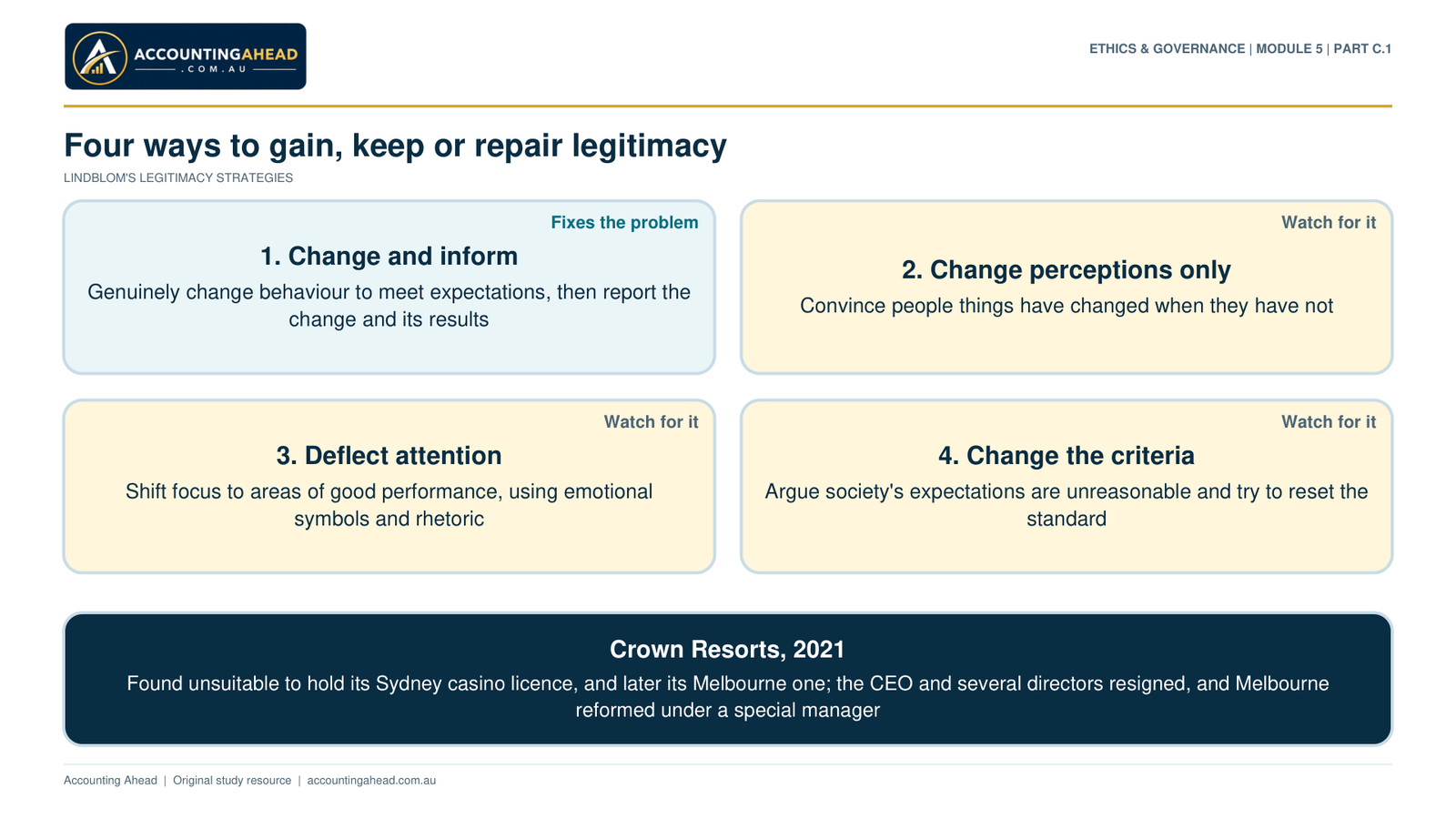
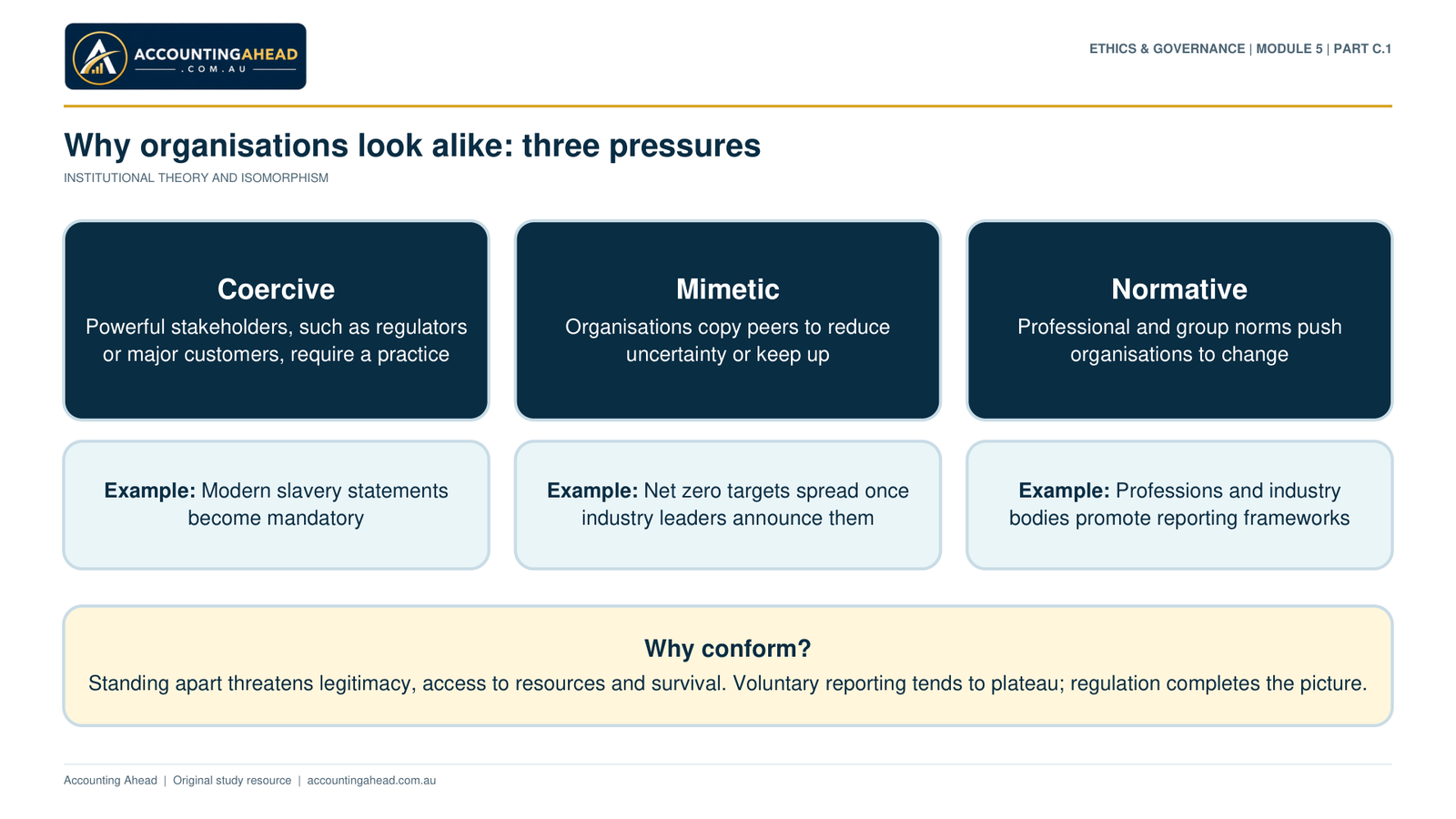
Part C.1 · Theories explaining corporate disclosure
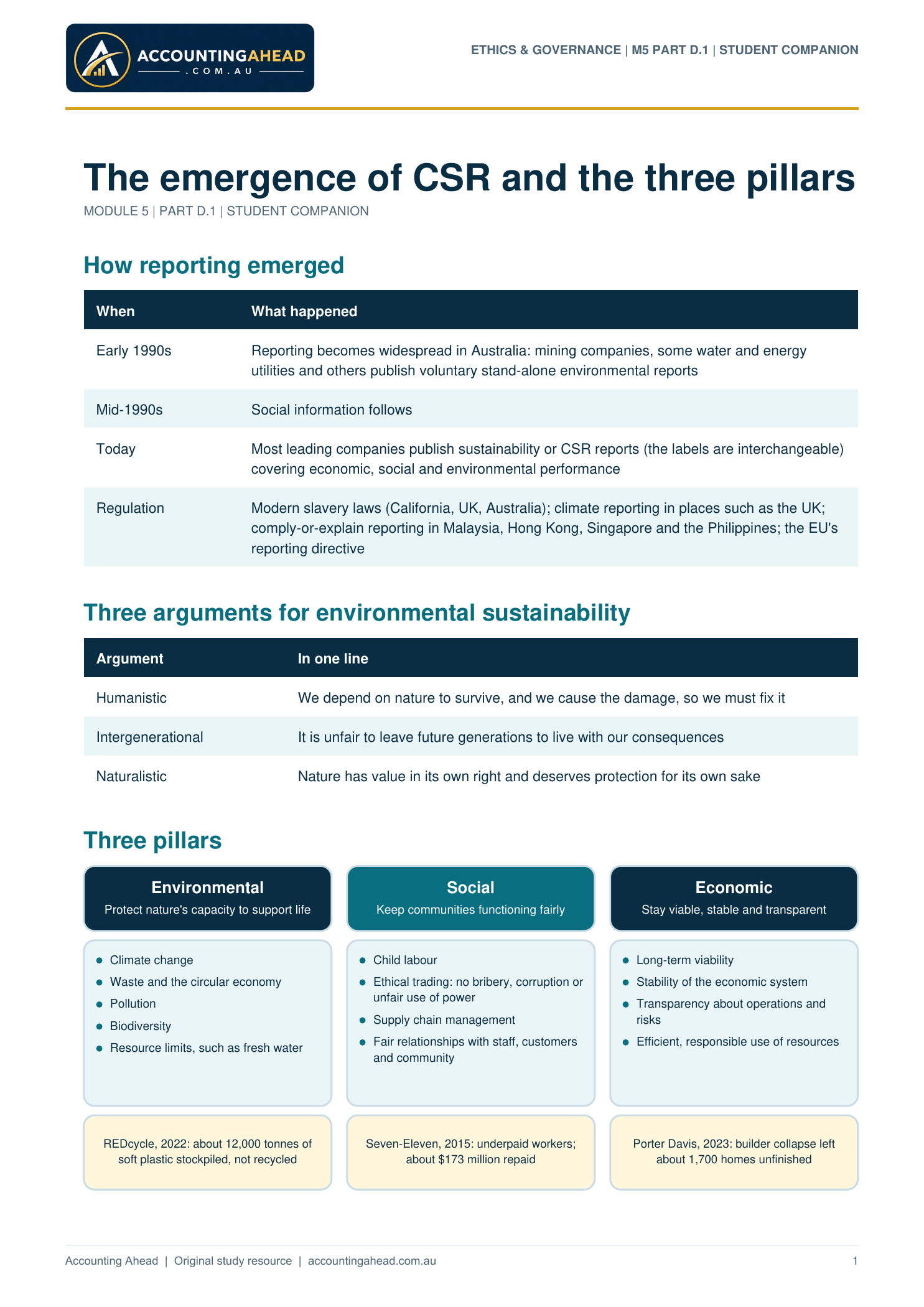
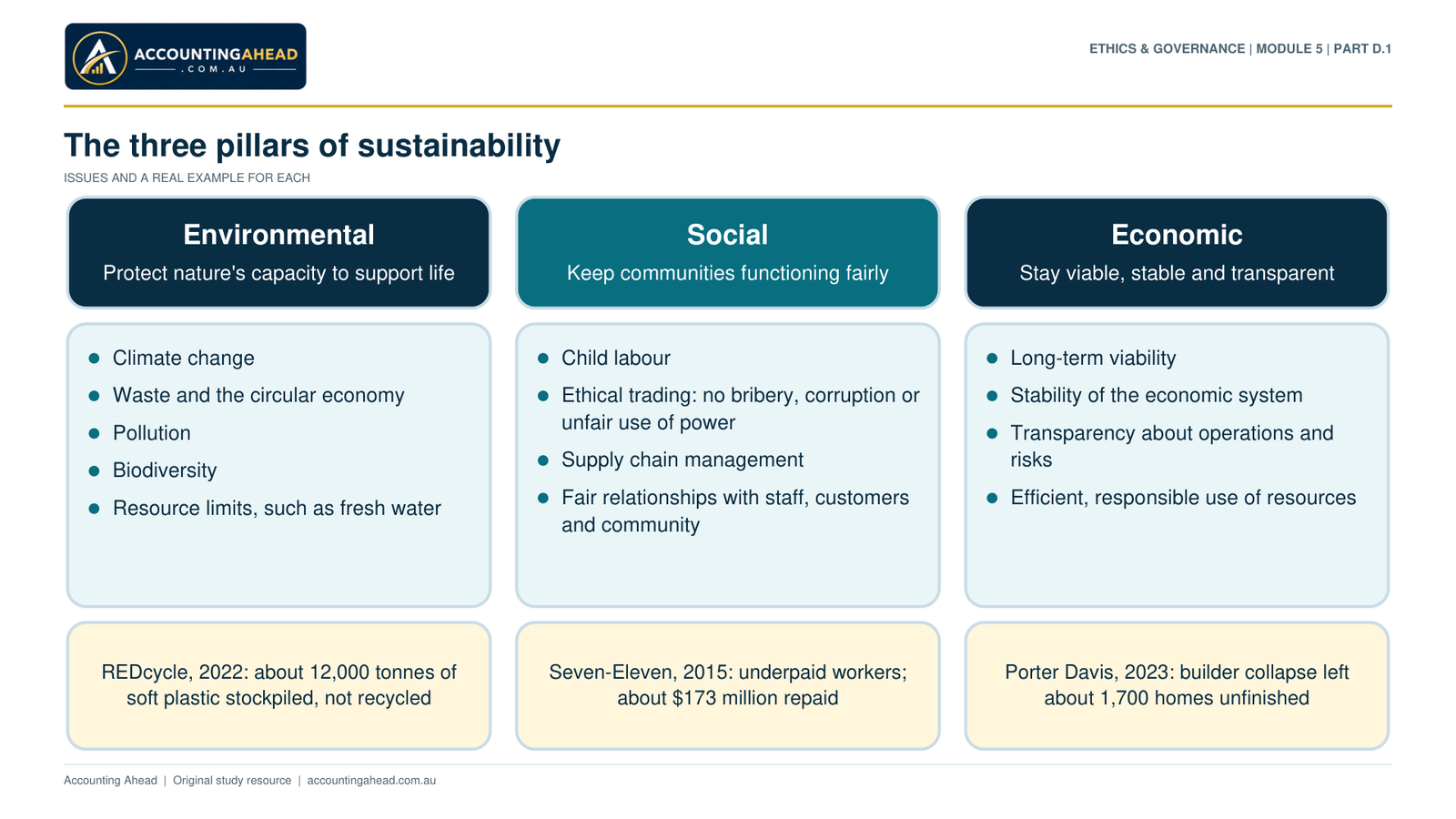
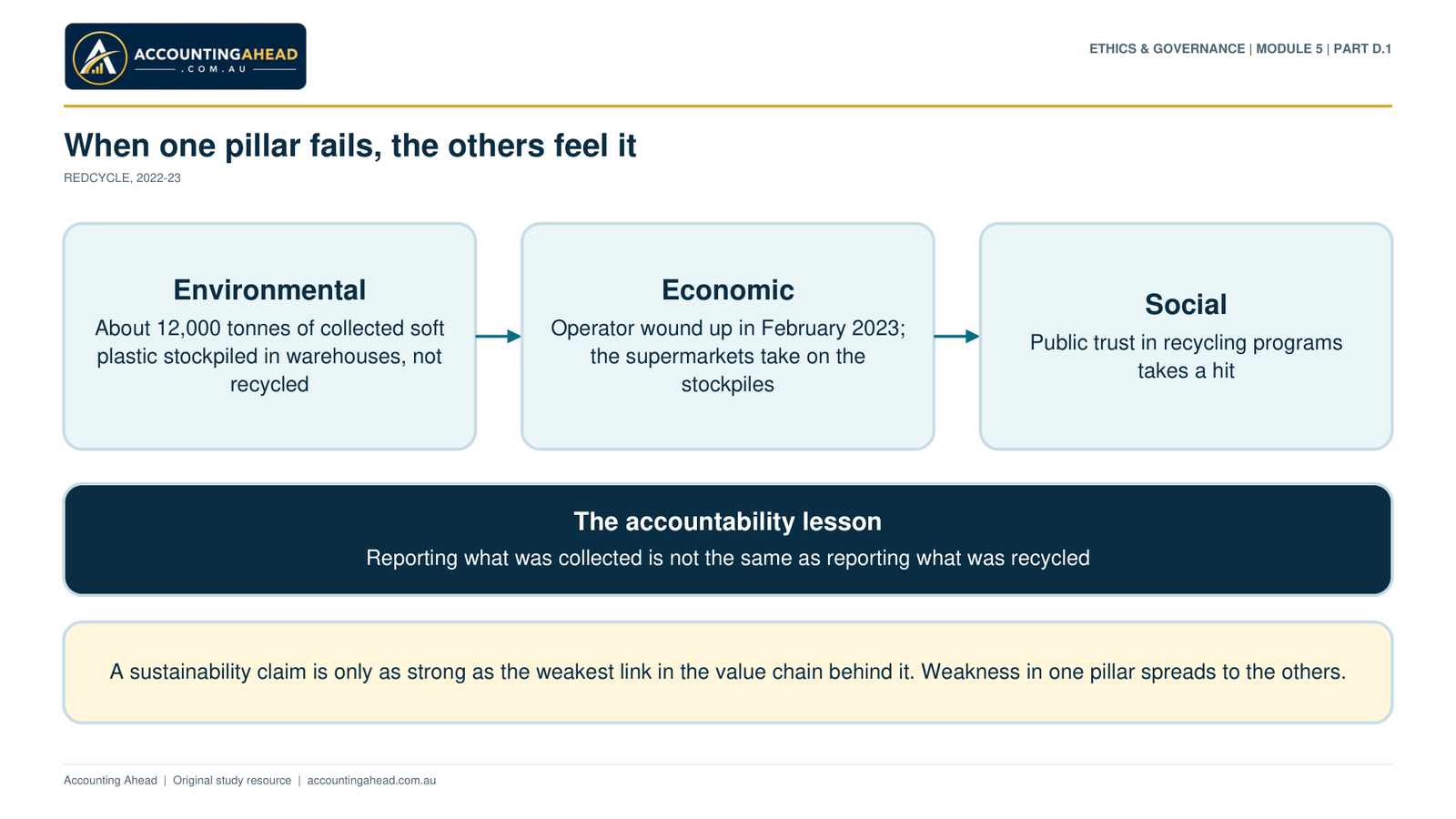
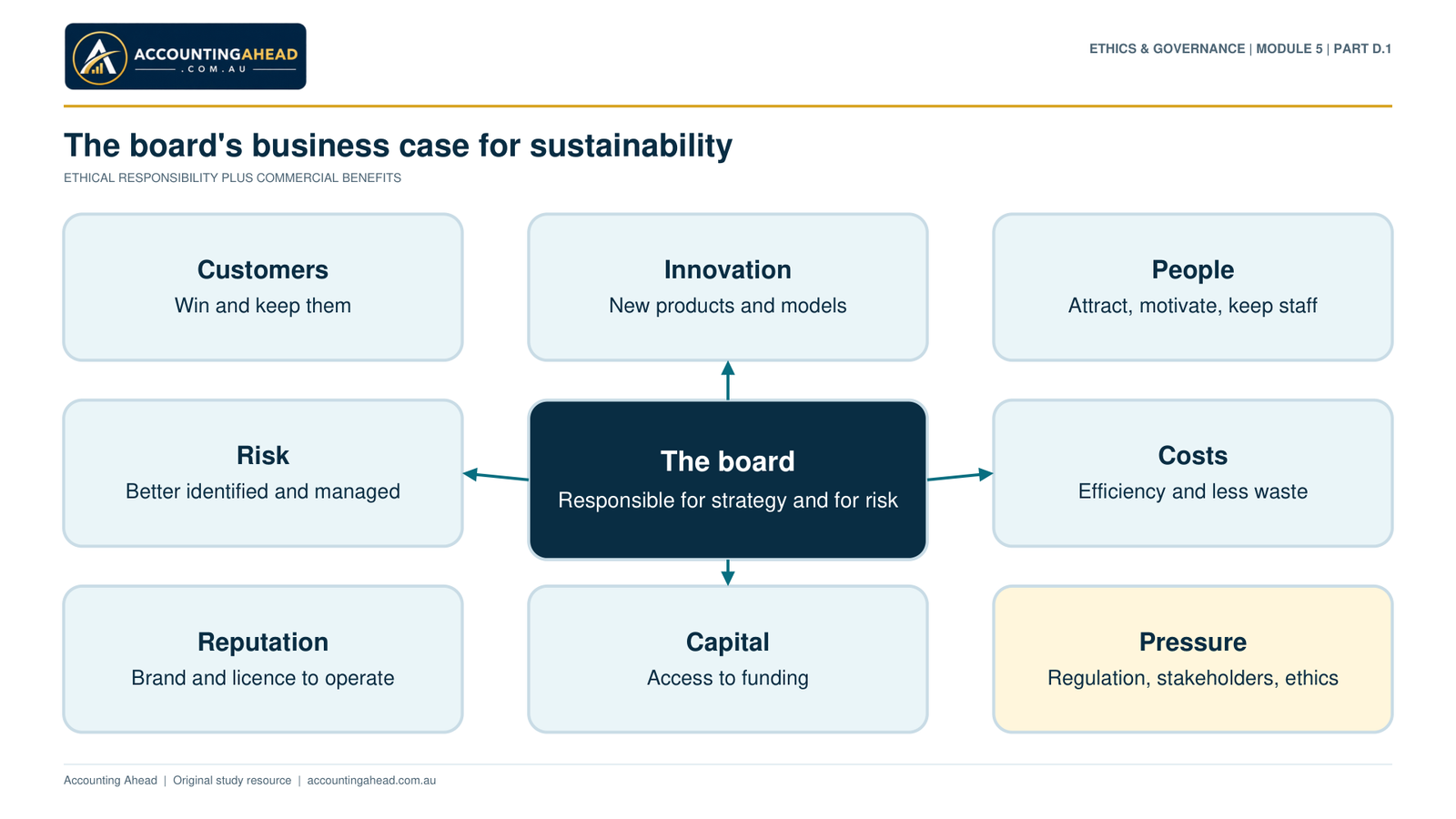
Part D.1 · The three sustainability pillars and the board
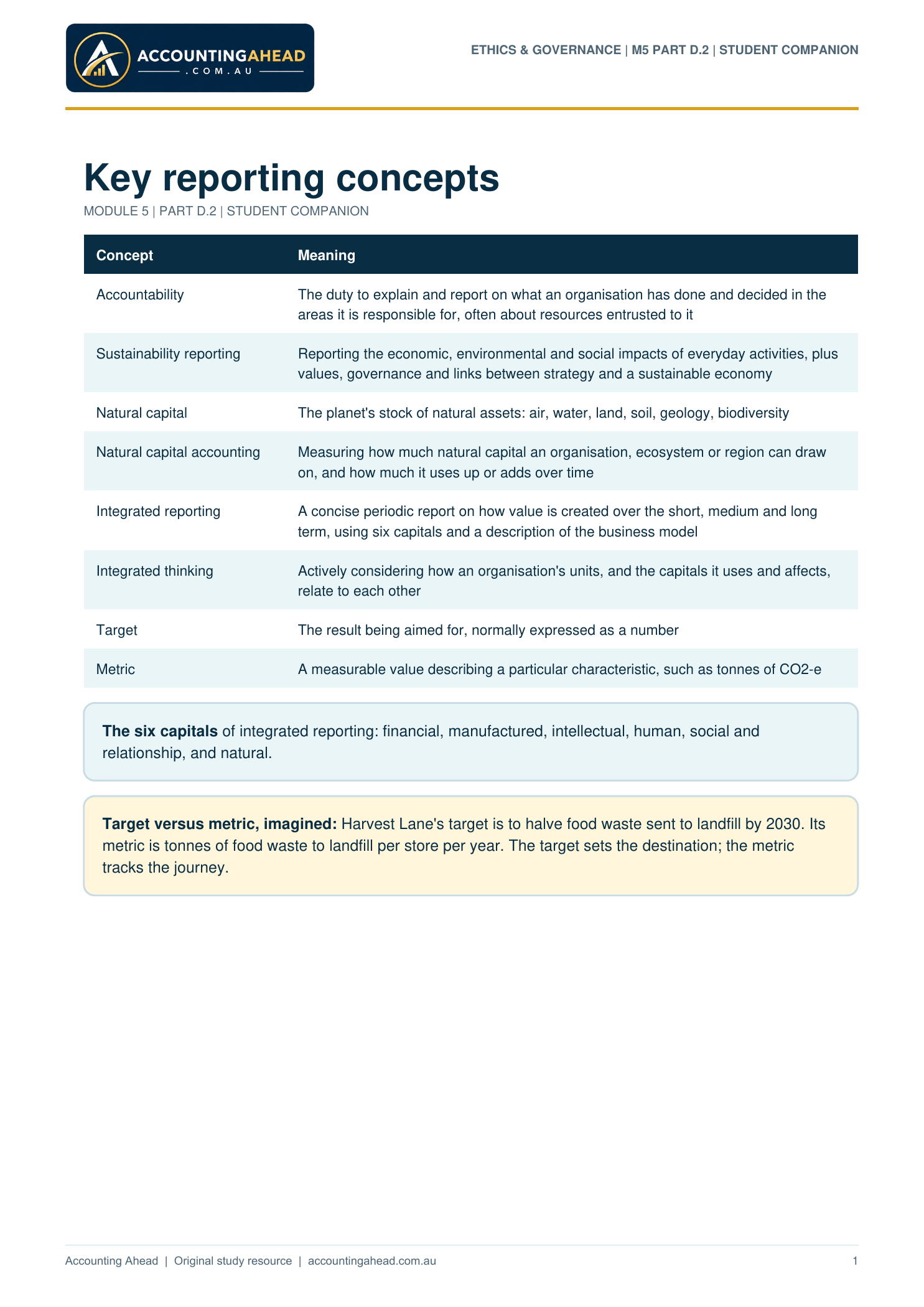
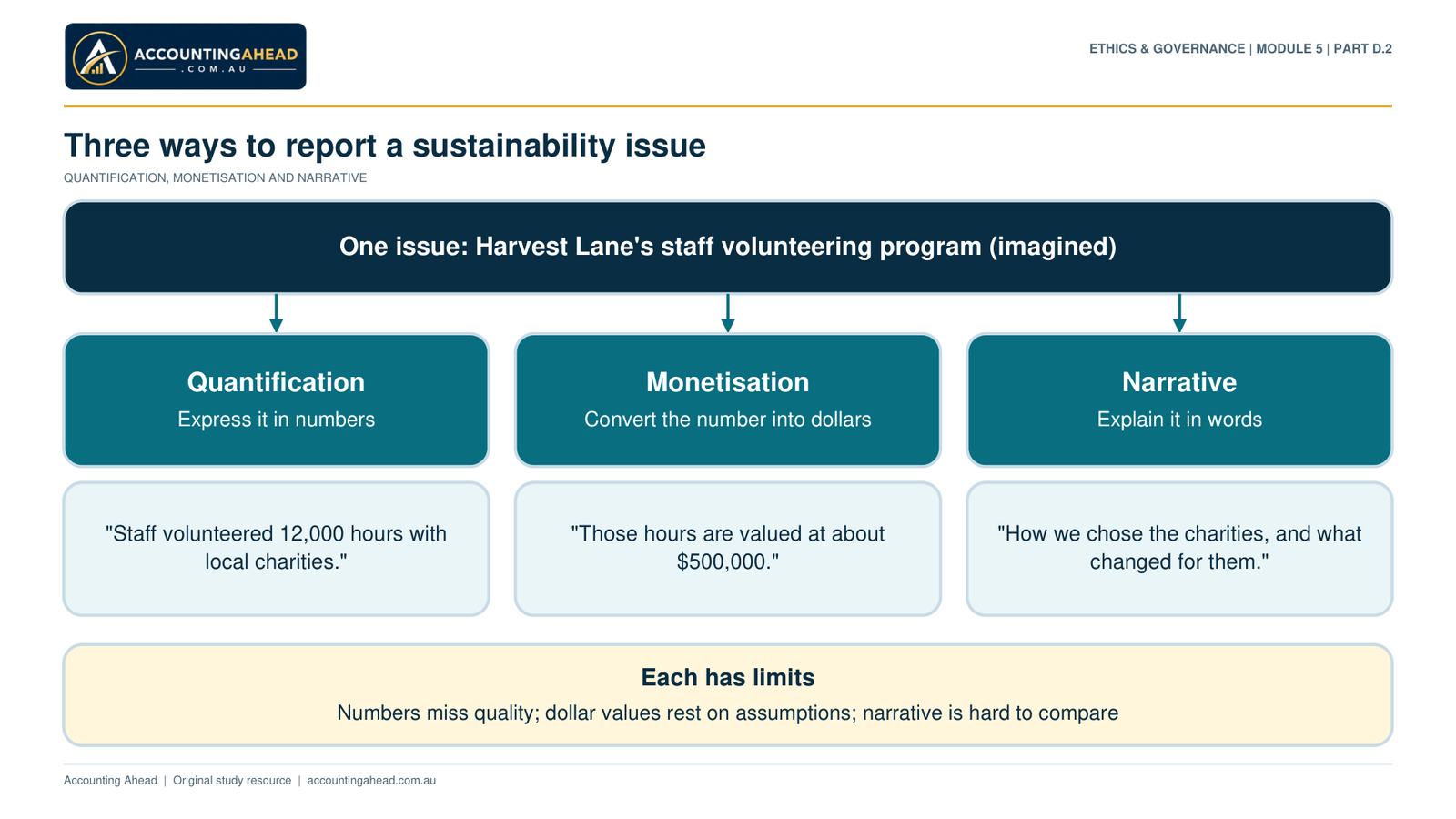
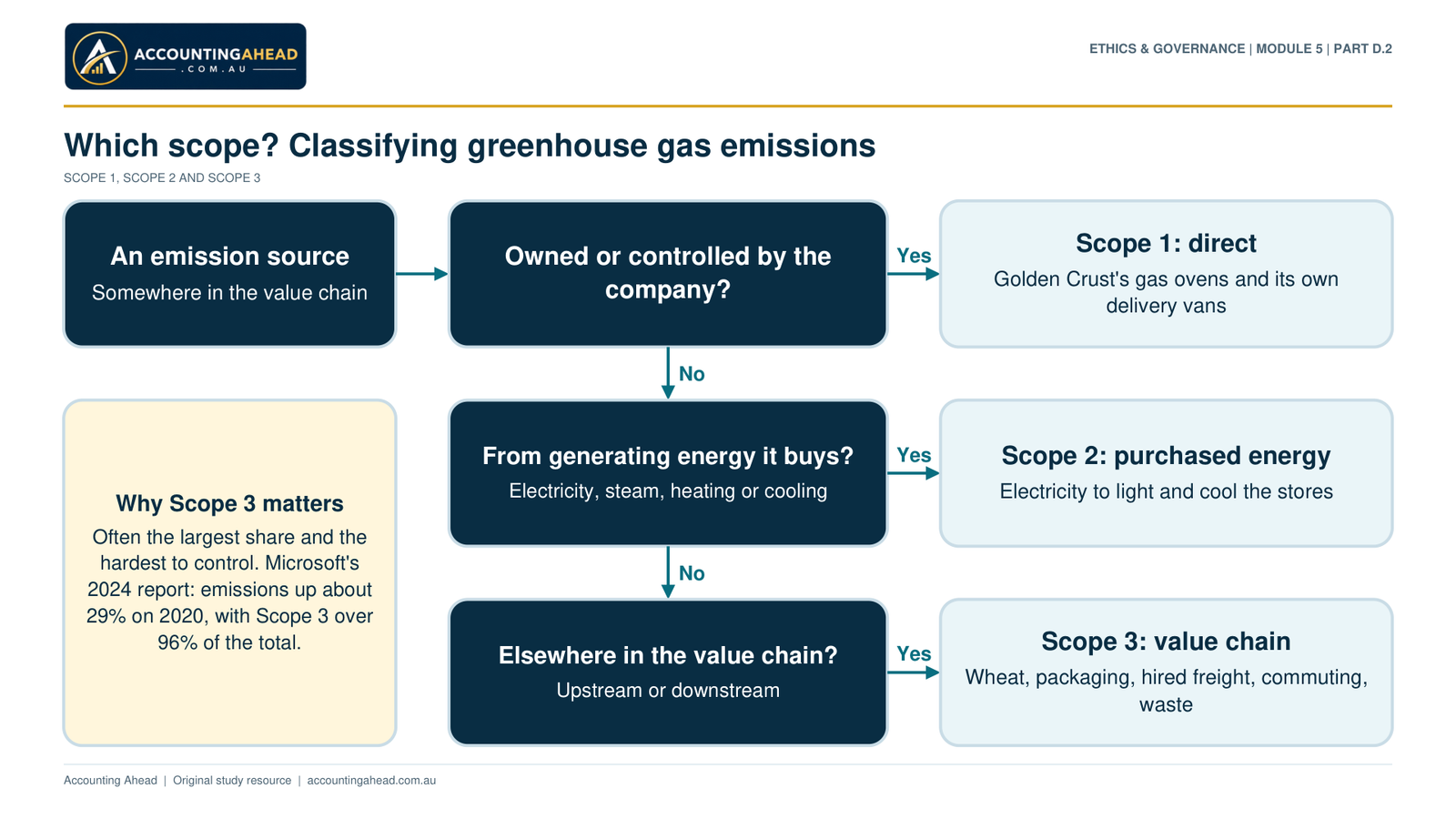
Part D.2 · Reporting concepts, measures and emissions
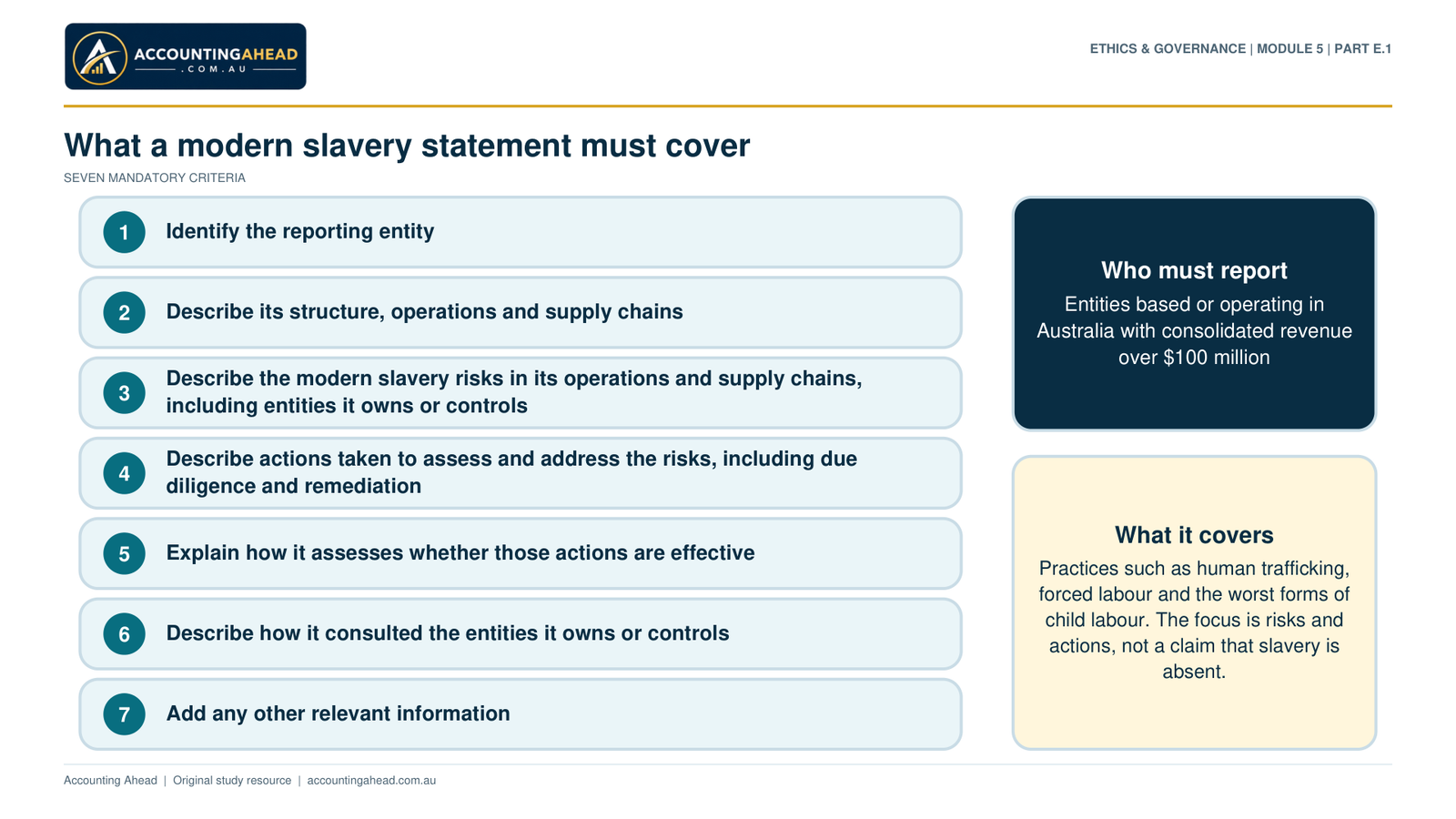
Part E.1 · Mandatory sustainability reporting
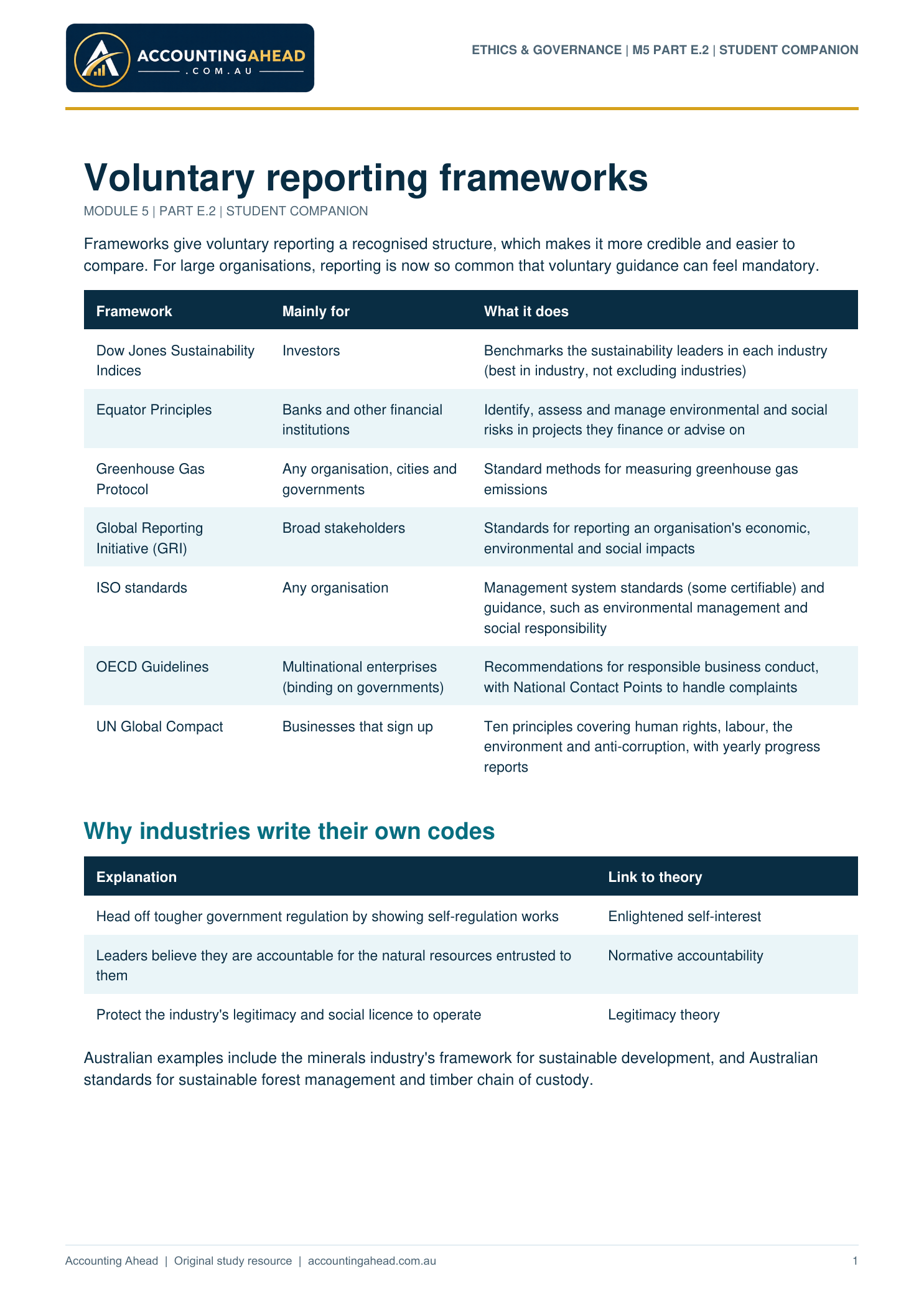
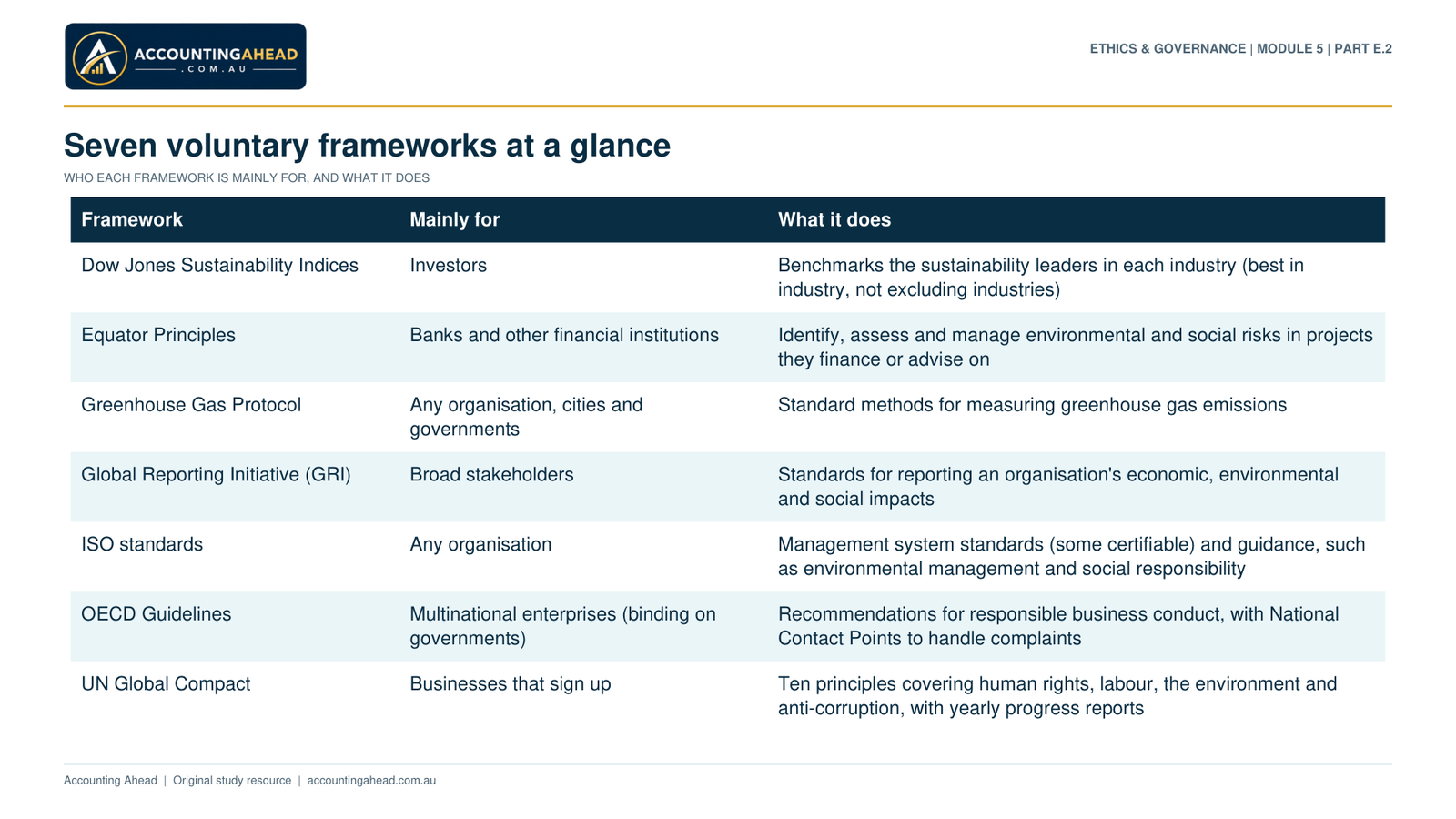
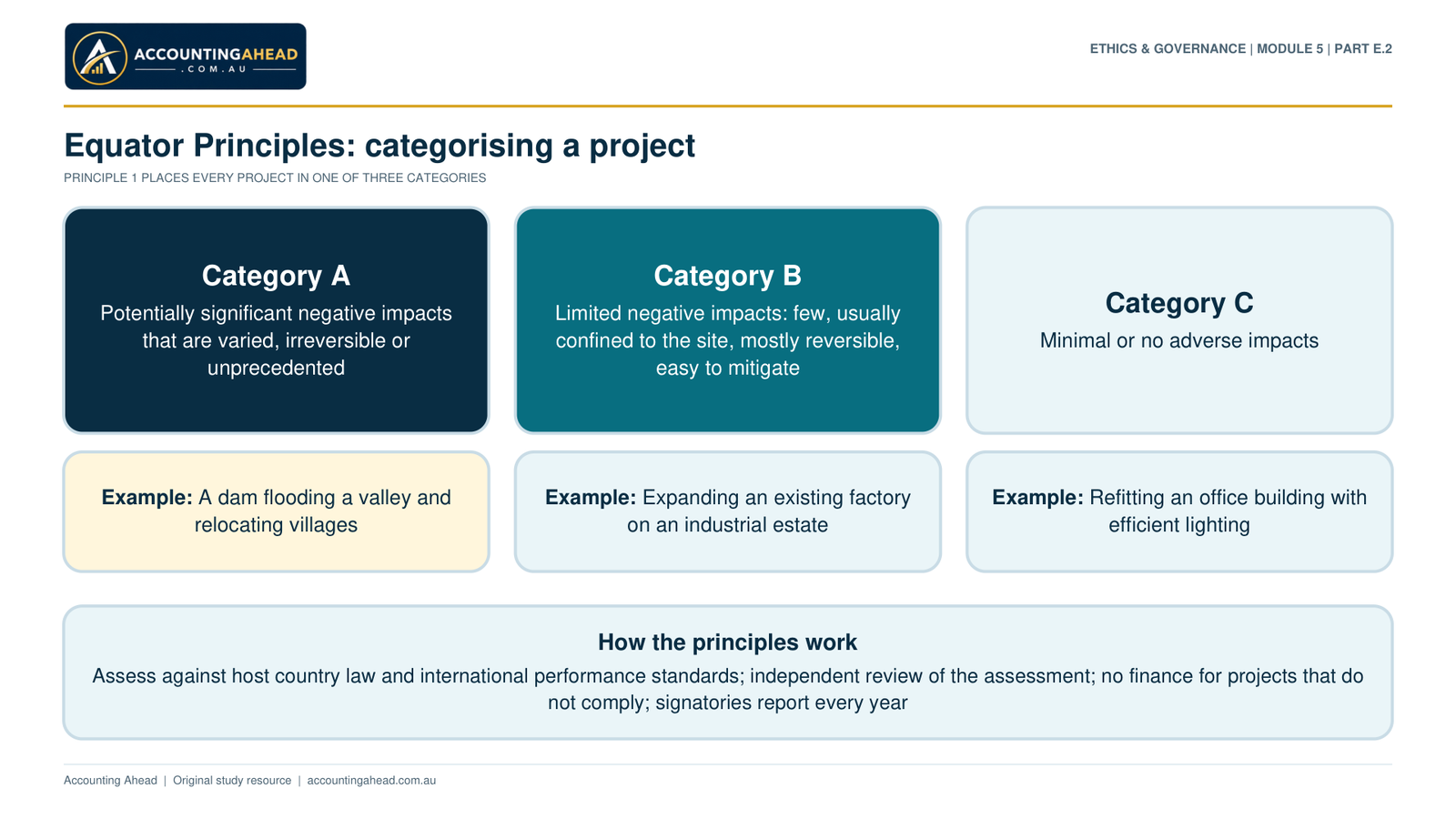
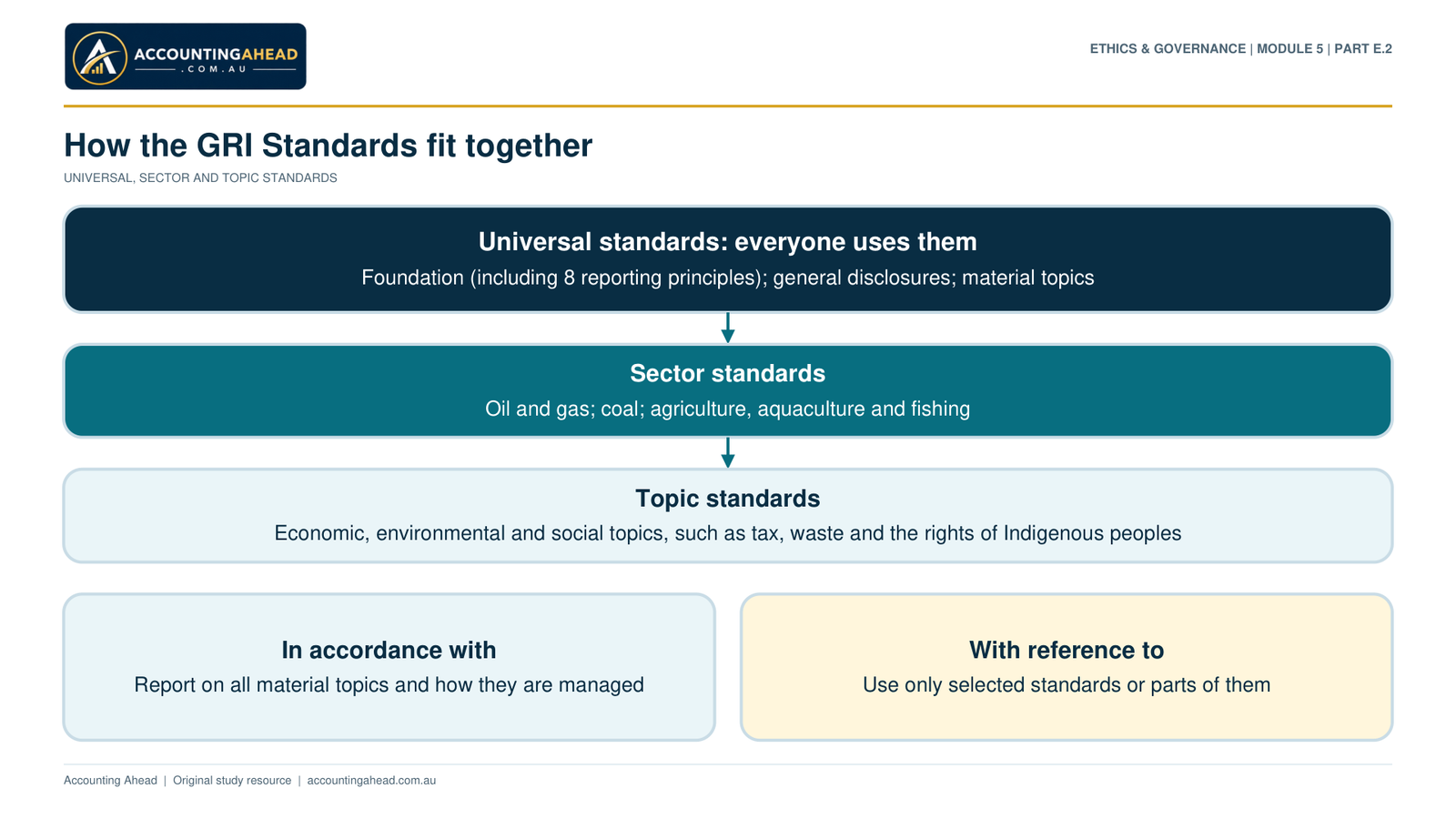
Part E.2 · Voluntary sustainability frameworks
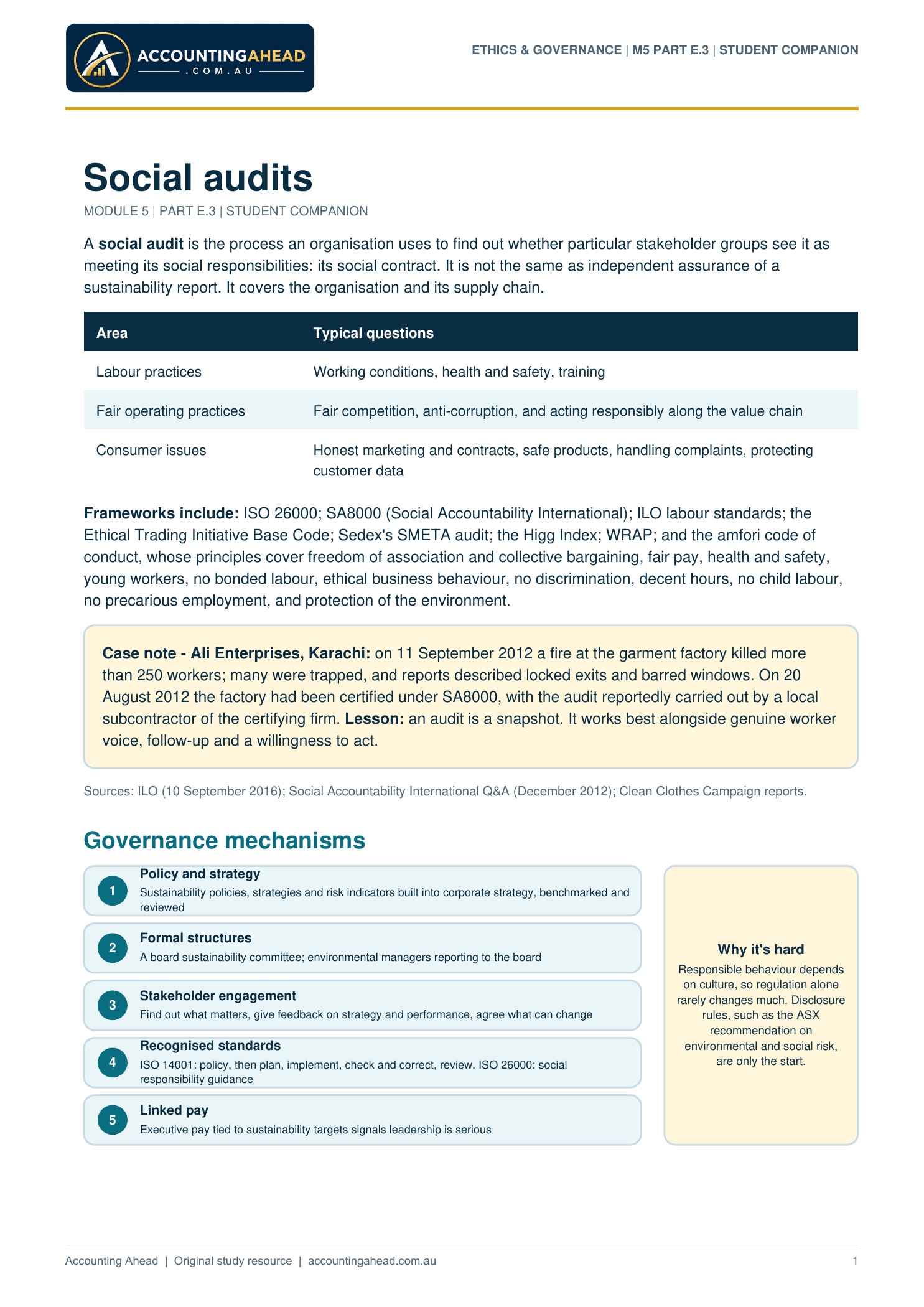
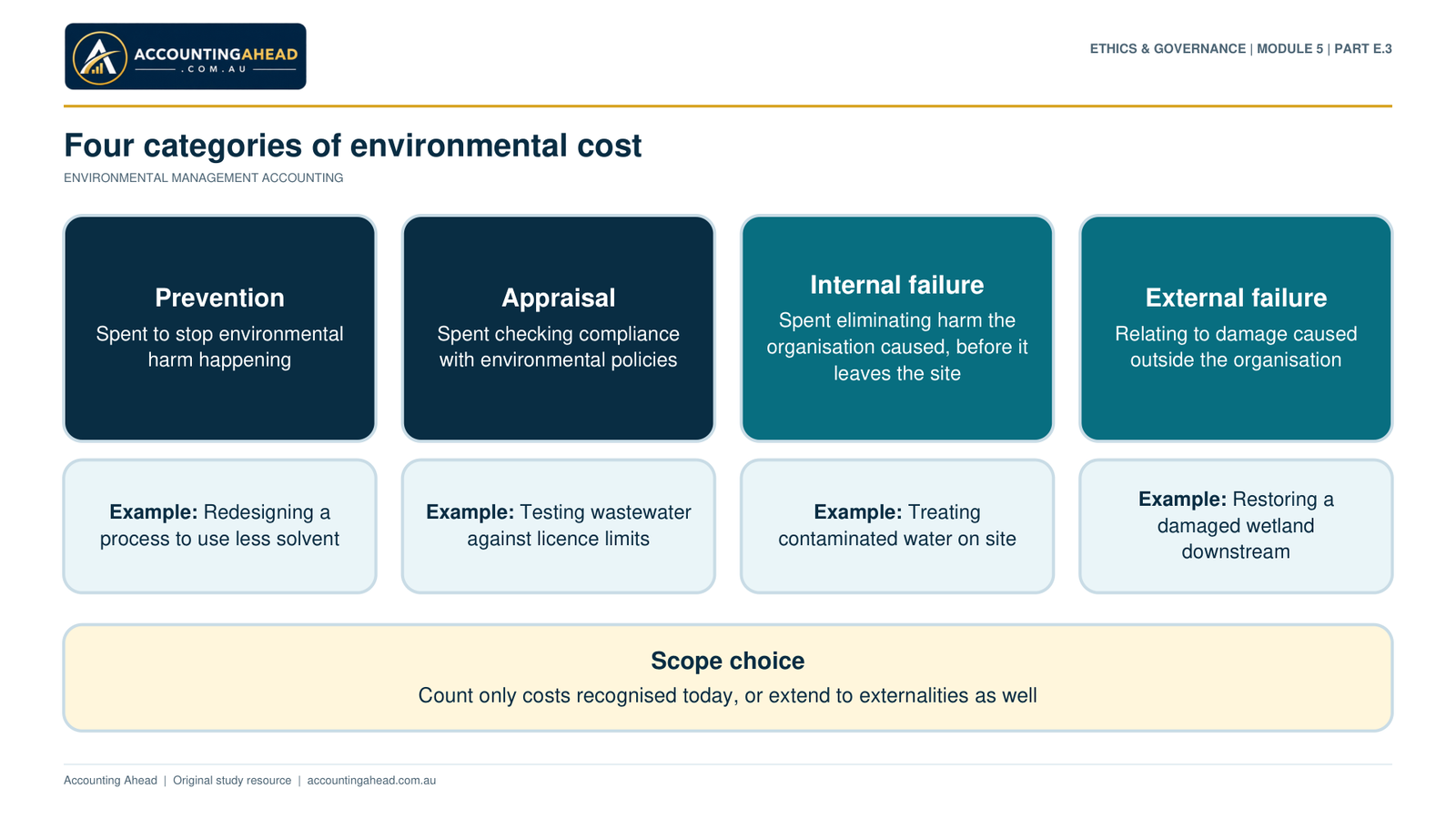
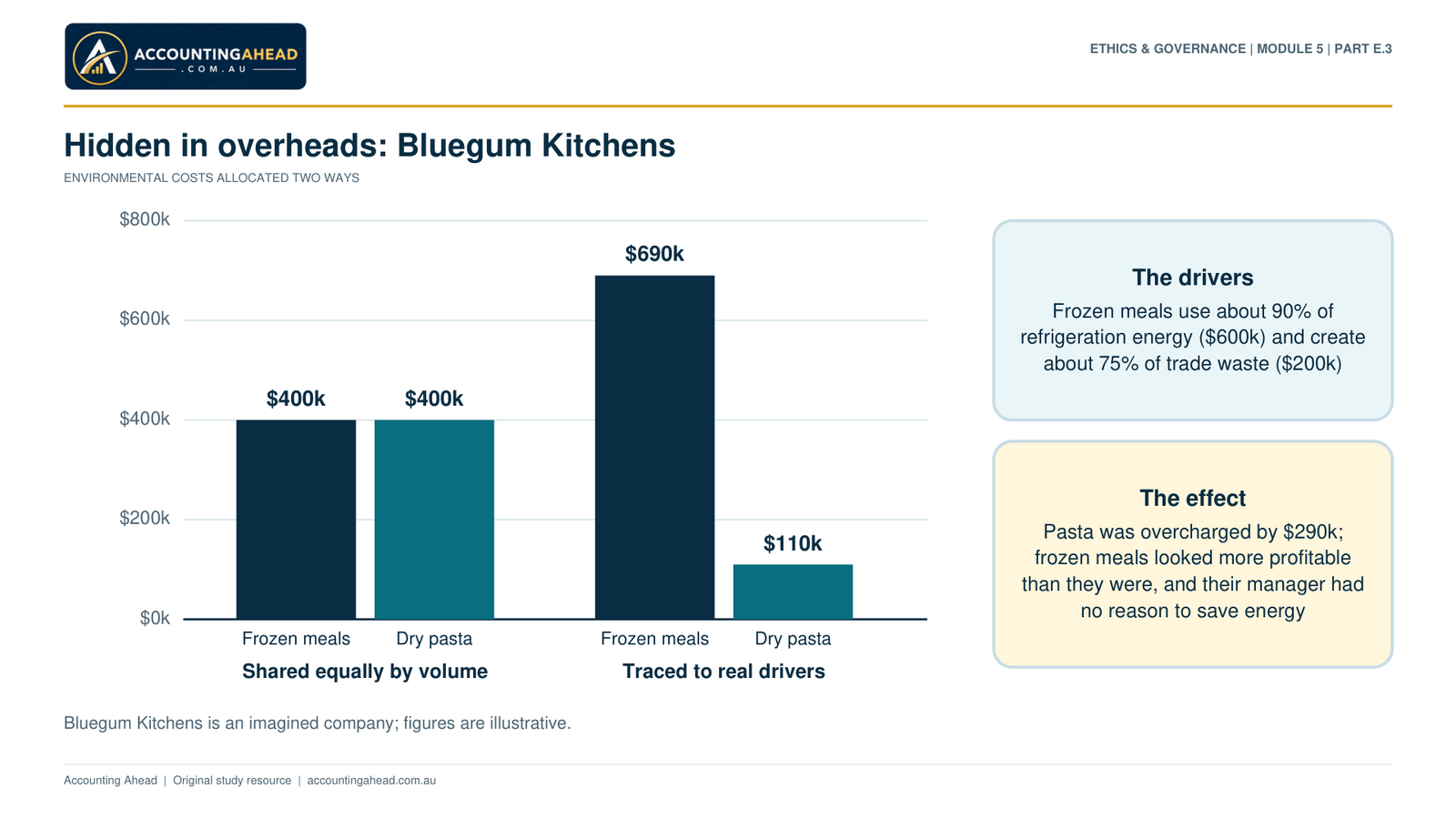
Part E.3 · Social audits and environmental management accounting
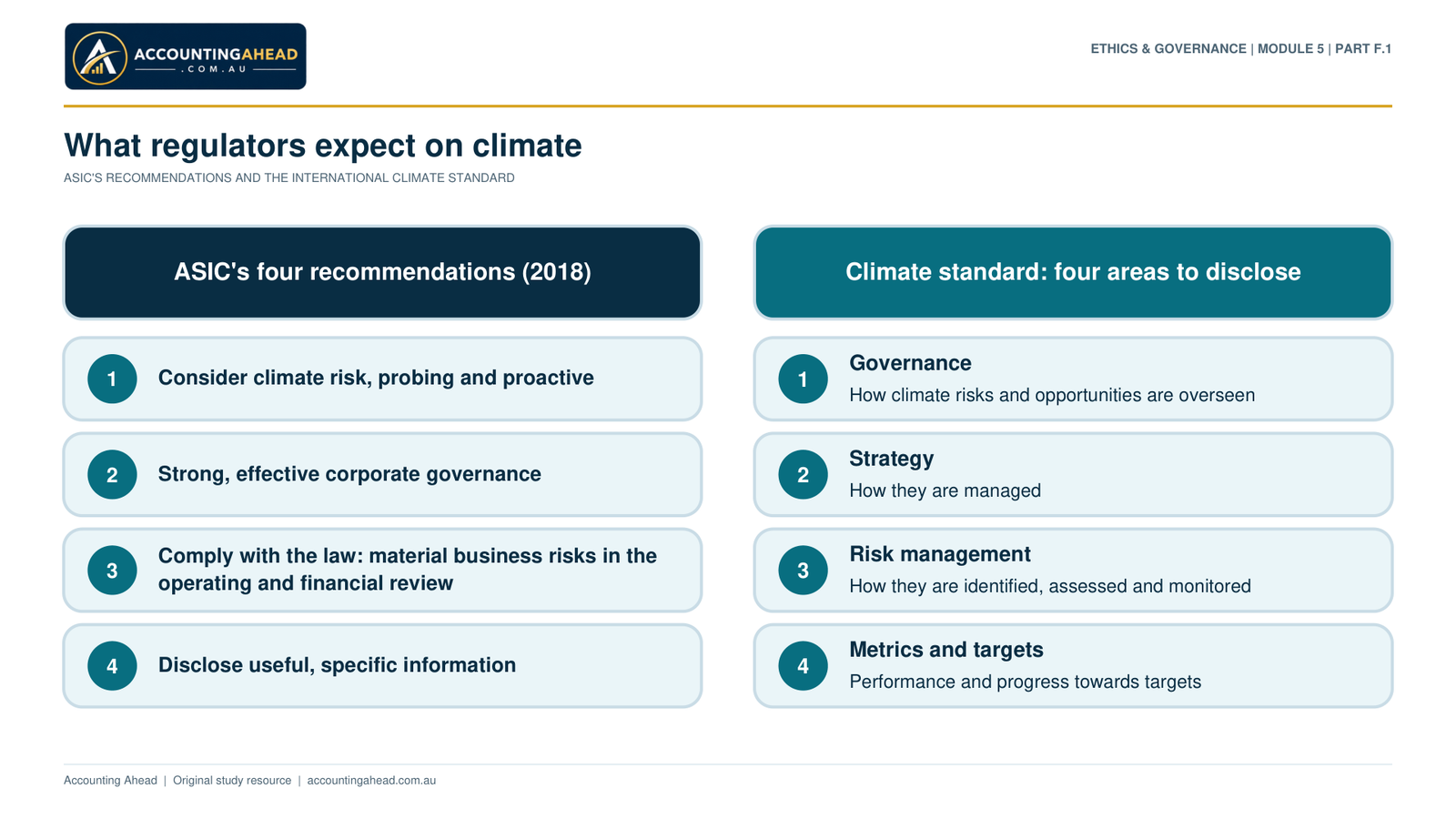
Part F.1 · Climate reporting, carbon pricing and greenwashing