The role and importance of financial reporting
Understand what financial reports communicate, then connect recognition and measurement to practical calculations and journal entries. Six connected topics follow the sixth-edition Financial Reporting study guide (October 2022). The examples and printable study aids are original Accounting Ahead material.
These independent resources use an October 2022 study context. Check the historical standards and assumptions identified with each topic and printable.
Module 1 printablesSign in to keep track of written topics.
Topics in this module
- 01Reporting purpose and the conceptual framework
Understand the users, reporting framework and accounting assumptions that explain why financial statements look the way they do.
7 sections - 02Useful information, elements and recognition
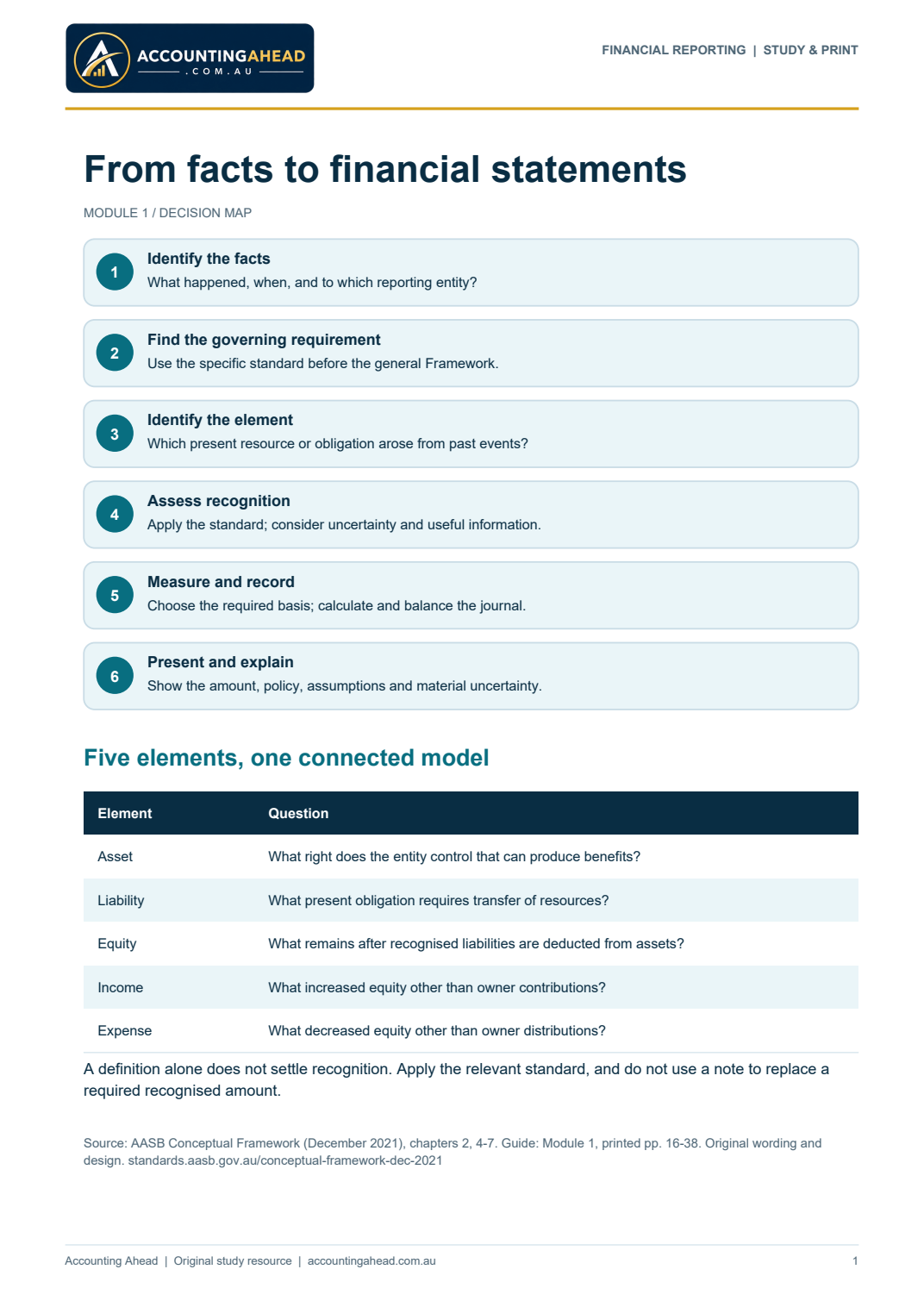
Connect useful information with the five financial-statement elements, then decide whether and when an item belongs in the statements.
7 sections1 PDFIncludes 1 flowchart guide - 03Measurement and present value
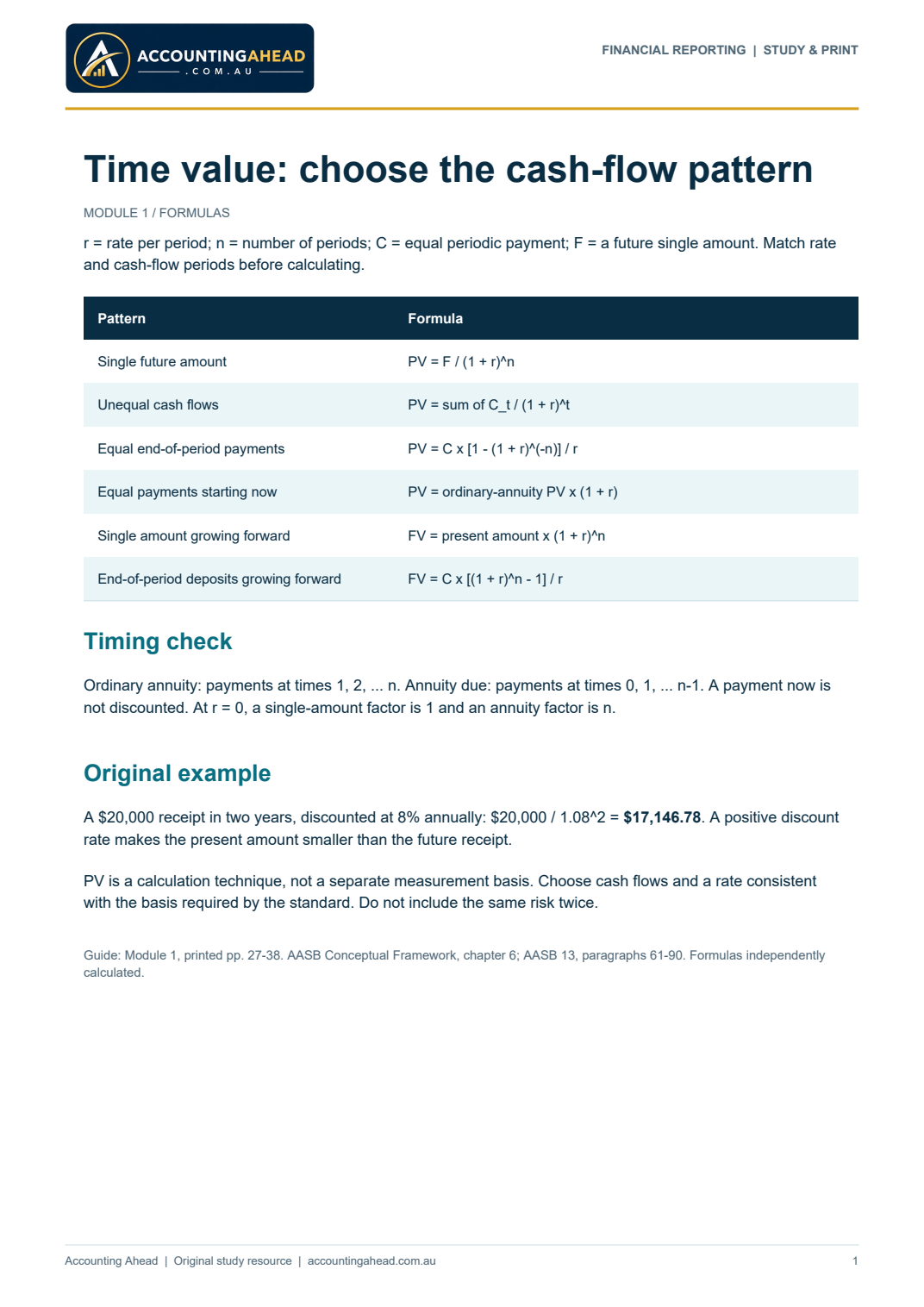
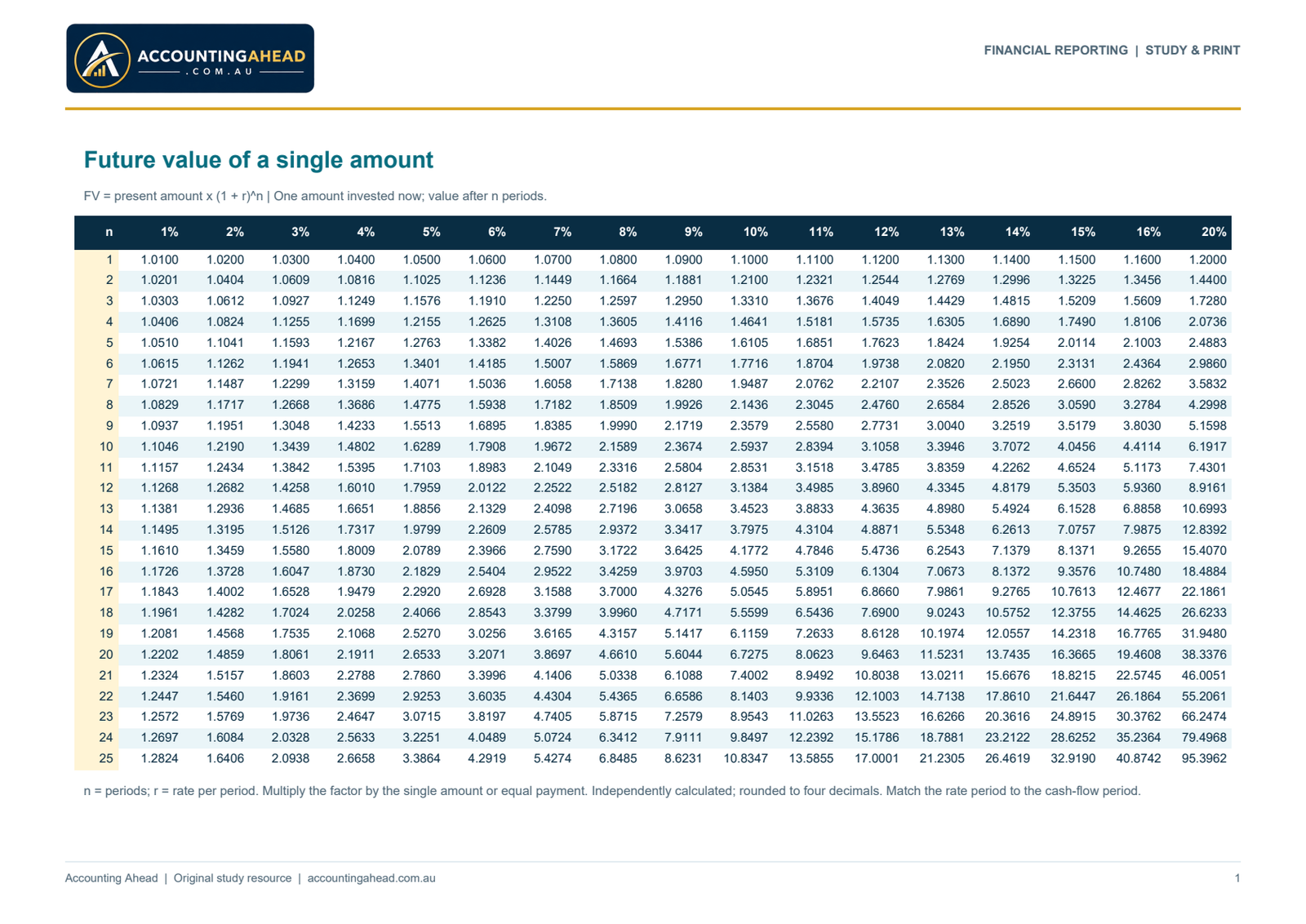
Choose the correct measurement basis, distinguish market and entity assumptions, and build present-value and effective-interest calculations.
8 sections2 PDFs - 04Leases and journal entries
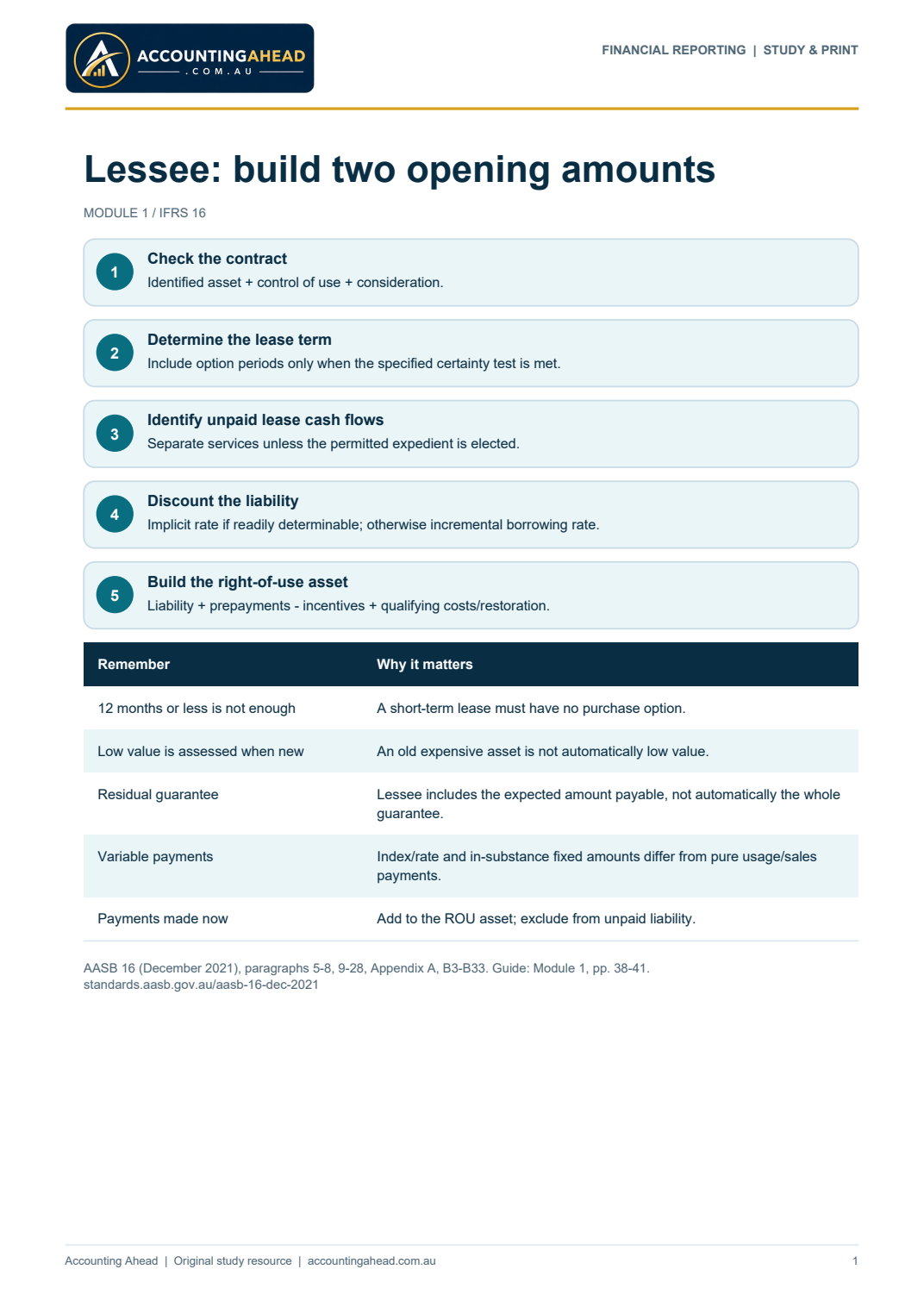
Work through lessee and lessor accounting using a payment timeline, balanced journal entries and independently reconciled lease schedules.
9 sections1 PDF - 05Employee benefits and share-based payments
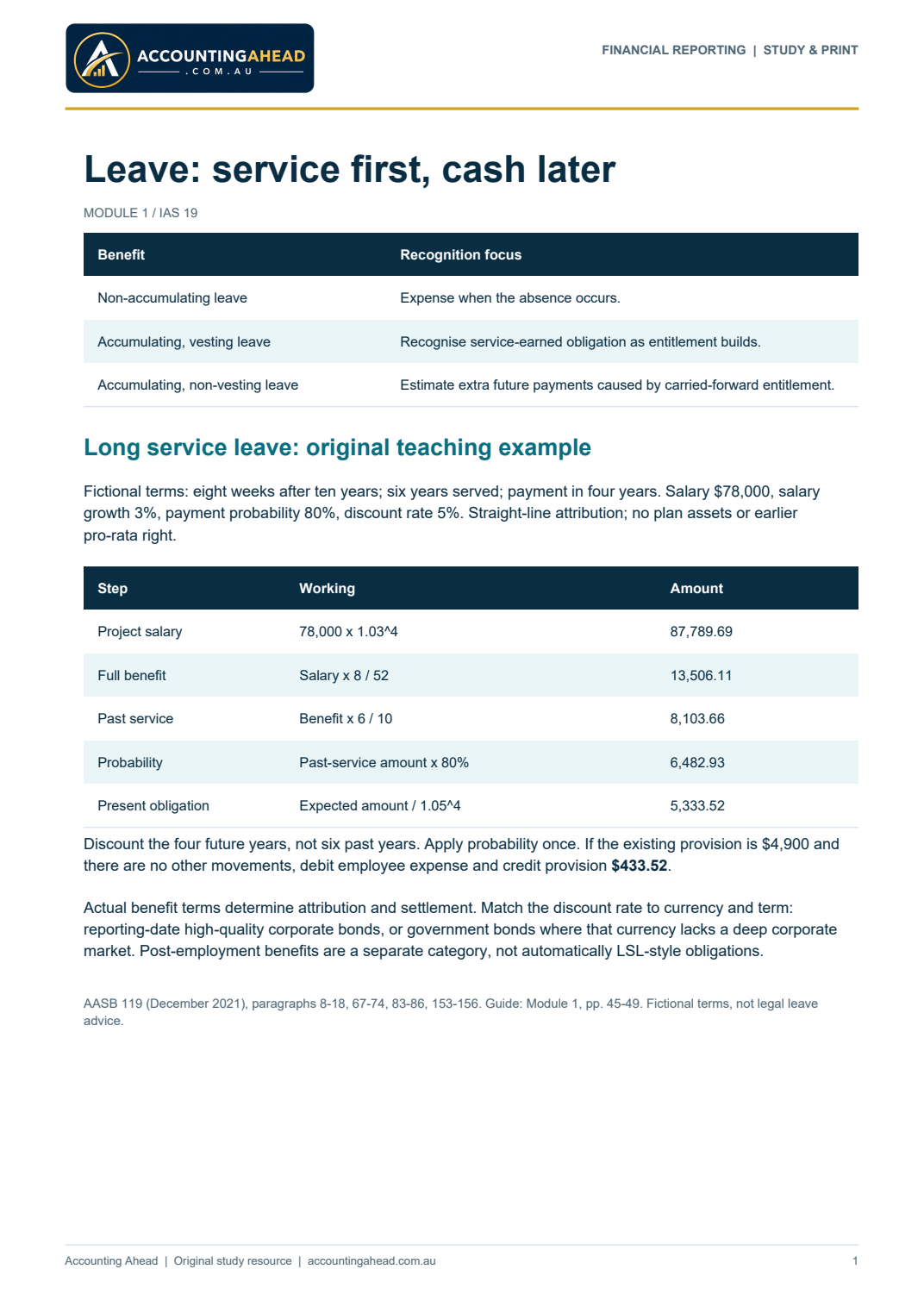
Distinguish leave obligations and long-term benefit estimates, then compare cash-settled and equity-settled remuneration with journal entries.
7 sections1 PDF - 06Investment property, judgement and disclosure
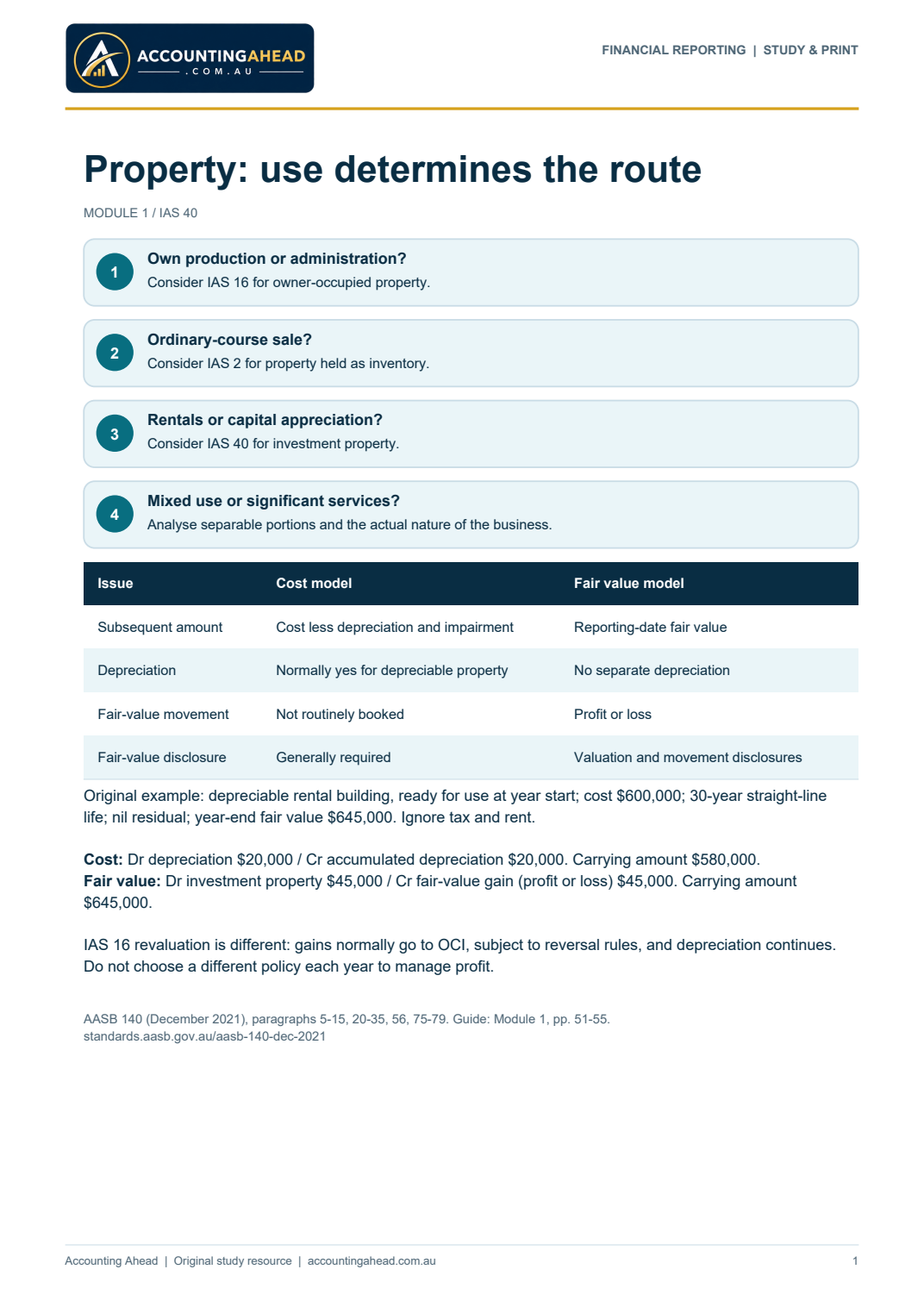
Classify property by its use, compare cost and fair-value models, and explain the judgements and disclosures behind the reported amounts.
7 sections1 PDF