Module 1 · Strategy and leadership foundations
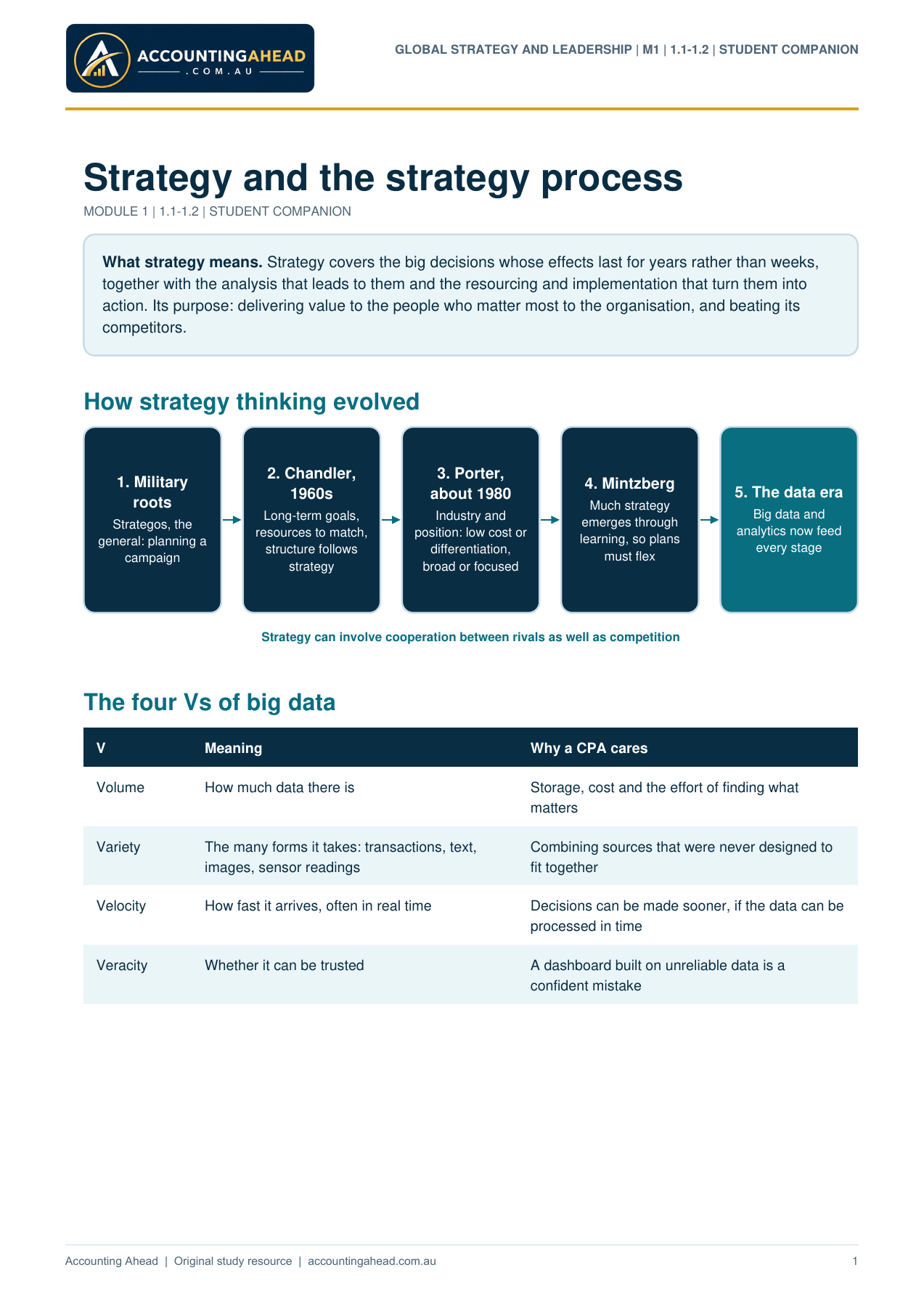
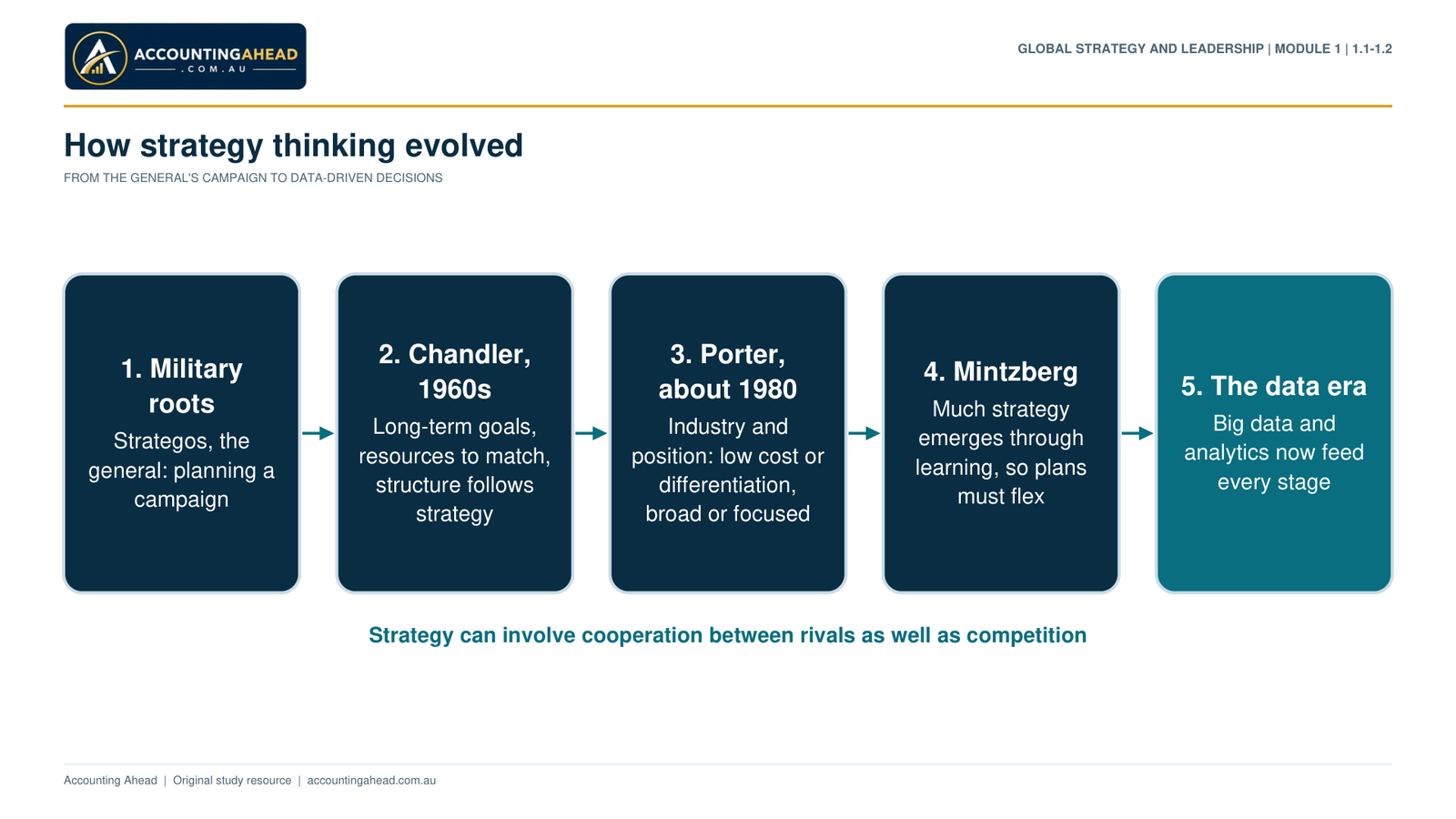
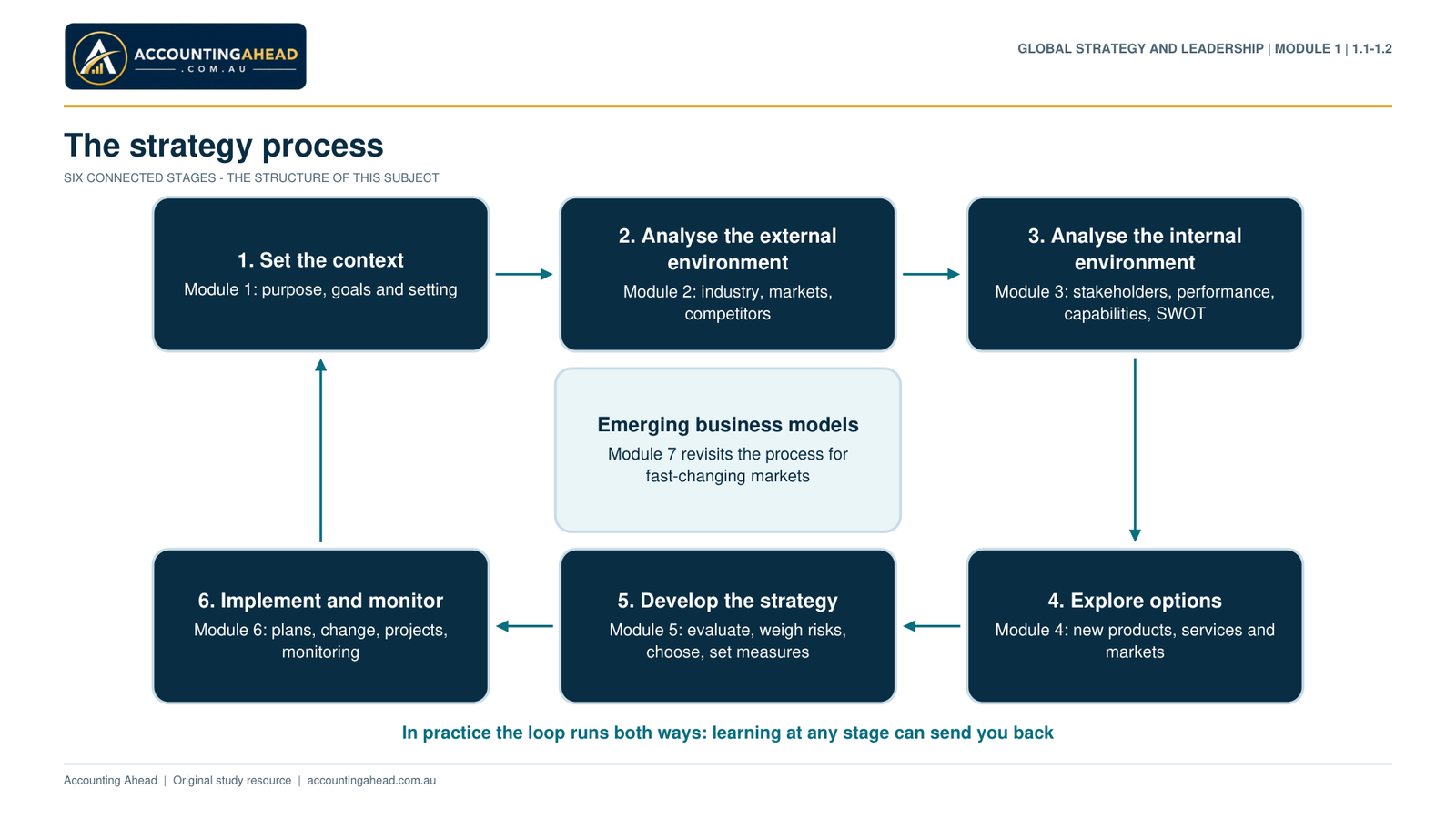
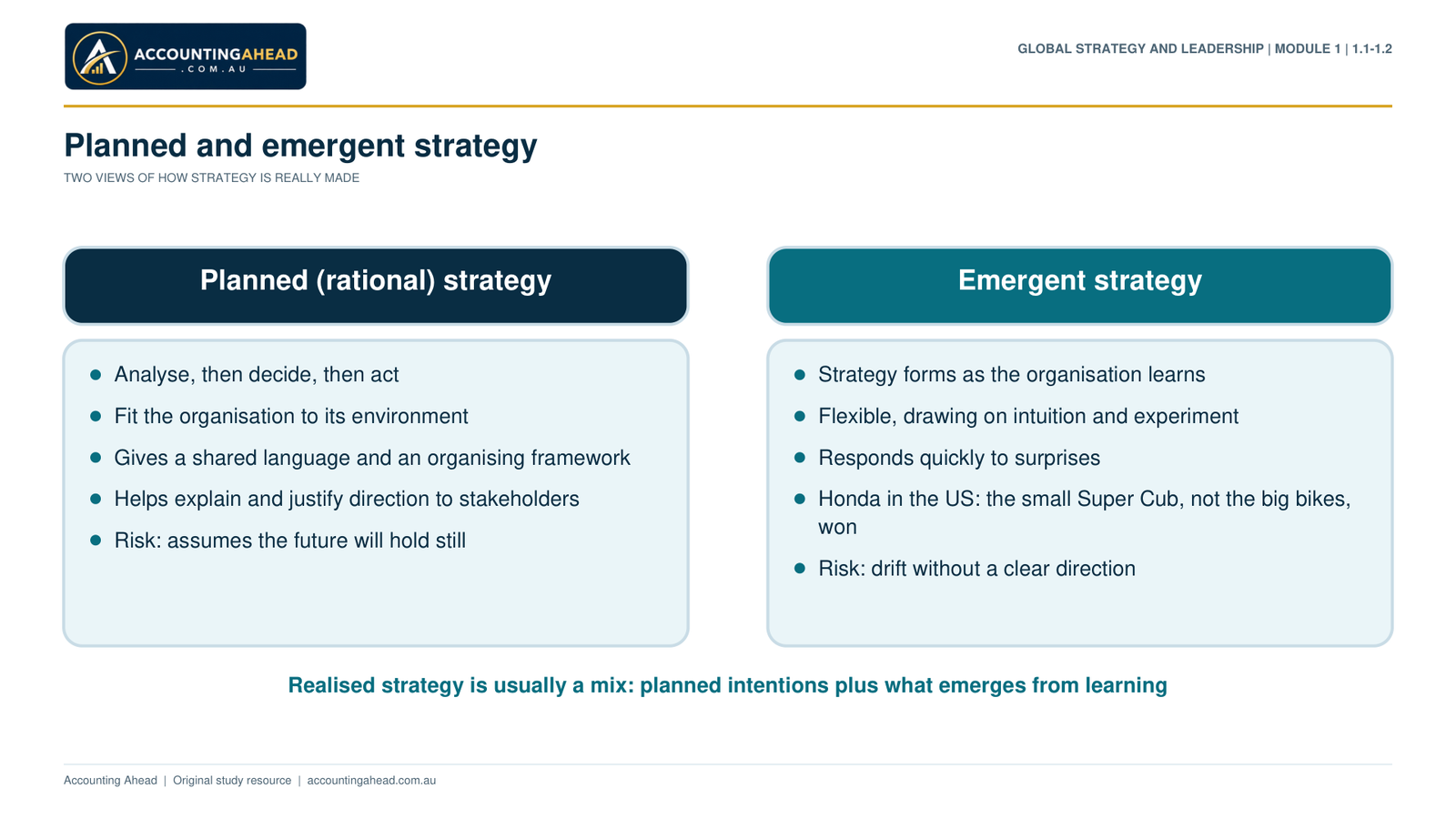
Part 1.1-1.2 · Strategy and the Strategy Process
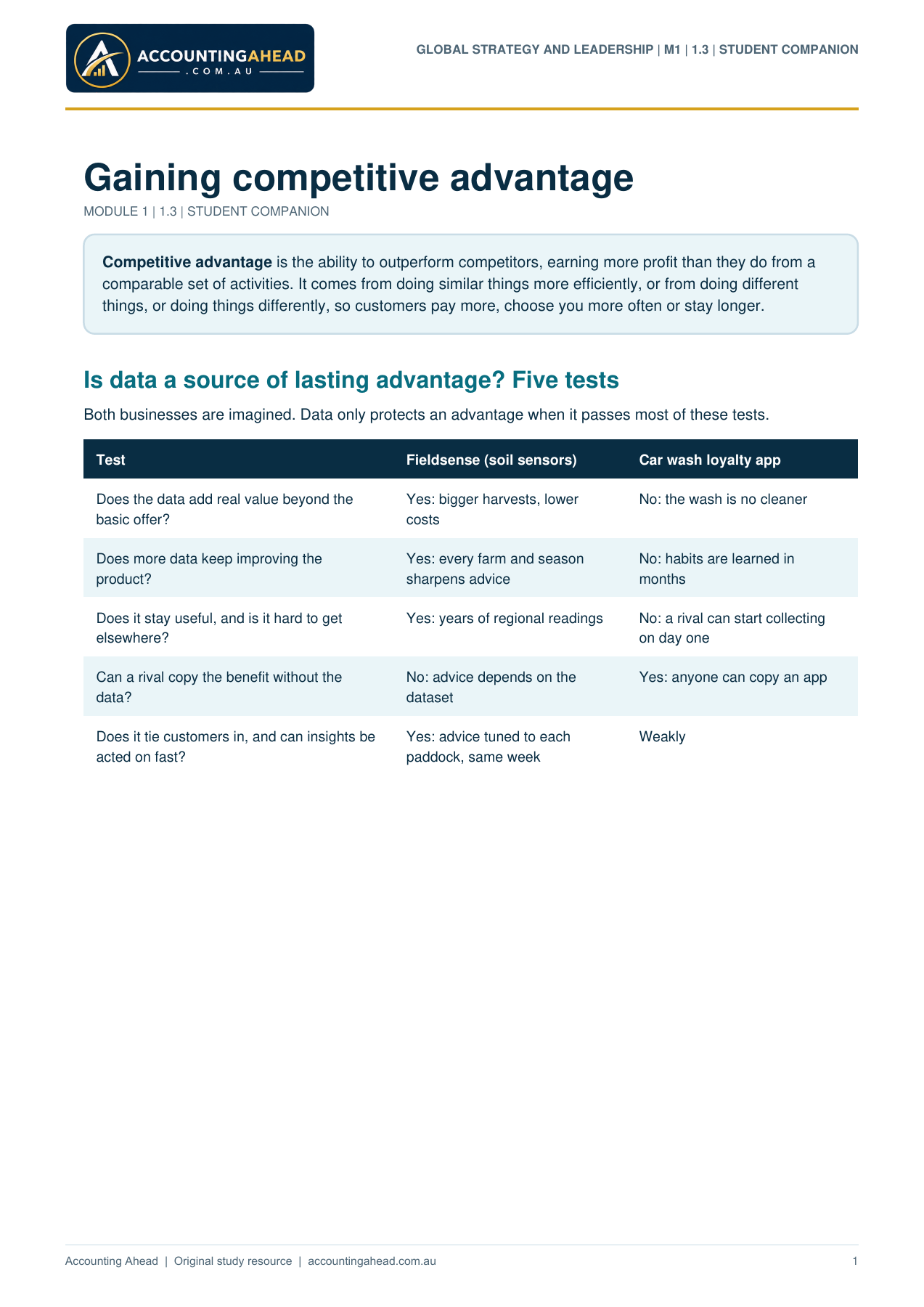
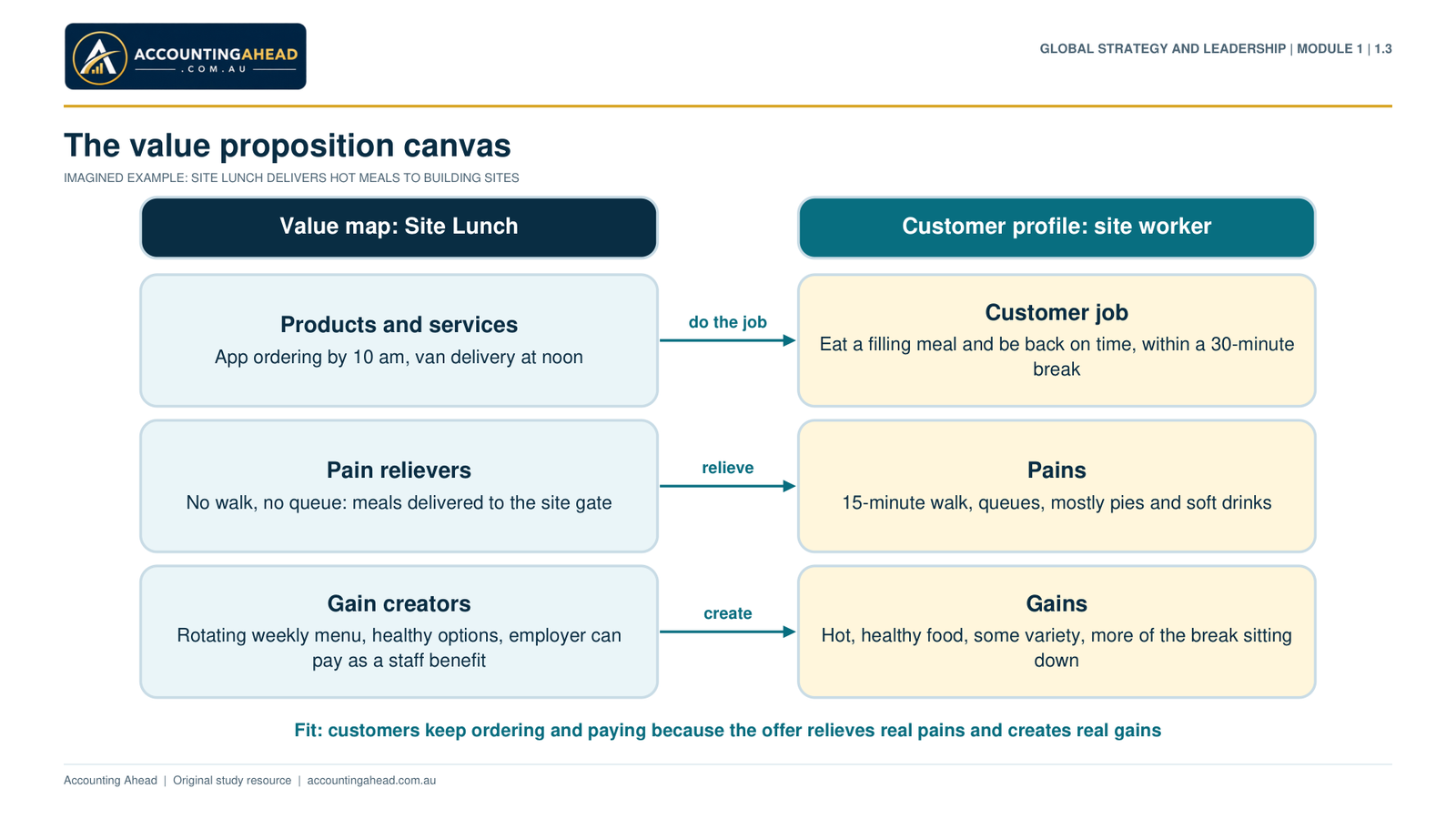
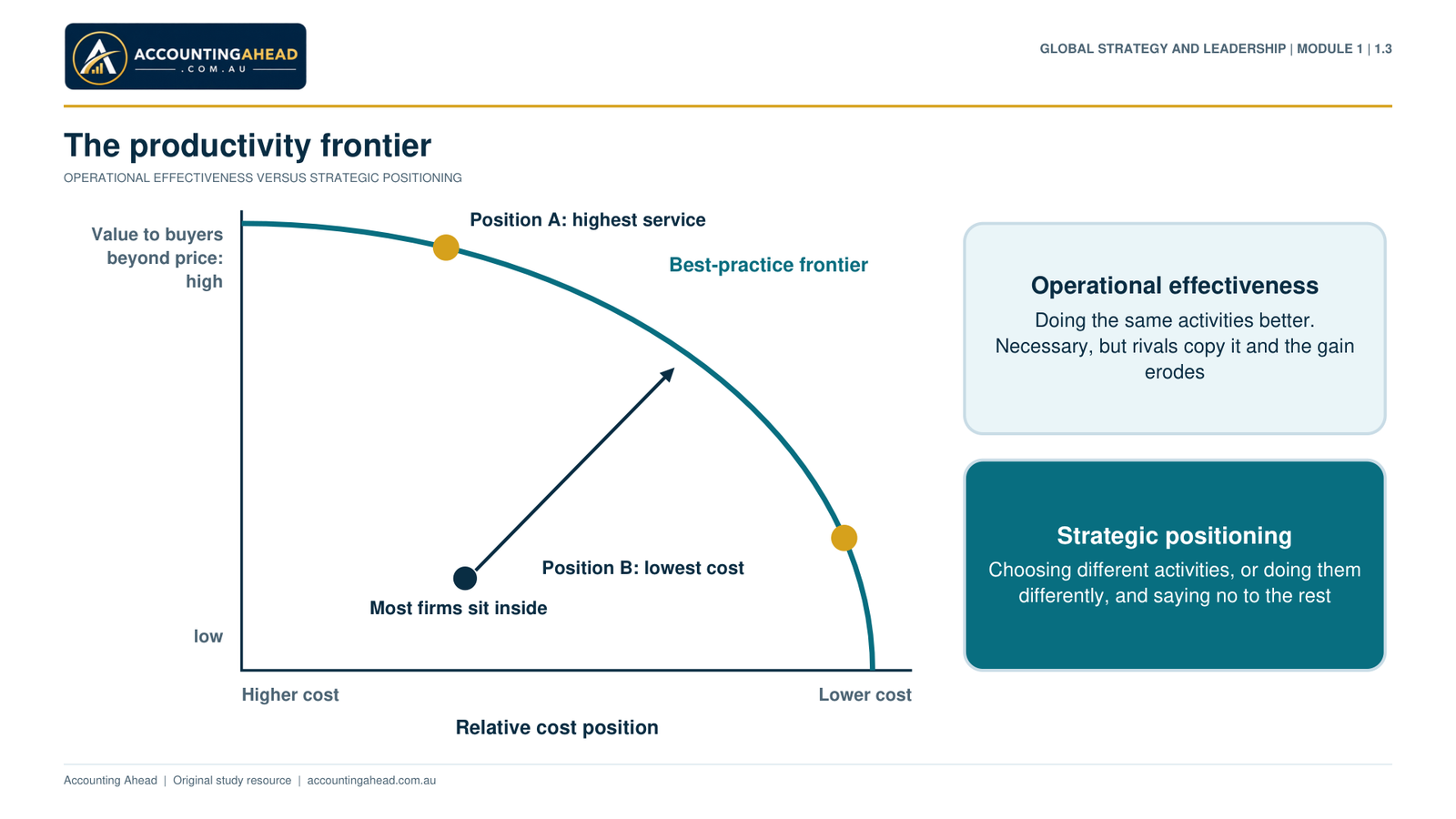
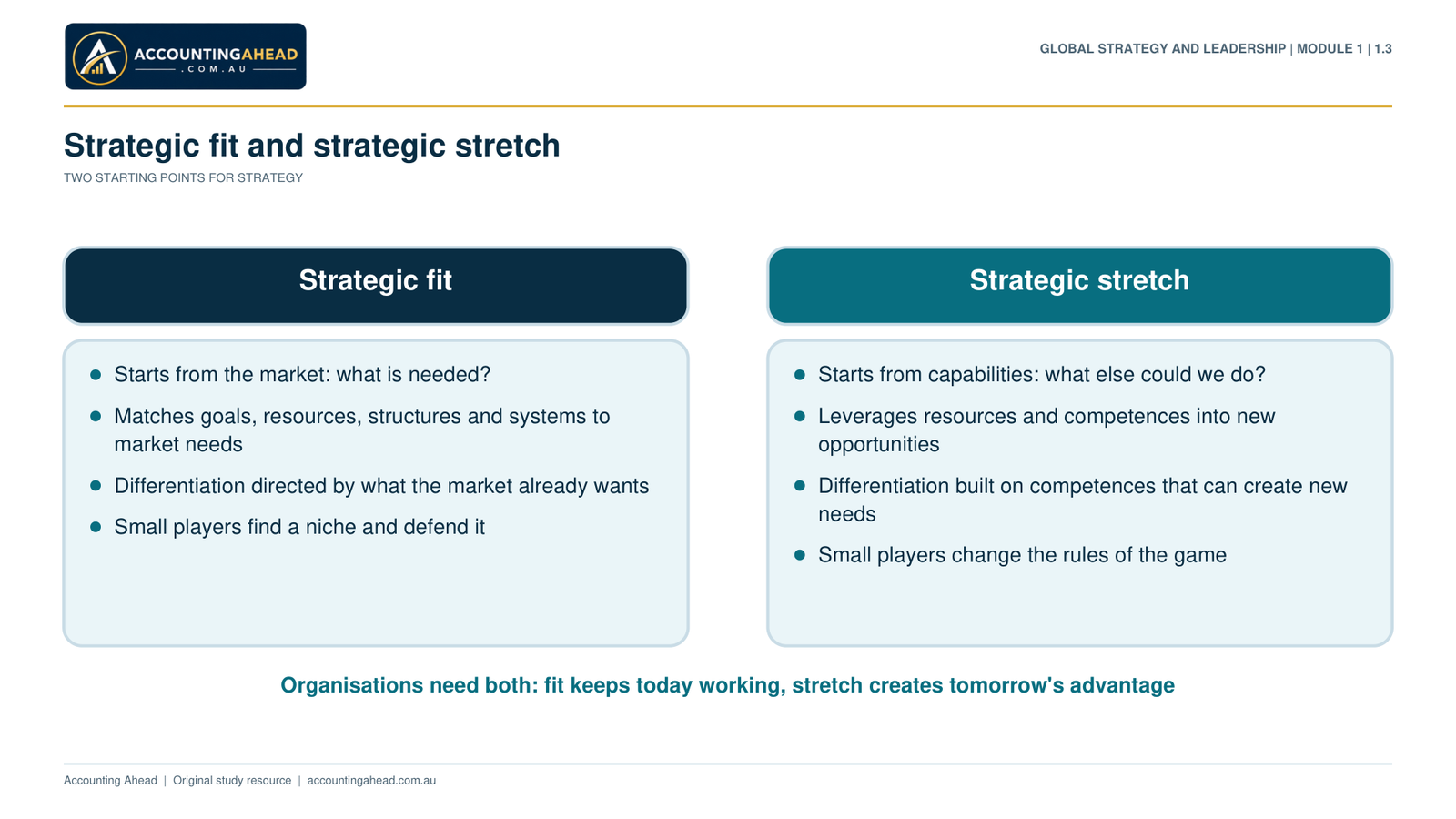
Part 1.3 · Gaining Competitive Advantage
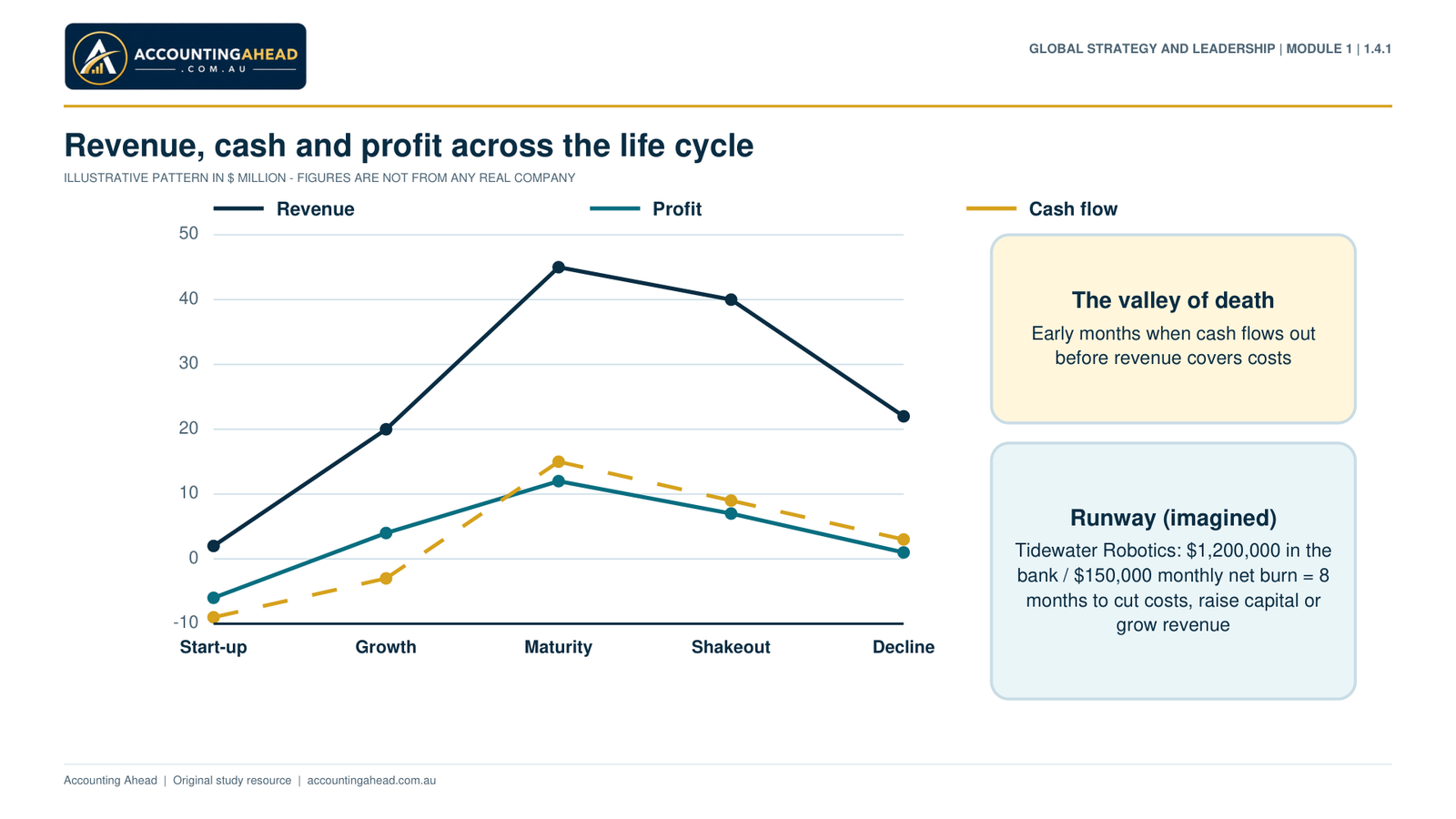
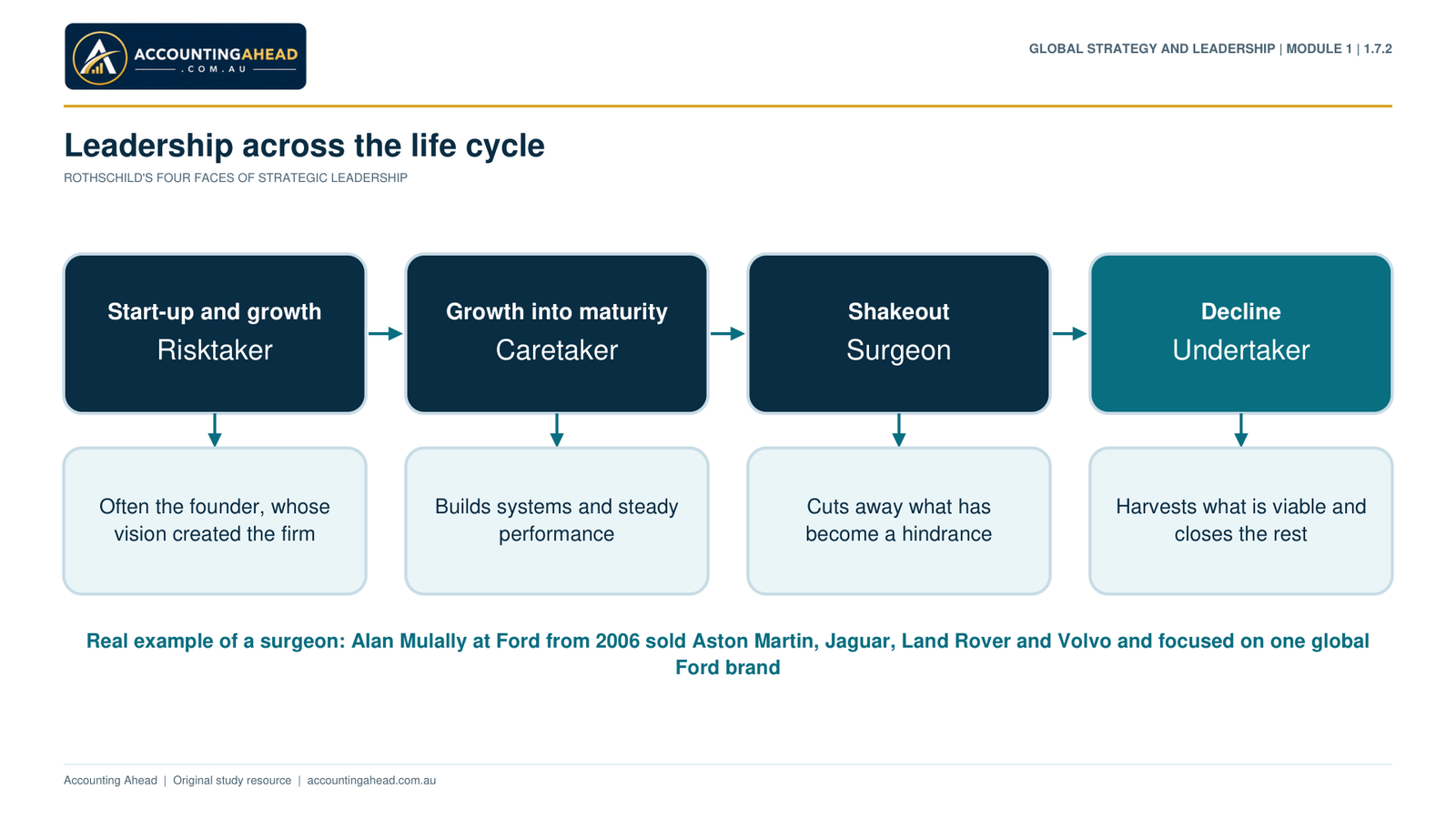
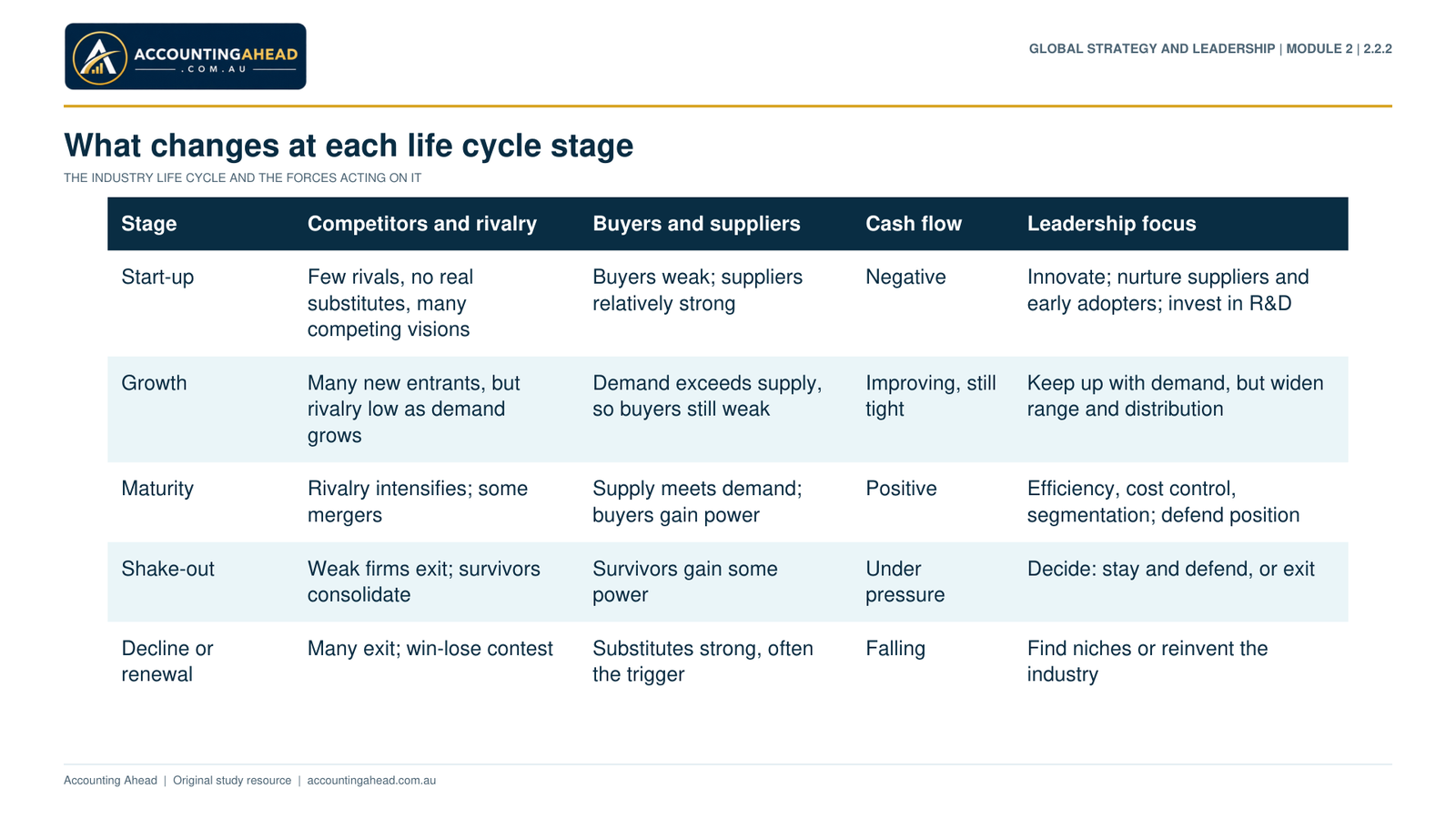
Part 1.4.1 · Industry and Organisational Life Cycles
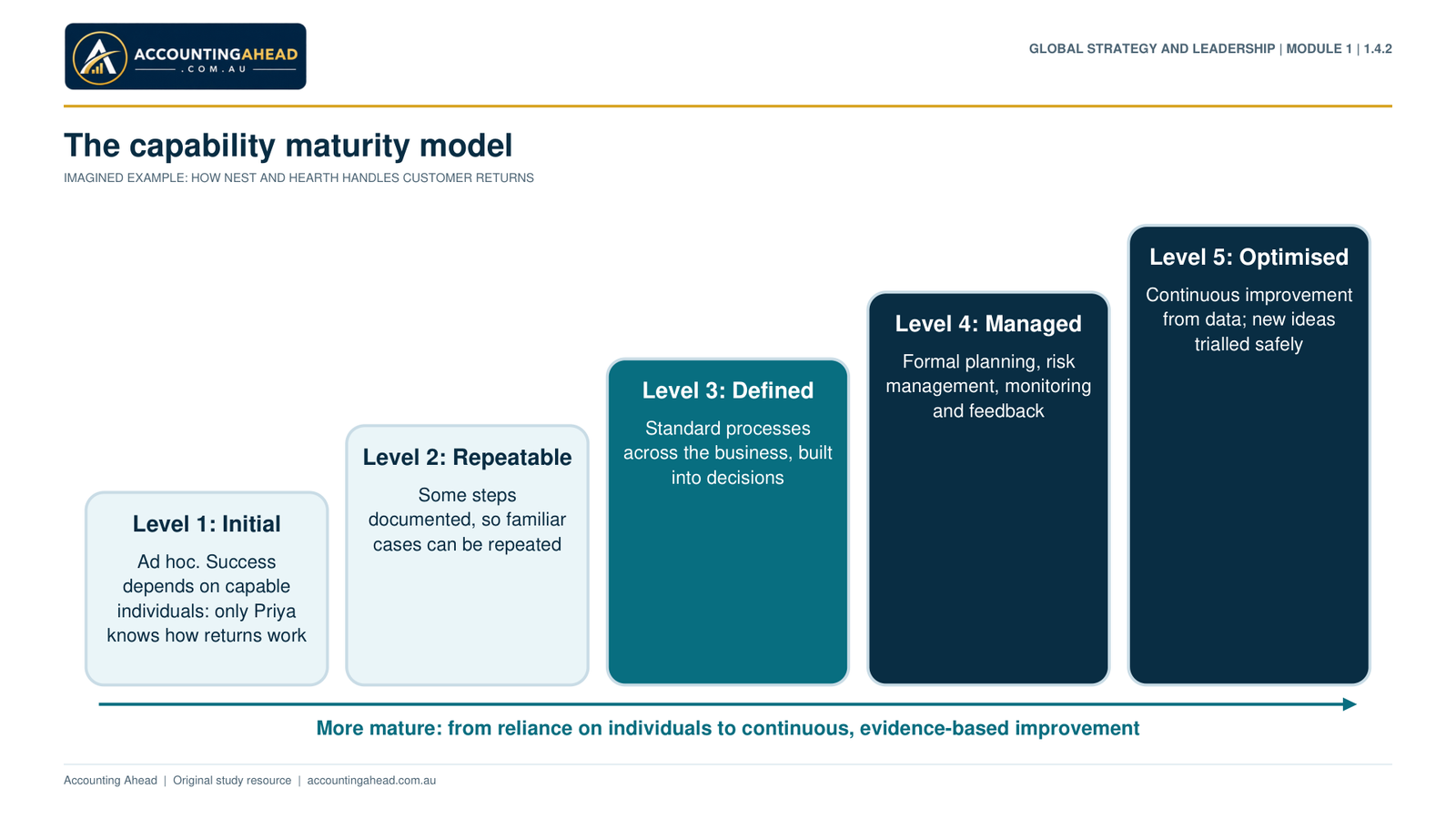
Part 1.4.2 · The Capability Maturity Model
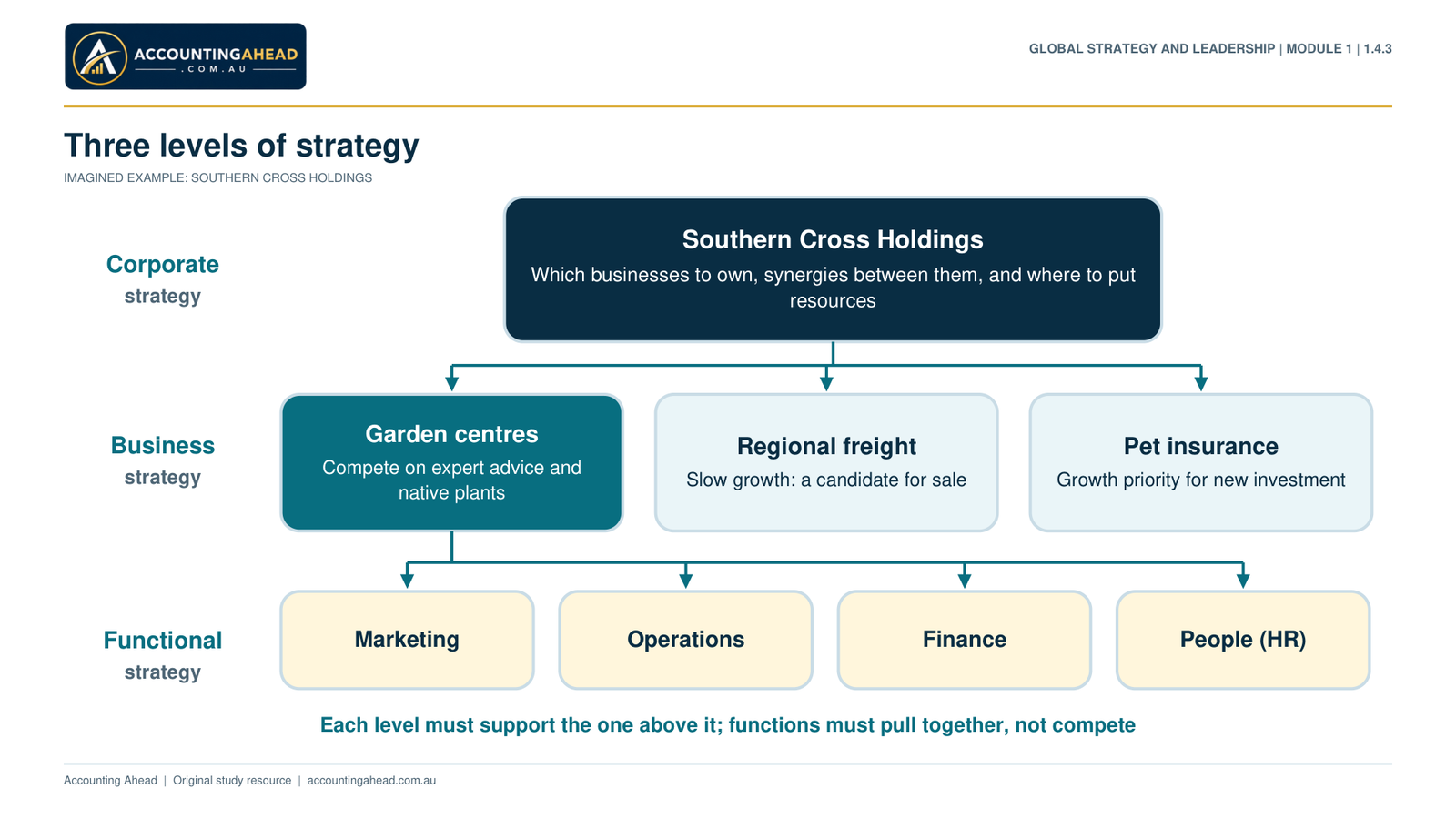
Part 1.4.3 · Levels of Strategy
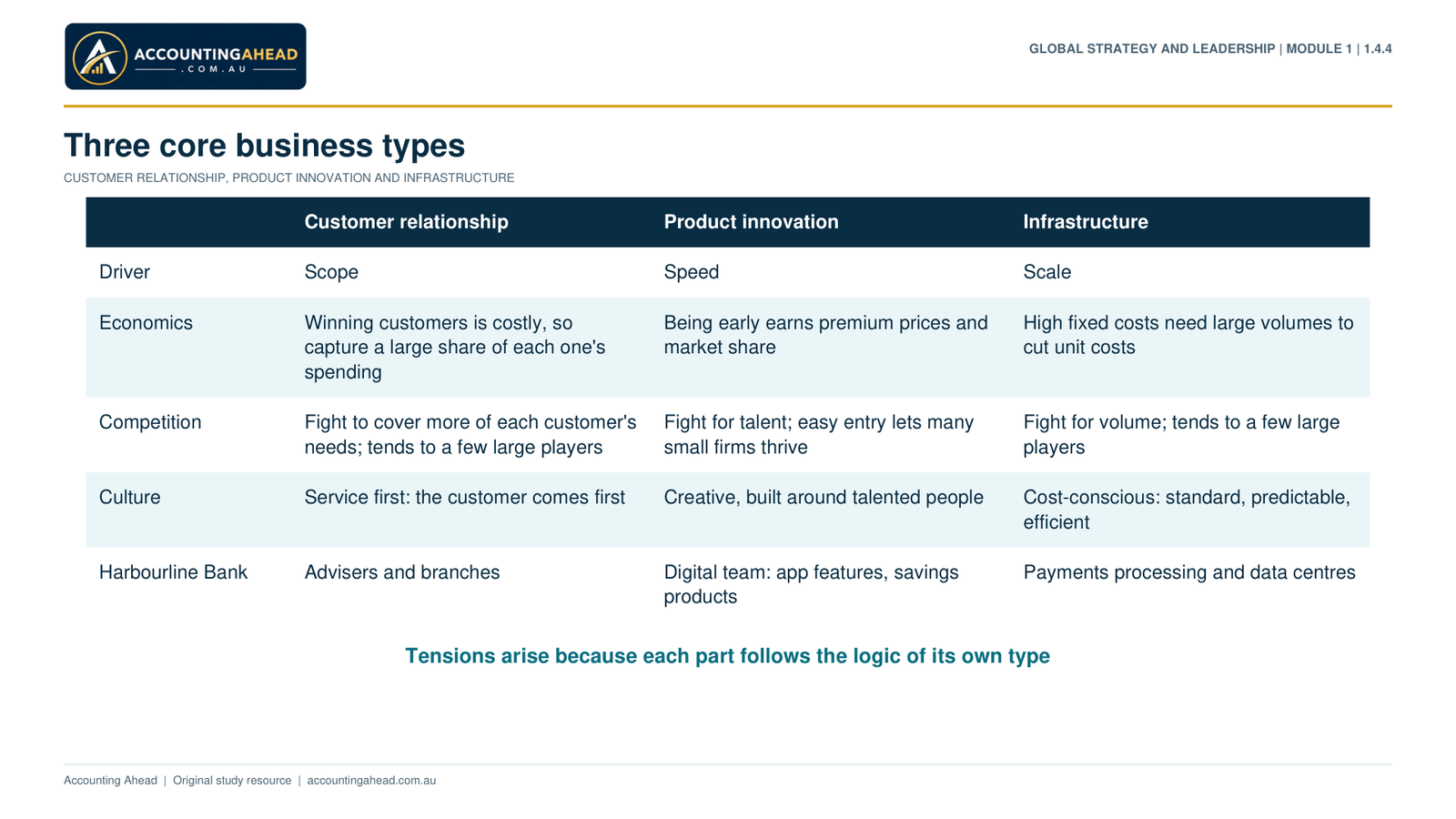
Part 1.4.4 · Core Business Types
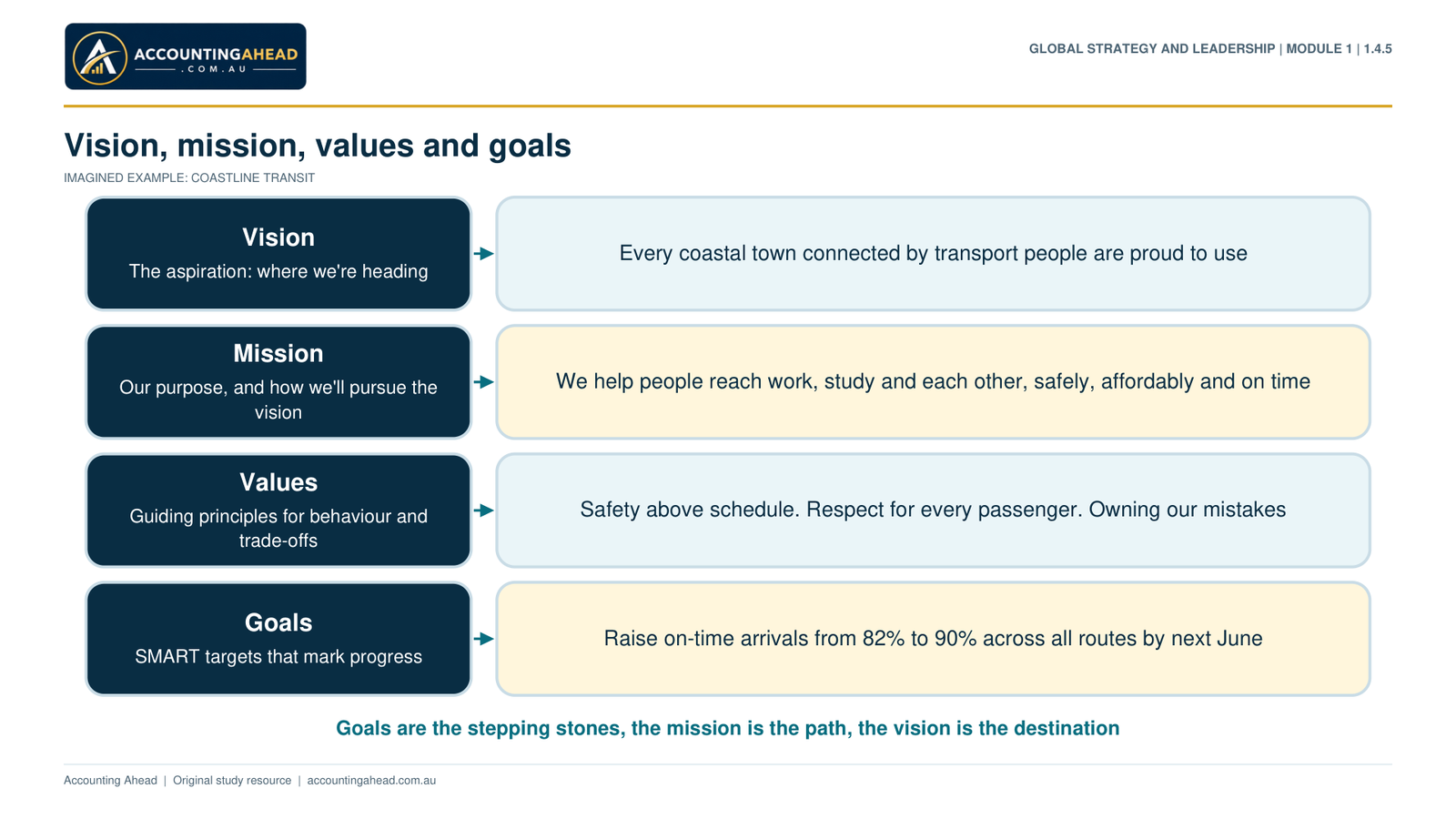
Part 1.4.5 · Vision, Mission, Values and Goals
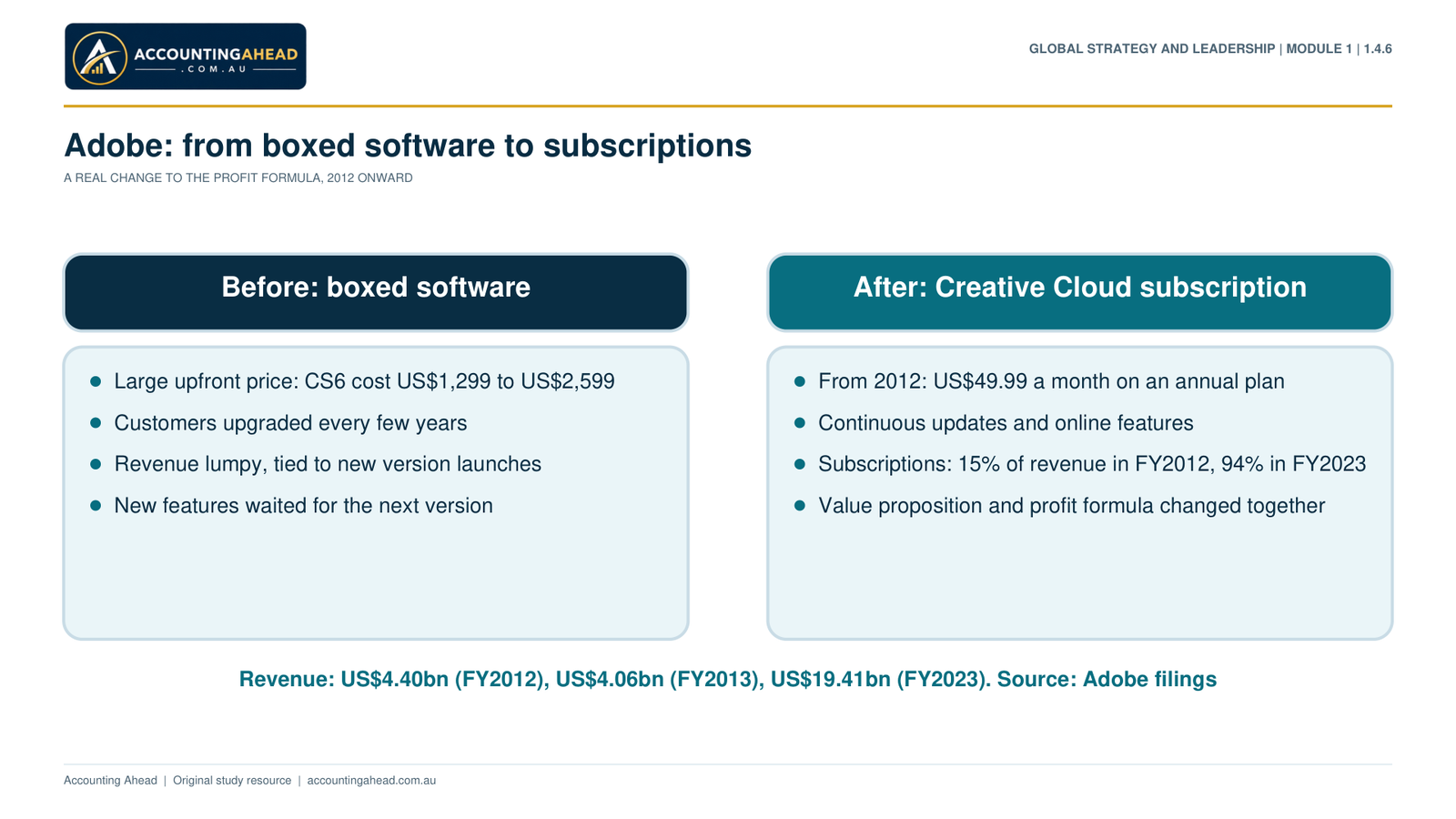
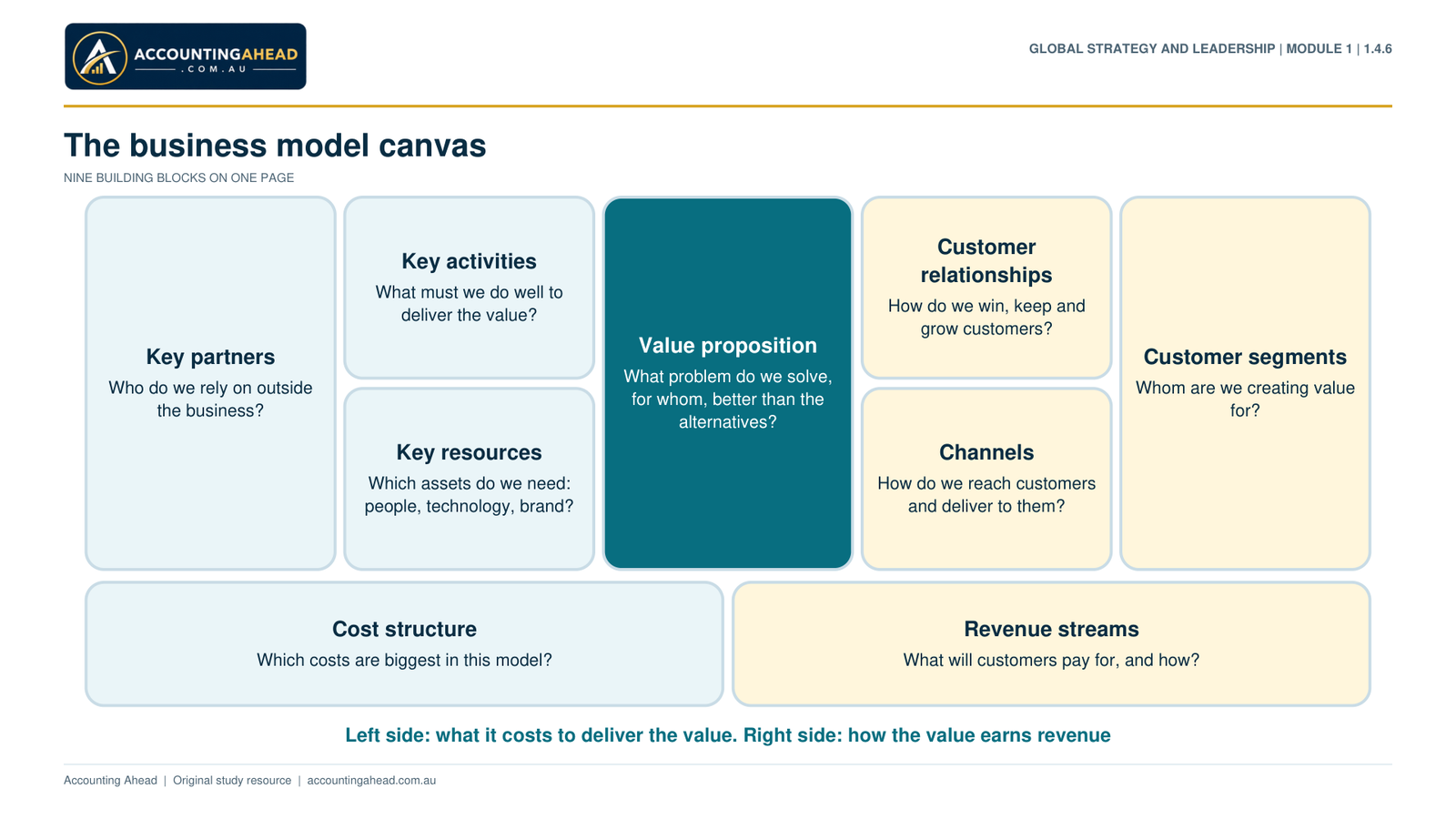
Part 1.4.6 · Business Models
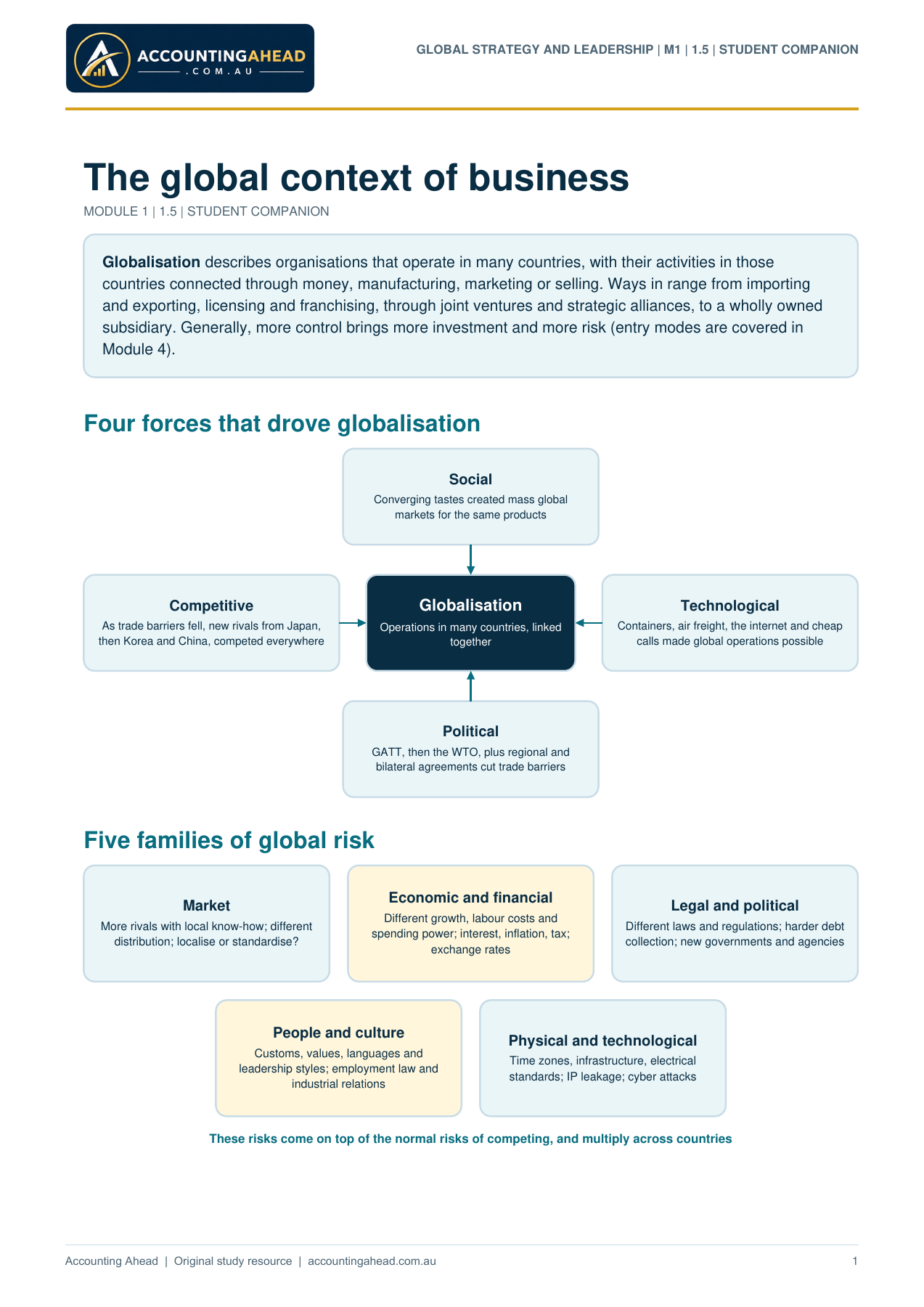
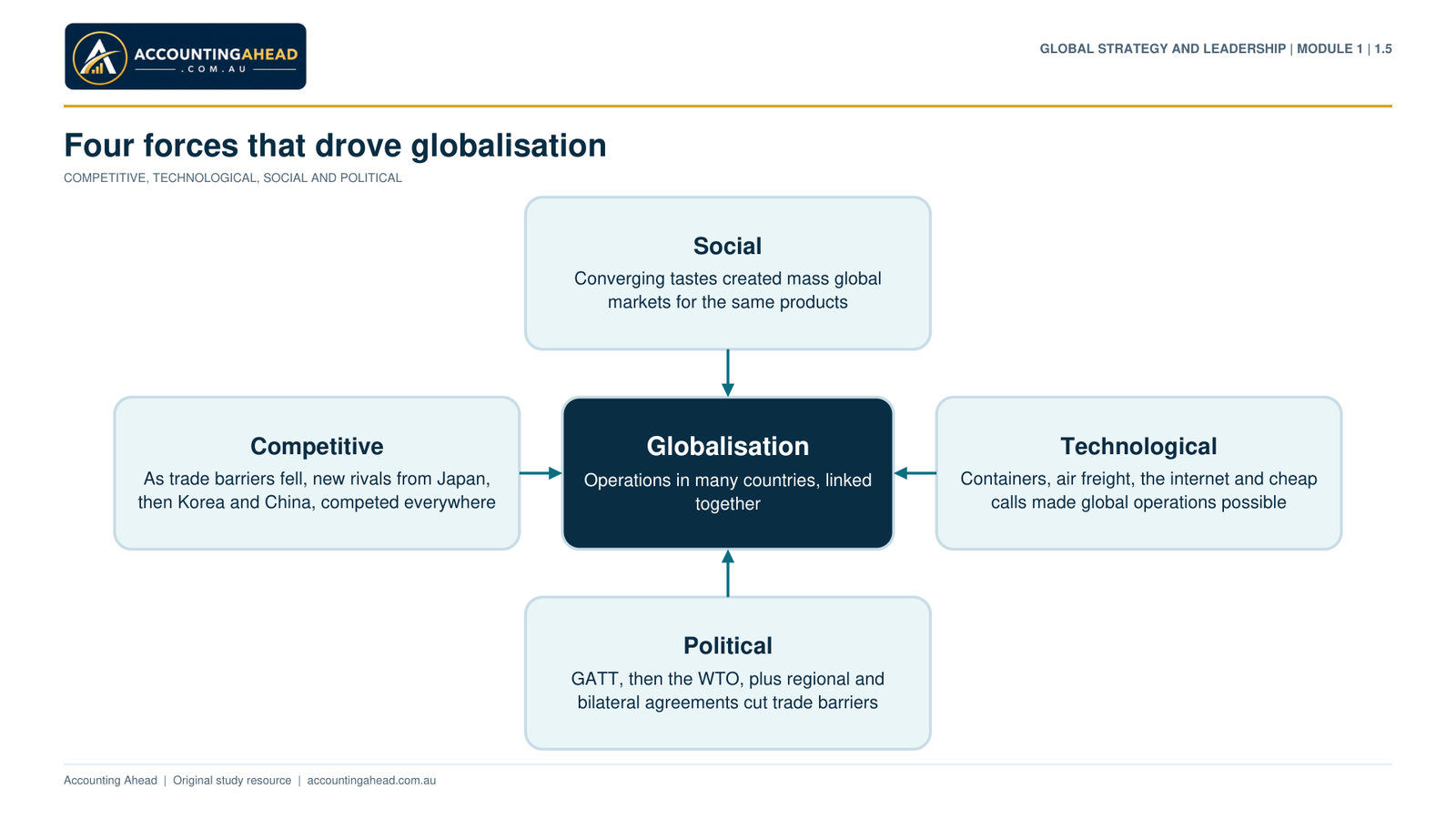
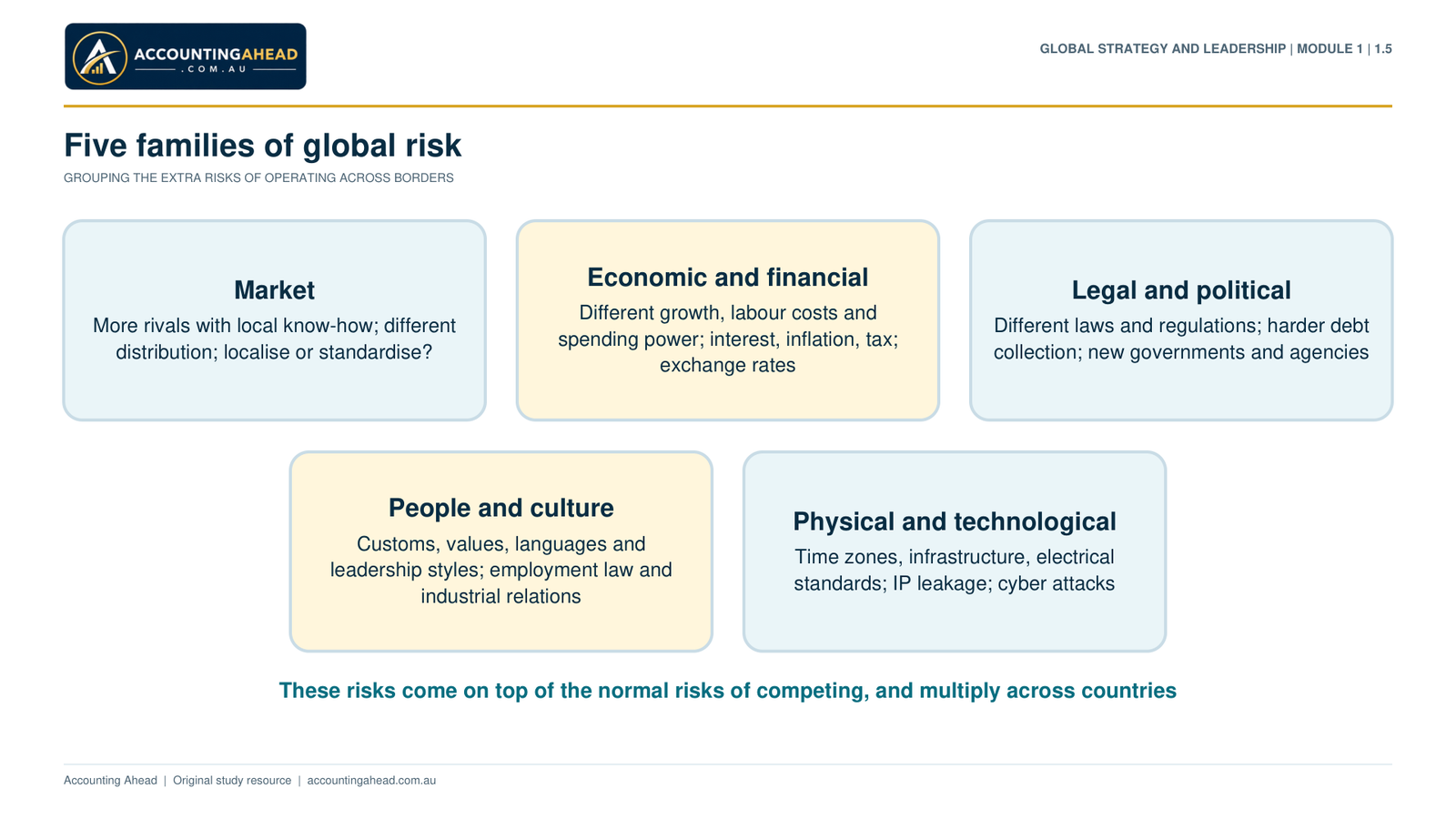
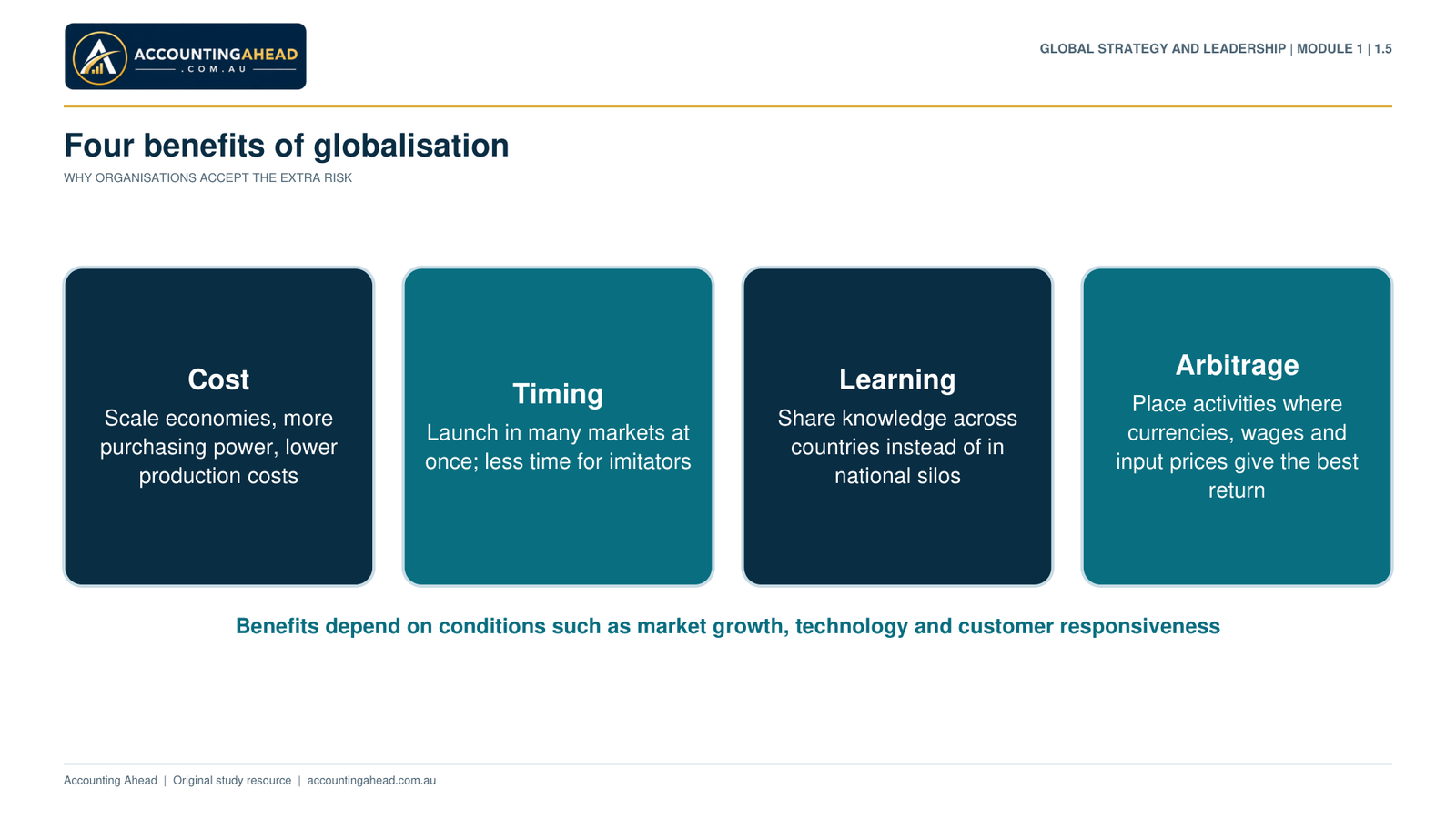
Part 1.5 · The Global Context of Business
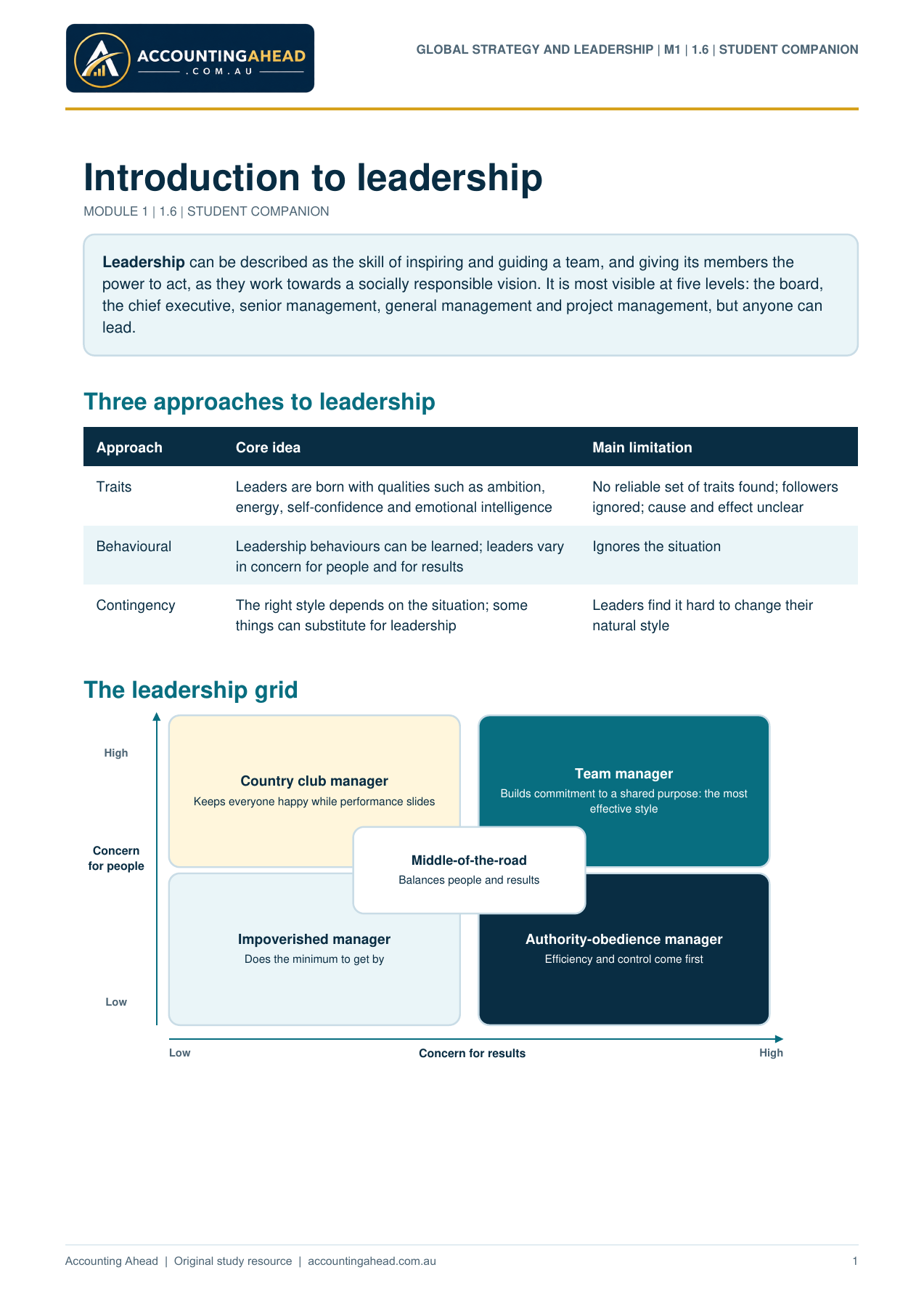
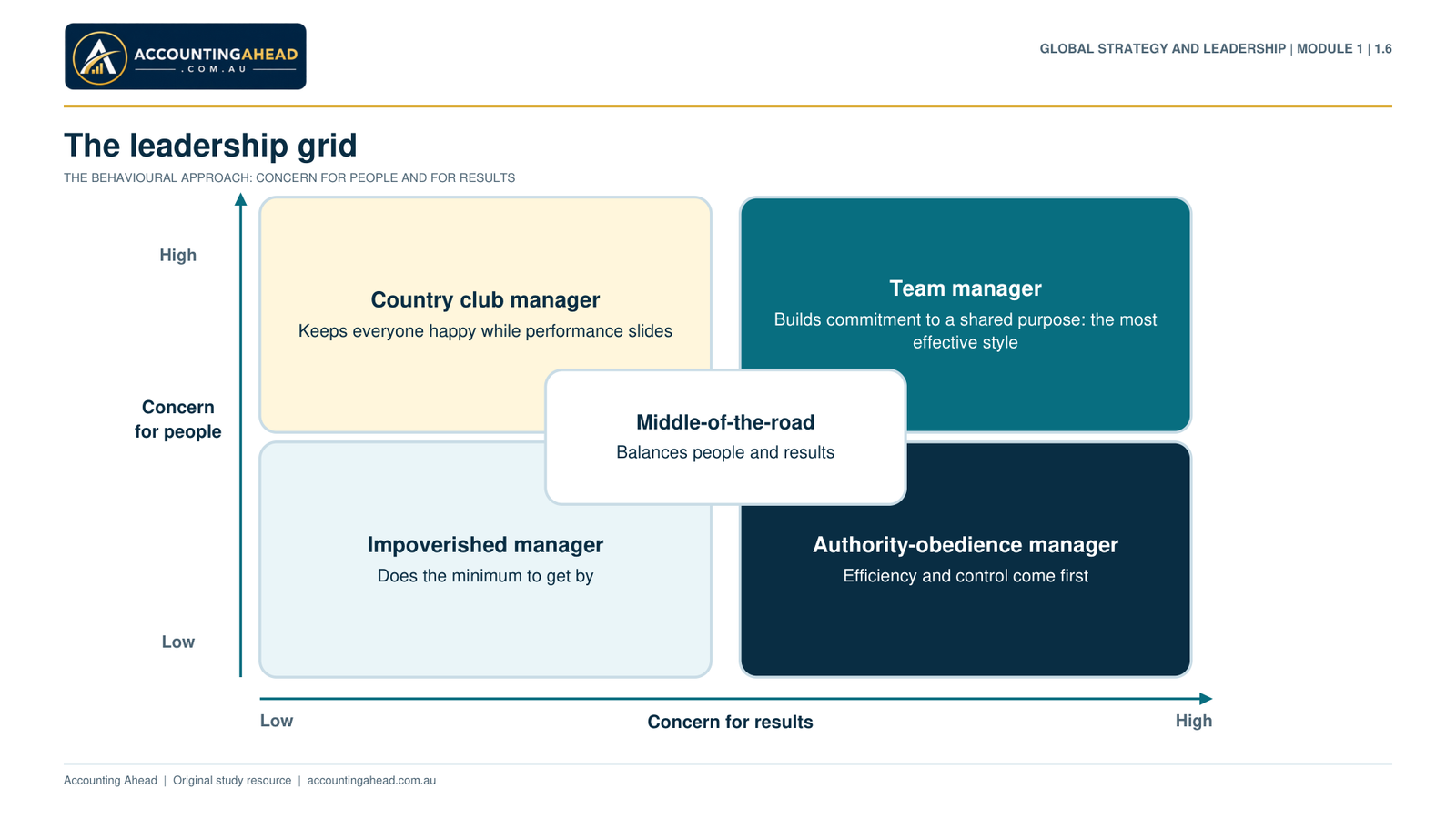
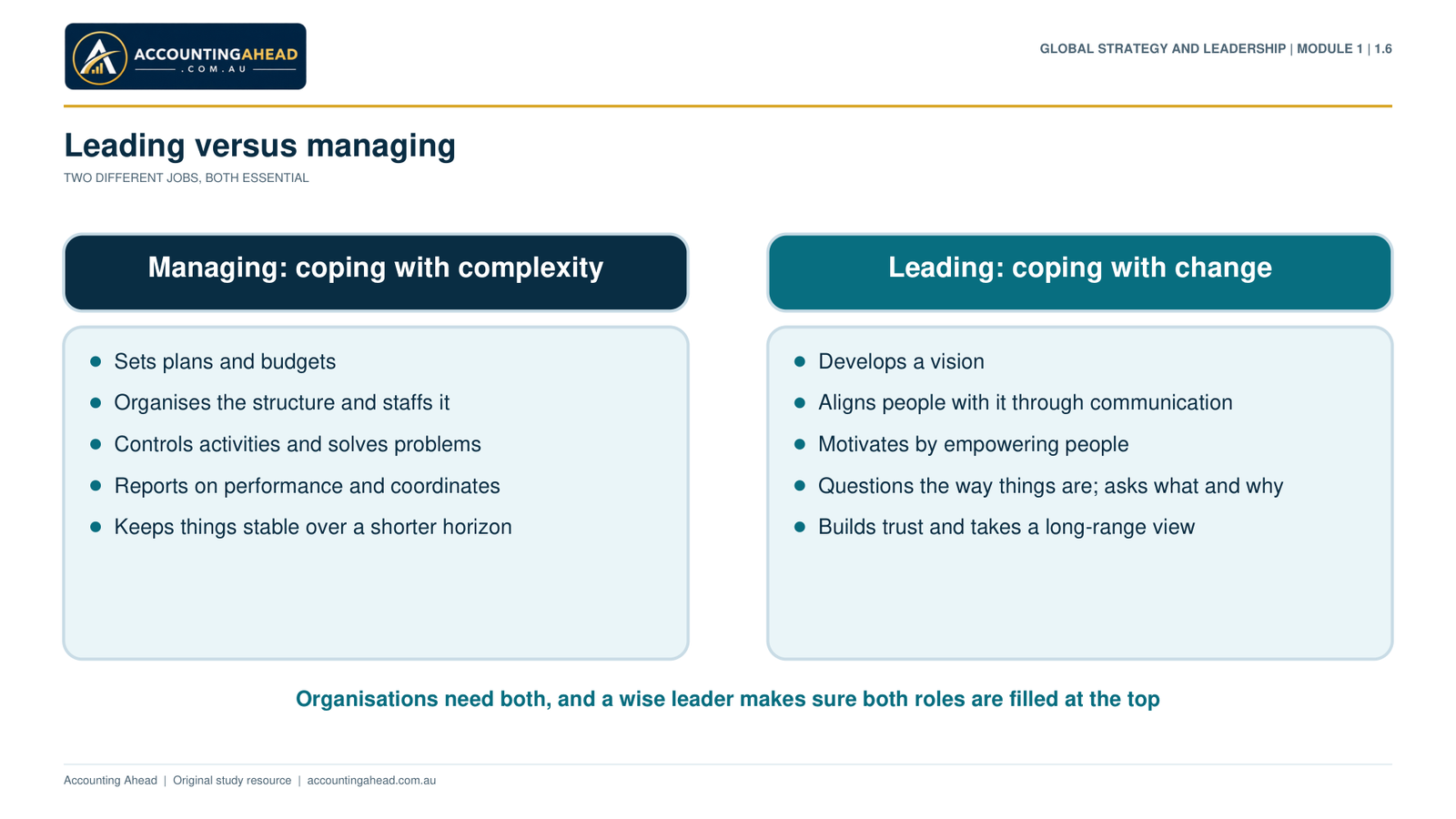
Part 1.6 · Introduction to Leadership
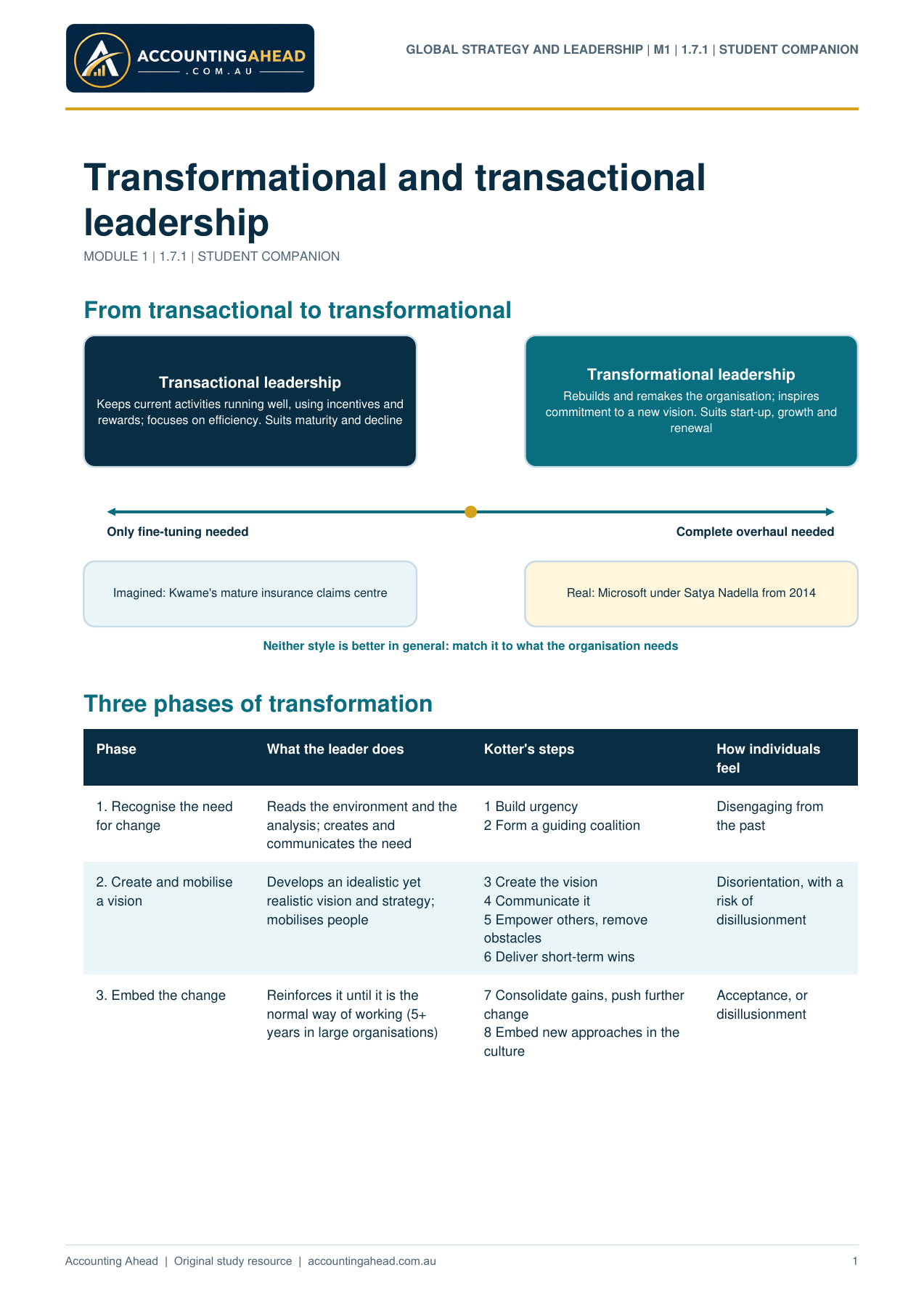
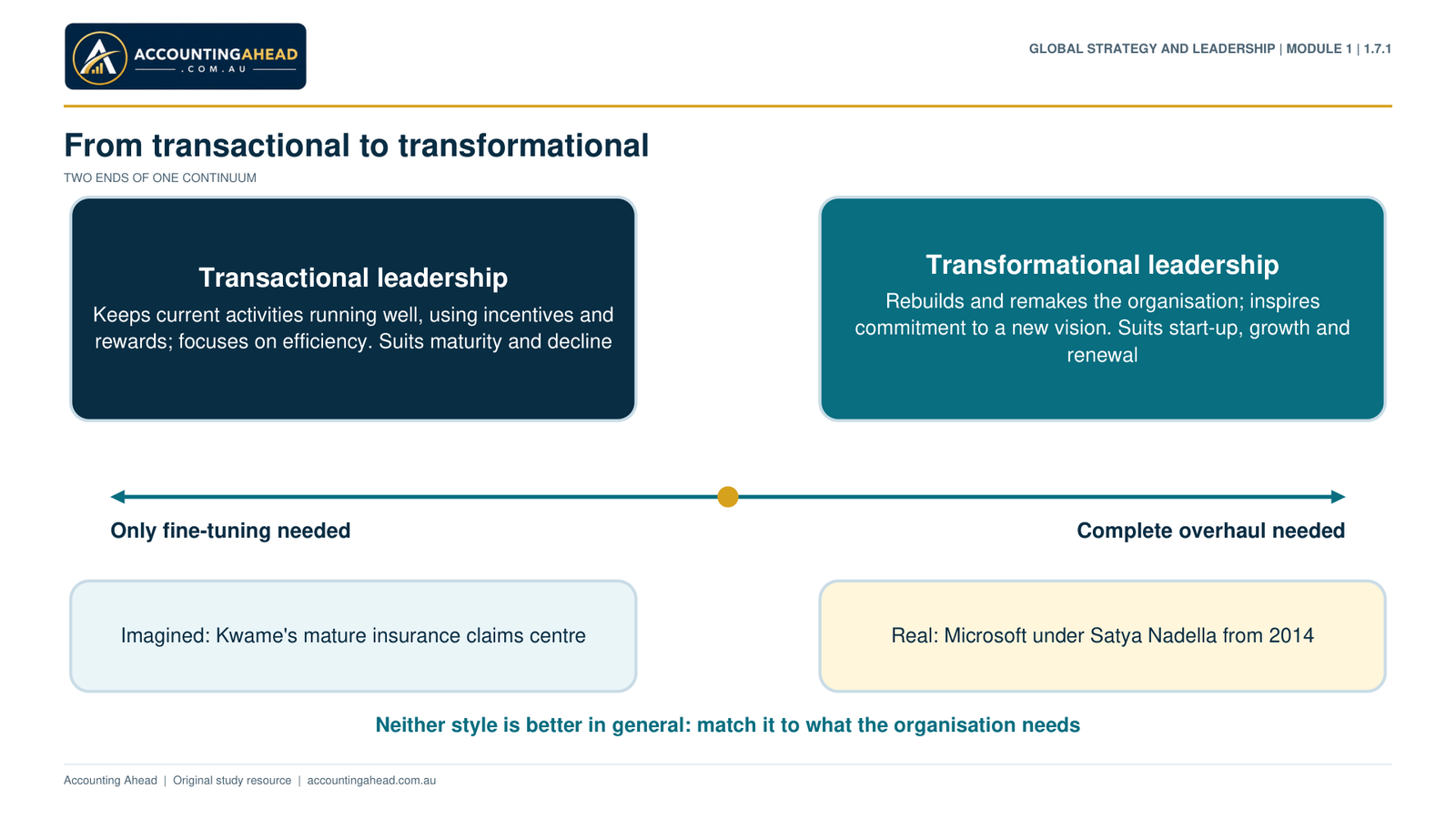
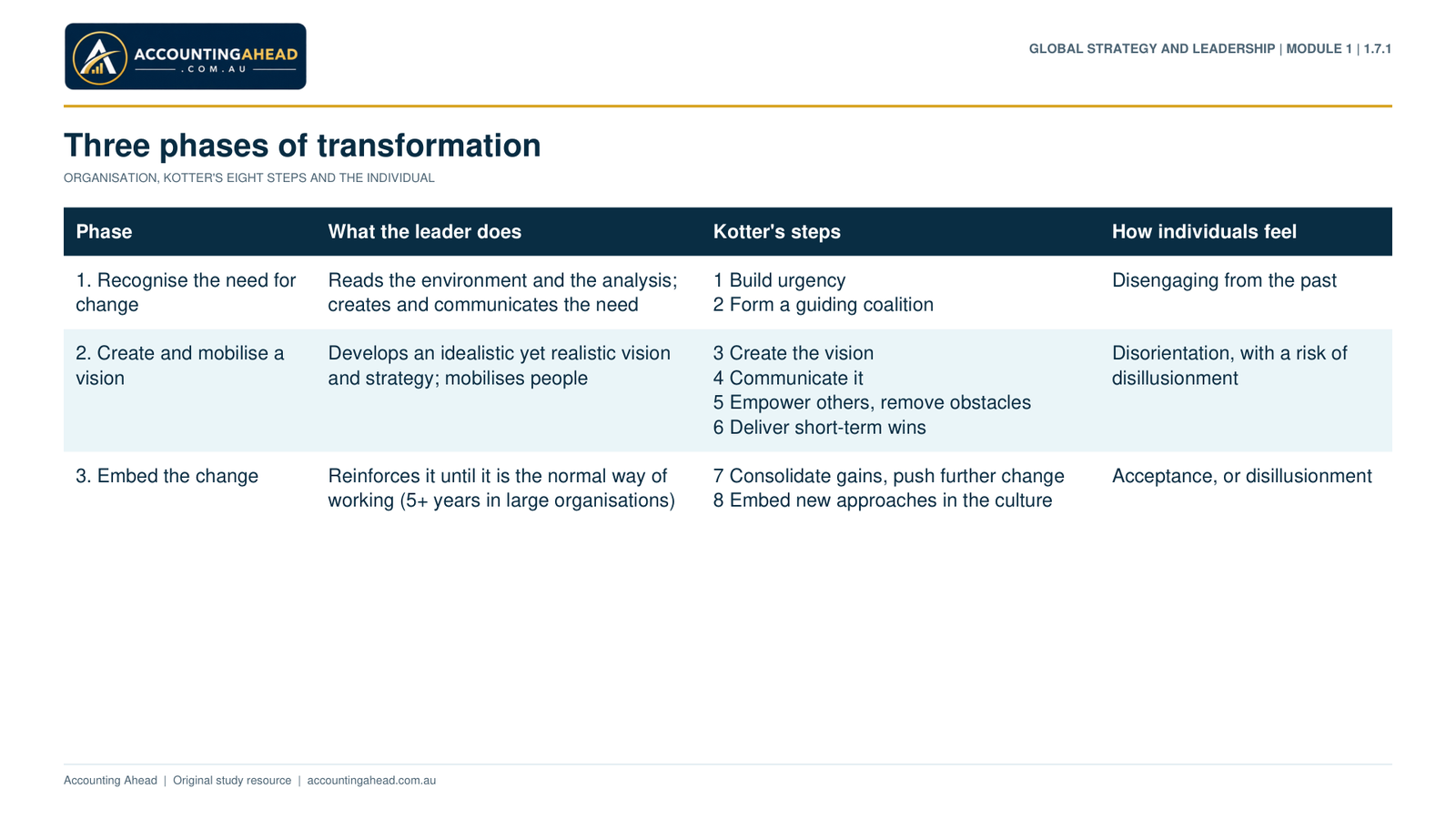
Part 1.7.1 · Transformational and Transactional Leadership
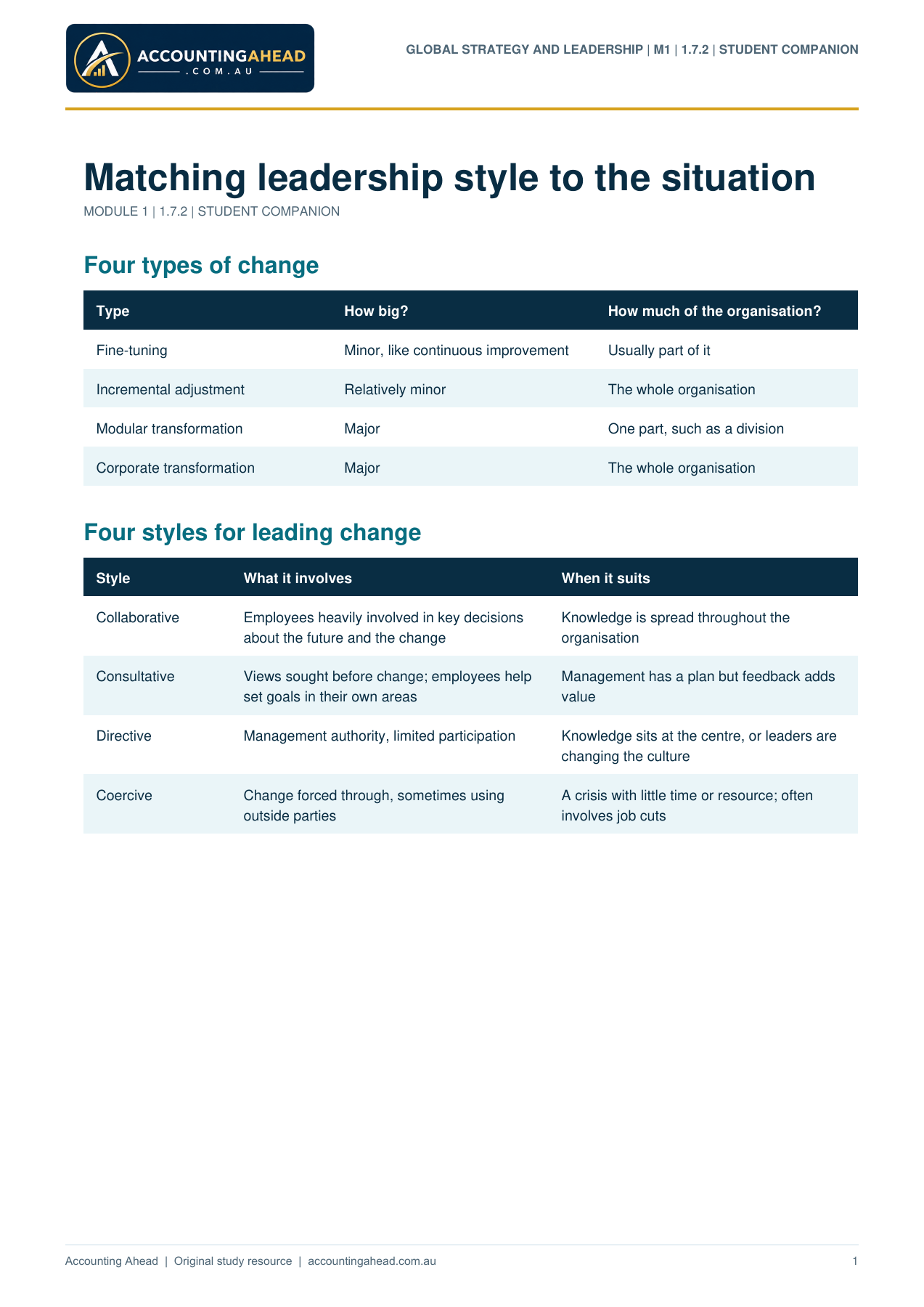
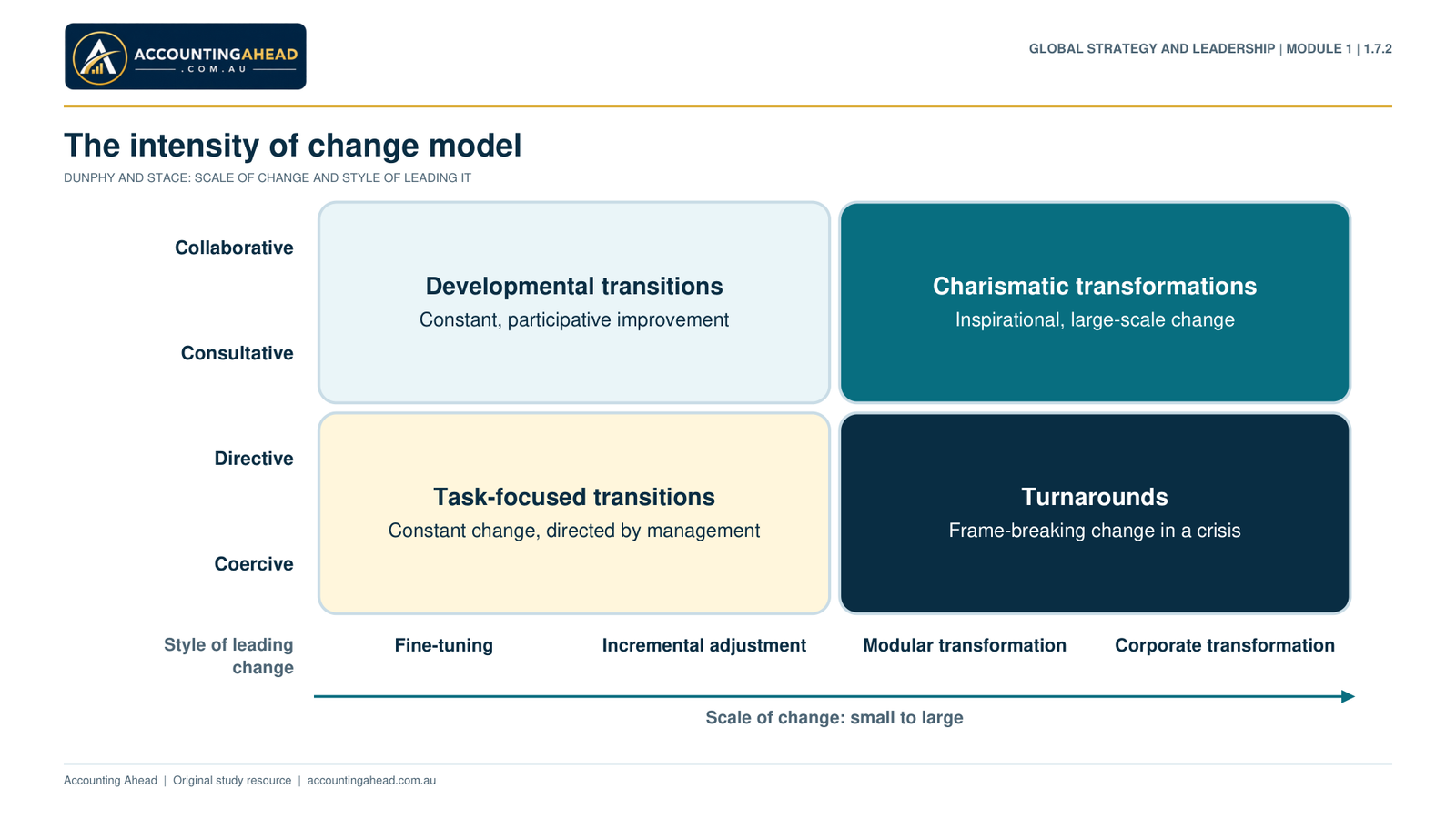
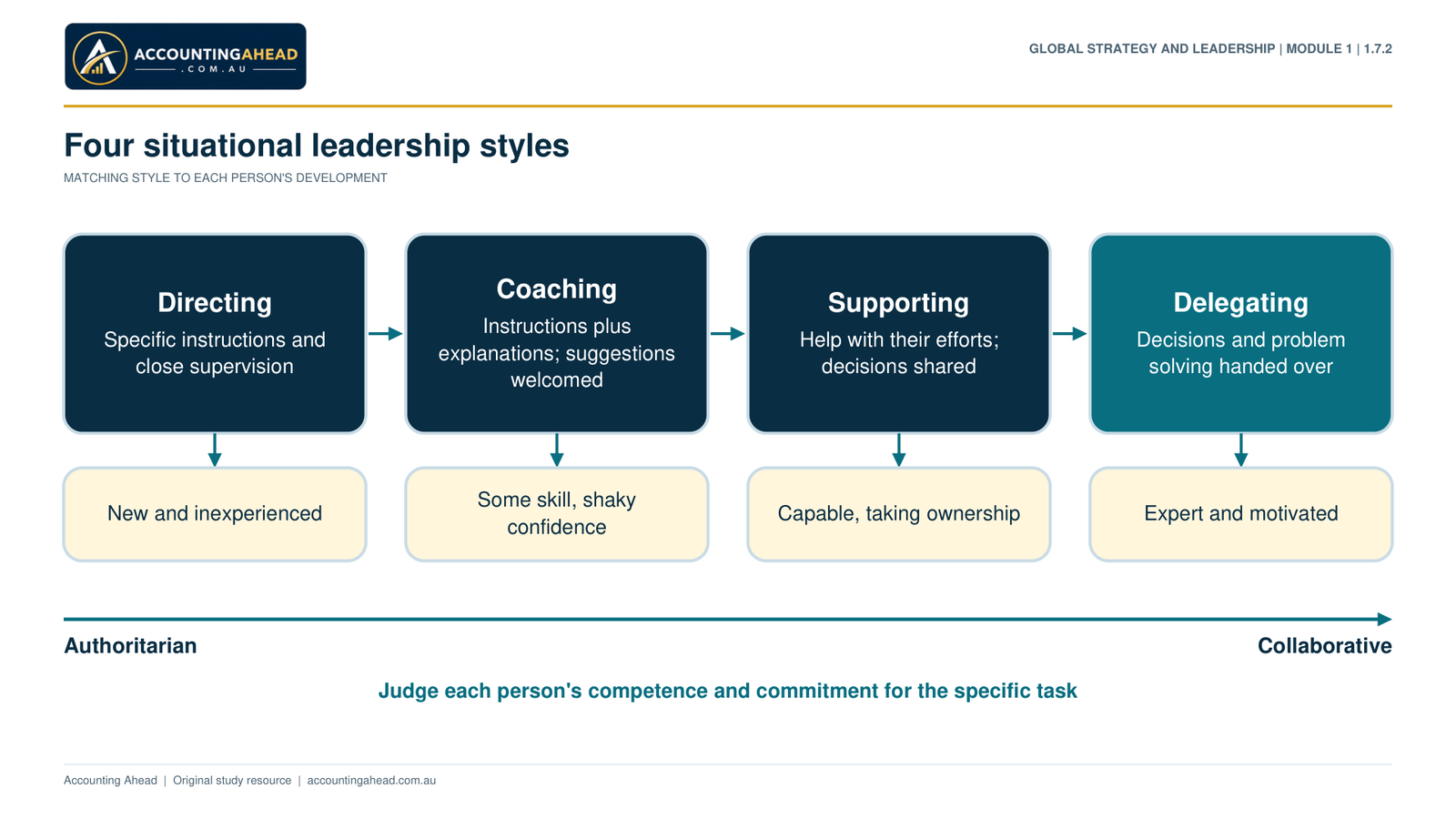
Part 1.7.2 · Matching Leadership Style to the Situation
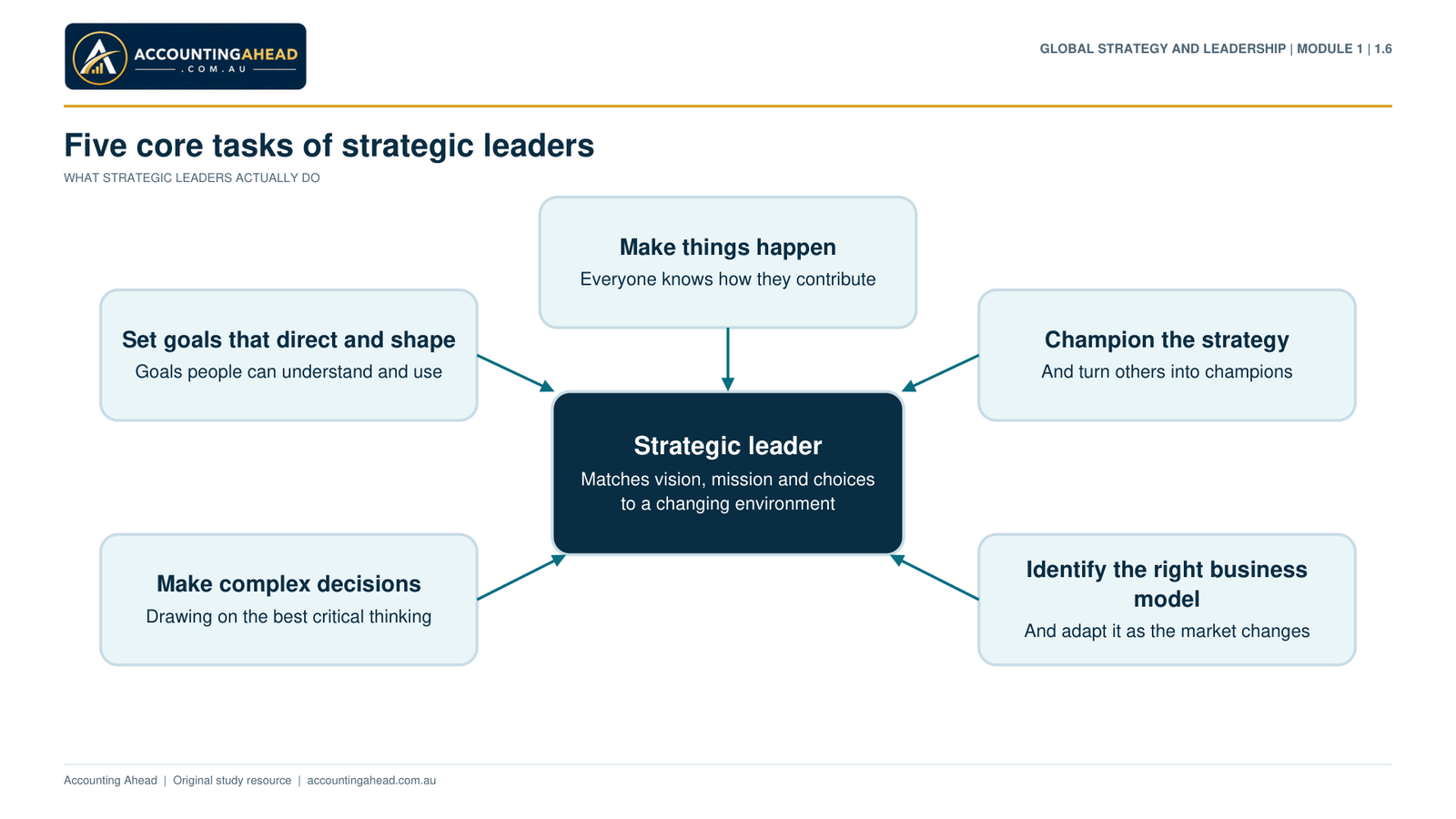
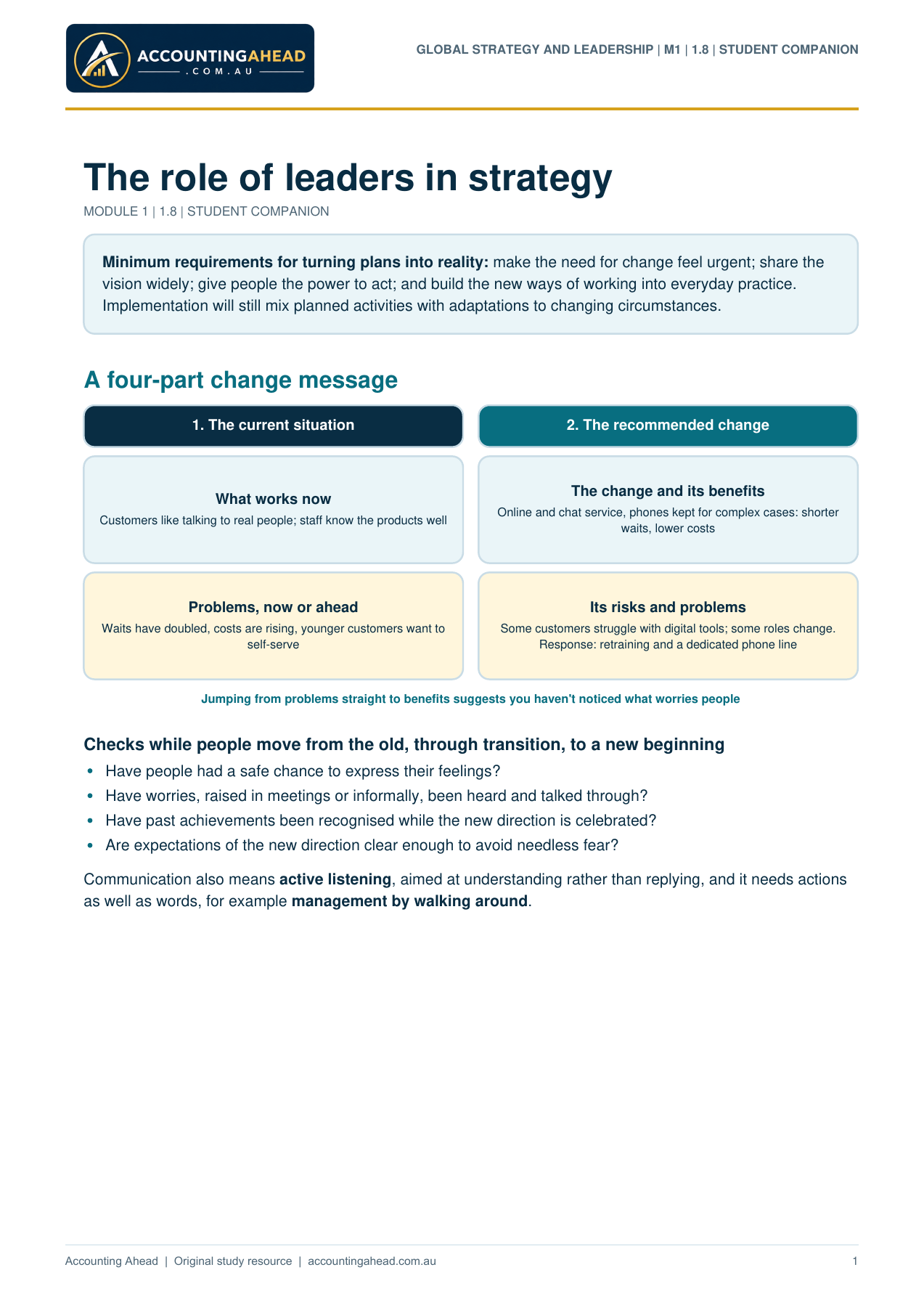
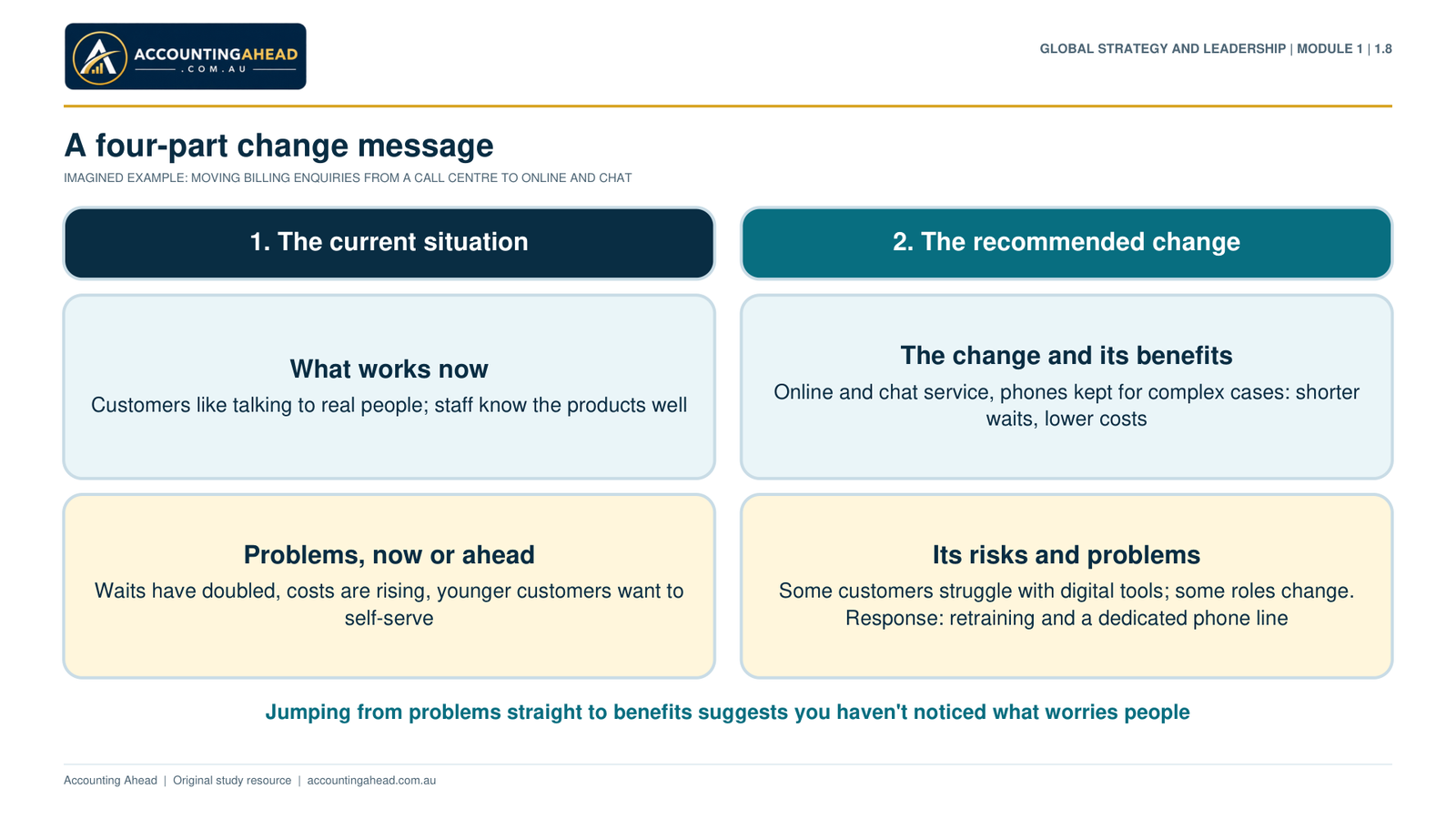
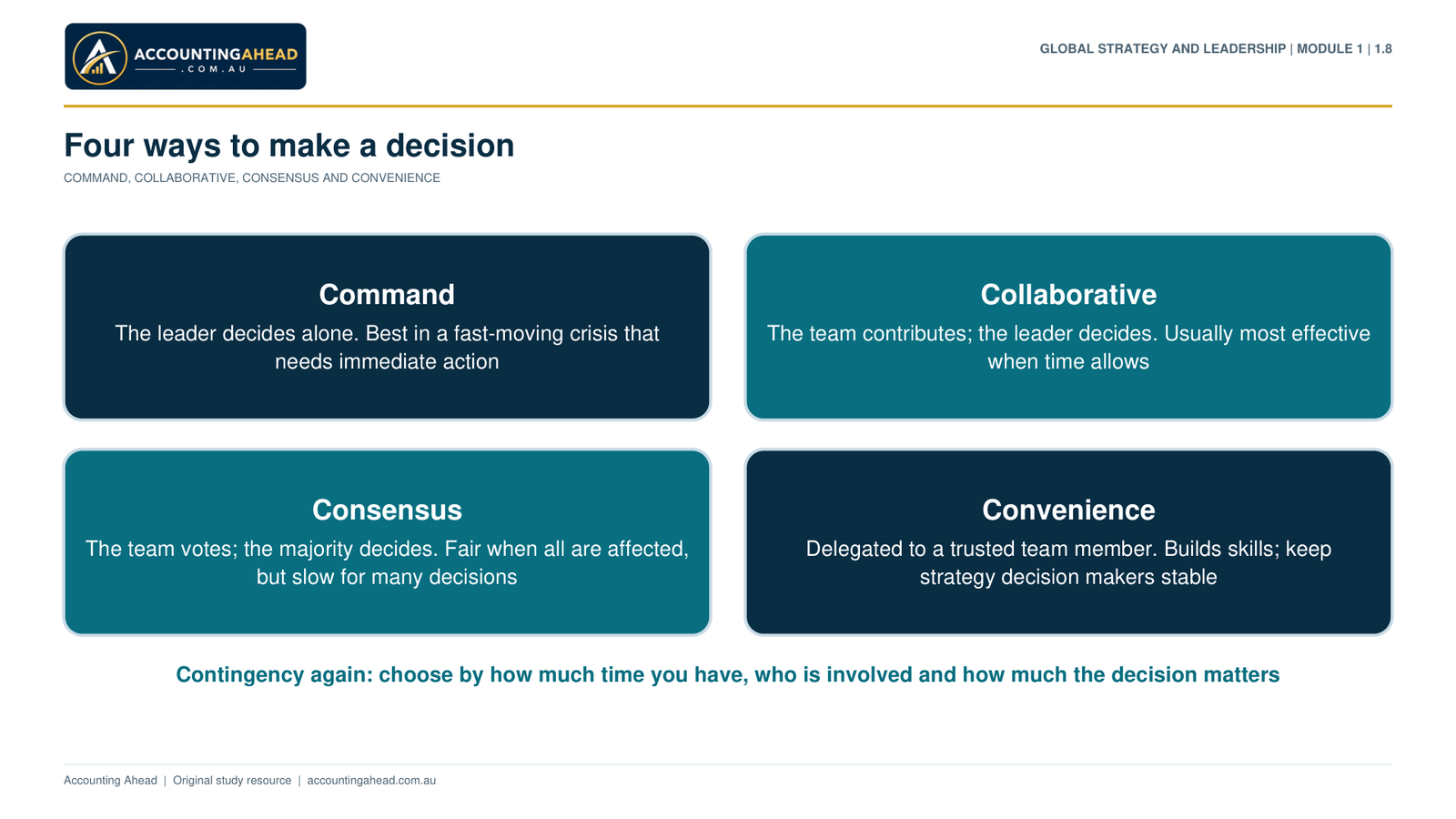
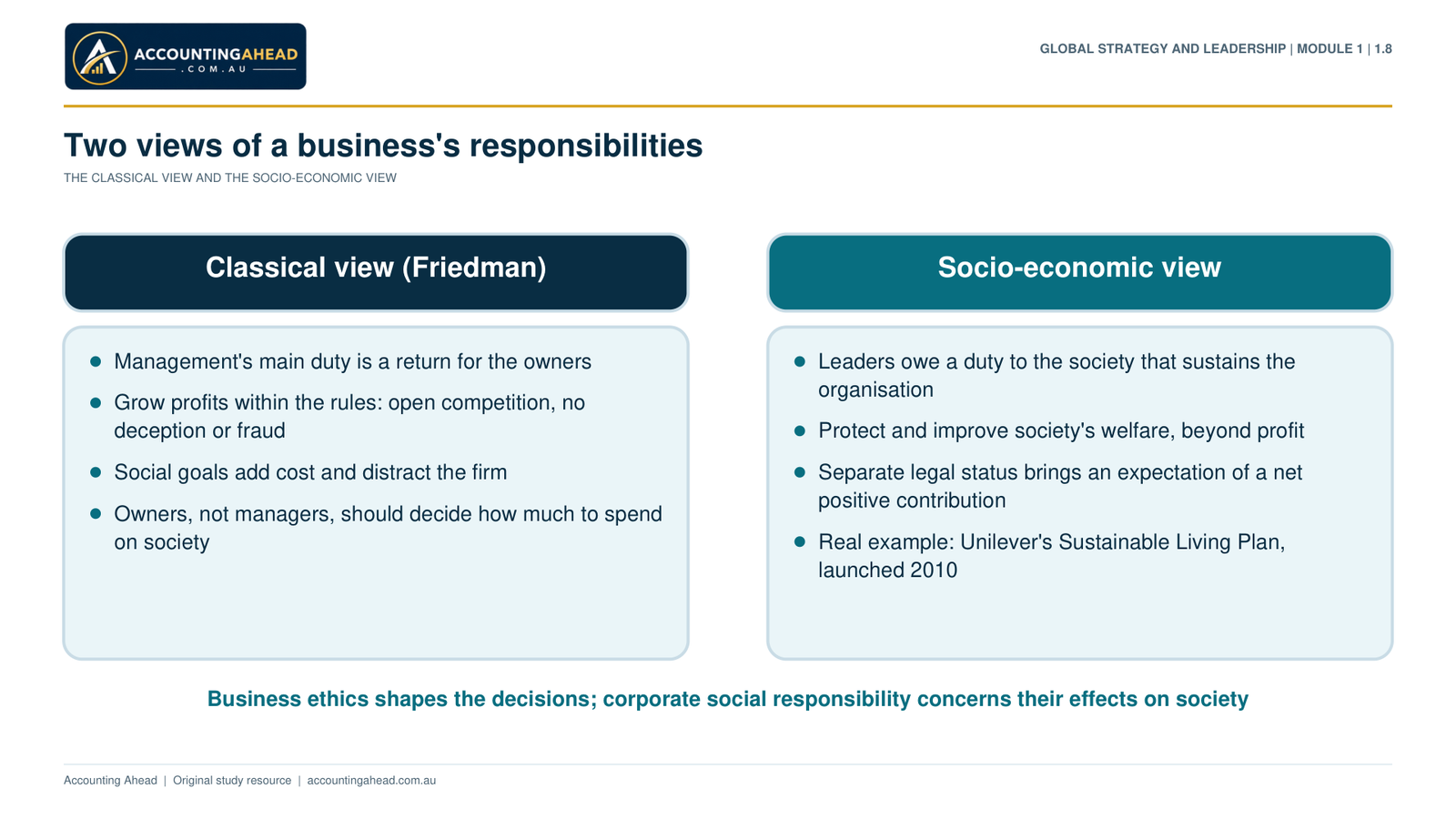
Part 1.8 · The Role of Leaders in Strategy
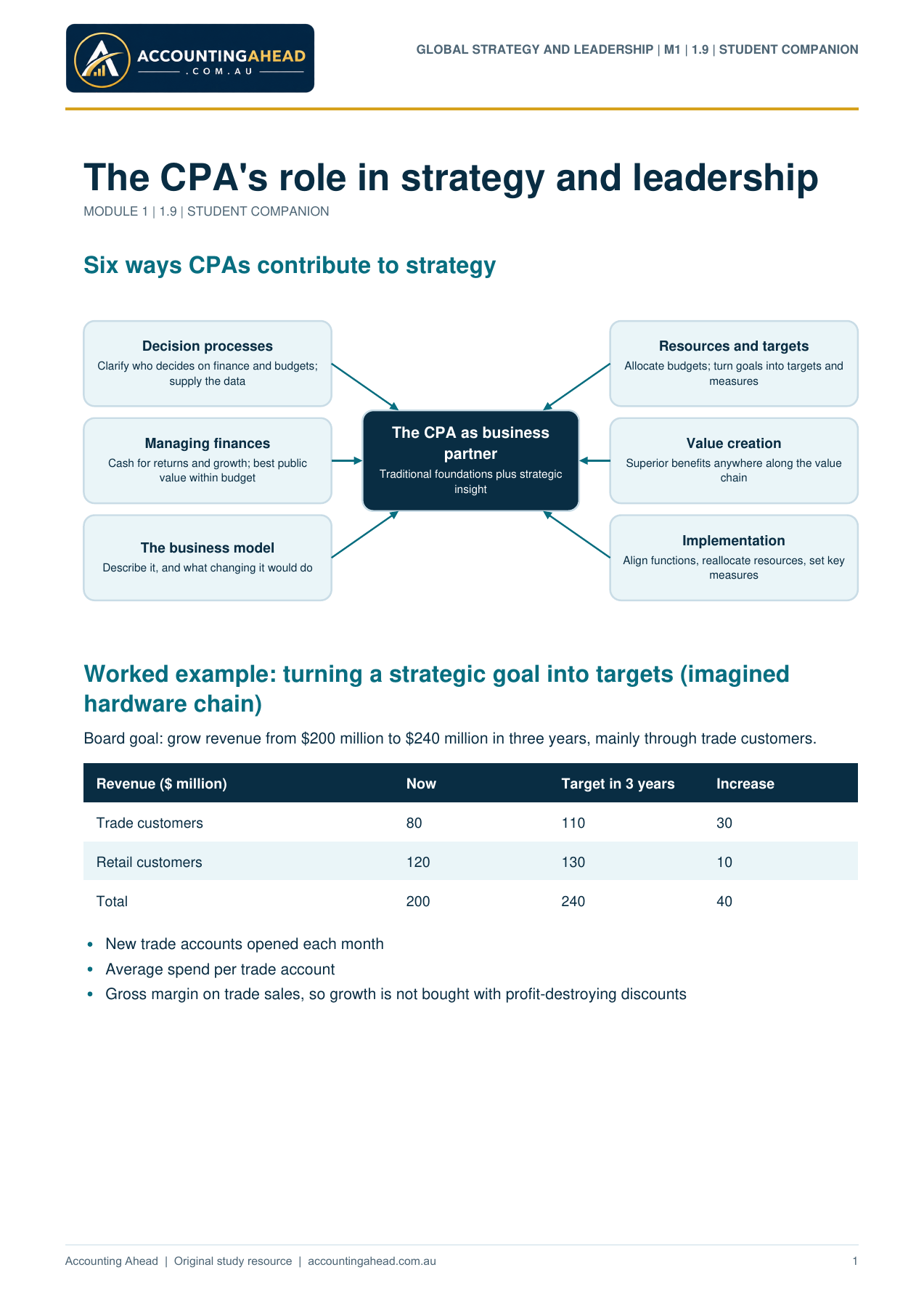
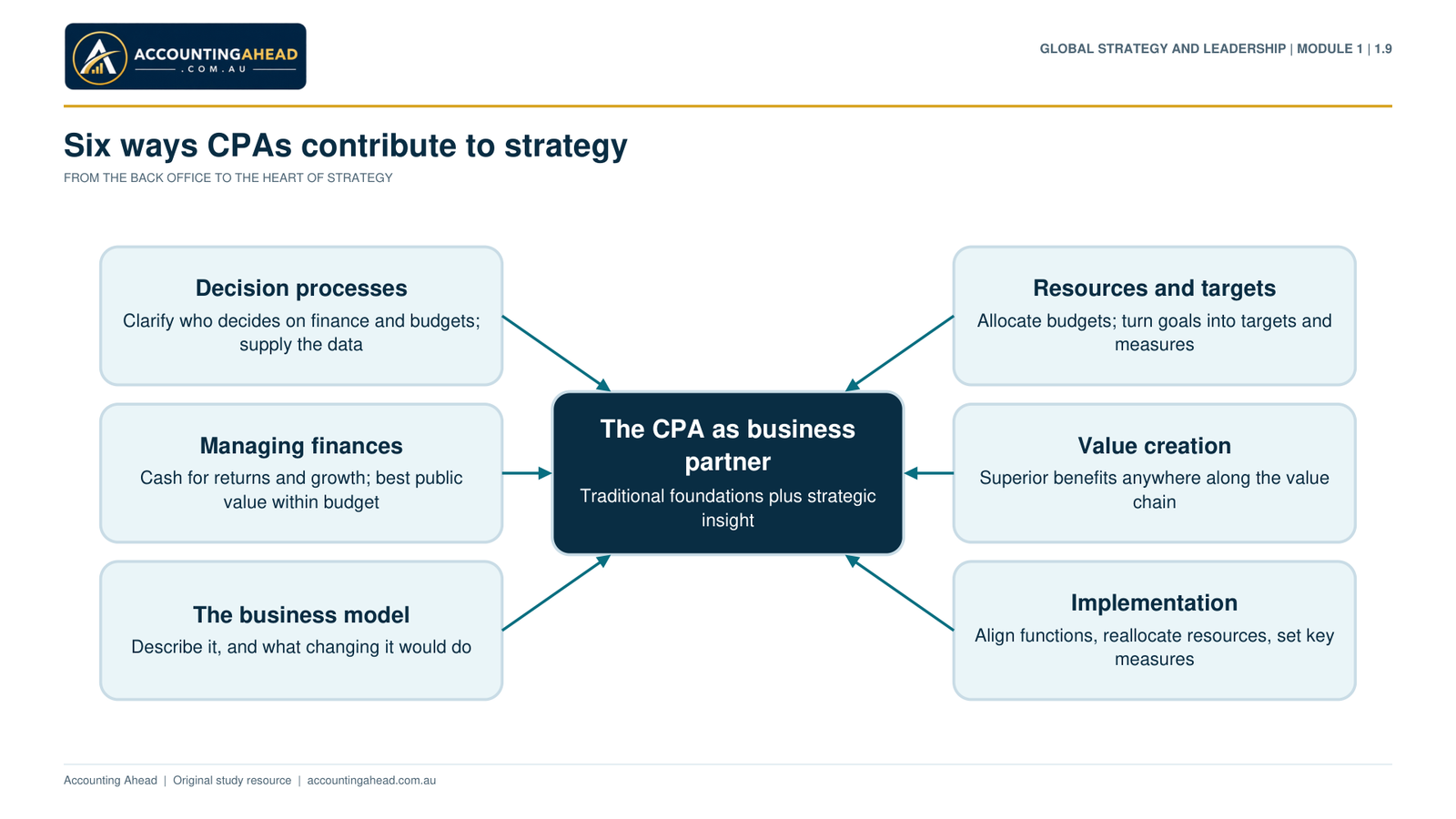
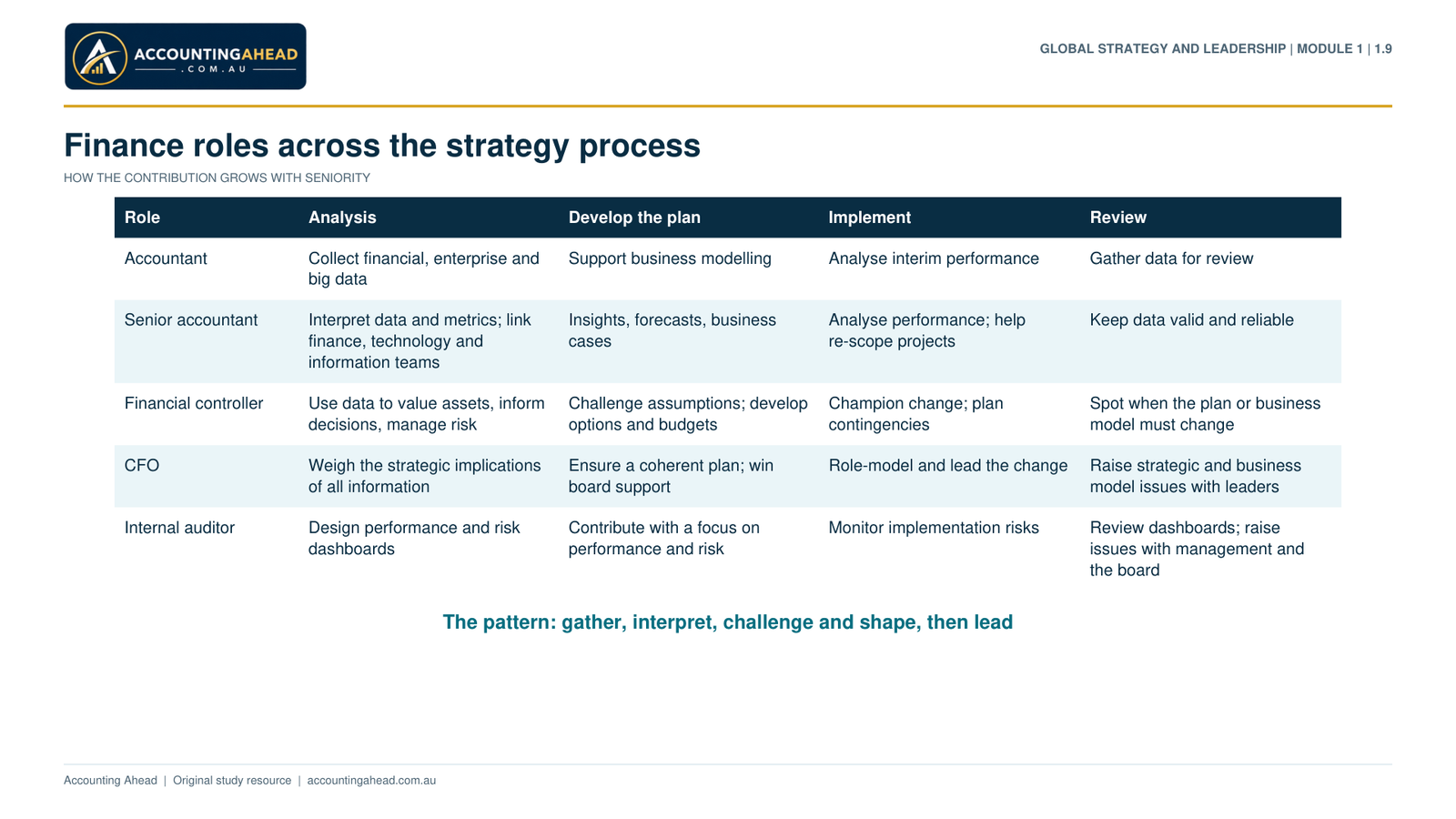
Part 1.9 · The Role of the CPA in Strategy
Module 2 · Understanding the external environment
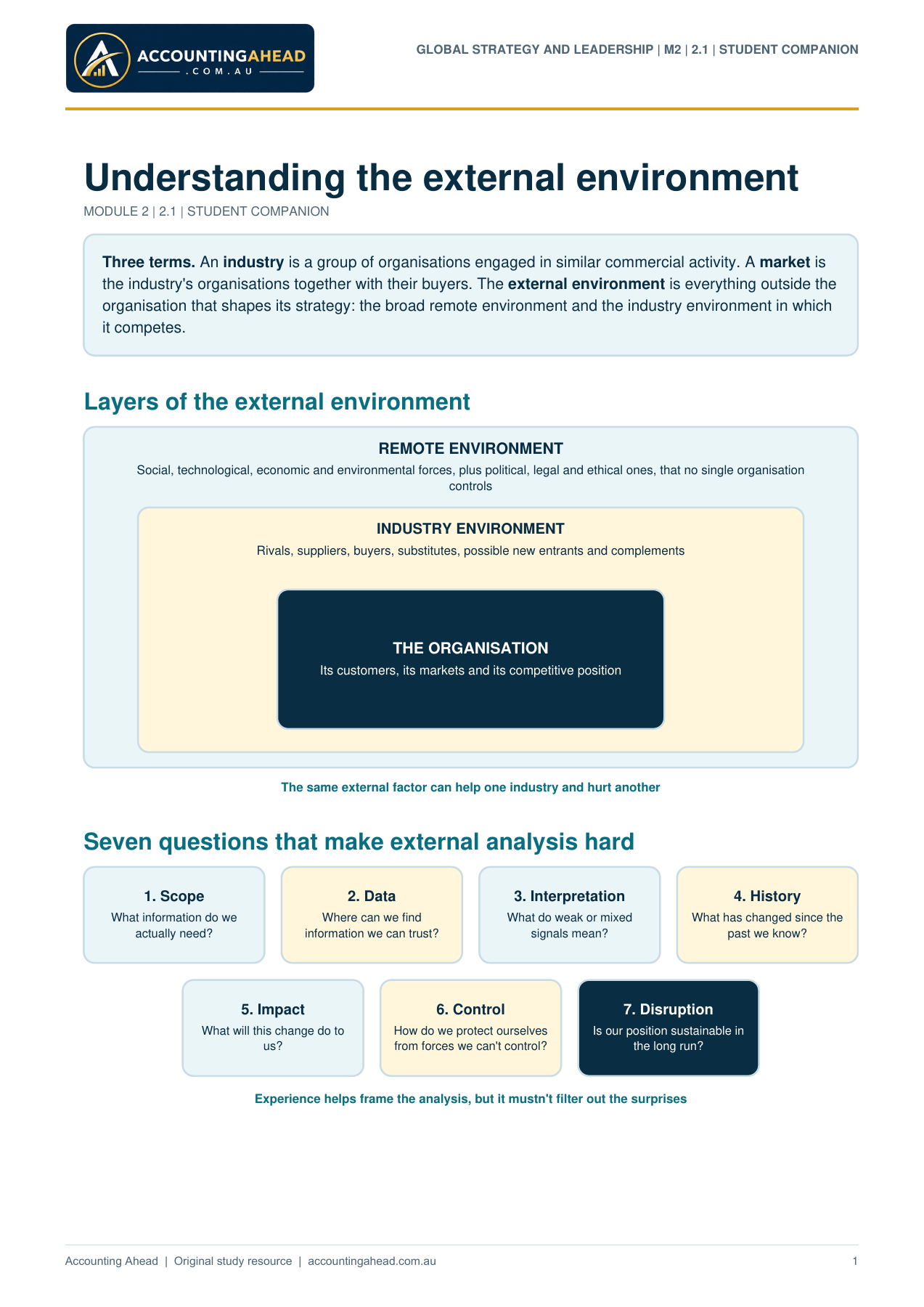
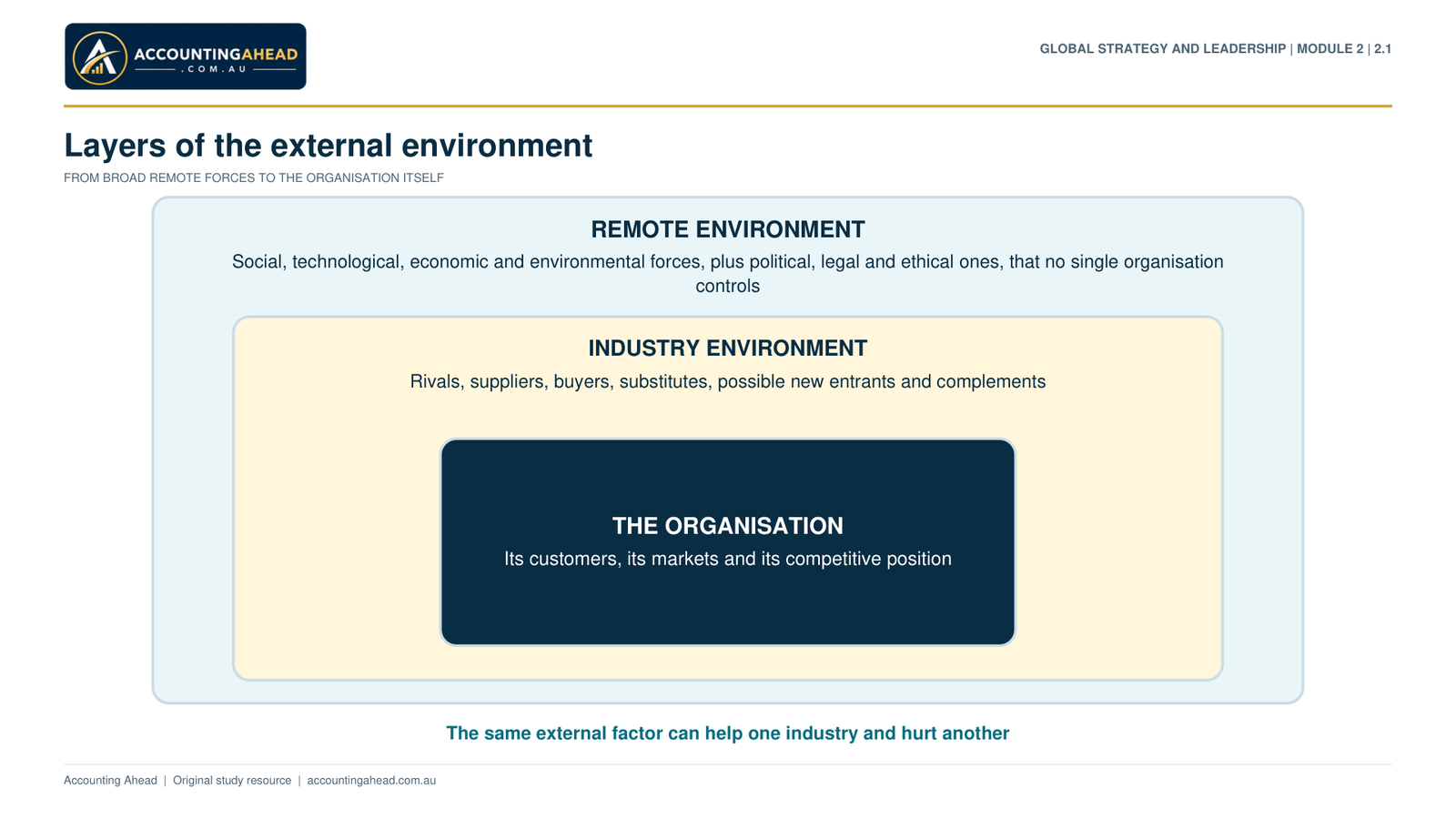
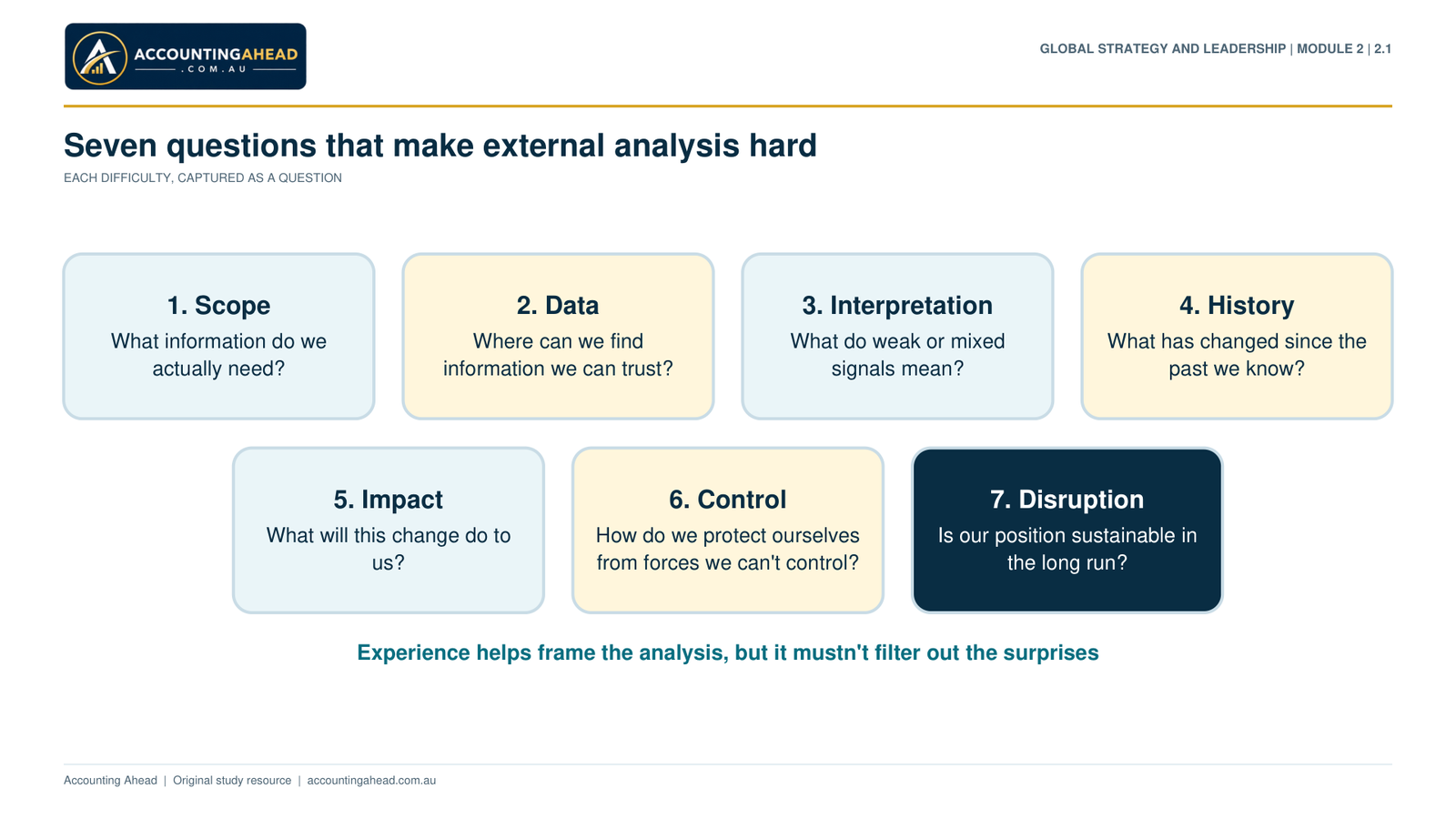
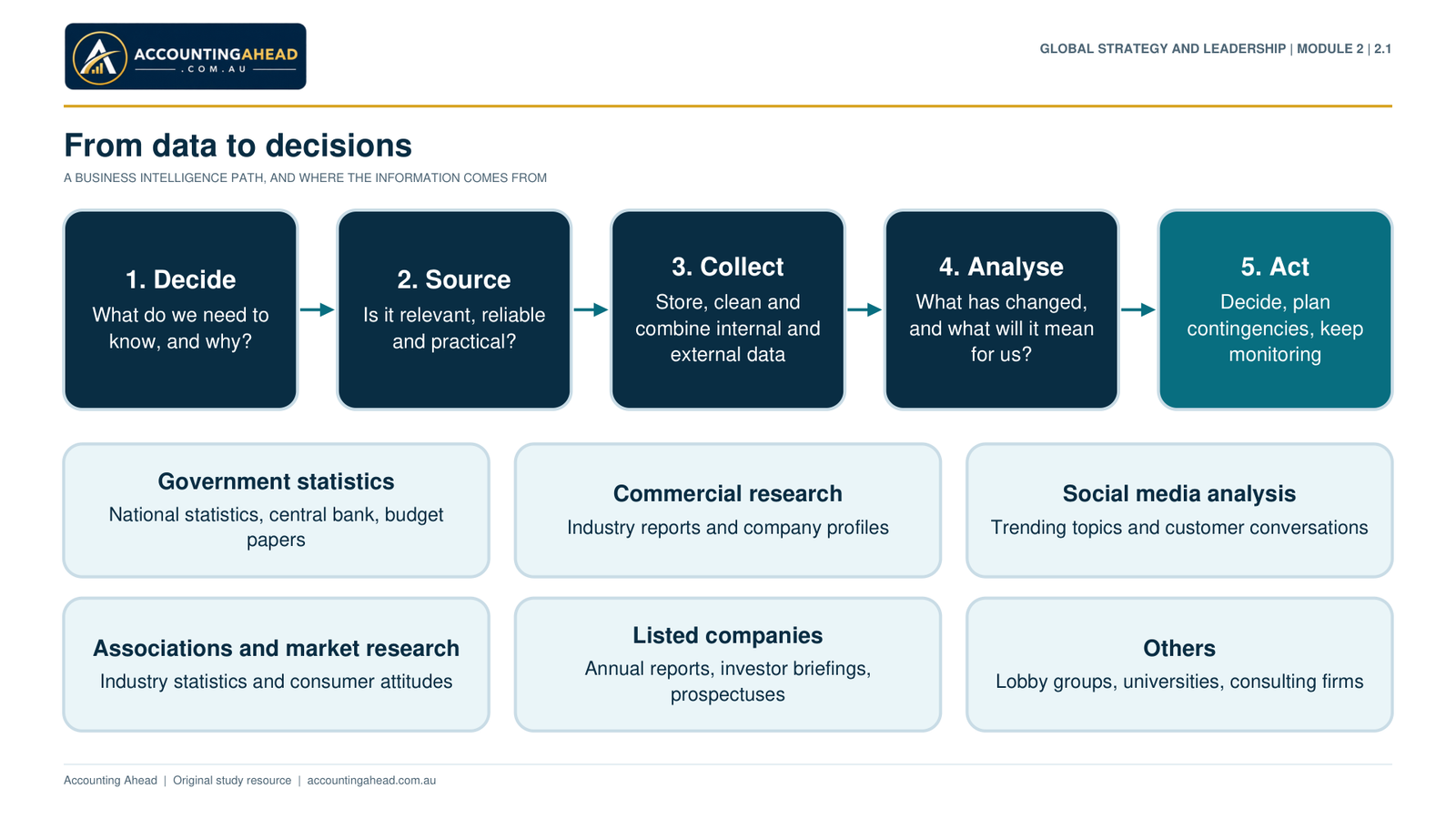
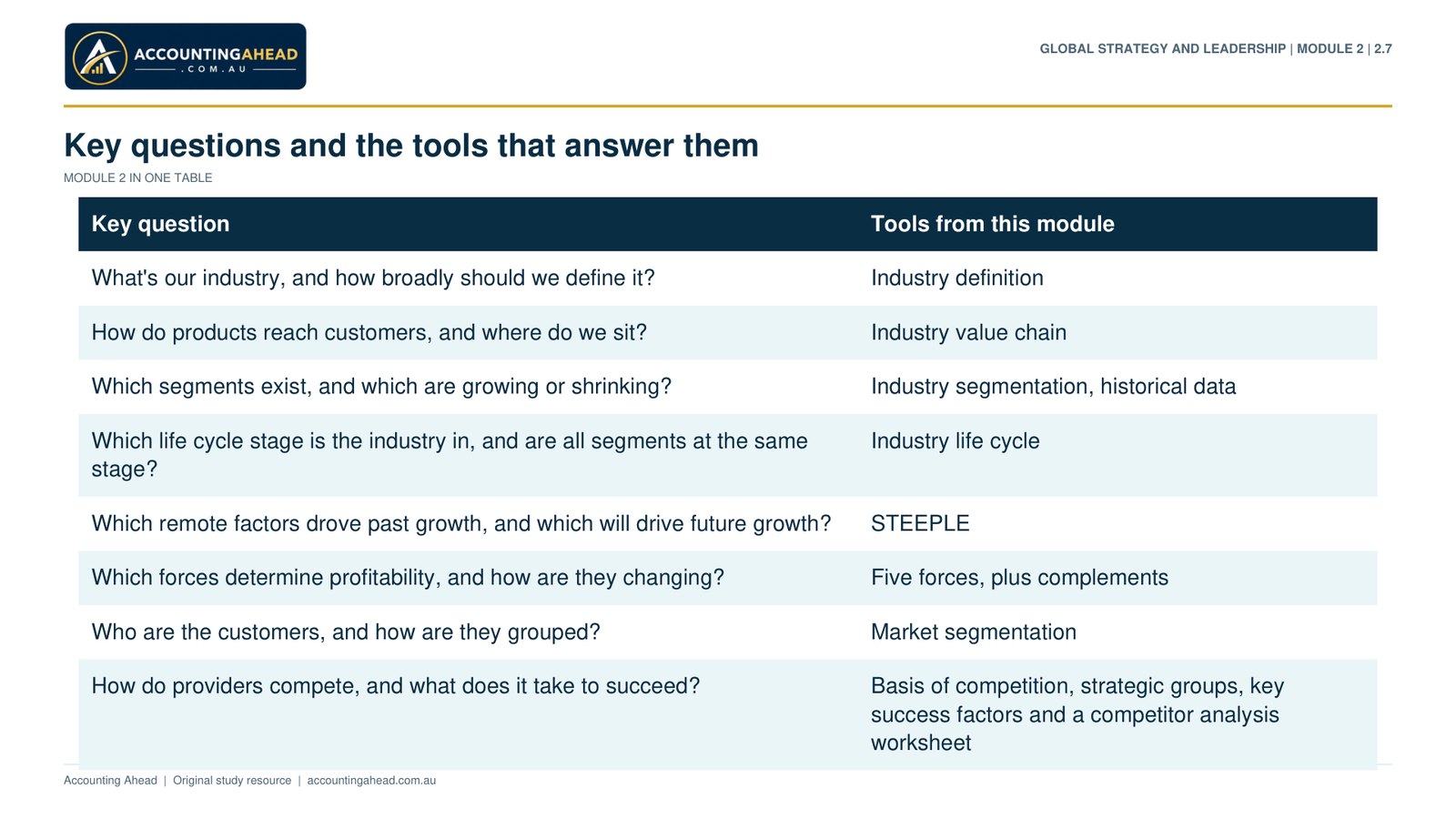
Part 2.1 · Understanding the External Environment
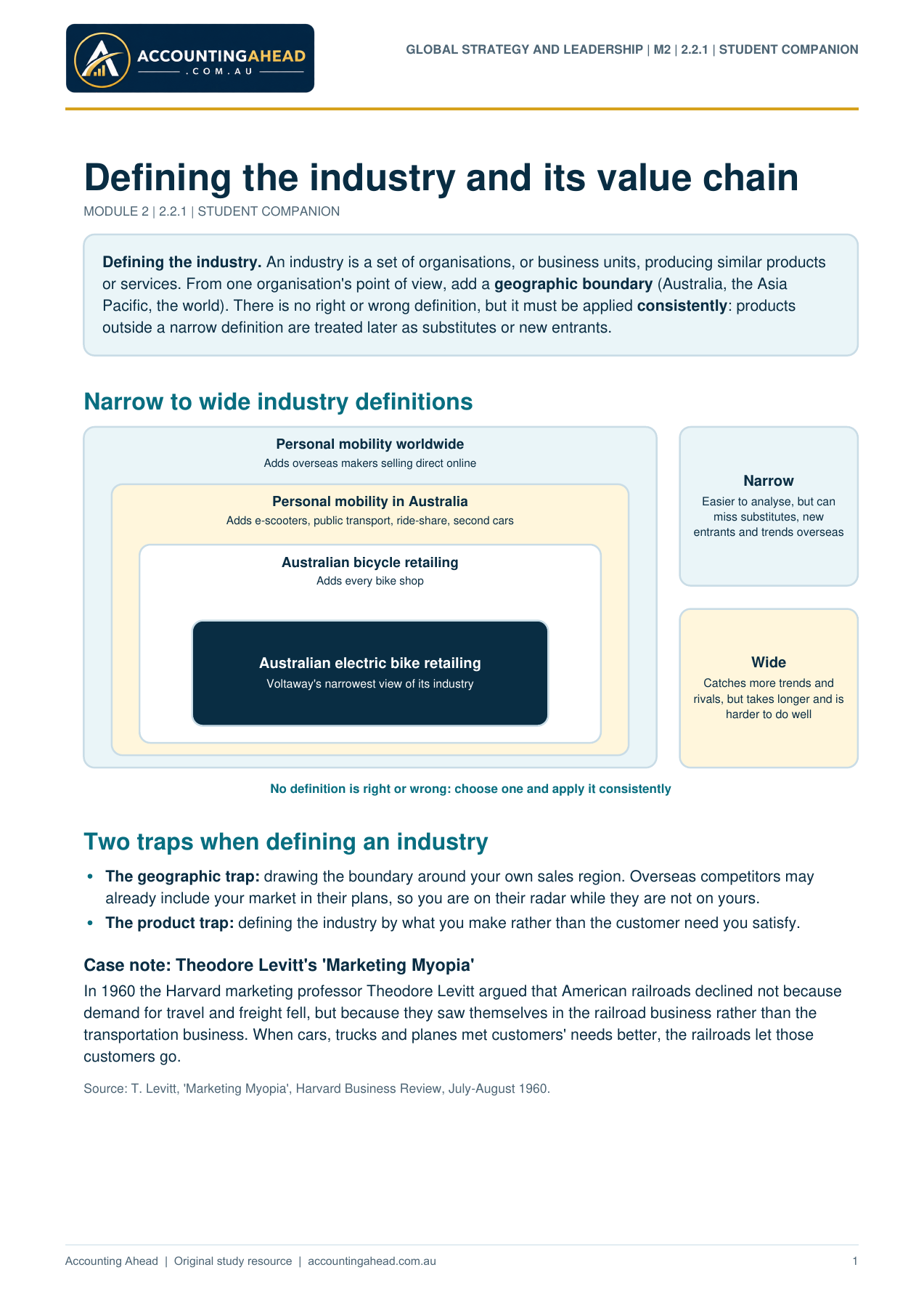
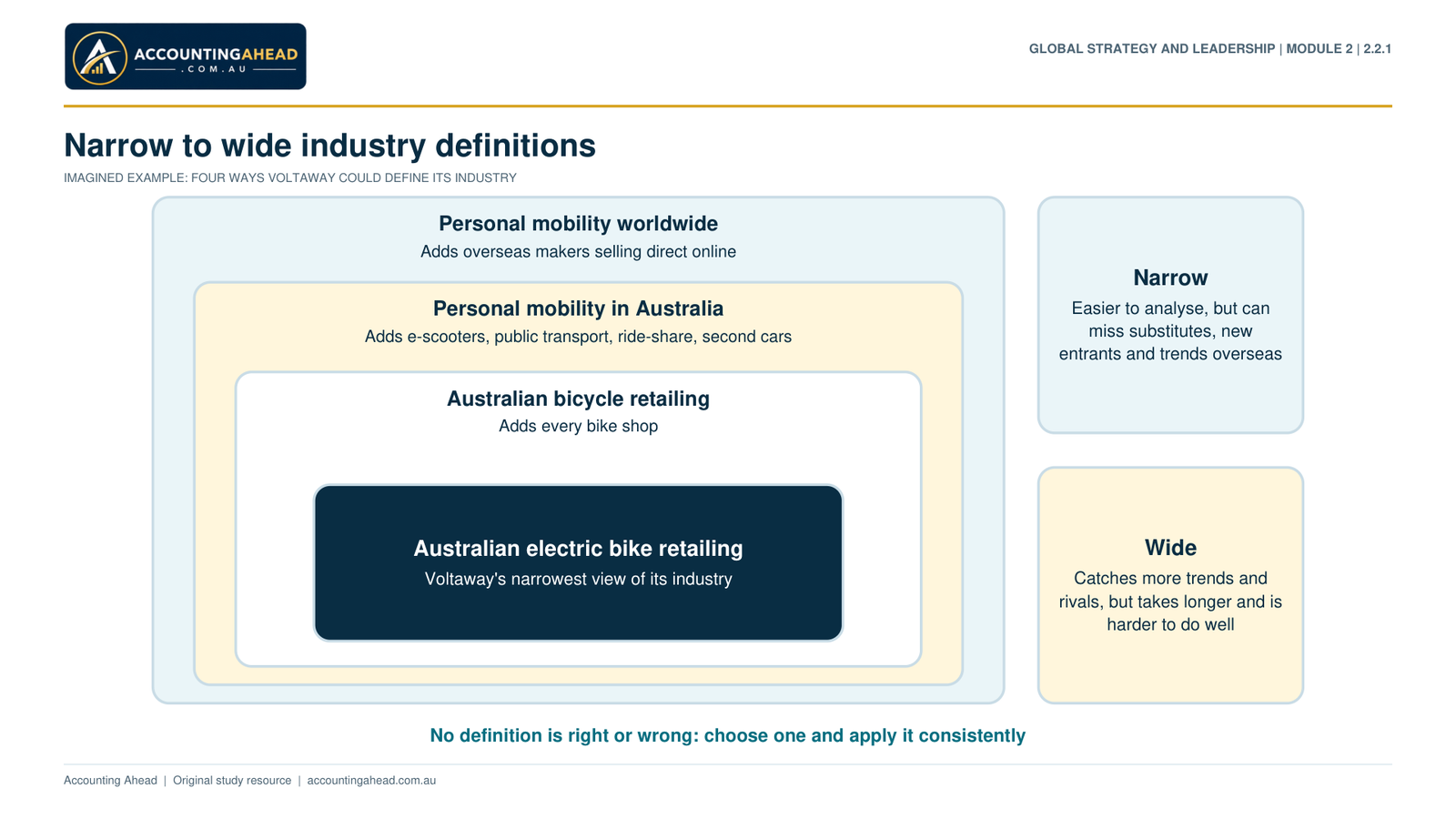
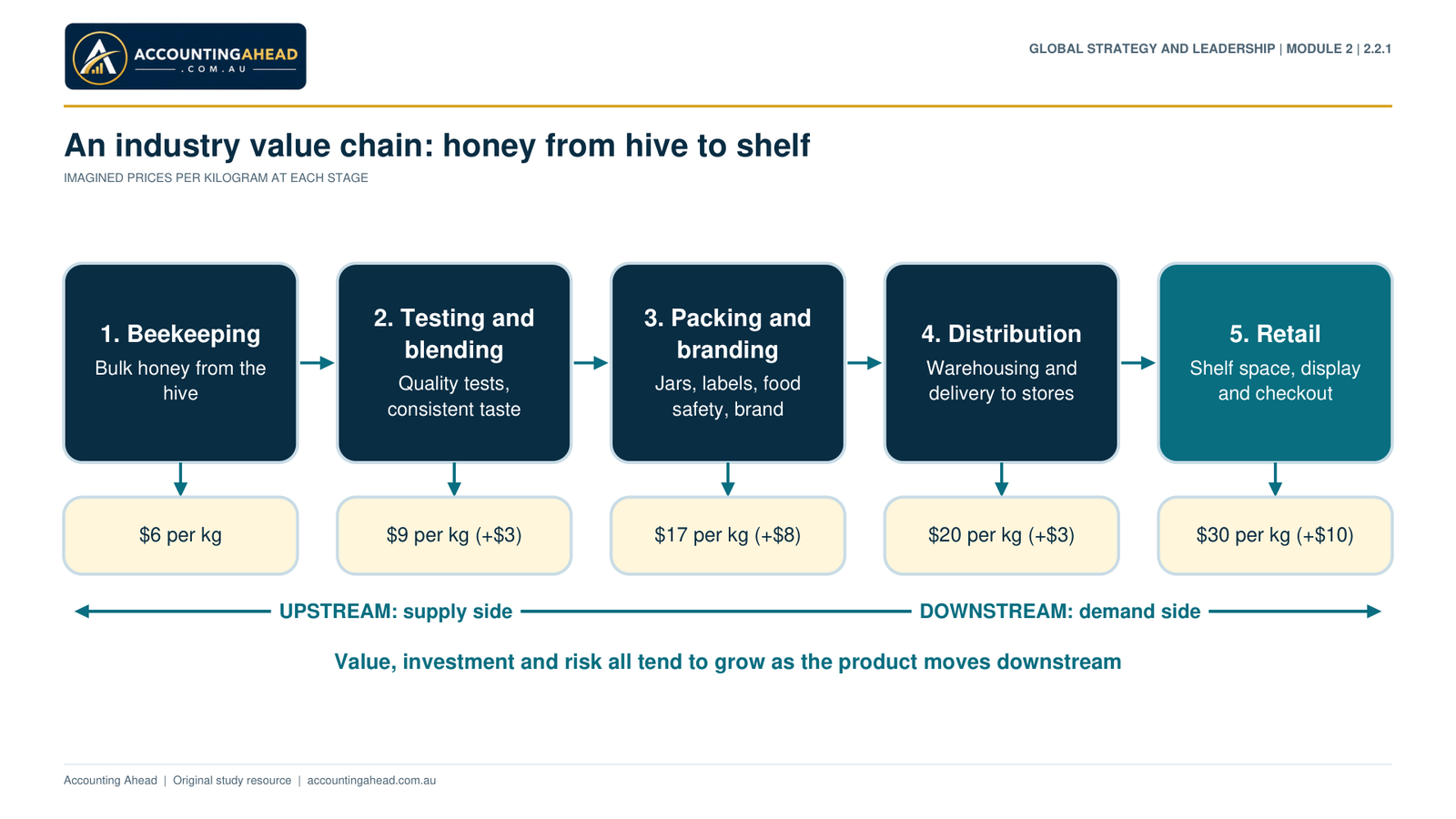
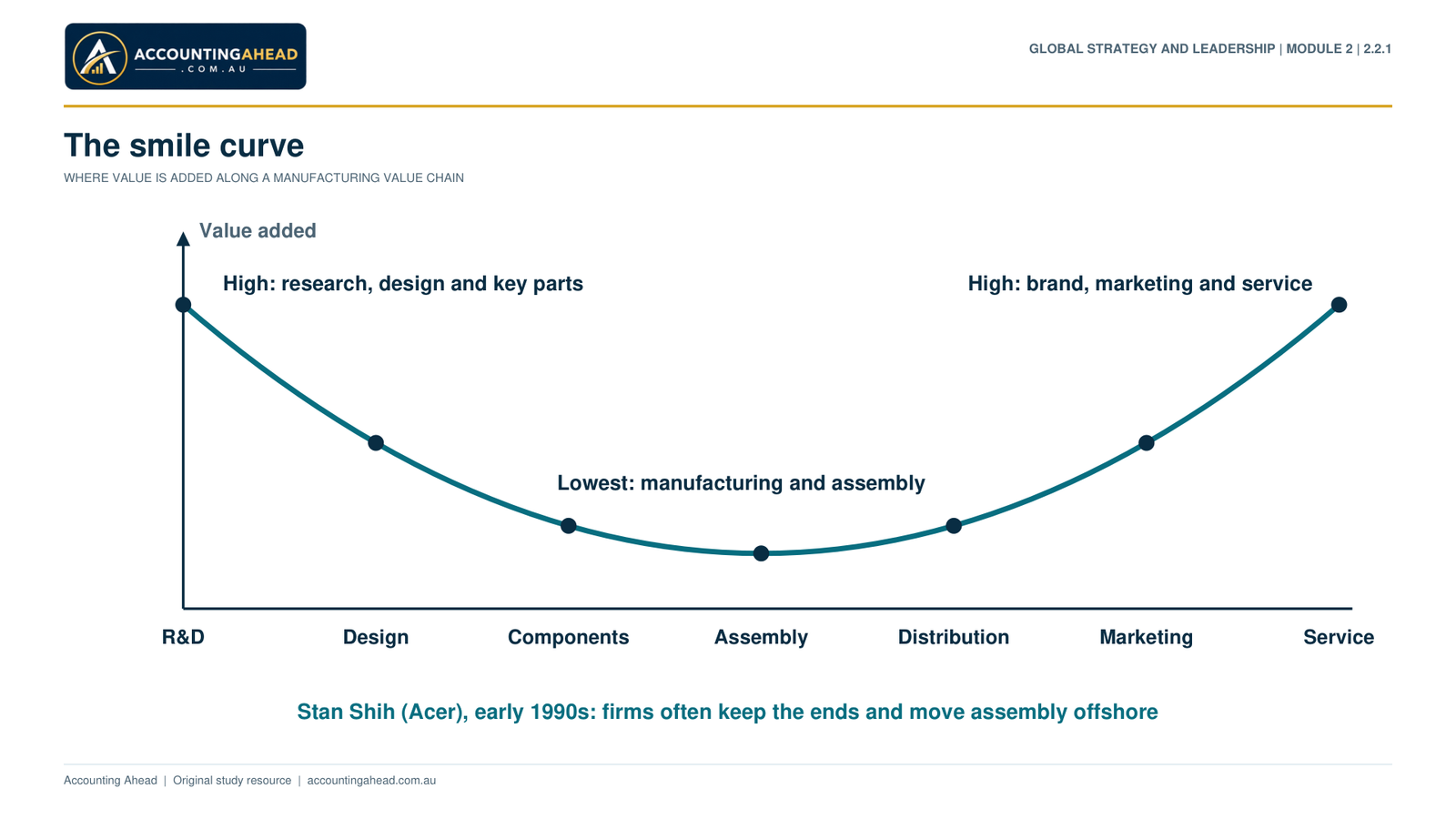
Part 2.2.1 · Defining the Industry and Its Value Chain
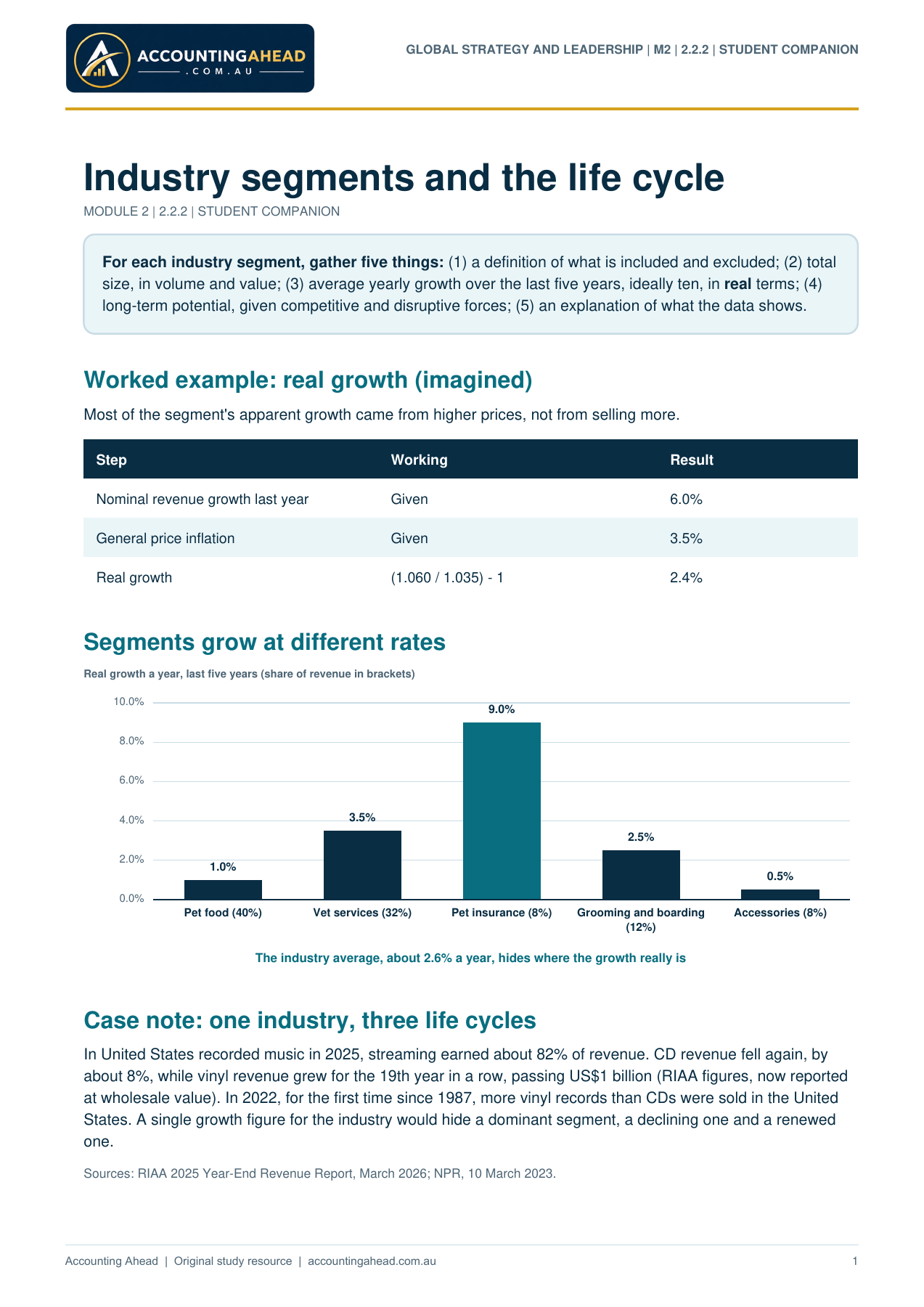
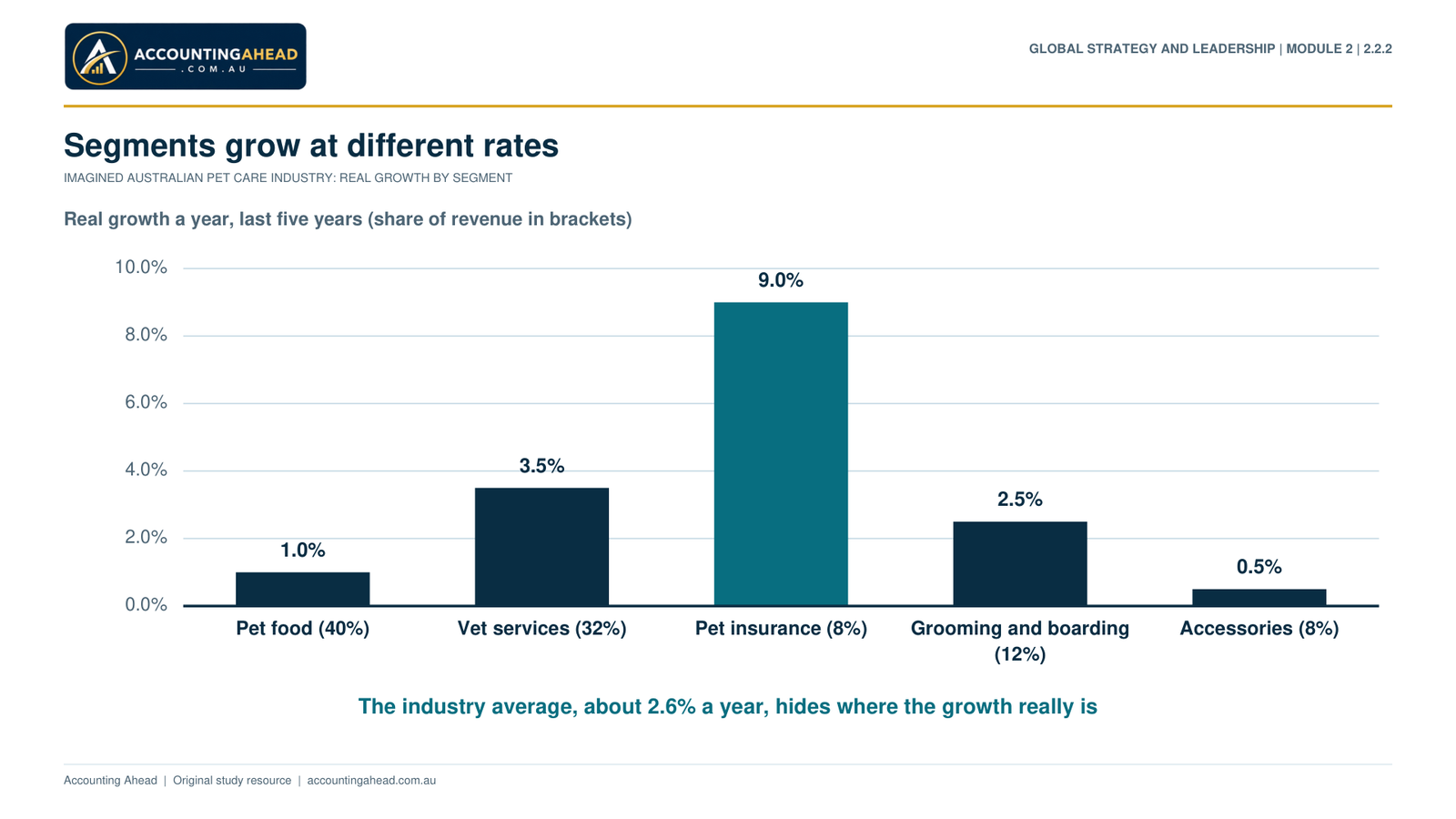
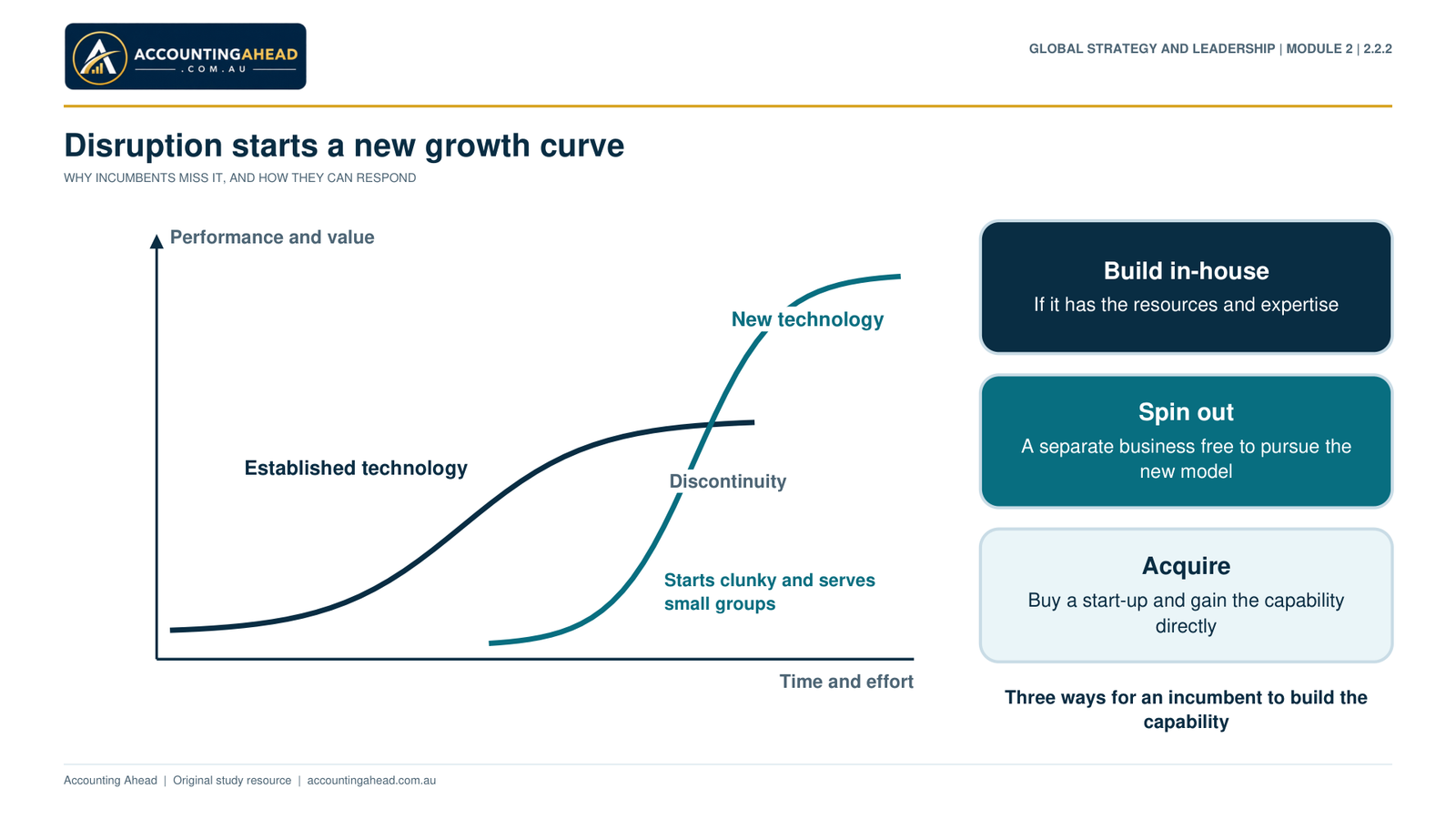
Part 2.2.2 · Industry Segments and the Life Cycle
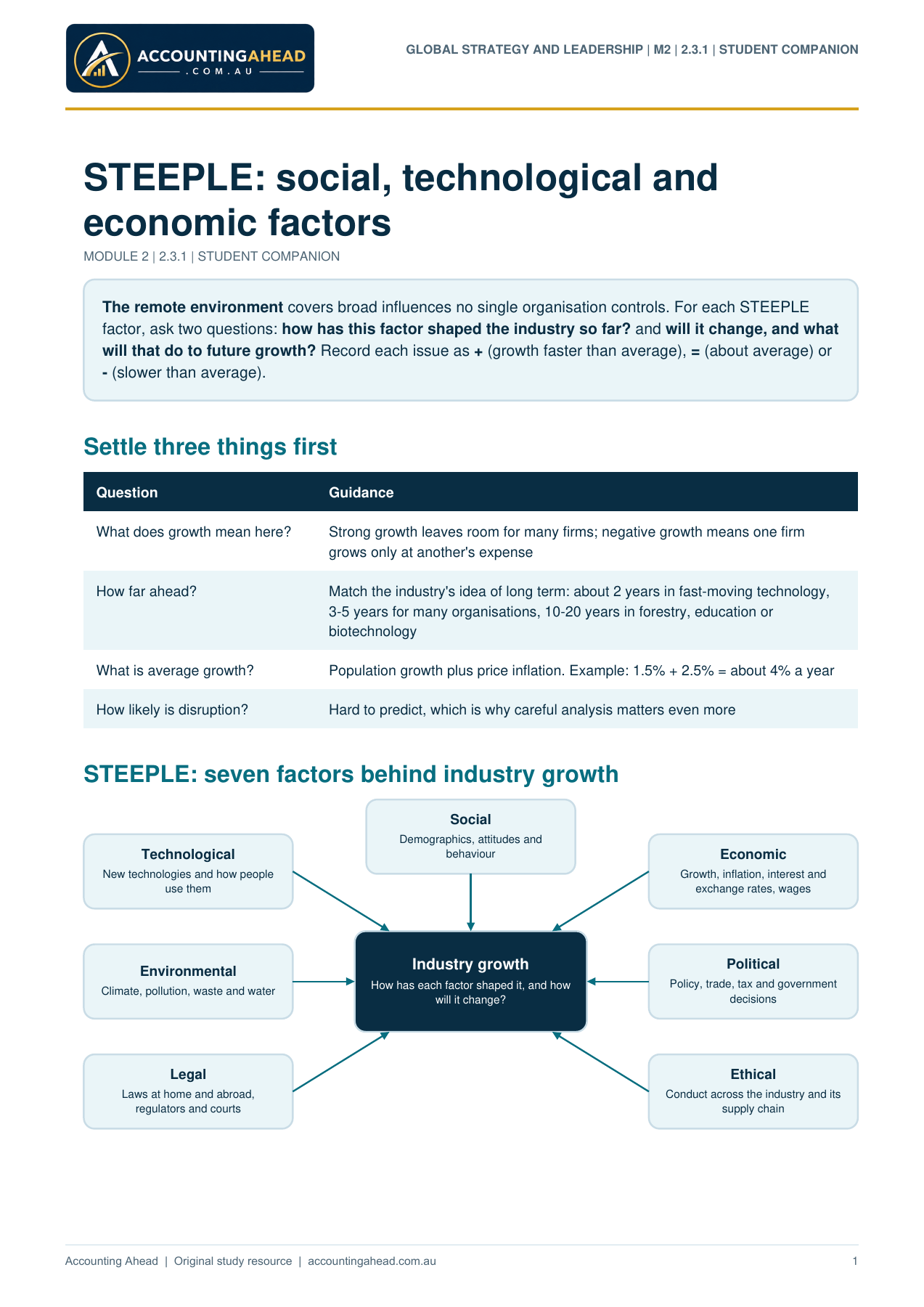
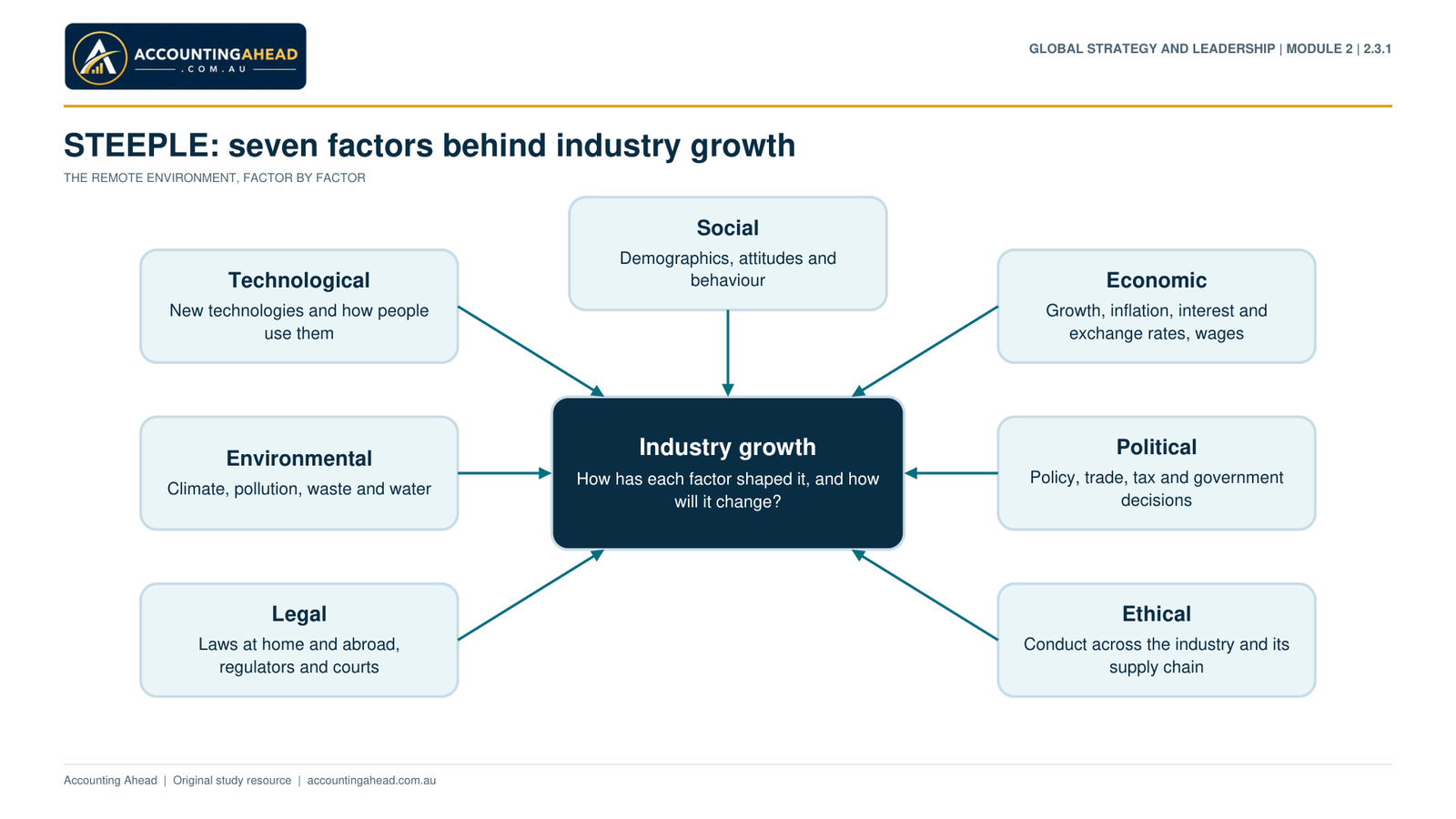
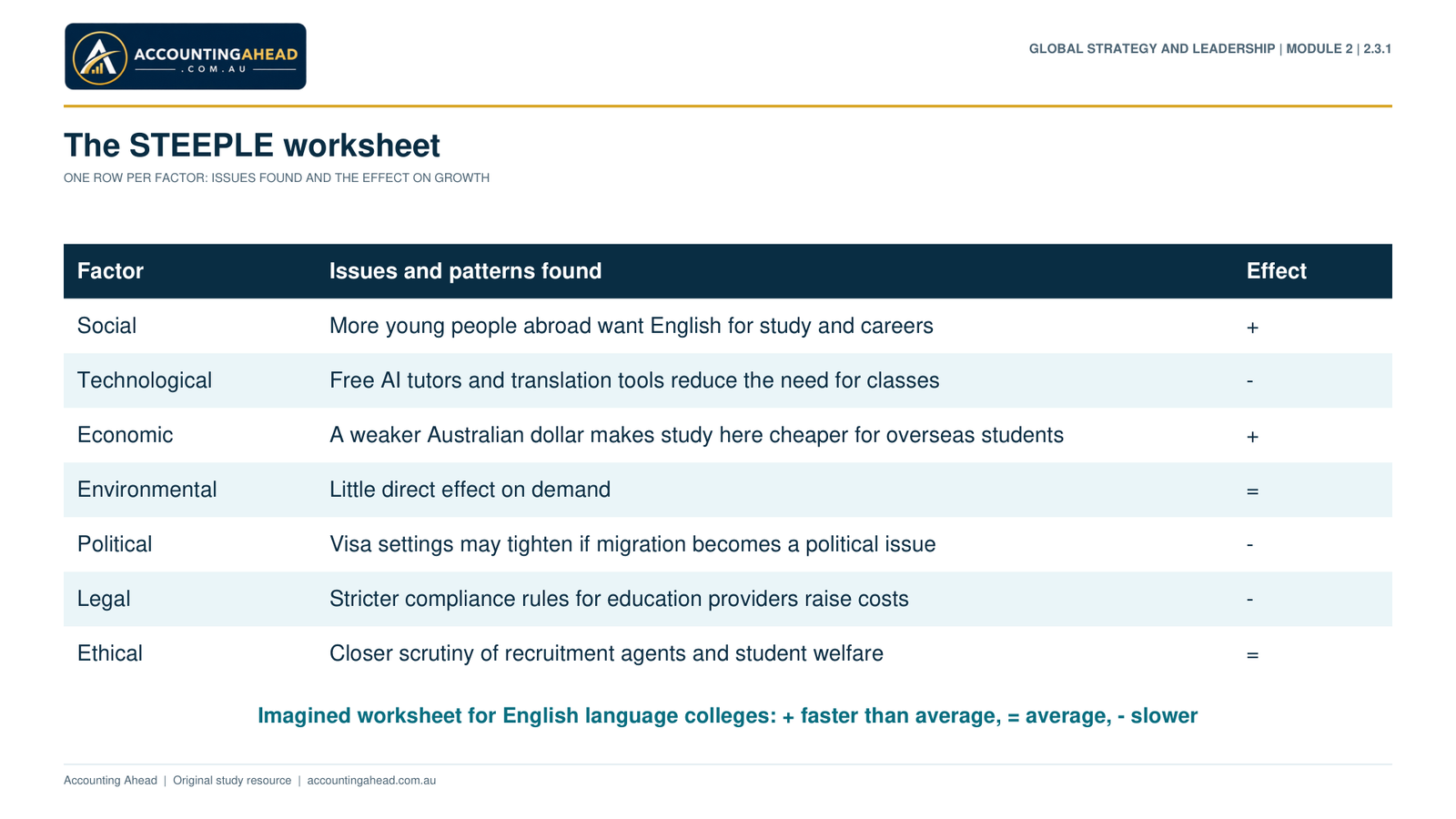
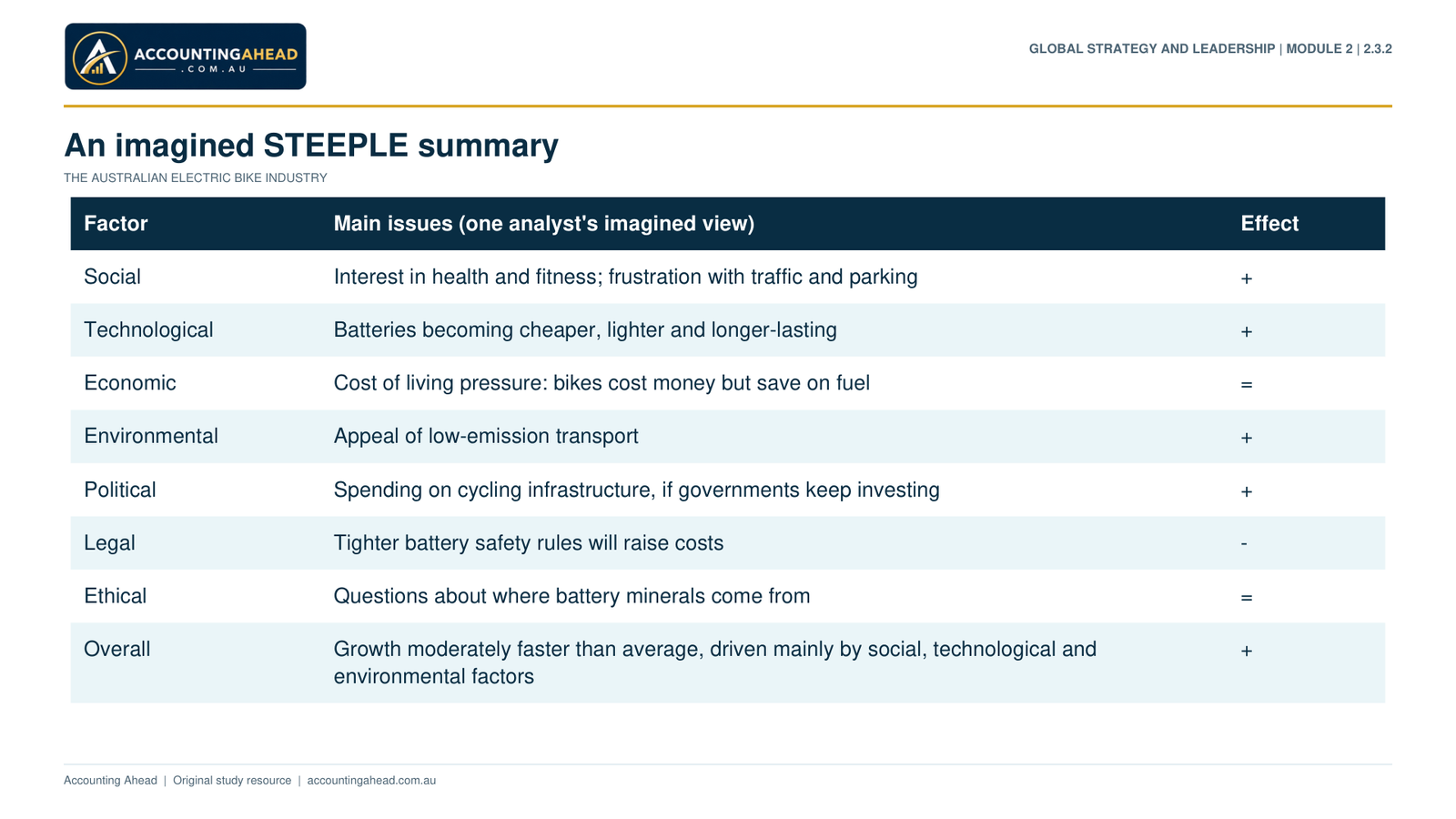
Part 2.3.1 · STEEPLE - Social, Technological, Economic
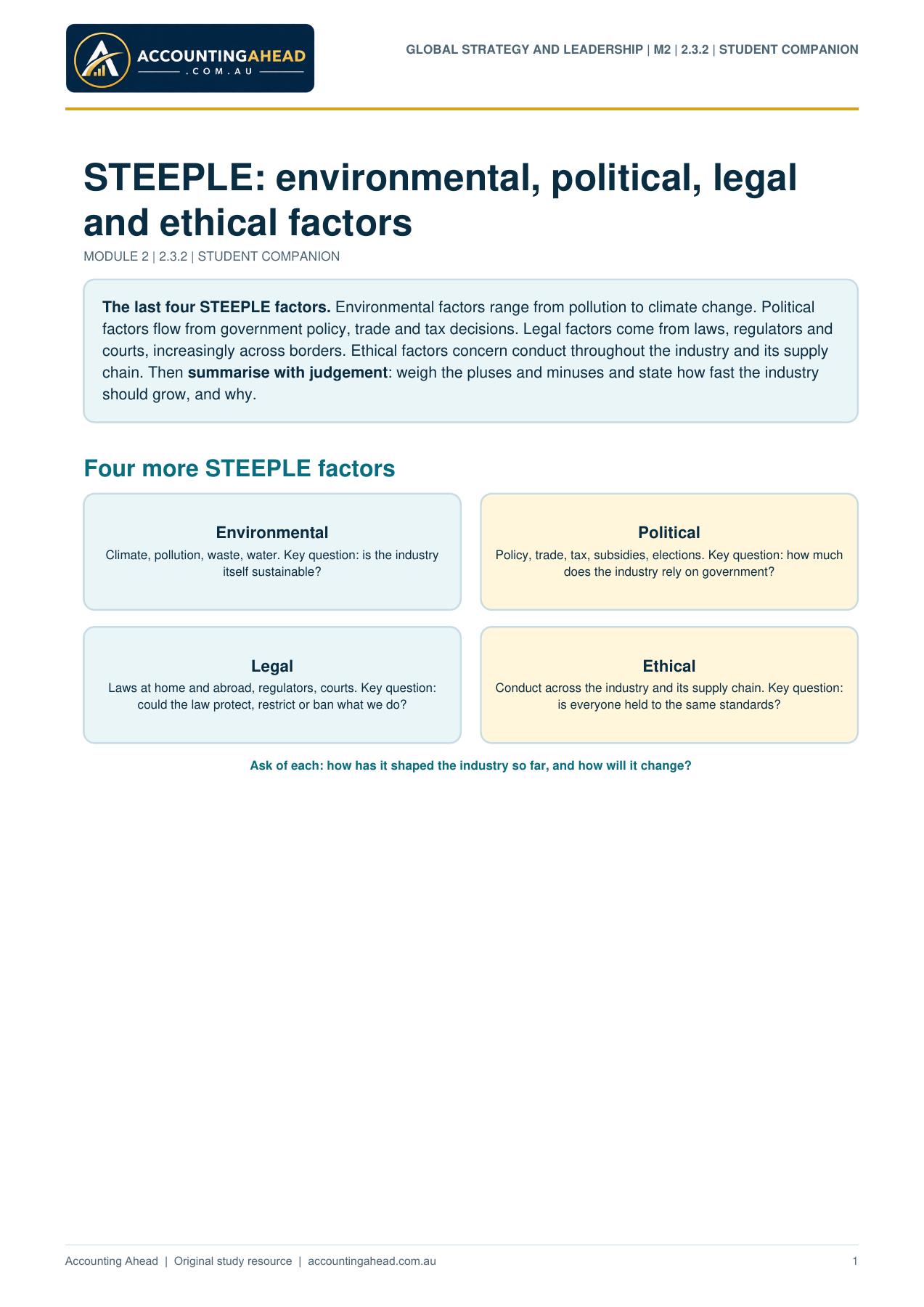
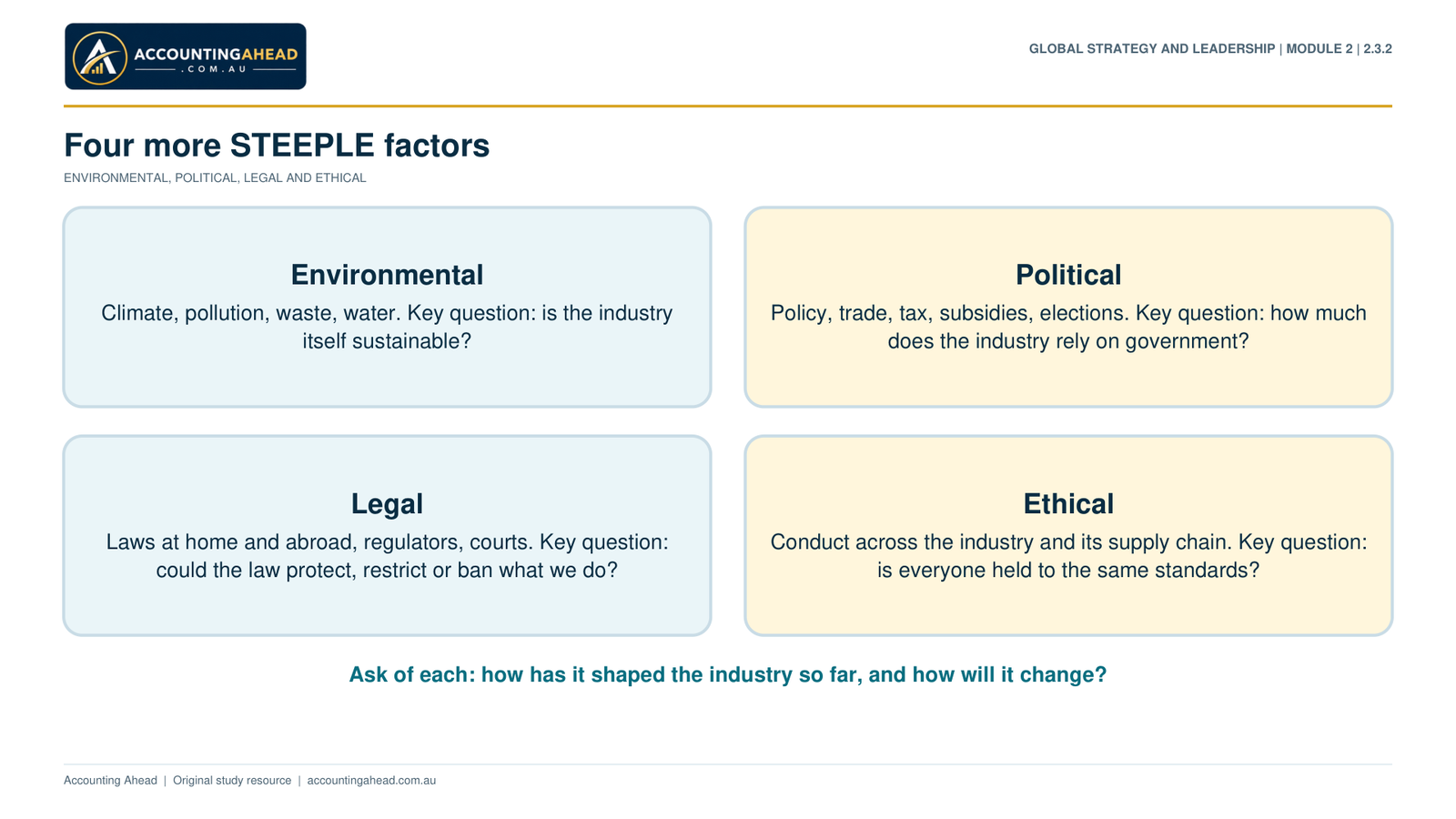
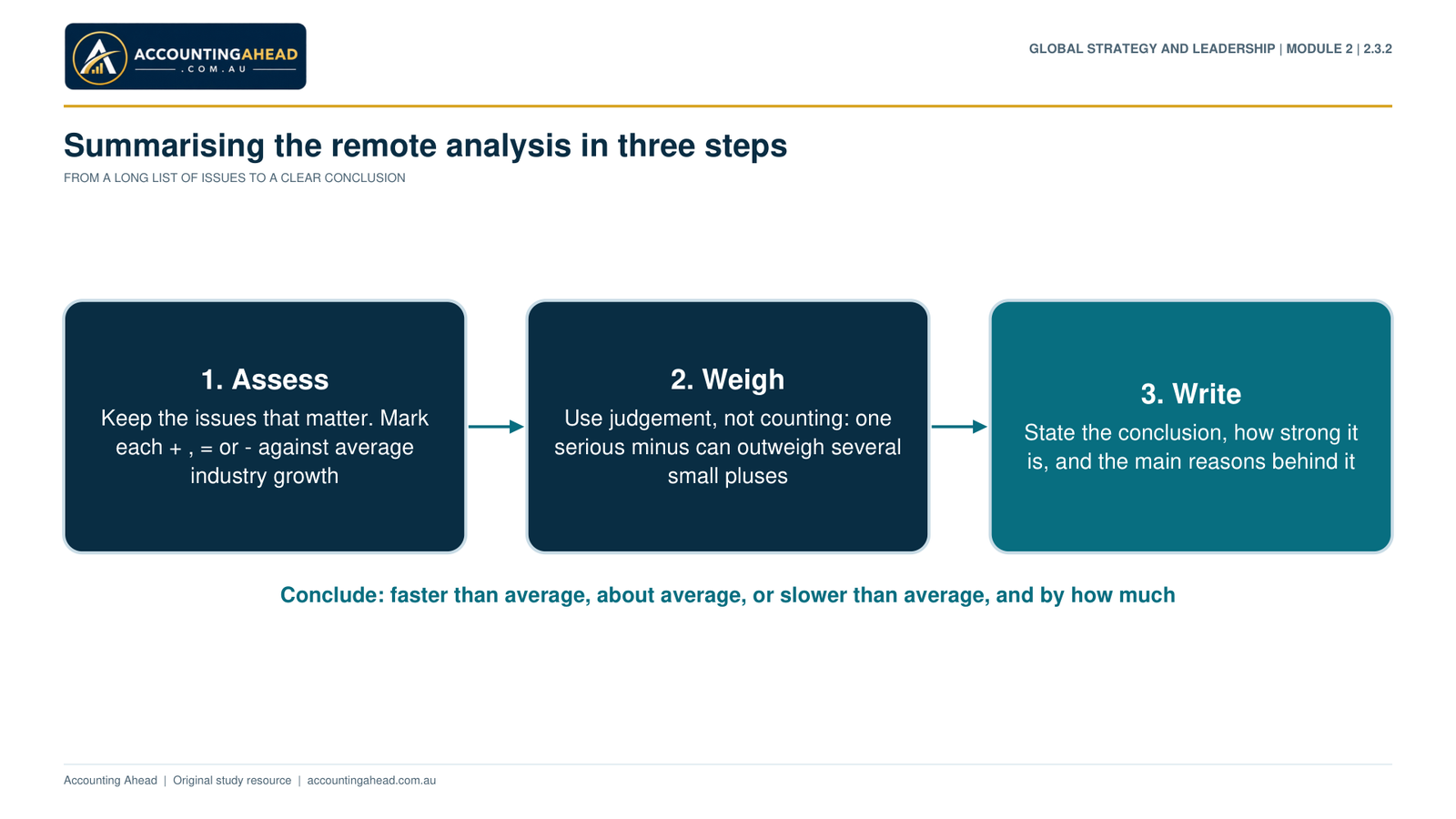
Part 2.3.2 · STEEPLE - Environmental, Political, Legal, Ethical
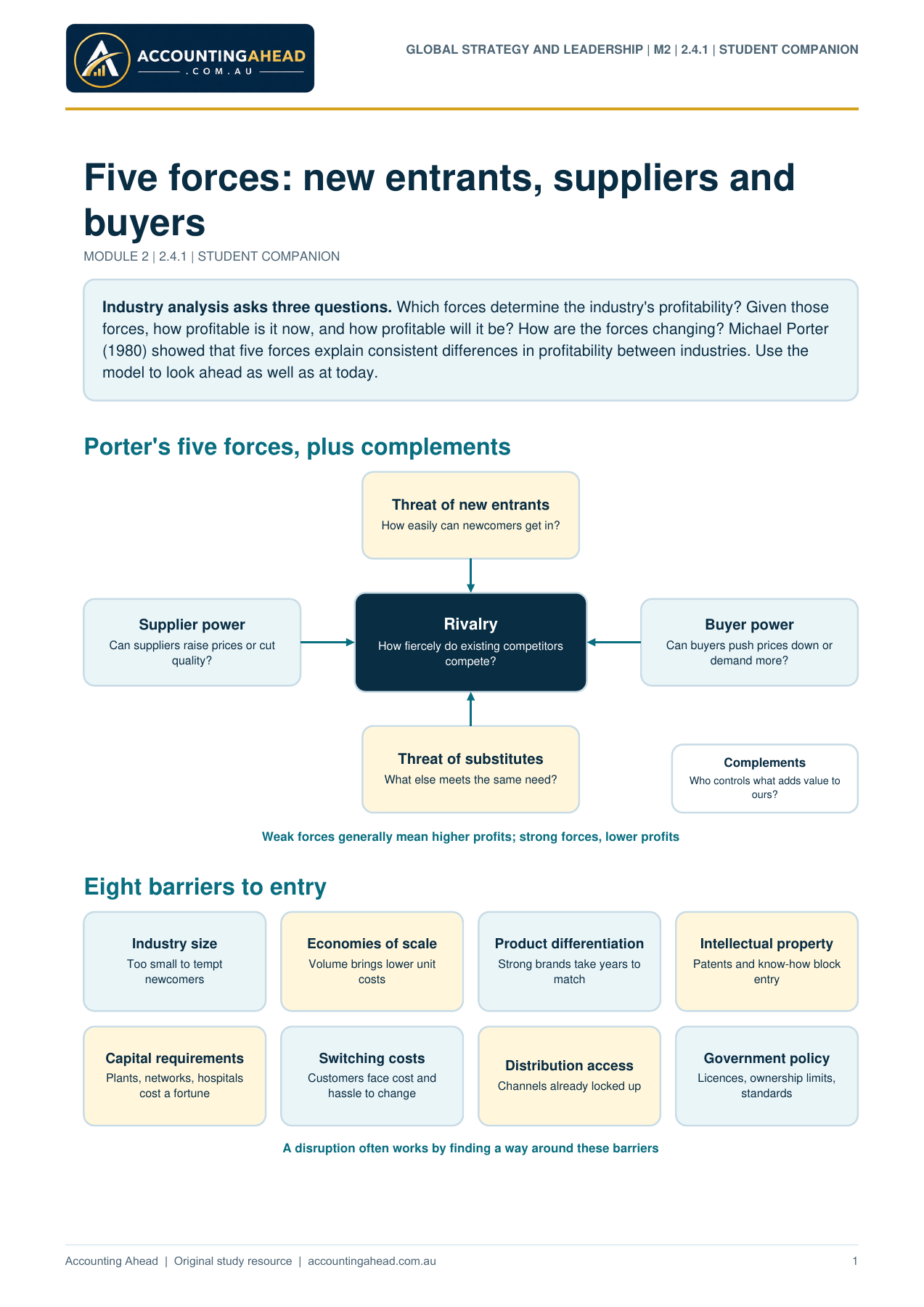
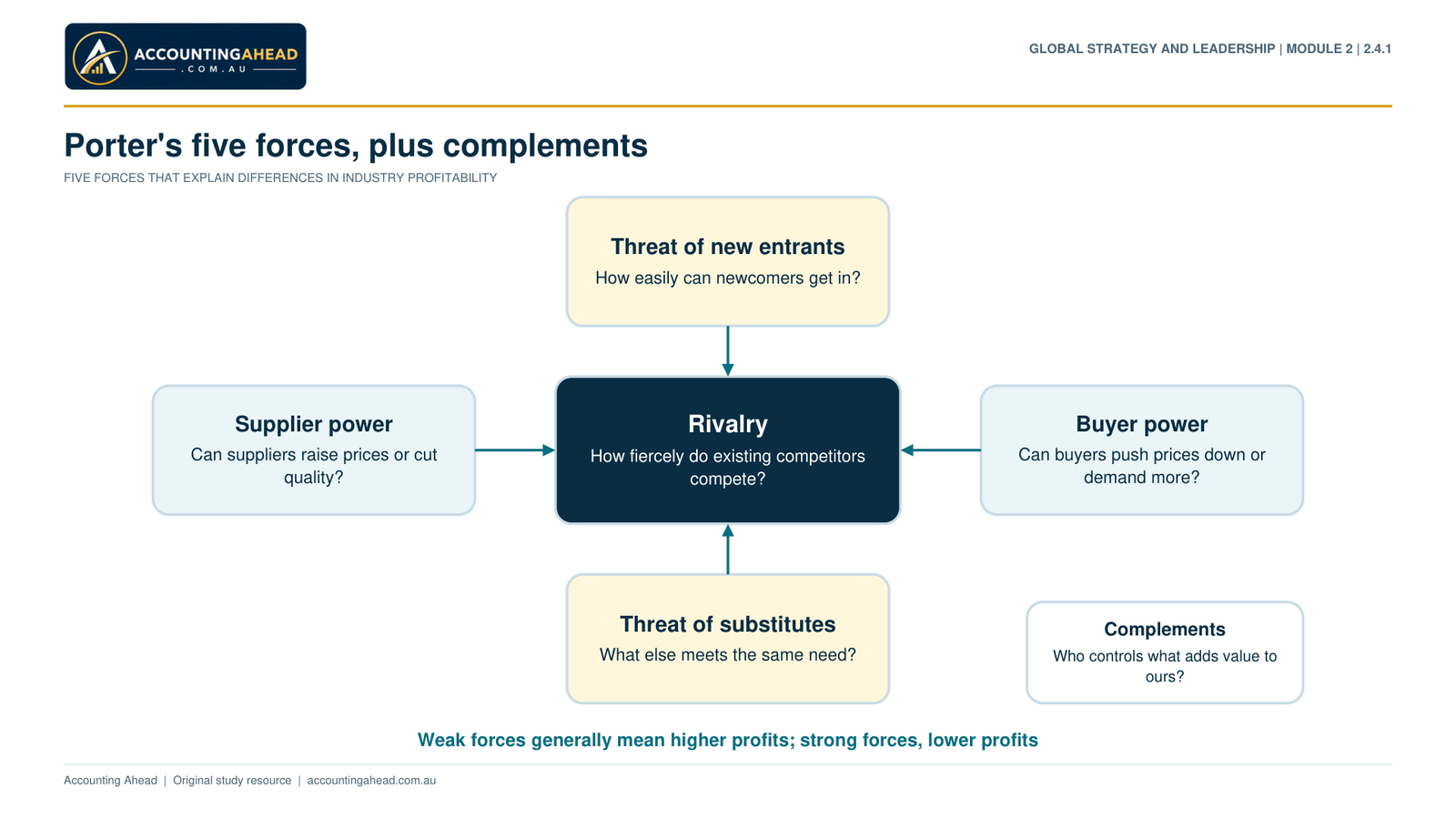
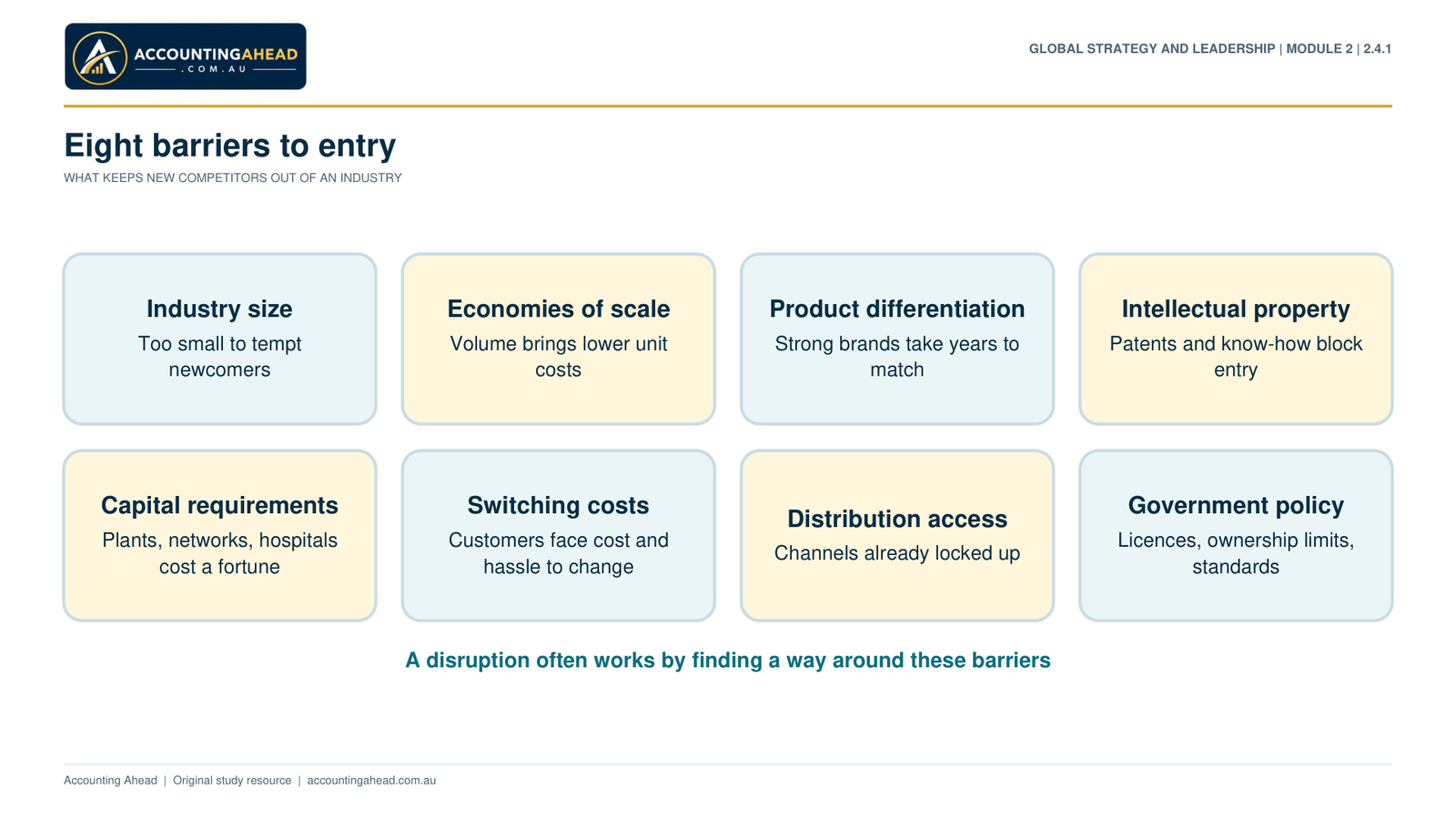
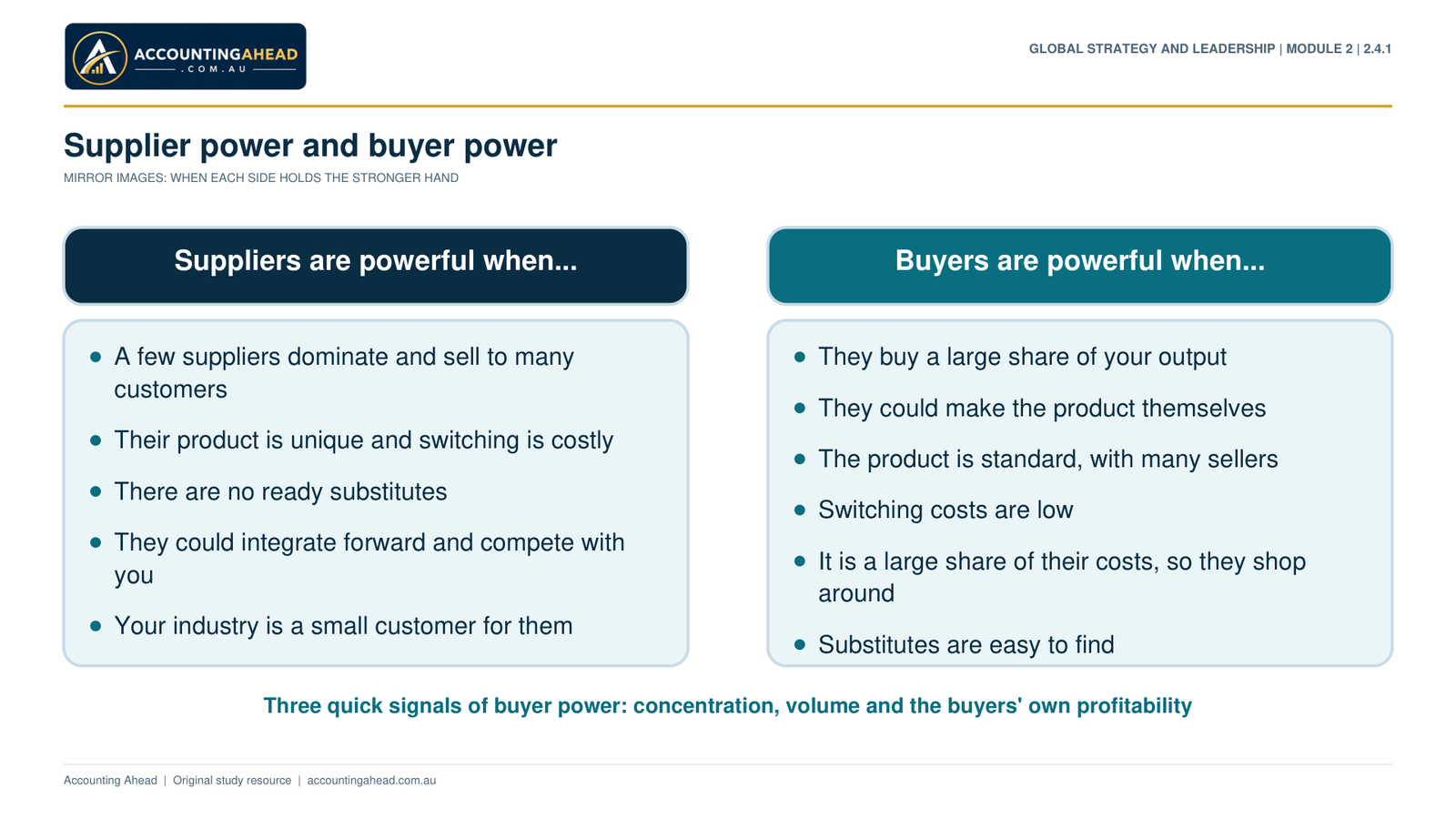
Part 2.4.1 · Five Forces - New Entrants, Suppliers, Buyers
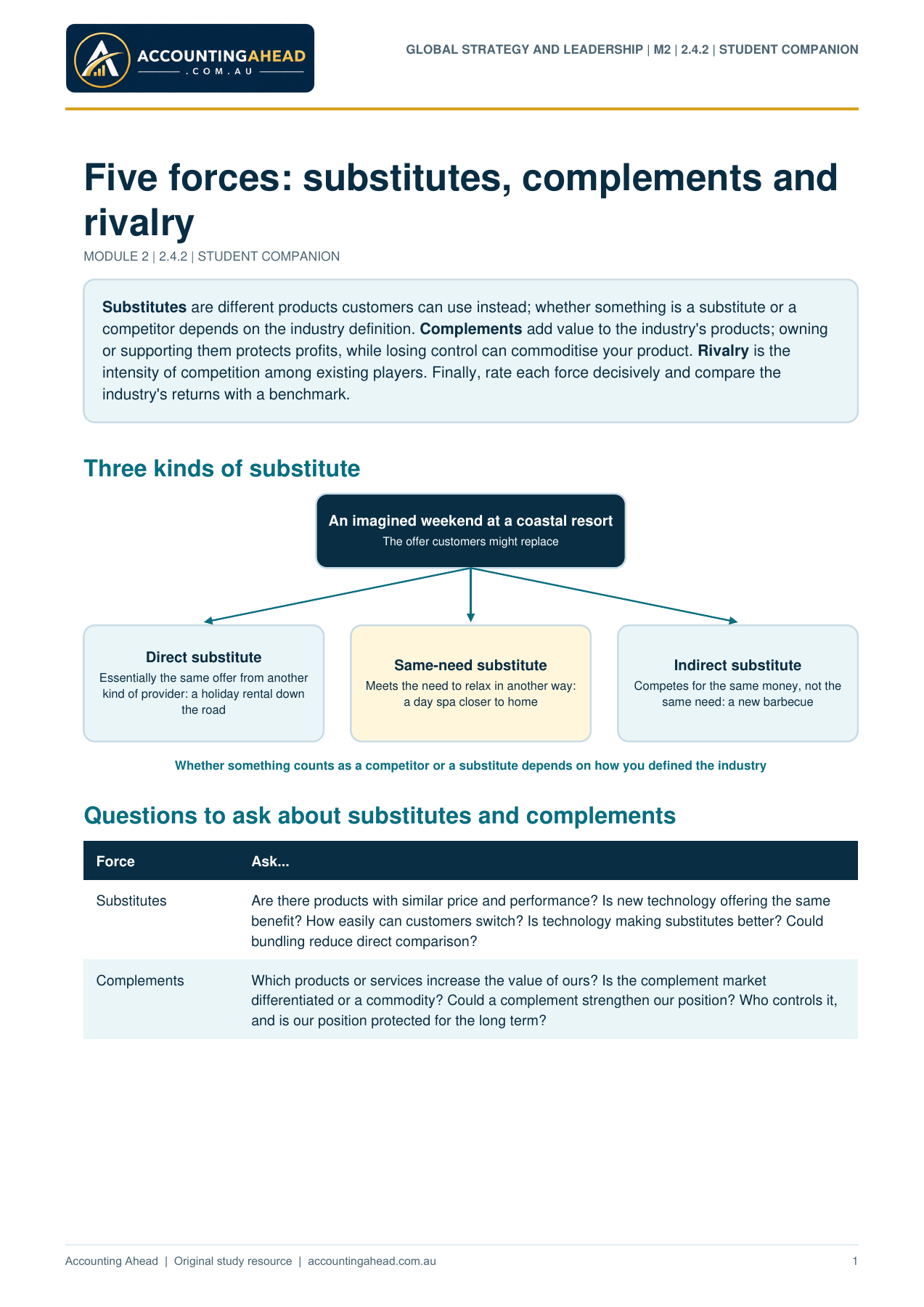
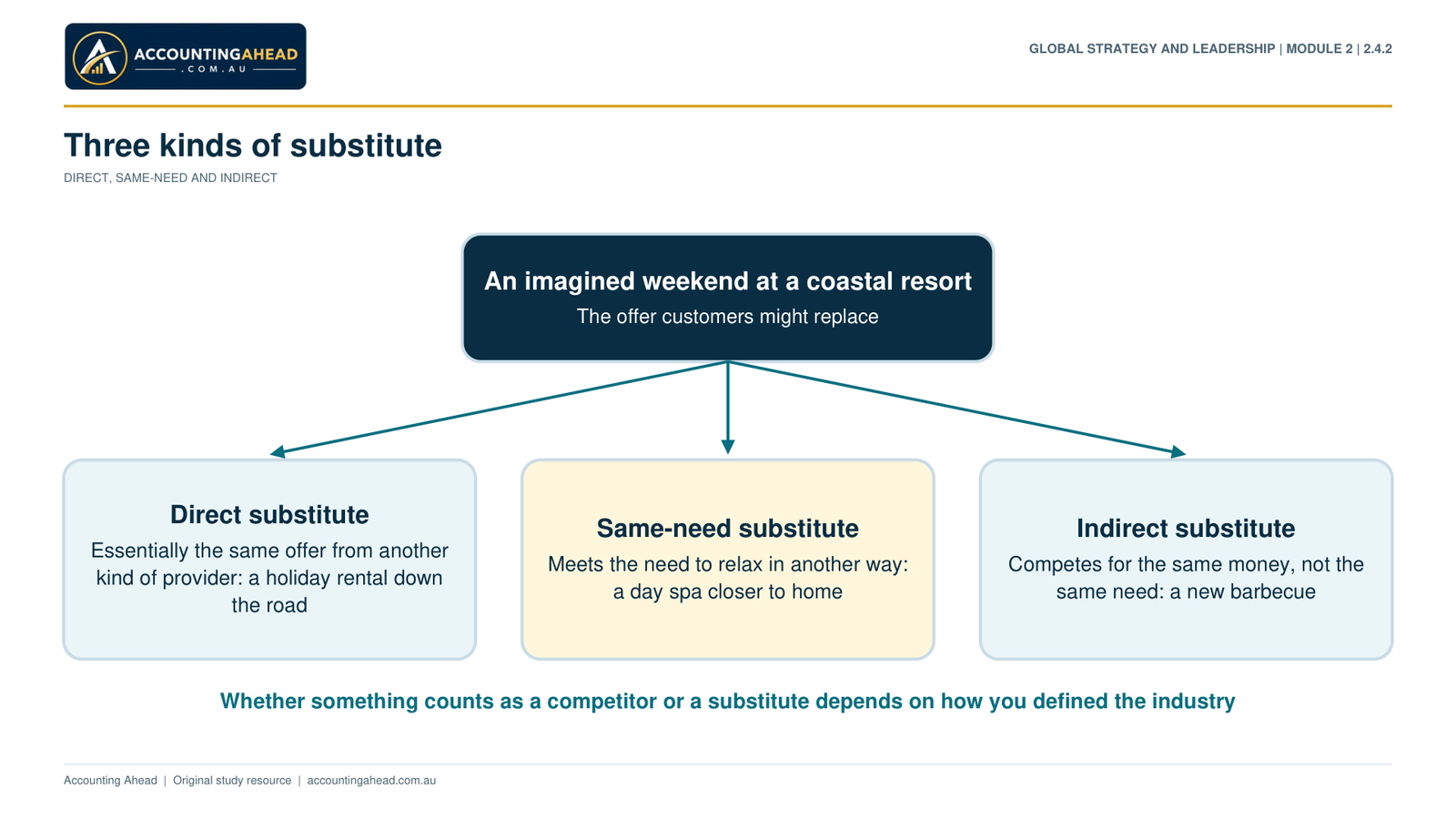
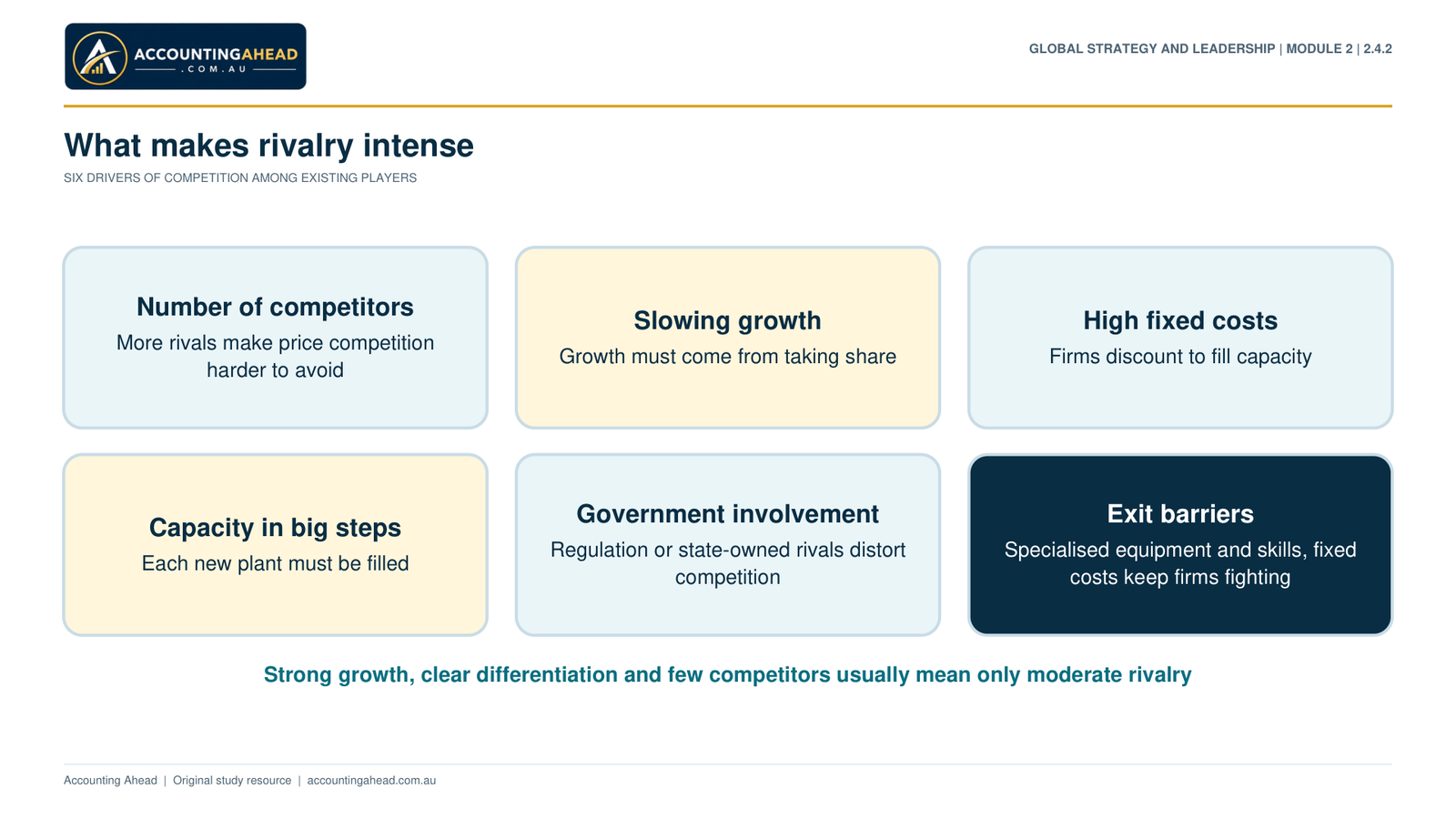
Part 2.4.2 · Five Forces - Substitutes, Complements, Rivalry
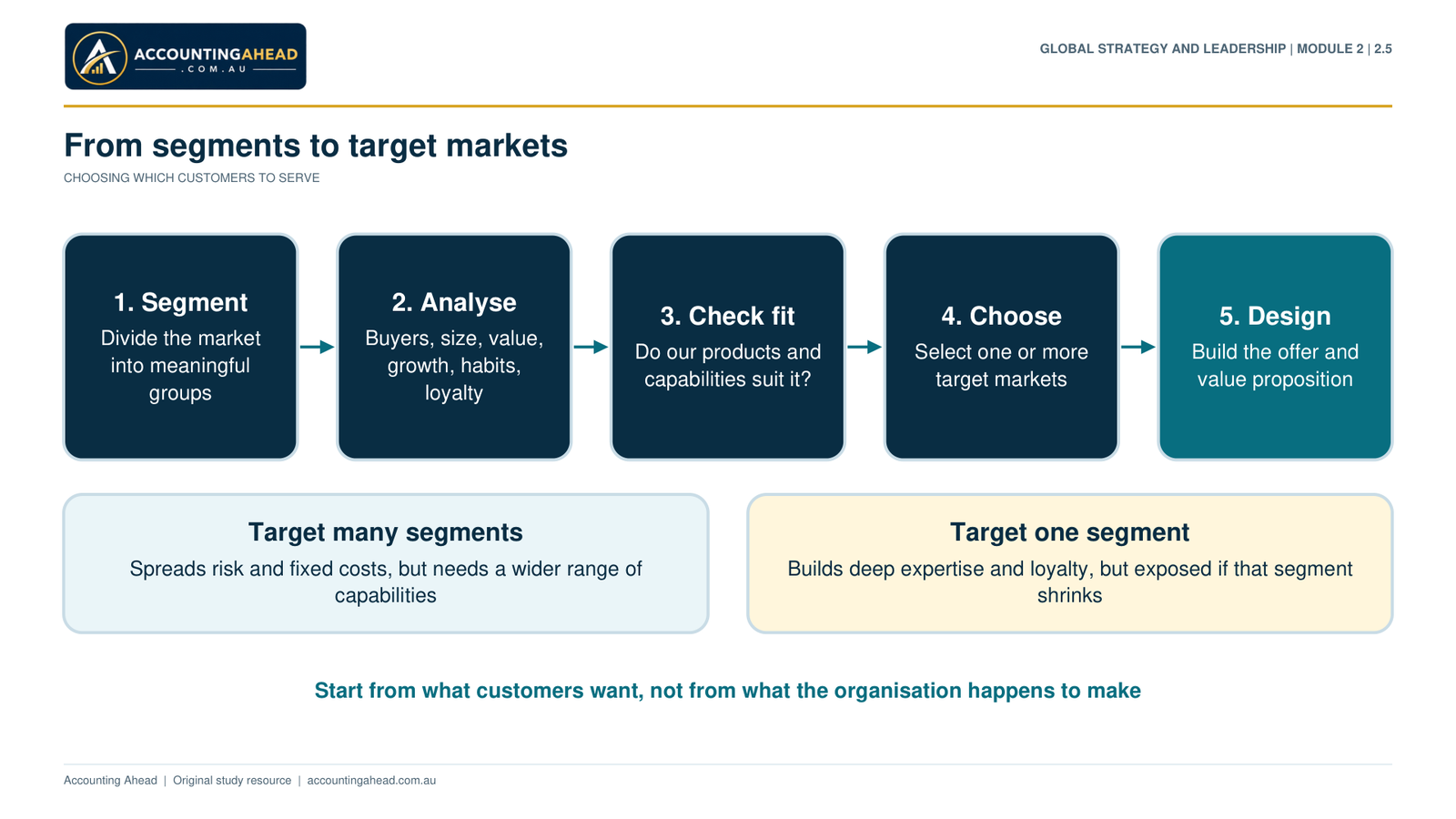
Part 2.5 · Understanding Customers and Markets
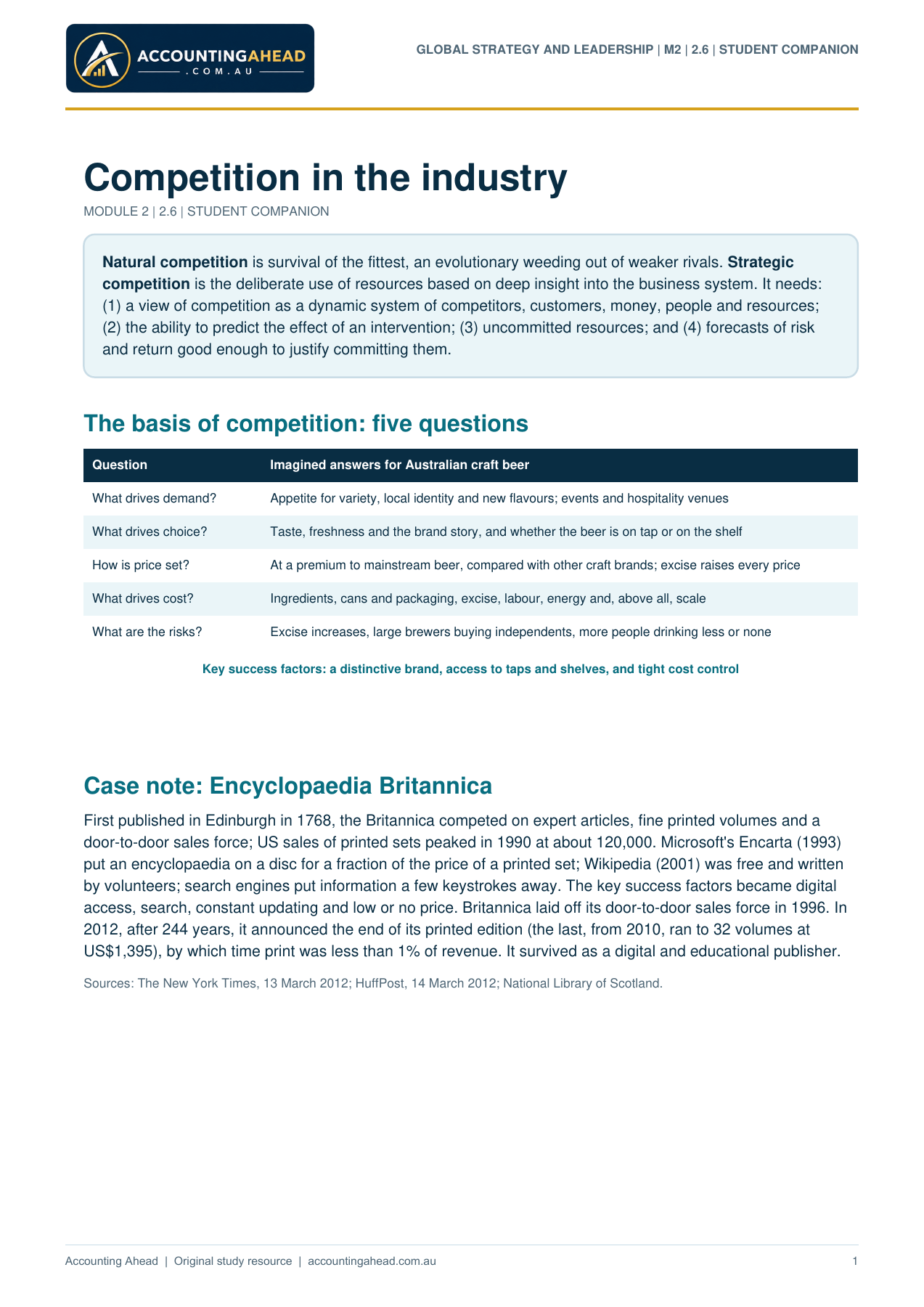
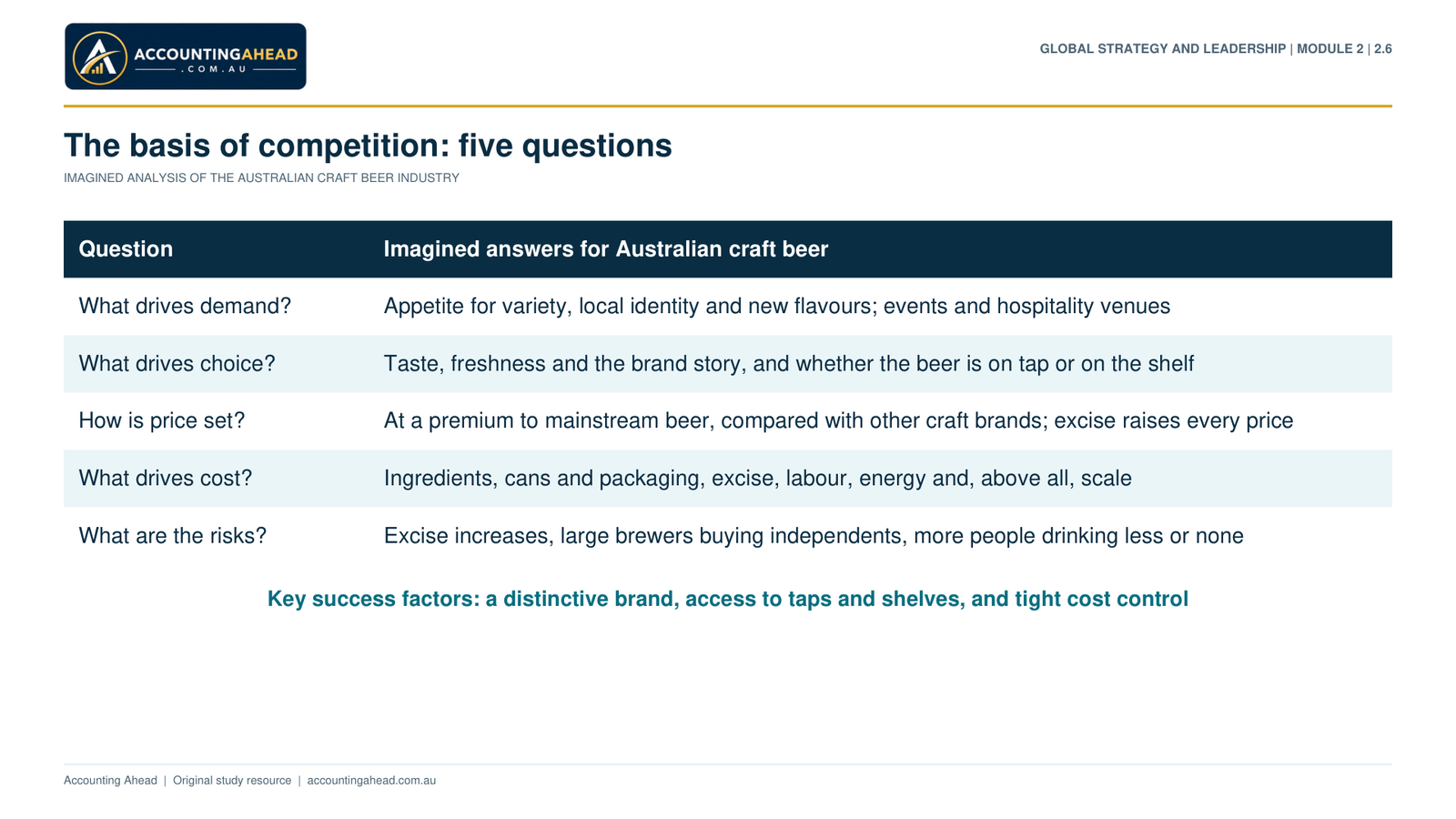
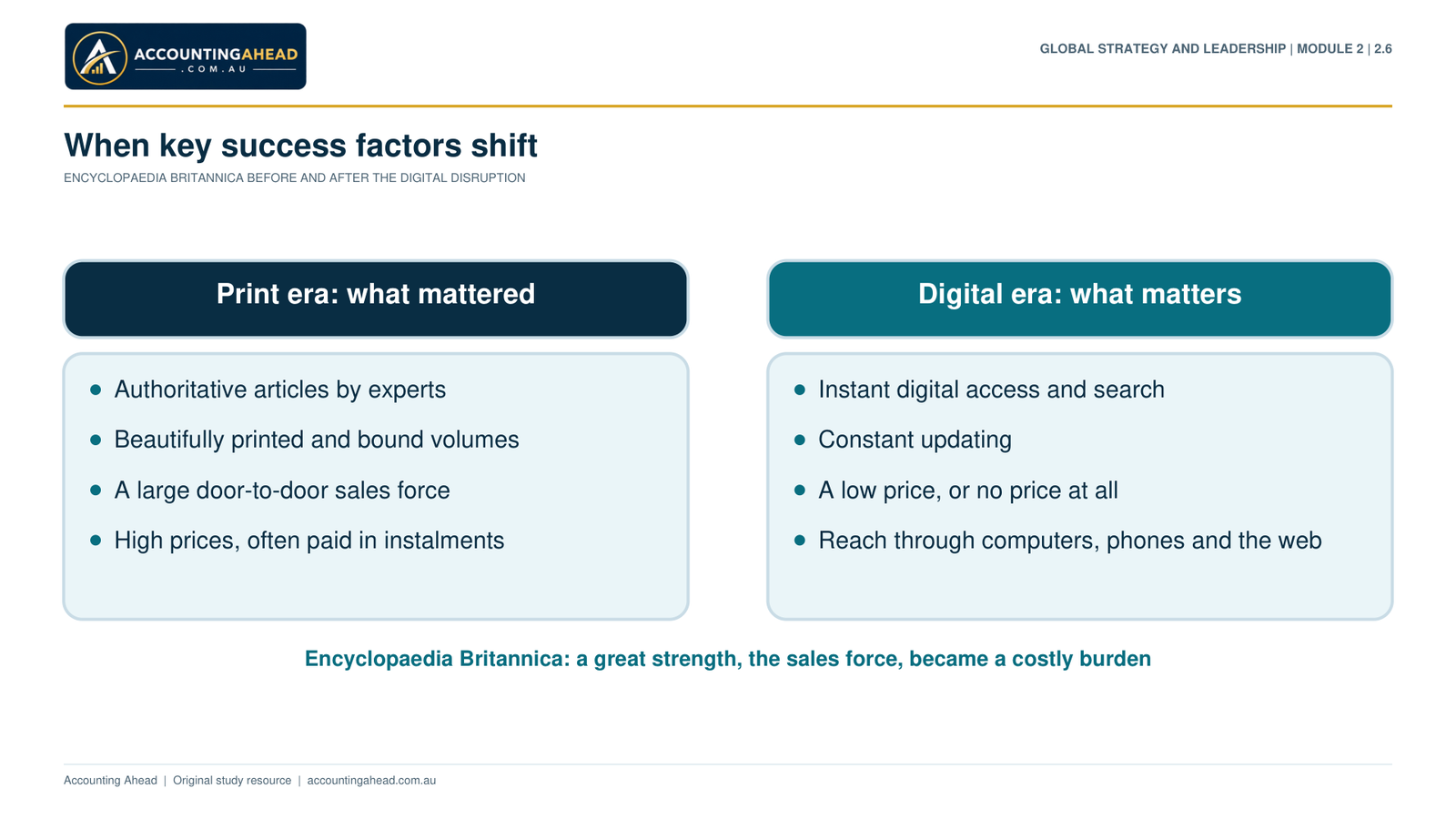
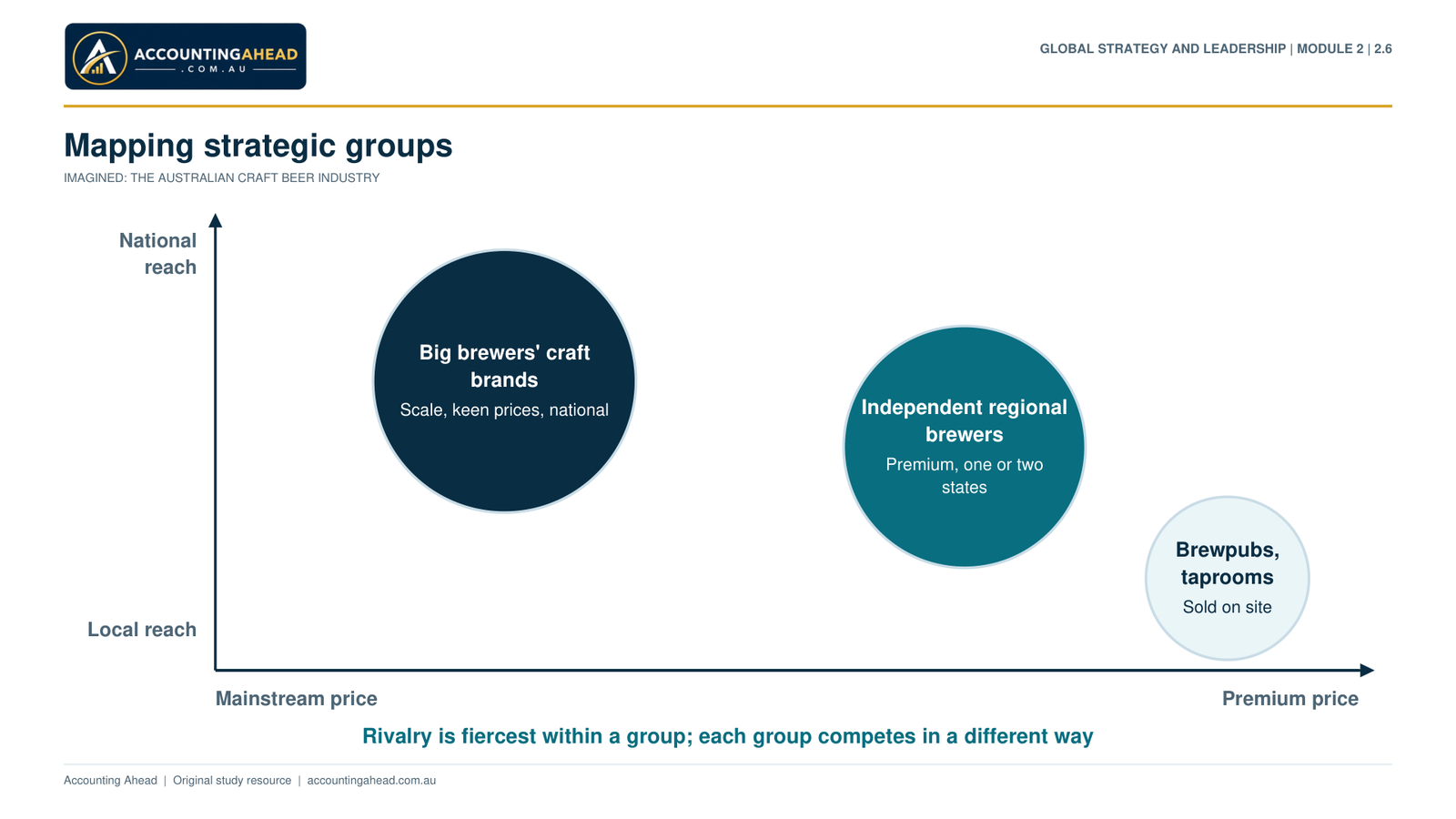
Part 2.6 · Competition in the Industry
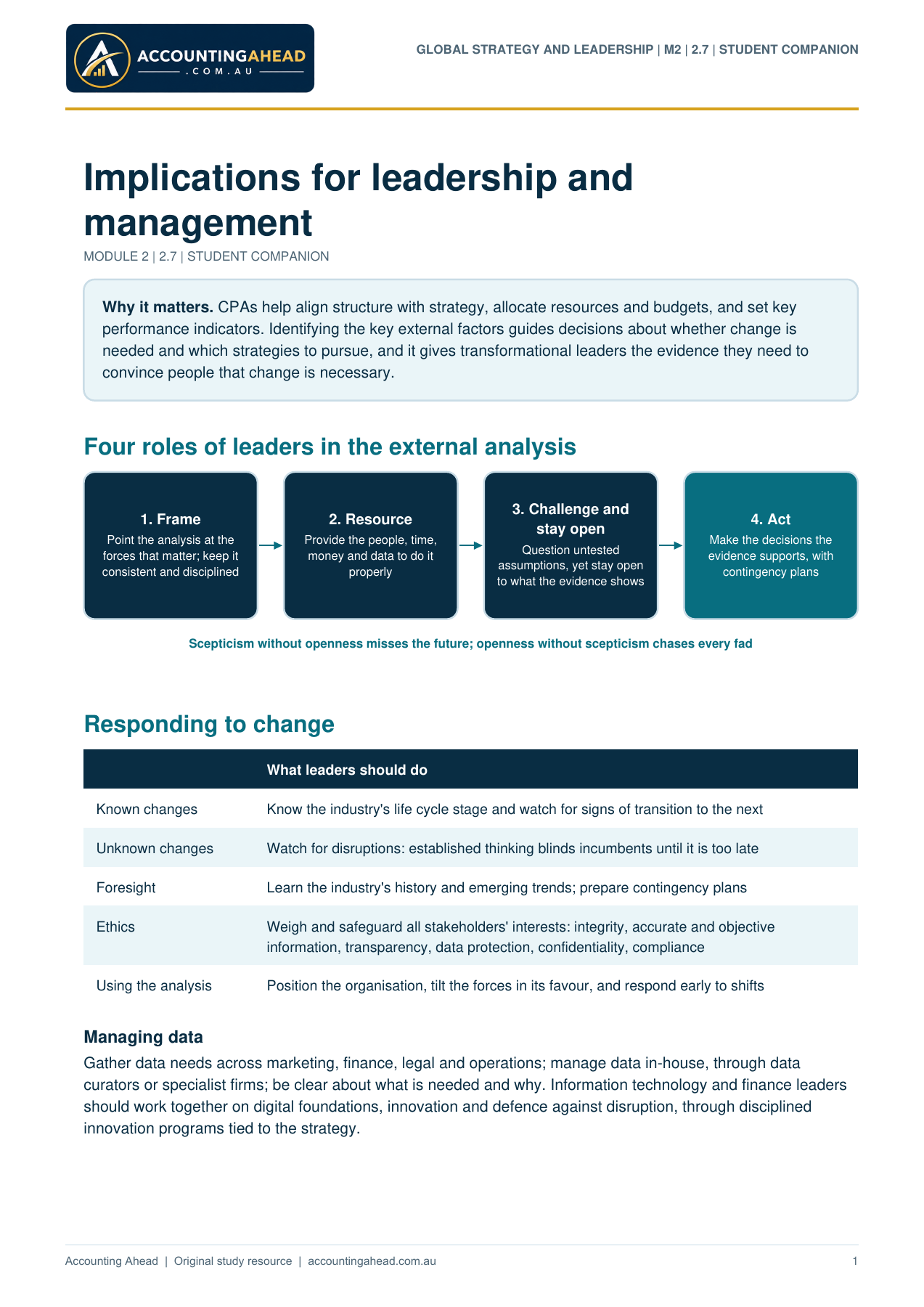
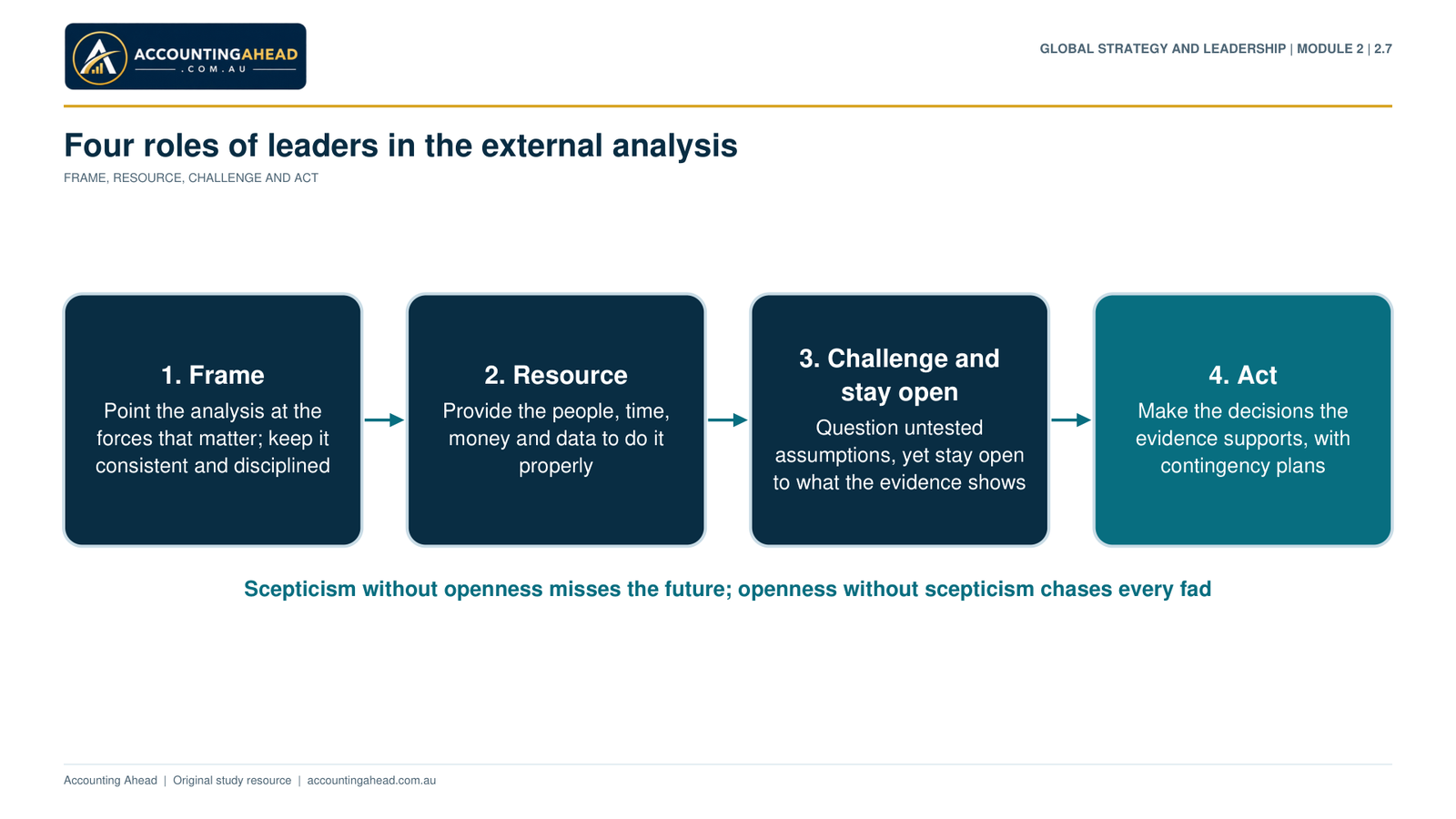
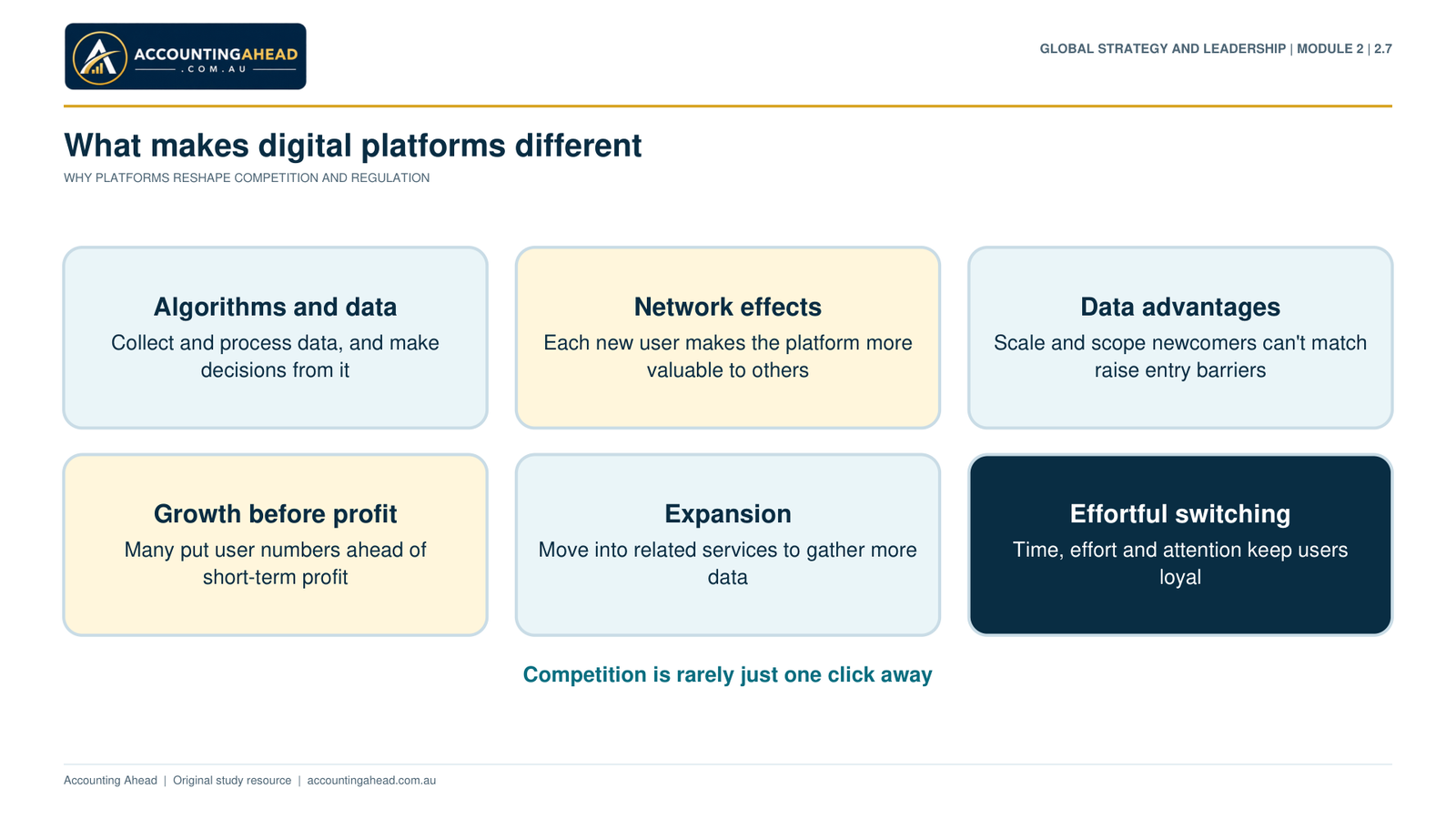
Part 2.7 · Implications for Leadership and Management
Module 3 · Assessing organisational strengths
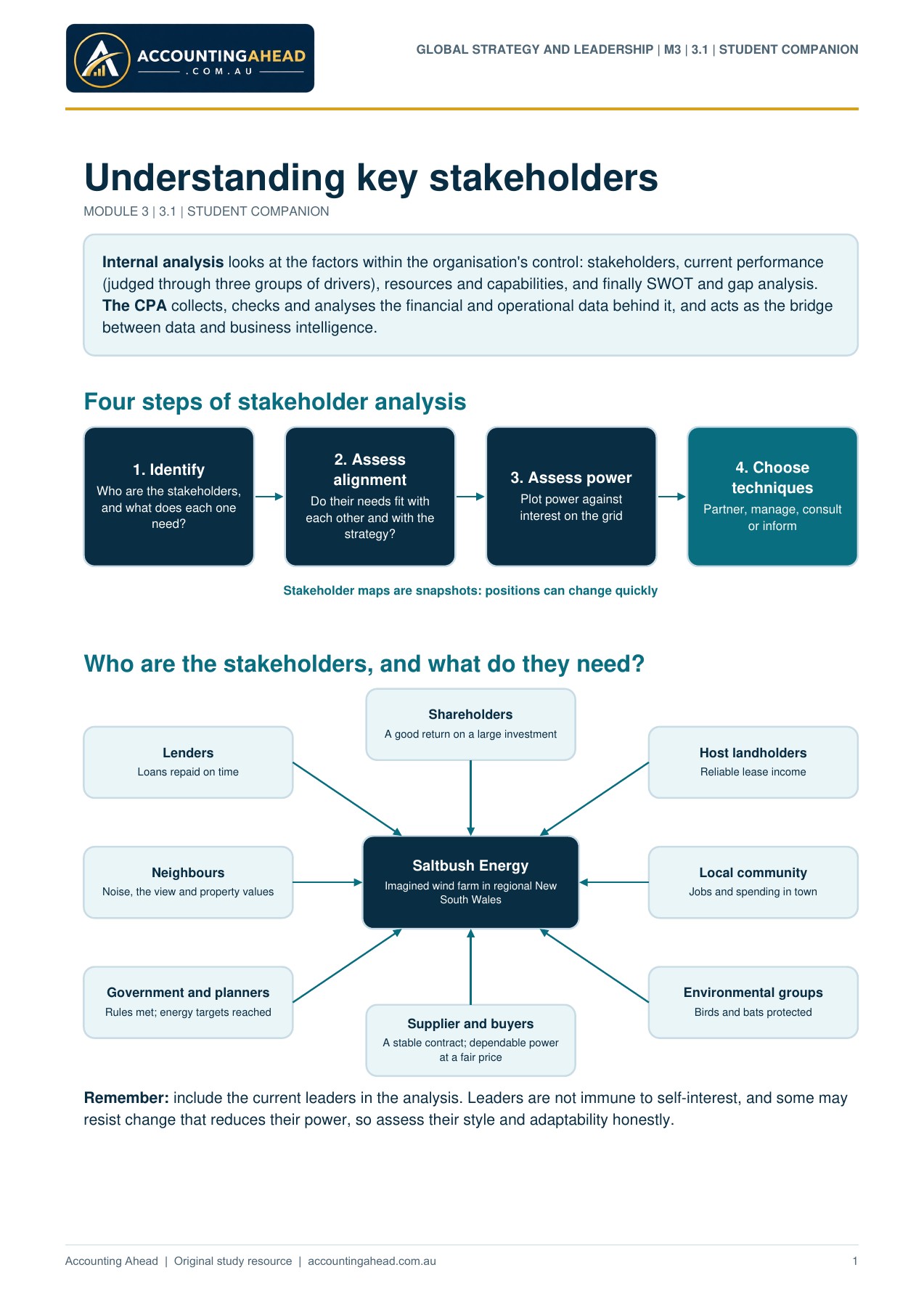
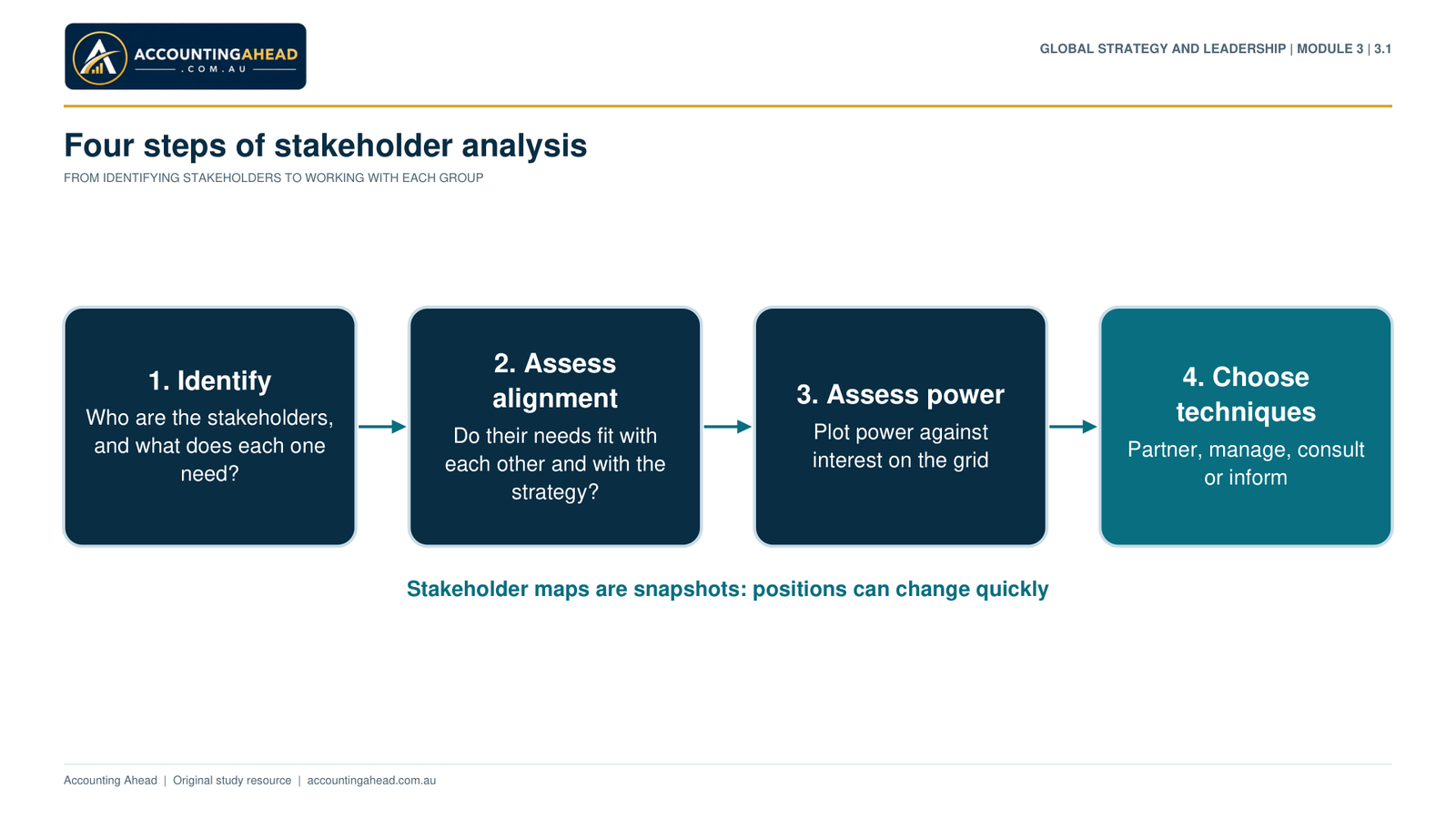
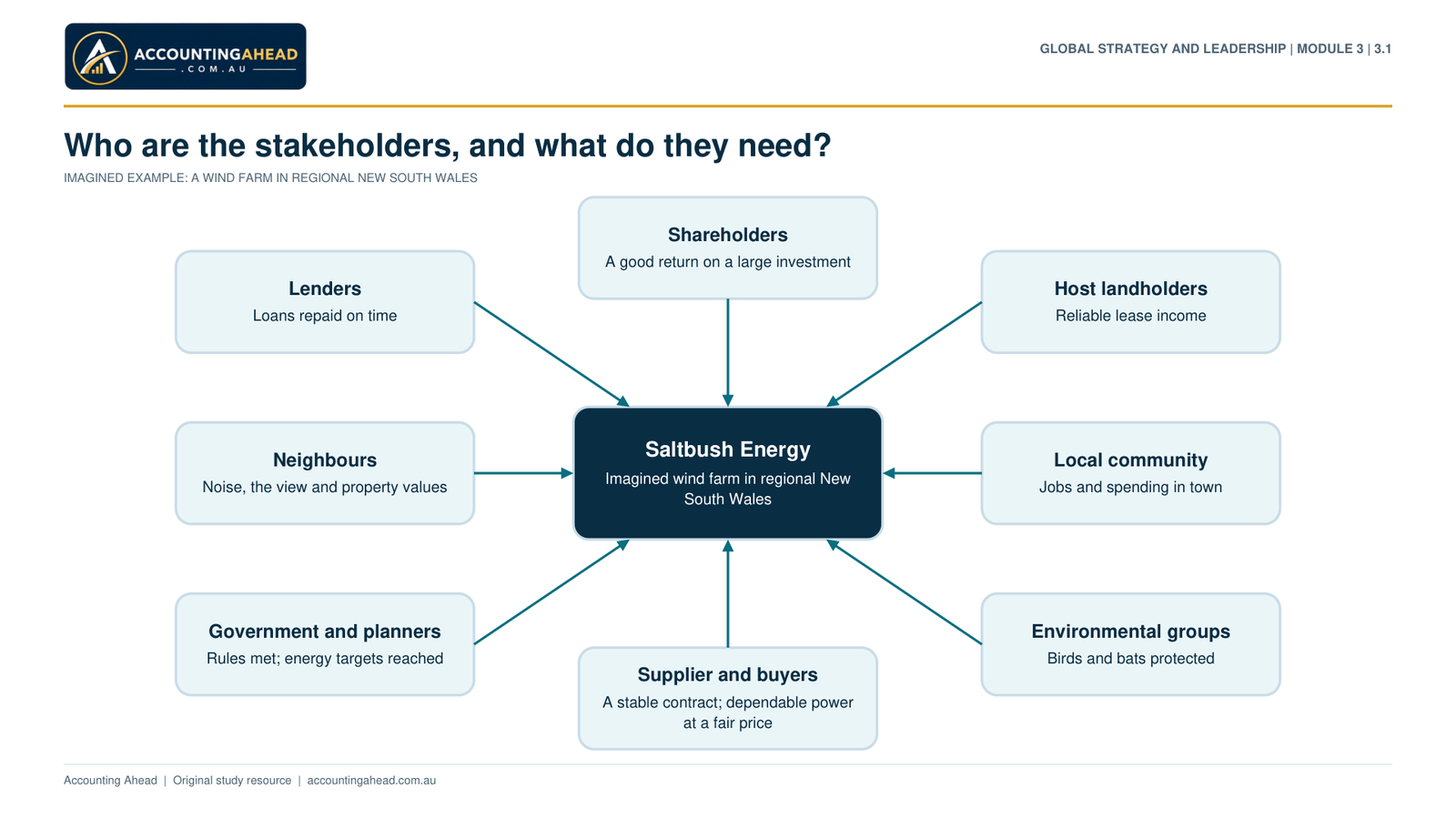
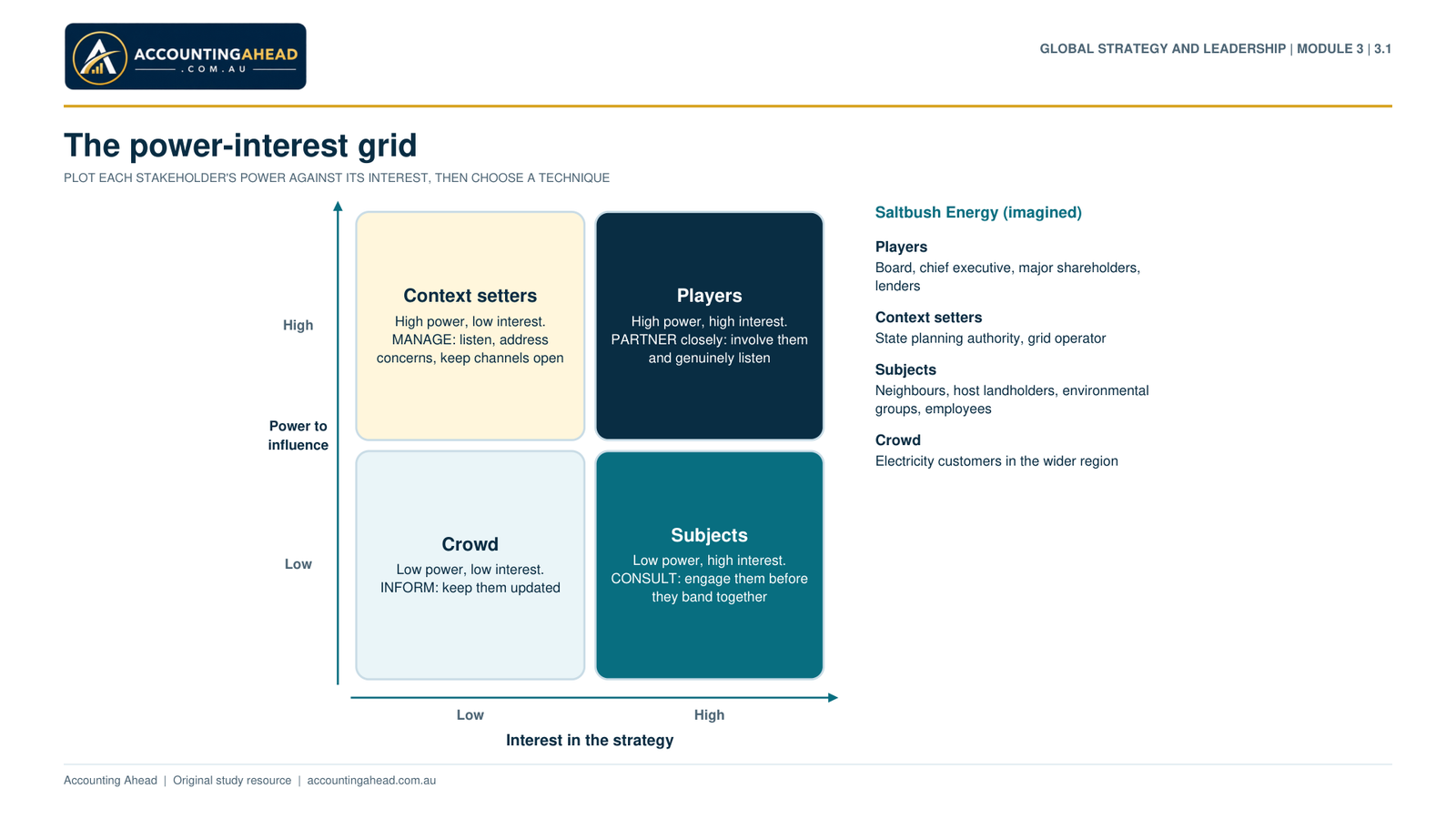
Part 3.1 · Understanding Key Stakeholders
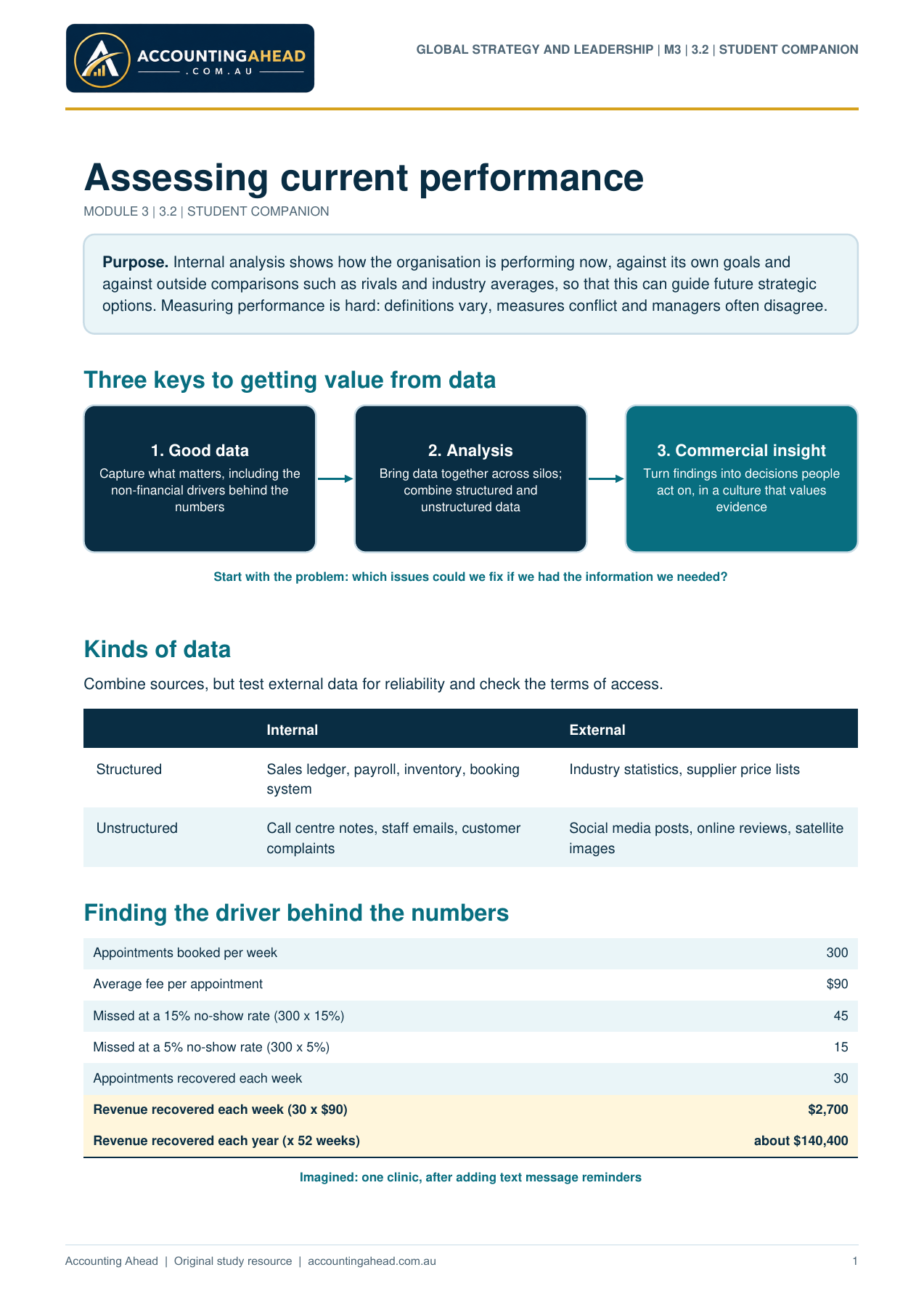
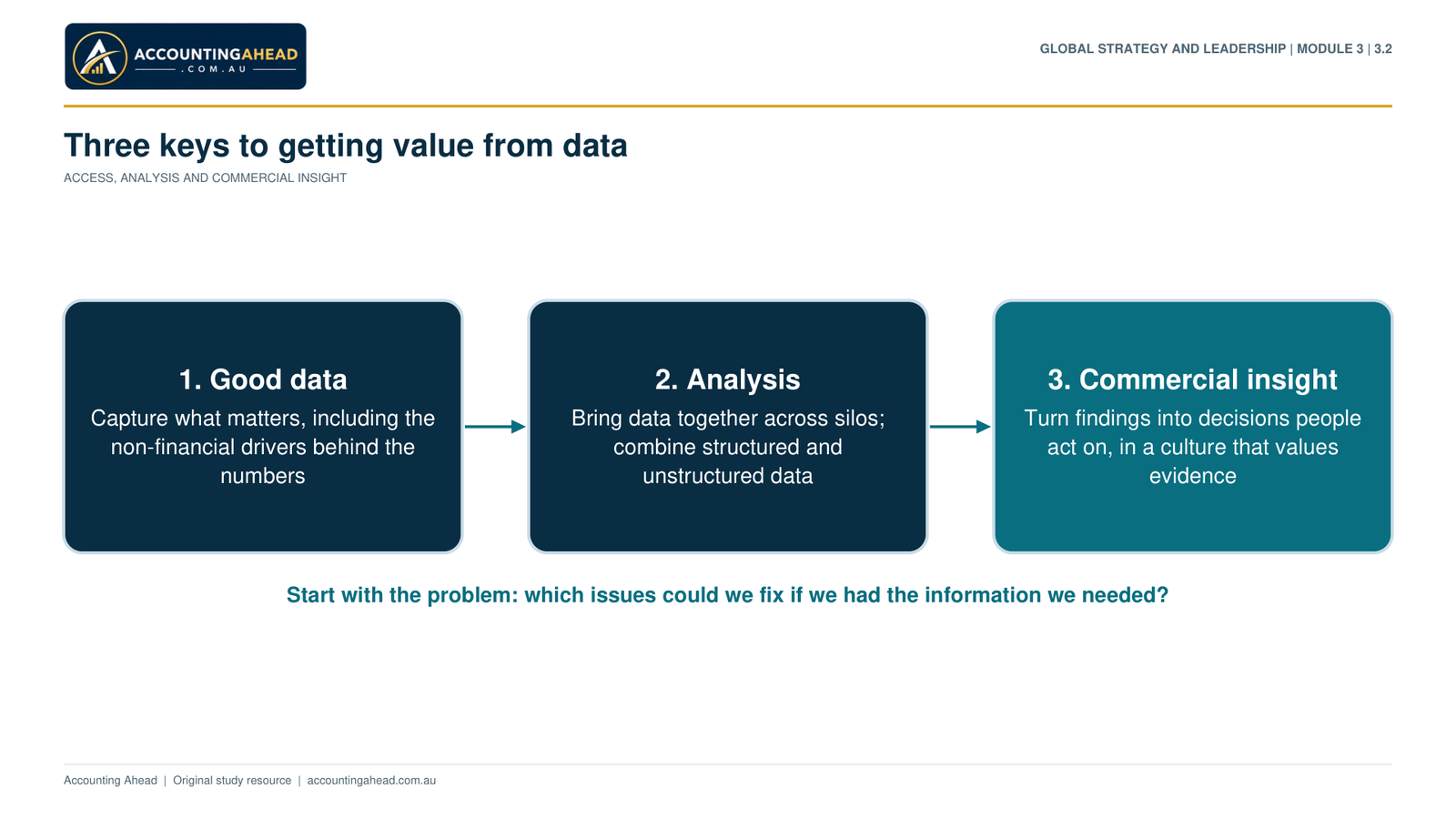
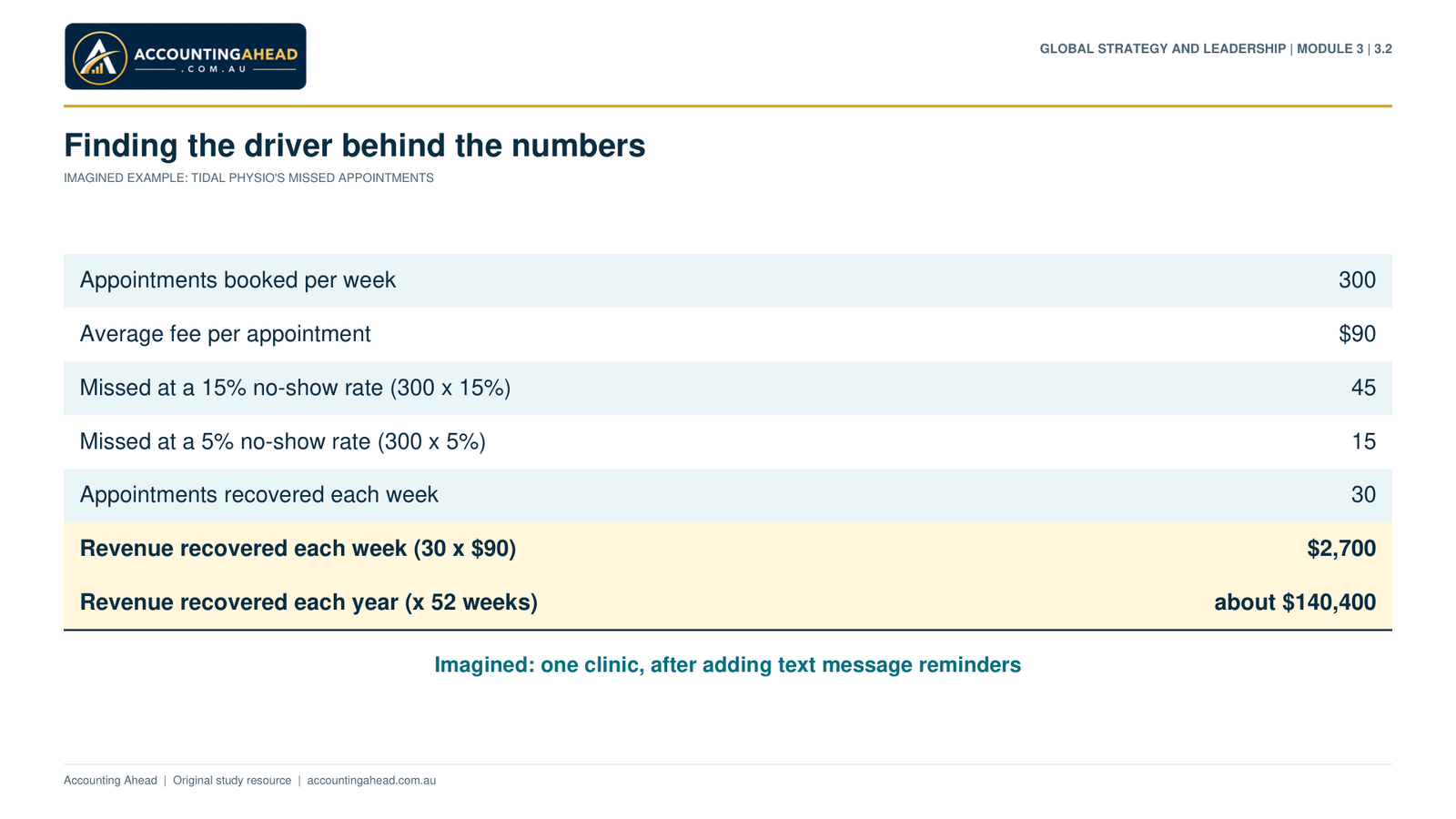
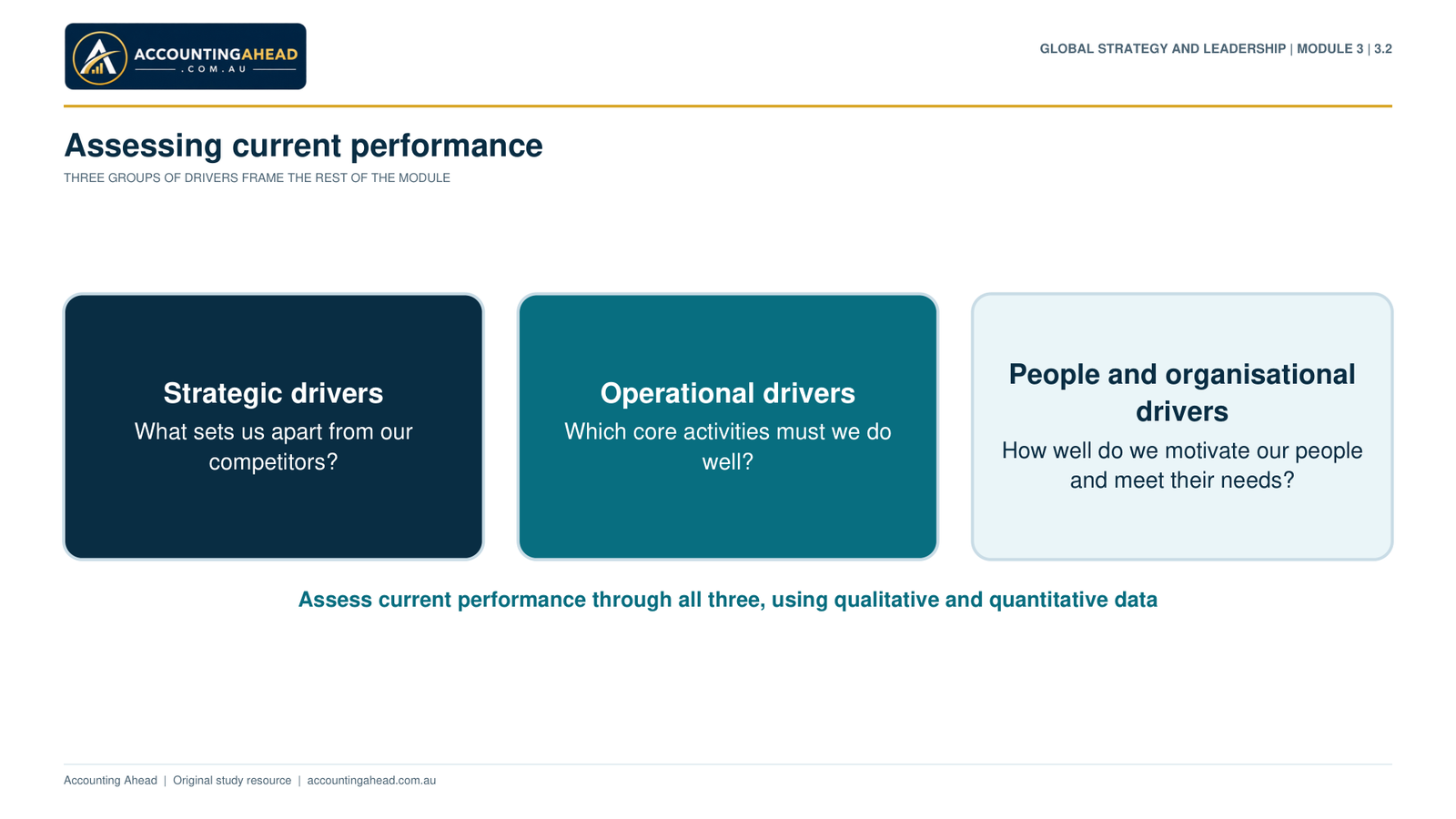
Part 3.2 · Assessing Current Performance
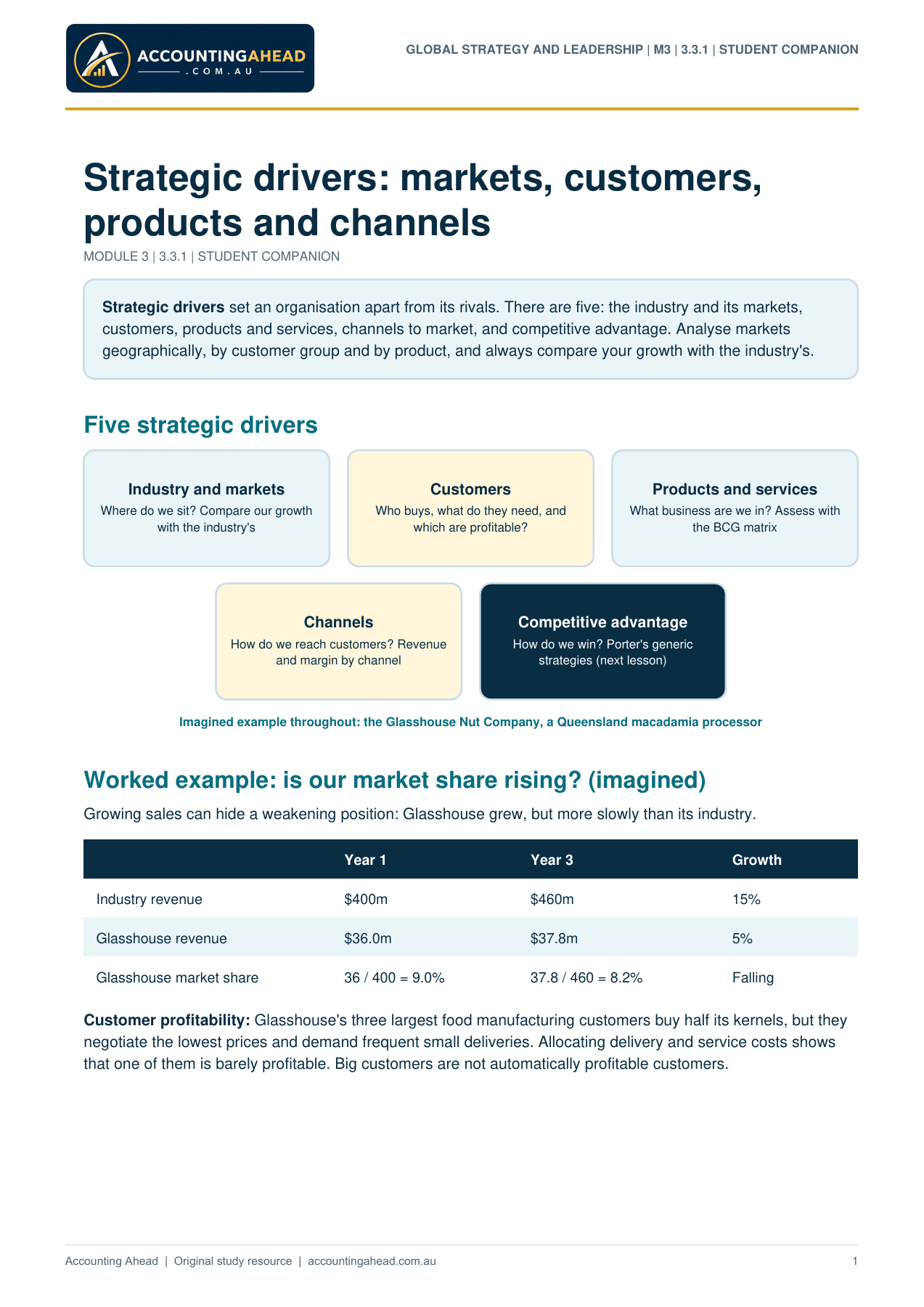
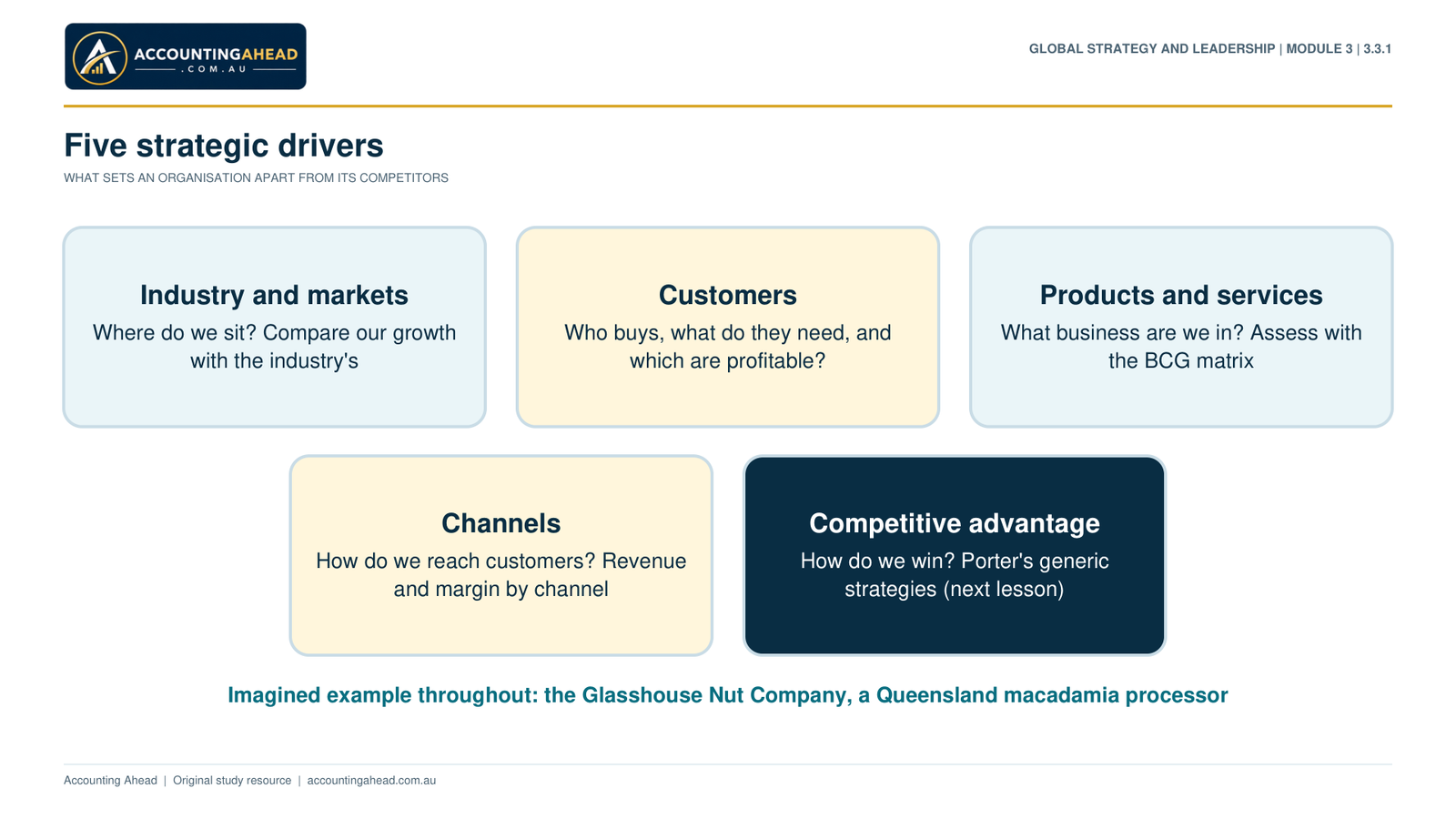
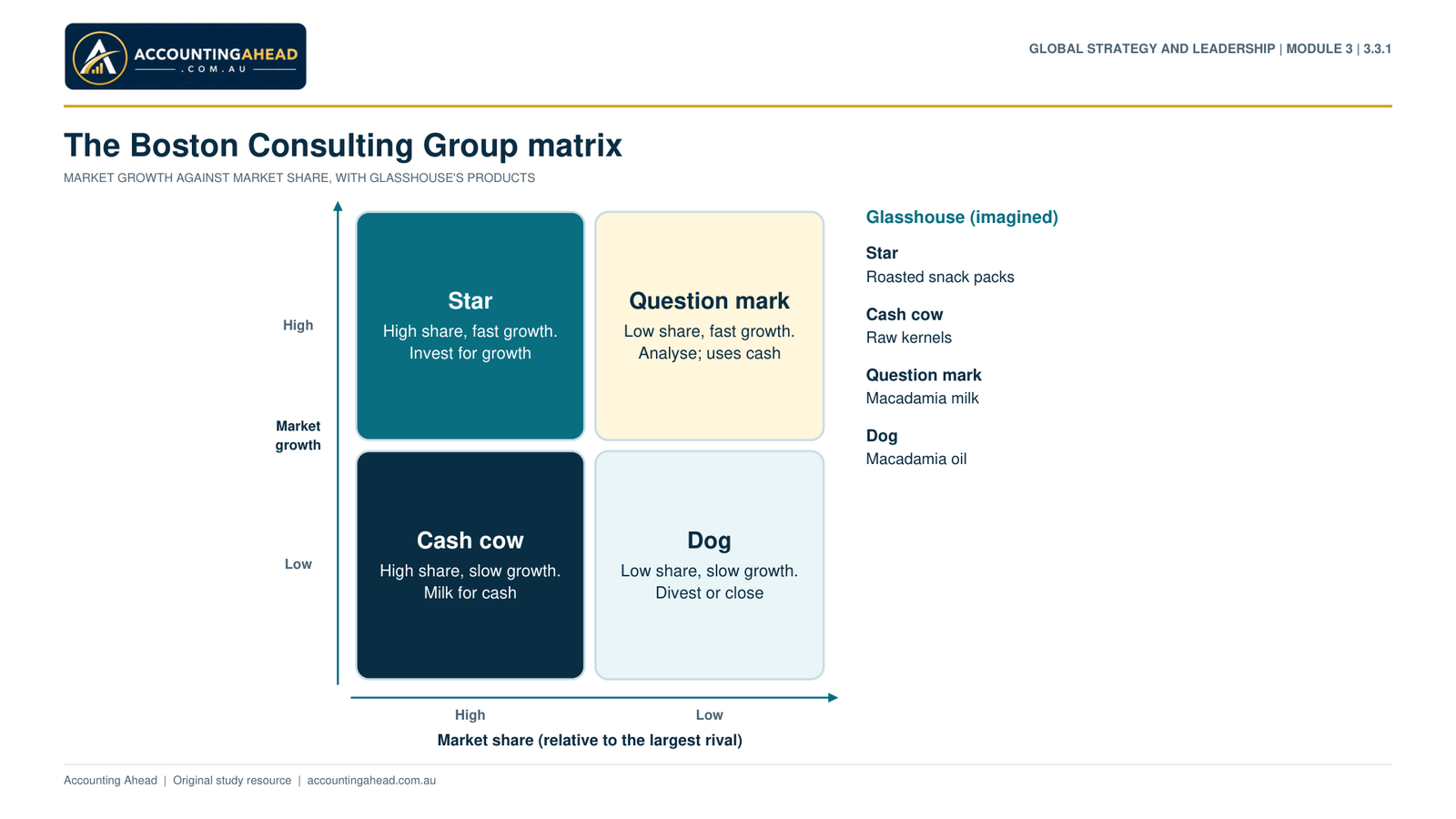
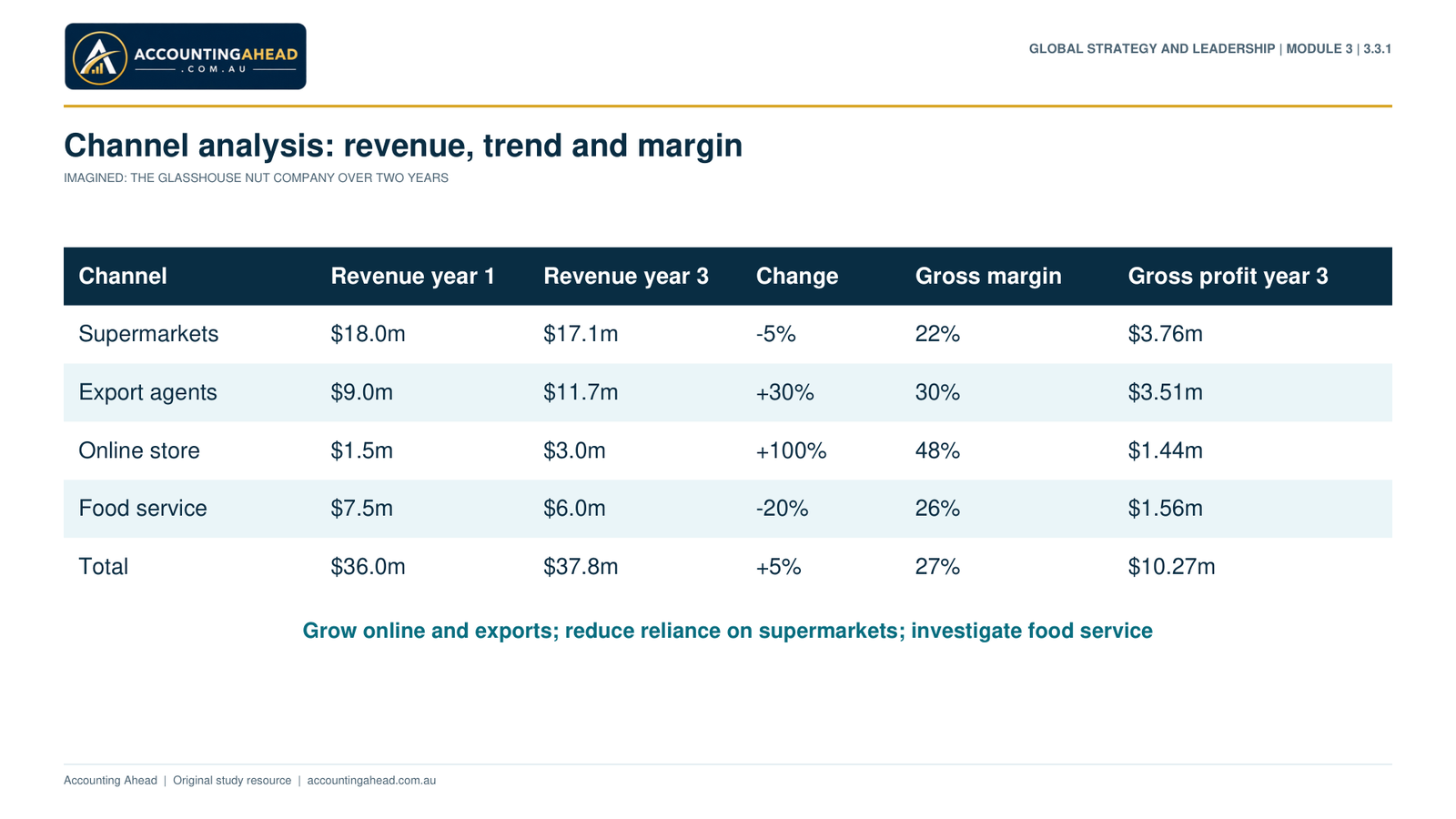
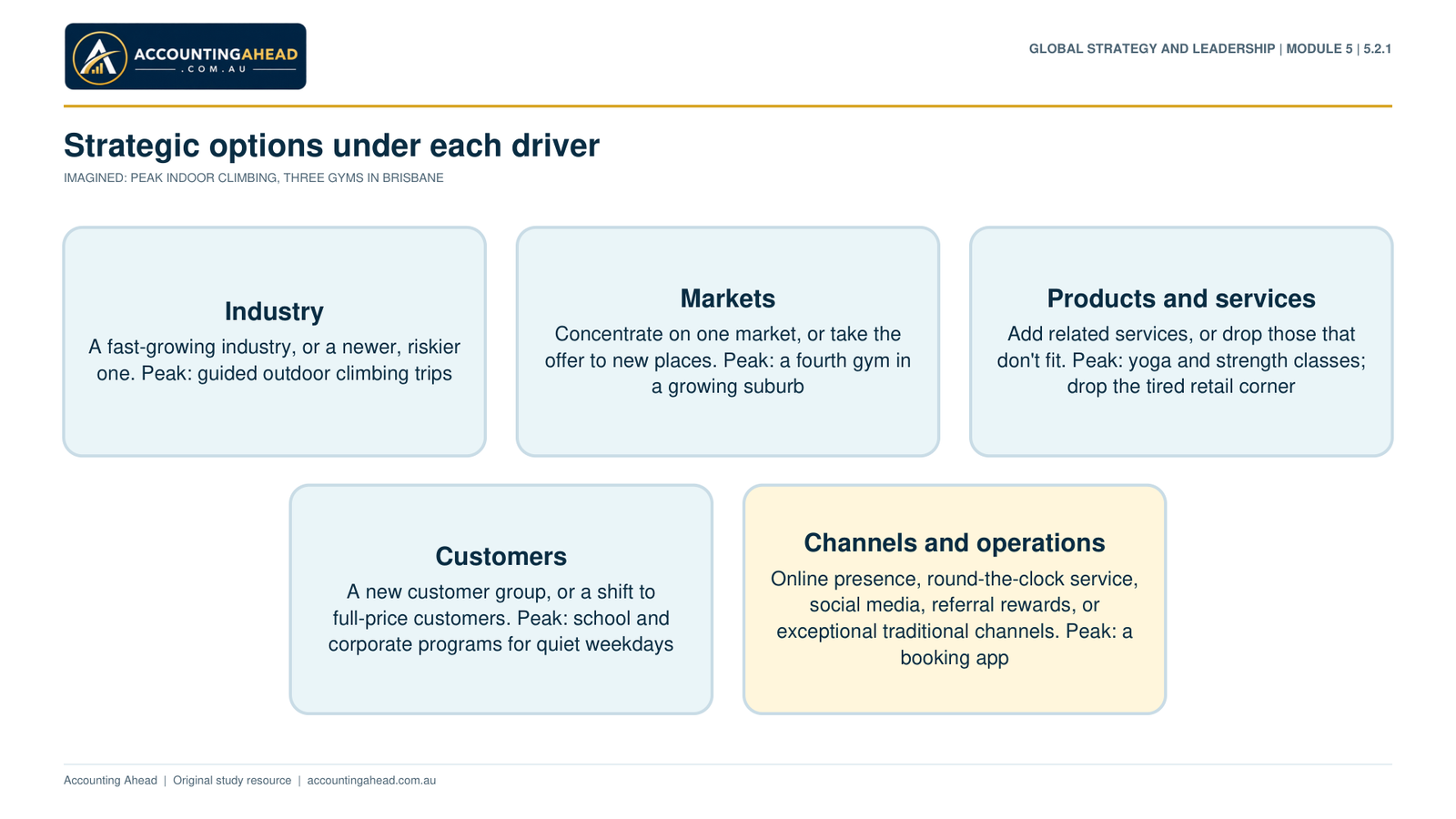
Part 3.3.1 · Strategic Drivers - Markets, Products, Channels
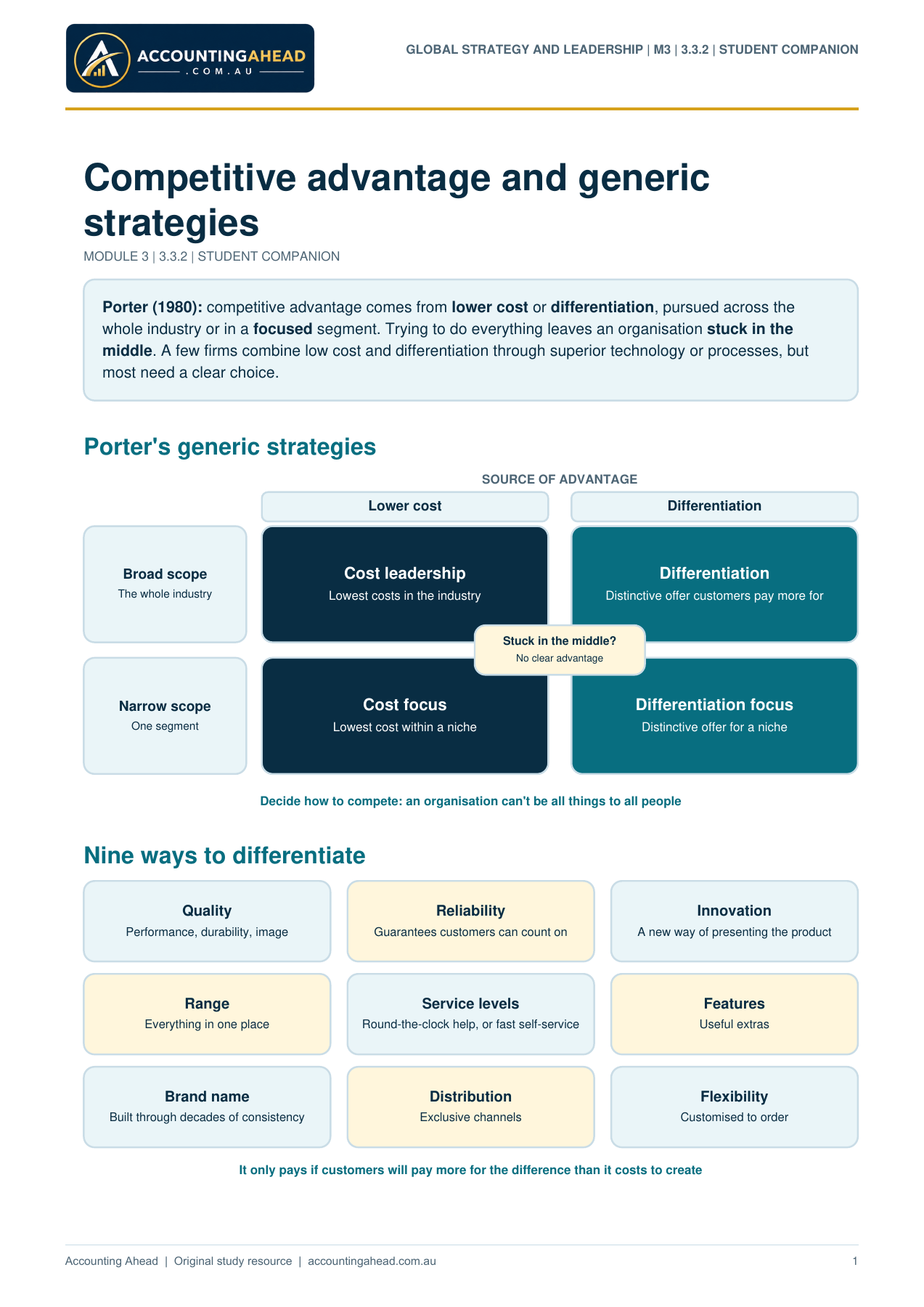
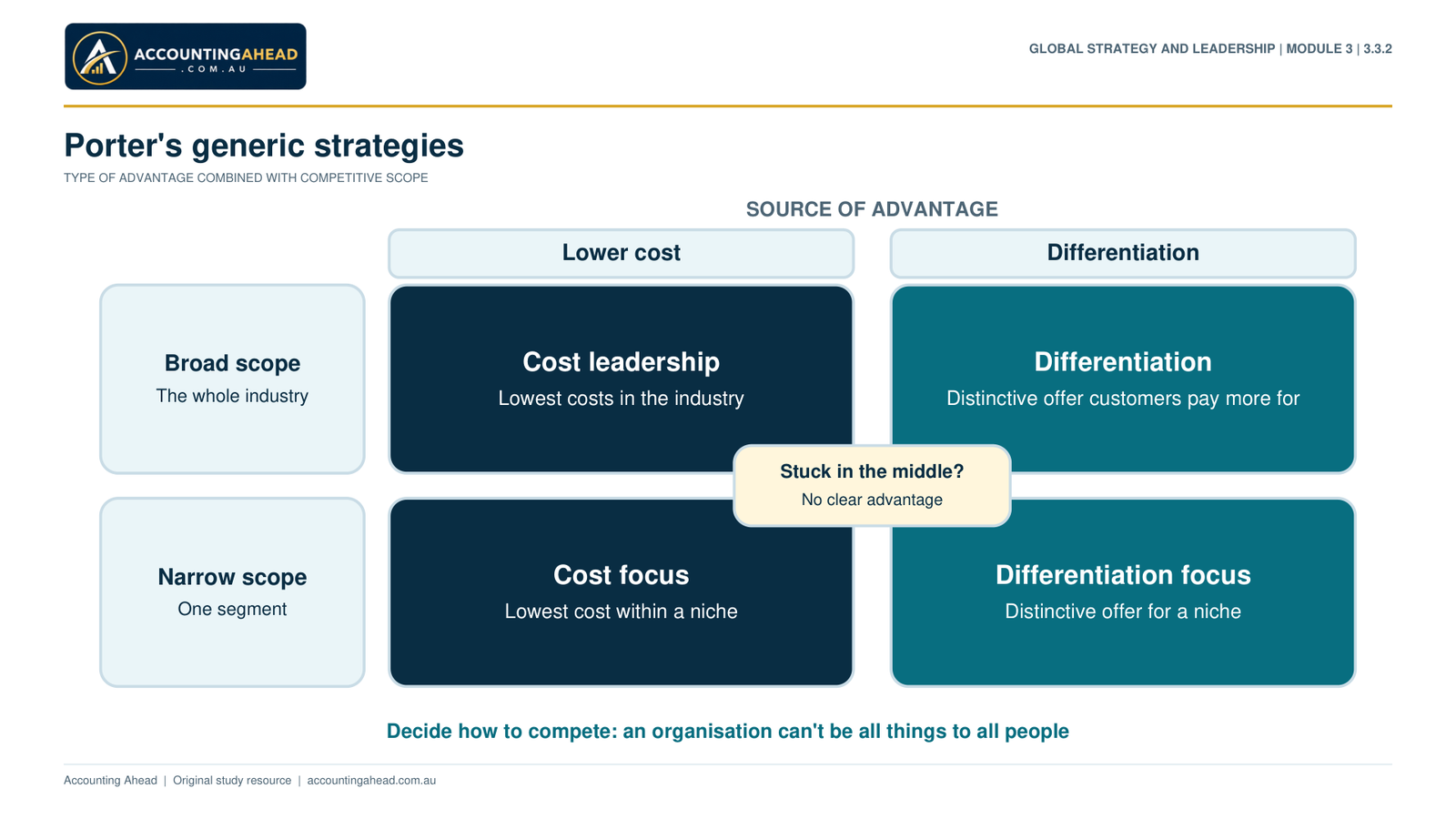
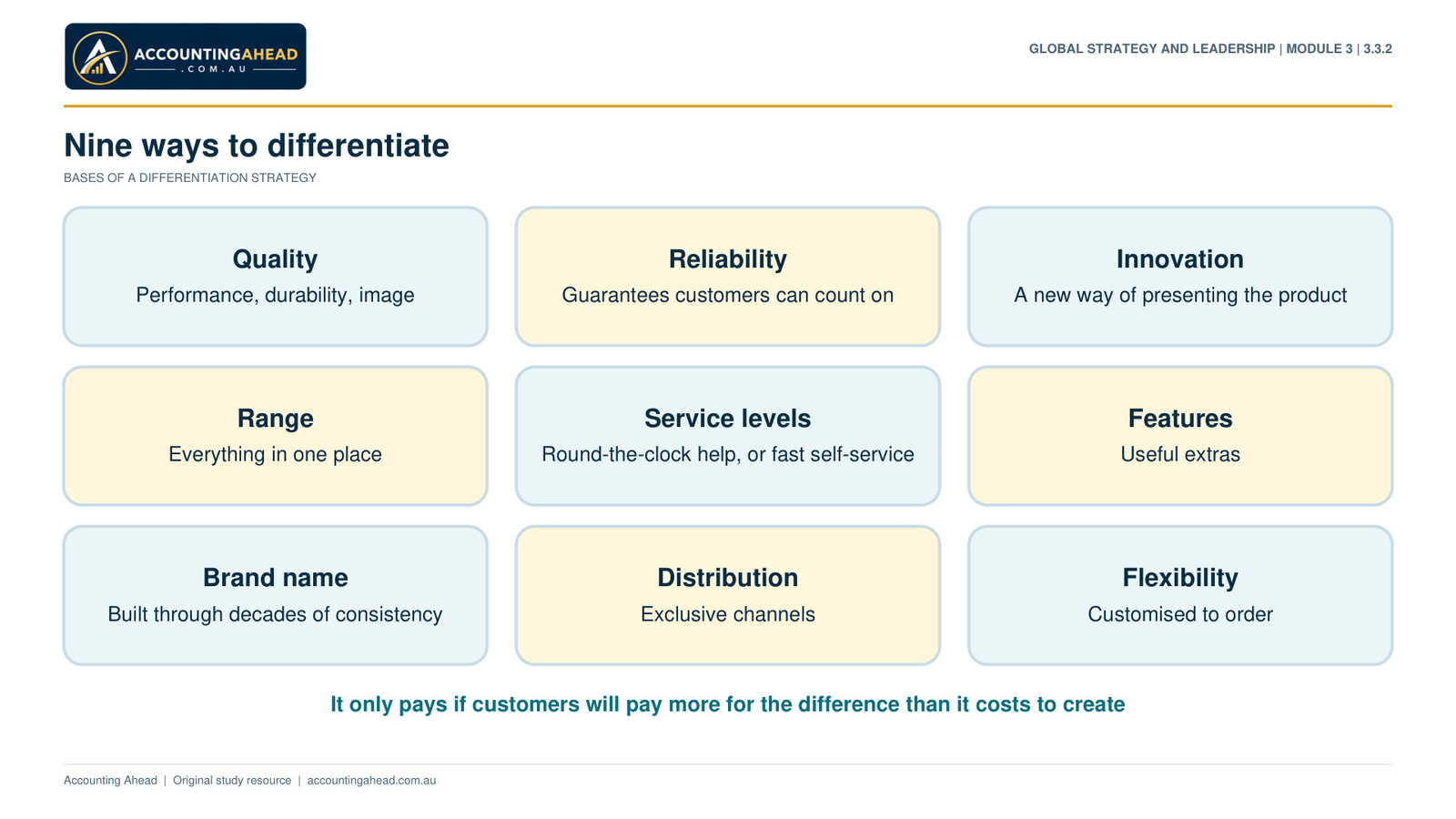
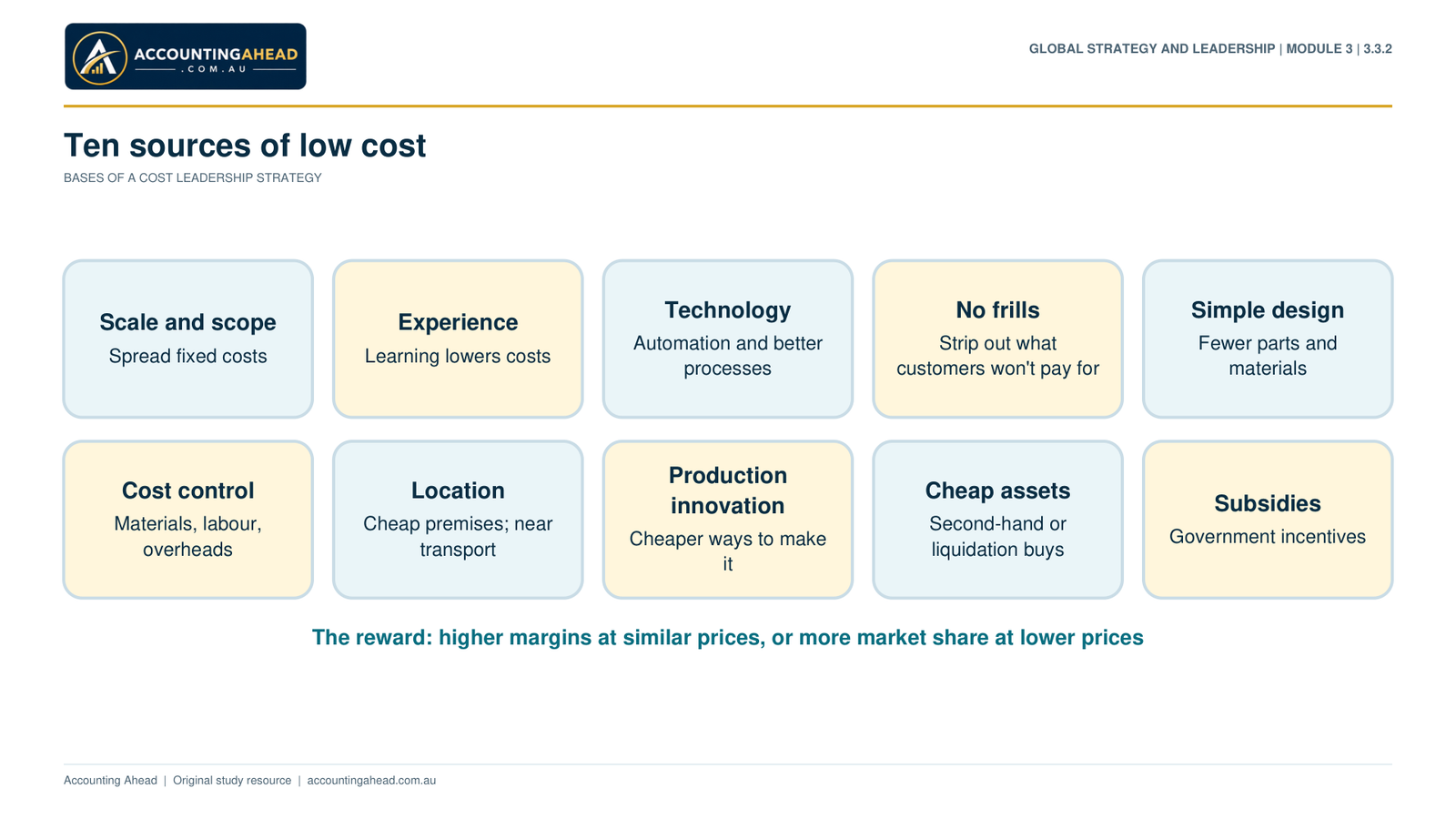
Part 3.3.2 · Competitive Advantage and Generic Strategies
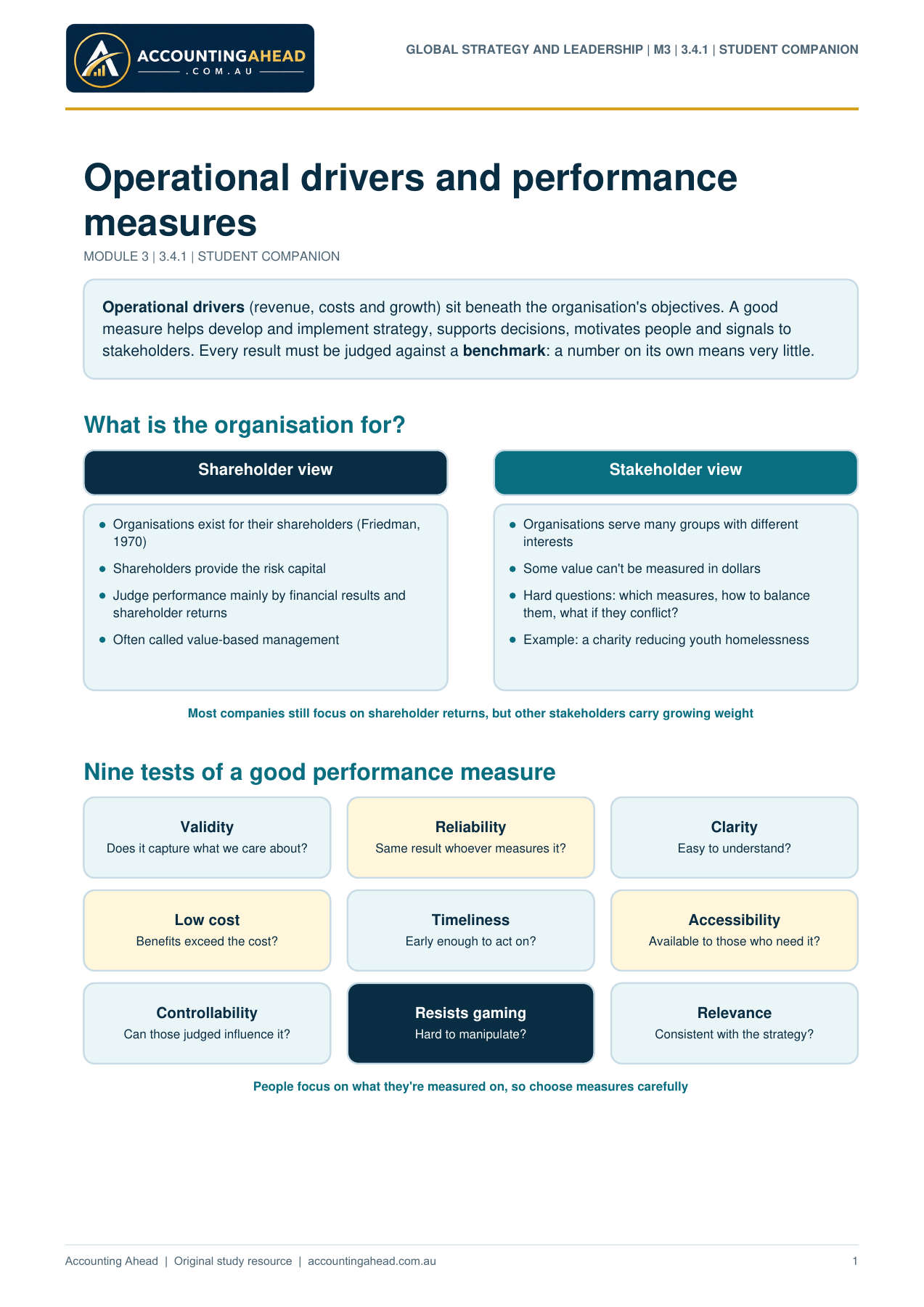
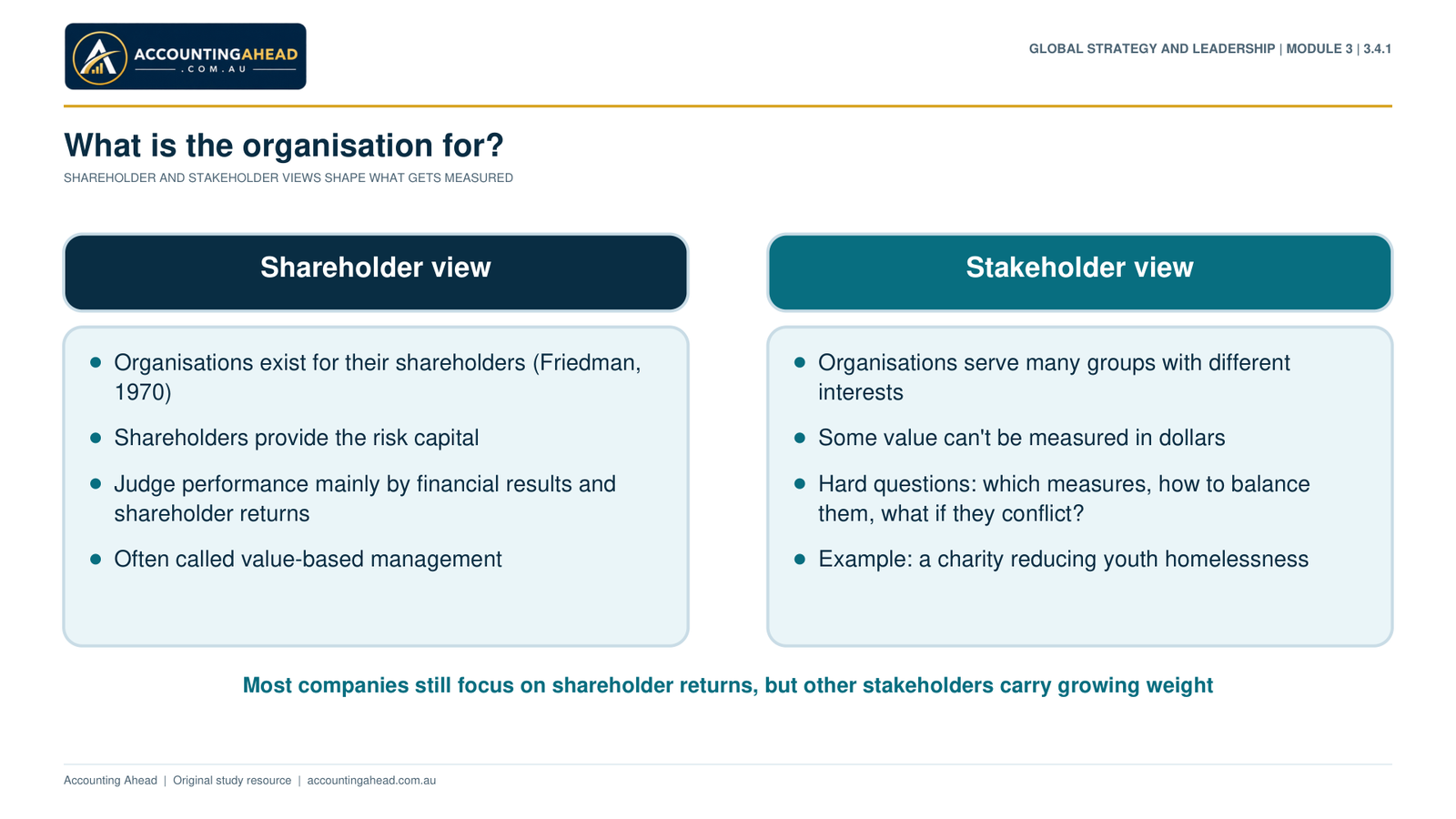
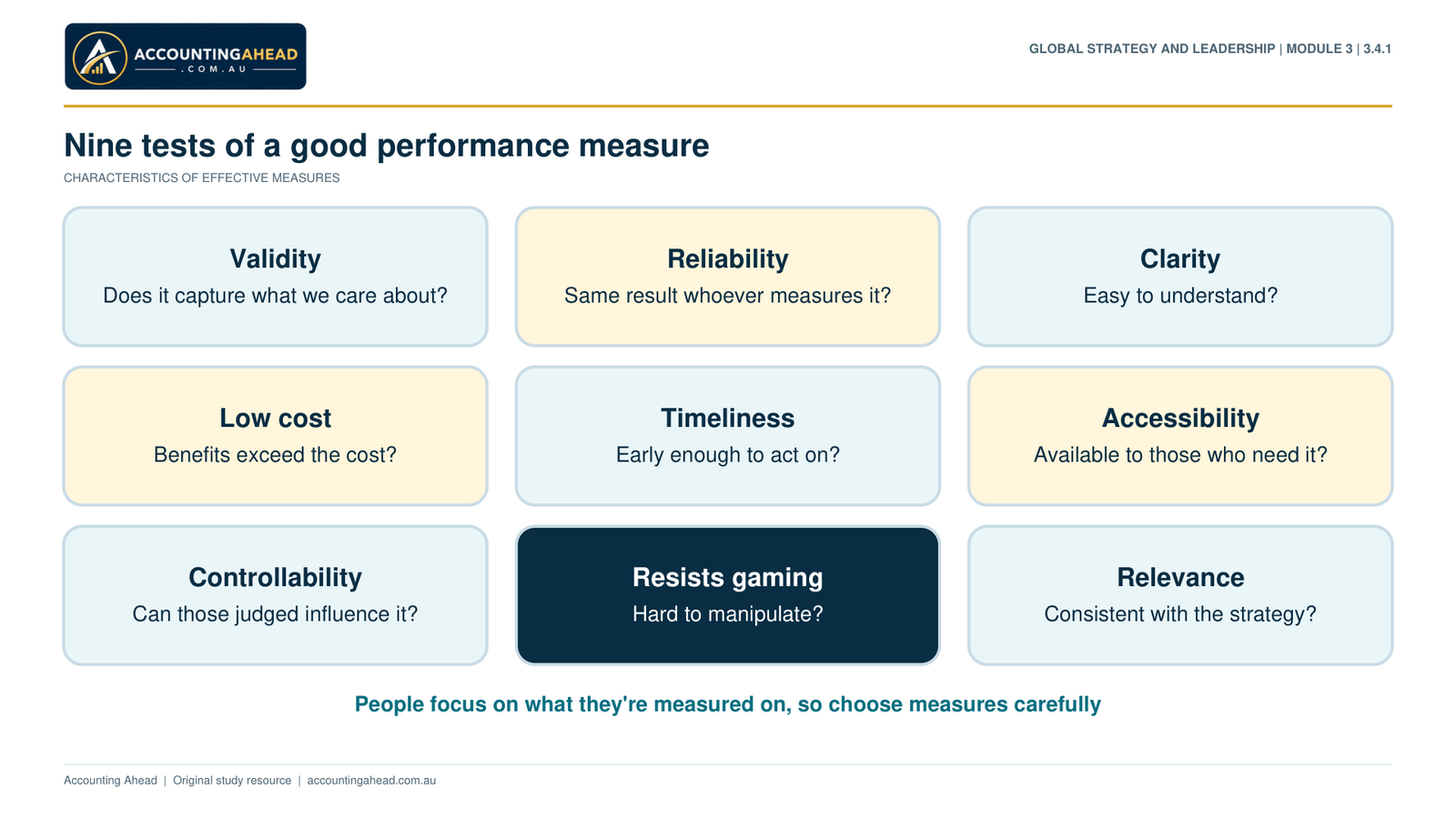
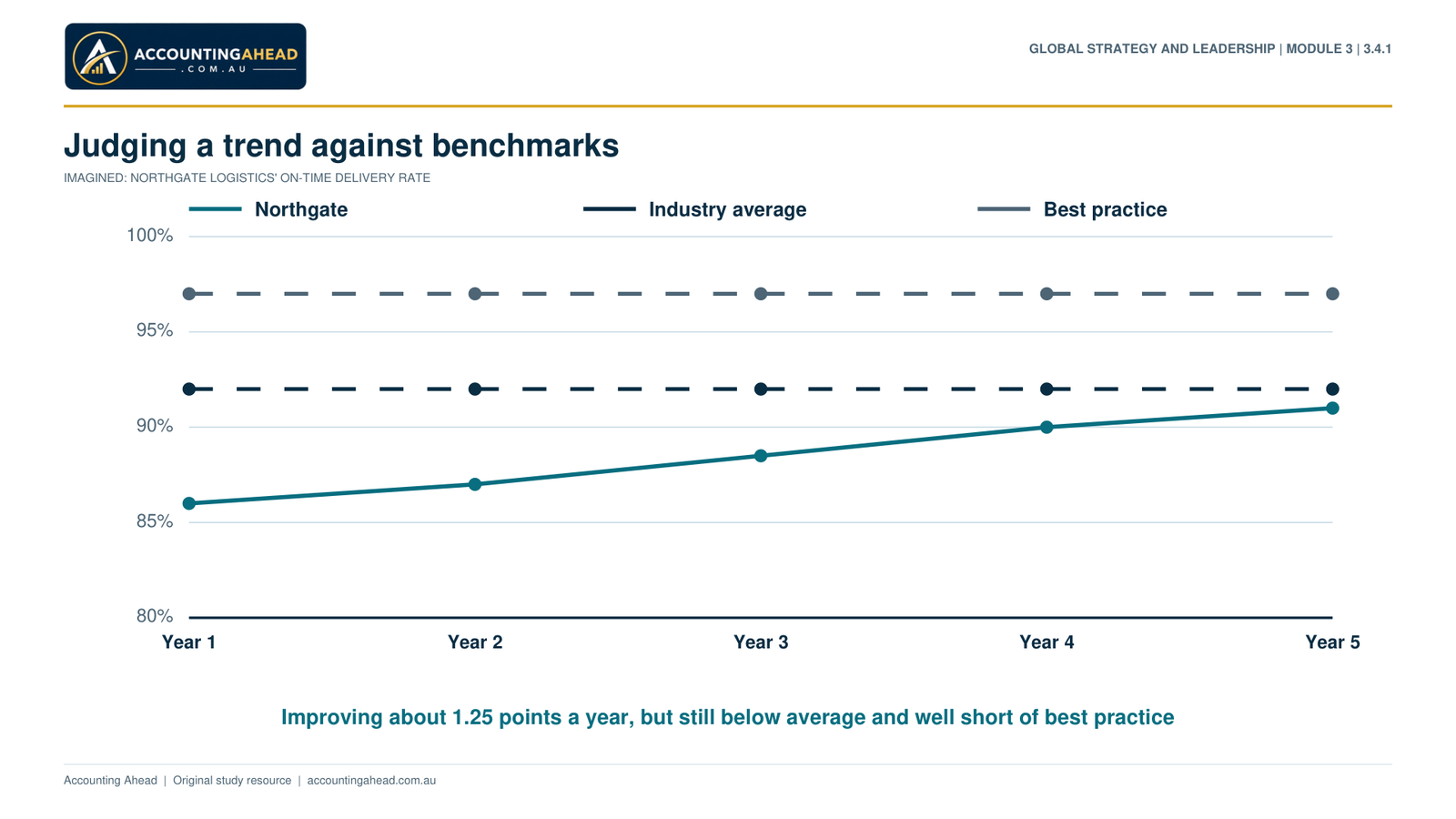
Part 3.4.1 · Operational Drivers and Performance Measures
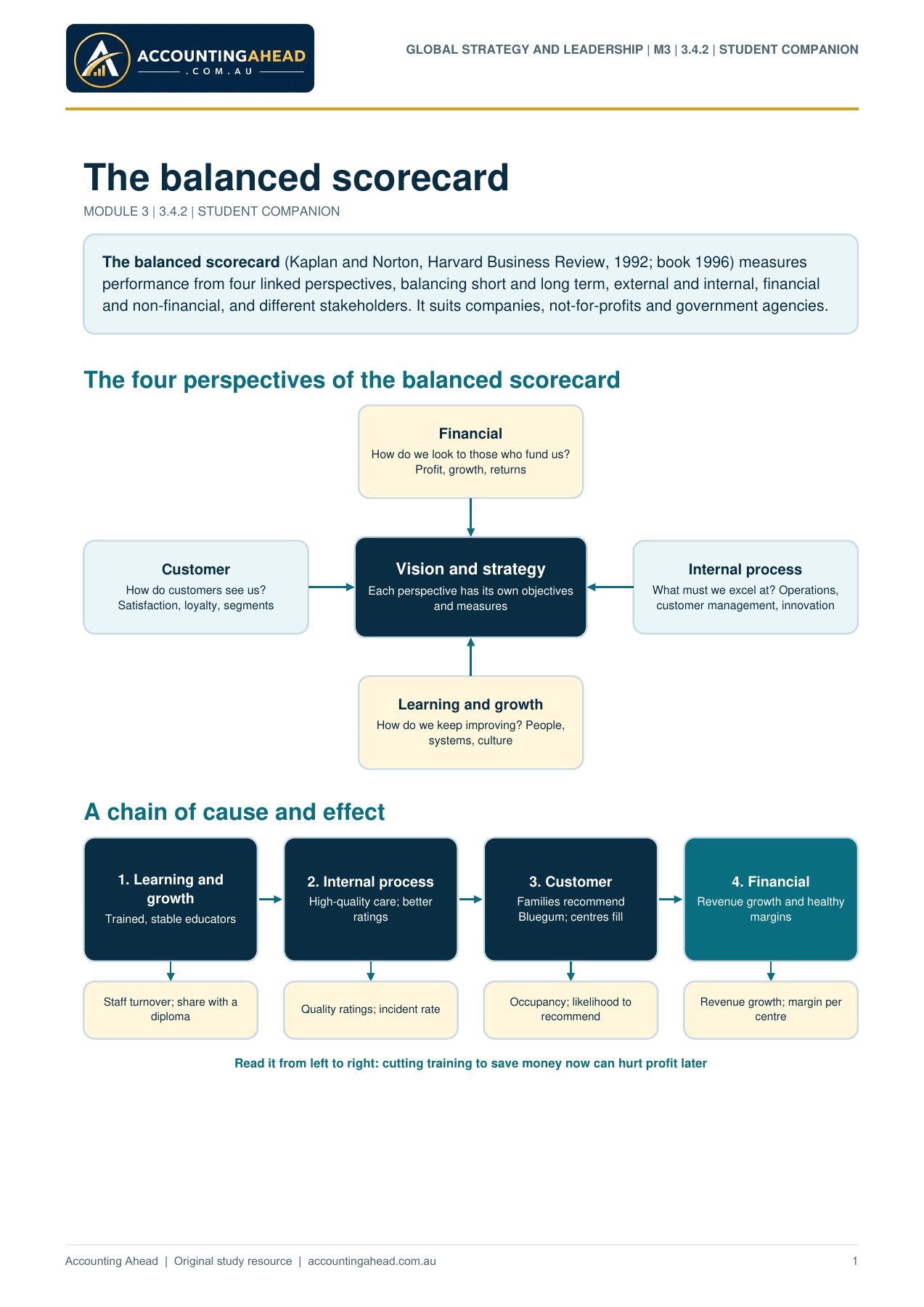
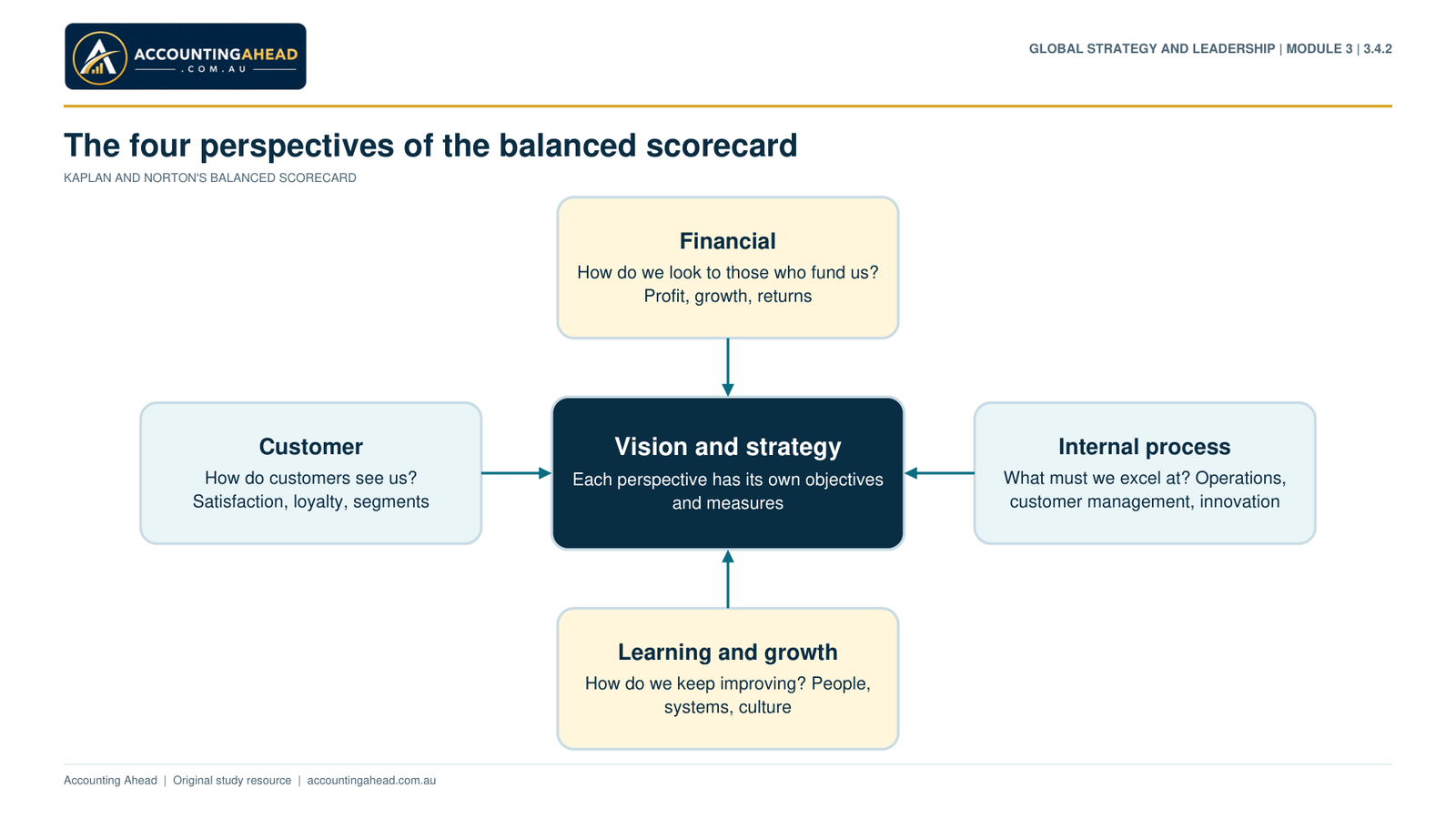
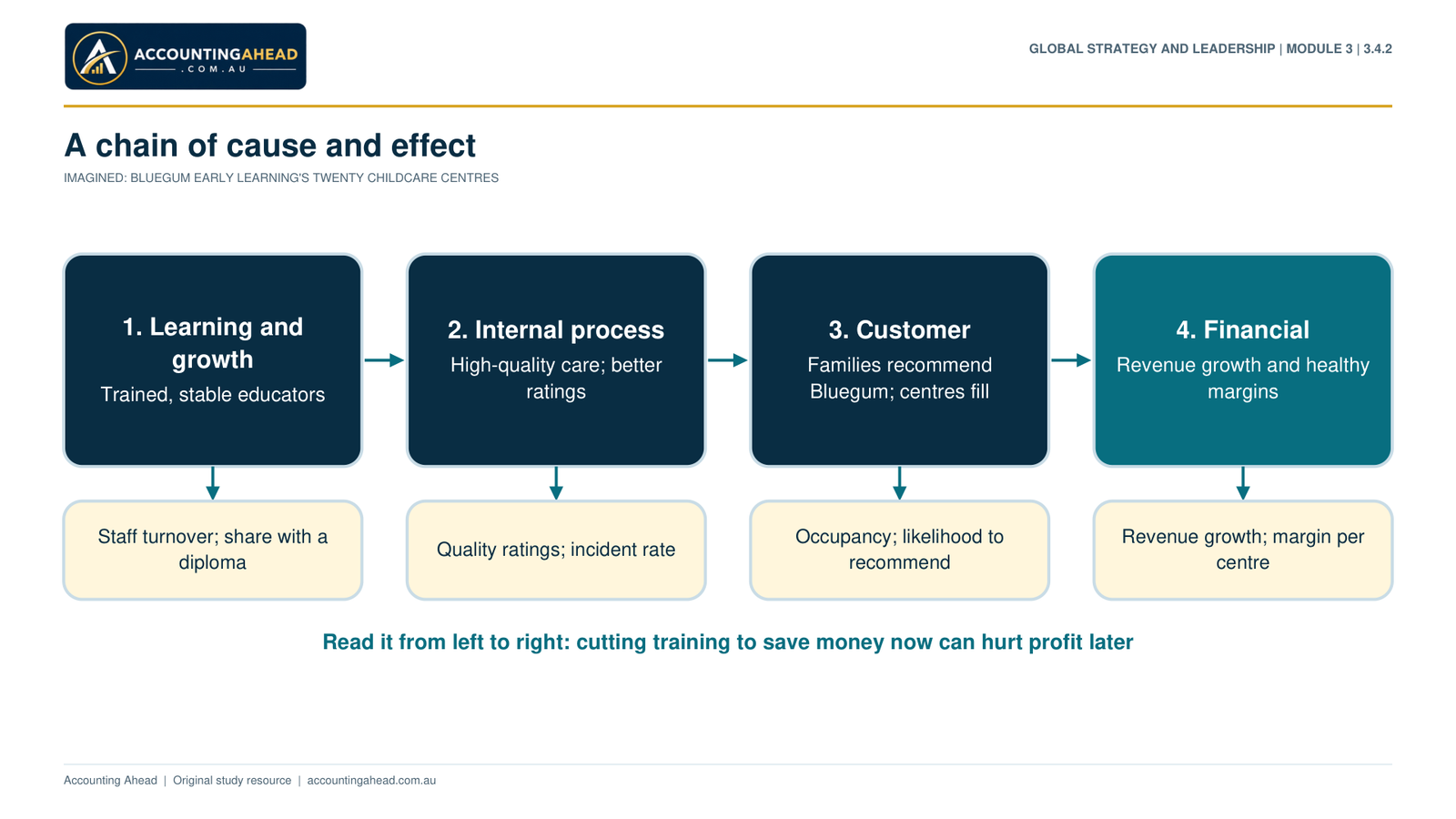
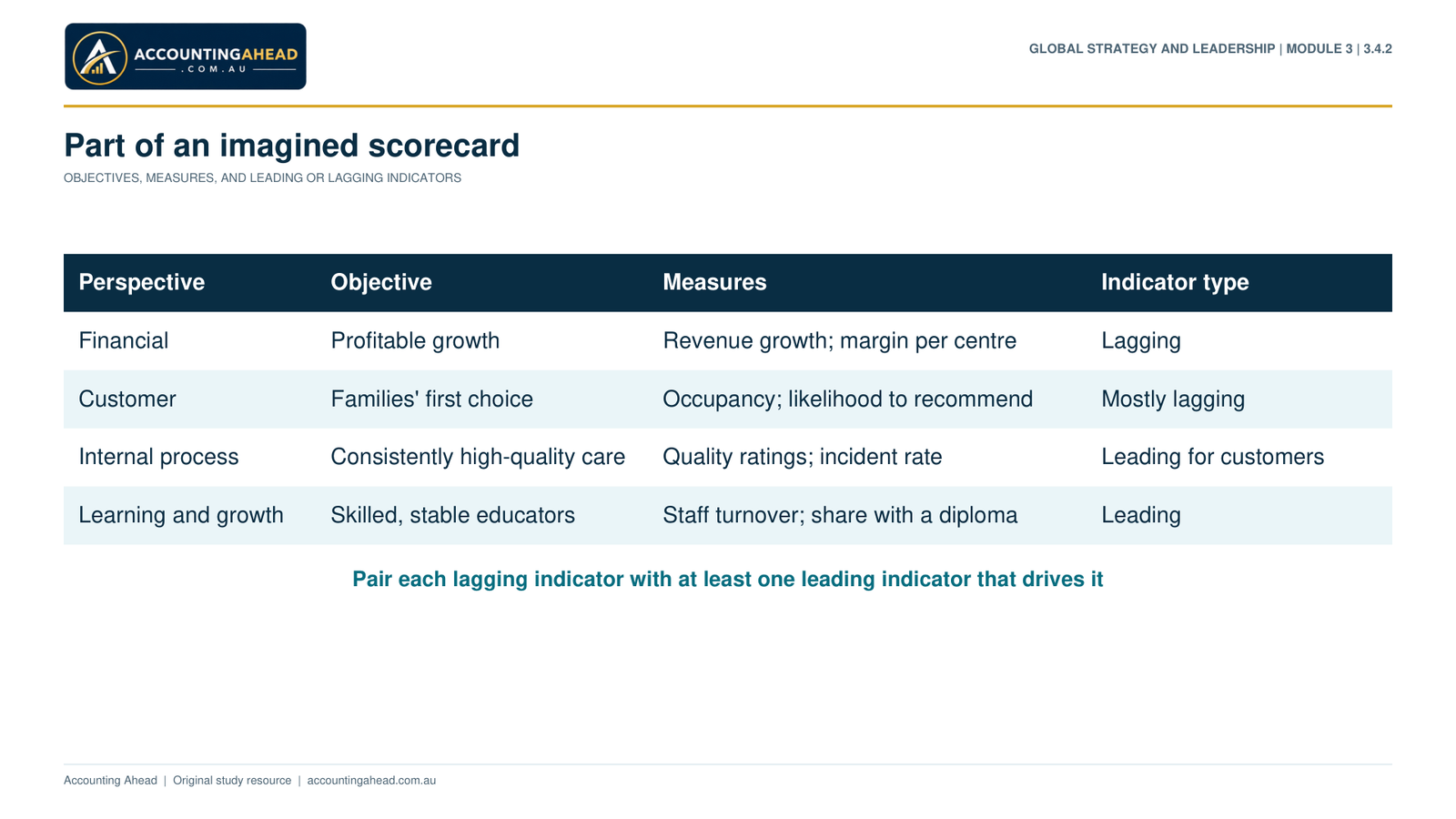
Part 3.4.2 · The Balanced Scorecard
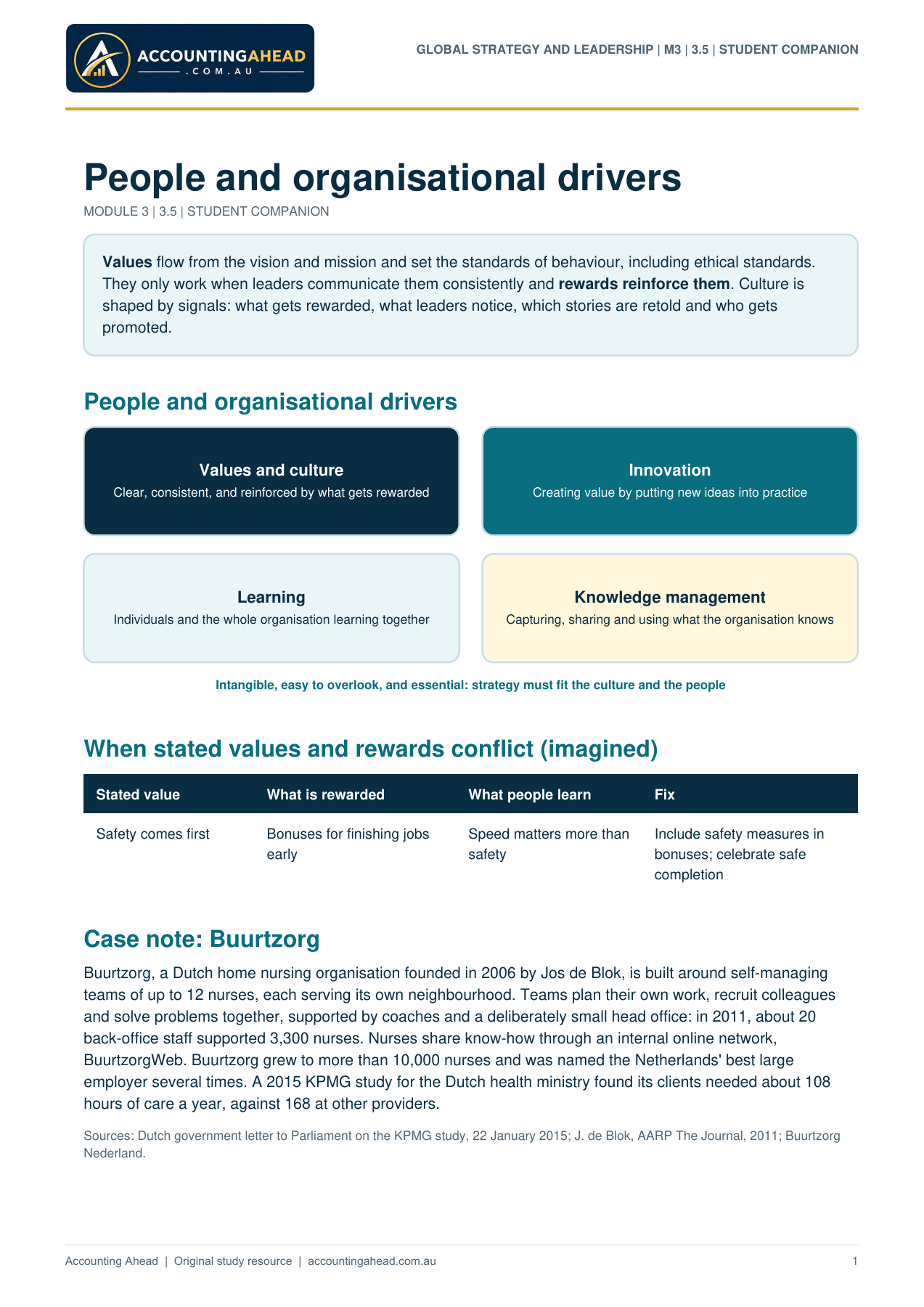
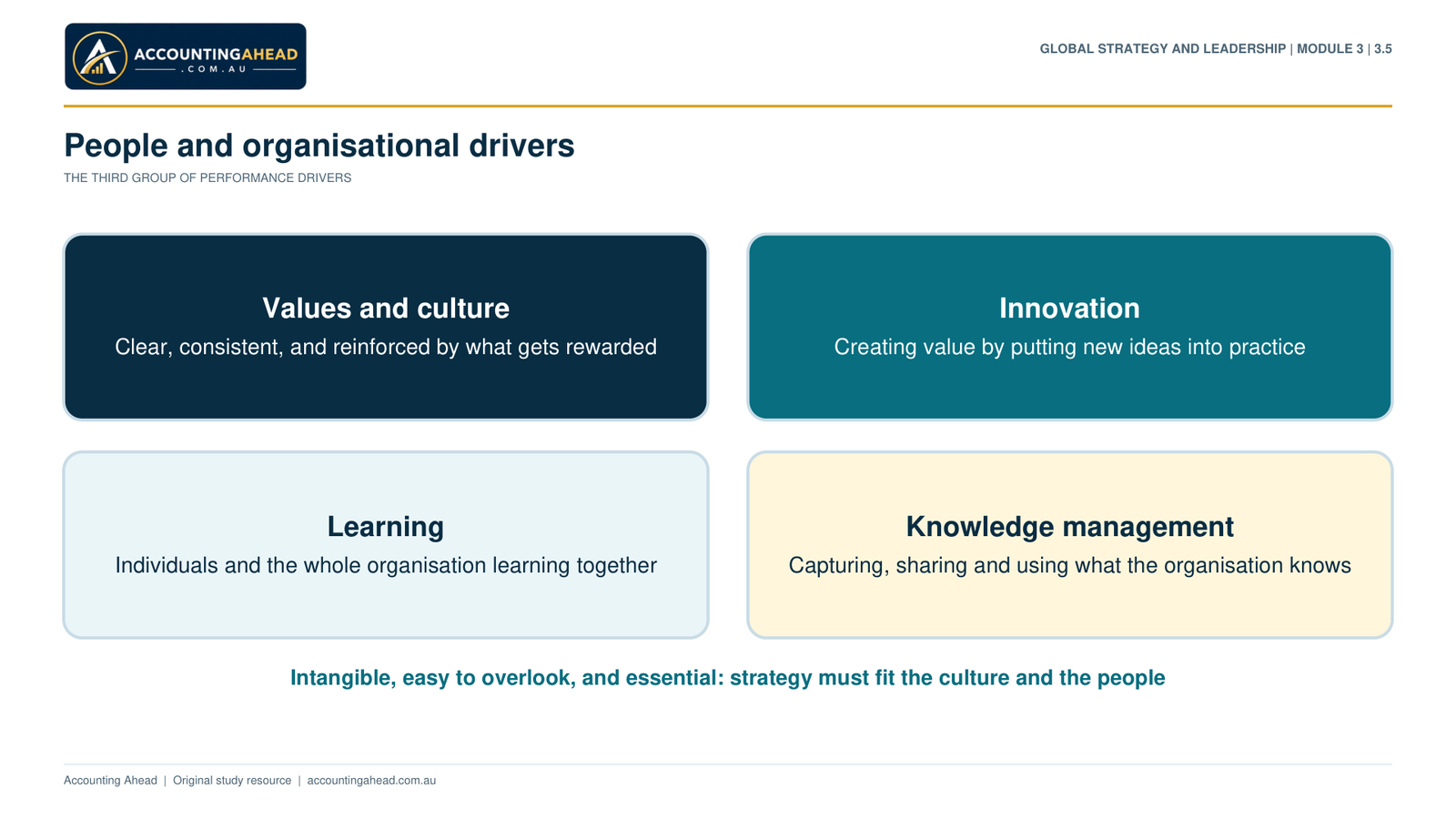
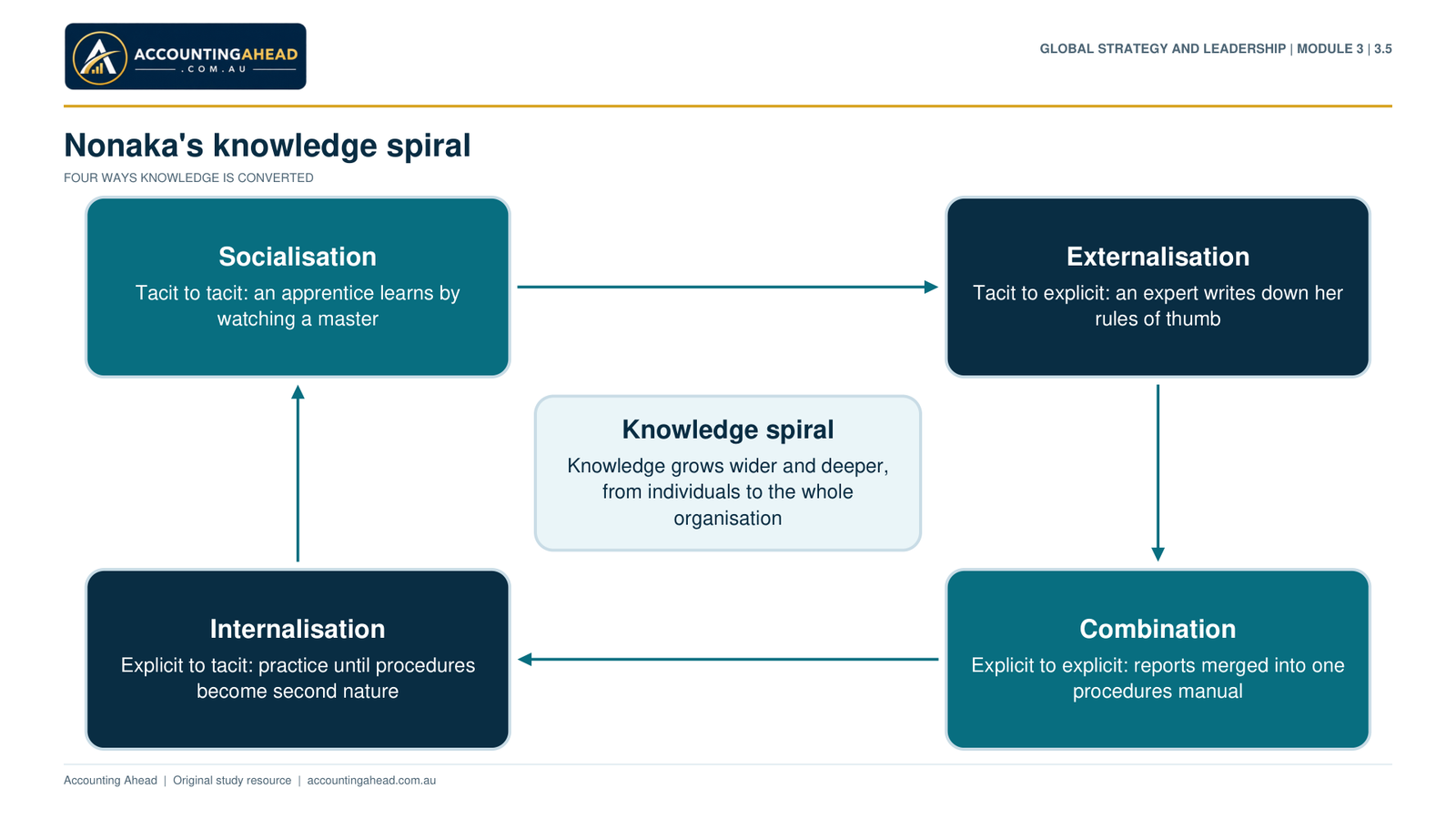
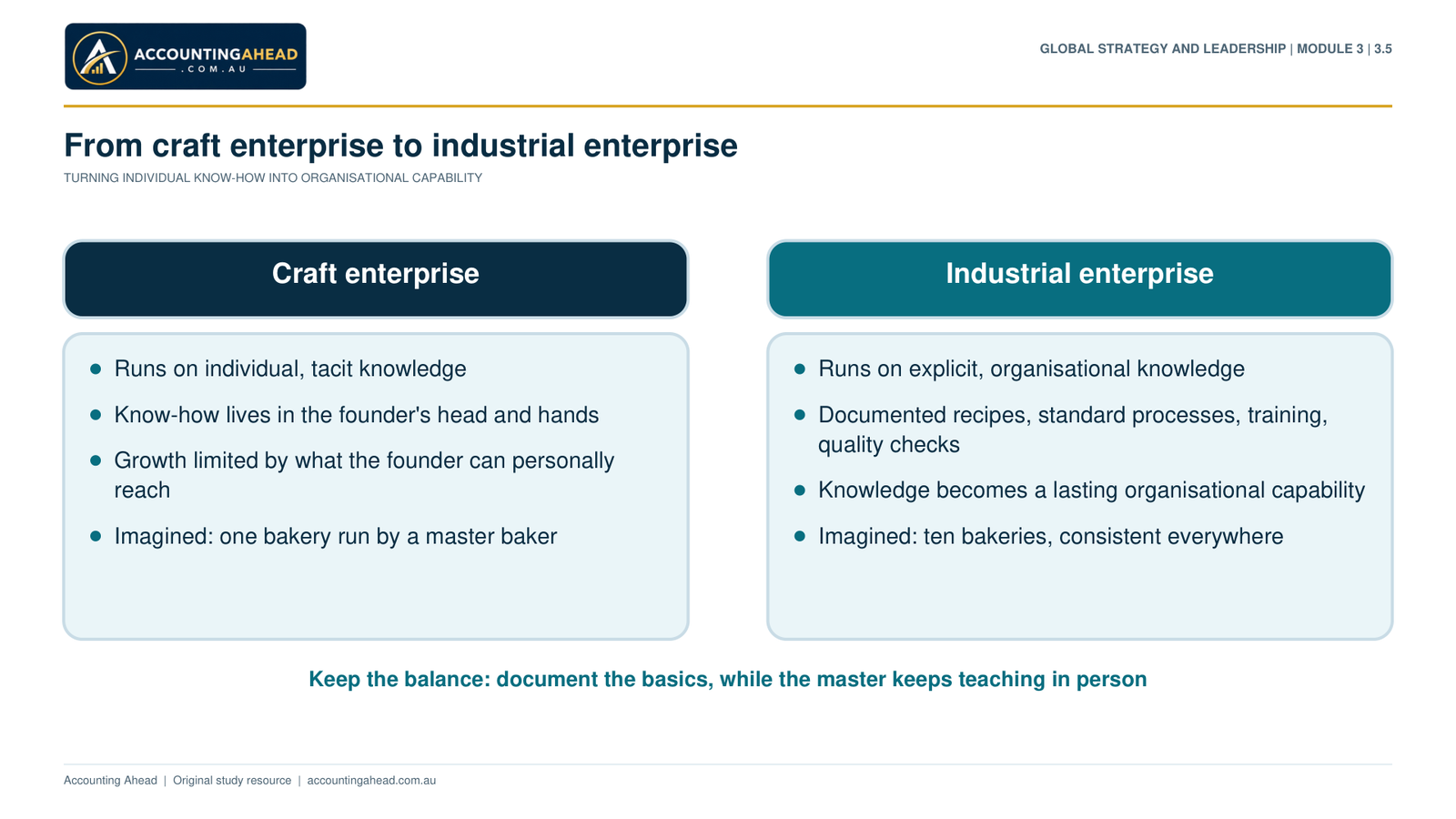
Part 3.5 · People and Organisational Drivers
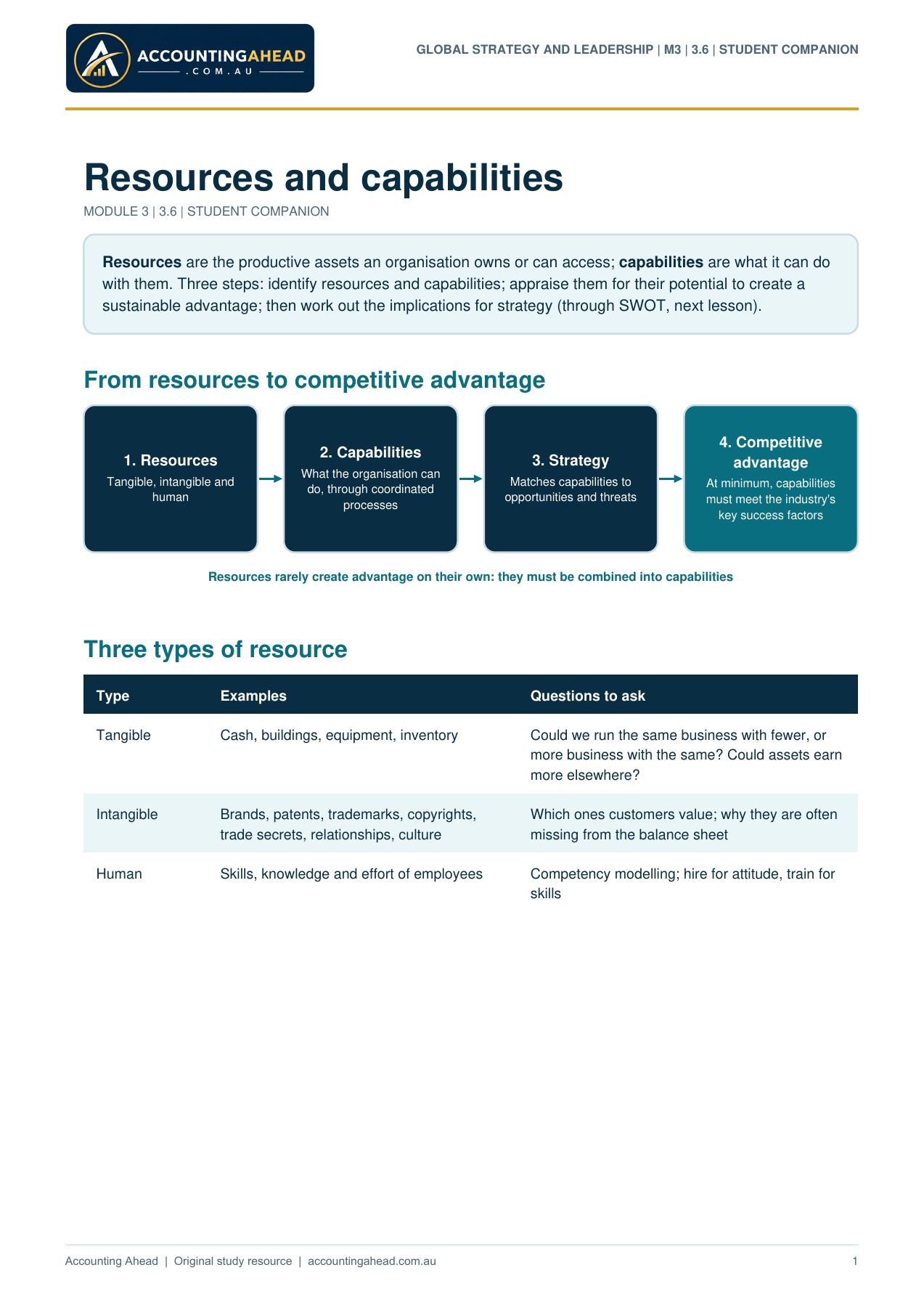
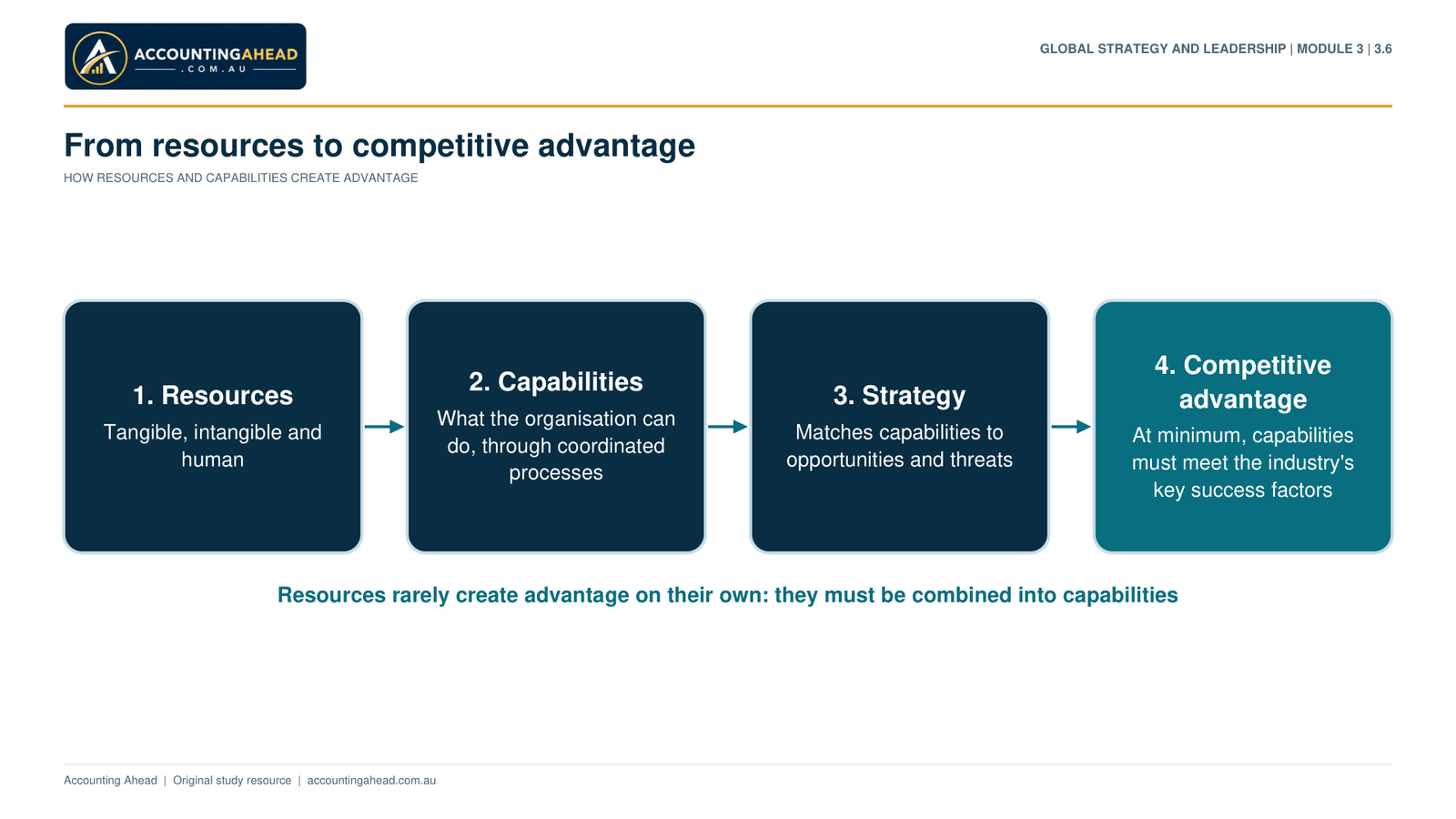
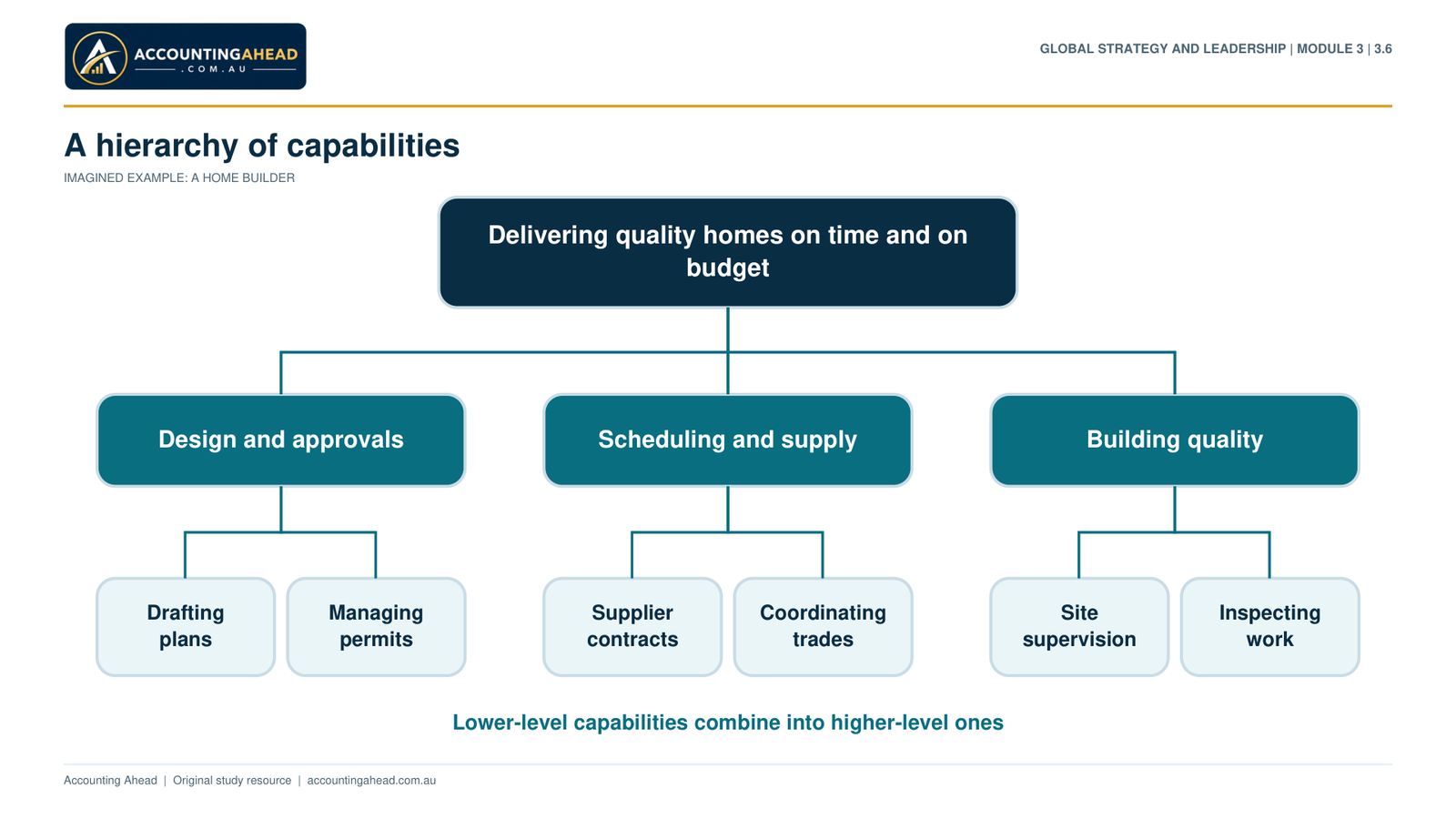
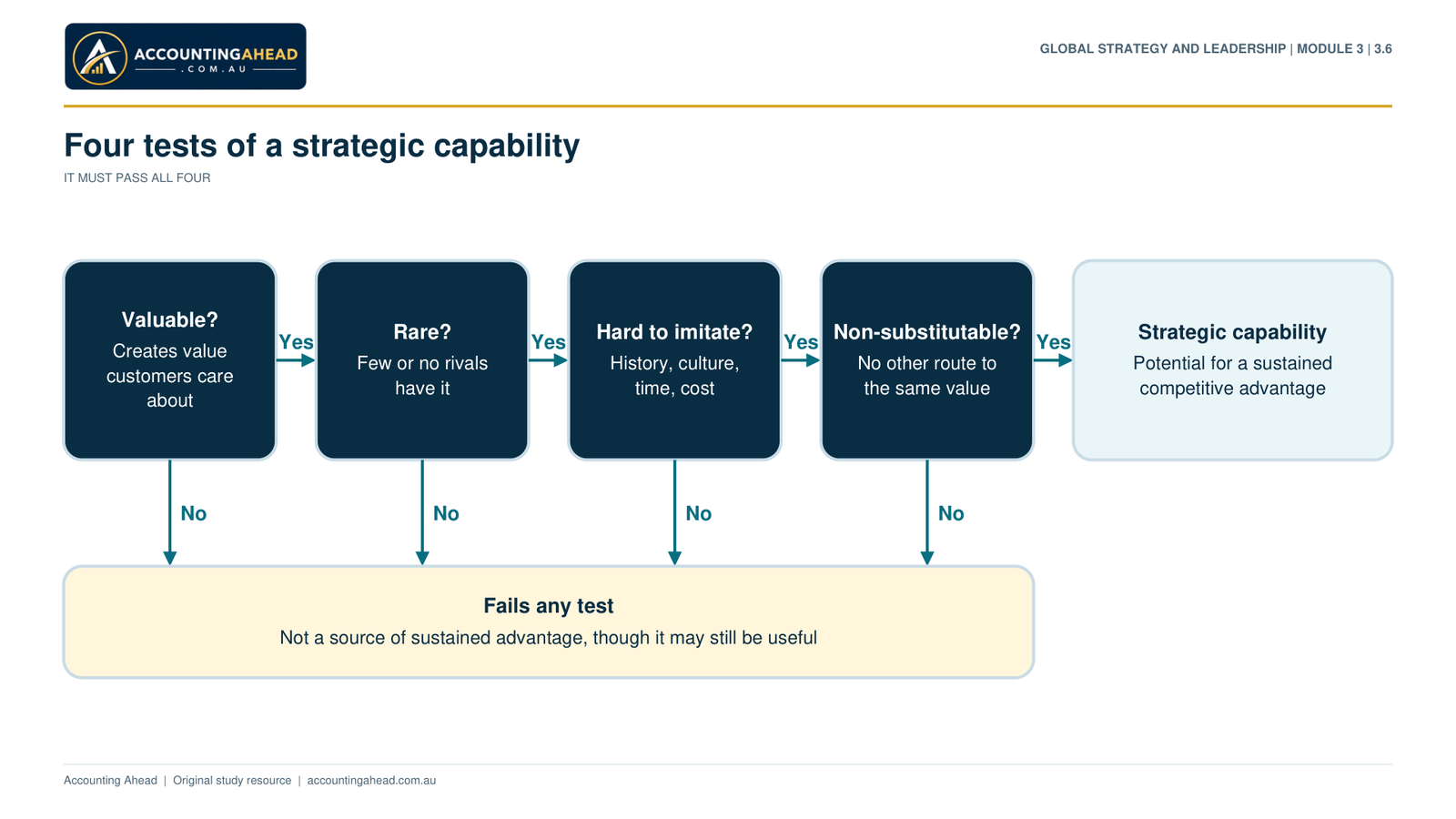
Part 3.6 · Resources and Capabilities
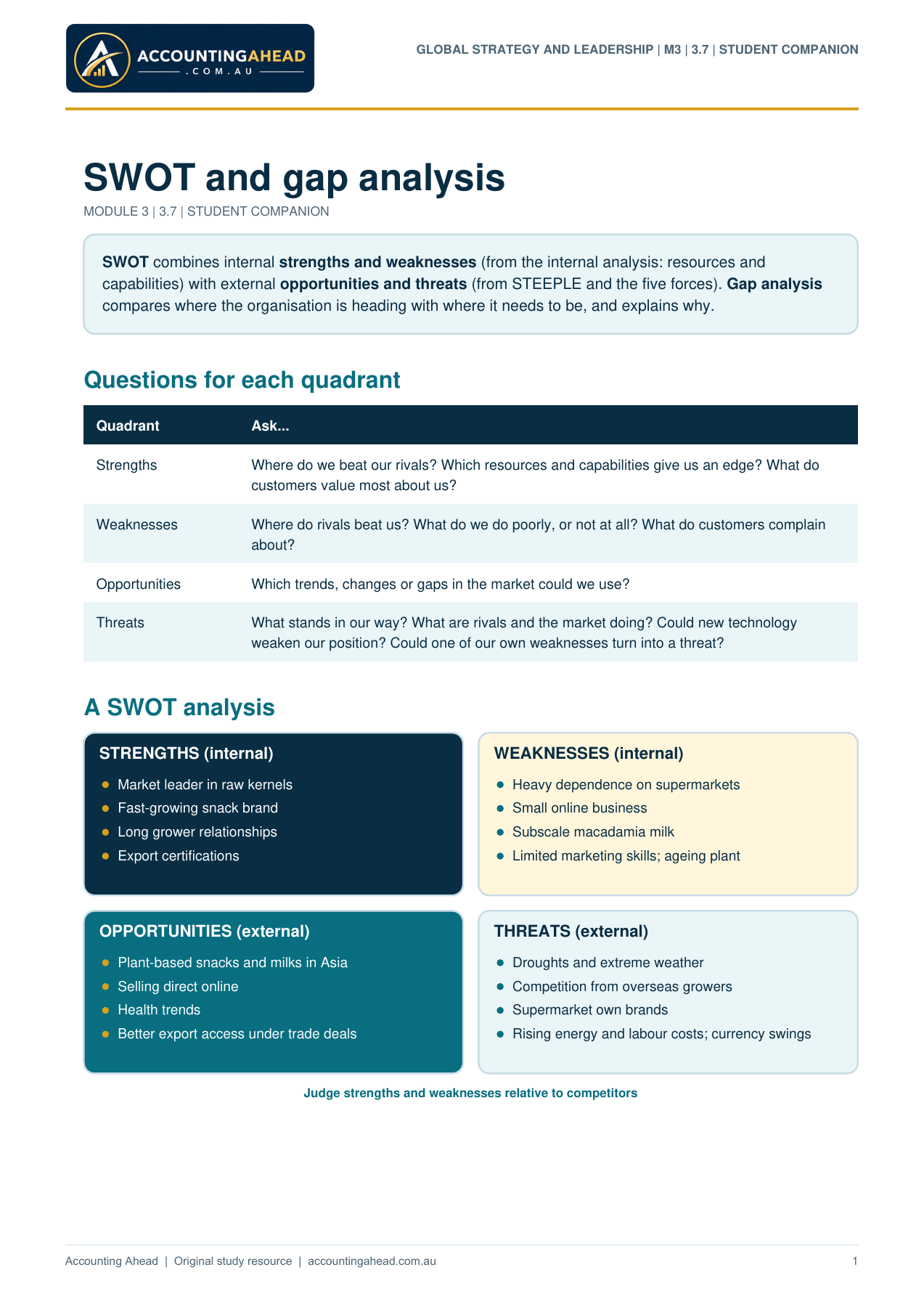
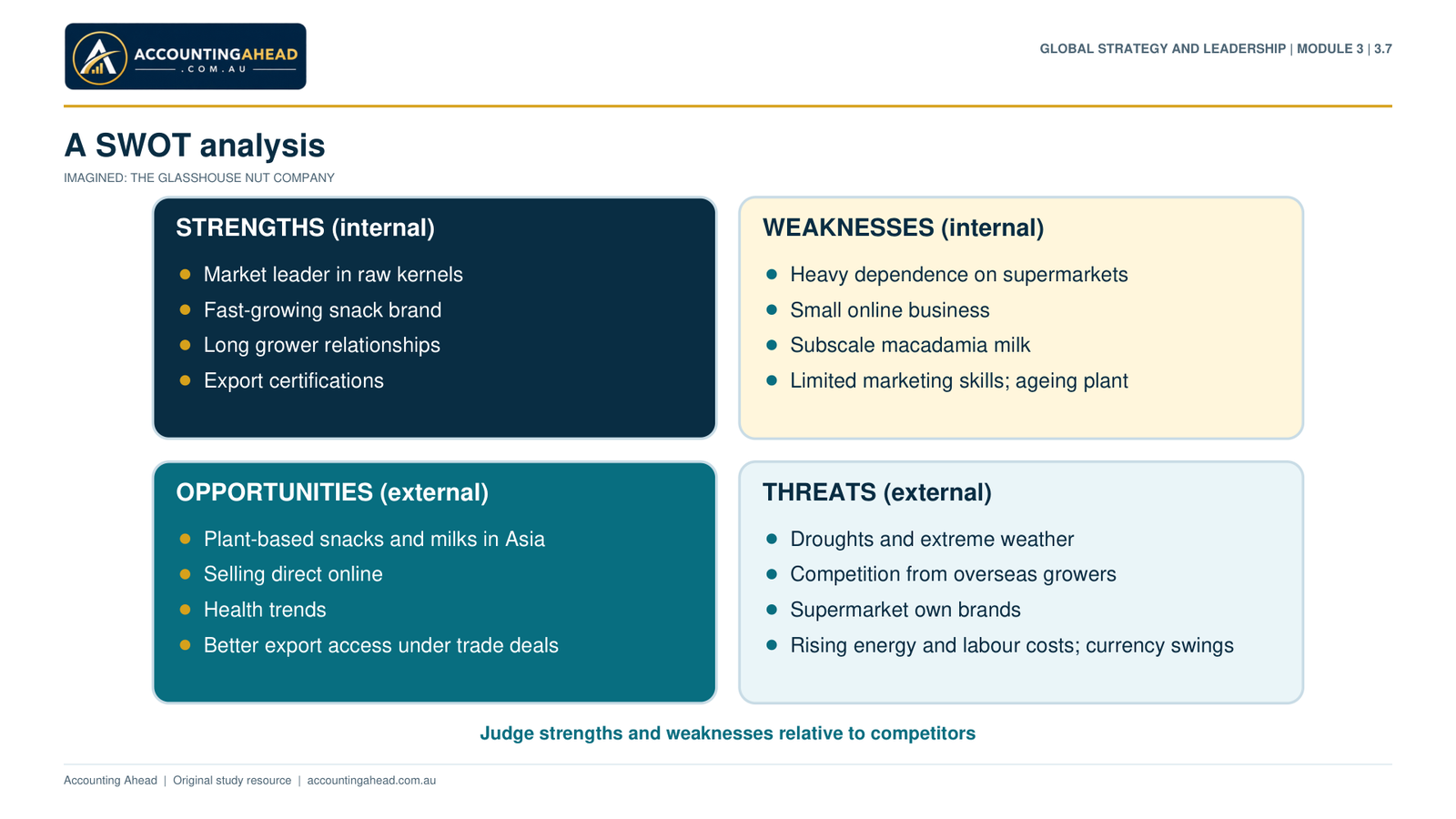
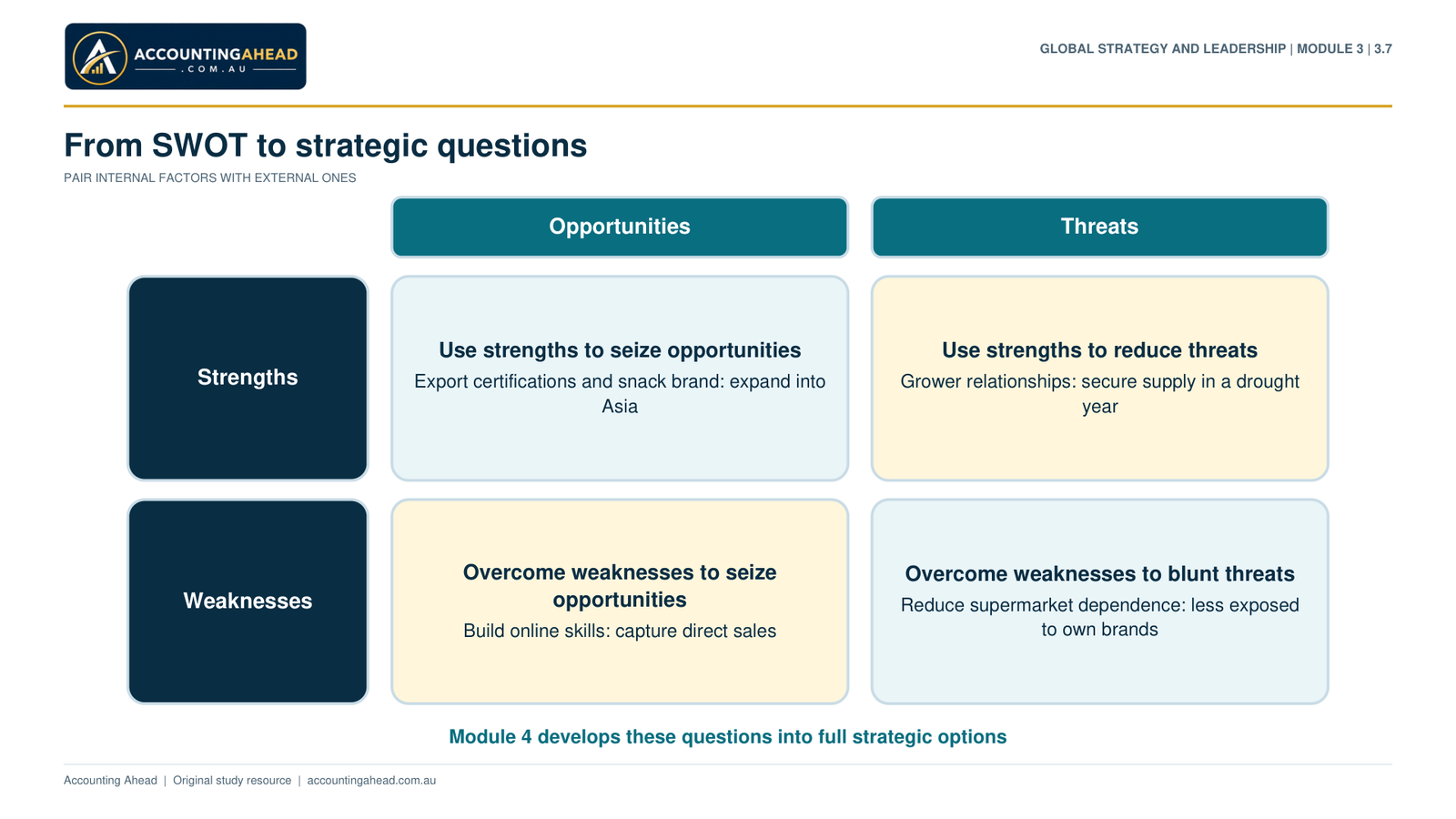
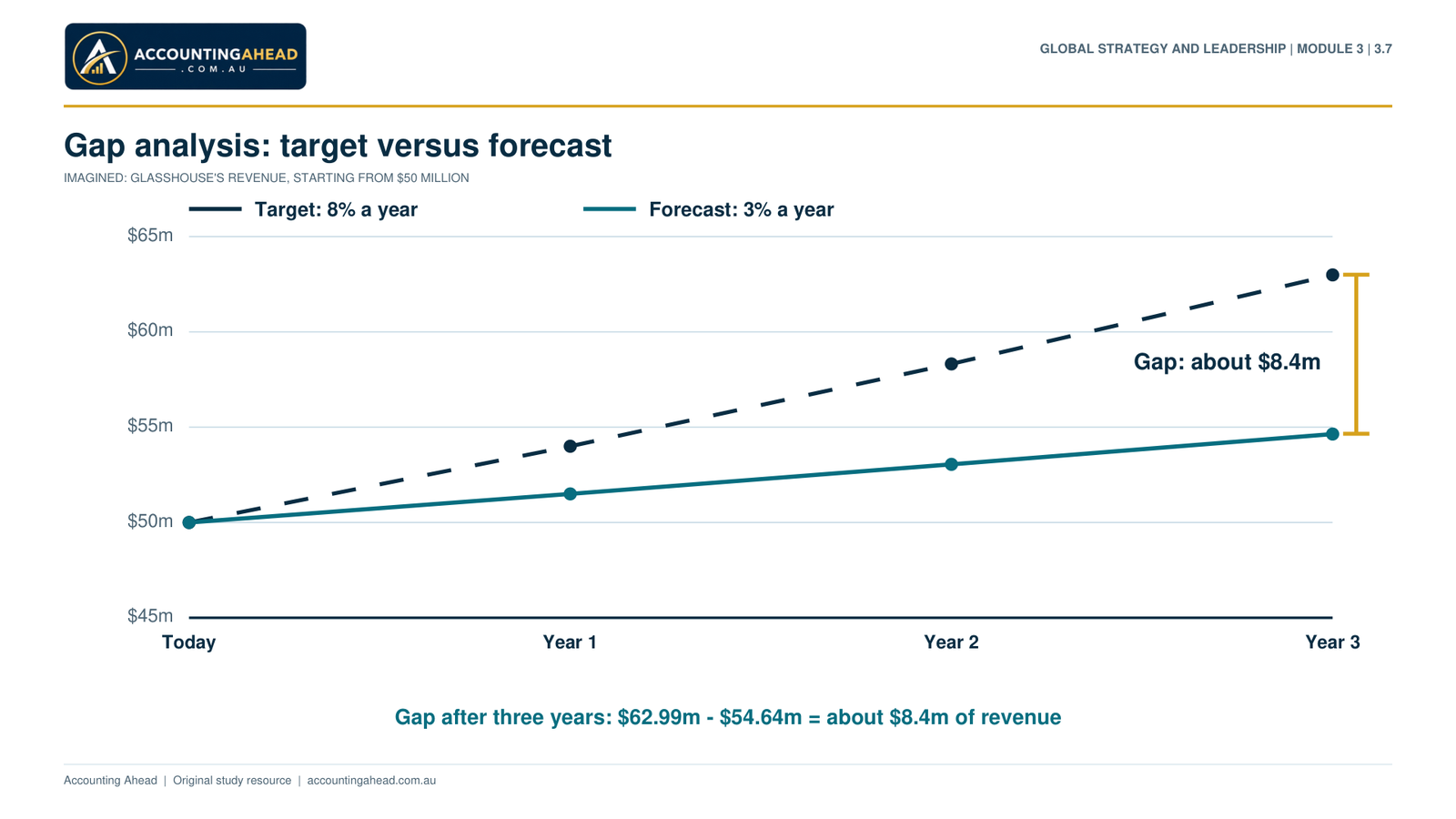
Part 3.7 · SWOT and Gap Analysis
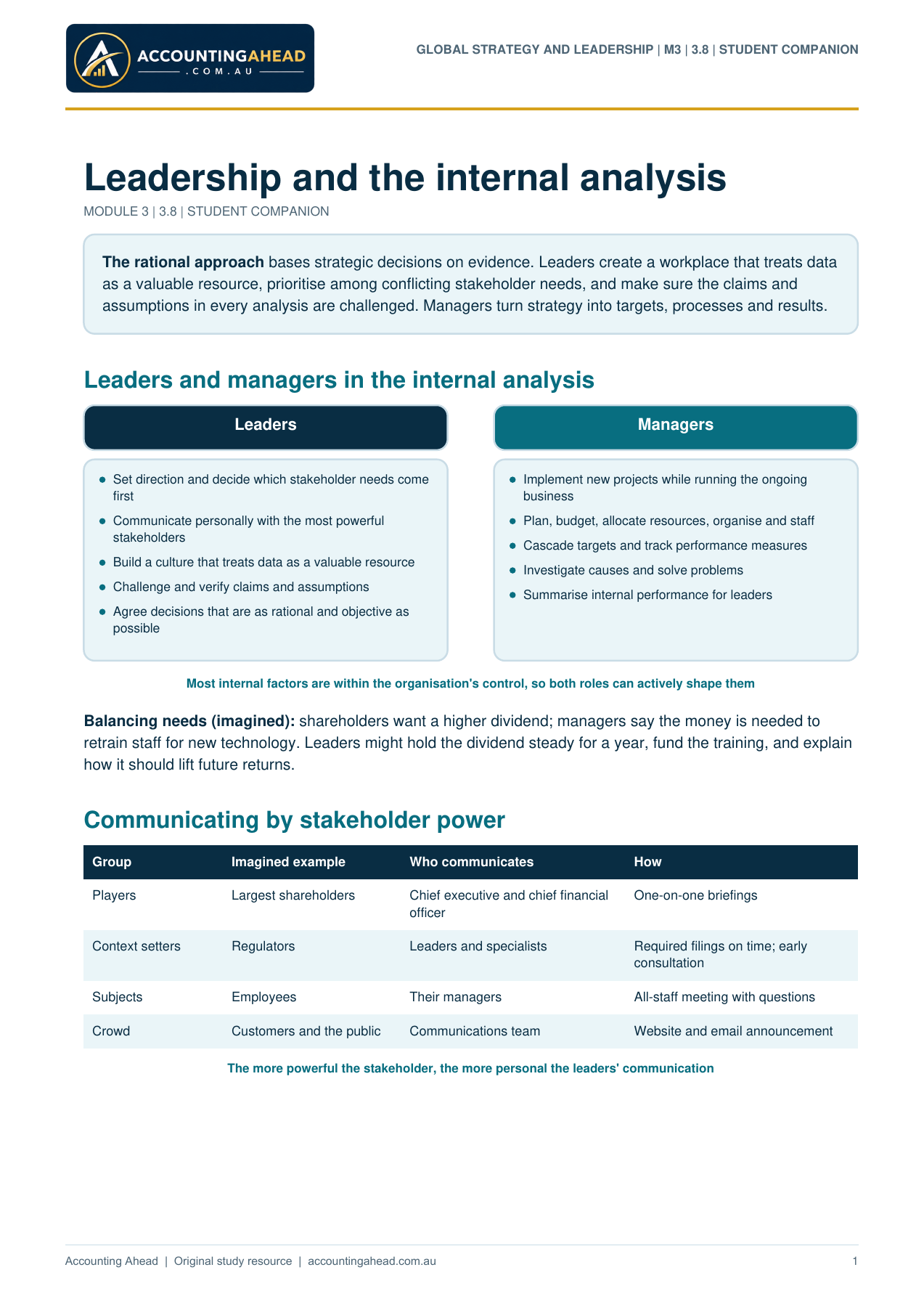
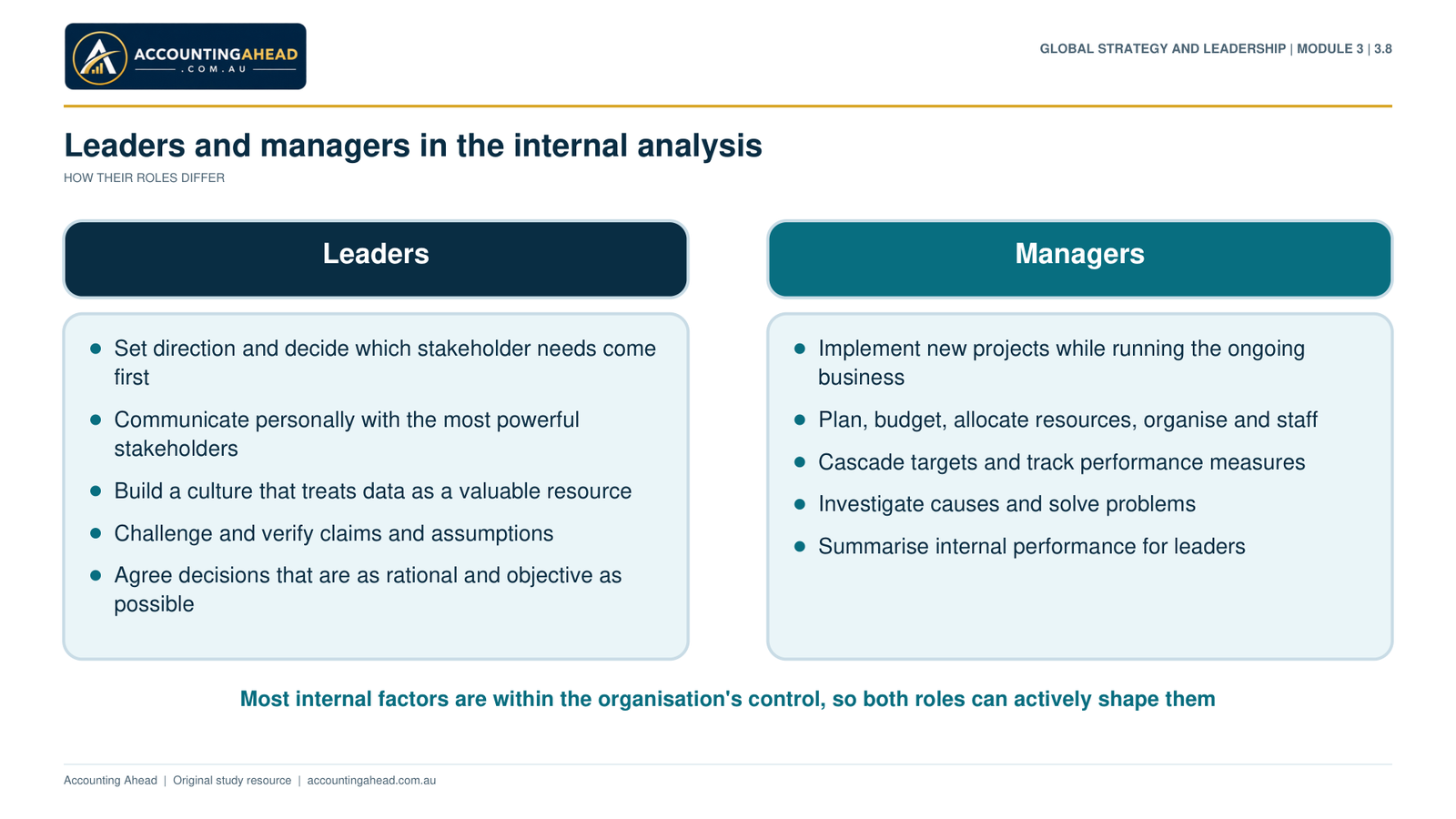
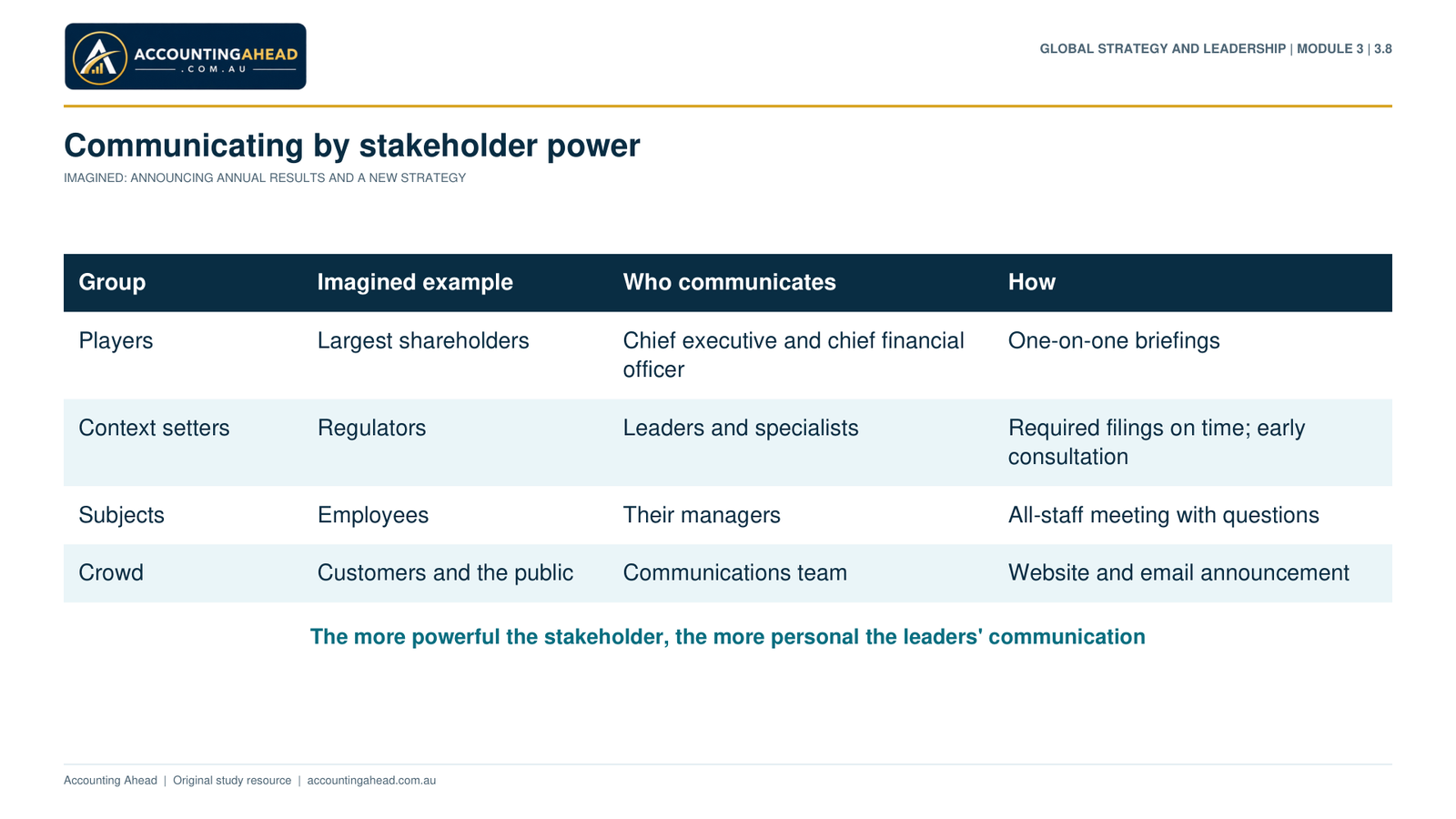
Part 3.8 · Leadership and the Internal Analysis
Module 4 · Products, services and market growth
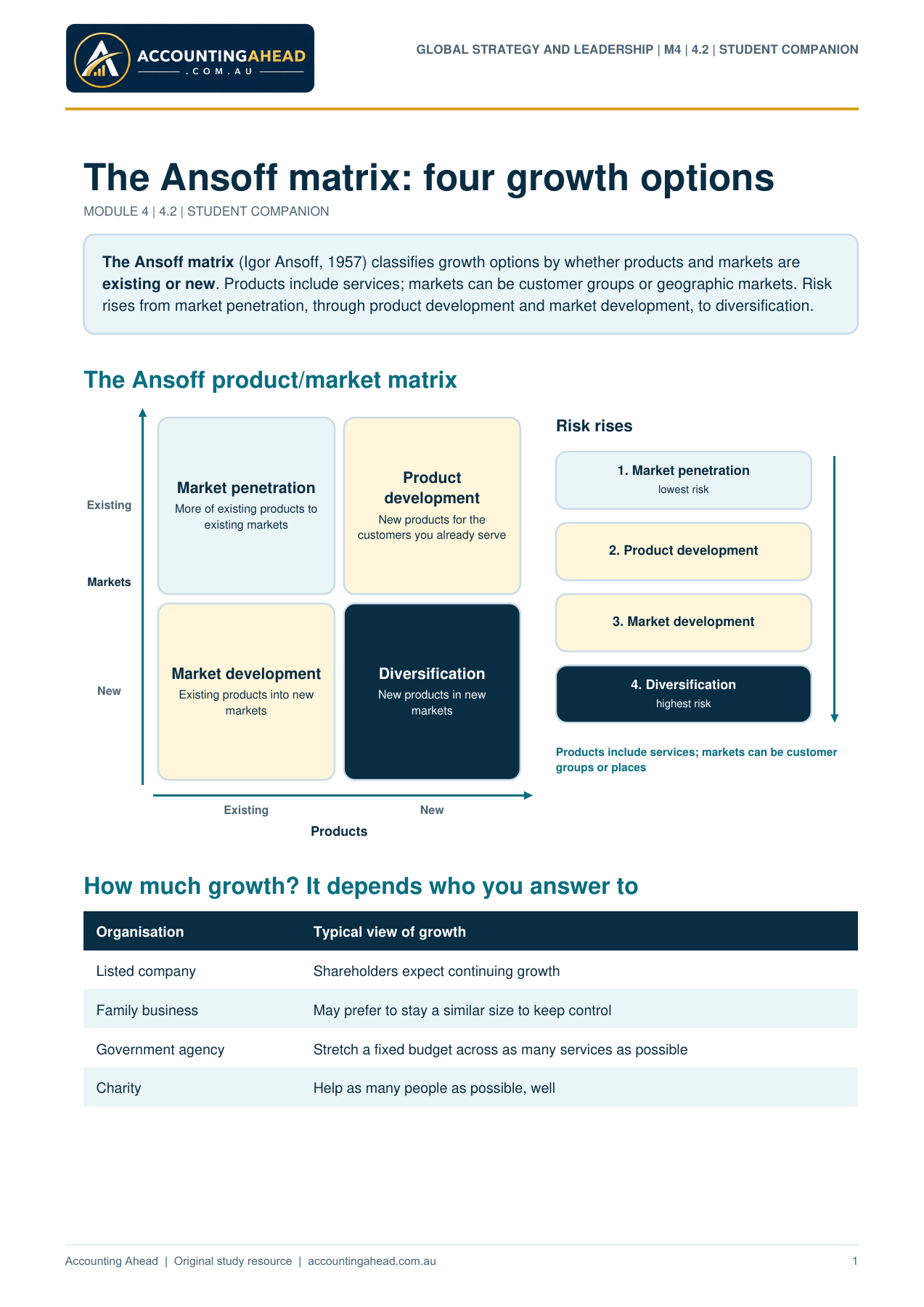
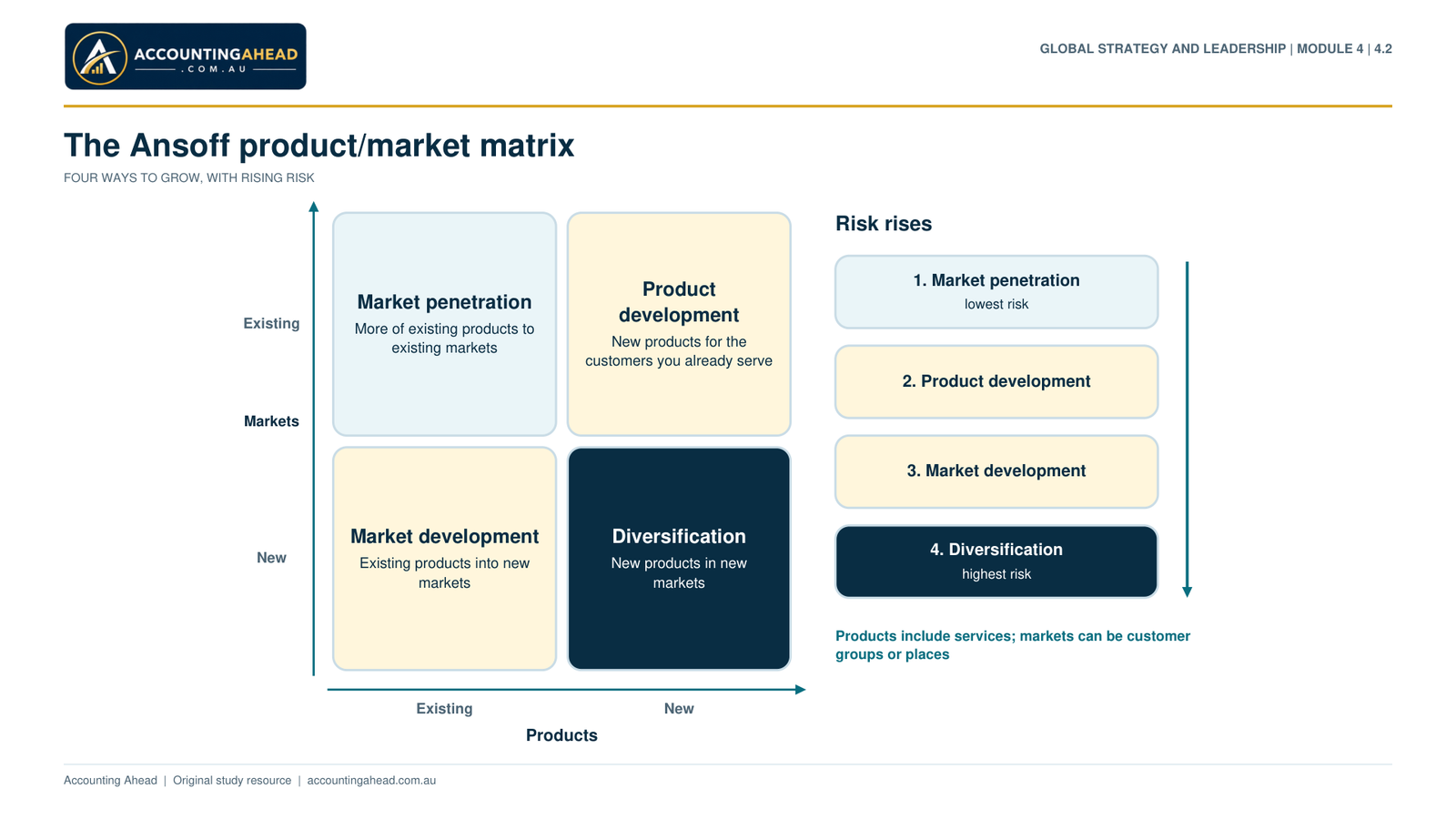
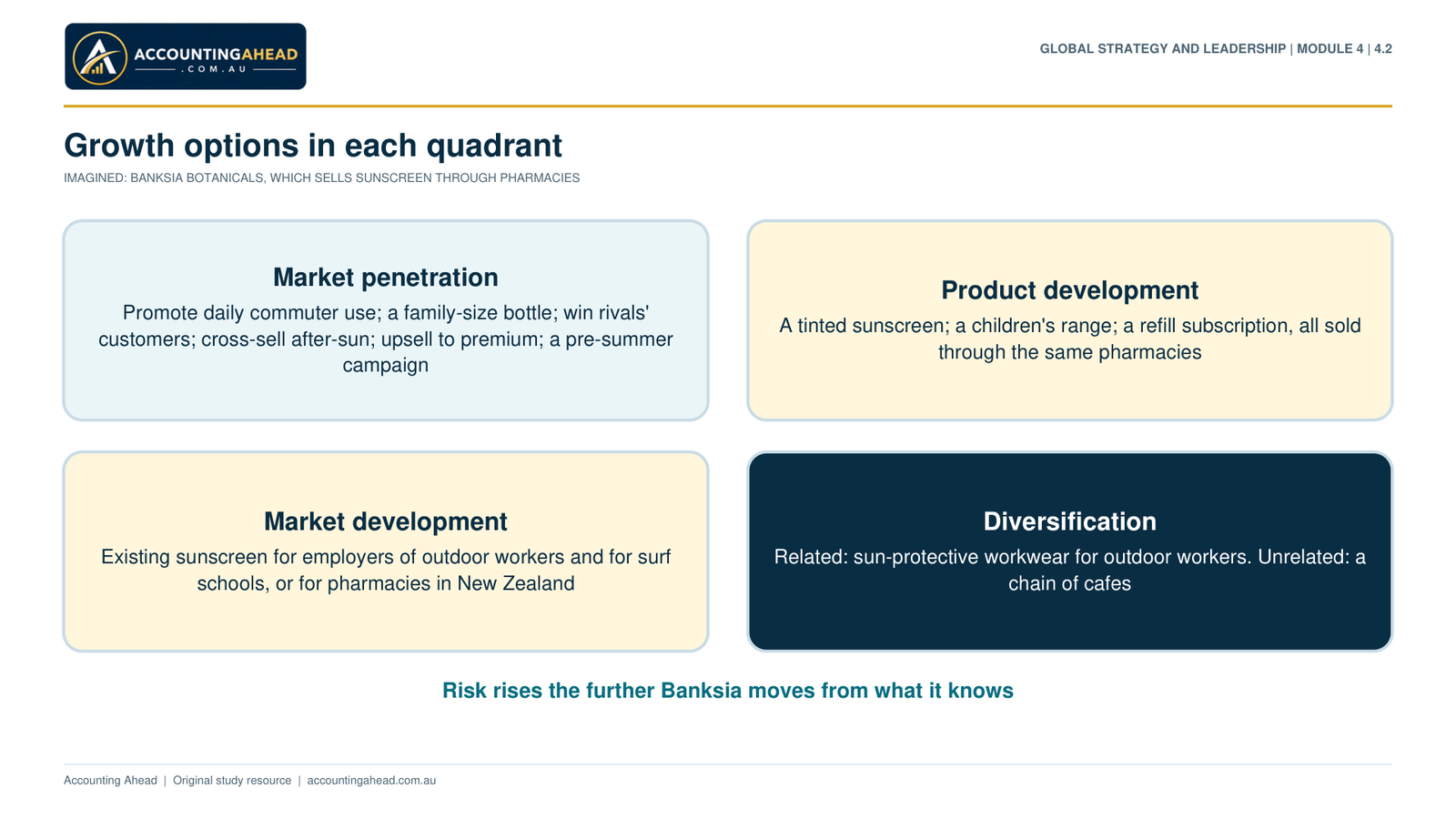
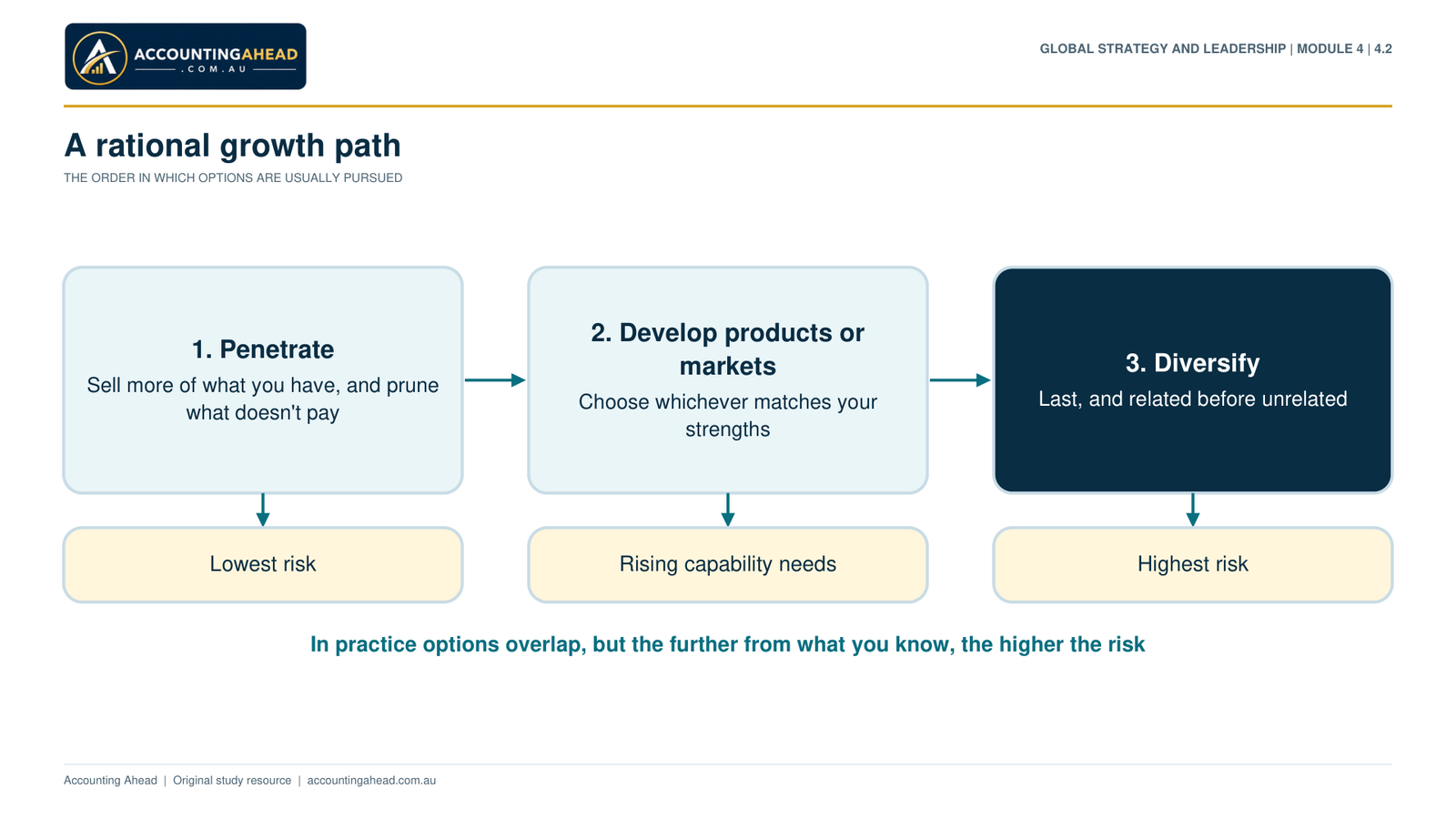
Part 4.2 · The Ansoff Matrix - Four Growth Options
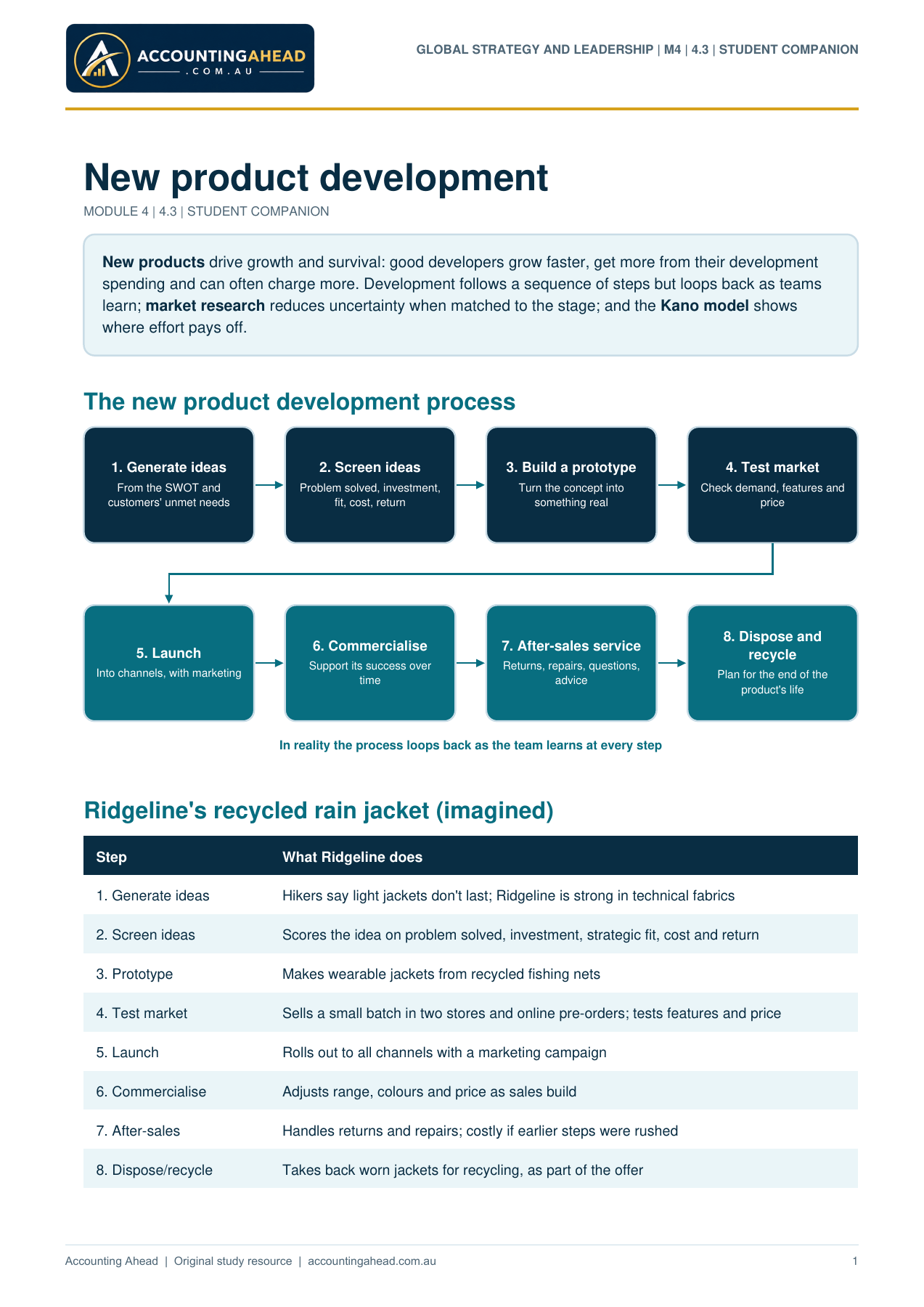
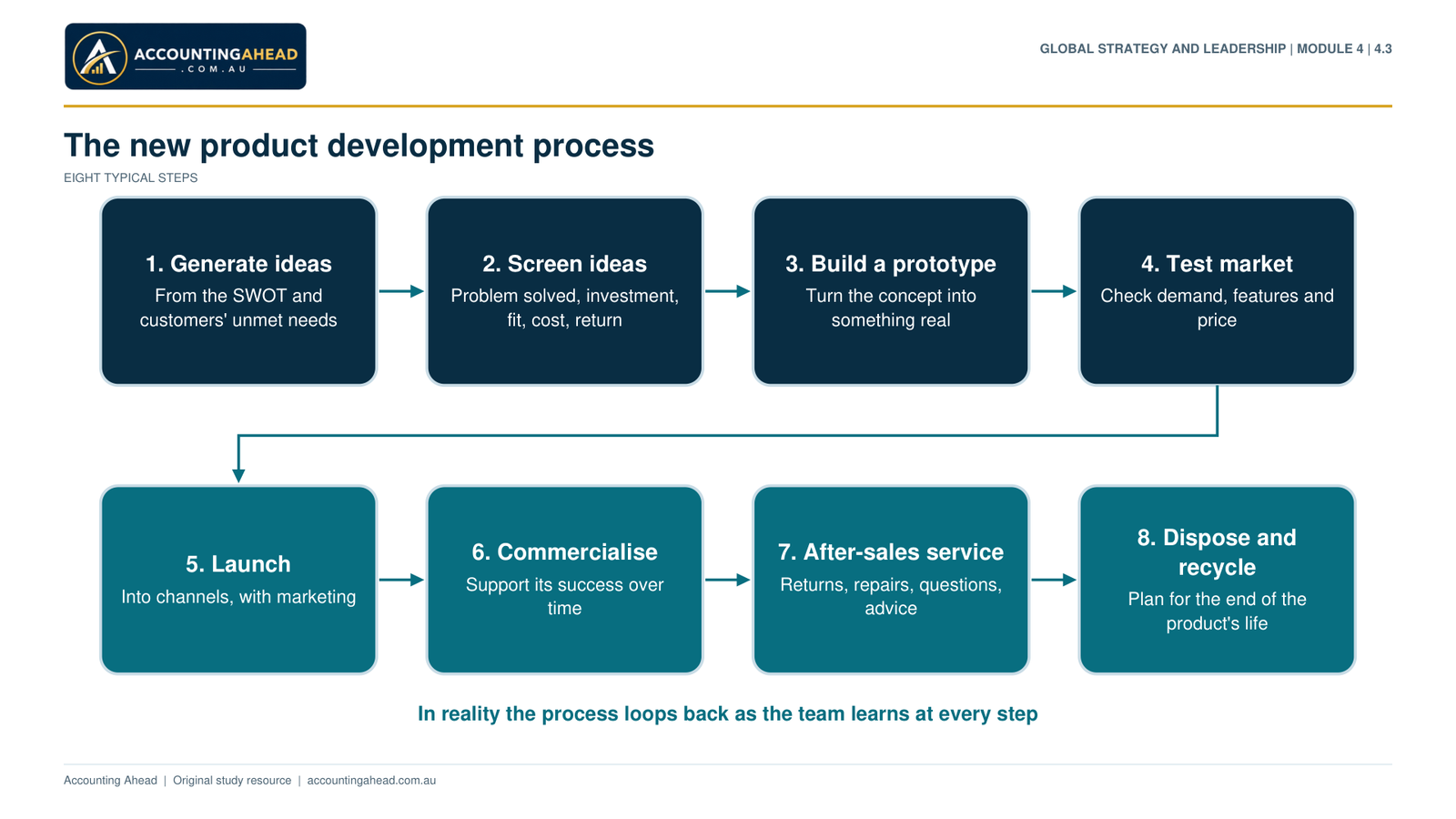
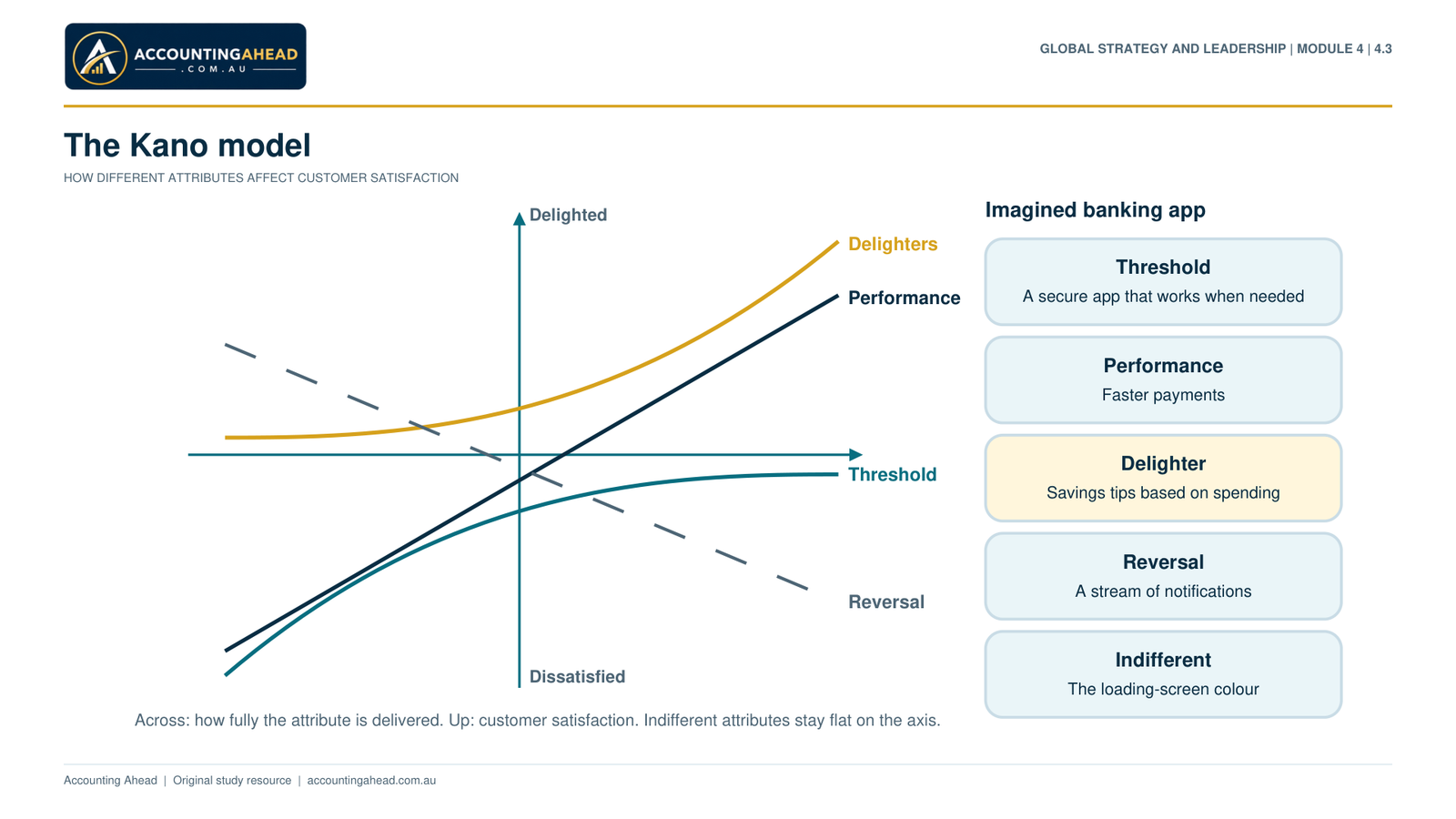
Part 4.3 · New Product Development
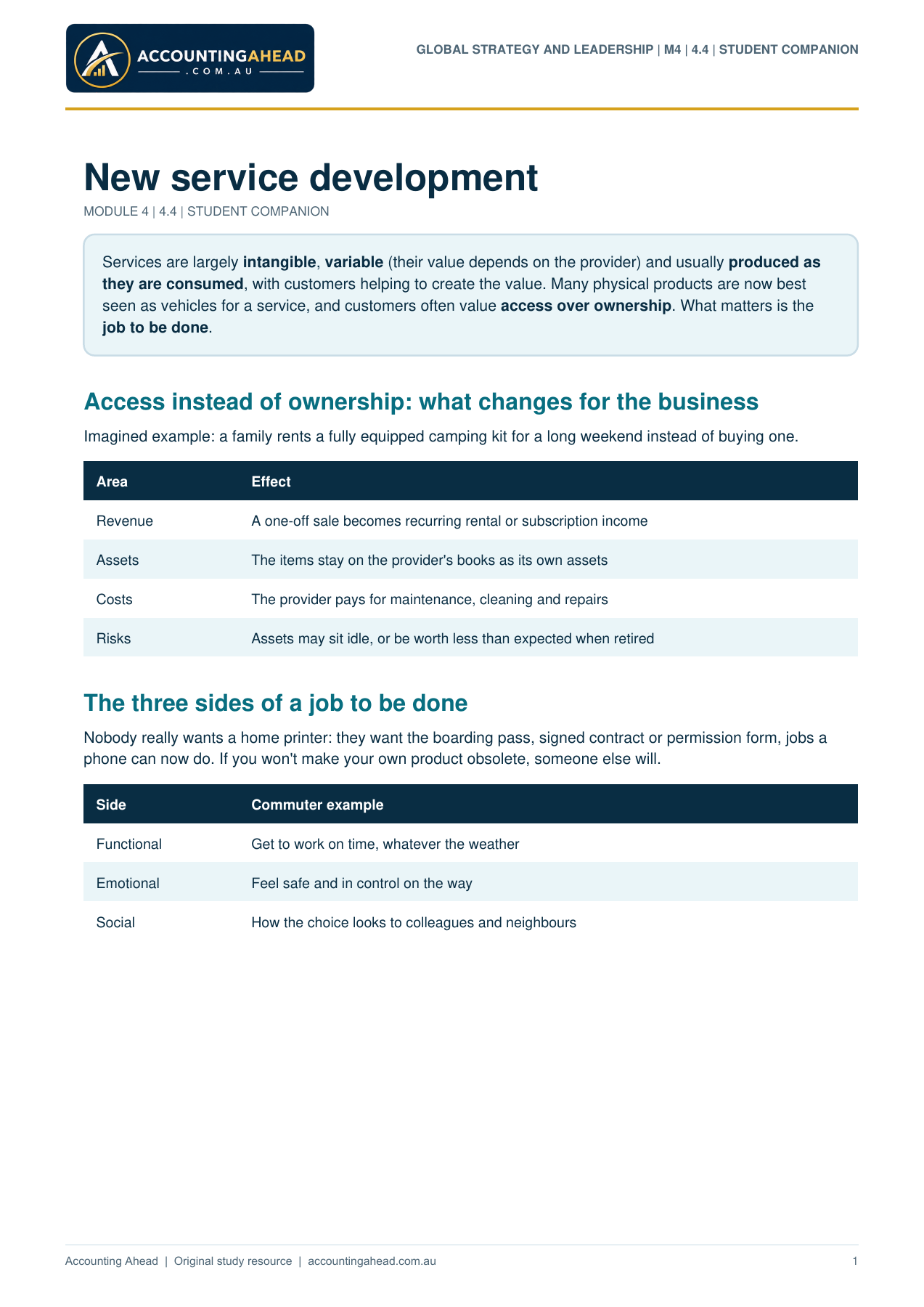
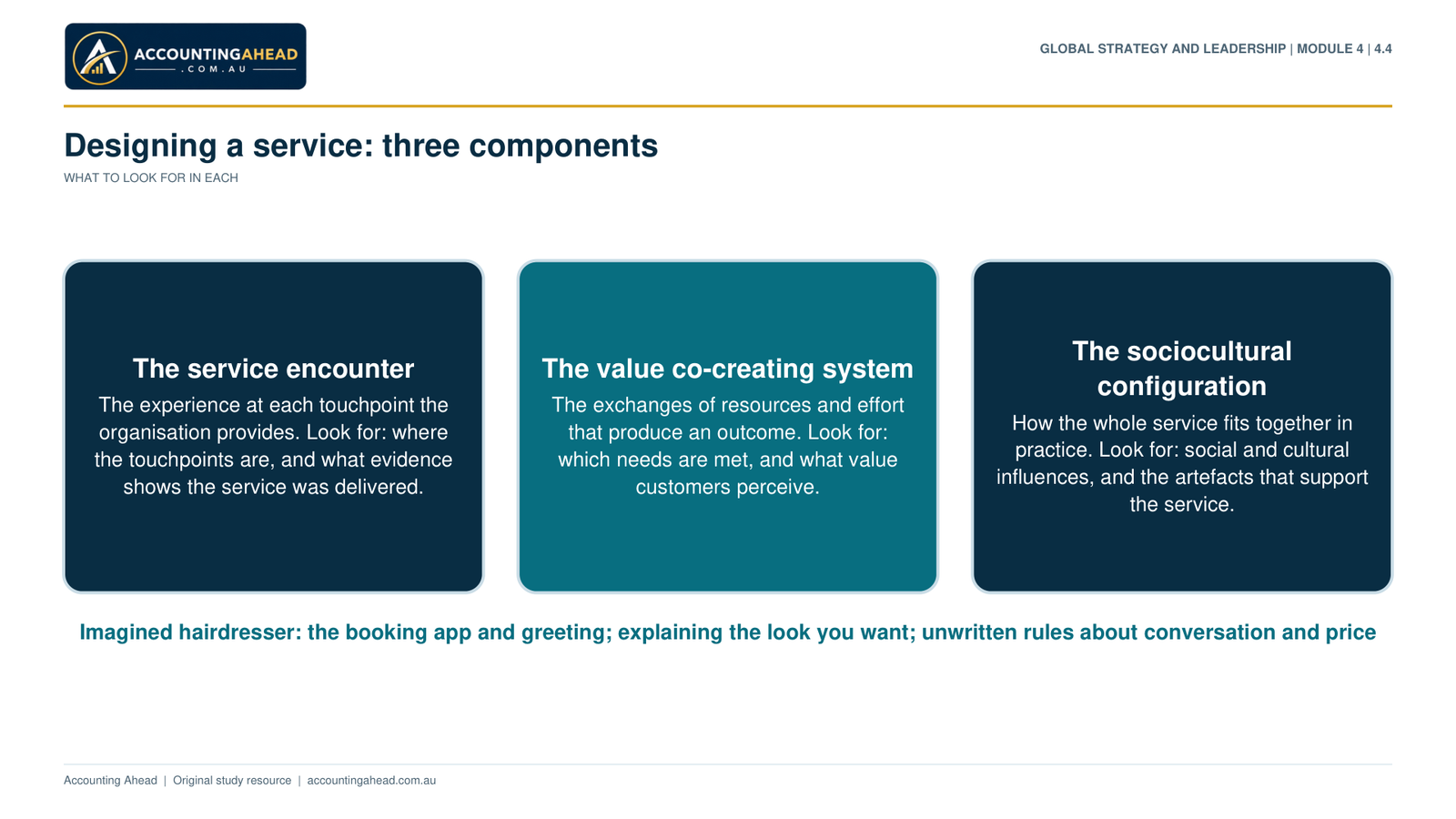
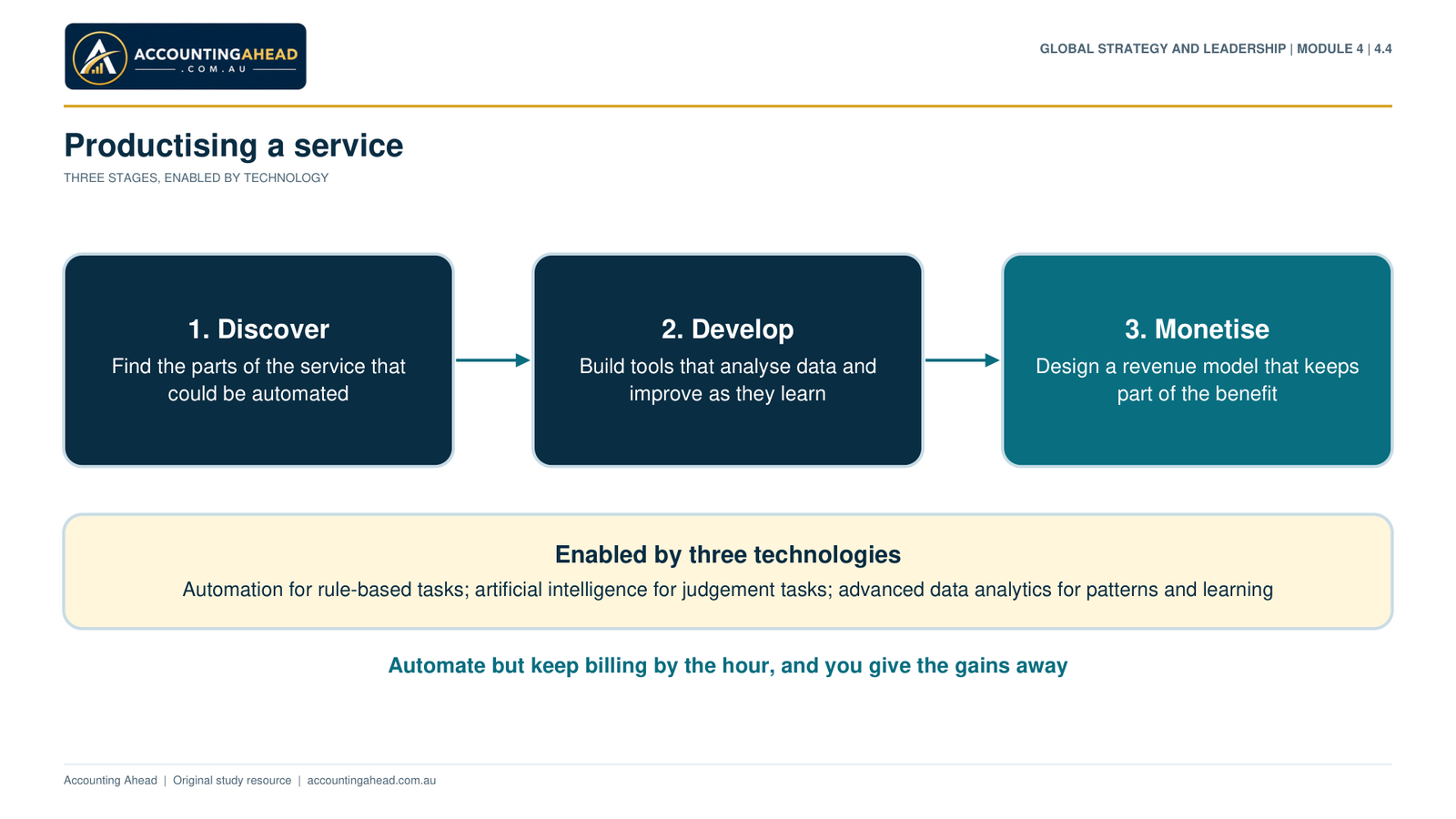
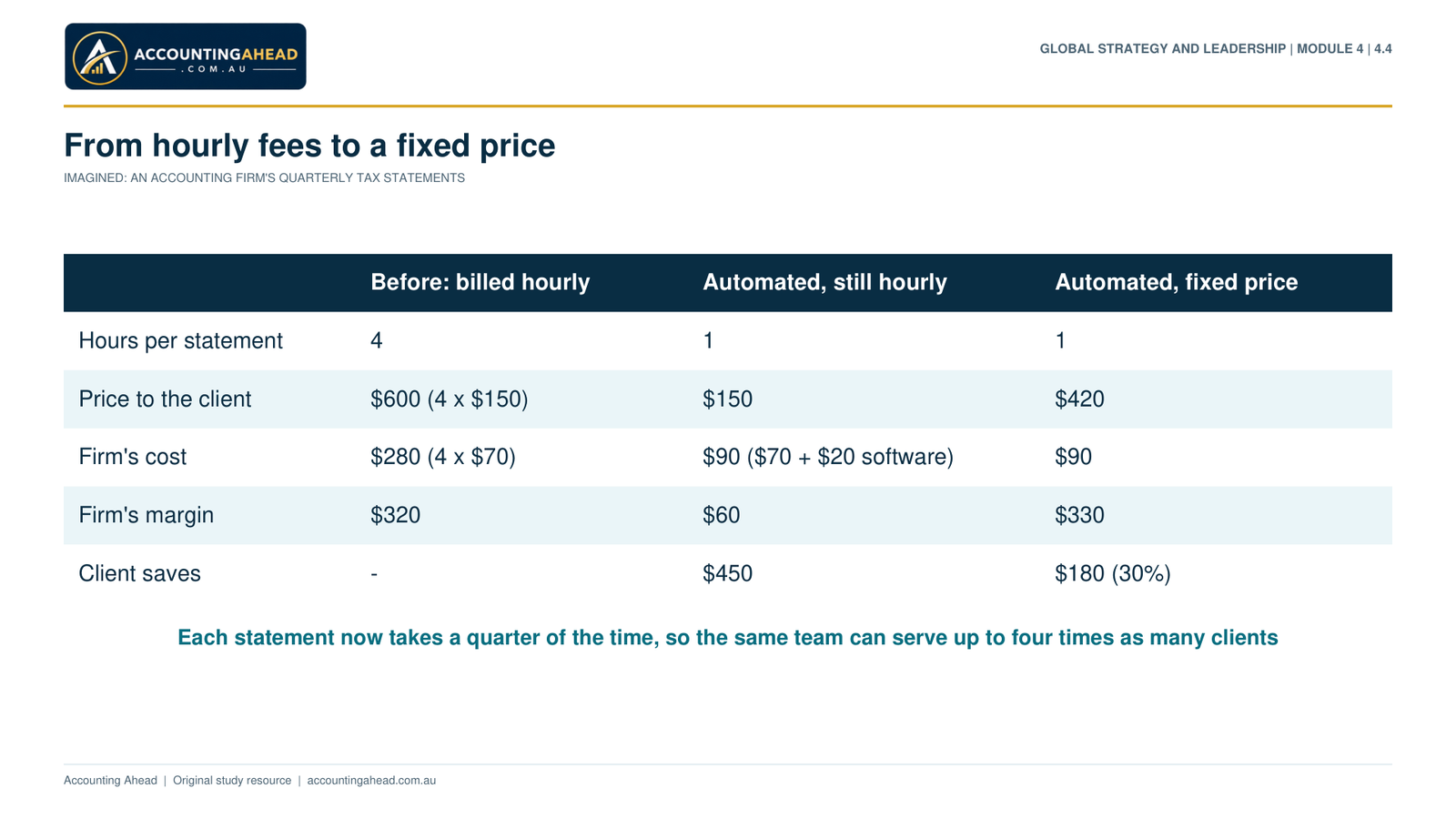
Part 4.4 · New Service Development
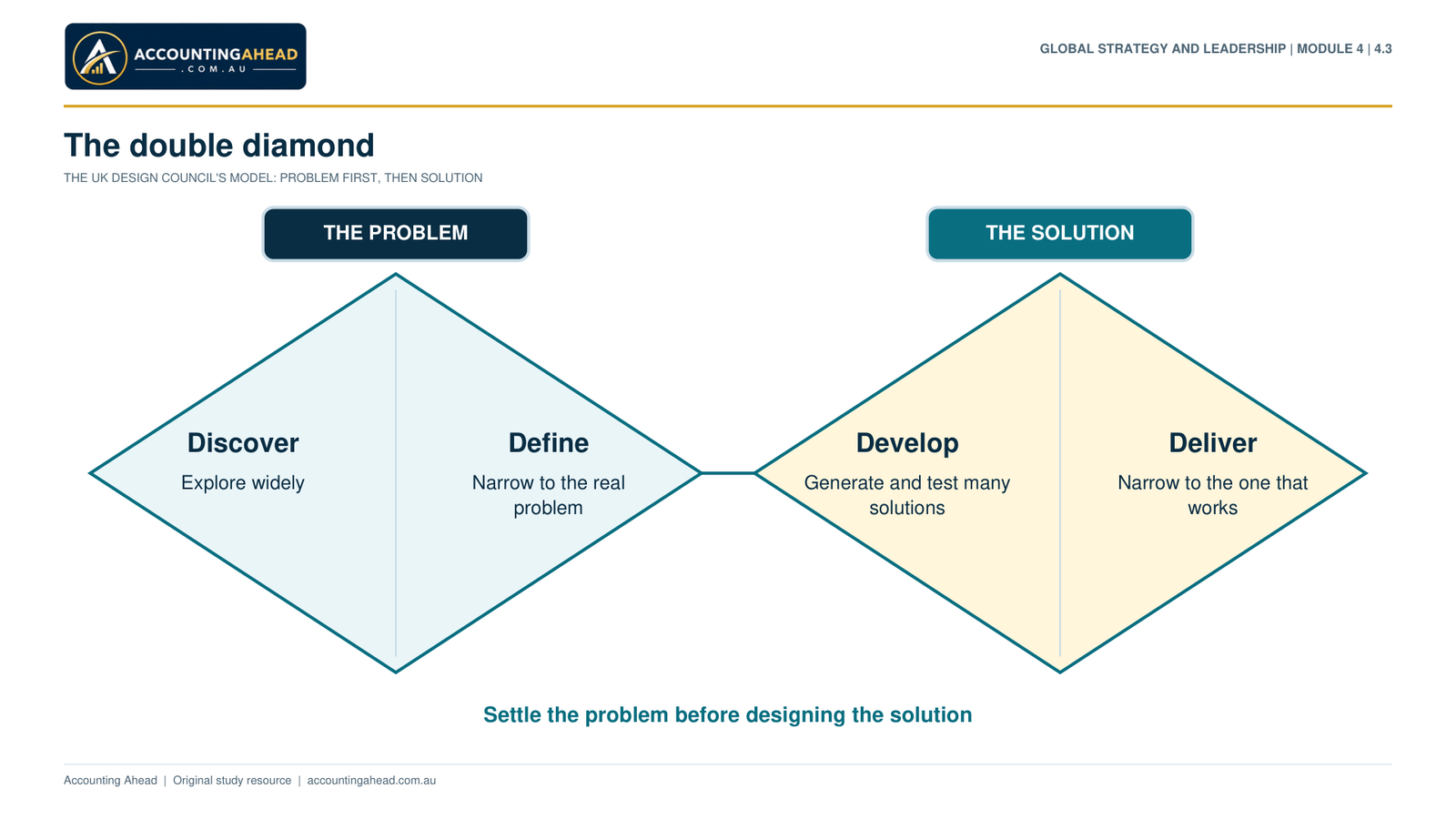
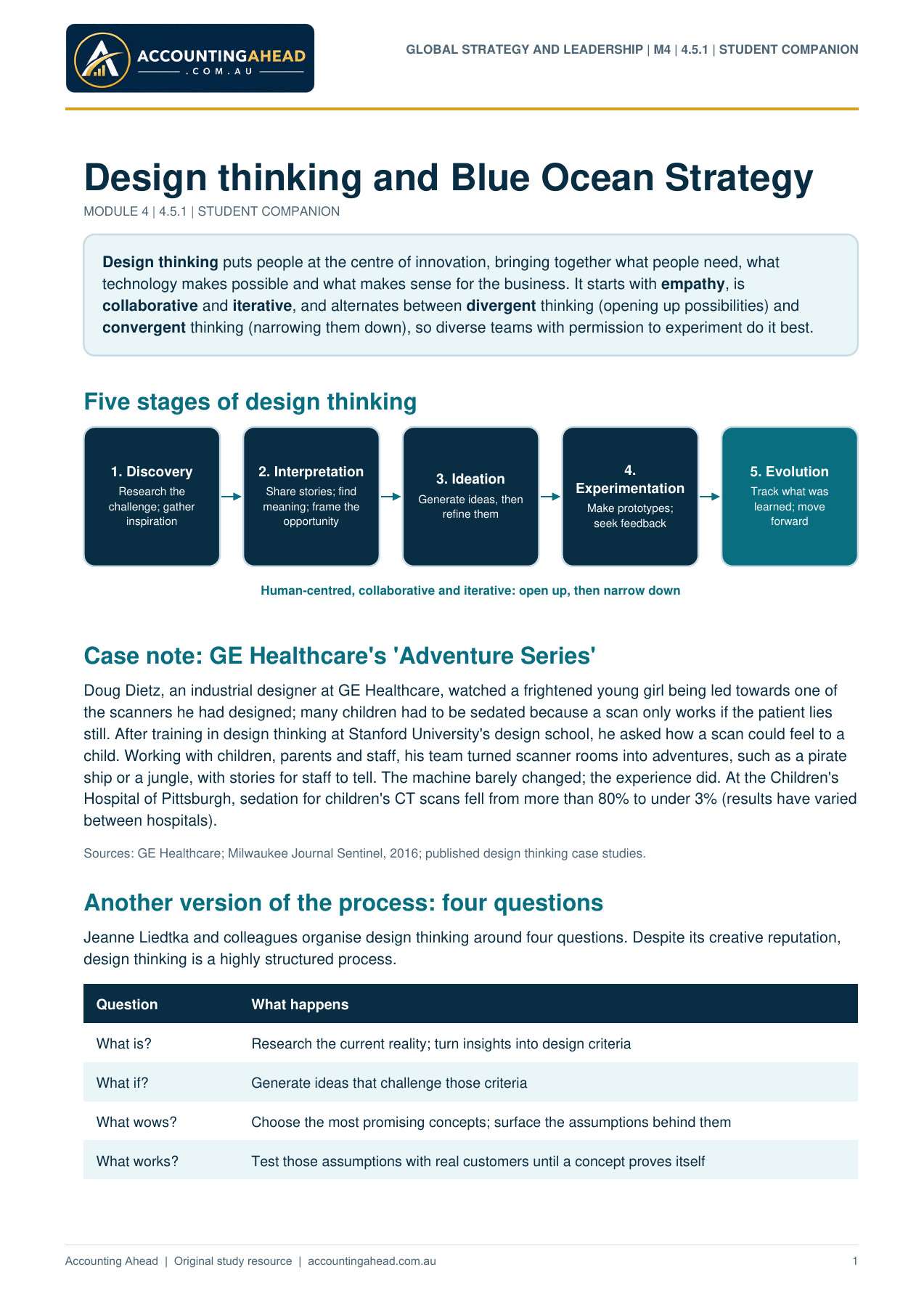
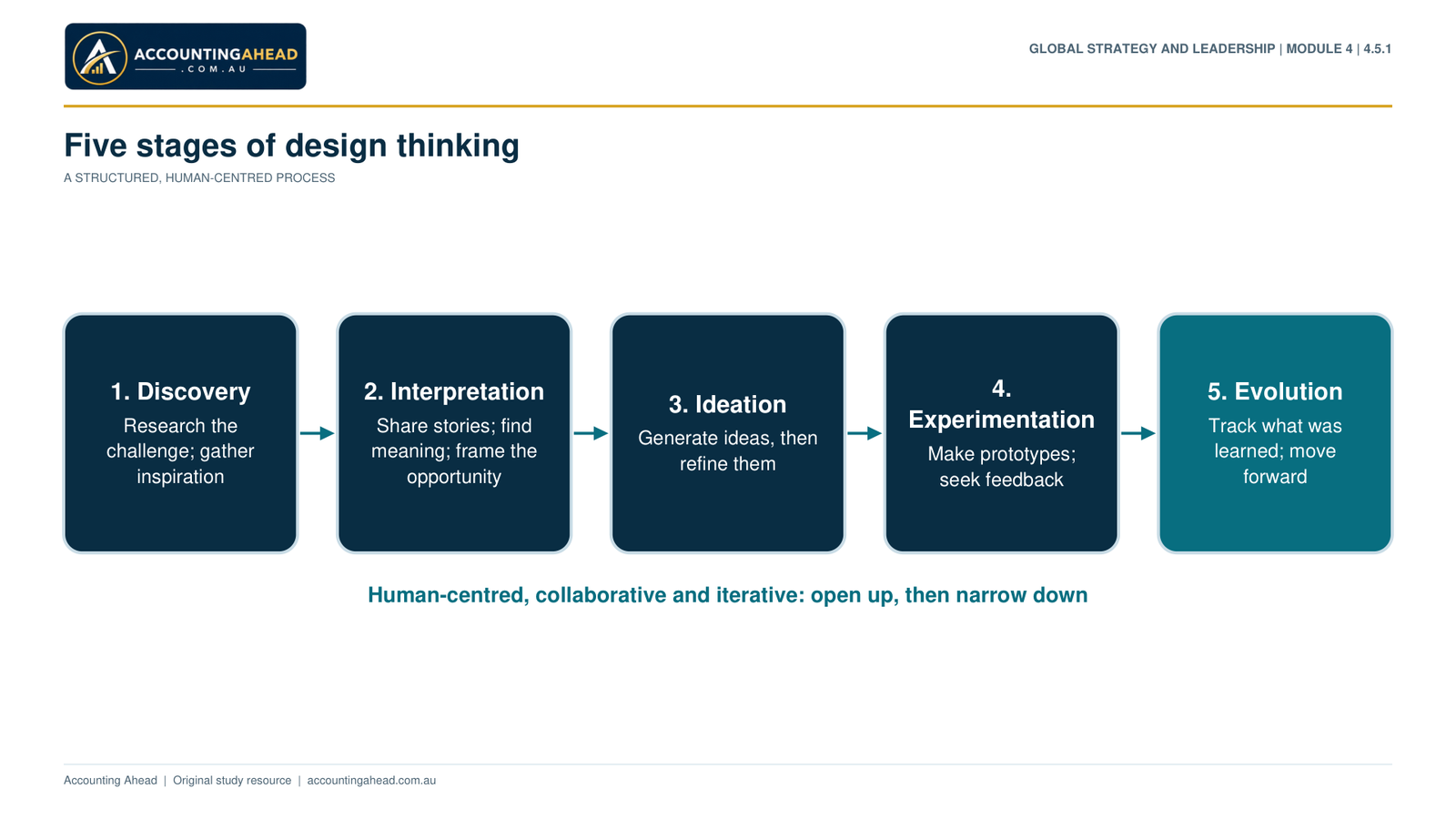
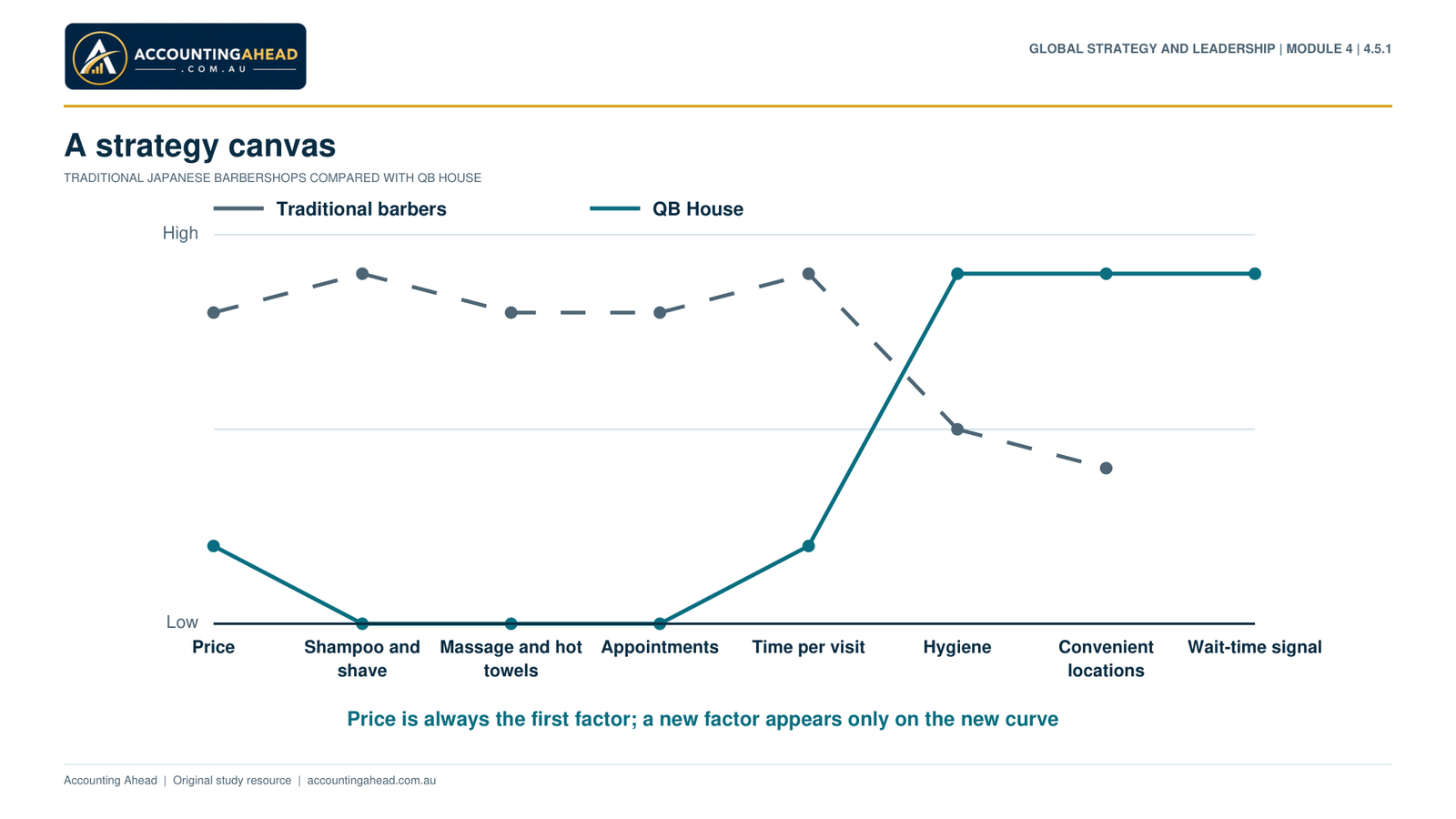
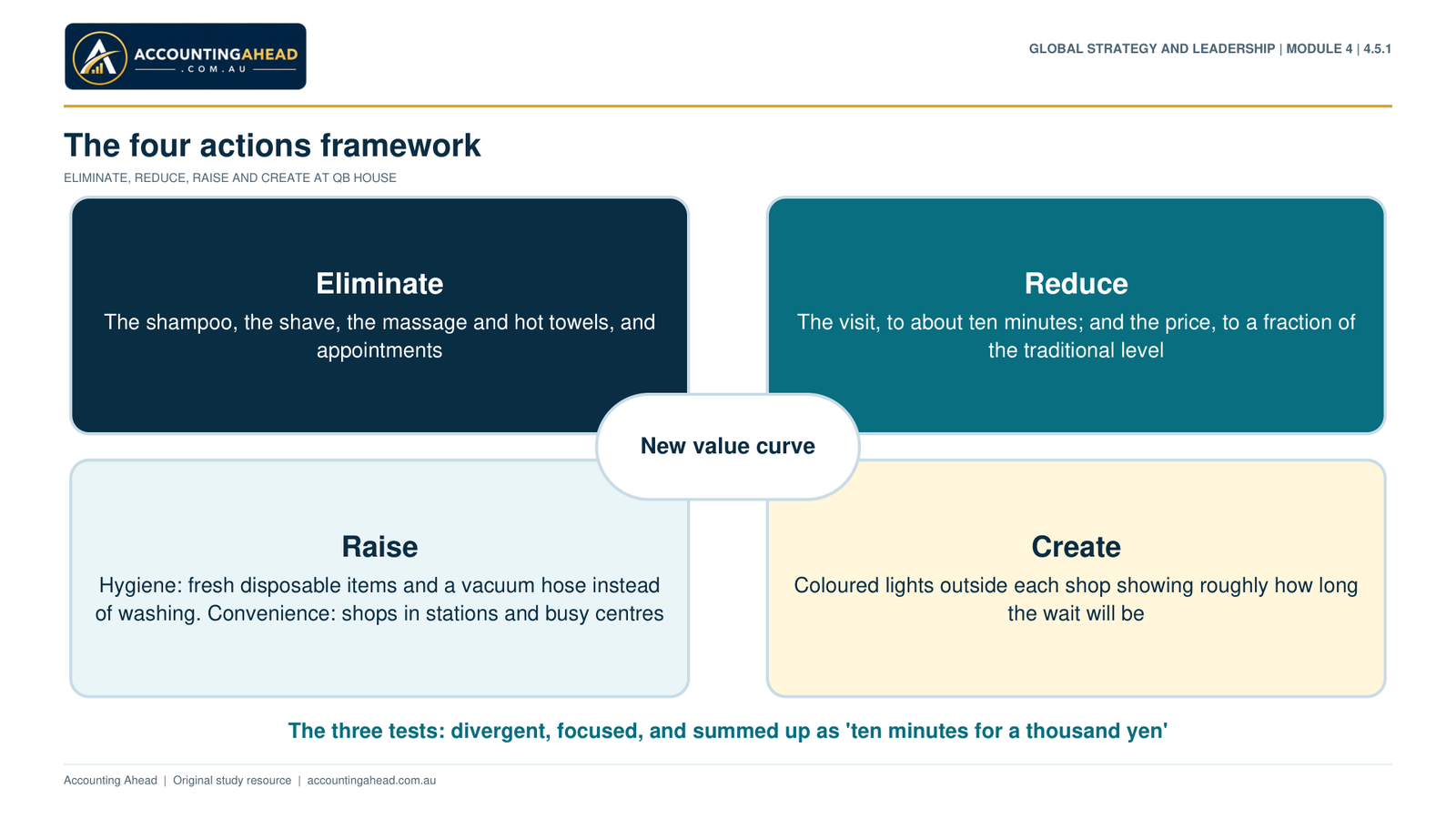
Part 4.5.1 · Design Thinking and Blue Ocean Strategy
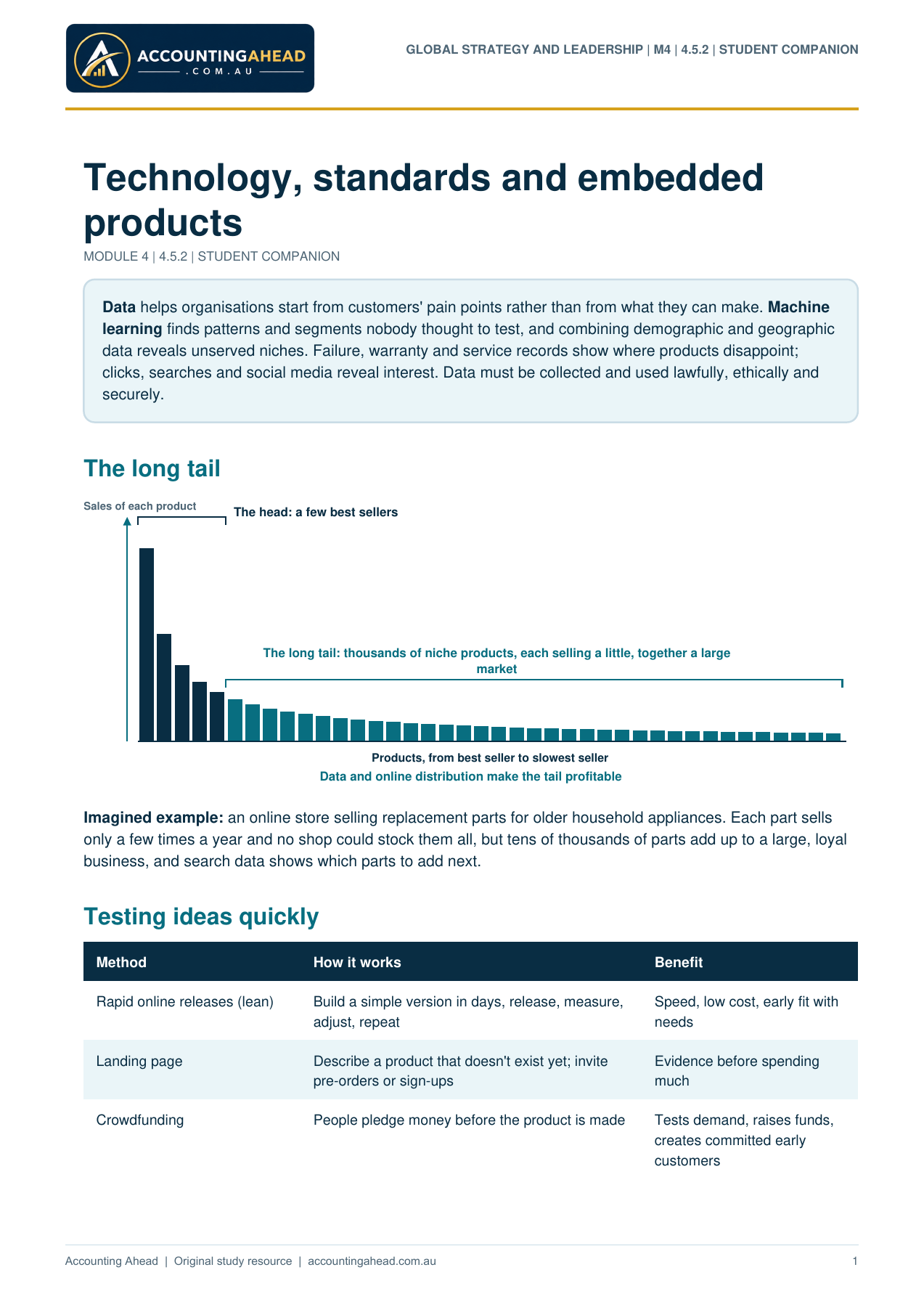
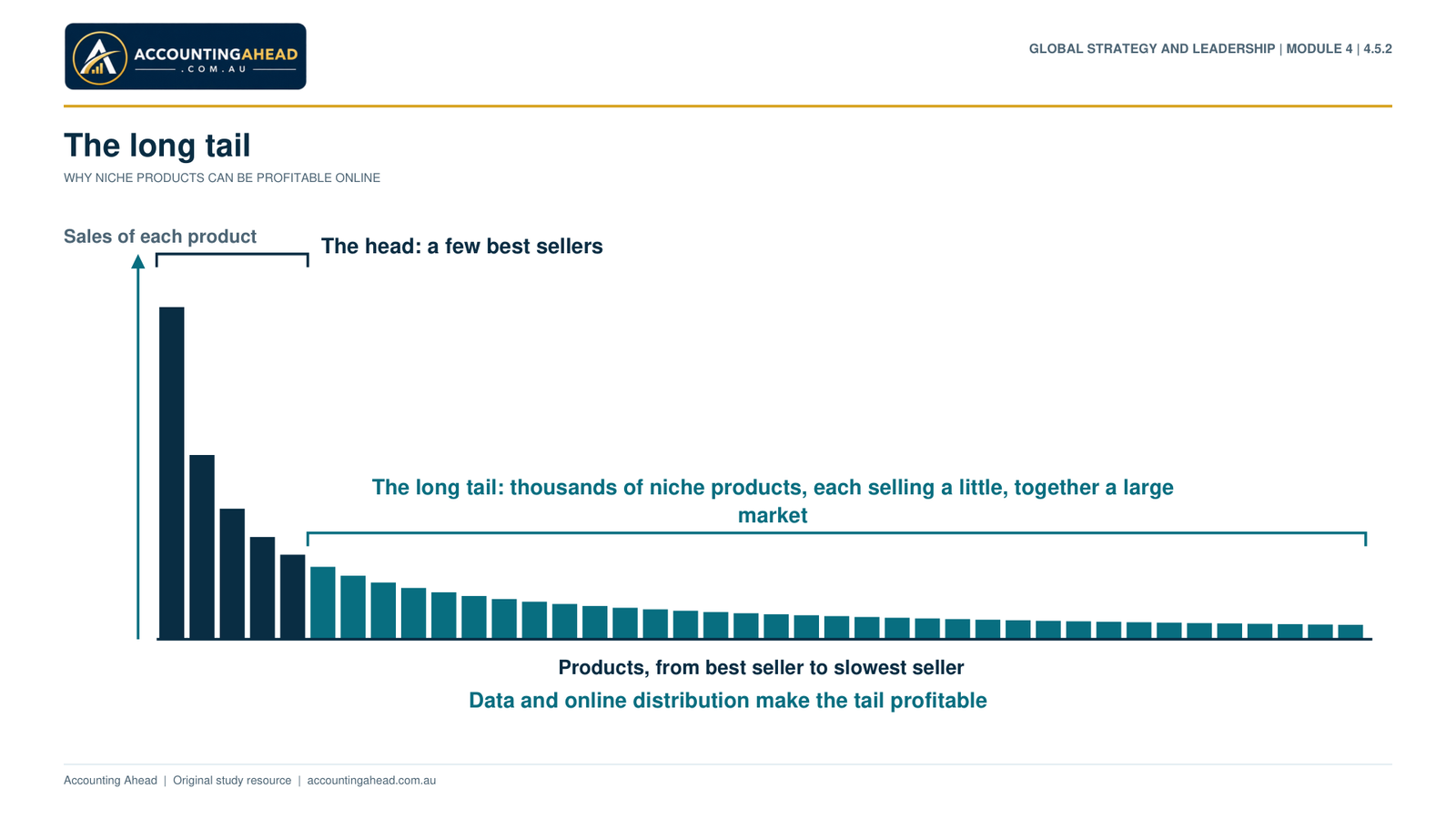
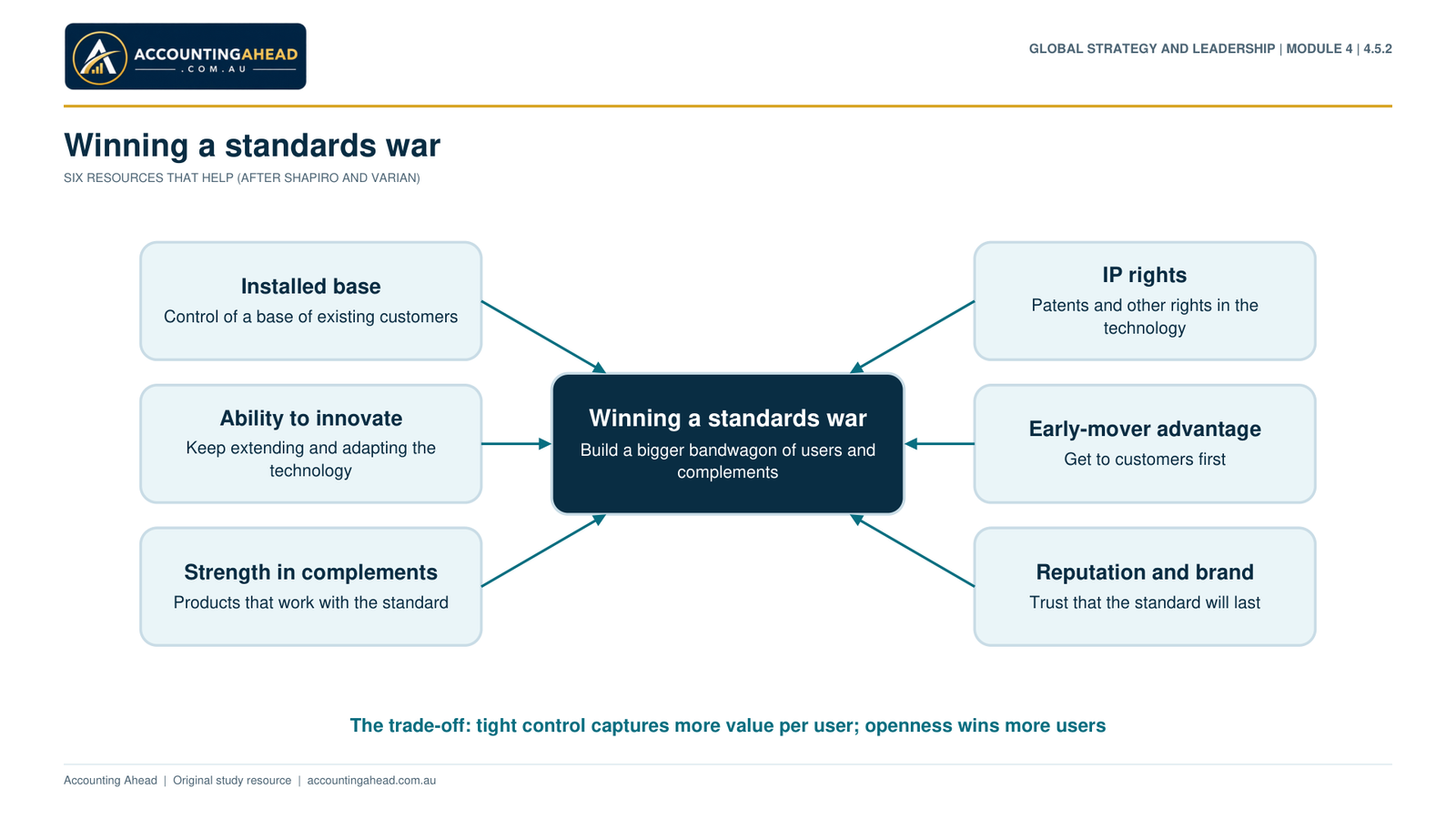
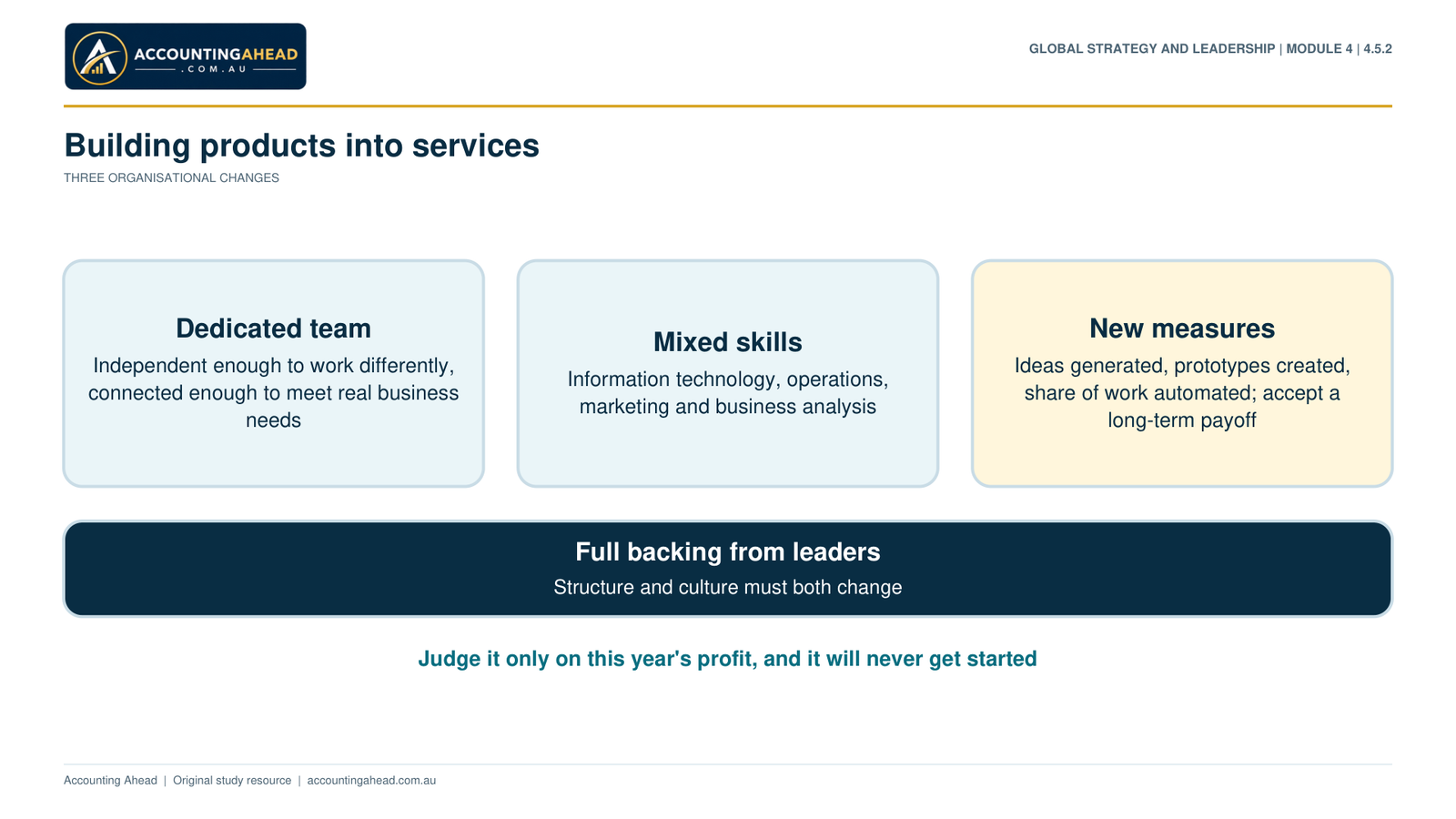
Part 4.5.2 · Technology, Standards and Embedded Products
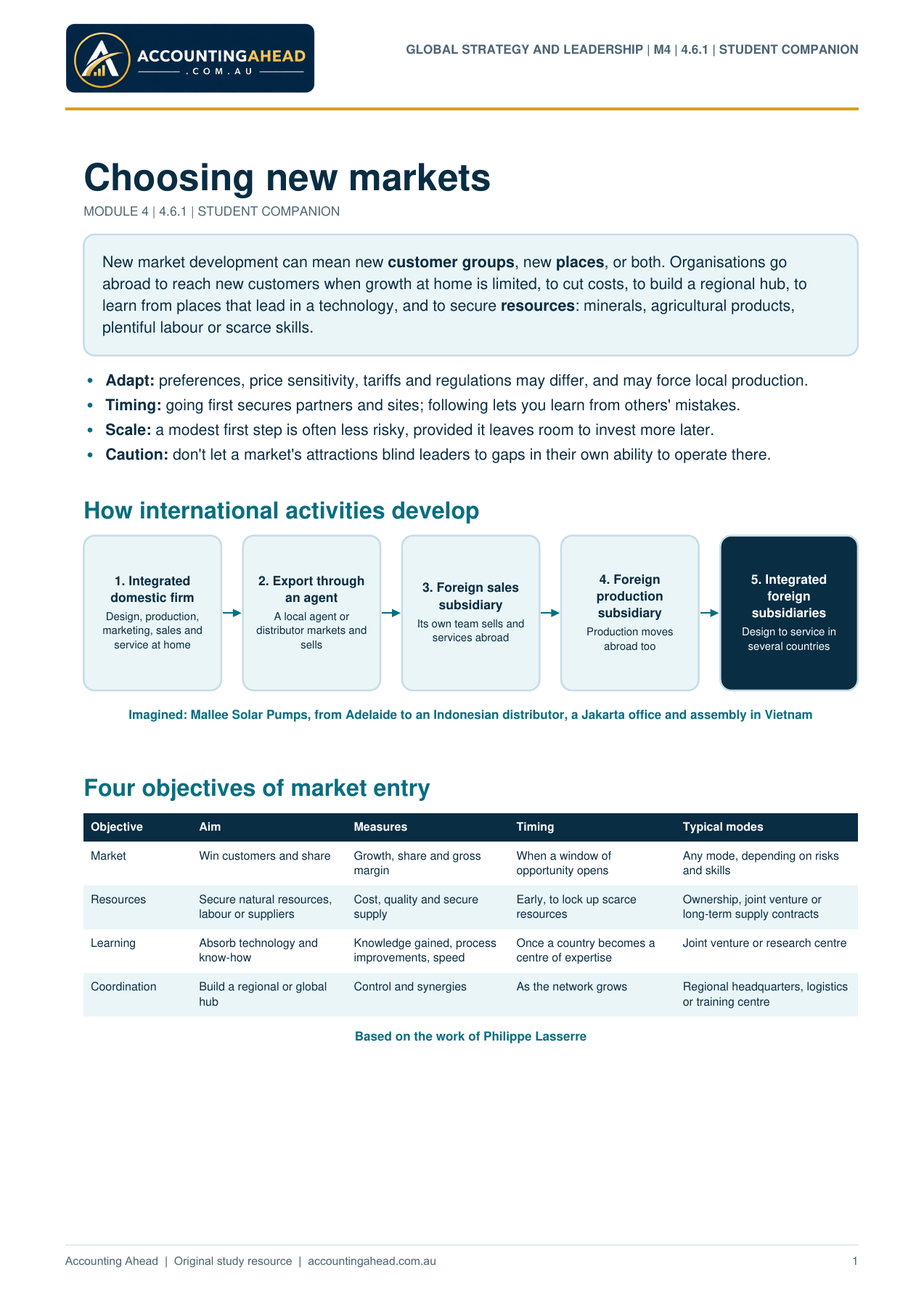
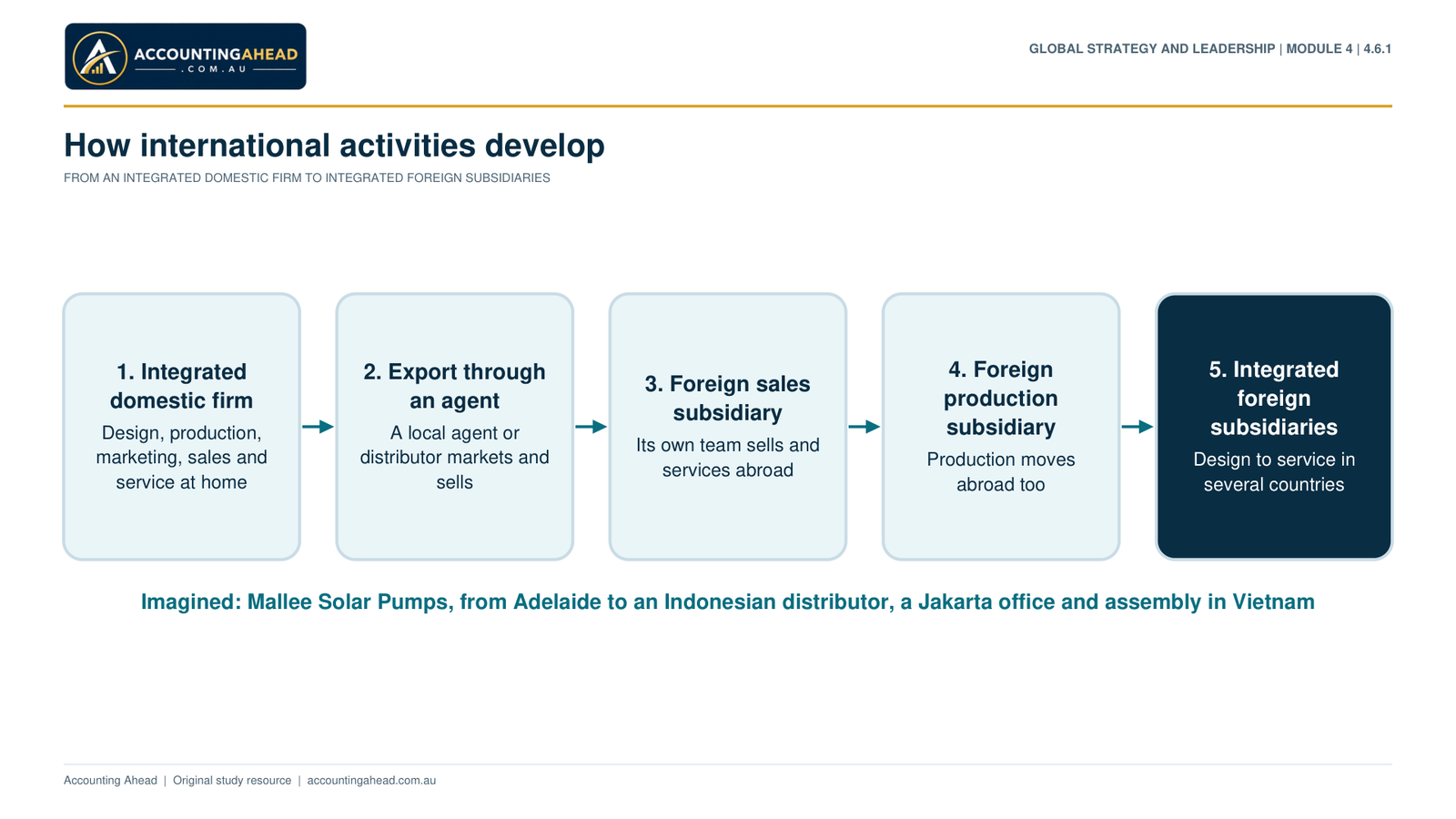
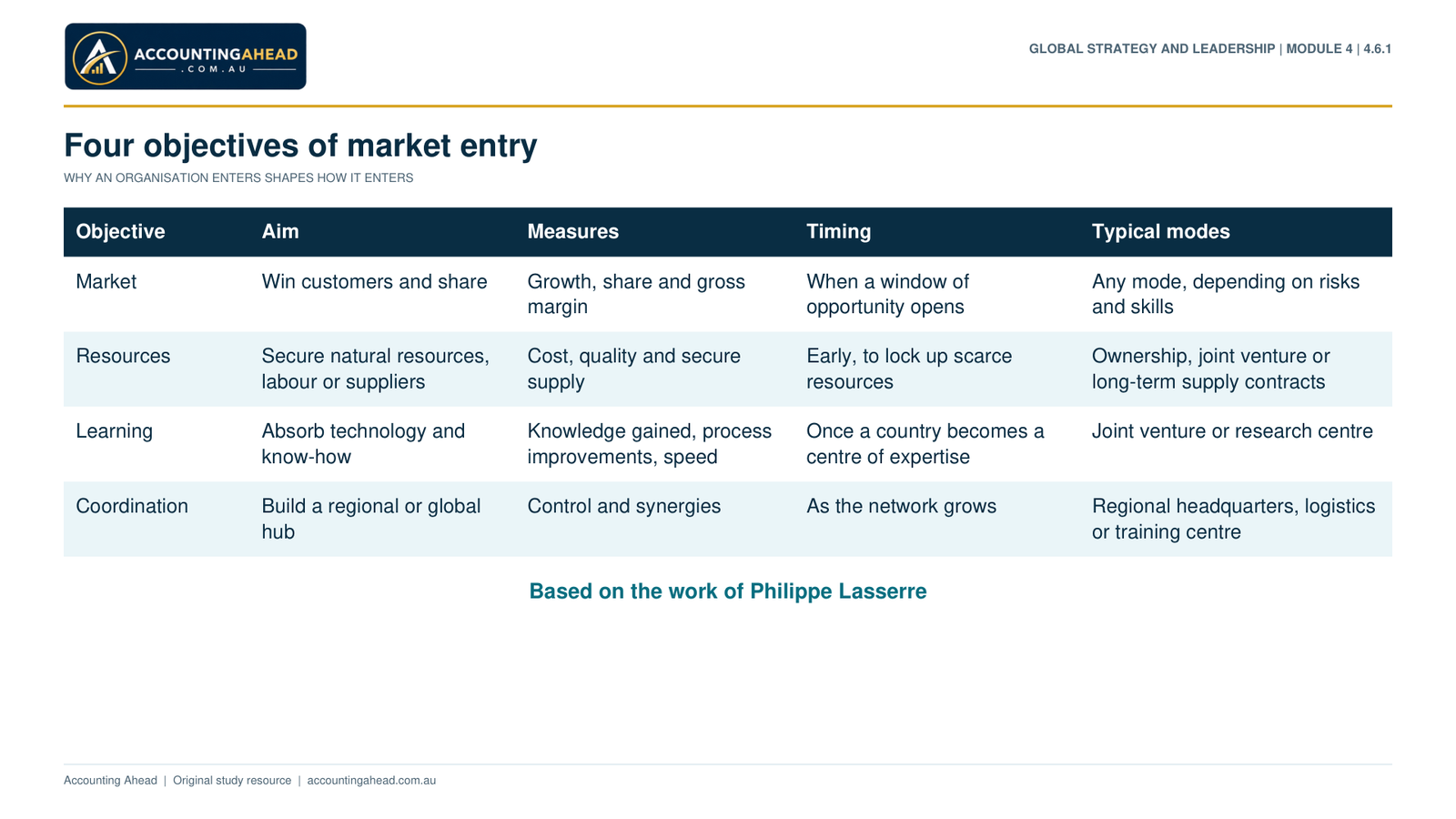
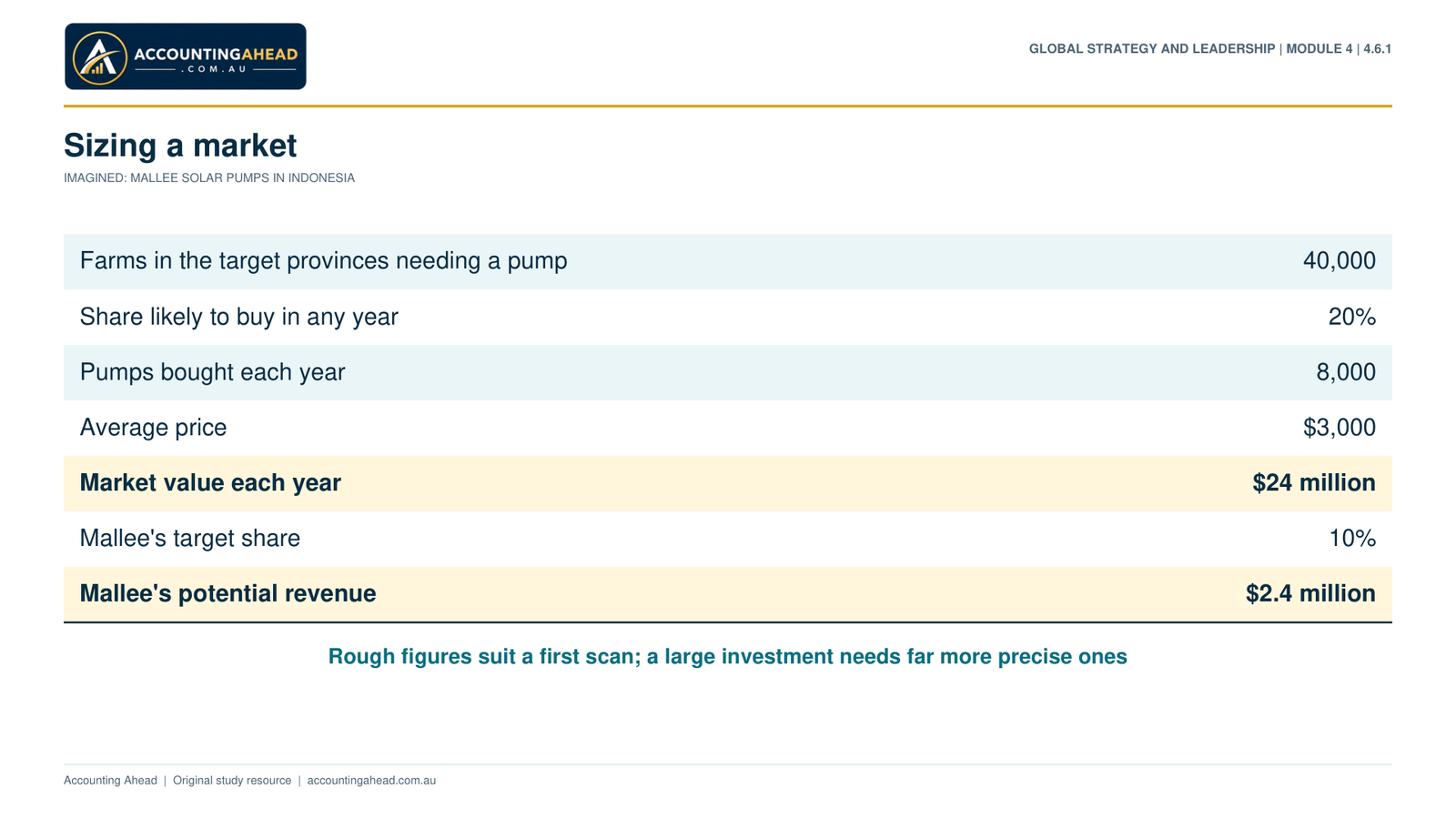
Part 4.6.1 · Choosing New Markets
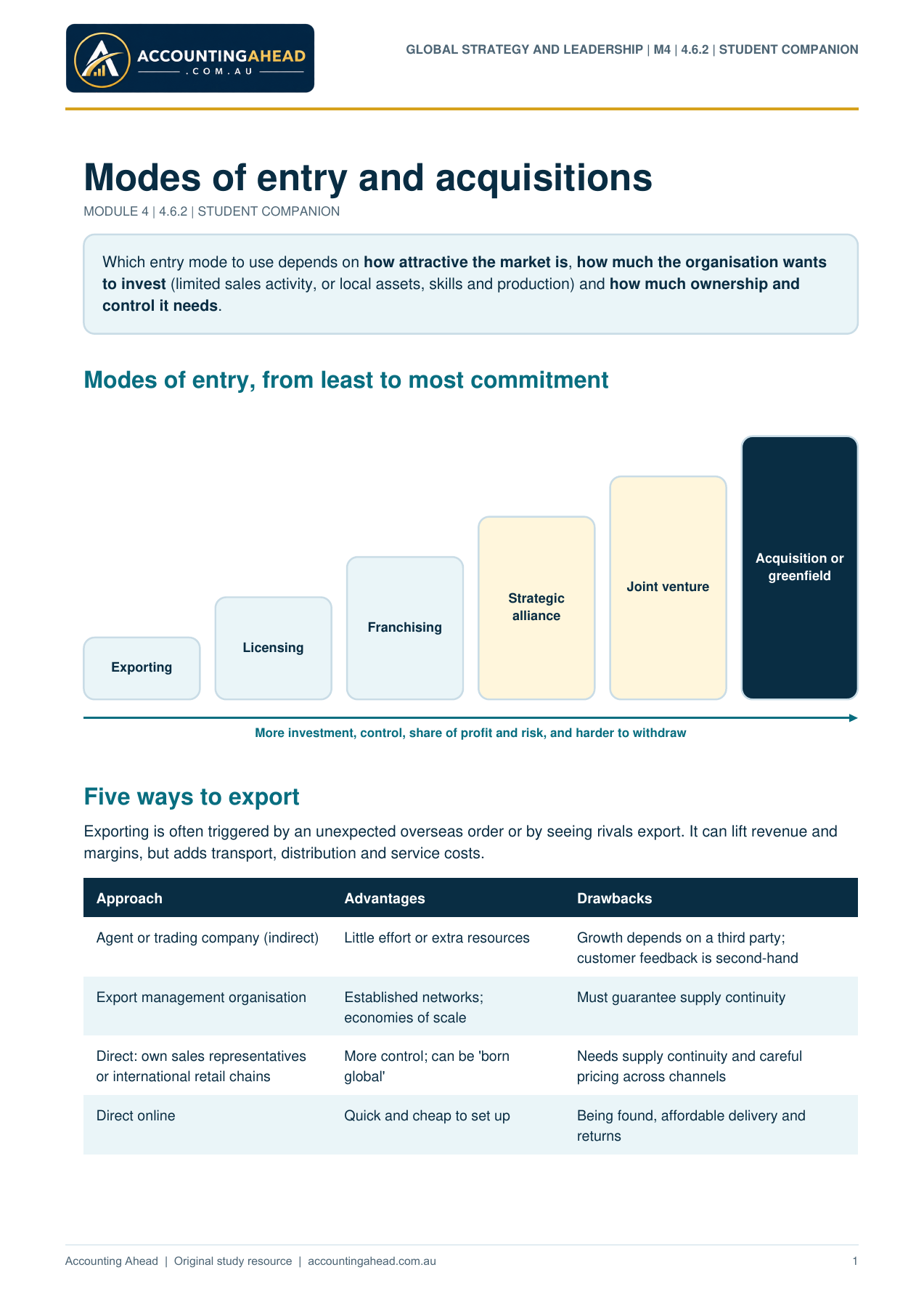
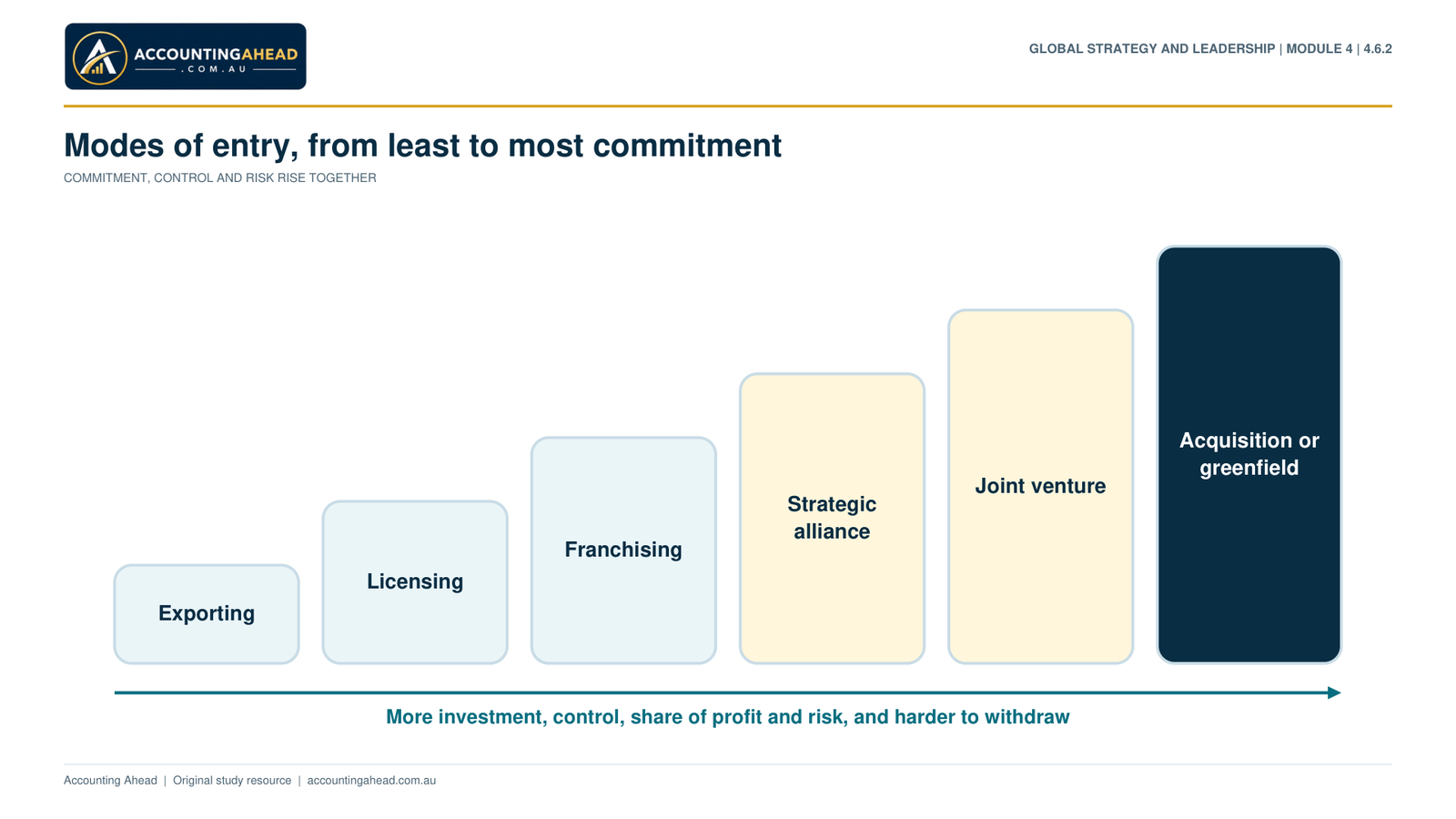
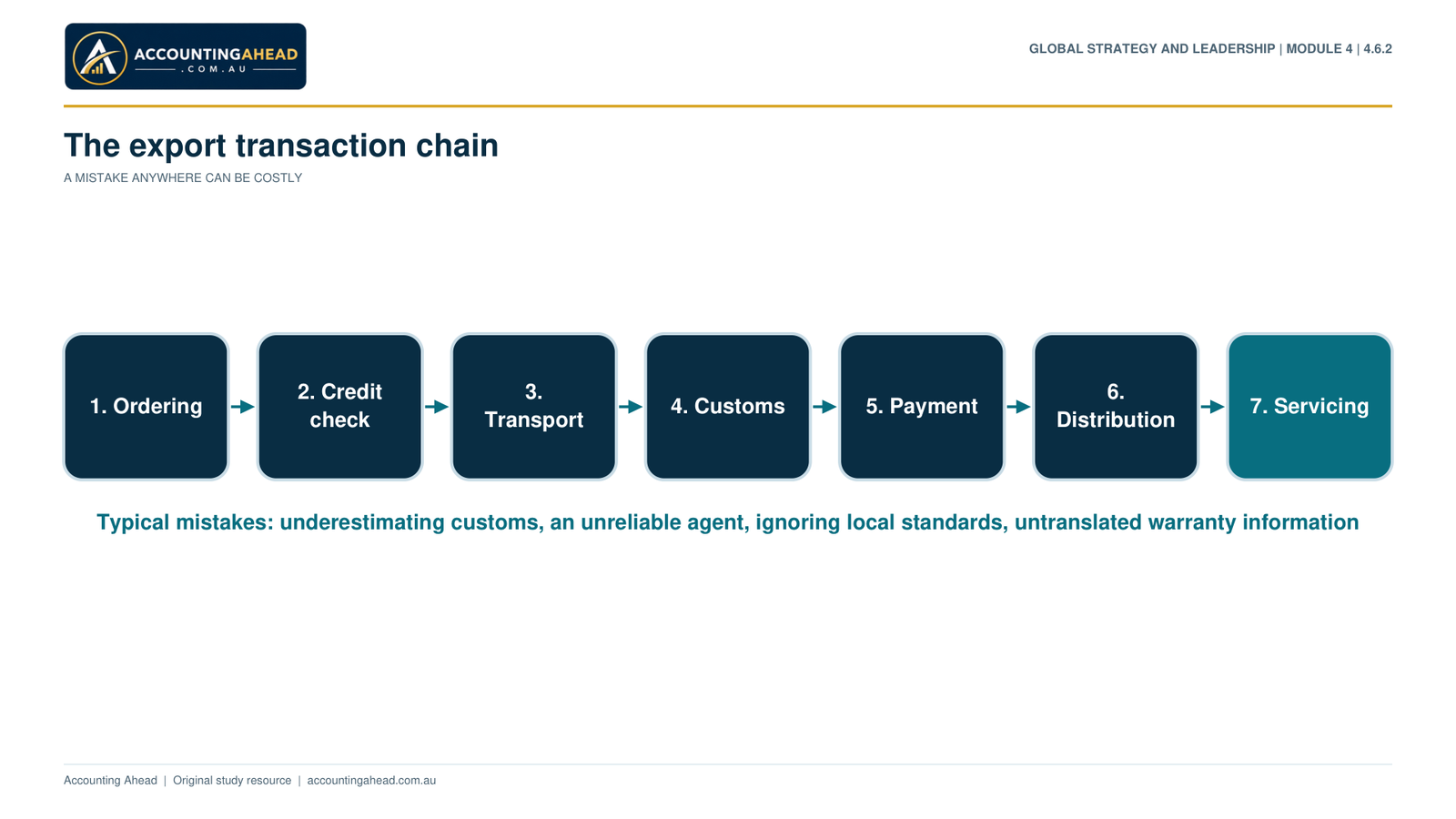
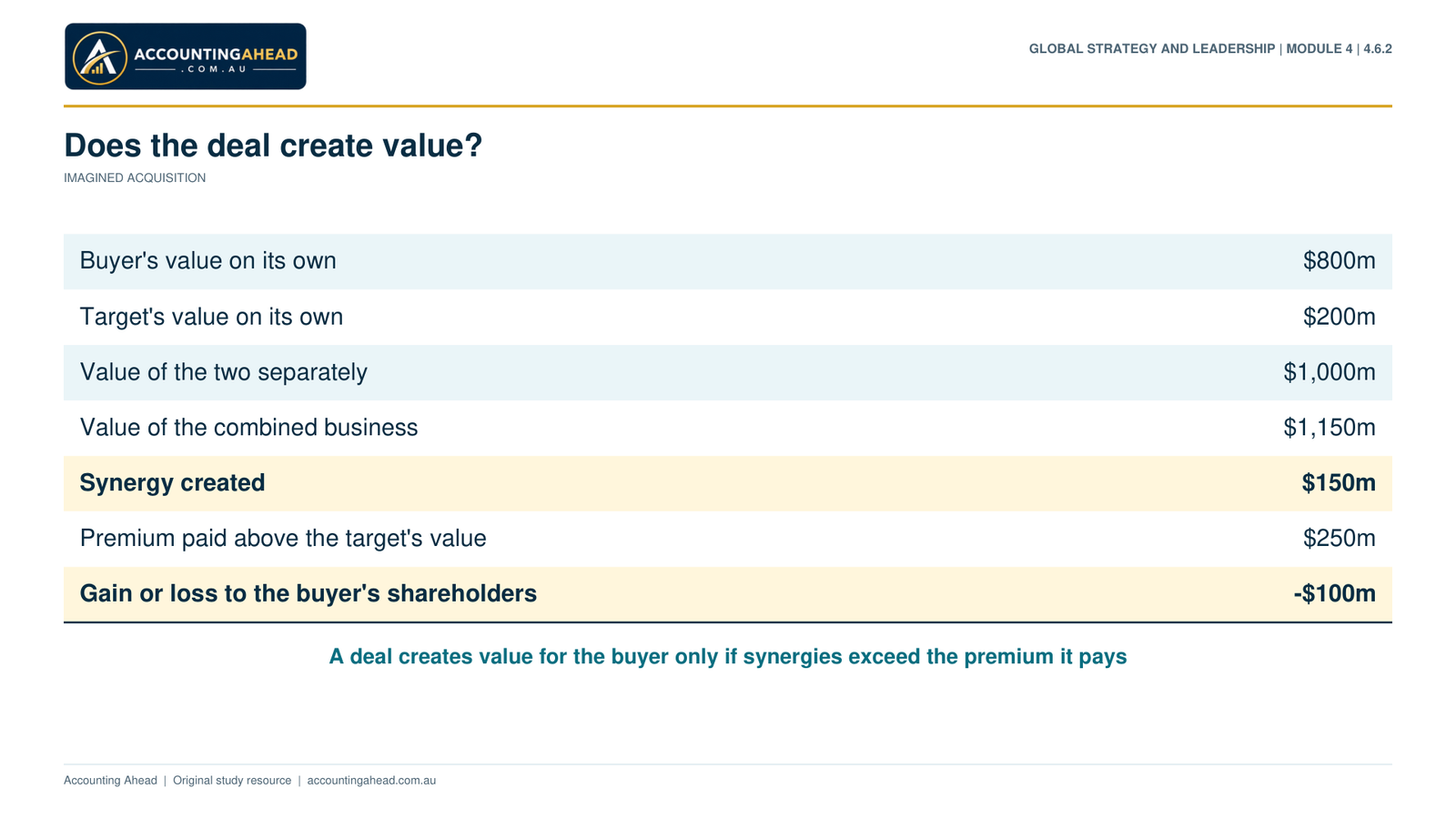
Part 4.6.2 · Modes of Entry and Acquisitions
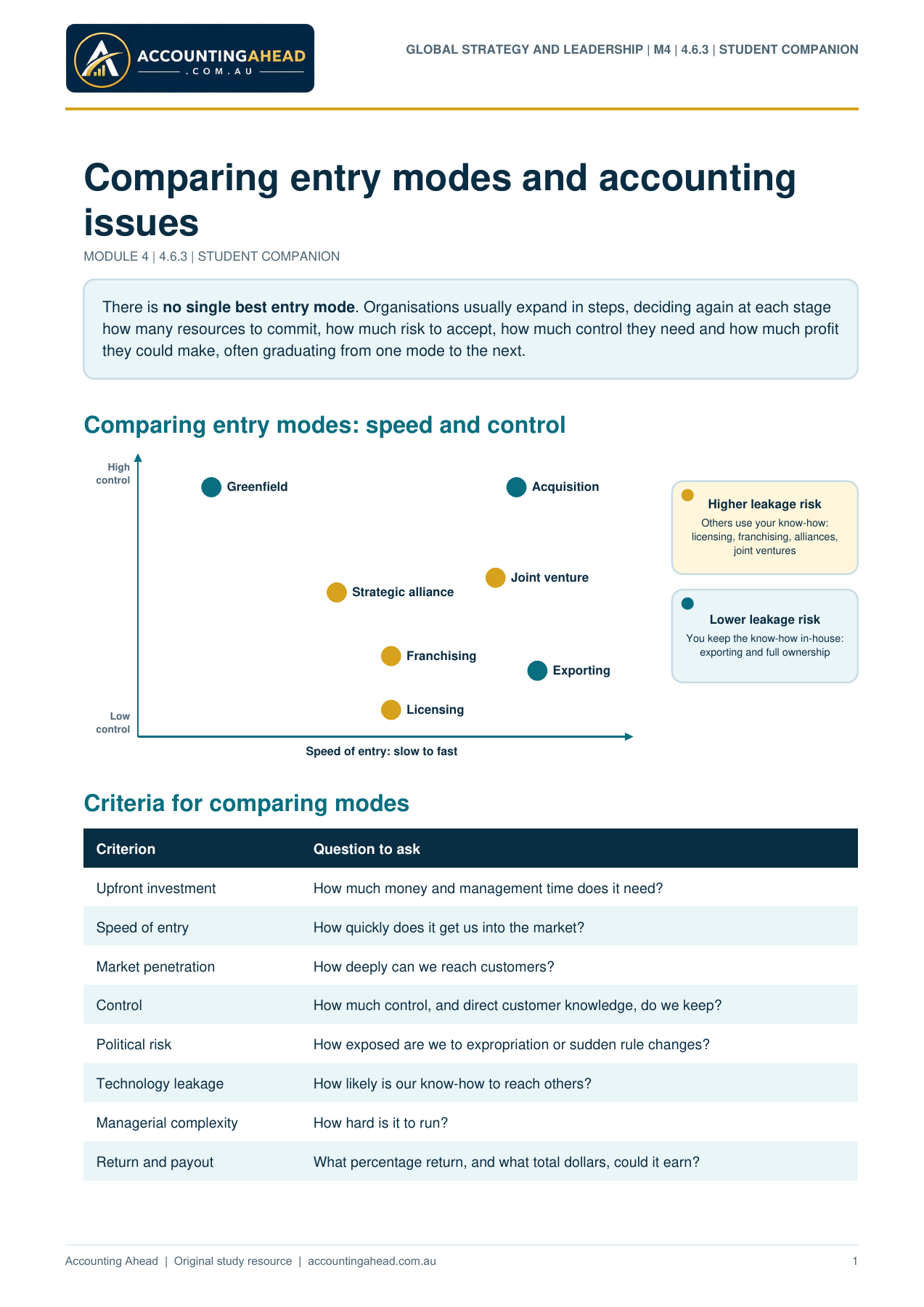
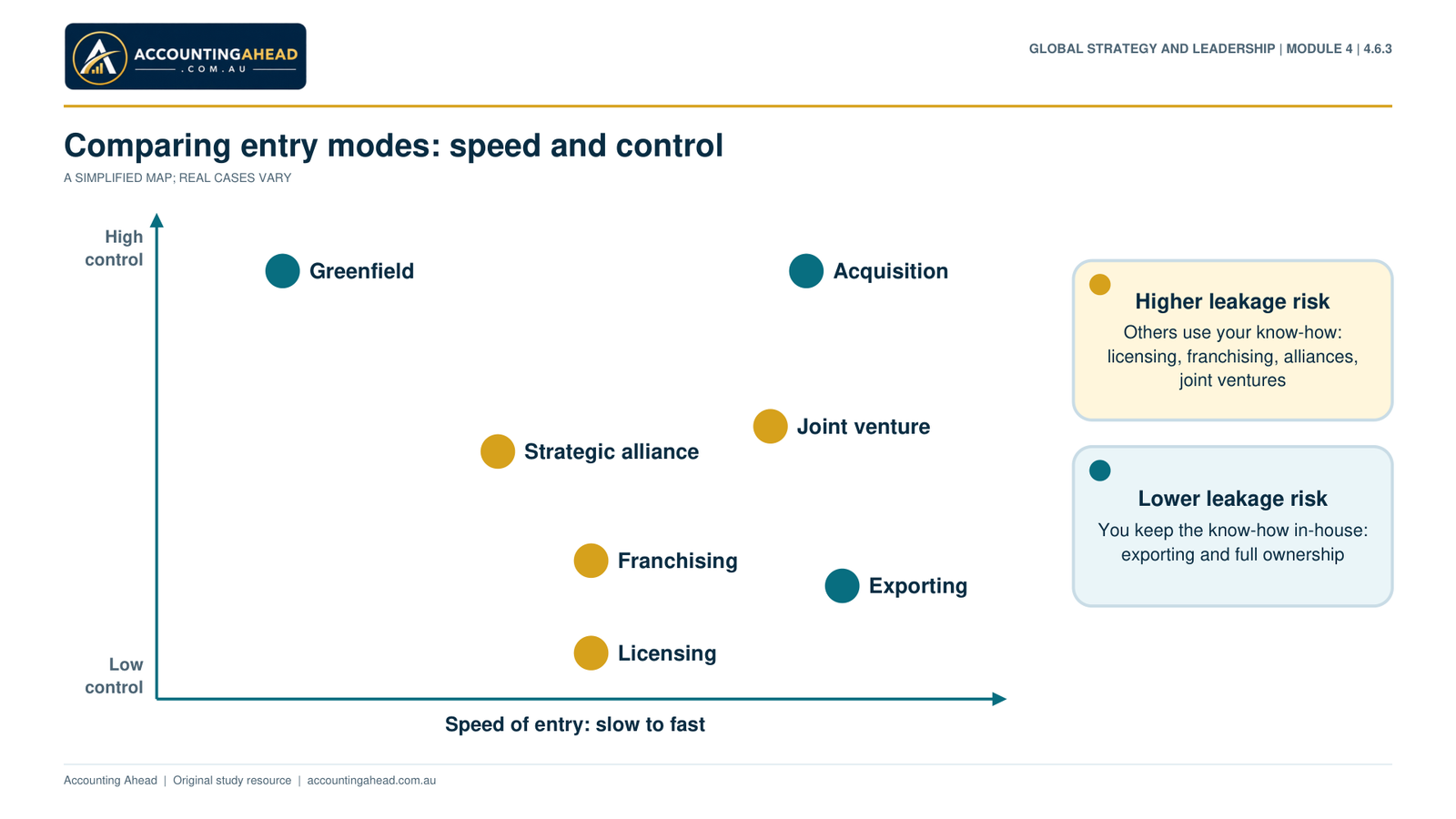
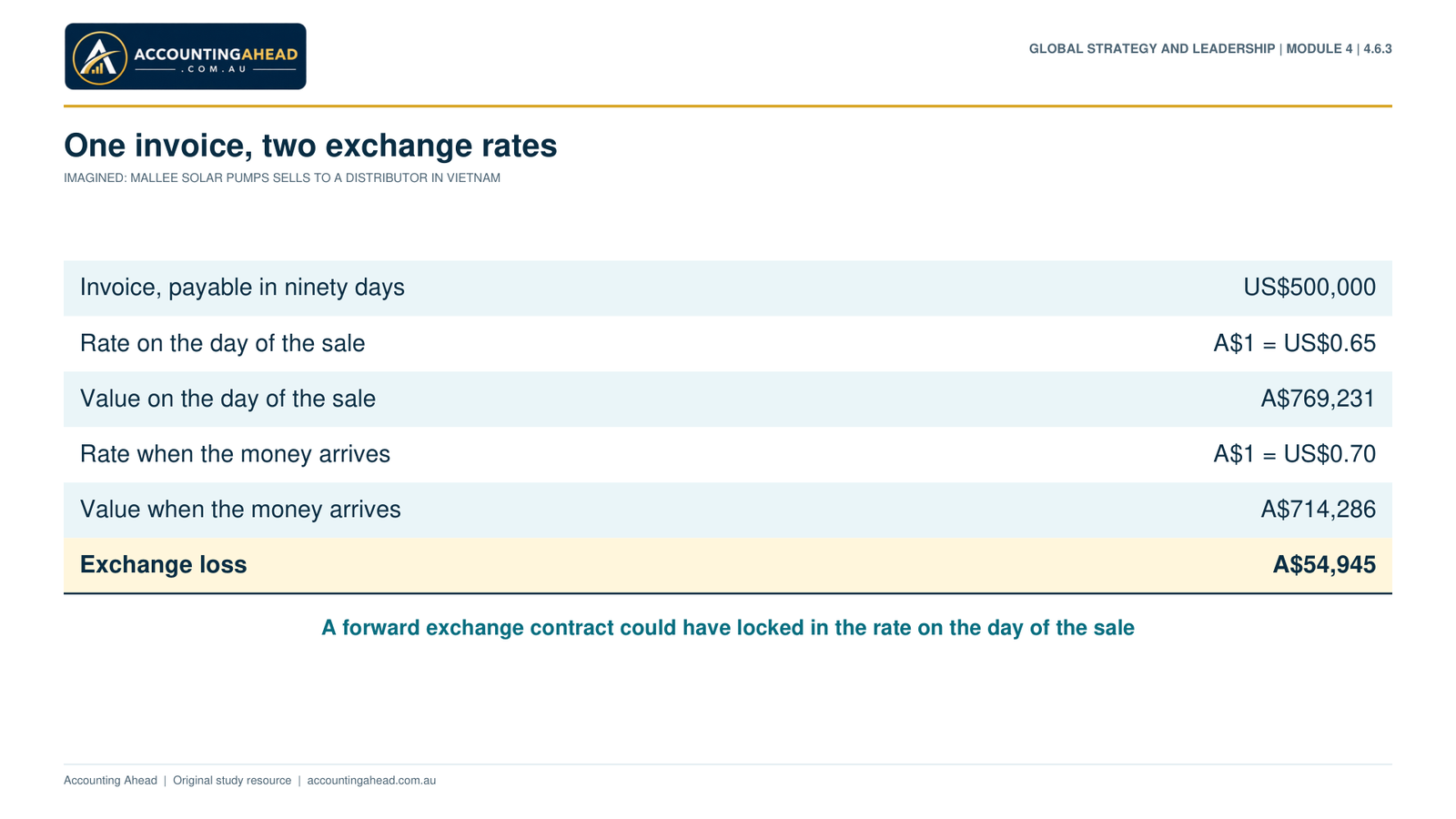
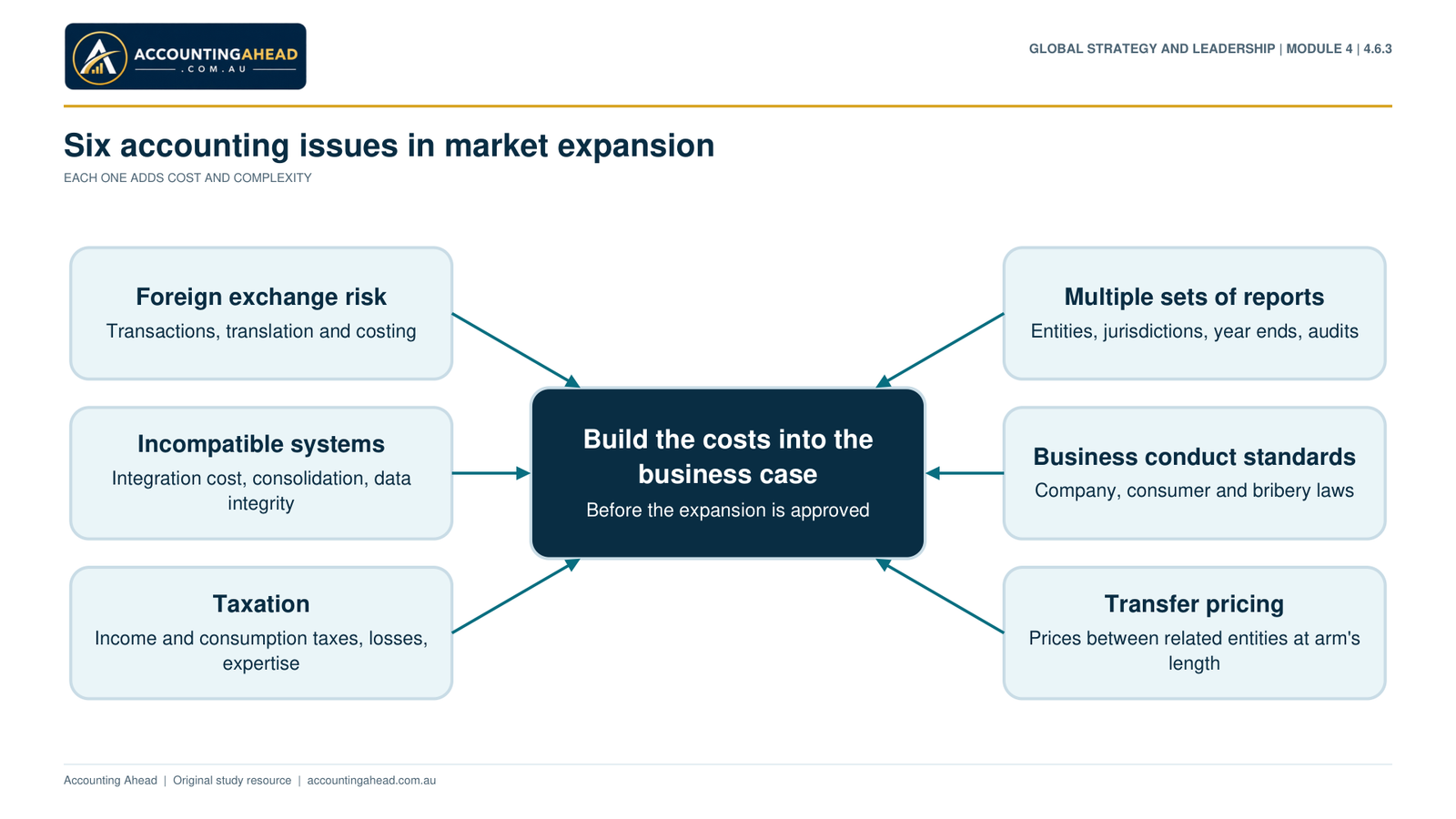
Part 4.6.3 · Comparing Entry Modes and Accounting Issues
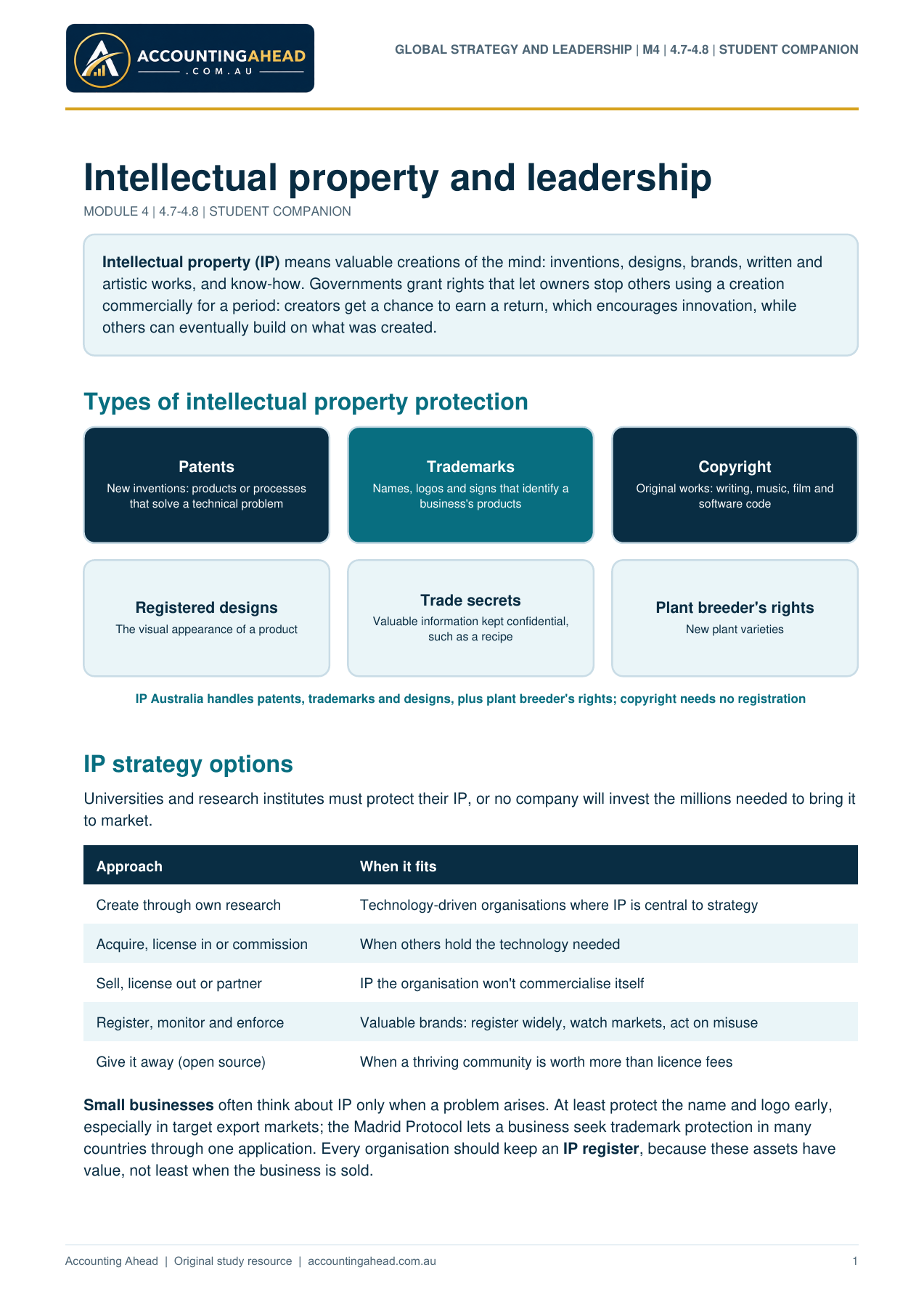
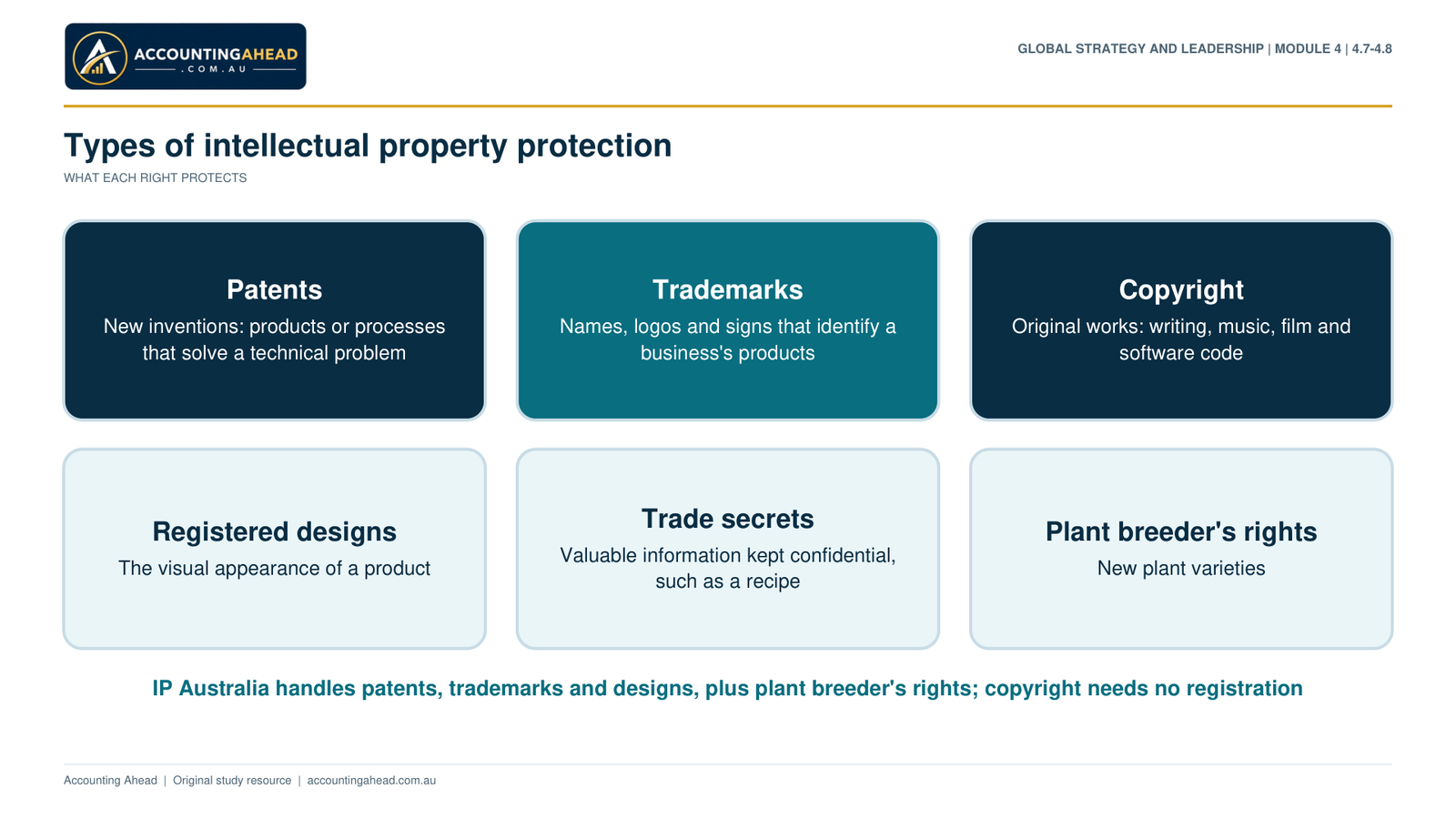
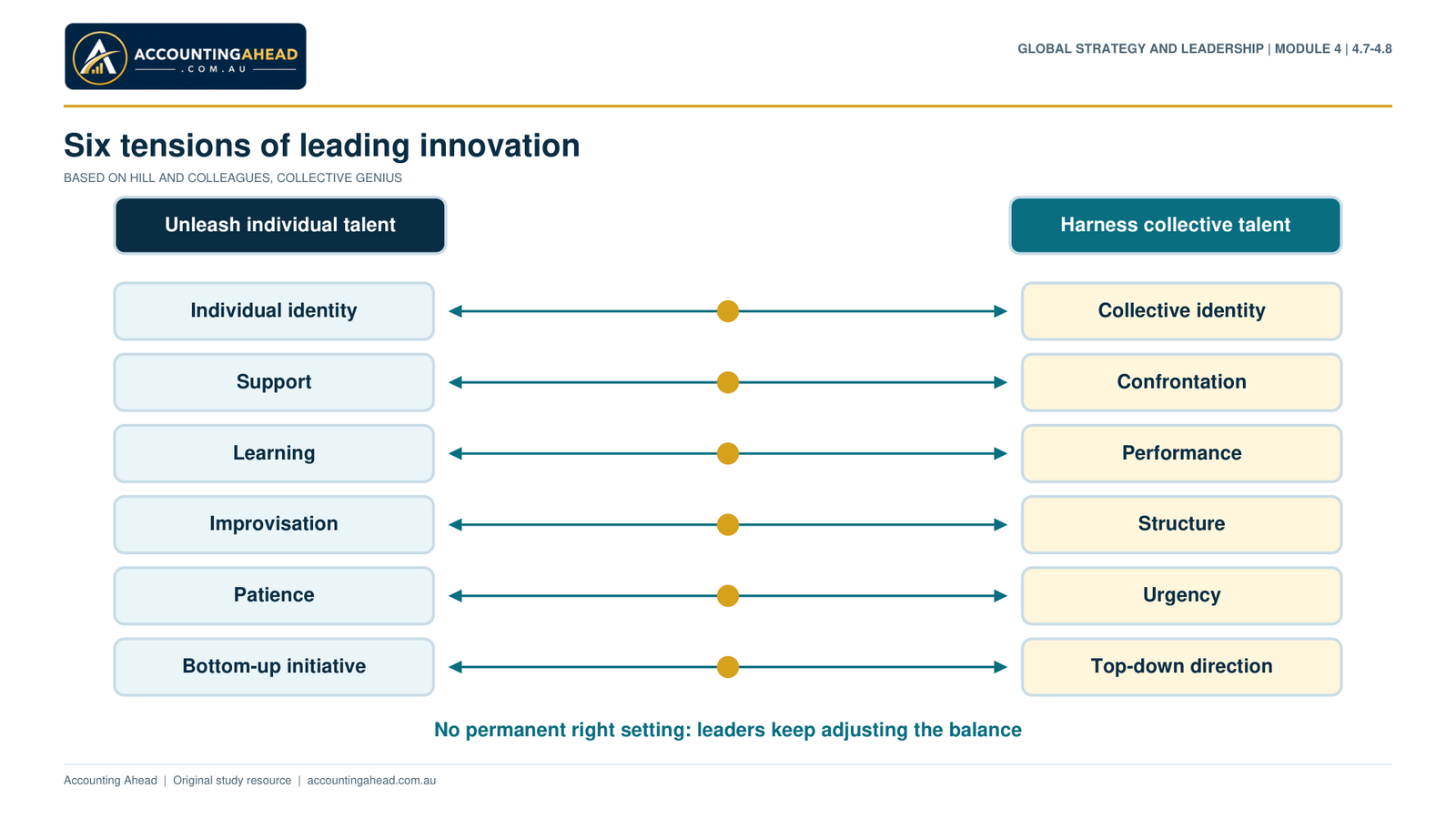
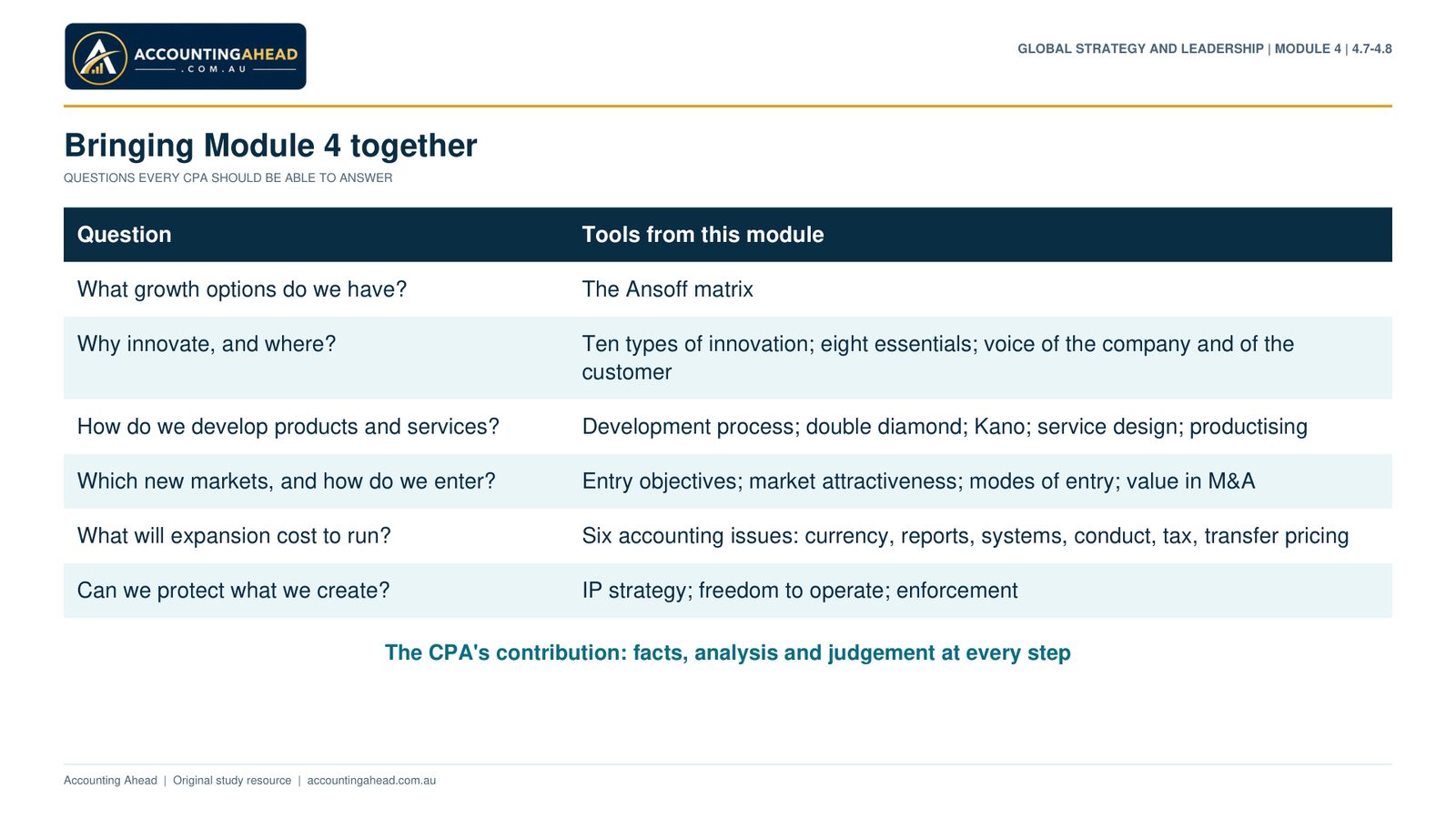
Part 4.7-4.8 · Intellectual Property and Leadership
Module 5 · Evaluating strategic choices
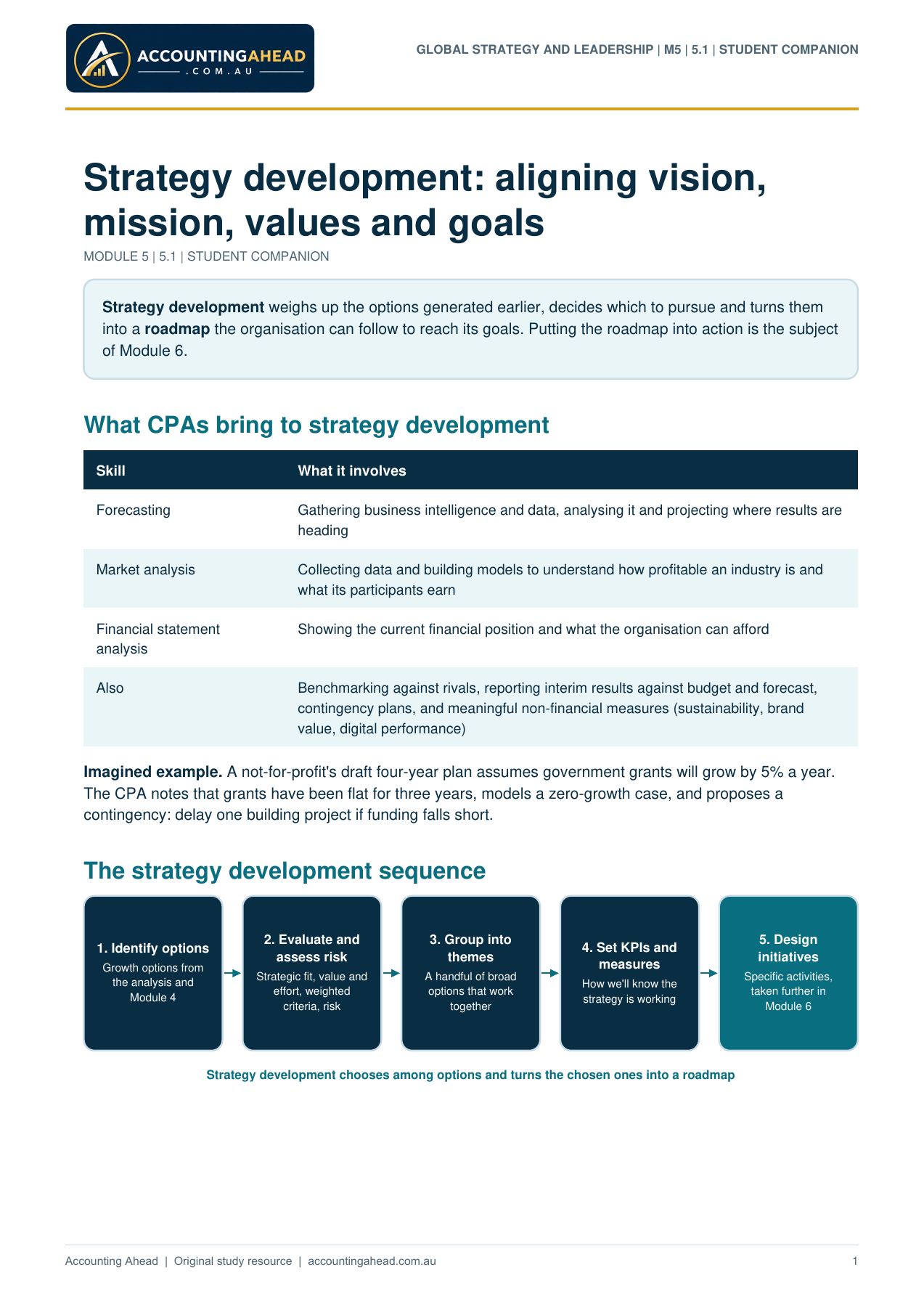
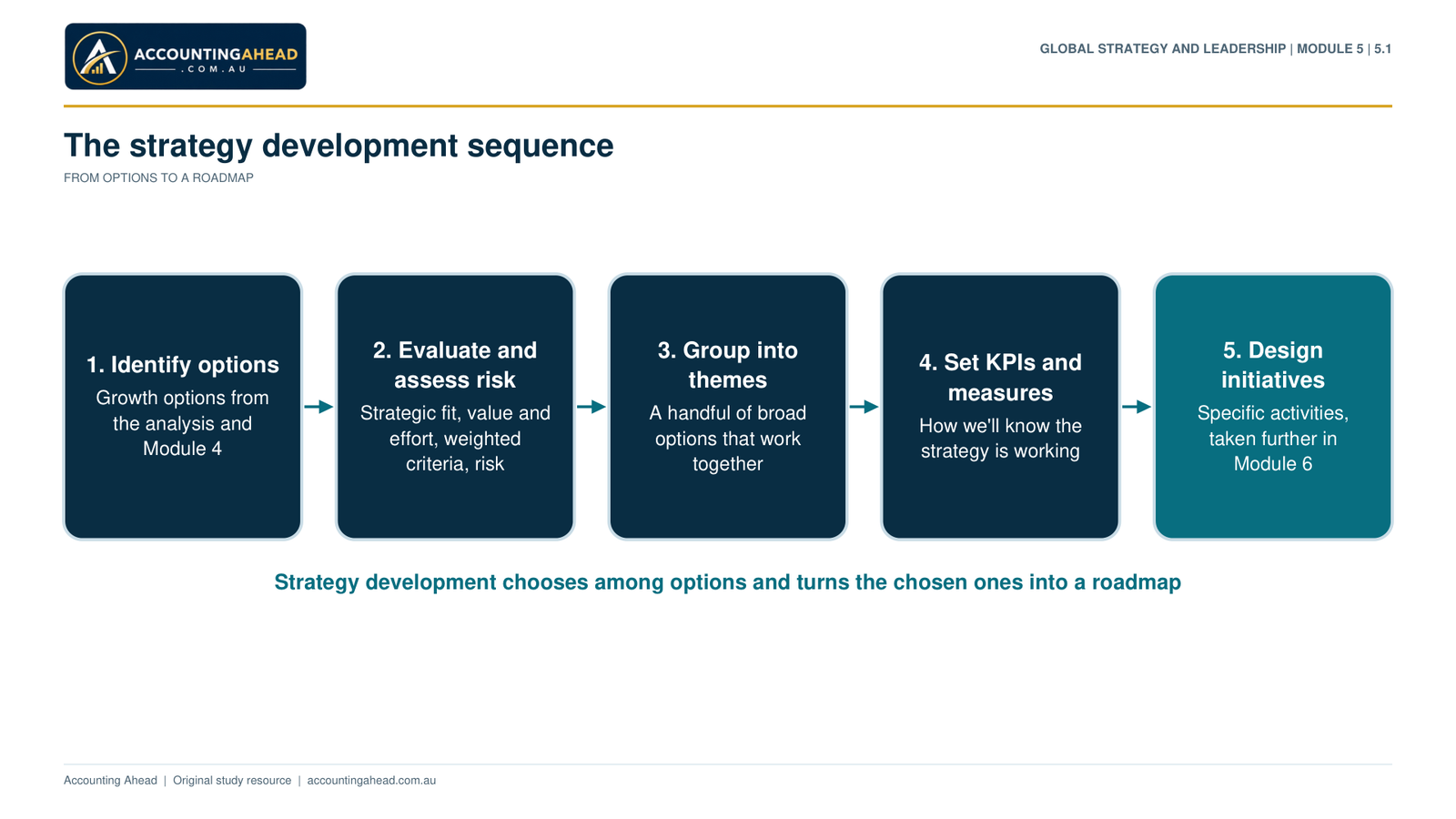
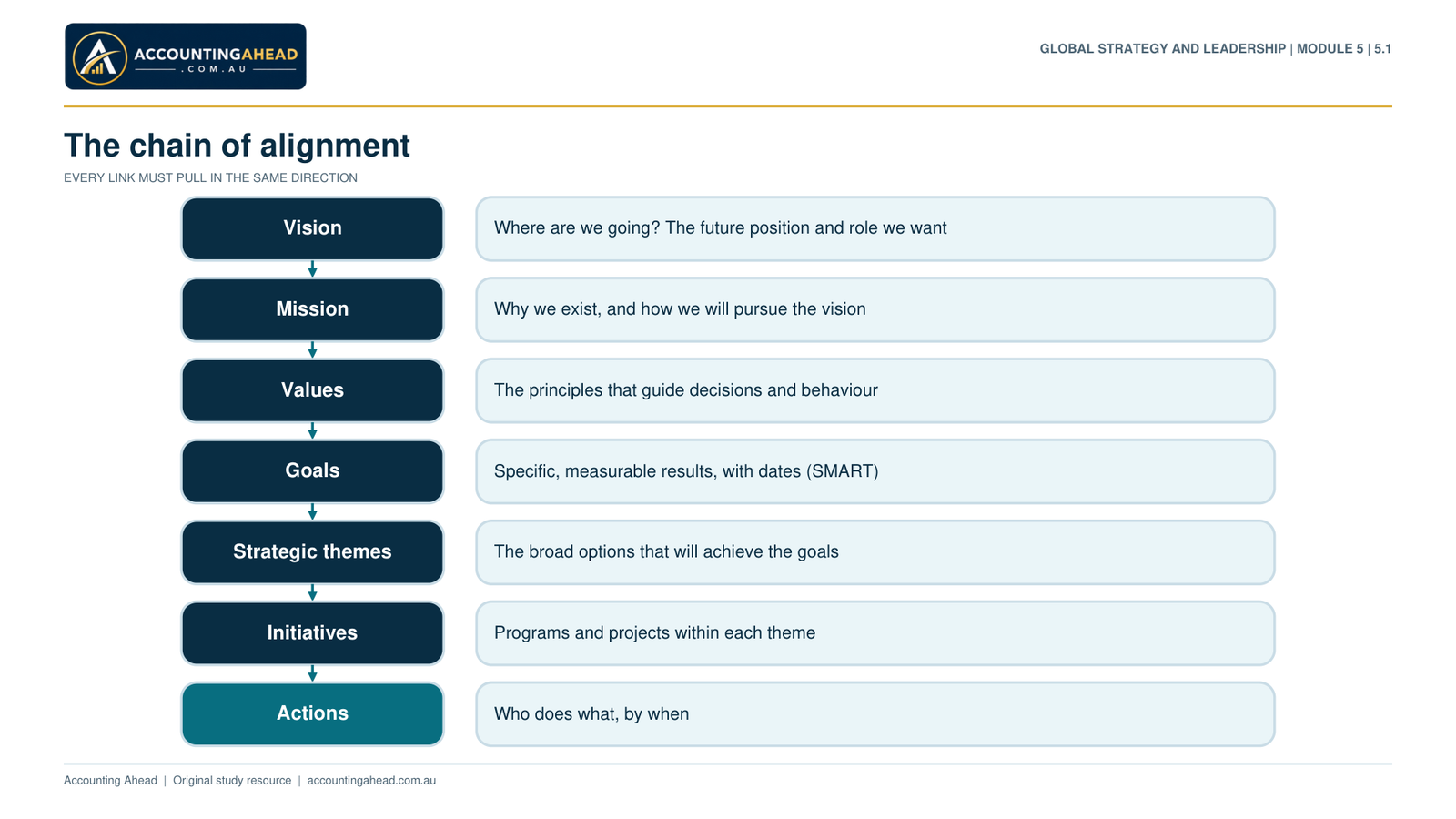
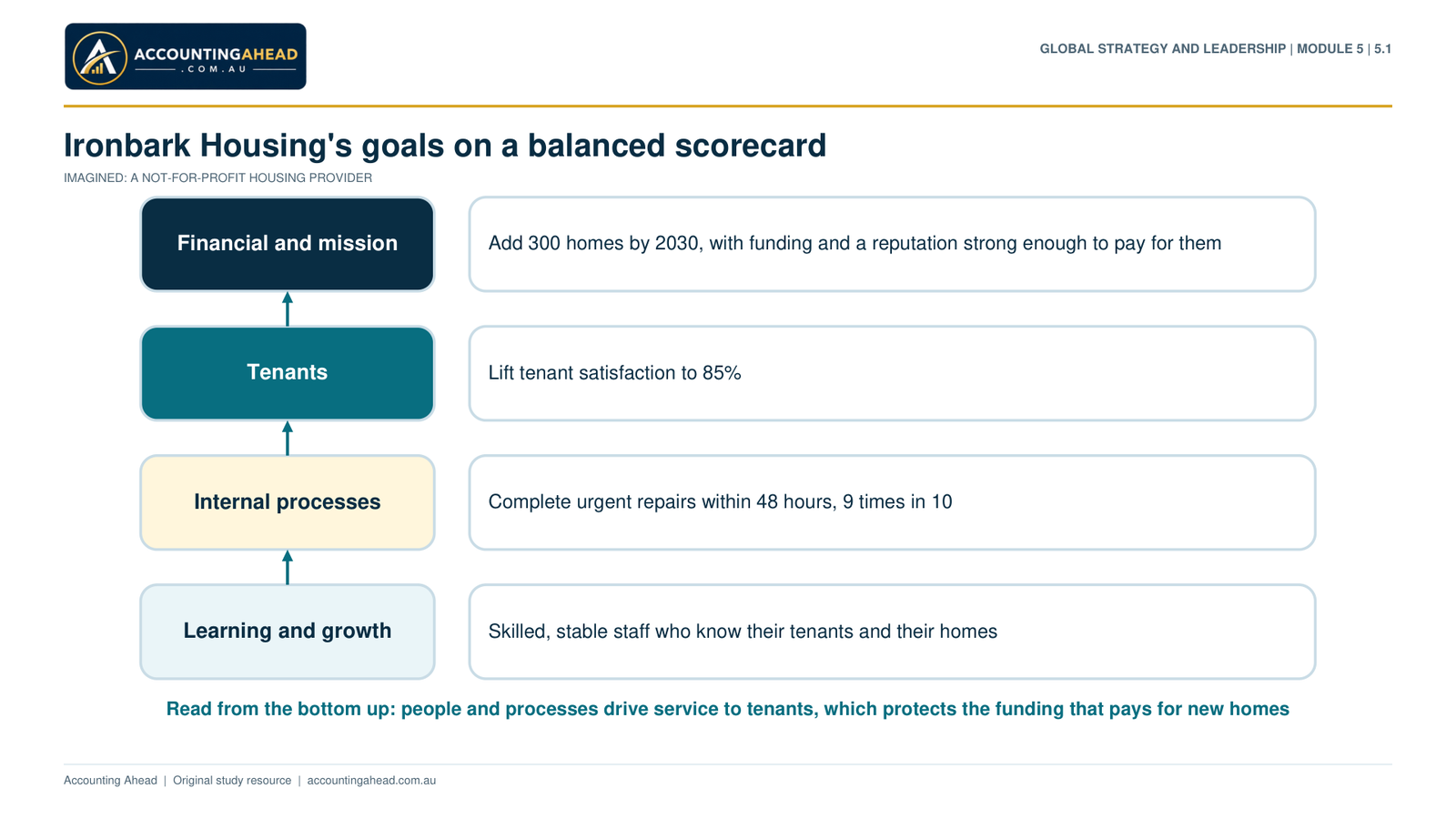
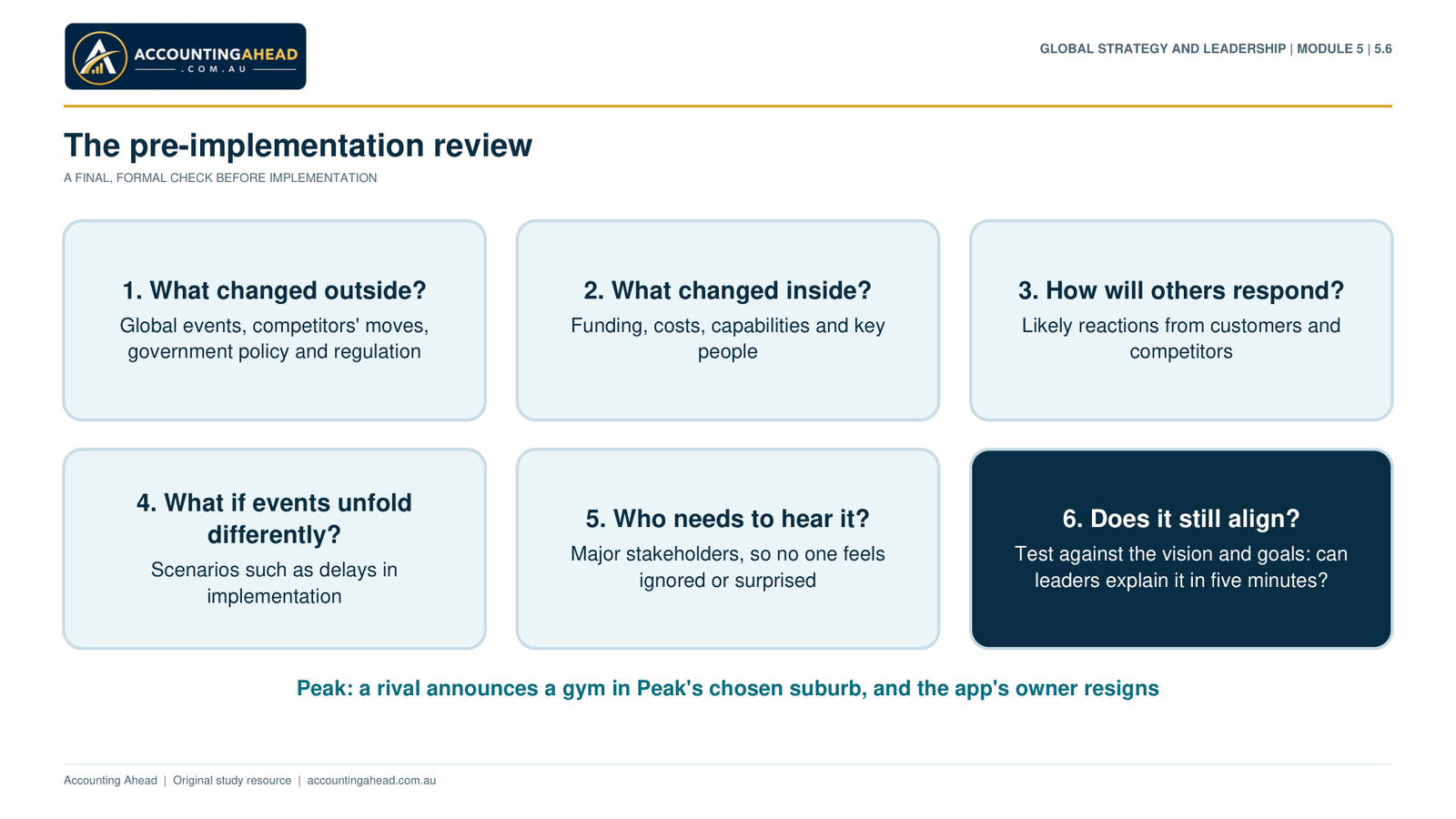
Part 5.1 · Aligning Vision, Mission, Values and Goals
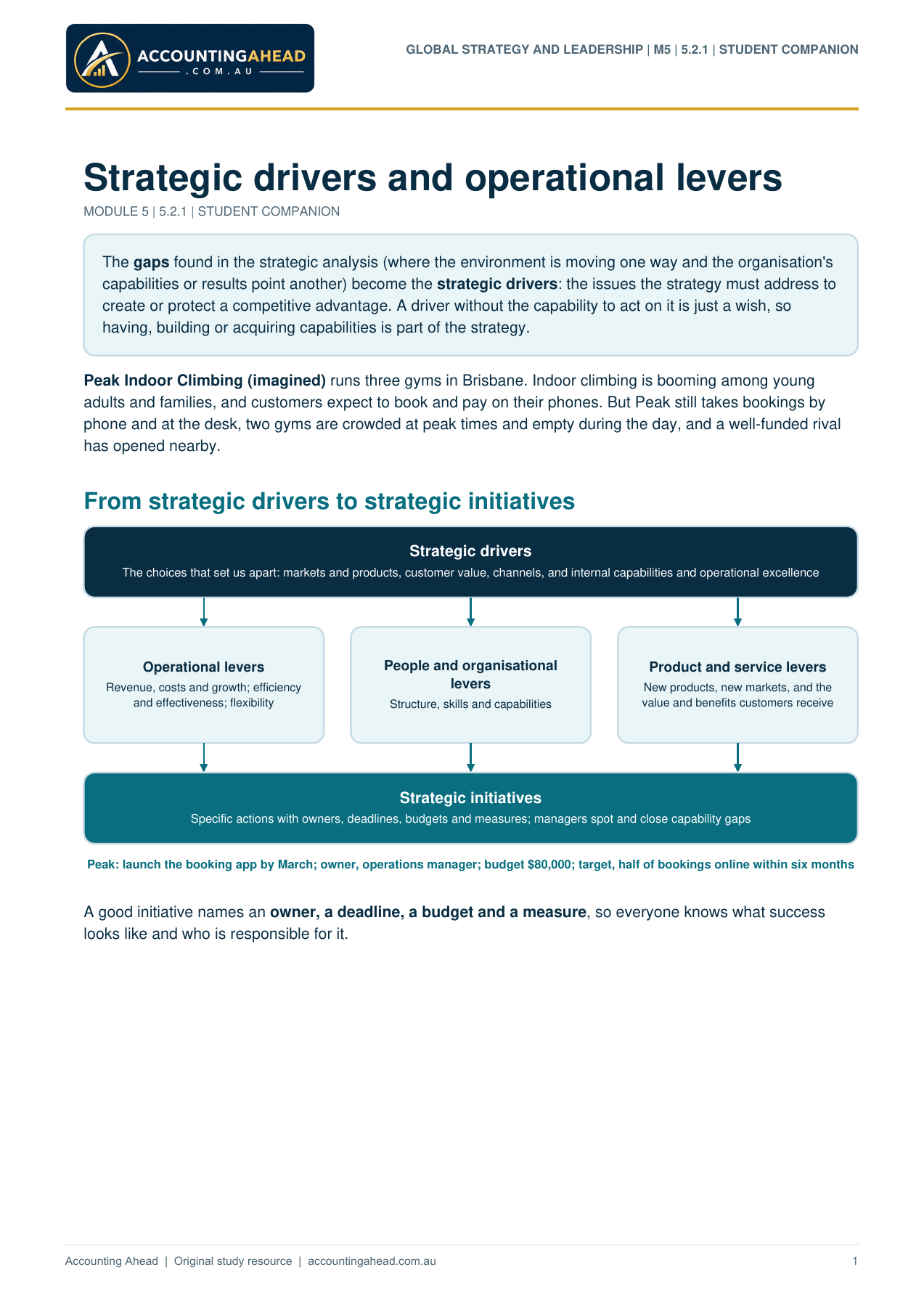
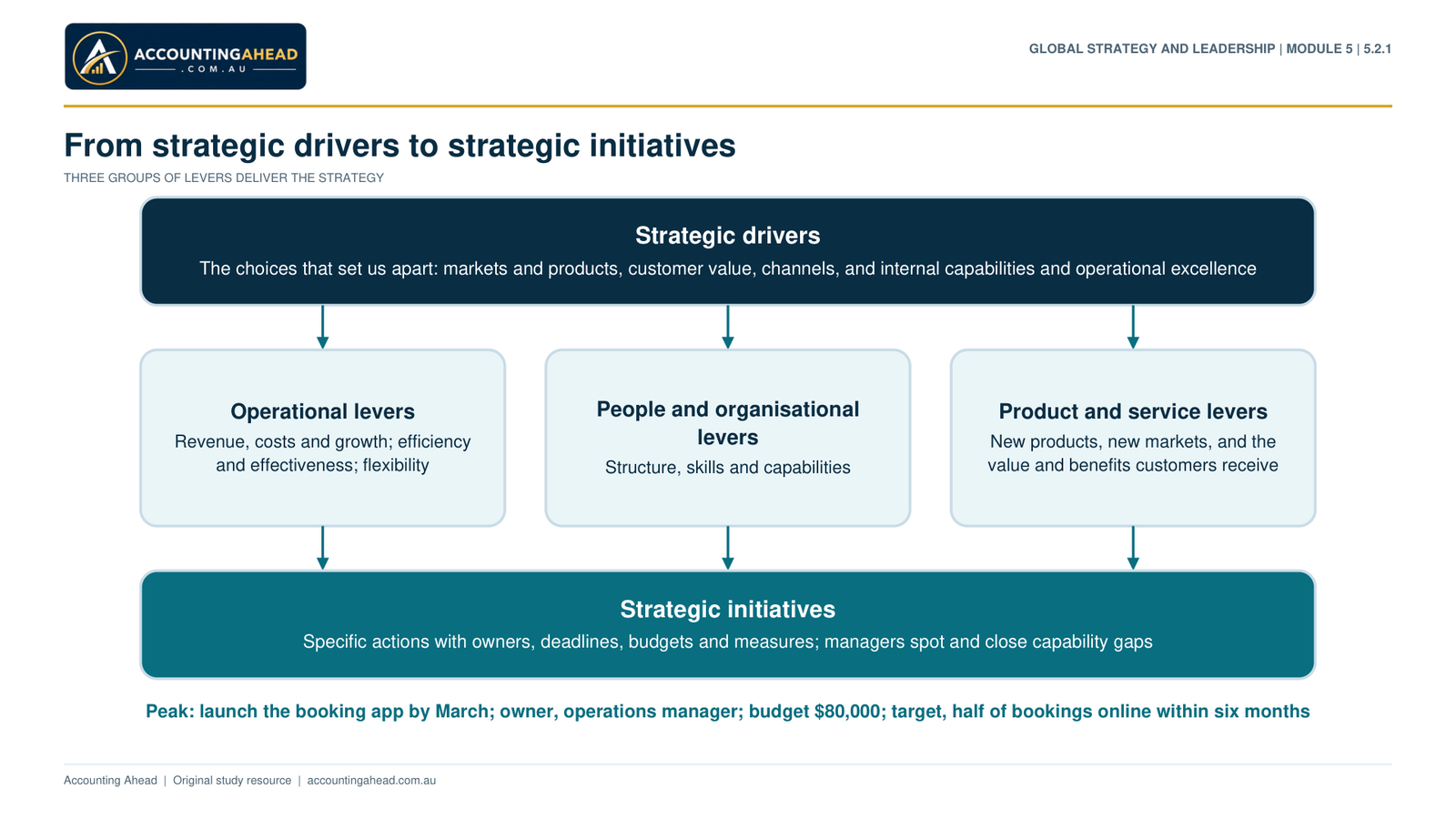
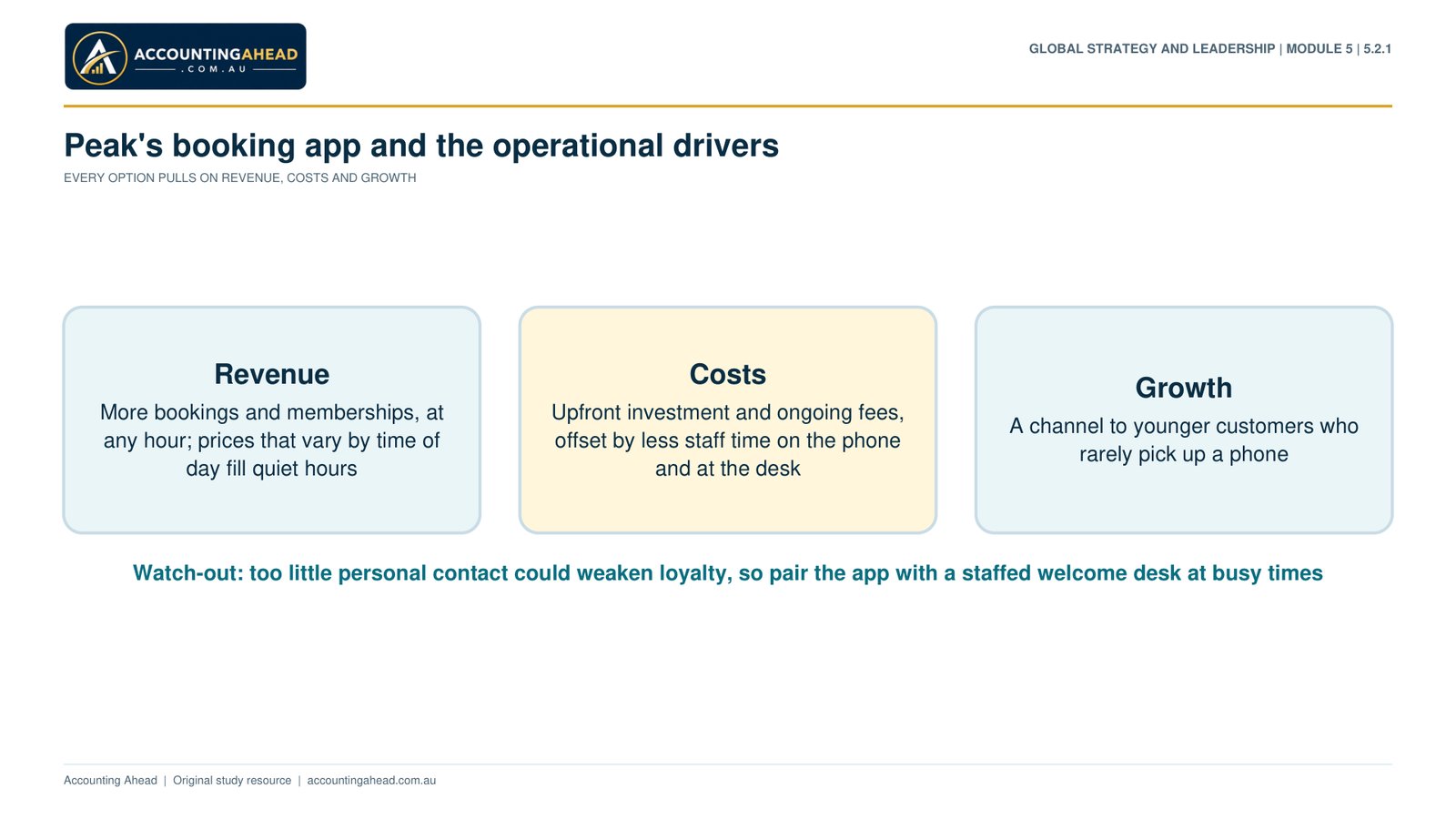
Part 5.2.1 · Strategic Drivers and Operational Levers
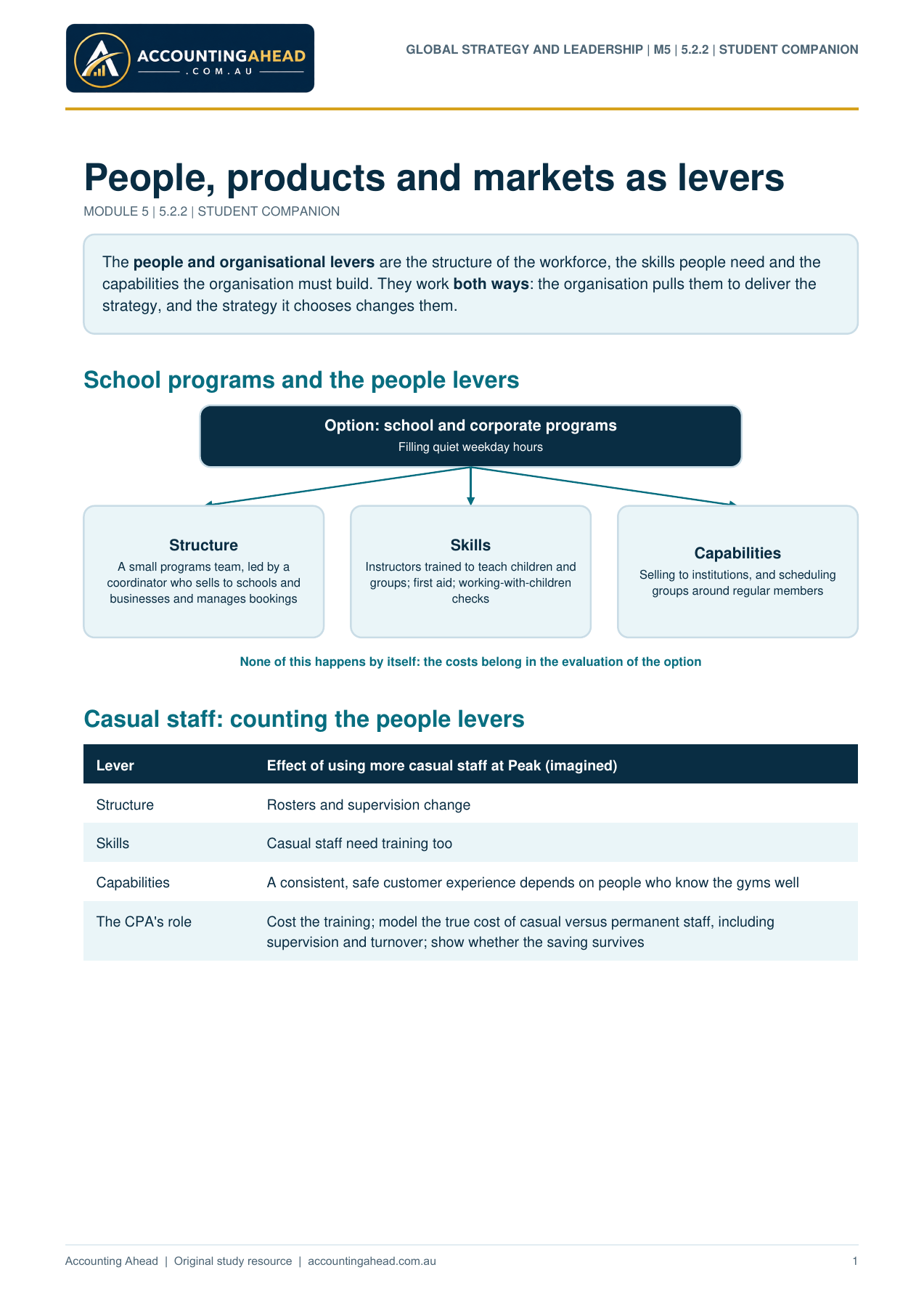
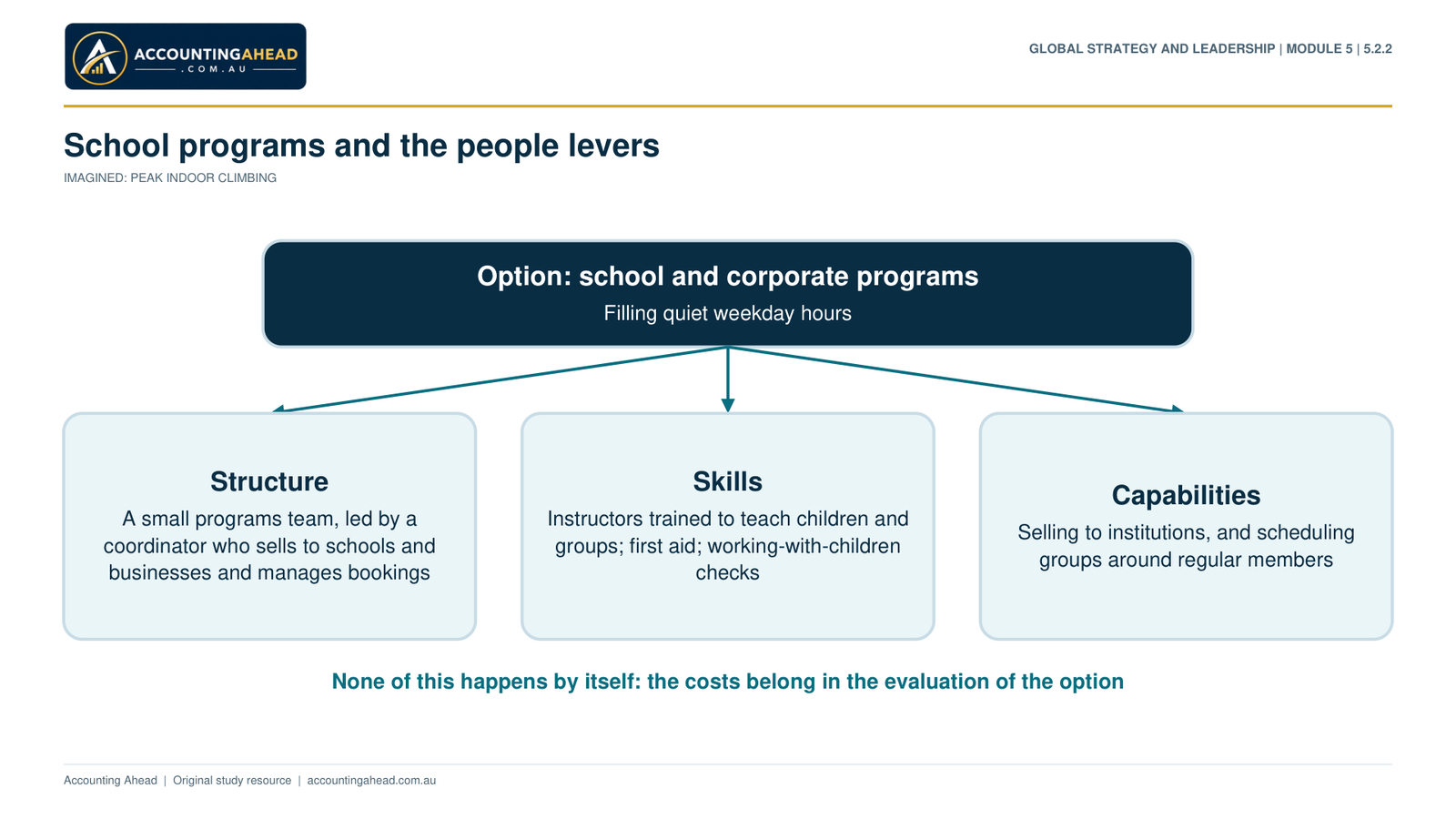
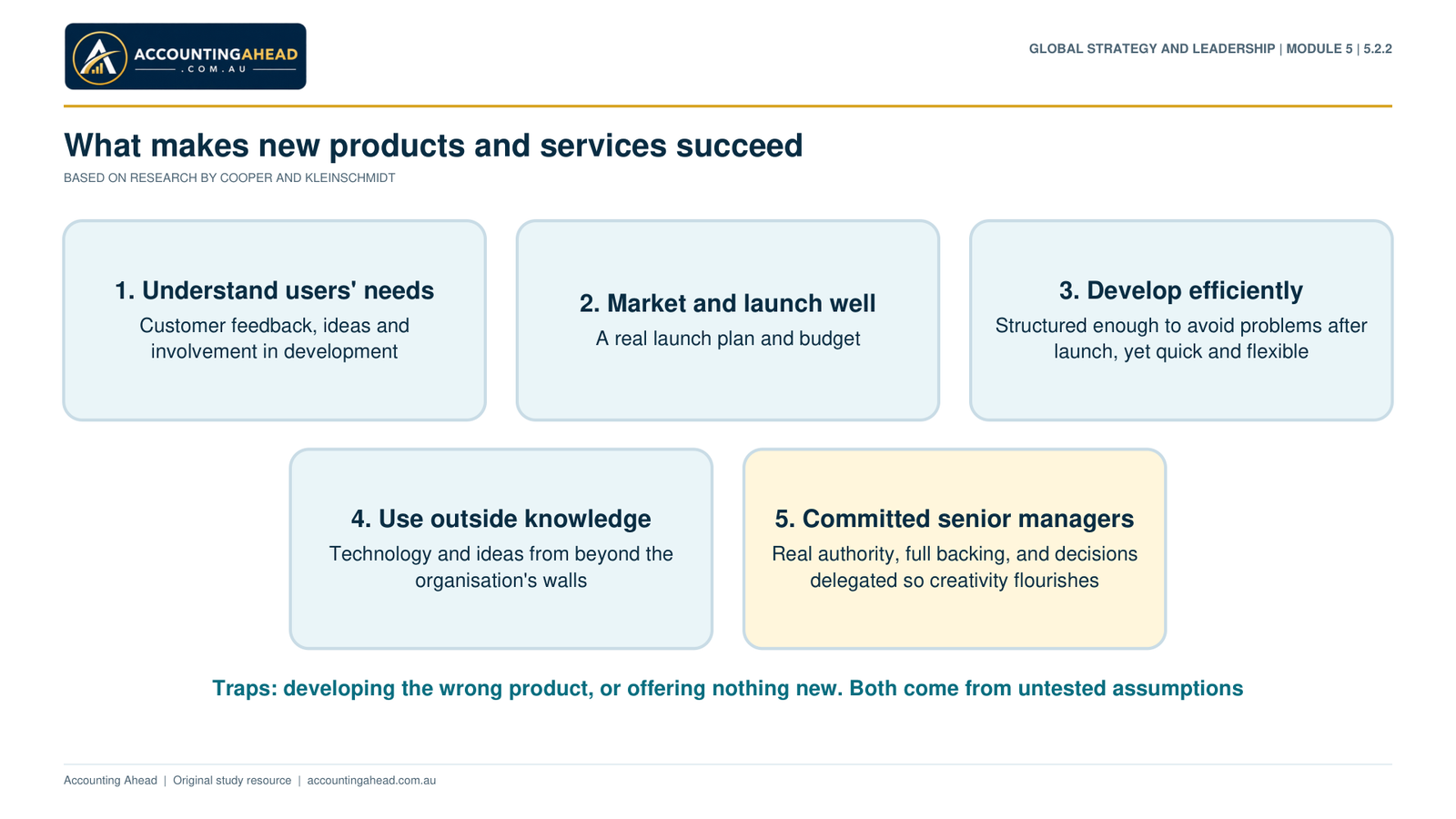
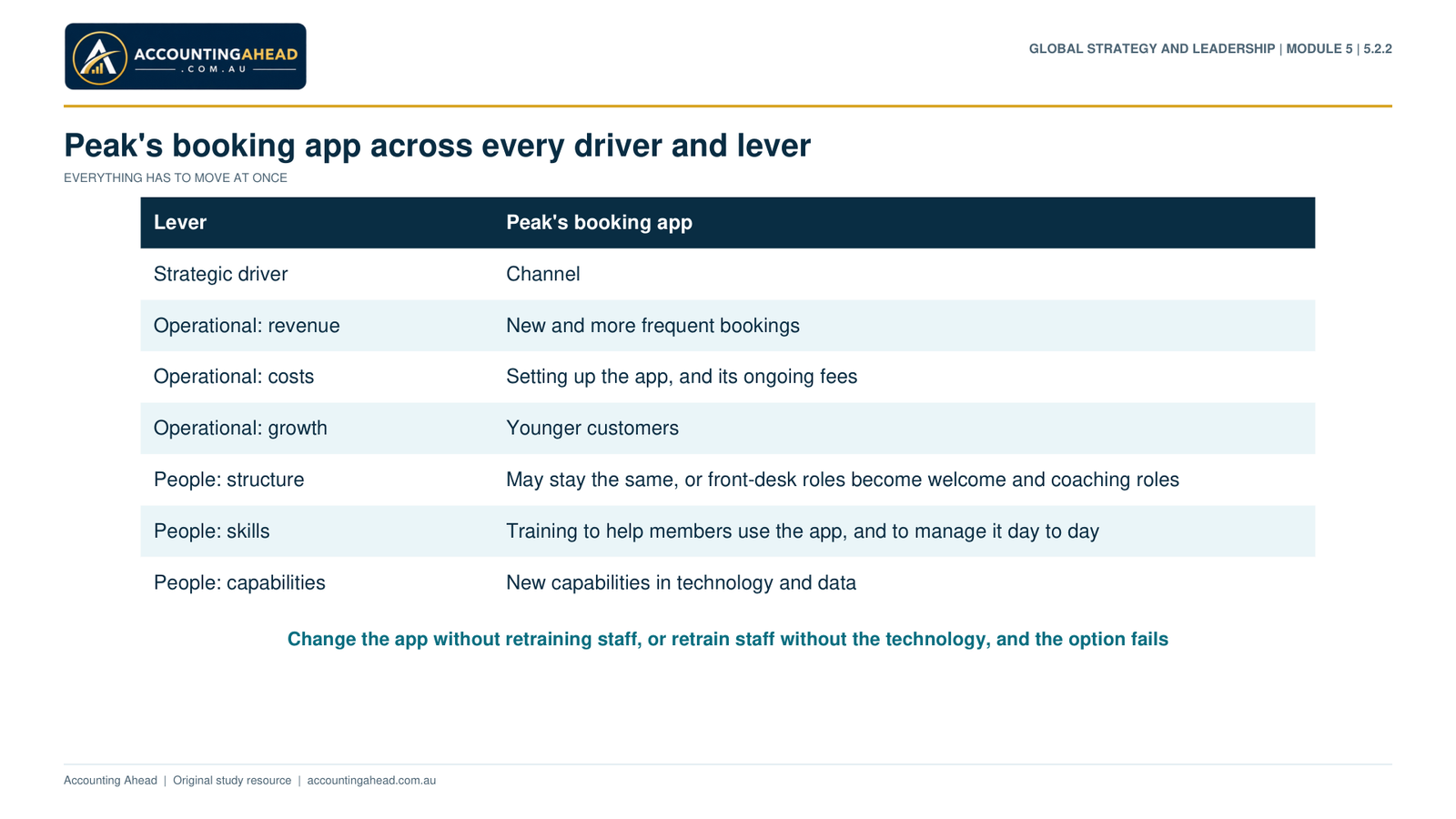
Part 5.2.2 · People, Products and Markets as Levers
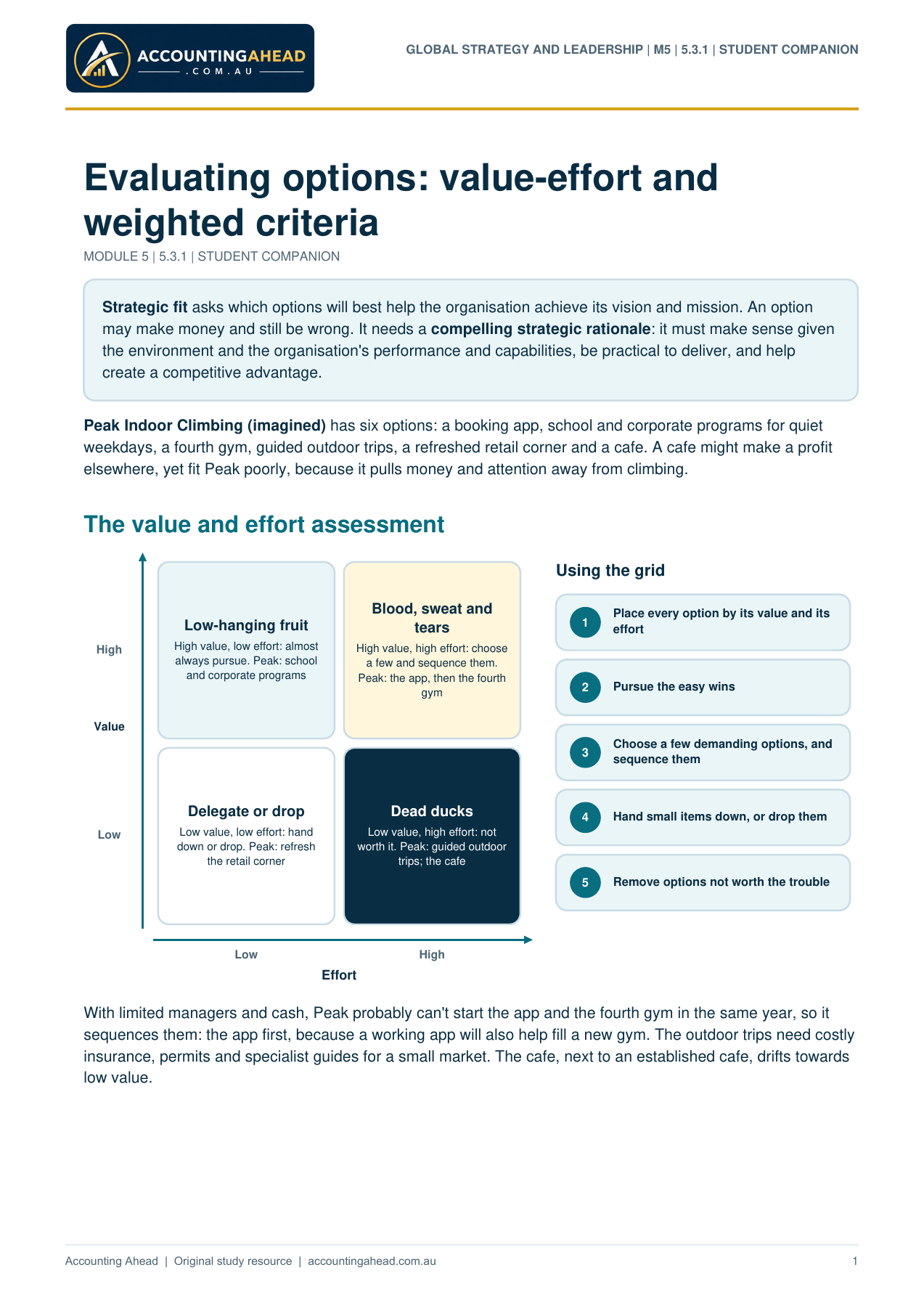
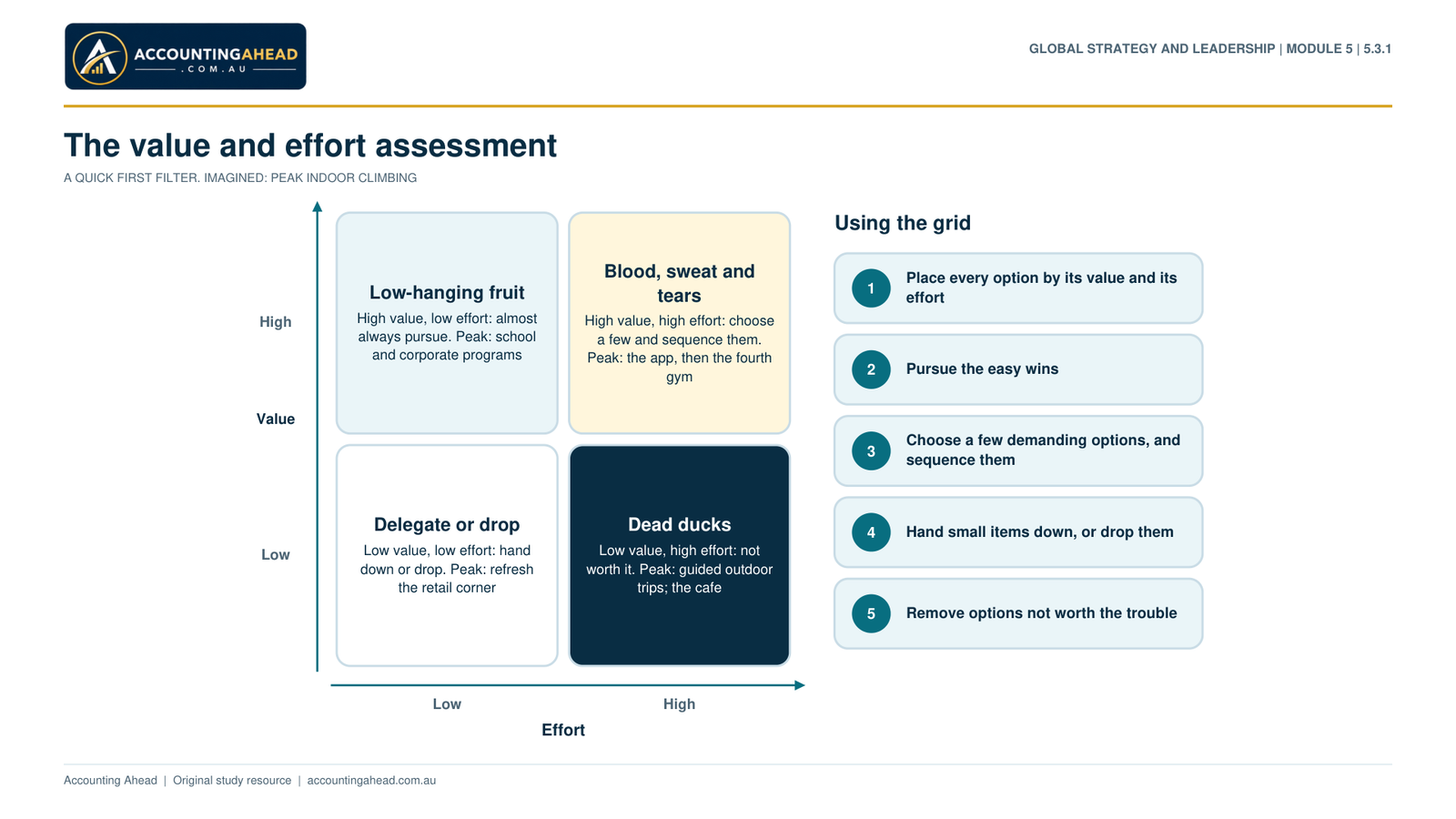
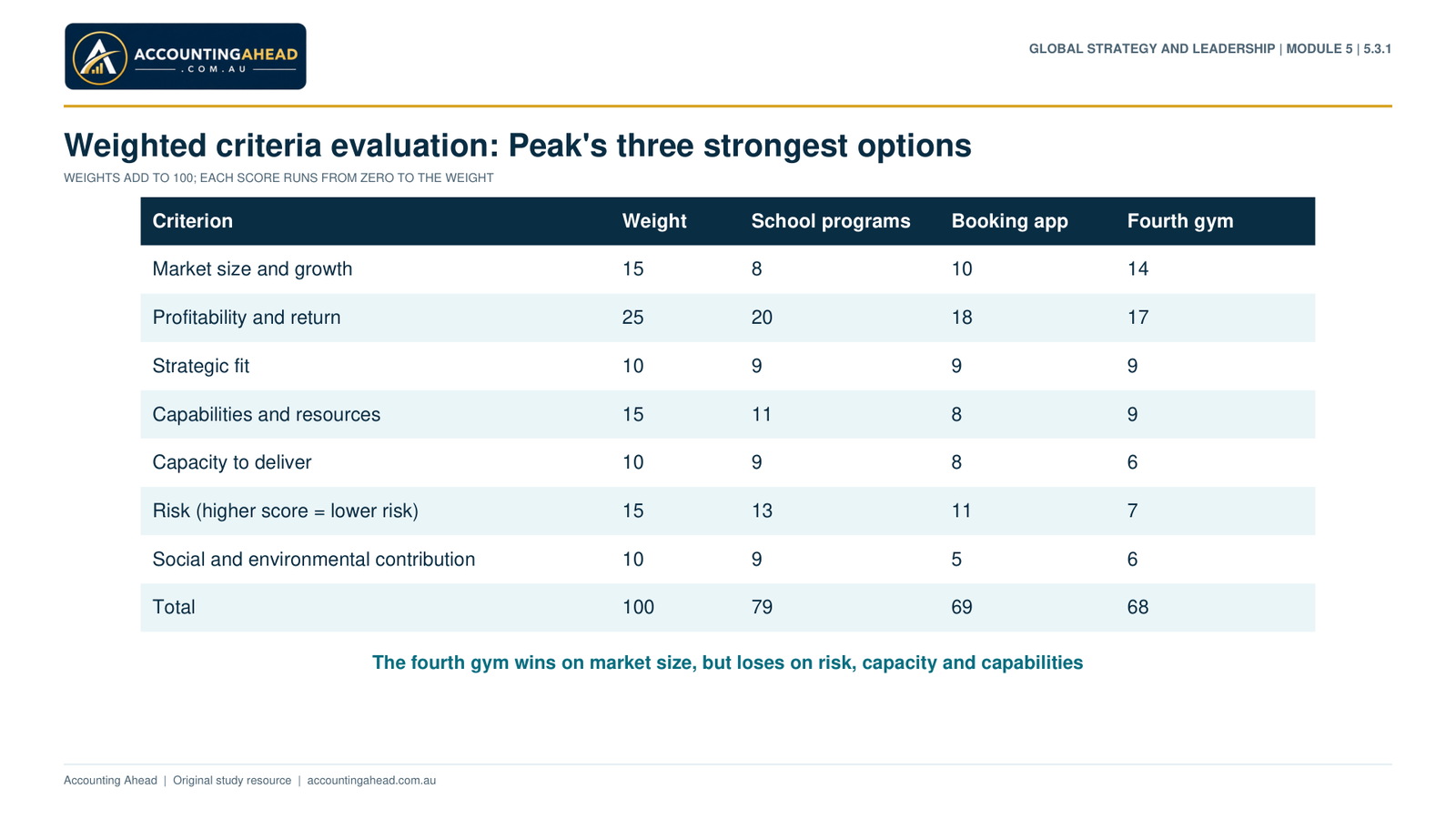
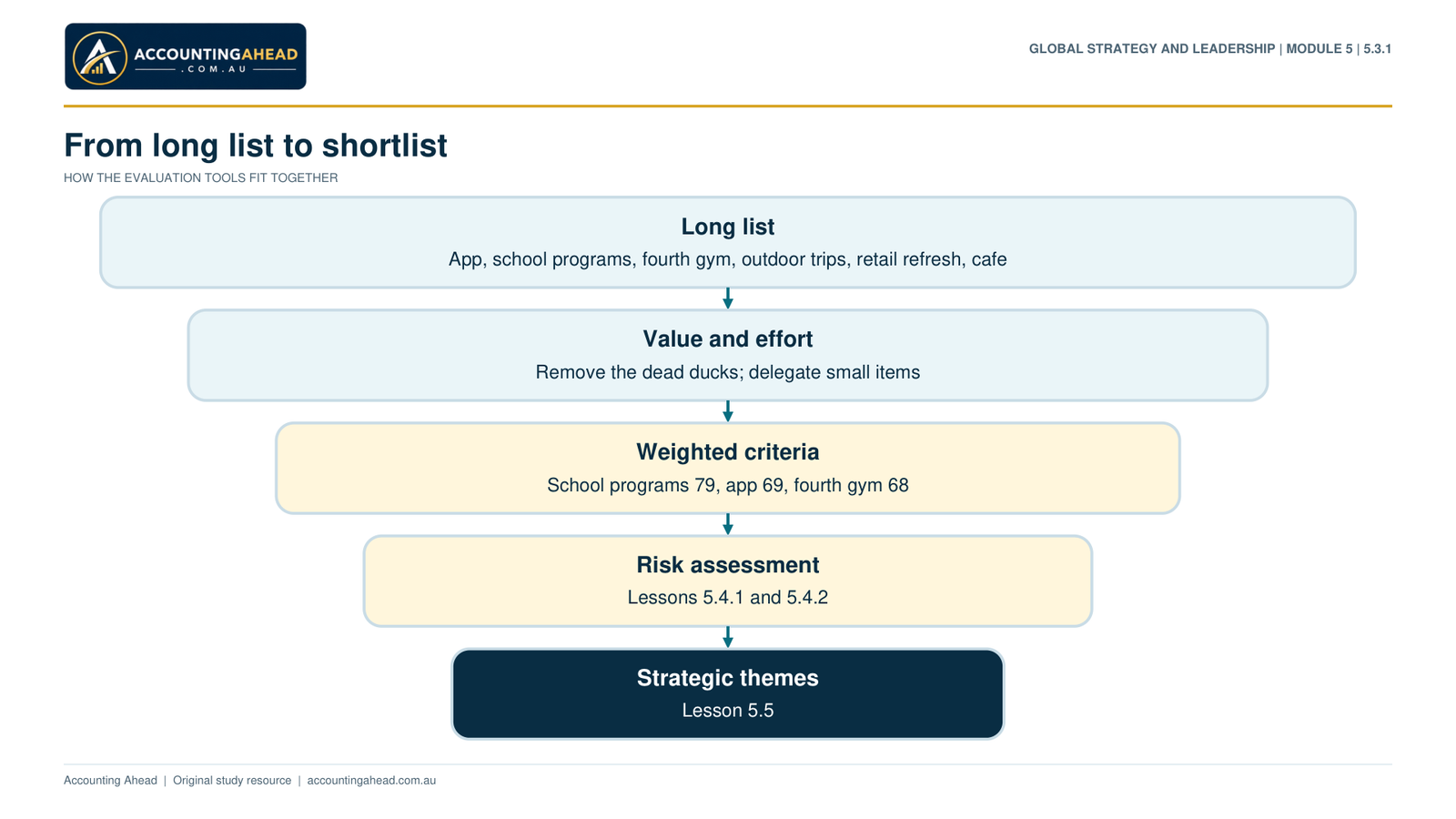
Part 5.3.1 · Value-Effort and Weighted Criteria
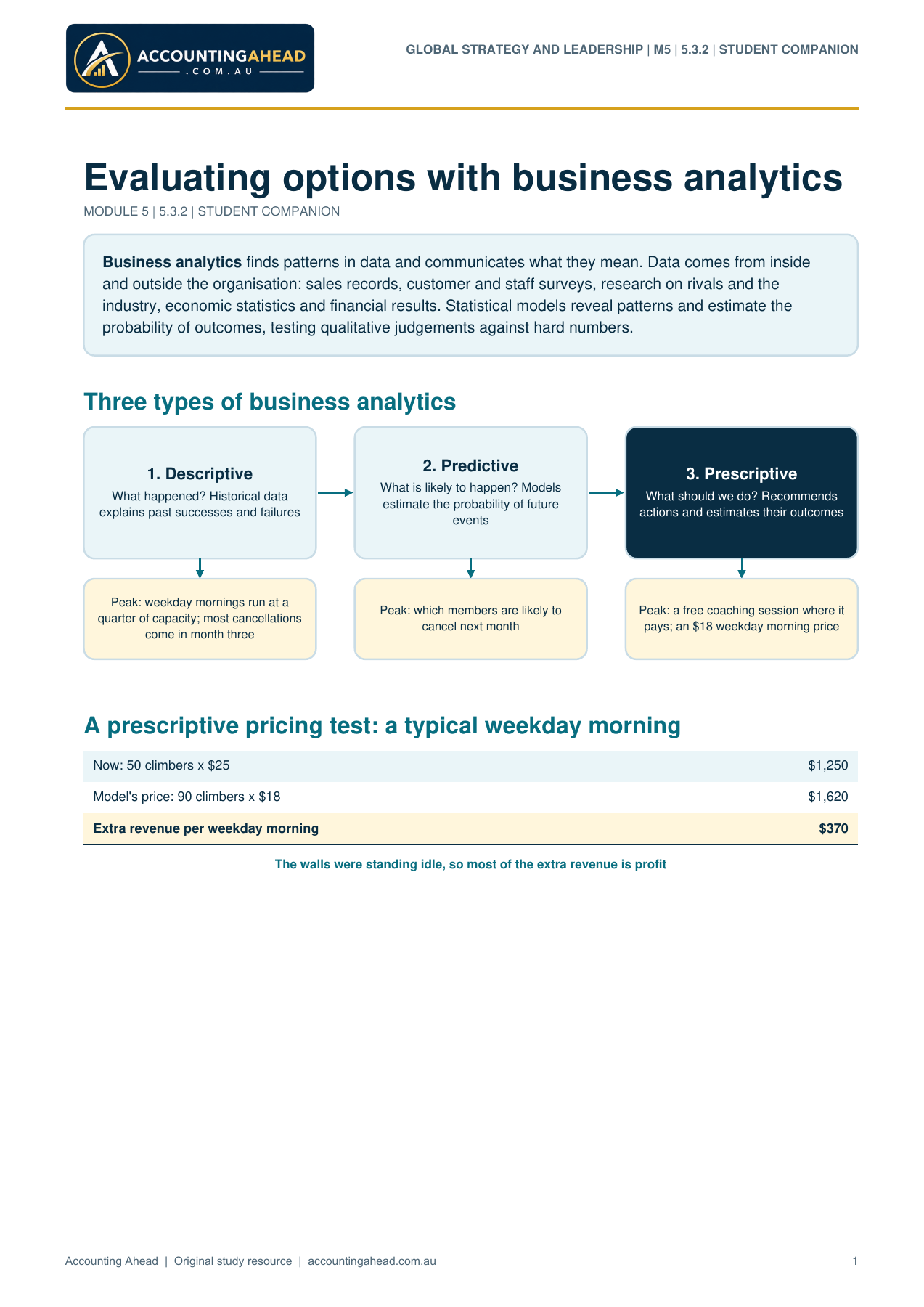
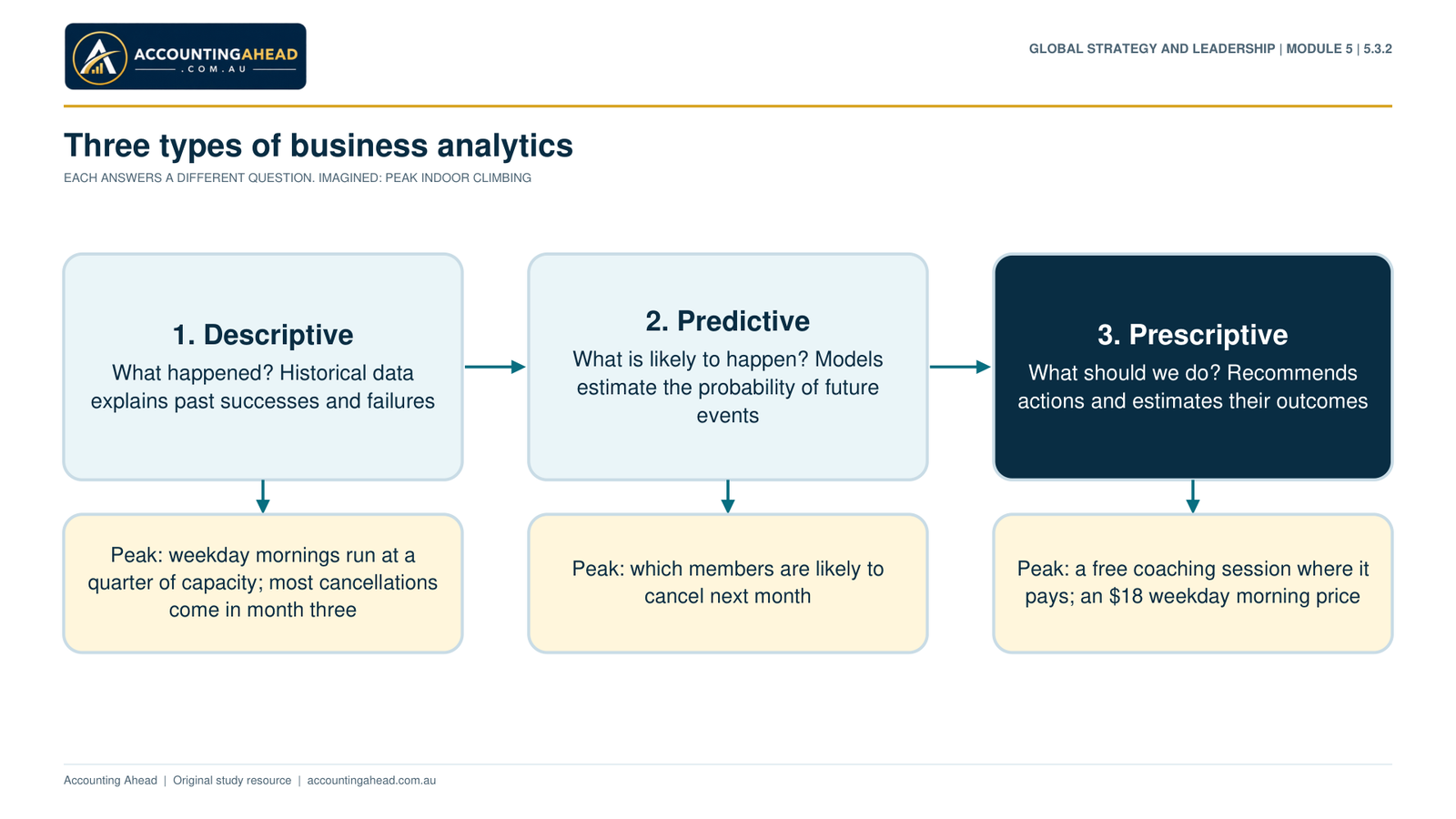
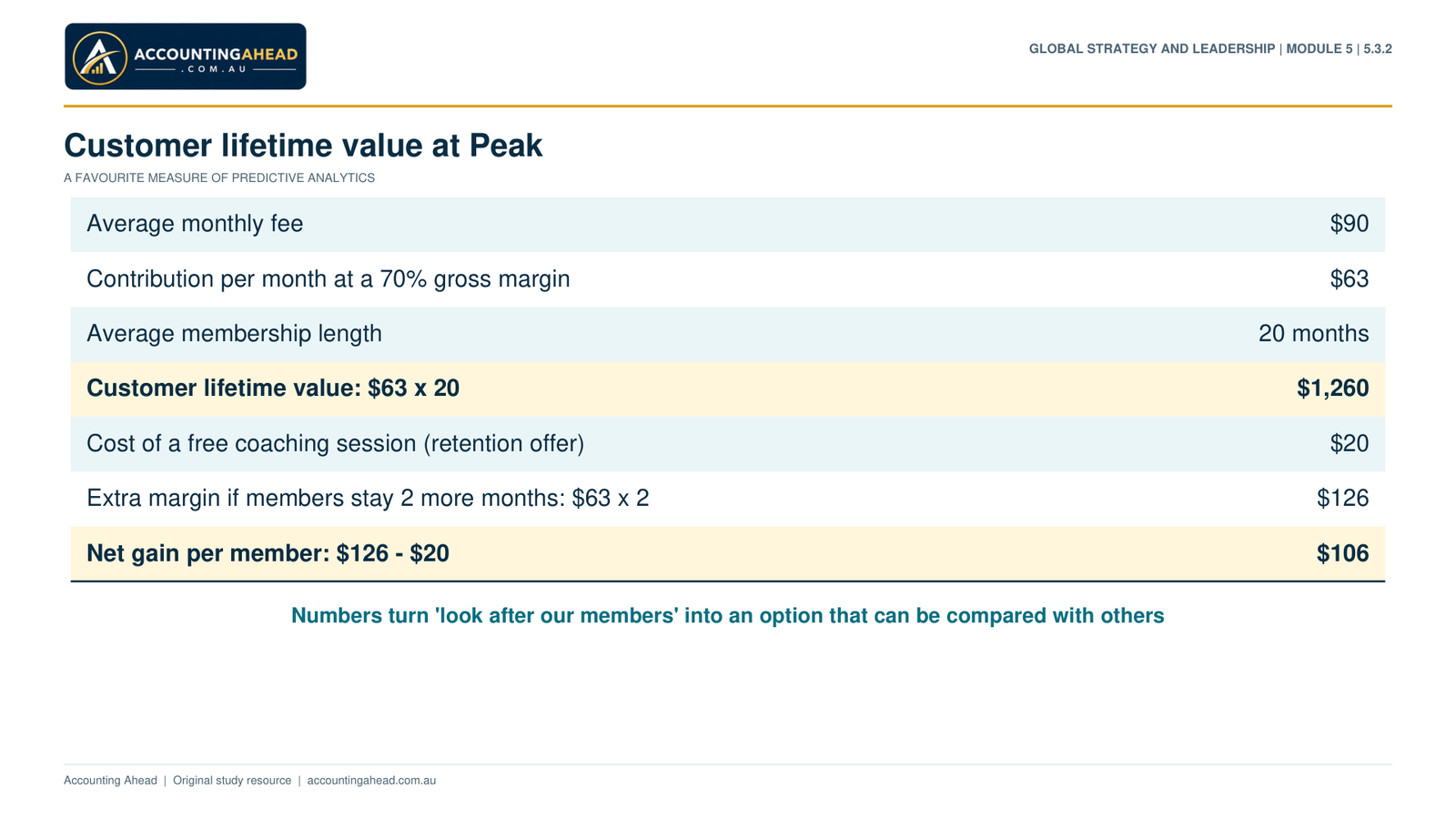
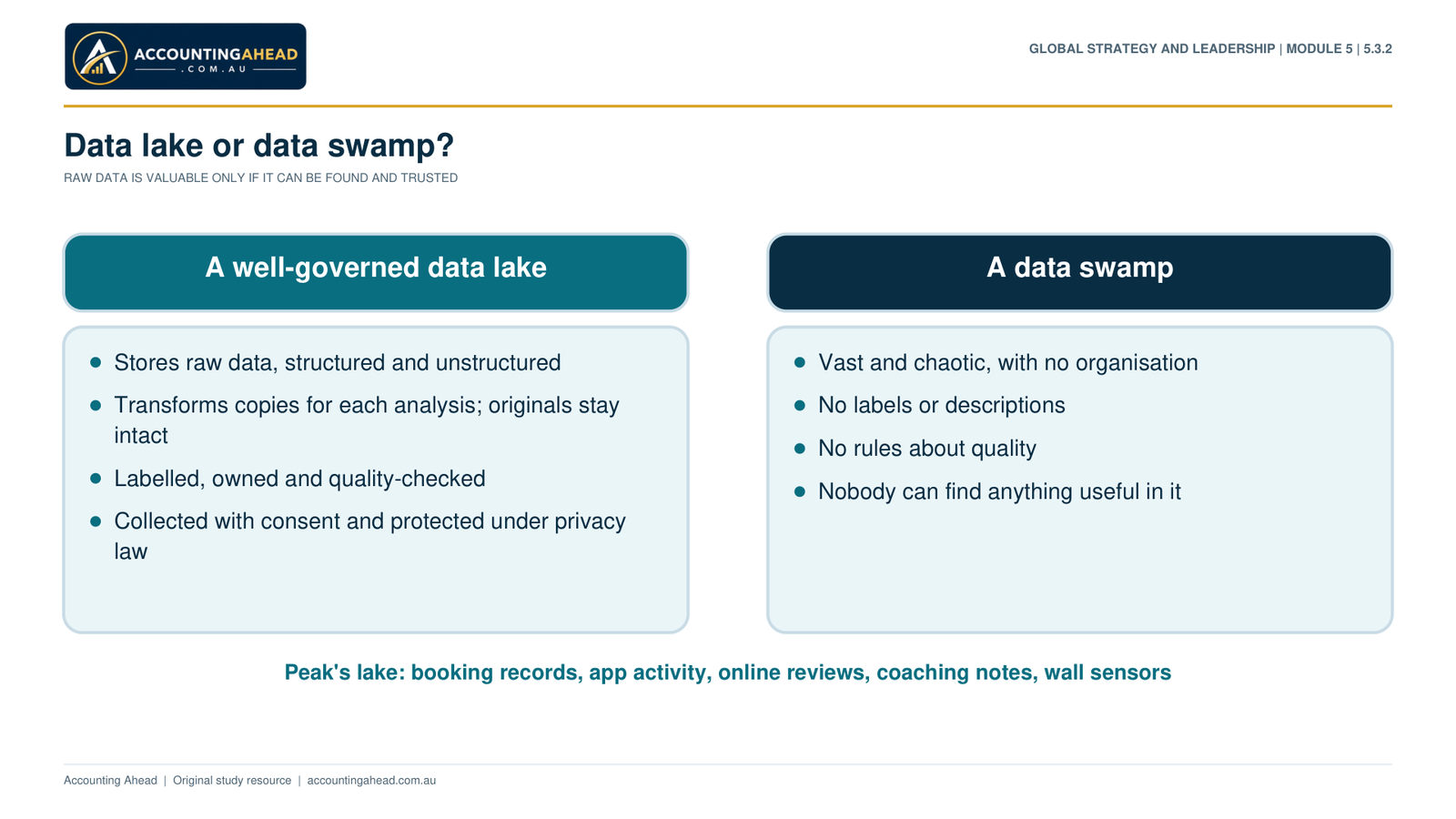
Part 5.3.2 · Evaluating Options with Business Analytics
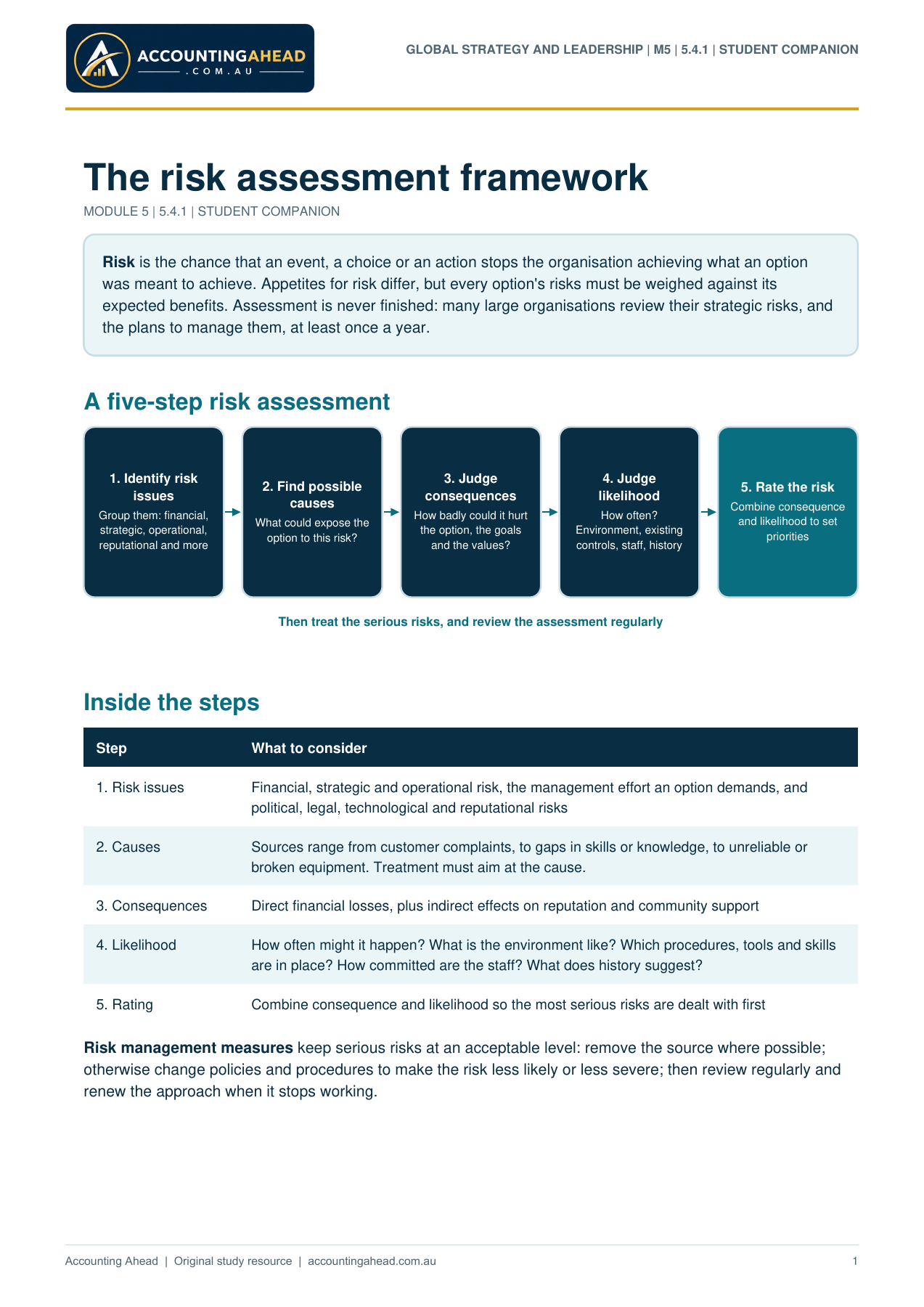
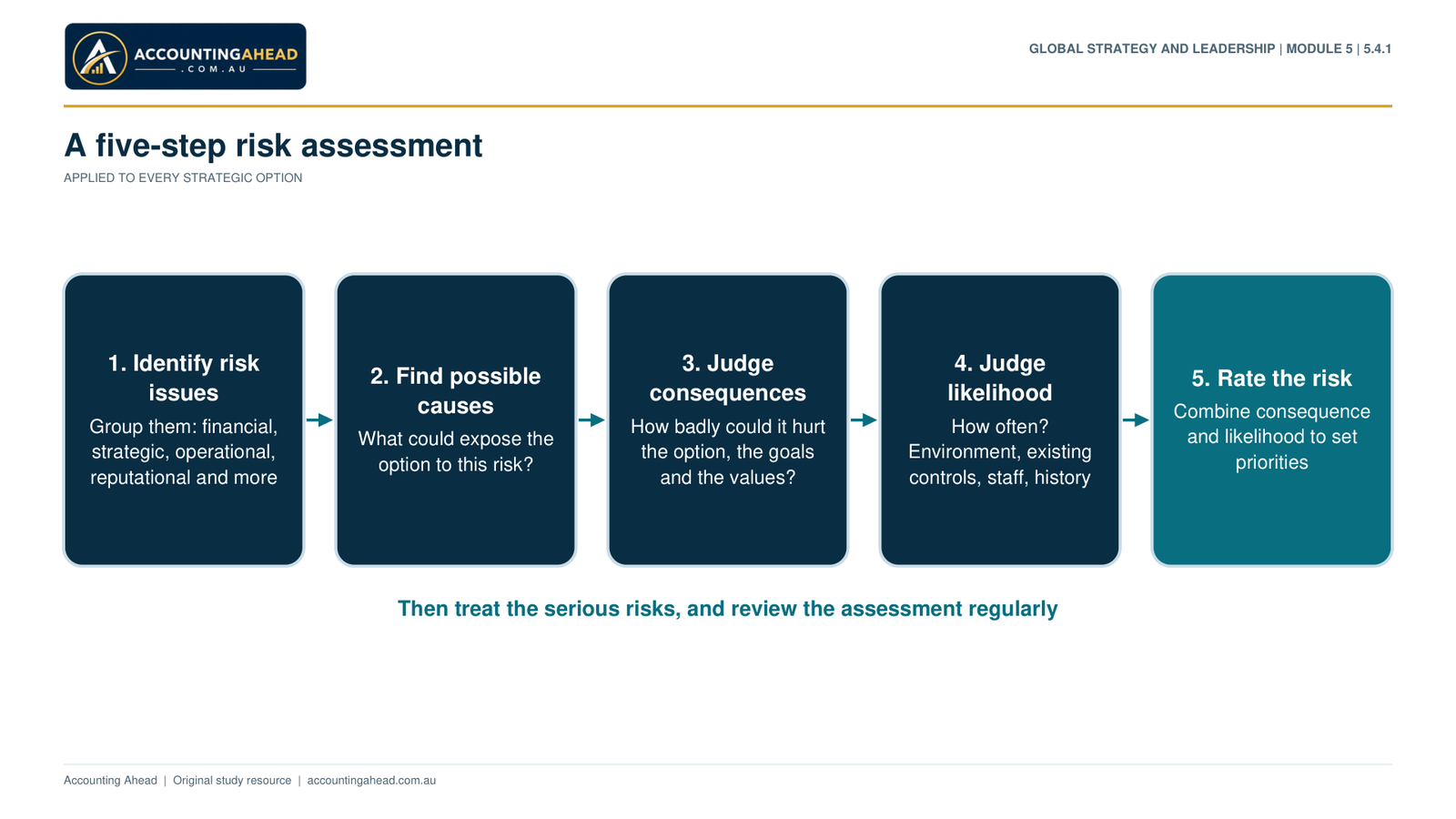
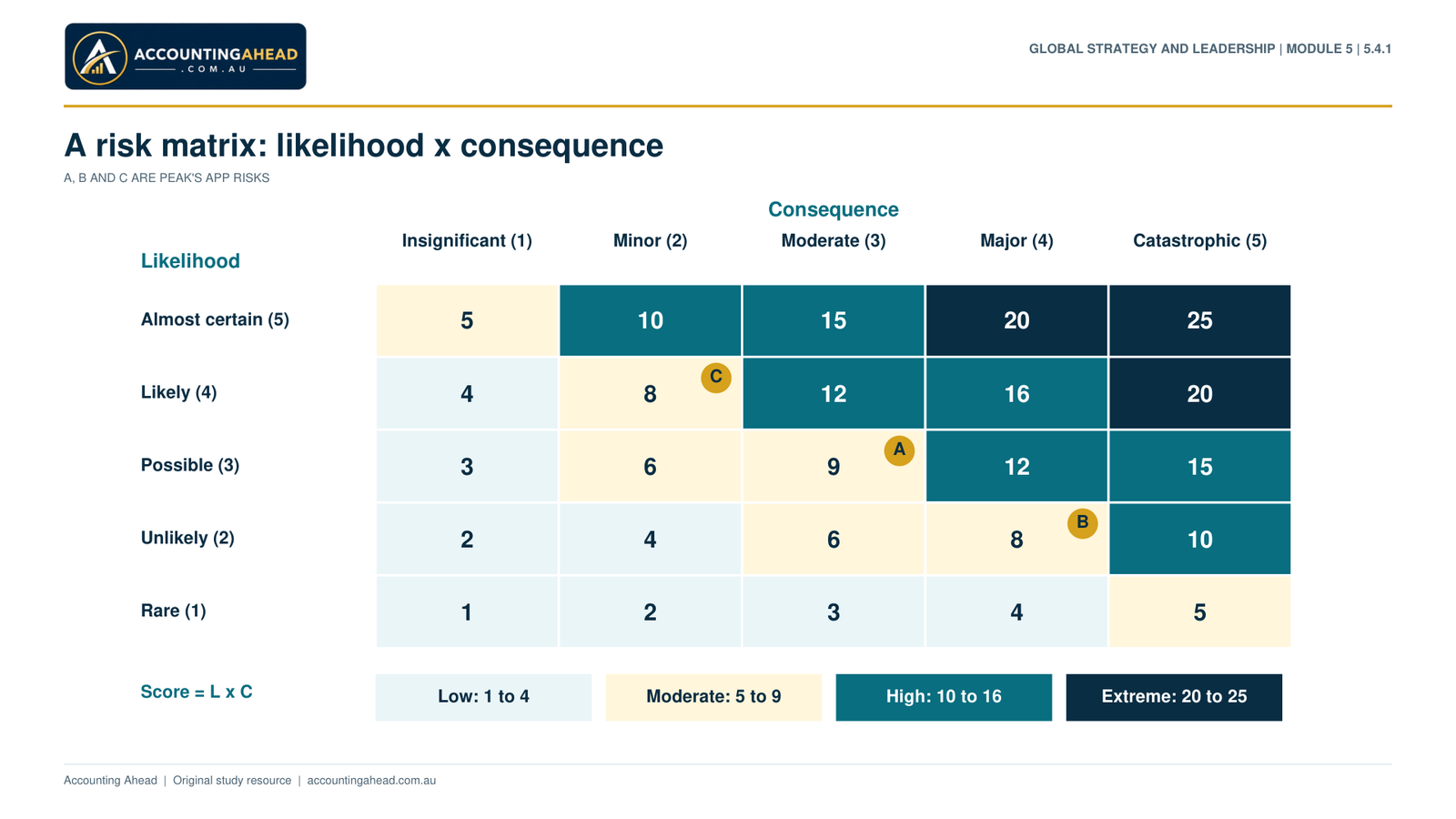
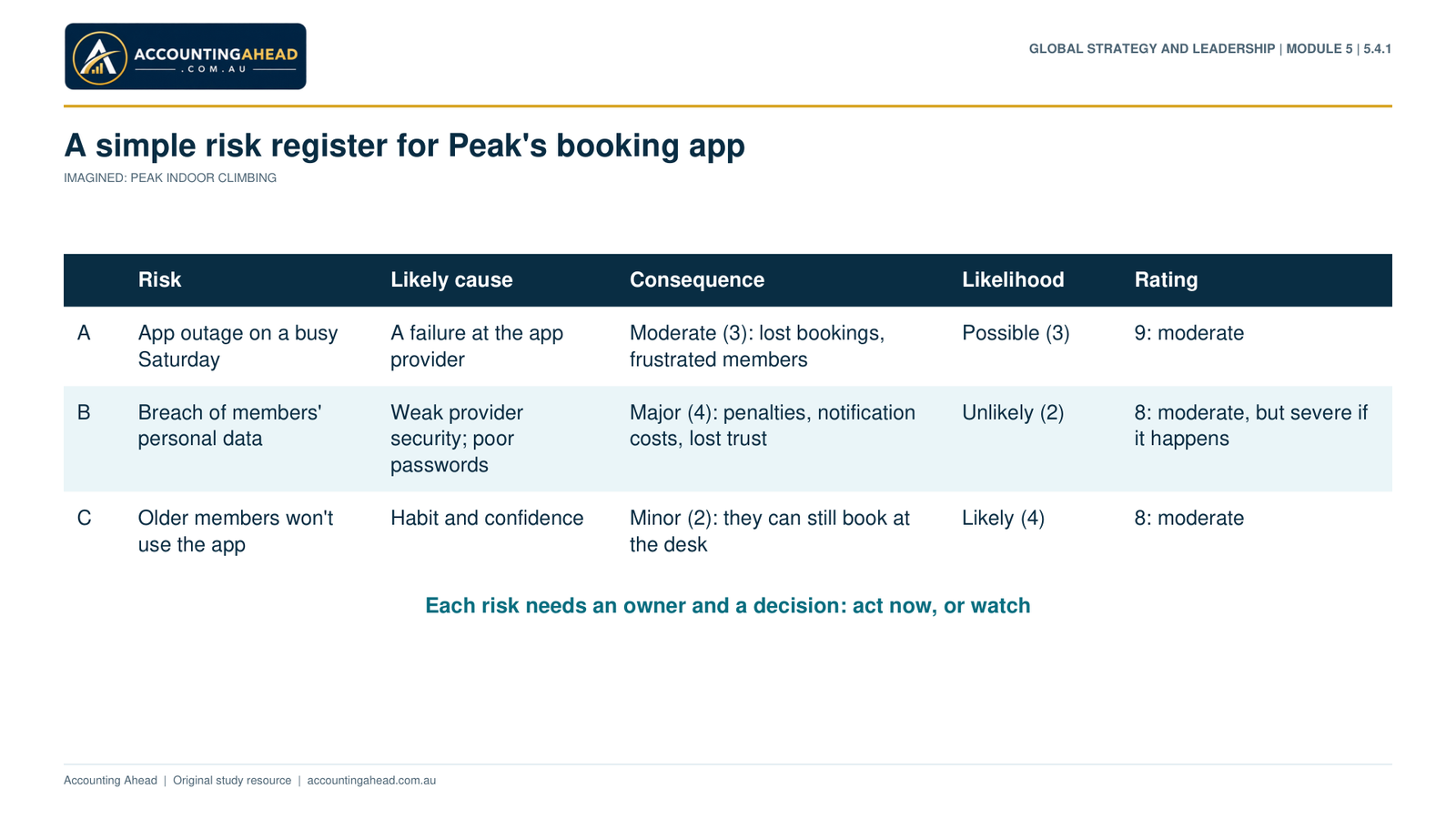
Part 5.4.1 · The Risk Assessment Framework
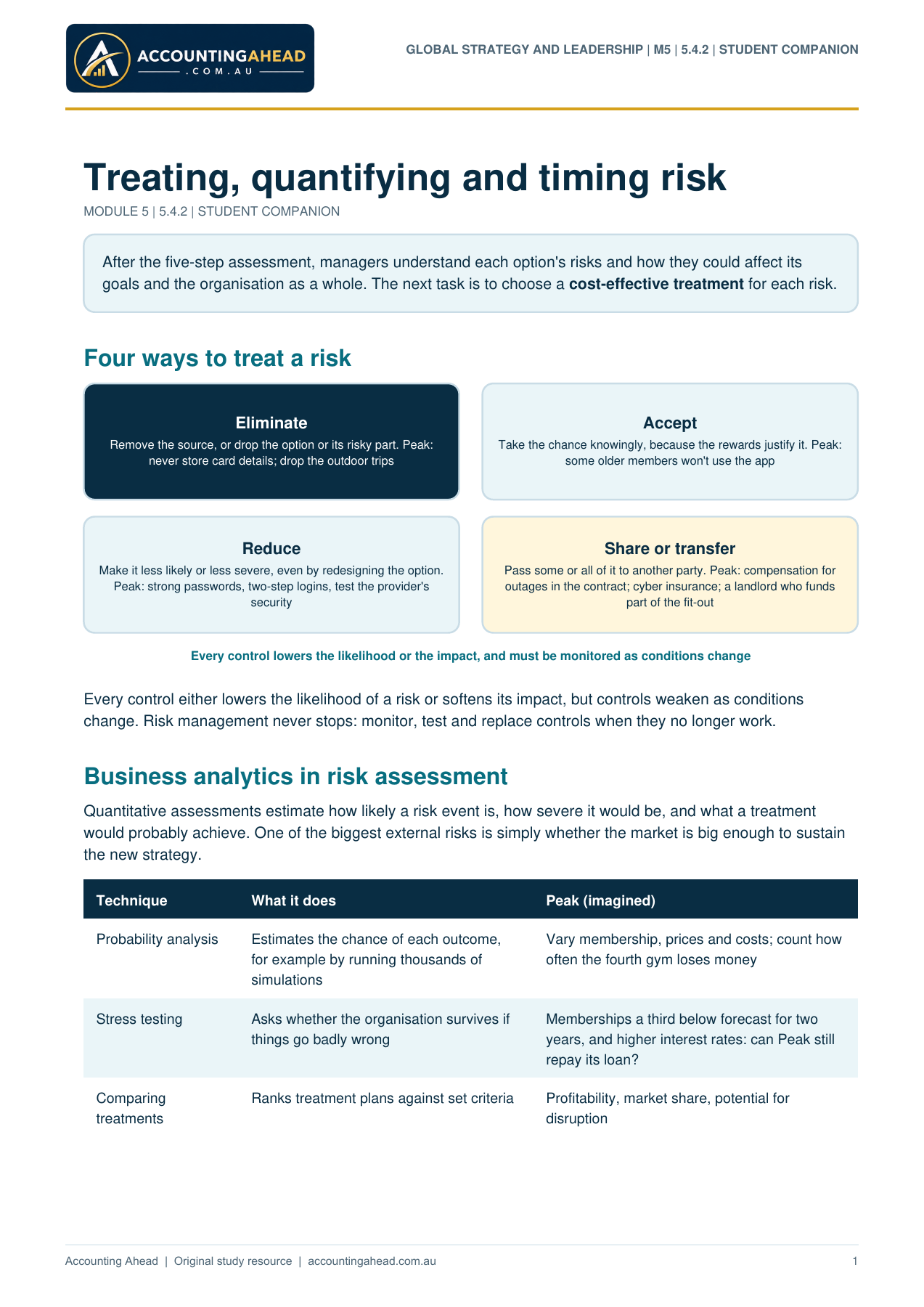
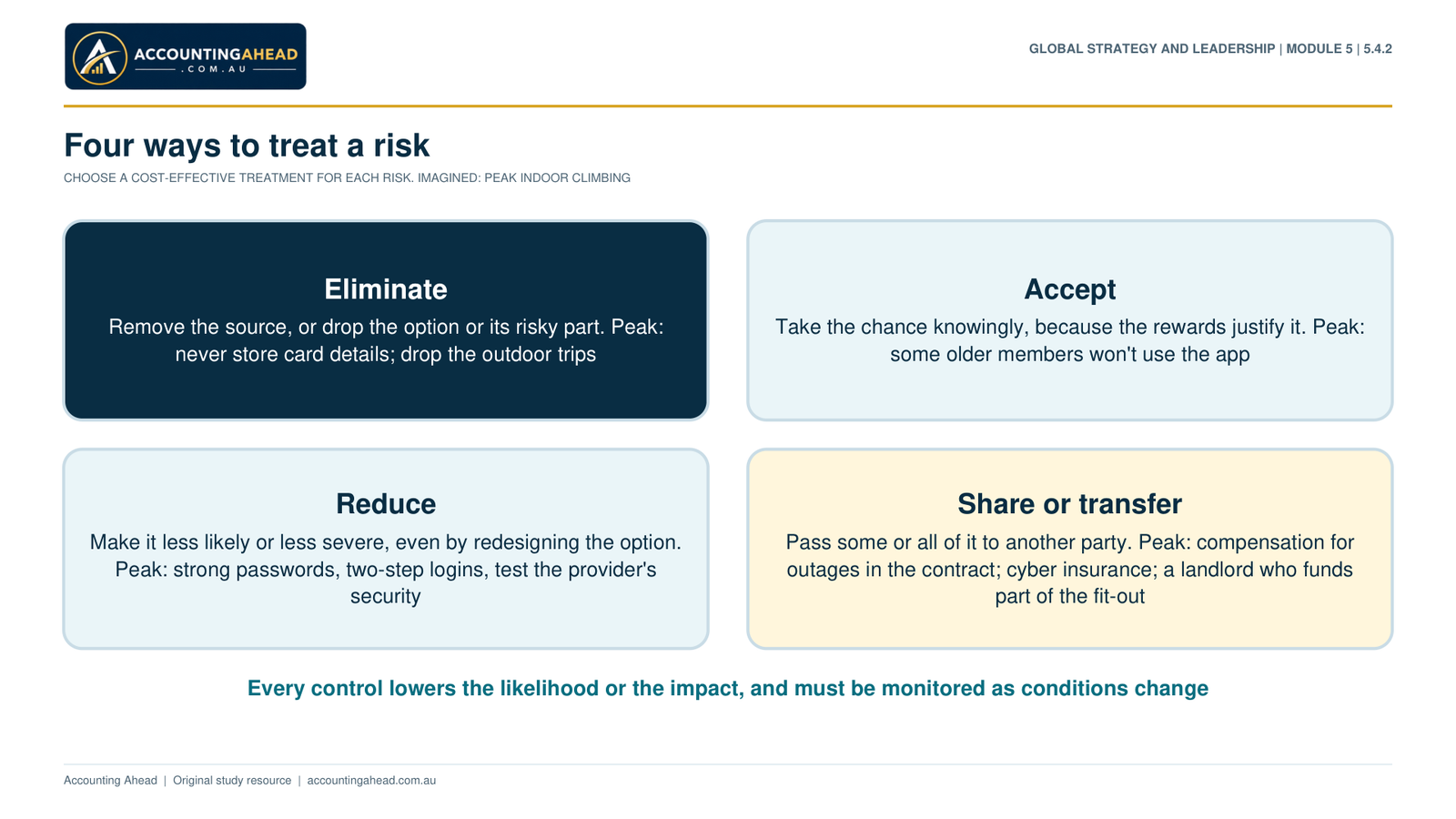
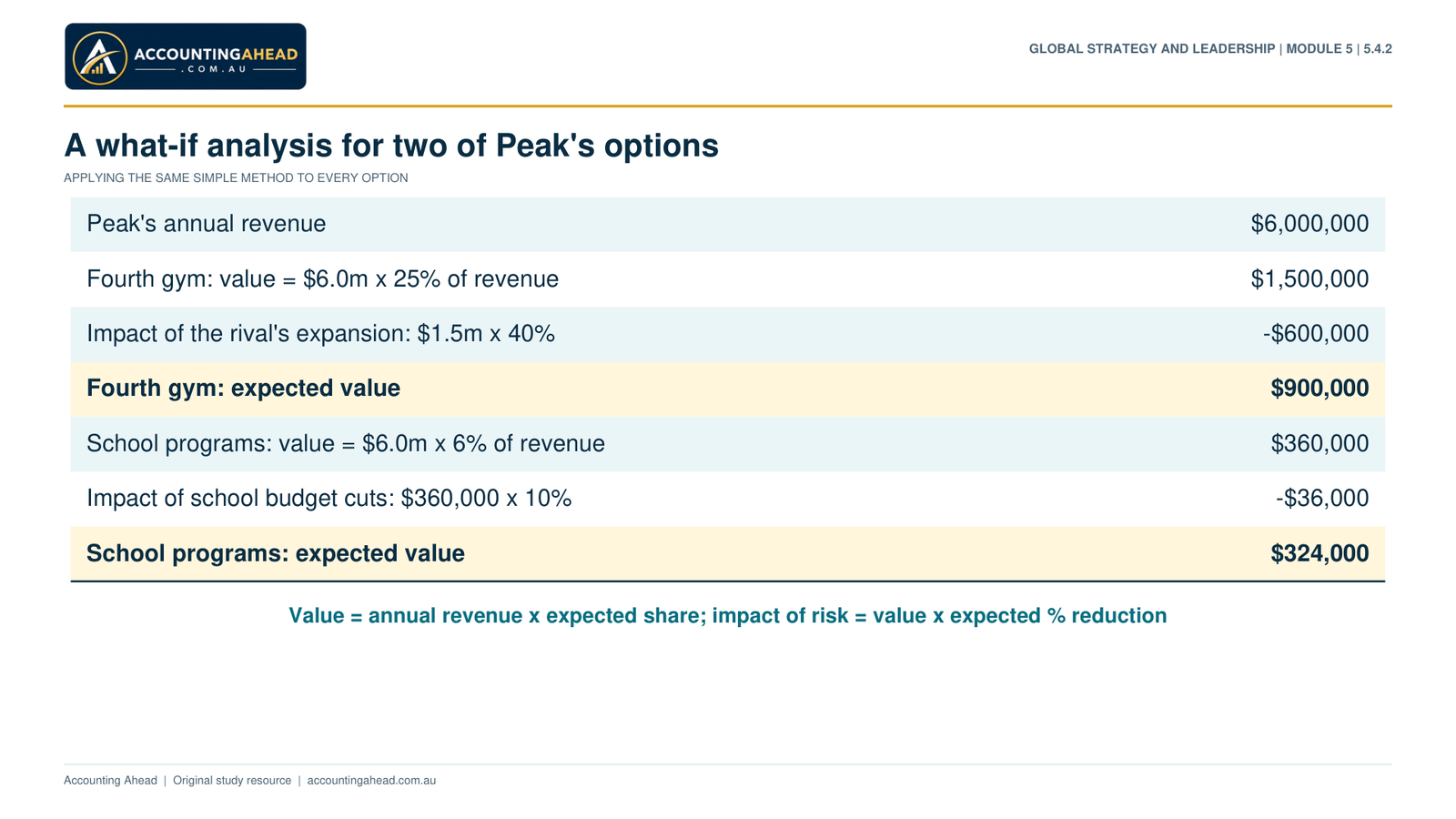
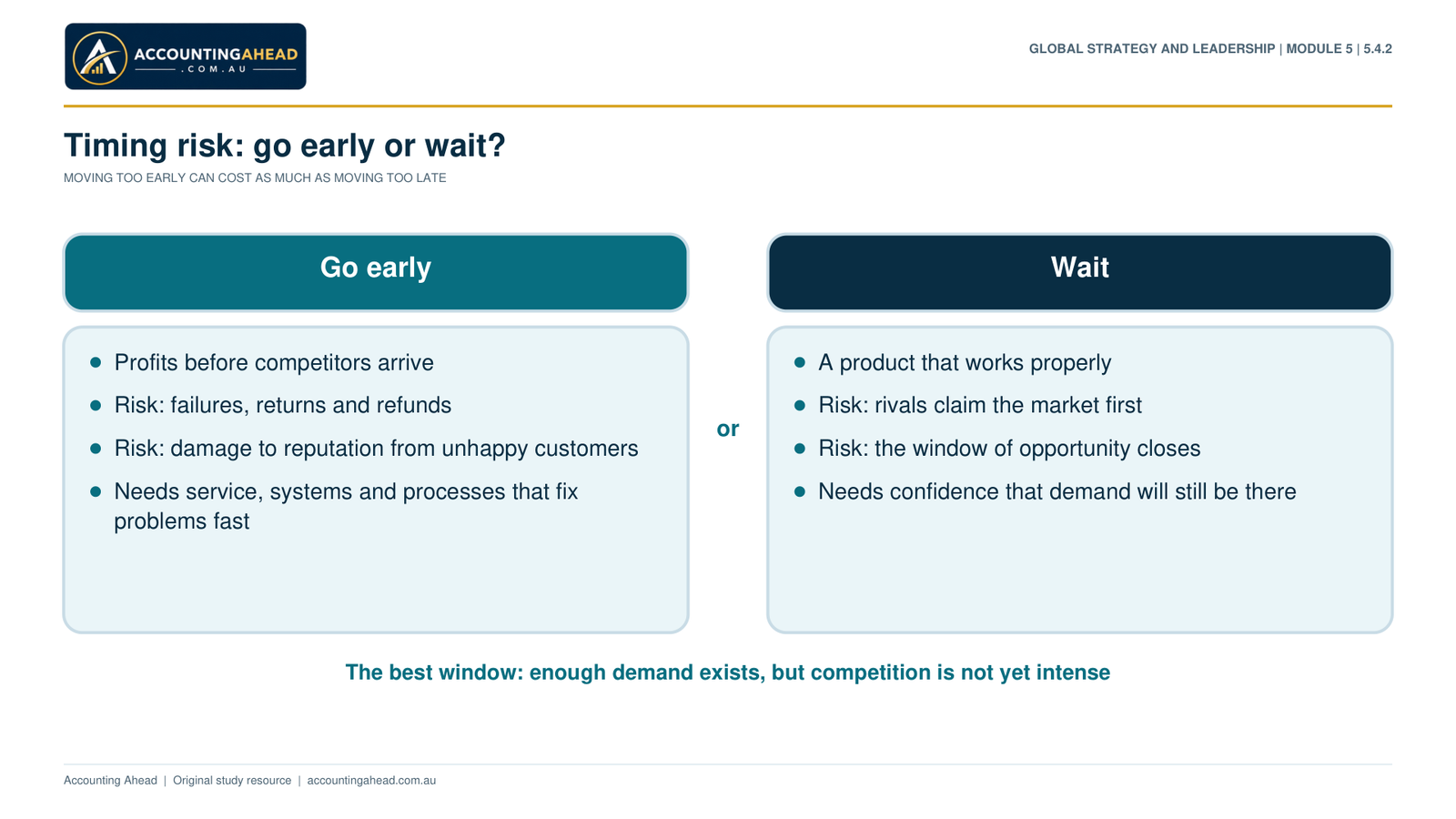
Part 5.4.2 · Treating, Quantifying and Timing Risk
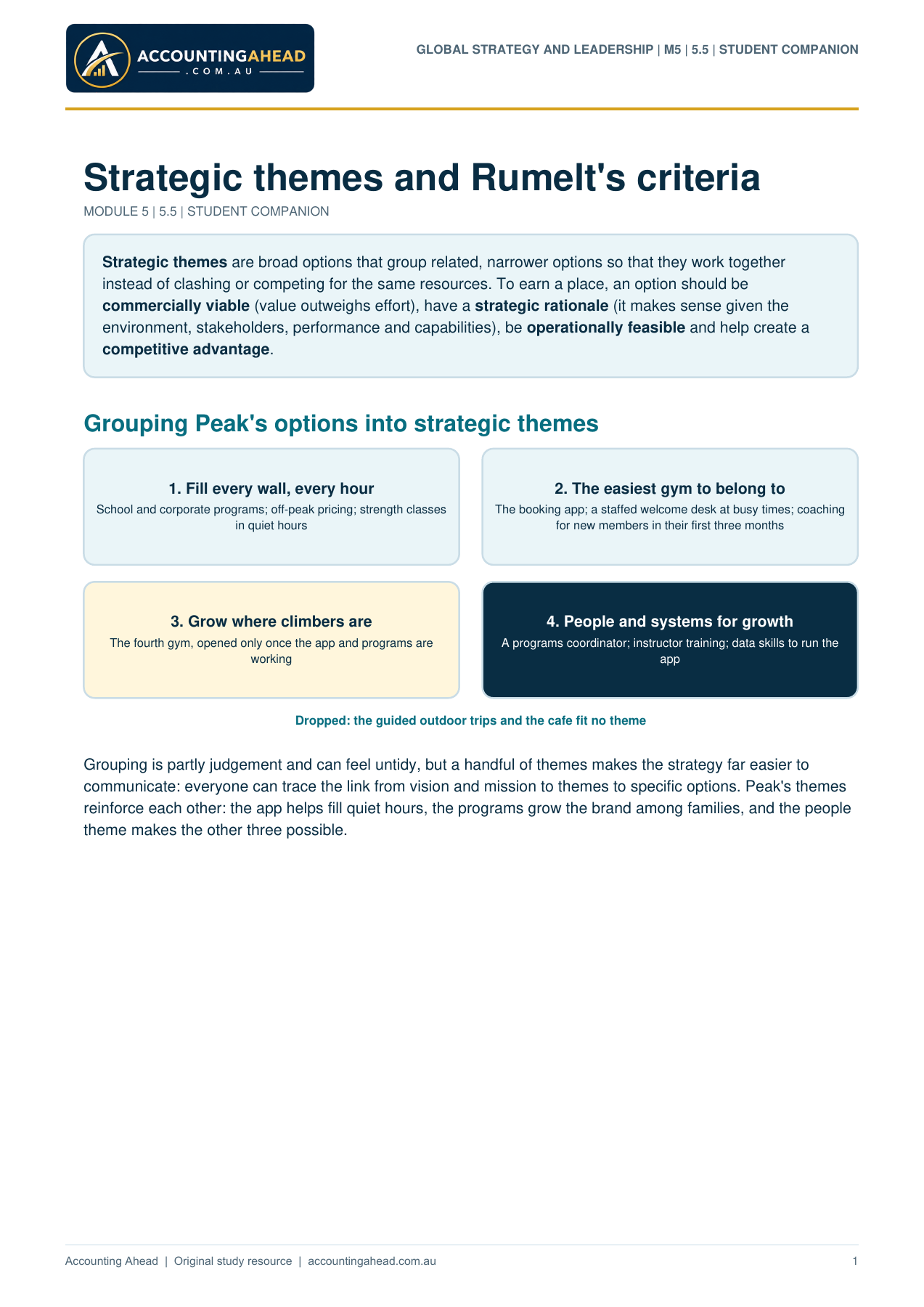
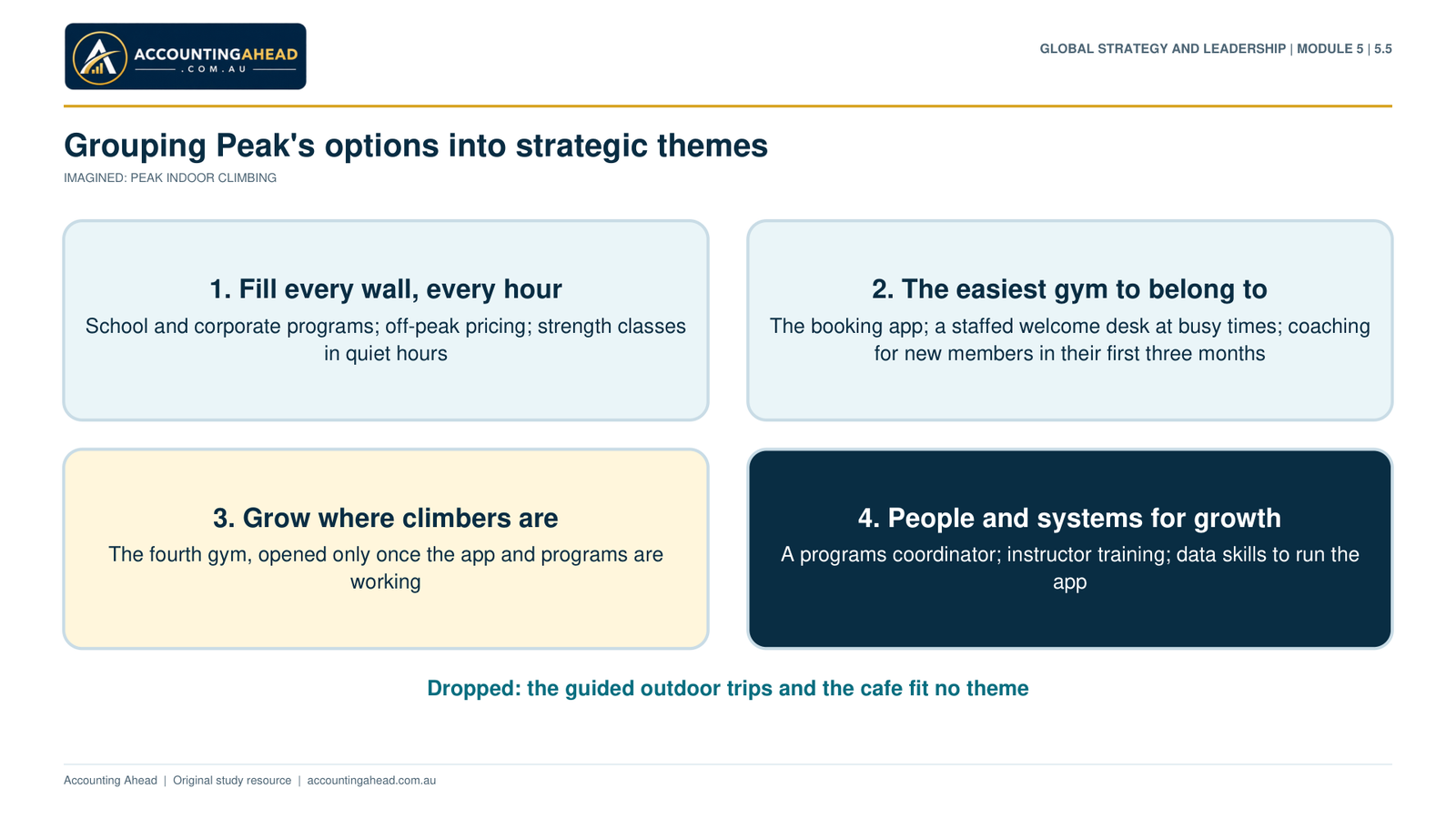
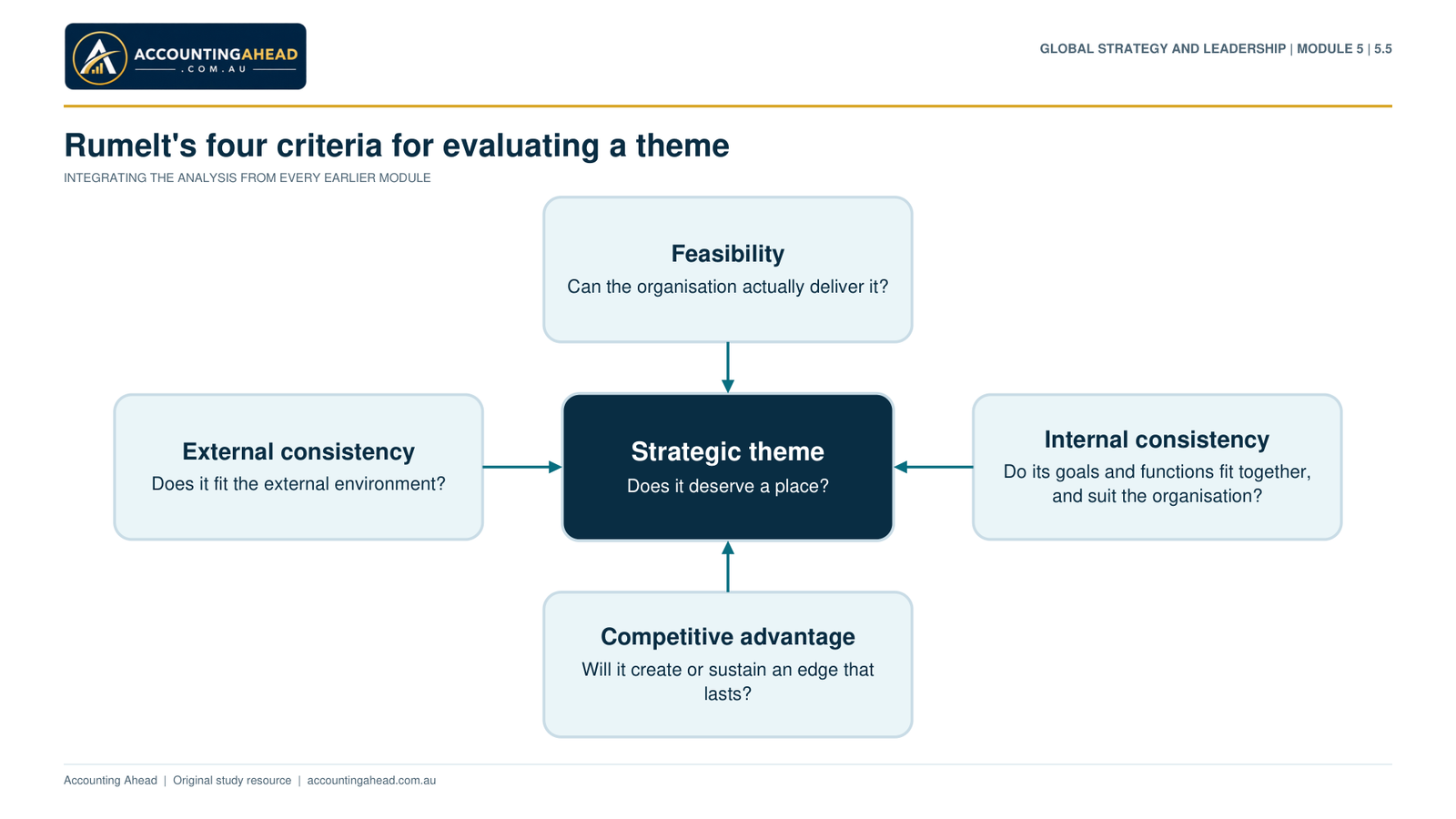
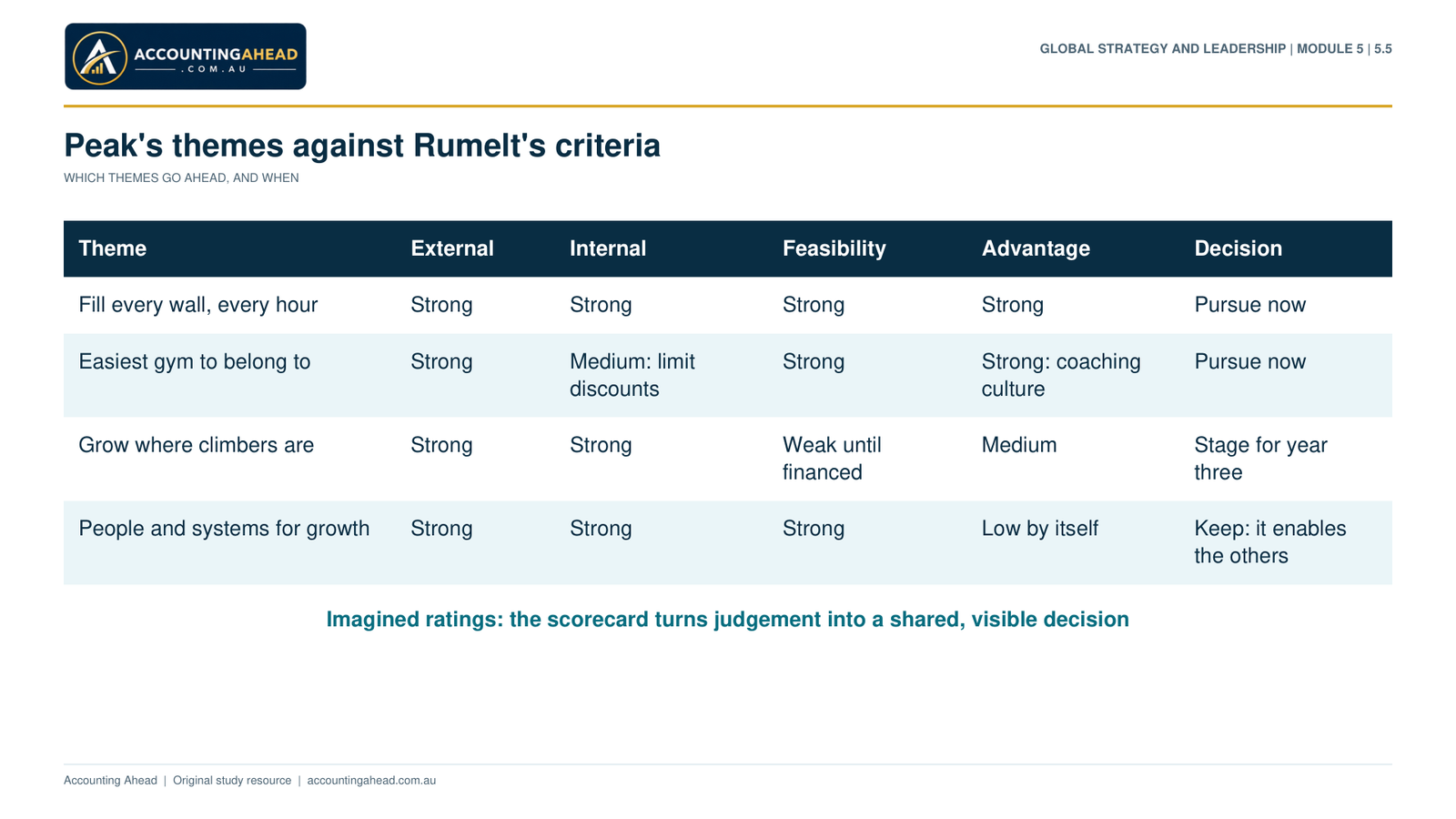
Part 5.5 · Strategic Themes and Rumelt's Criteria
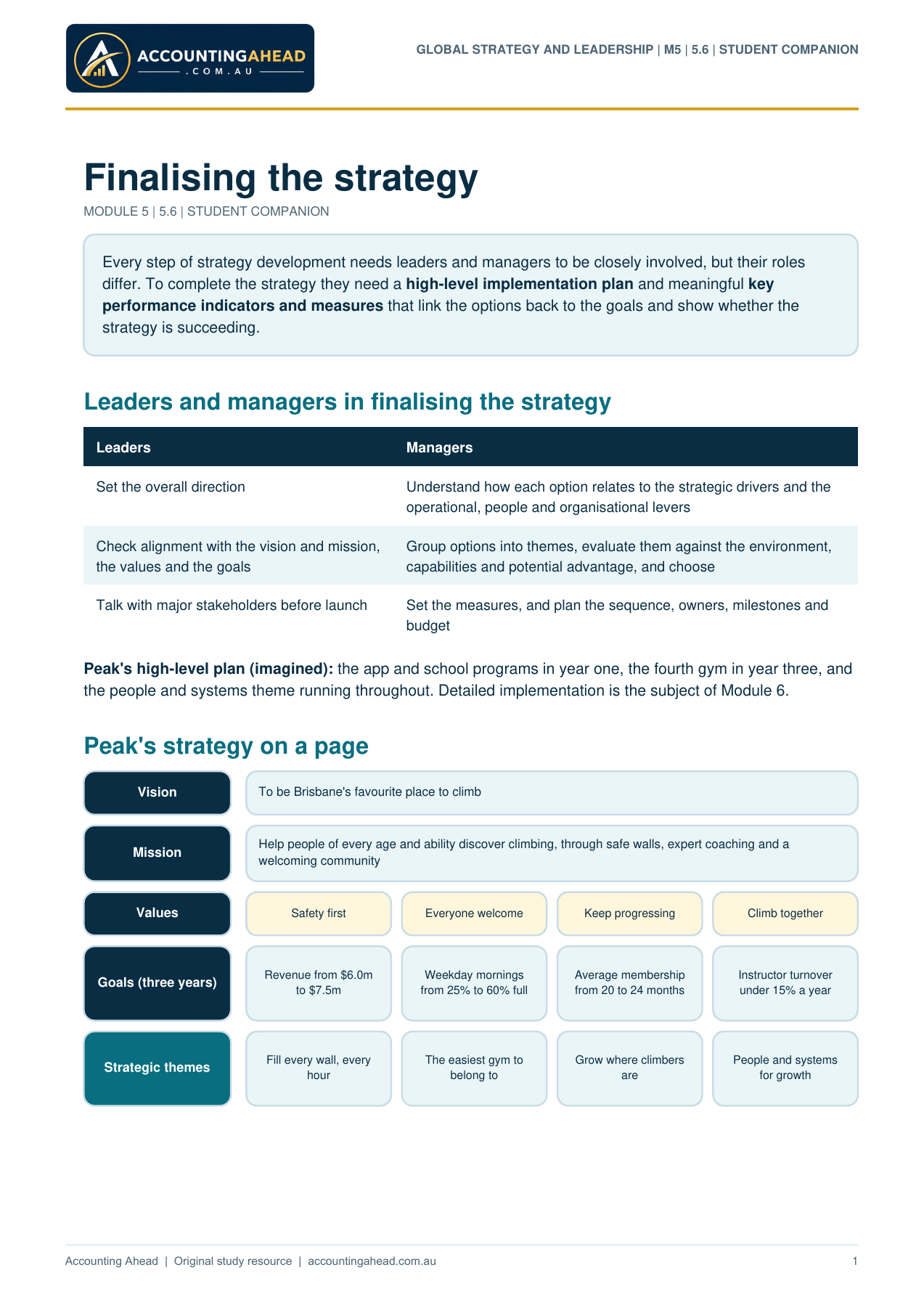
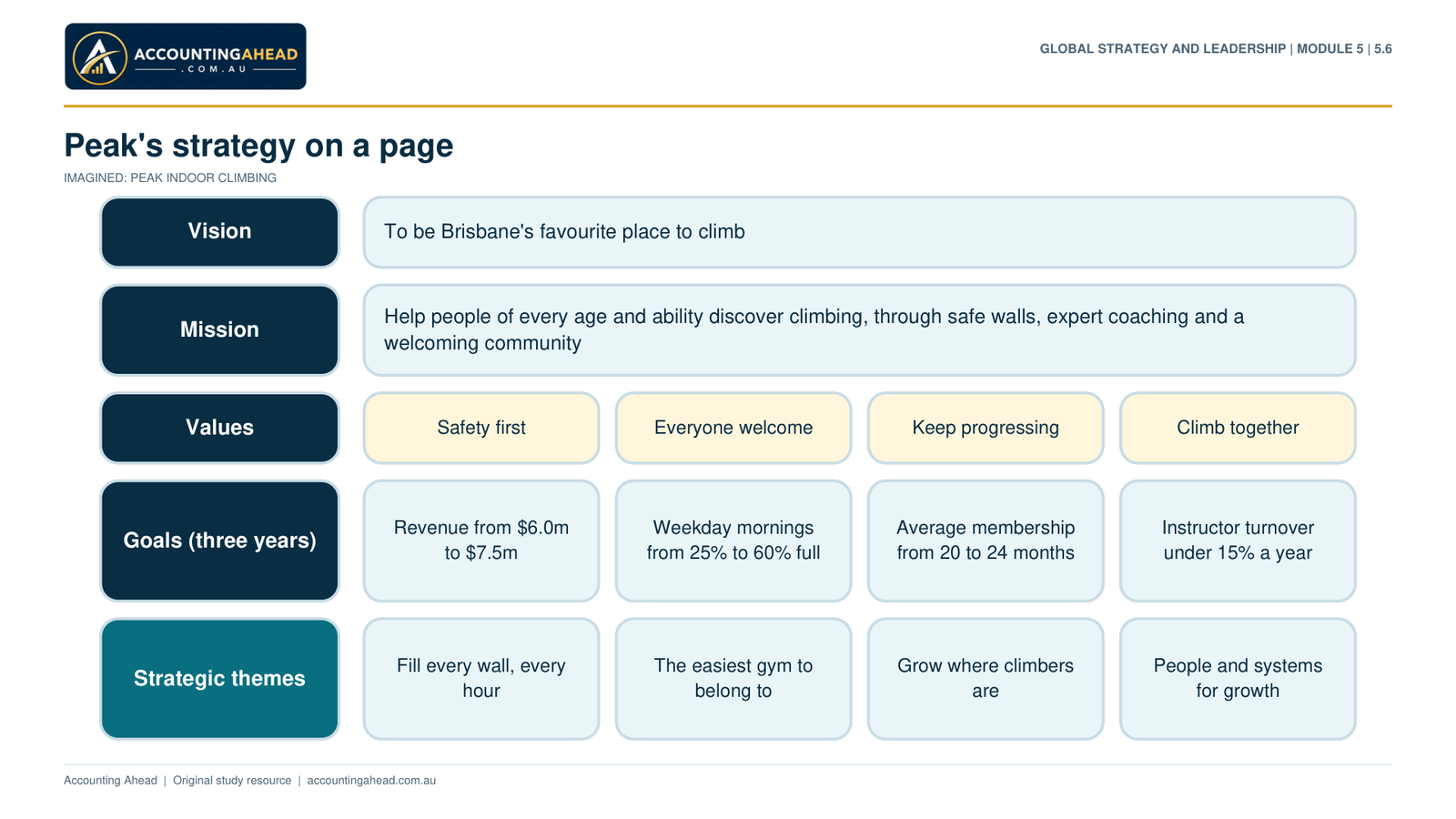
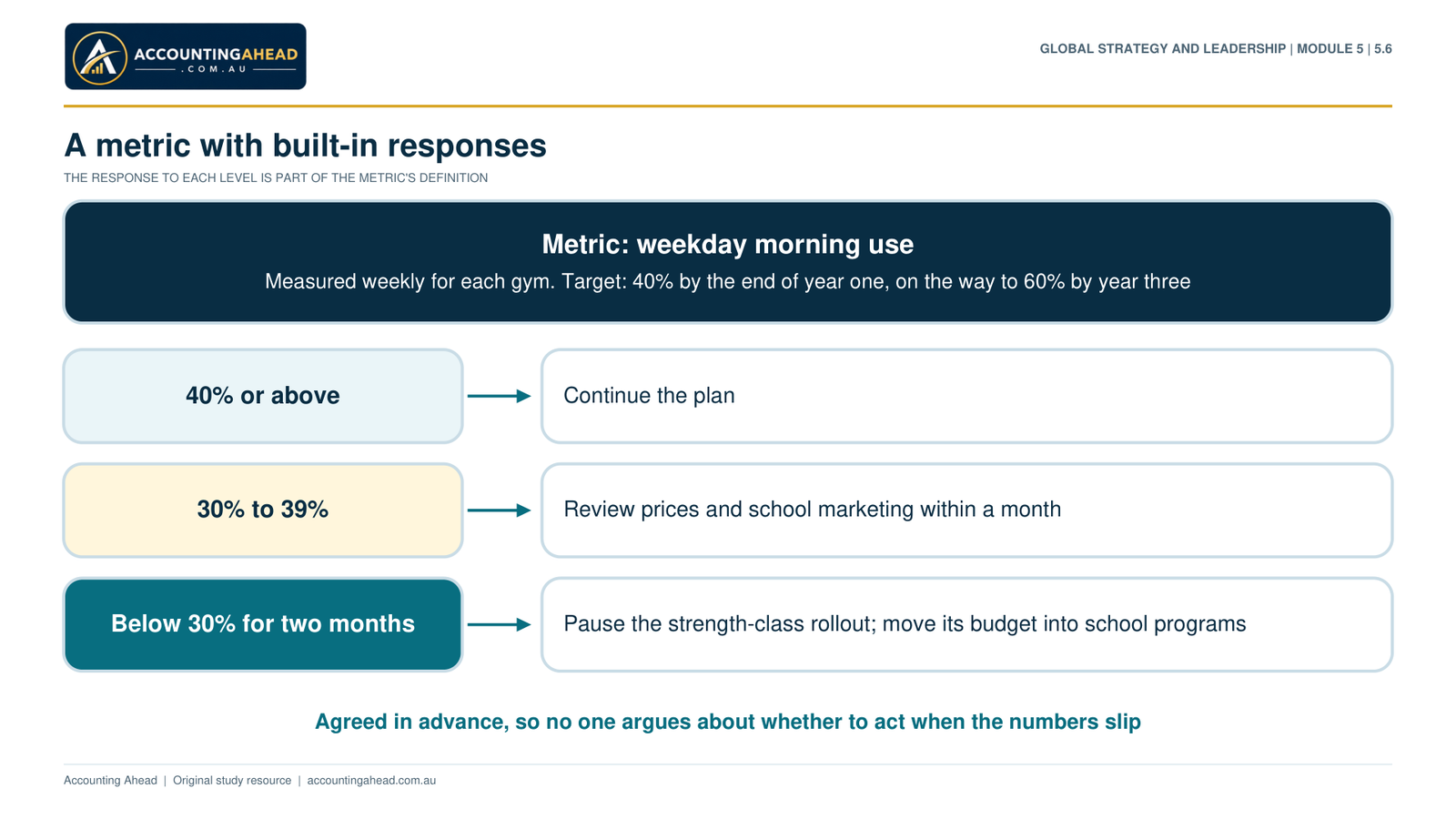
Part 5.6 · Finalising the Strategy
Module 6 · Implementing and reviewing strategy
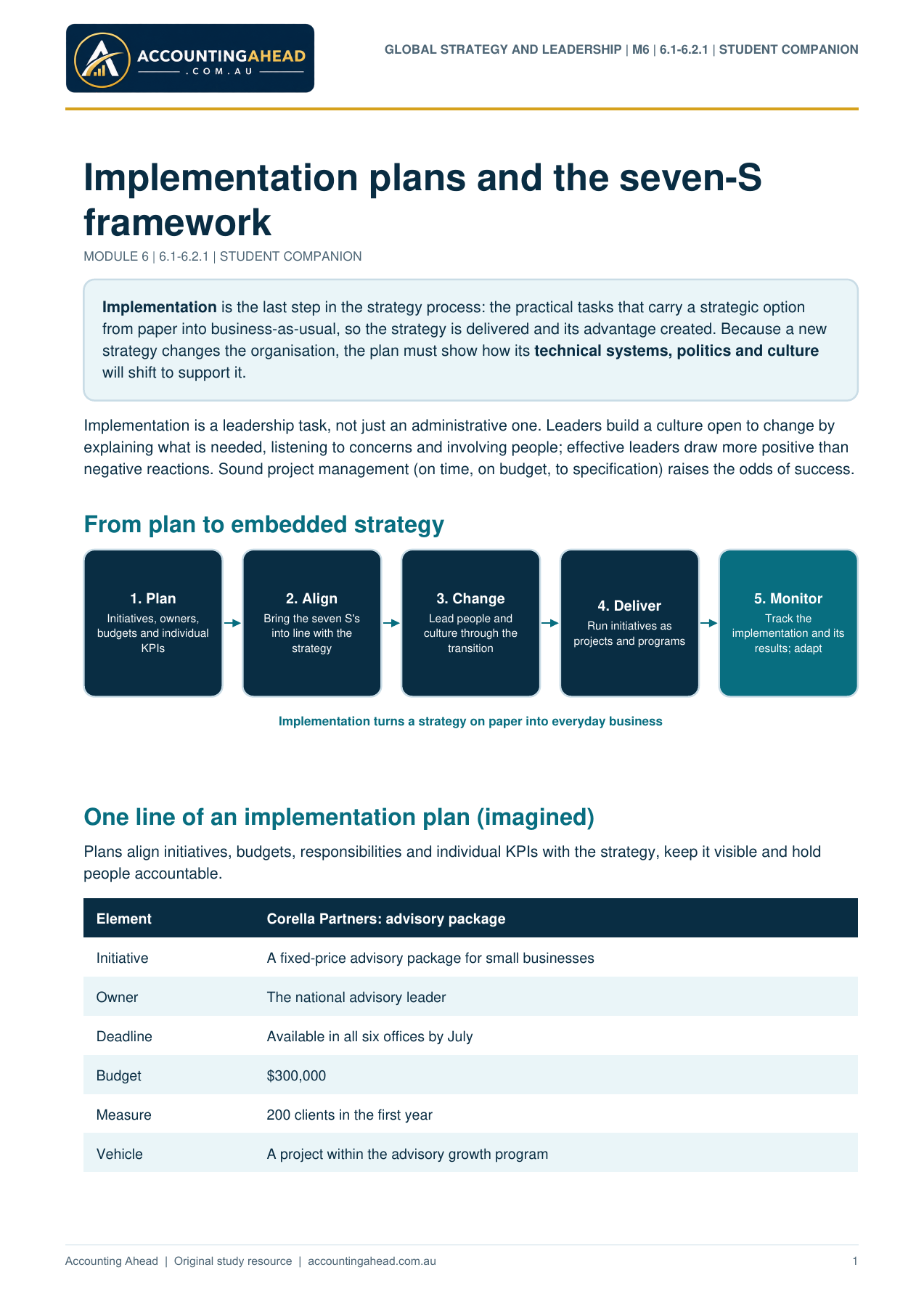
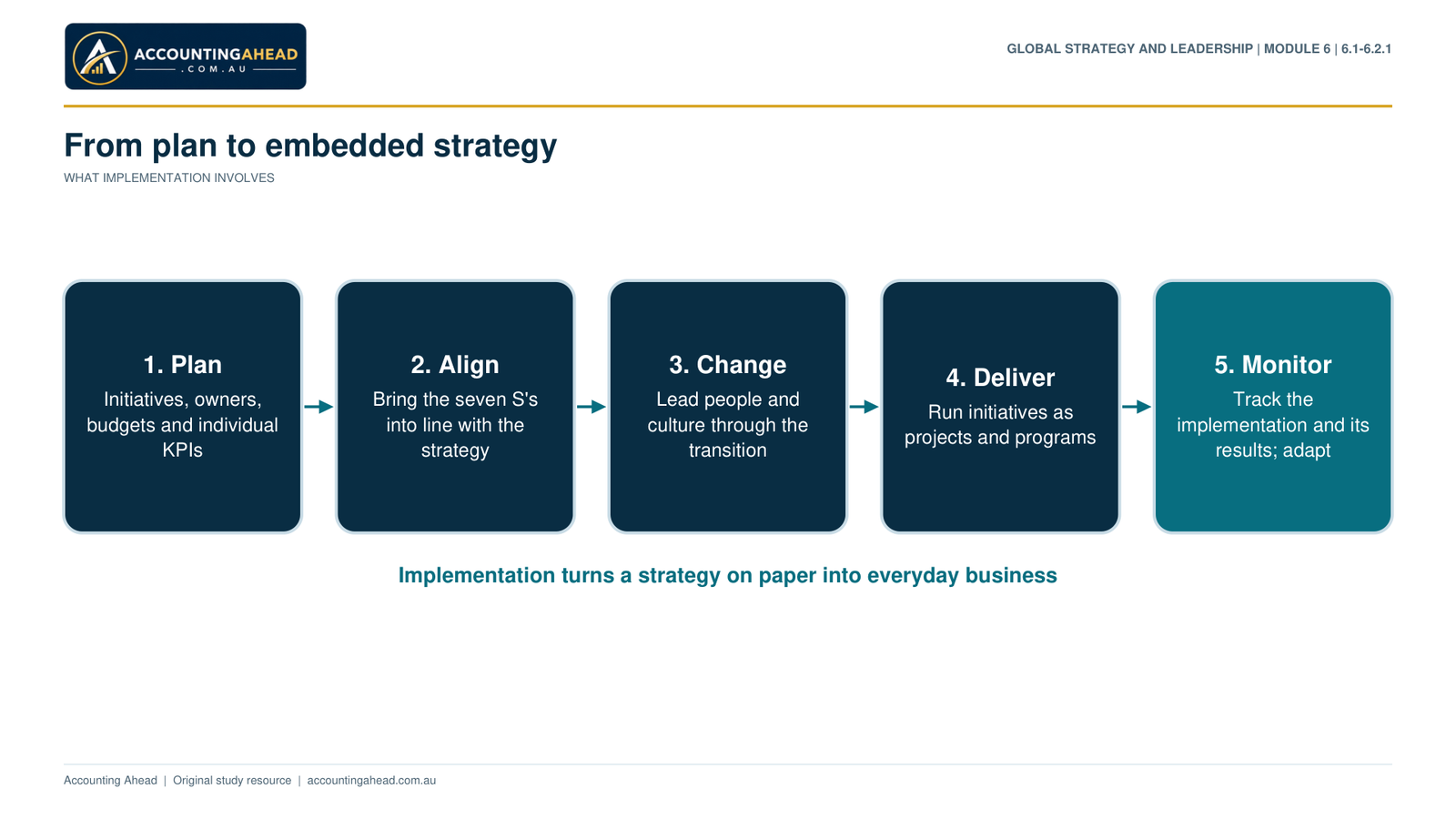
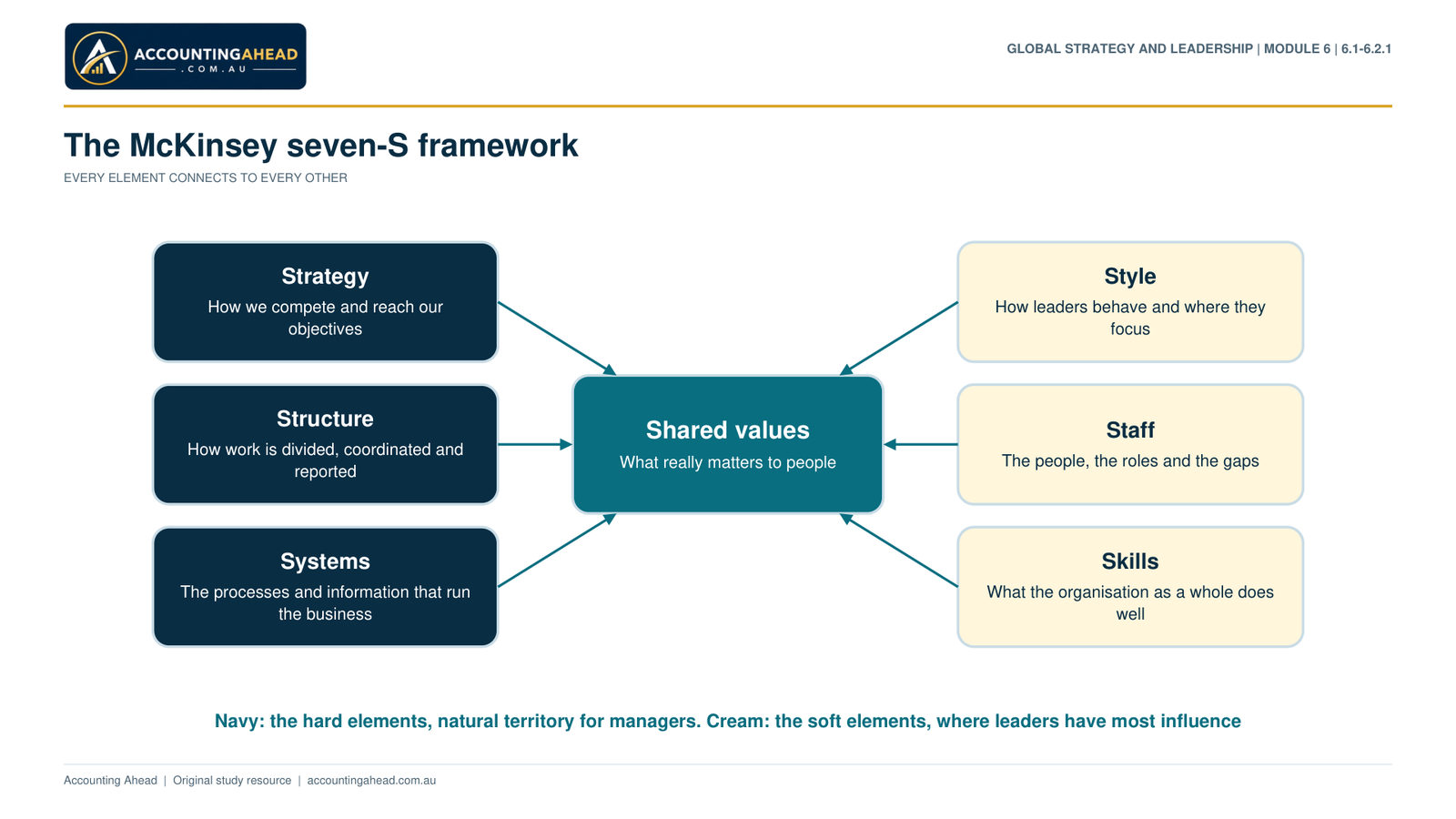
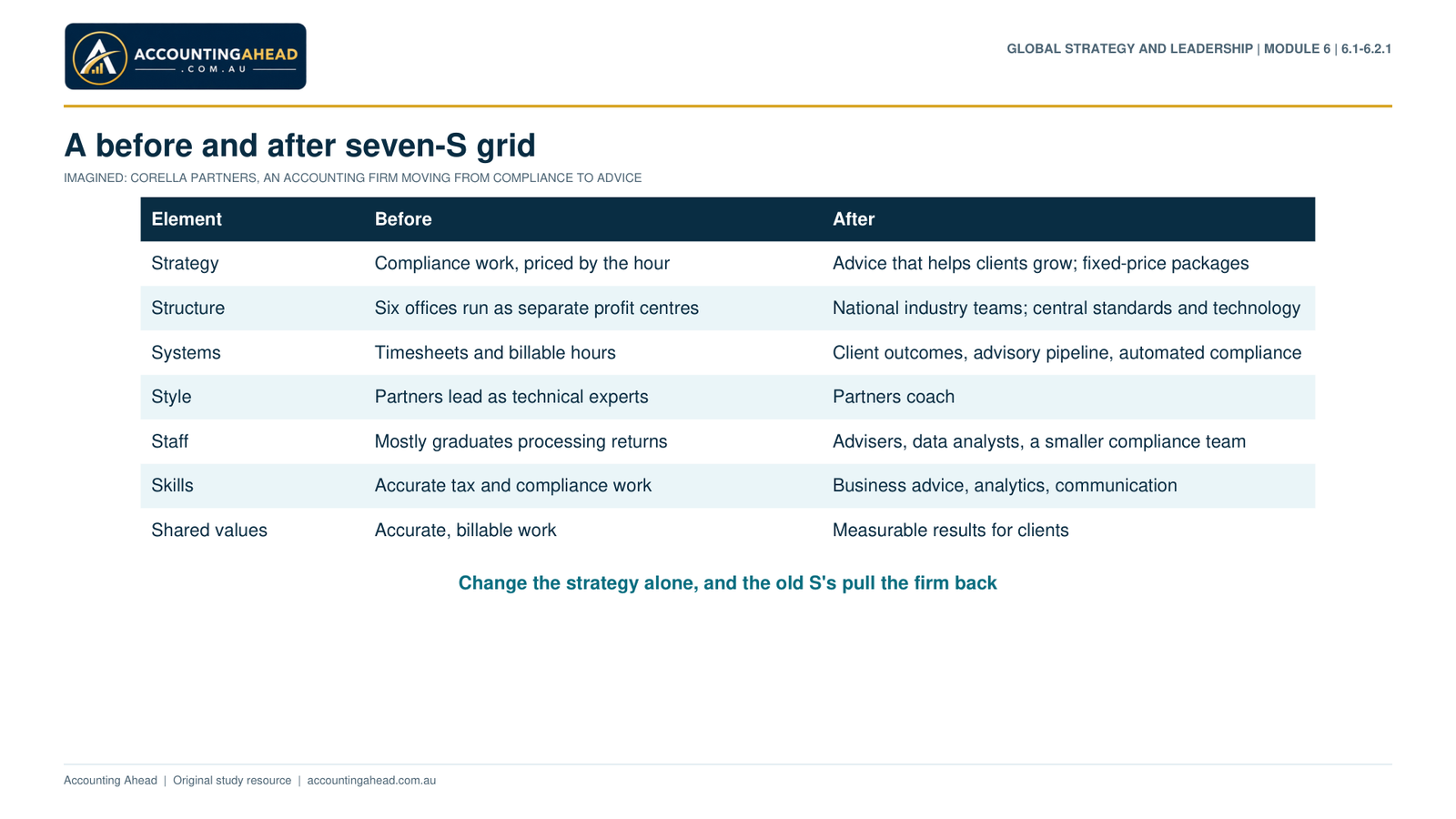
Part 6.1-6.2.1 · Implementation Plans and the 7-S Framework
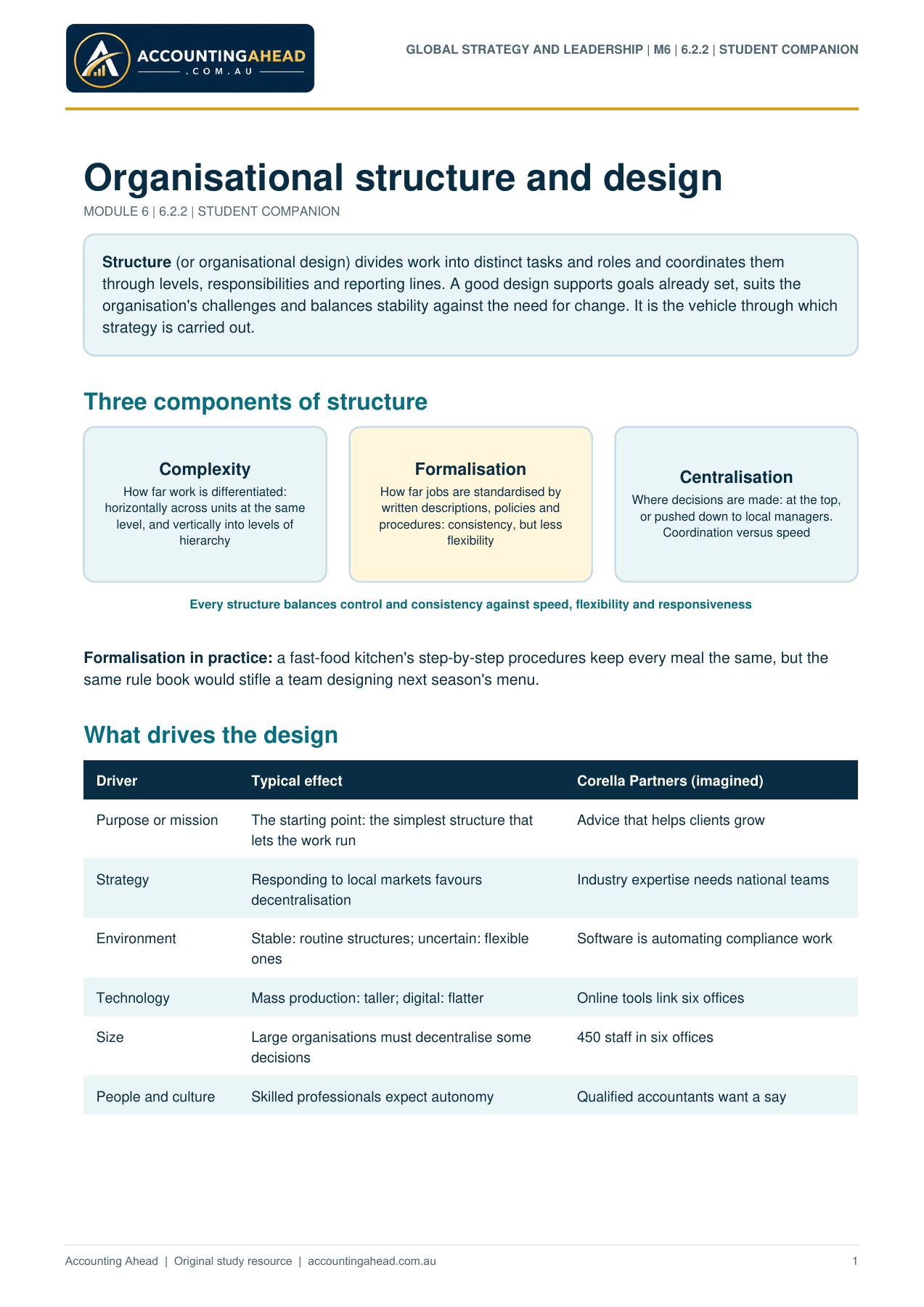
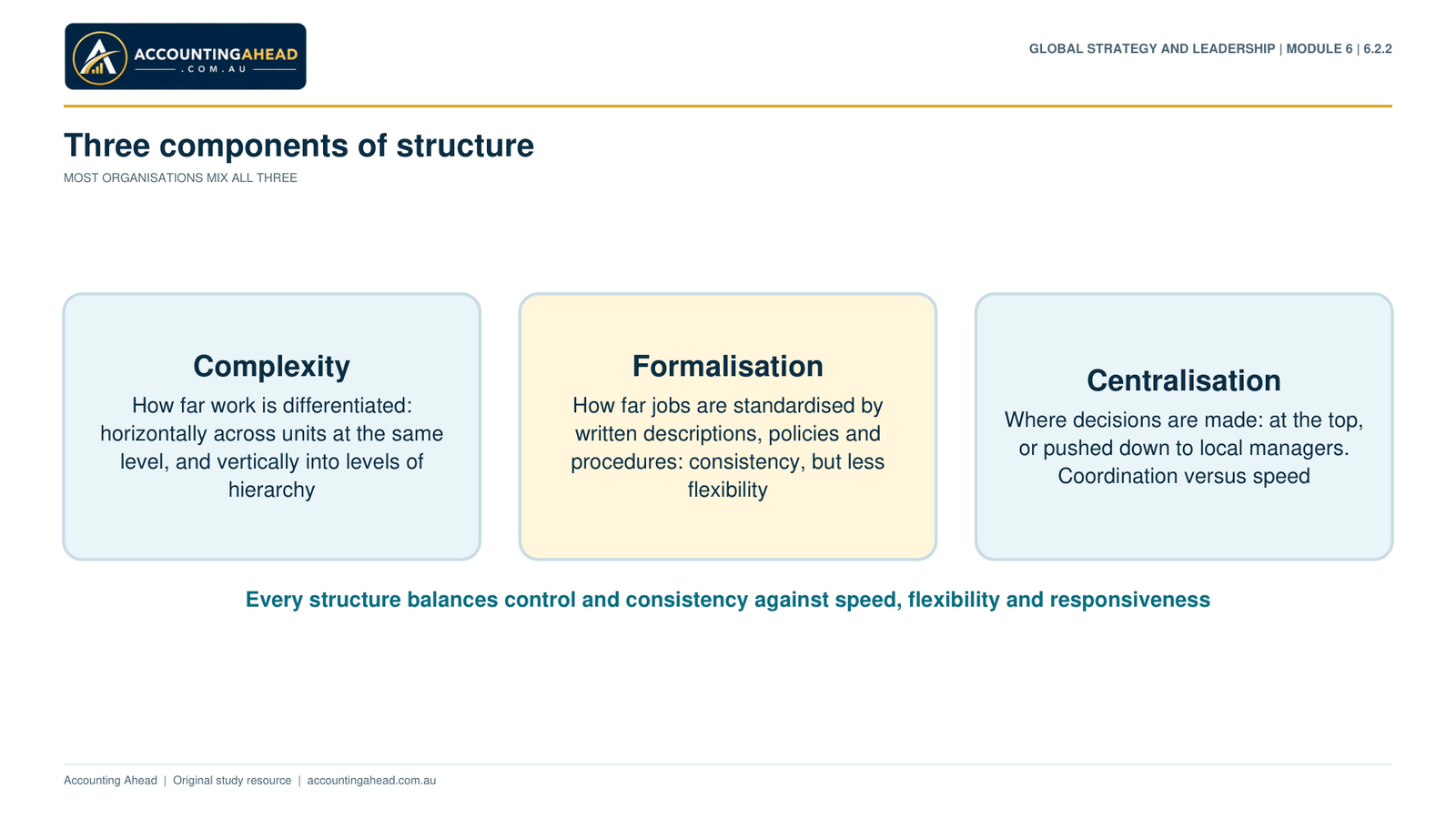
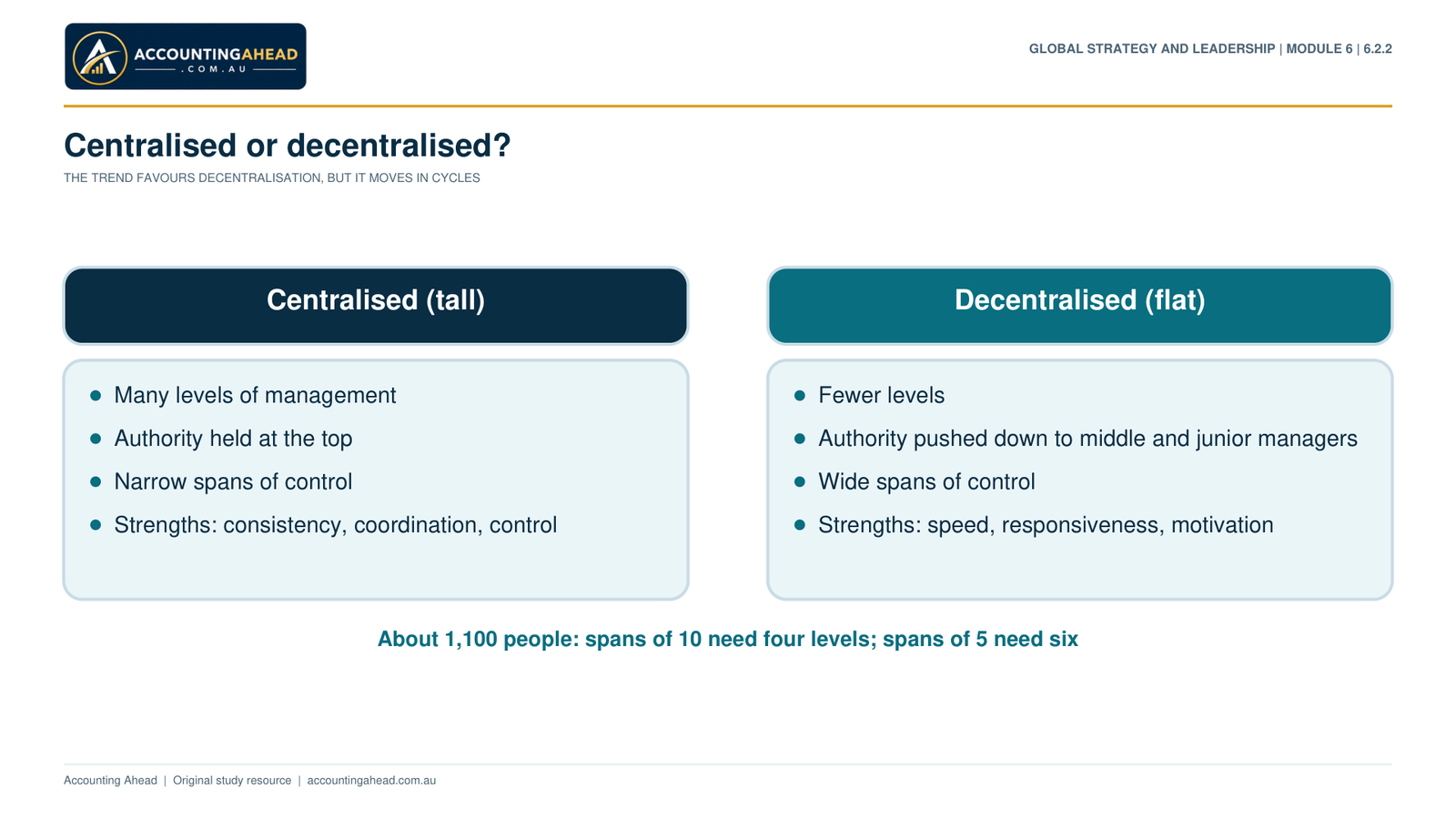
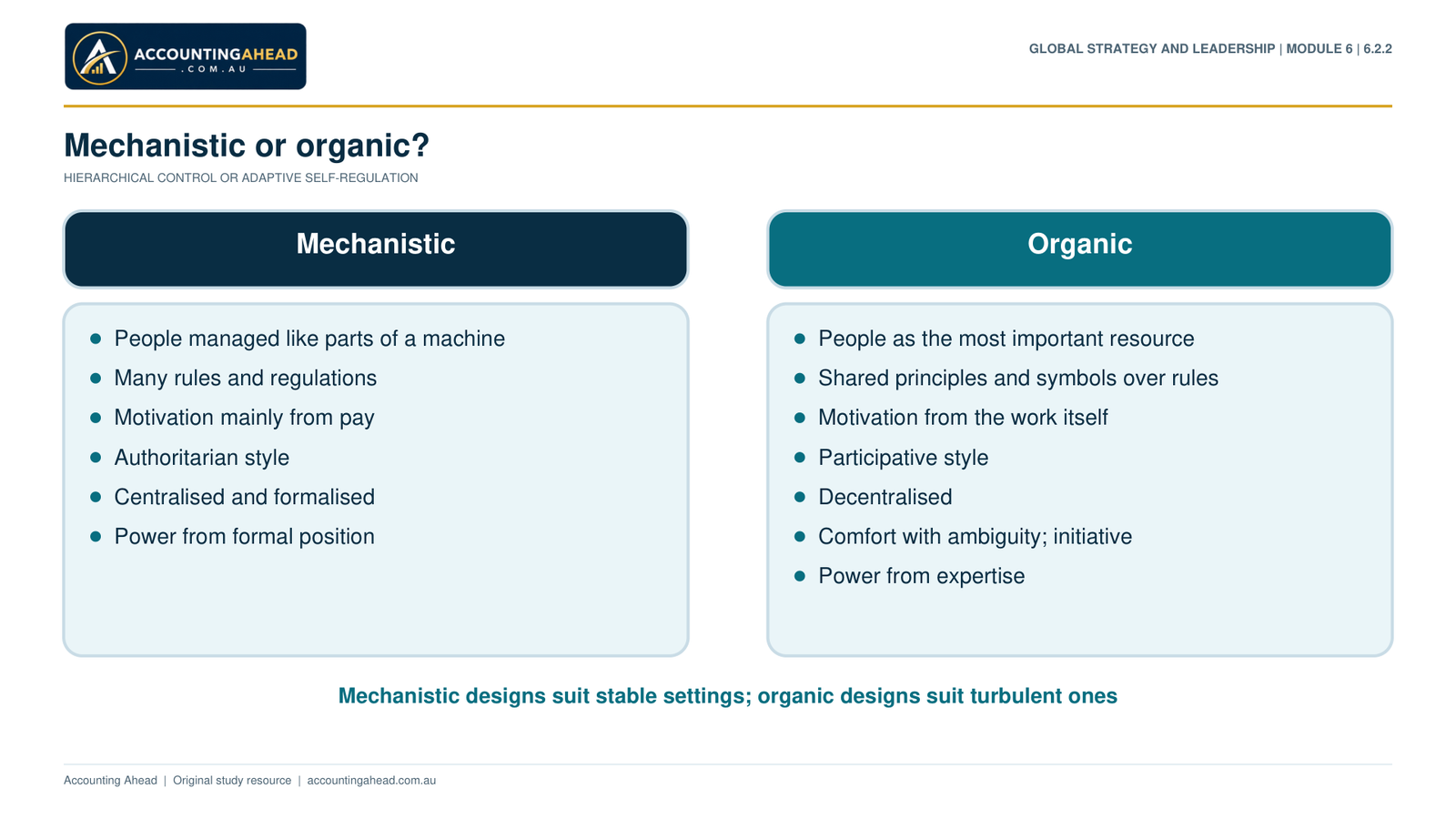
Part 6.2.2 · Organisational Structure and Design
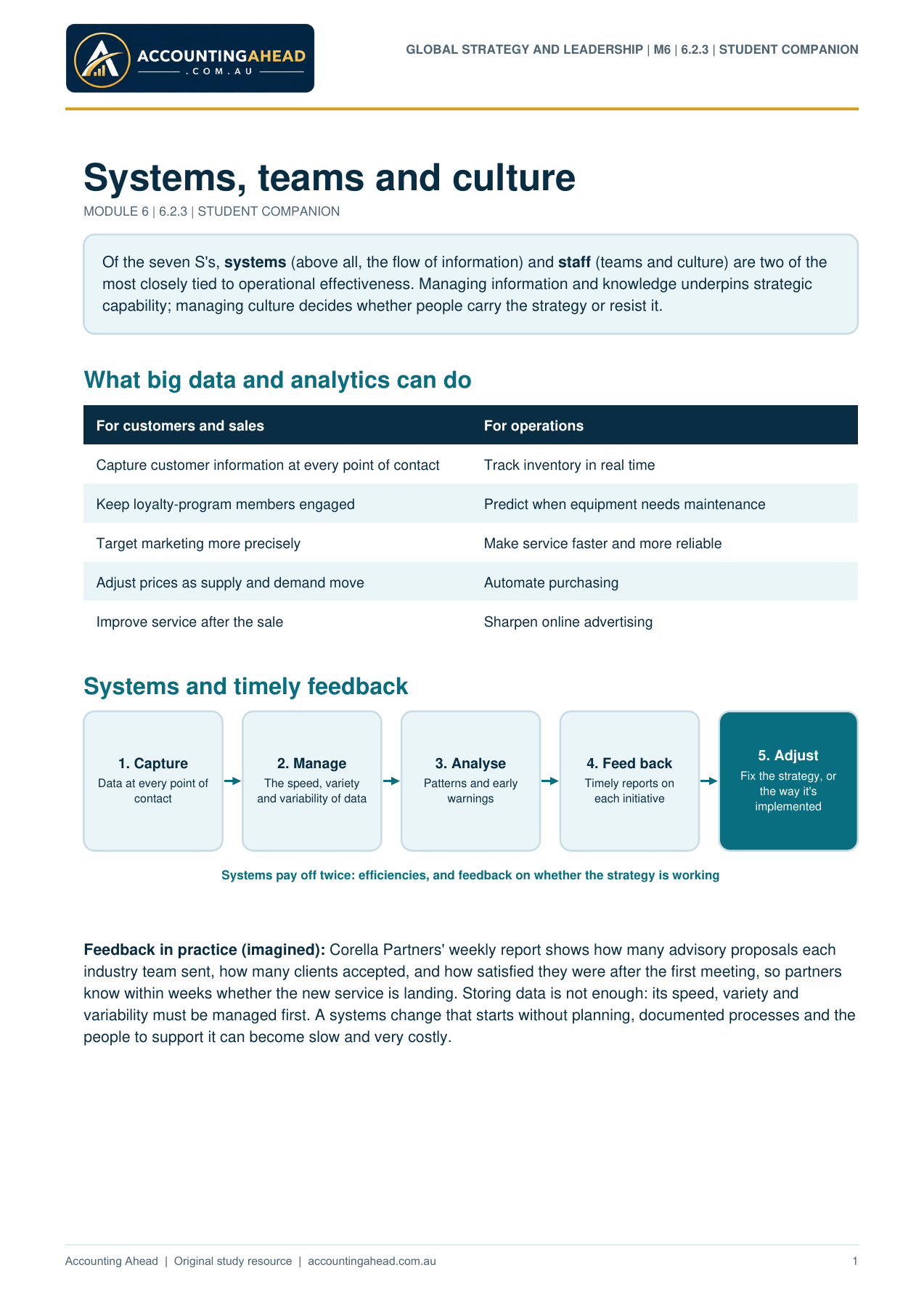
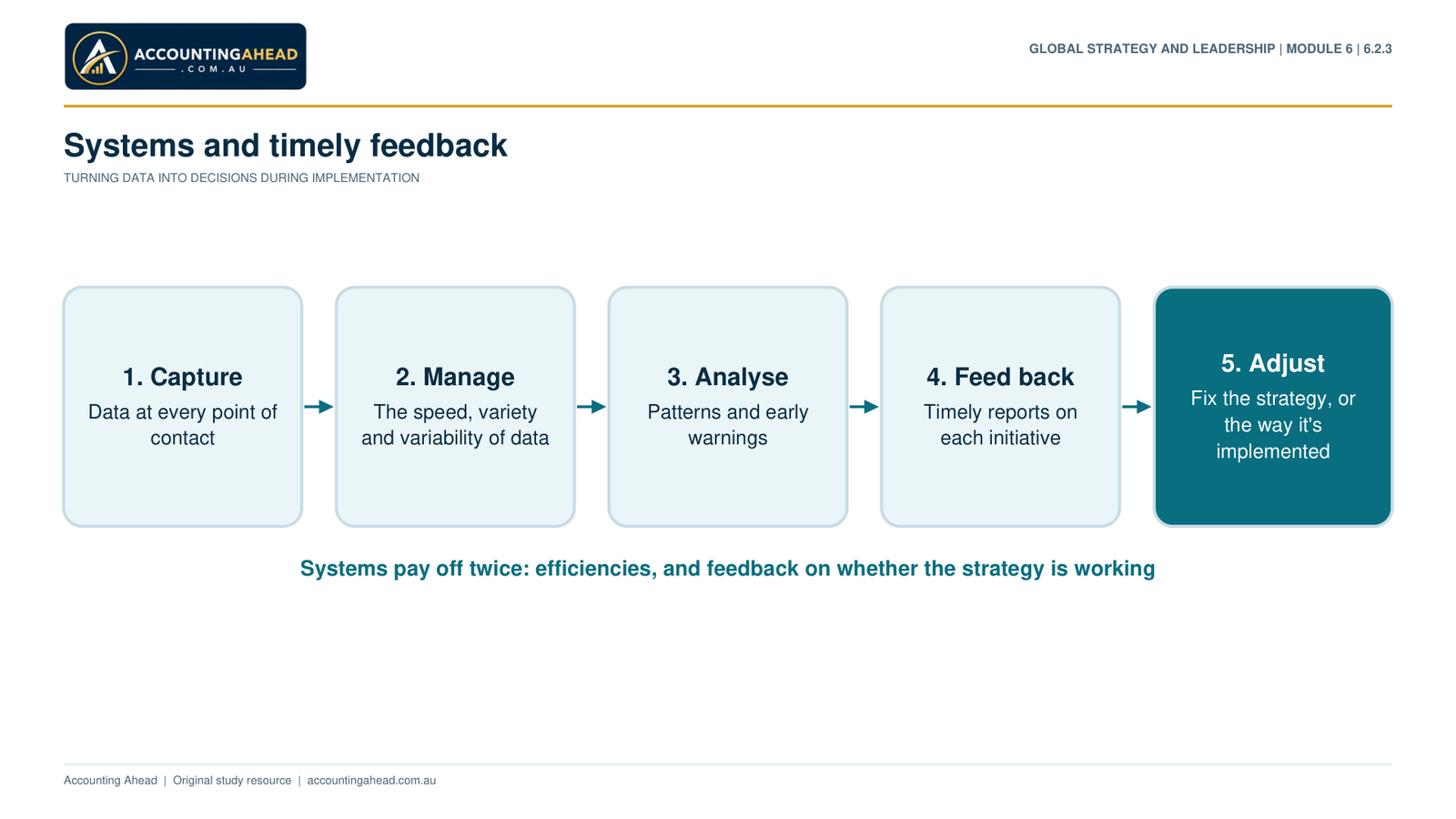
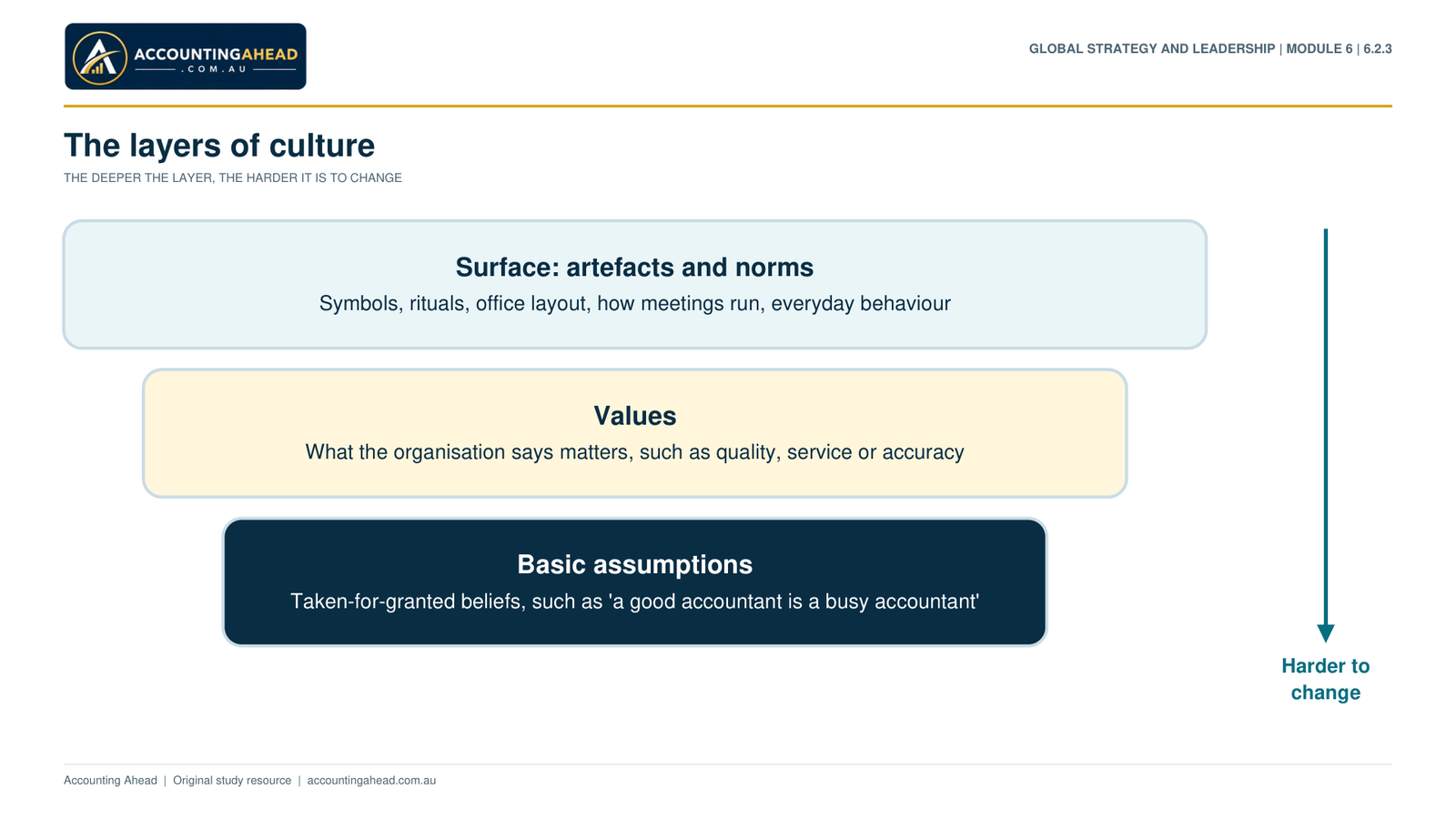
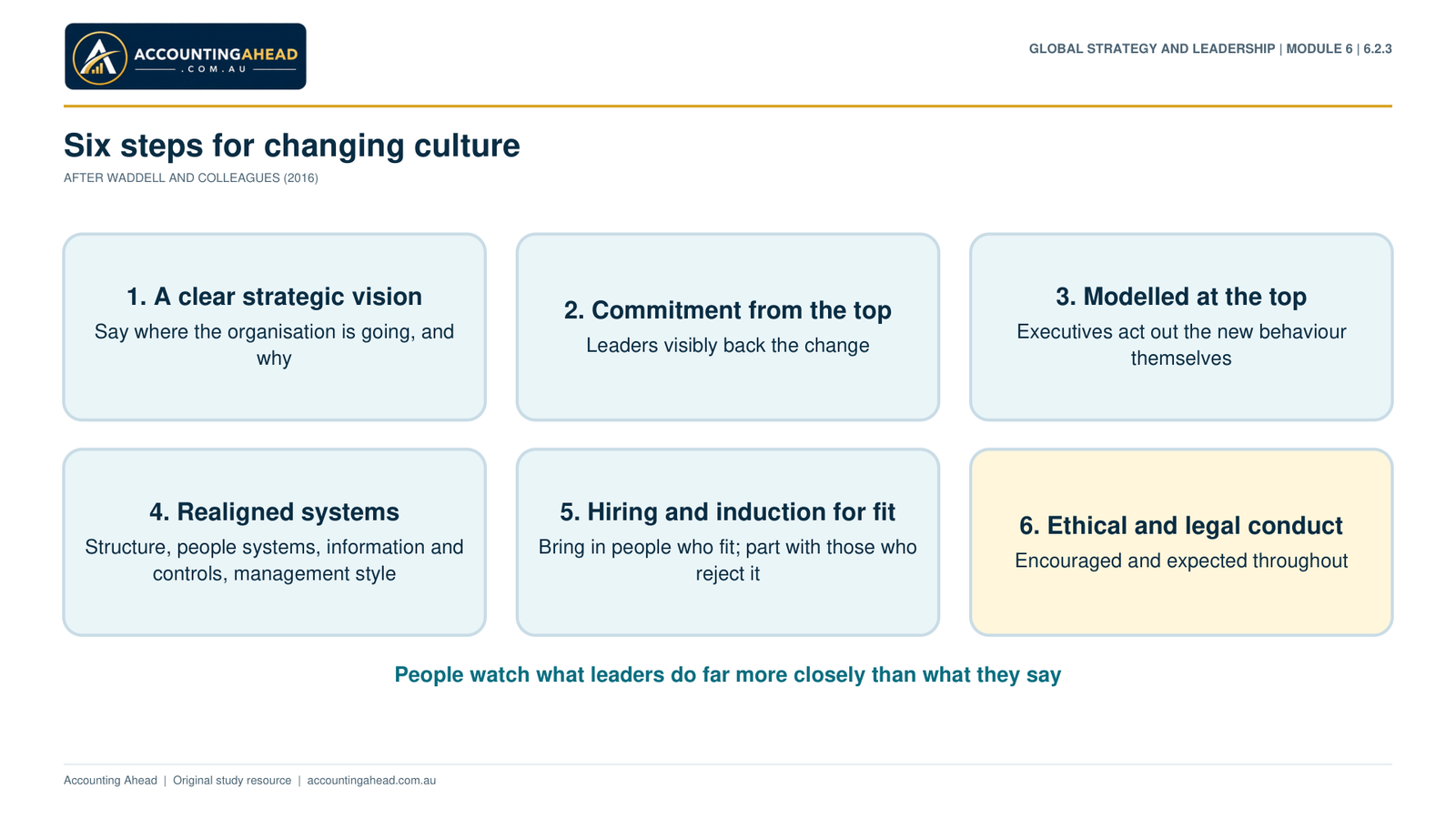
Part 6.2.3 · Systems, Teams and Culture
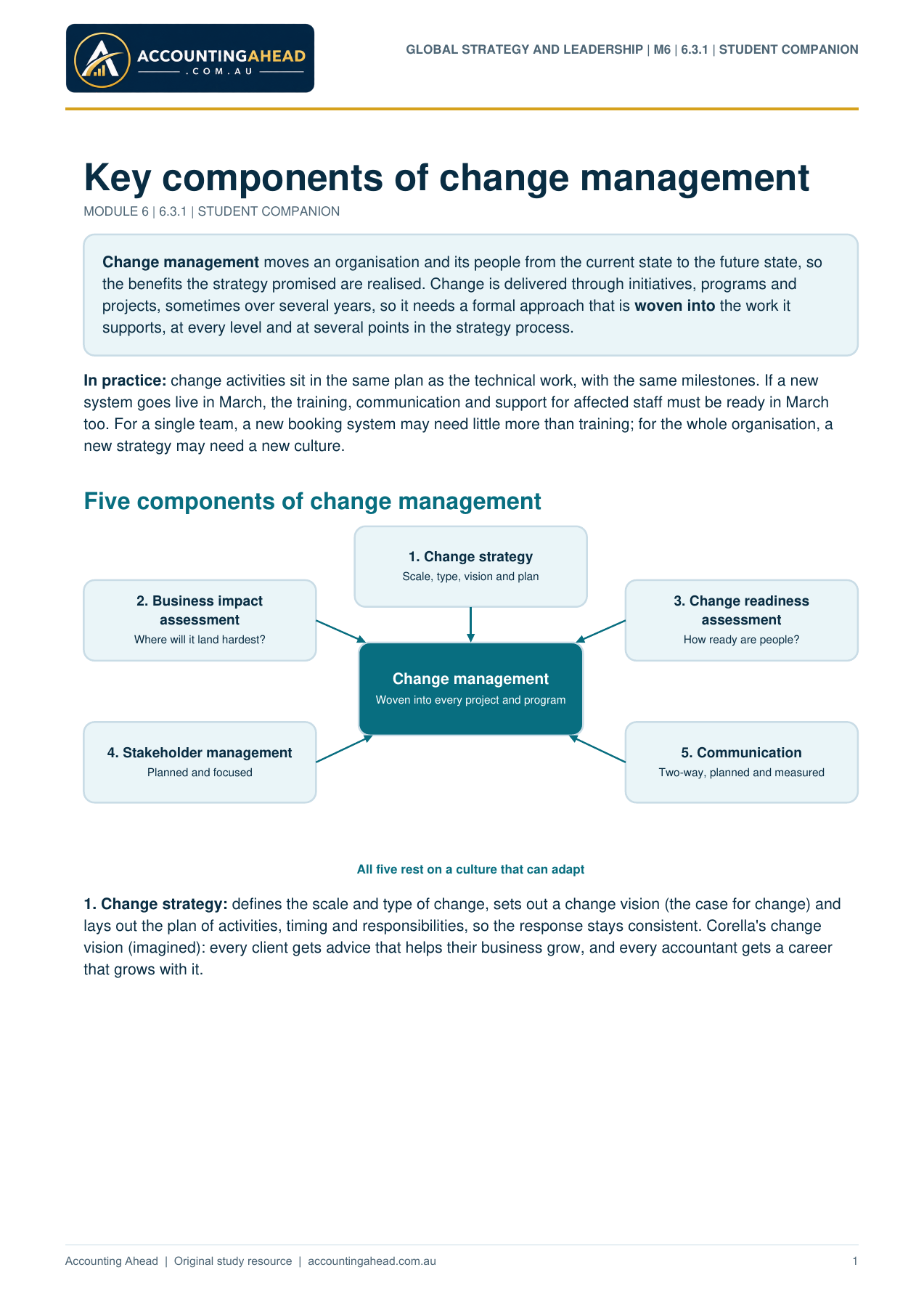
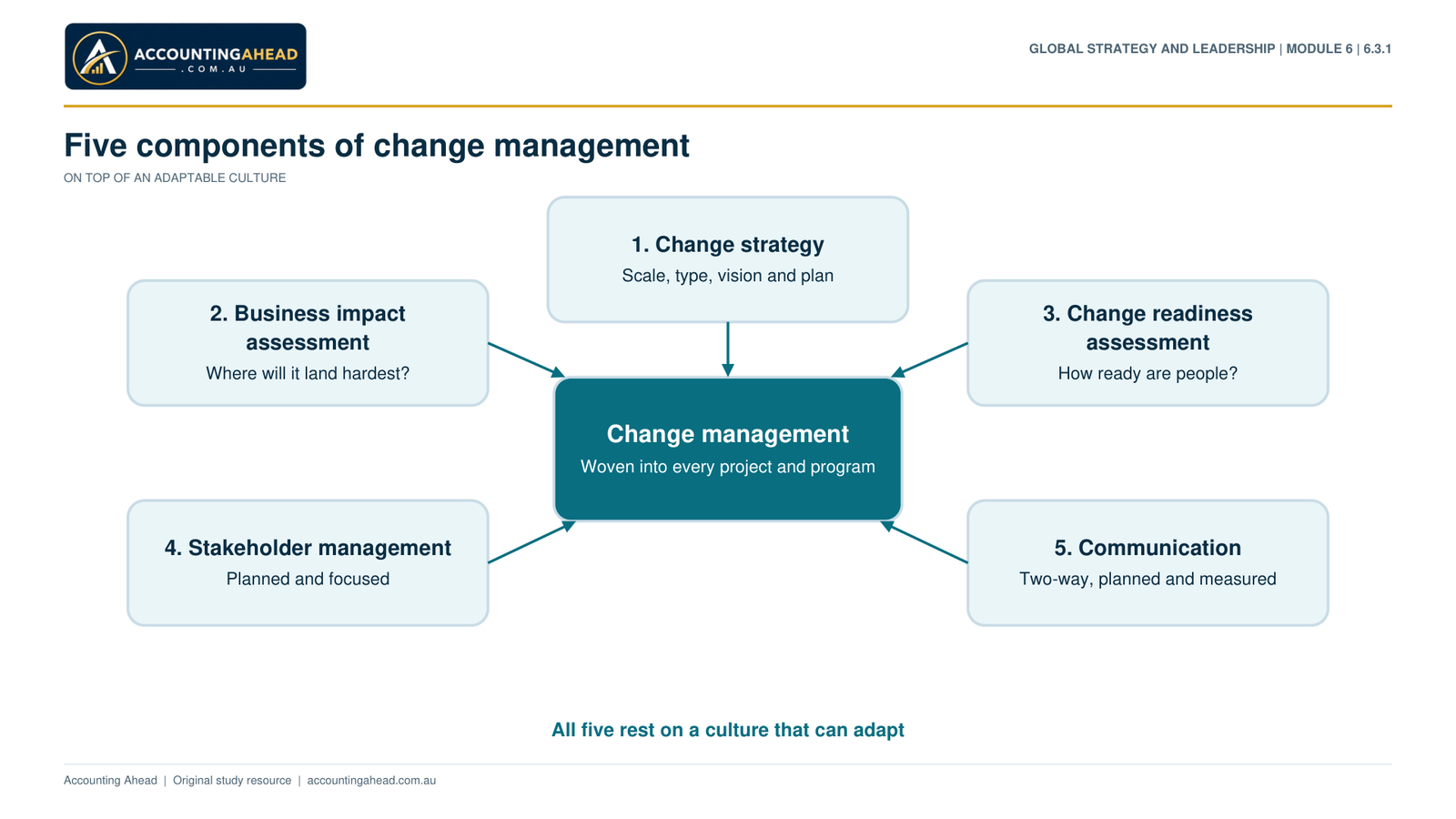
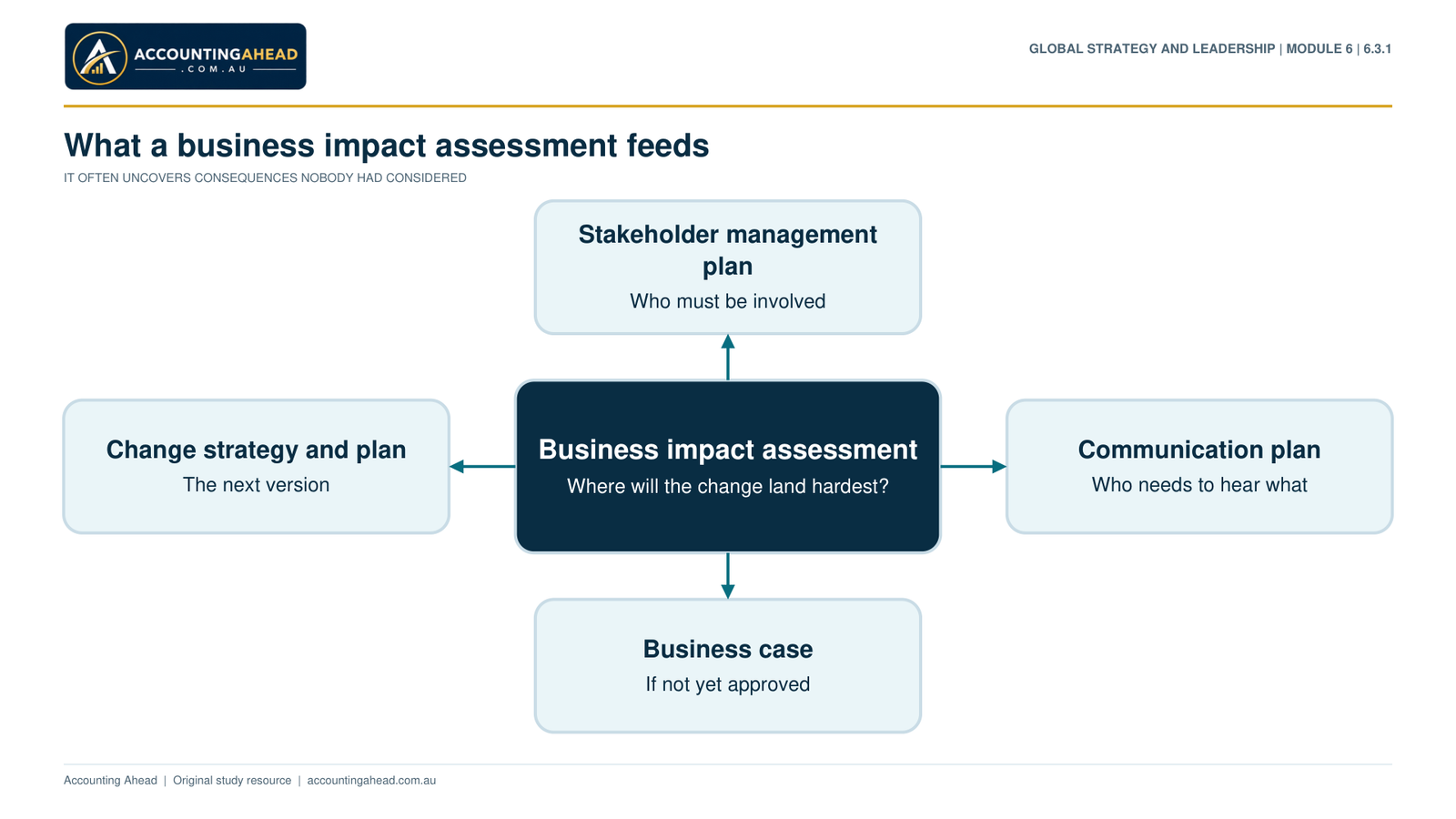
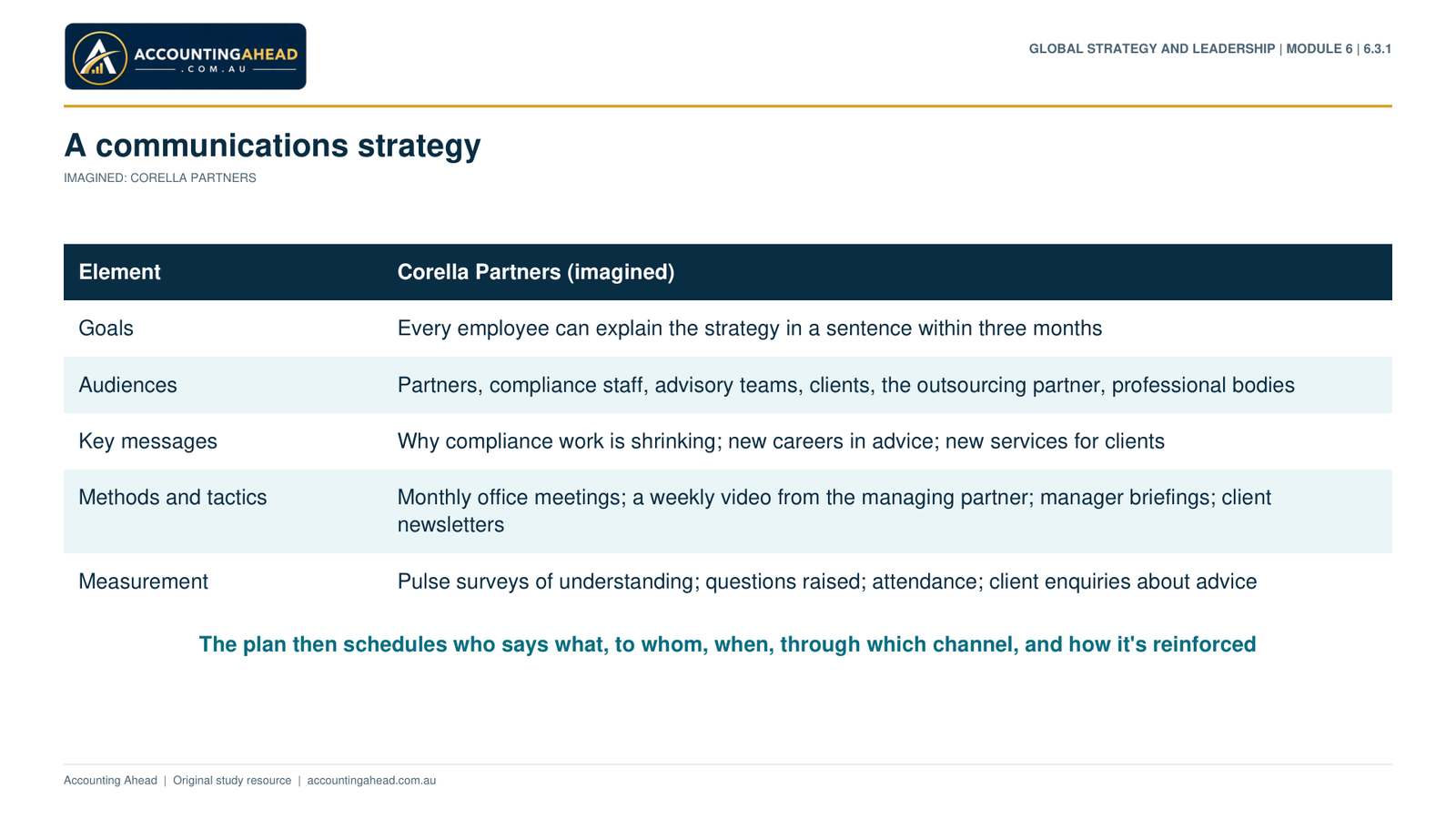
Part 6.3.1 · Key Components of Change Management
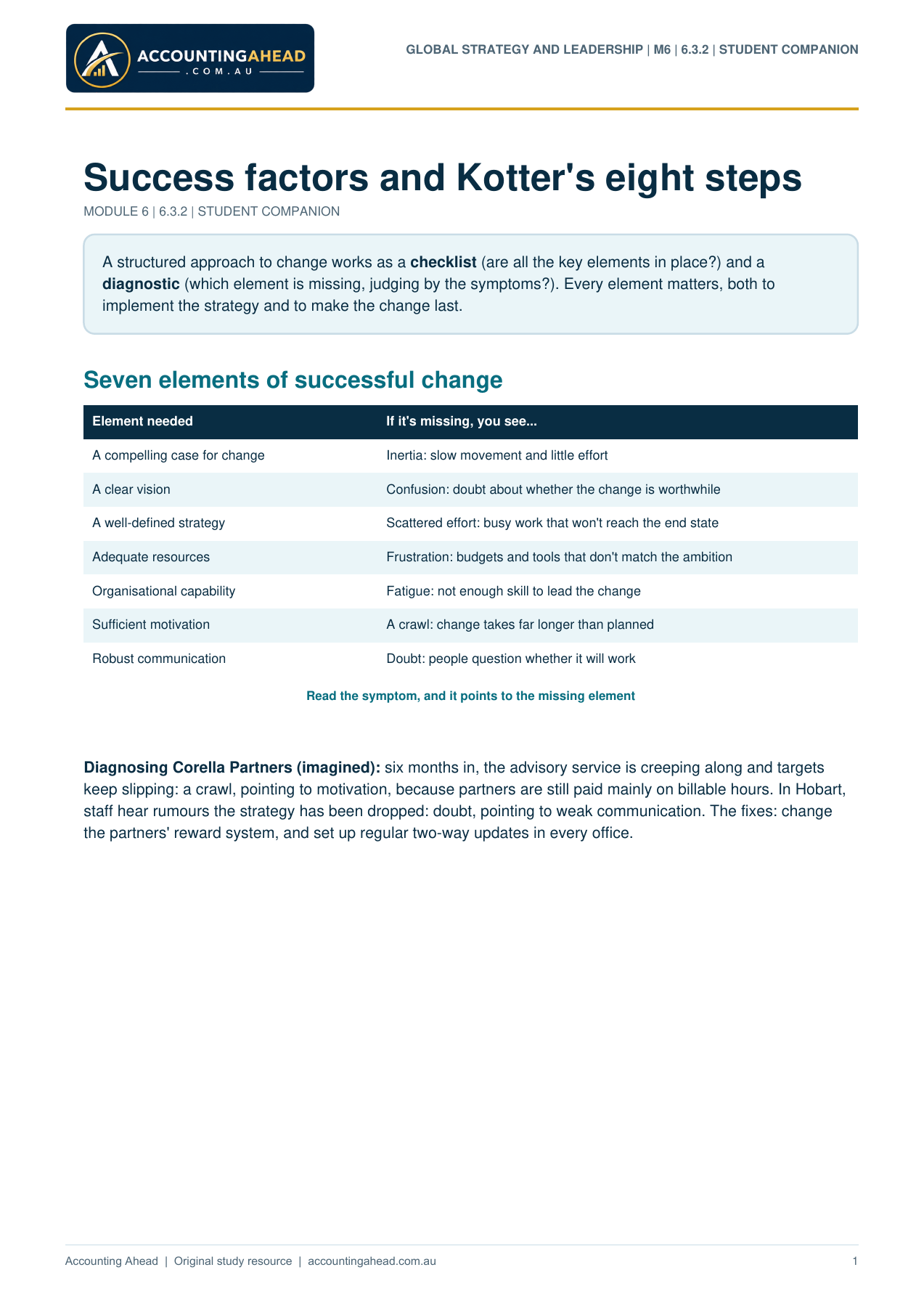
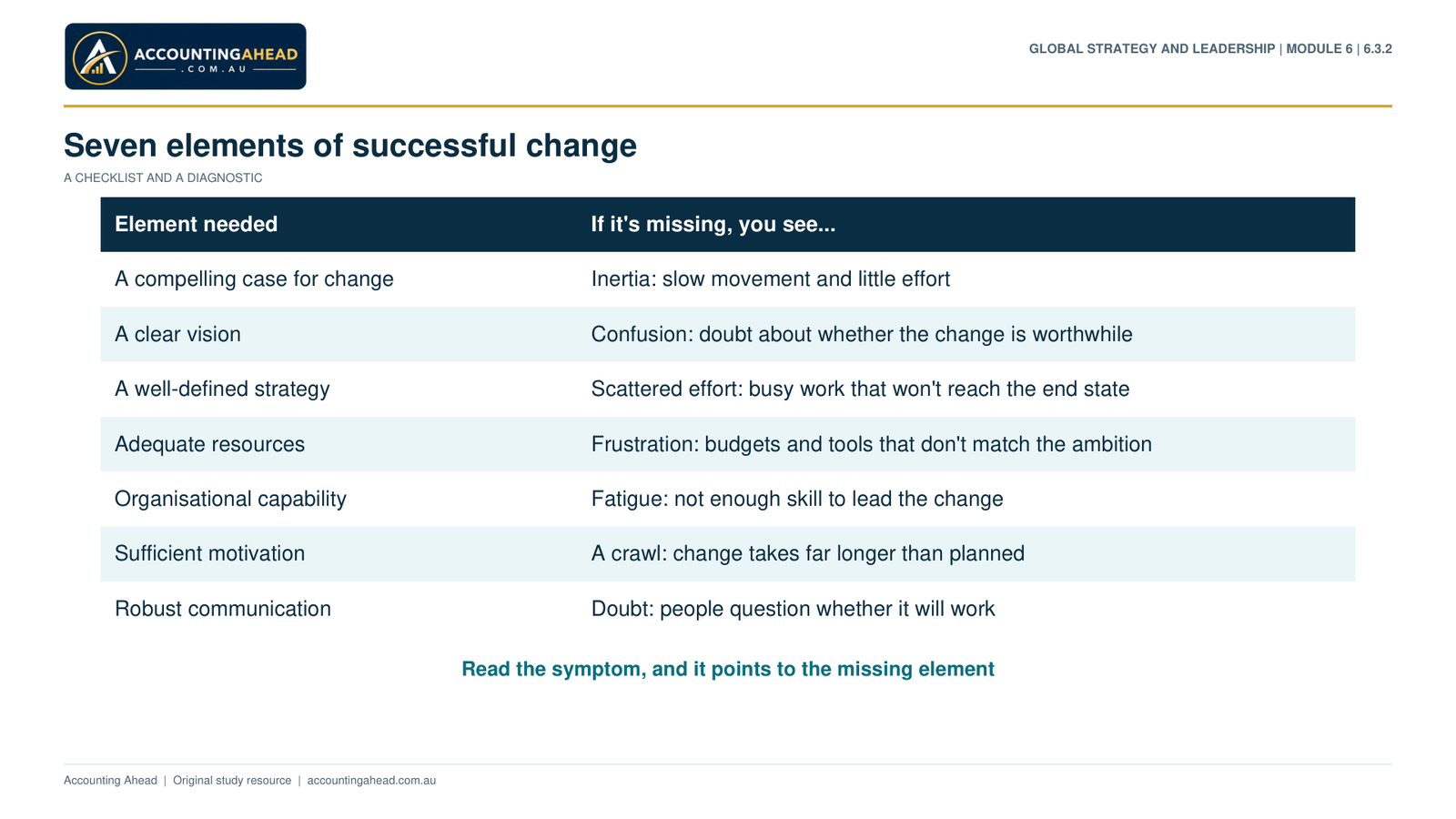
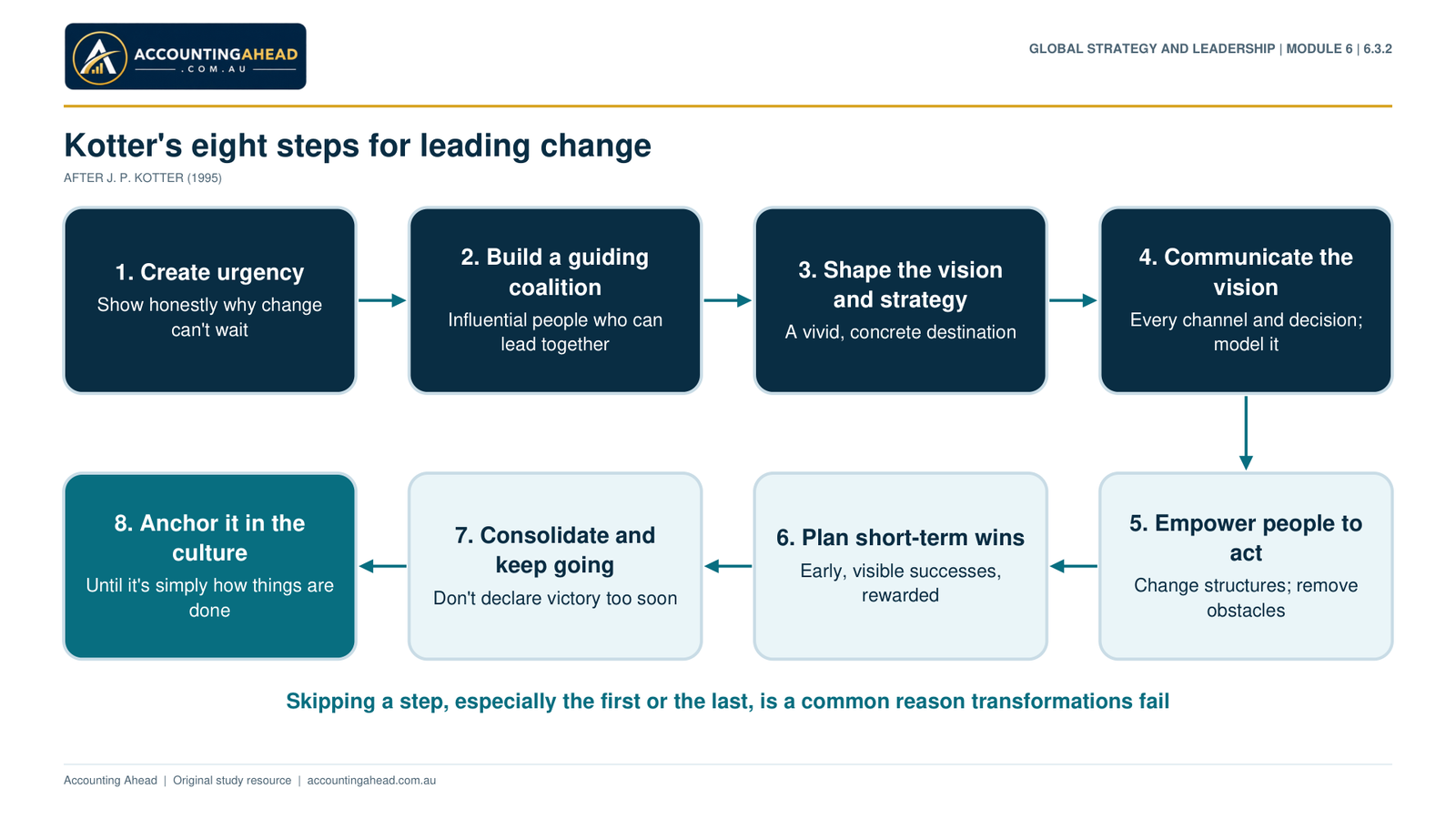
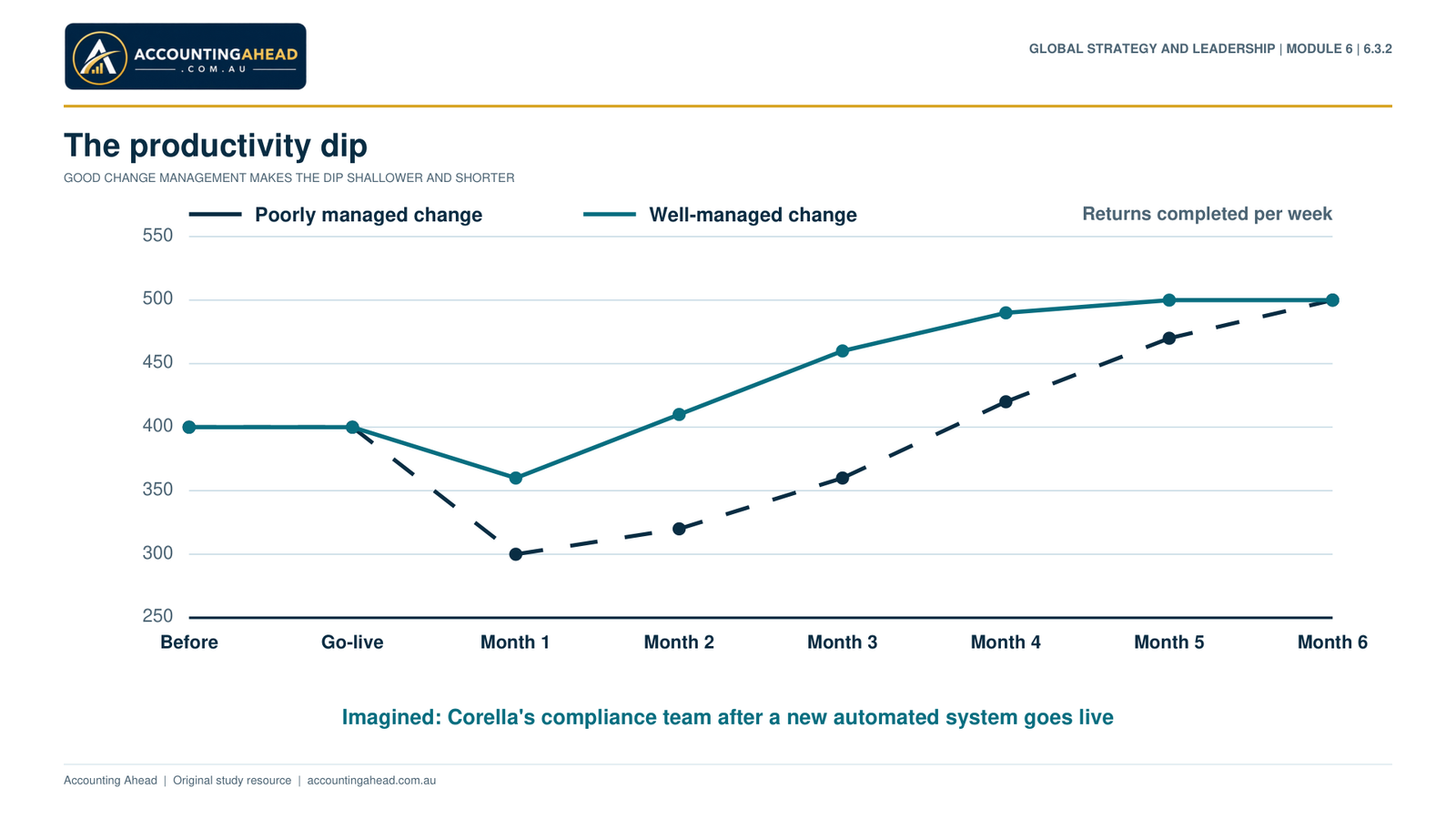
Part 6.3.2 · Success Factors and Kotter's Eight Steps
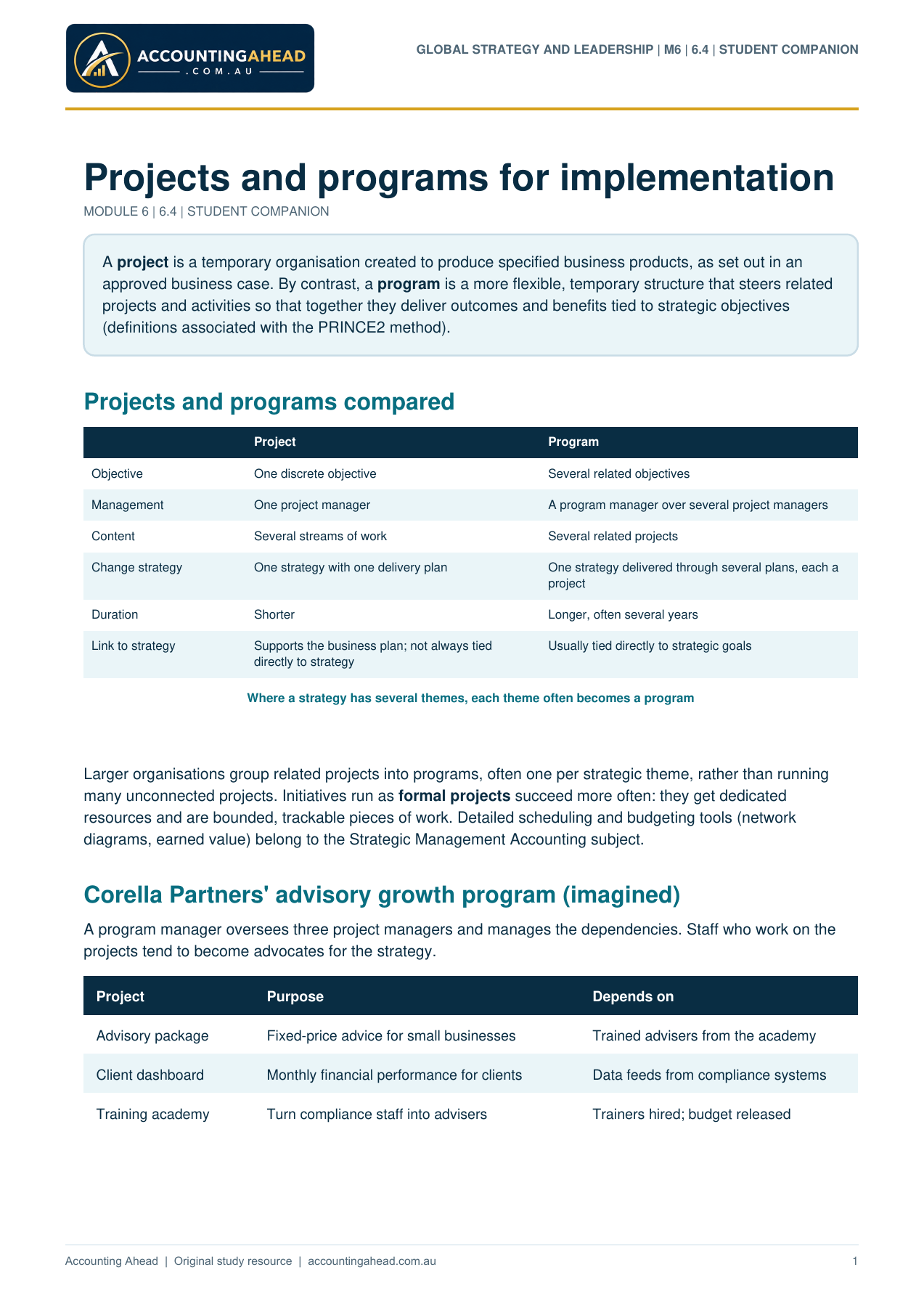
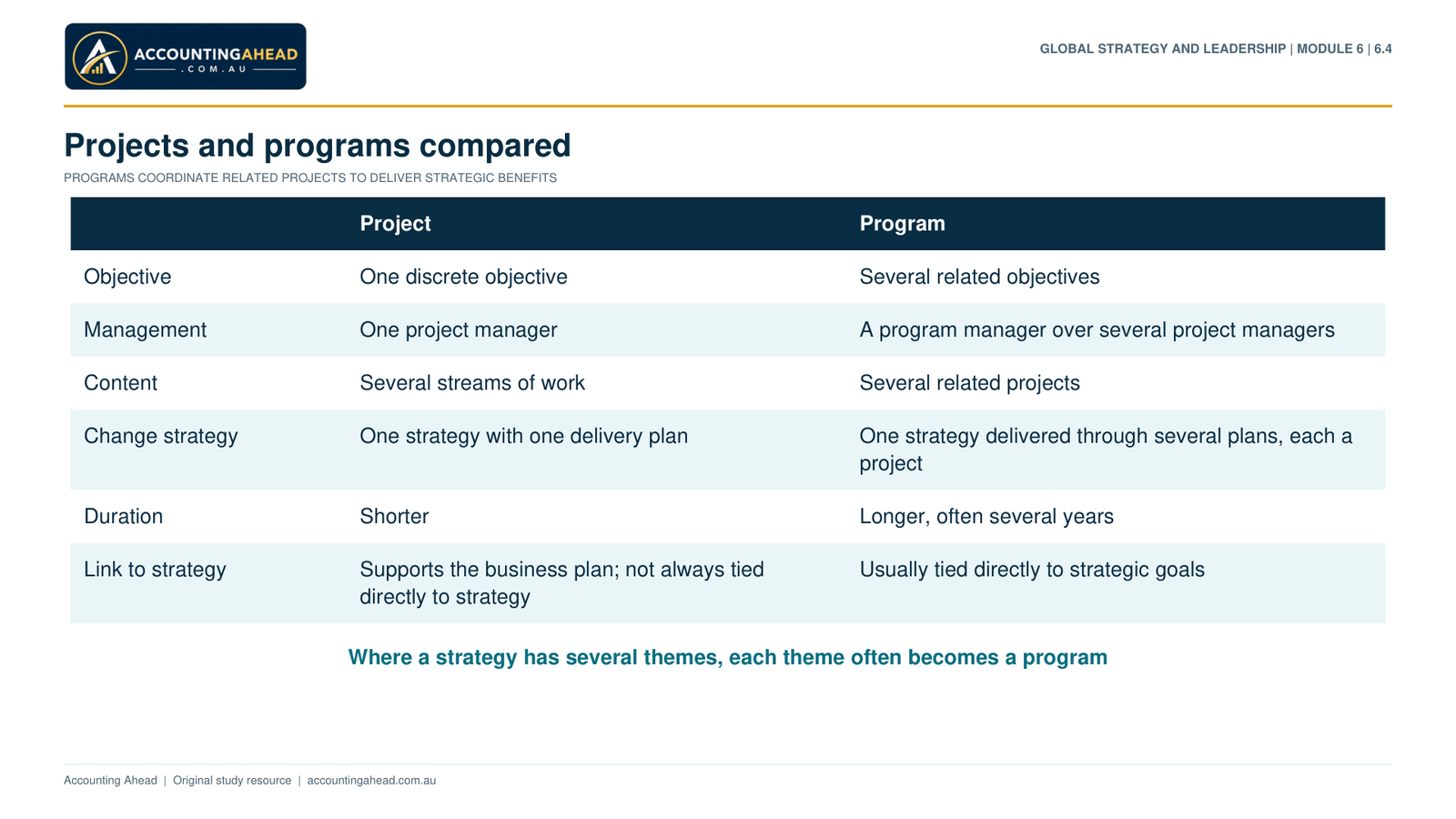
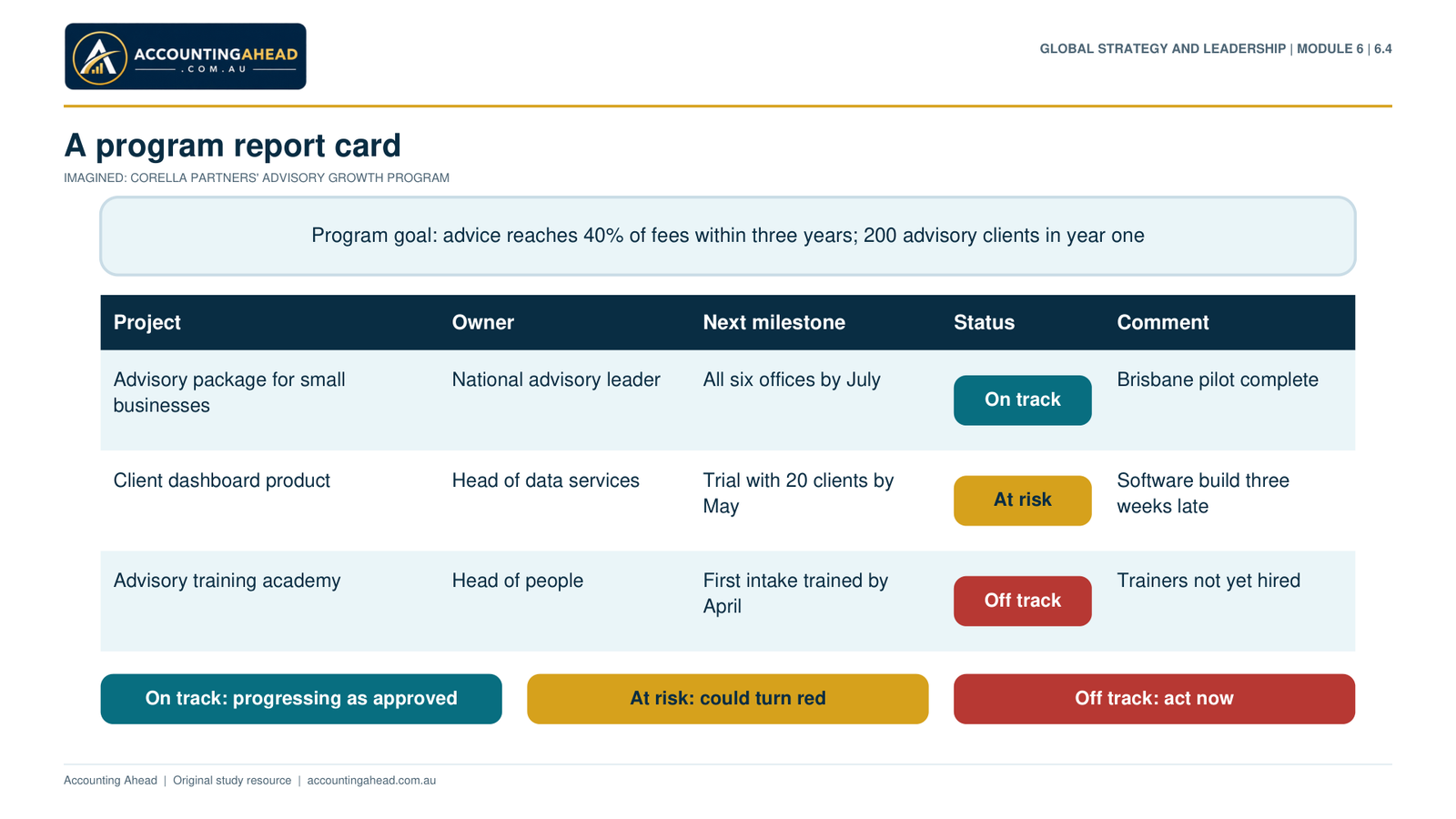
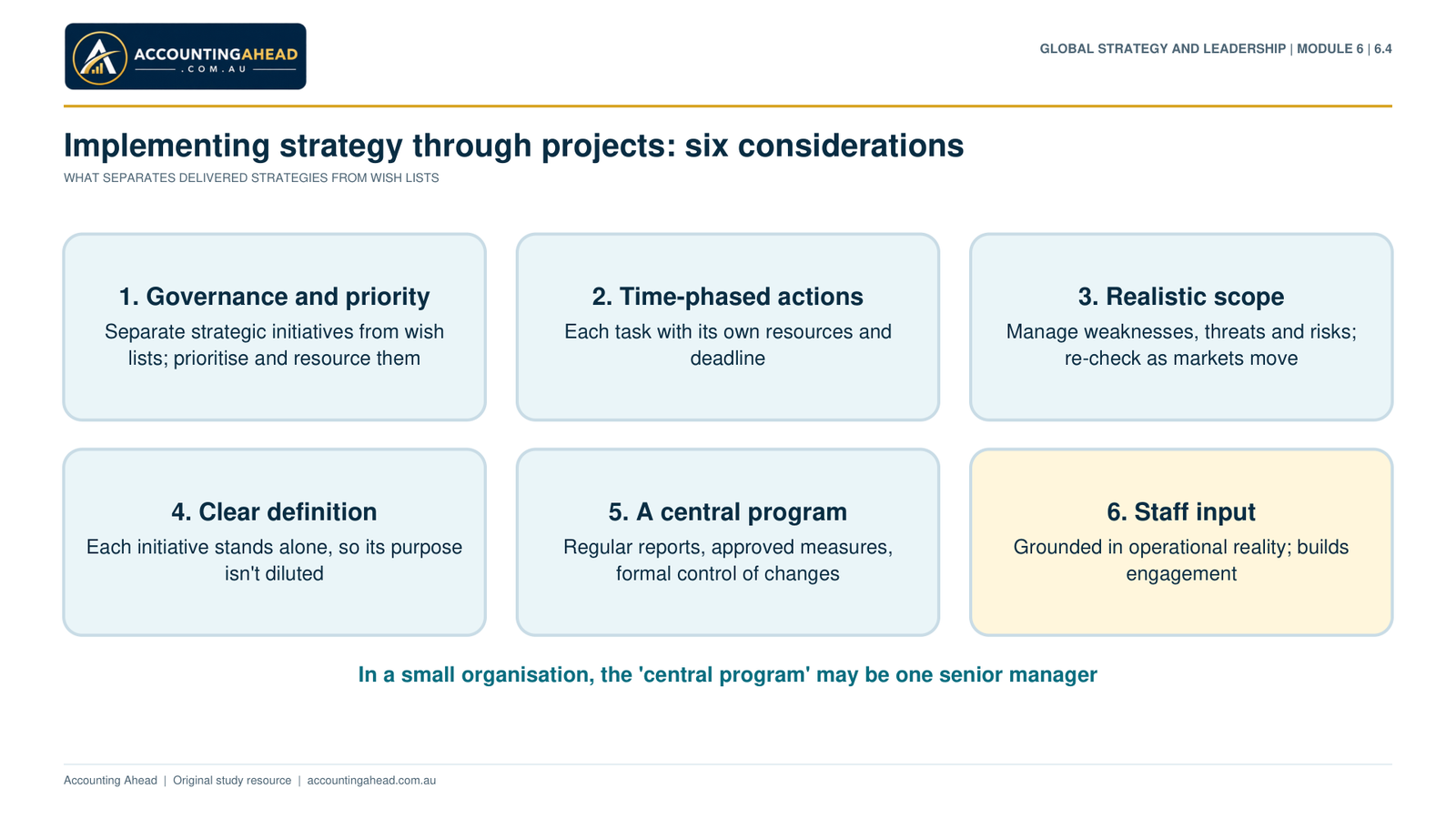
Part 6.4 · Projects and Programs for Implementation
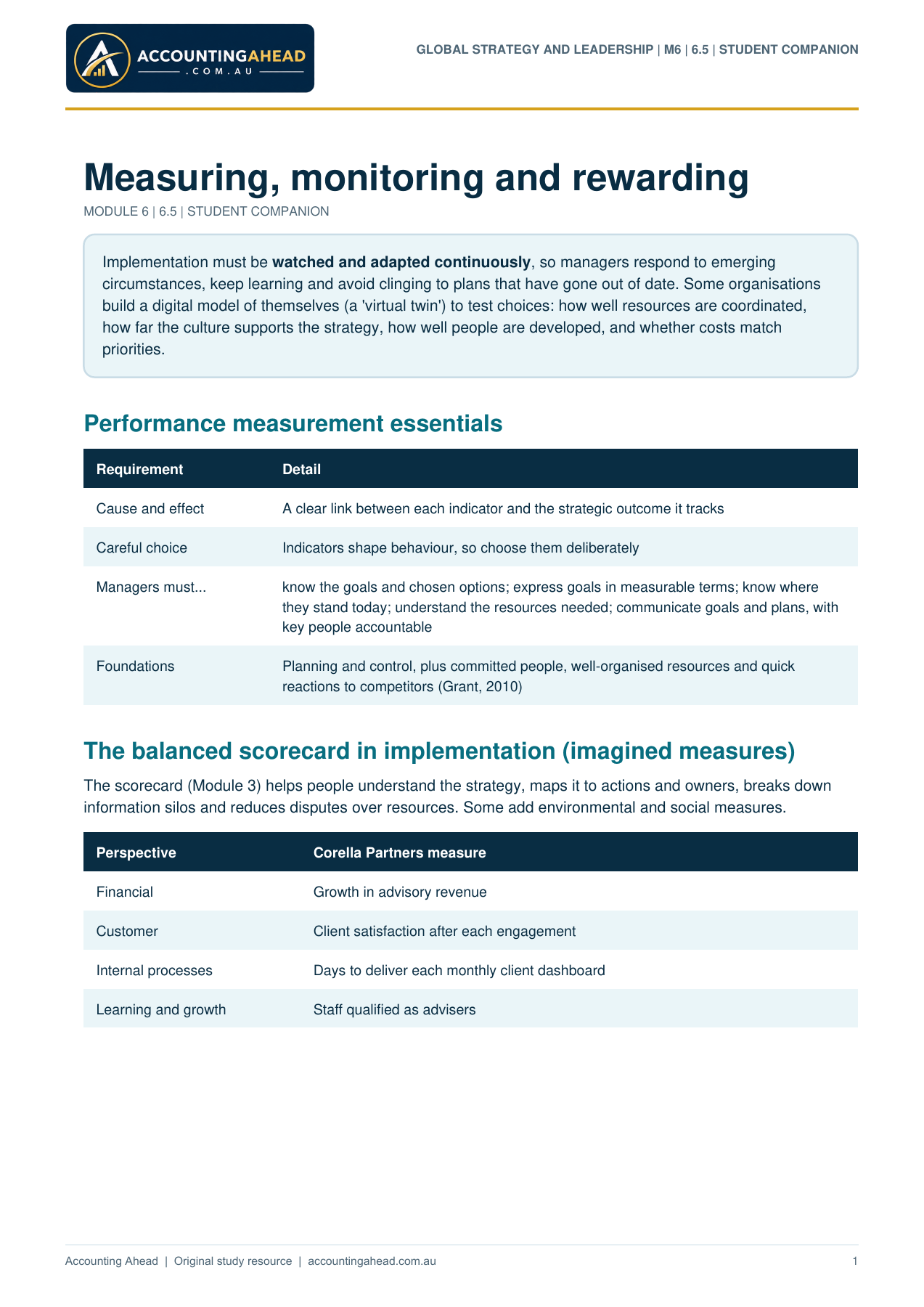
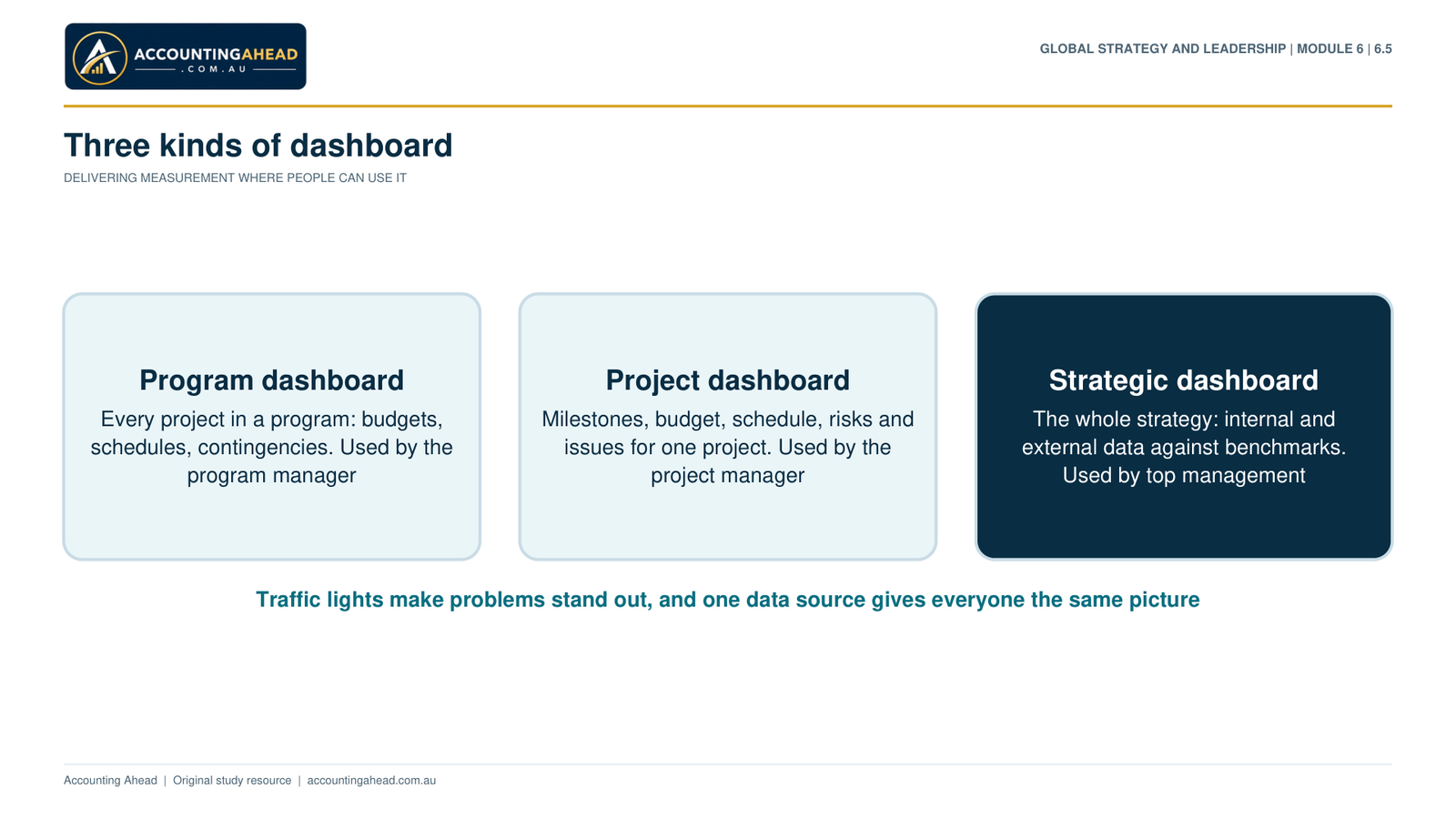
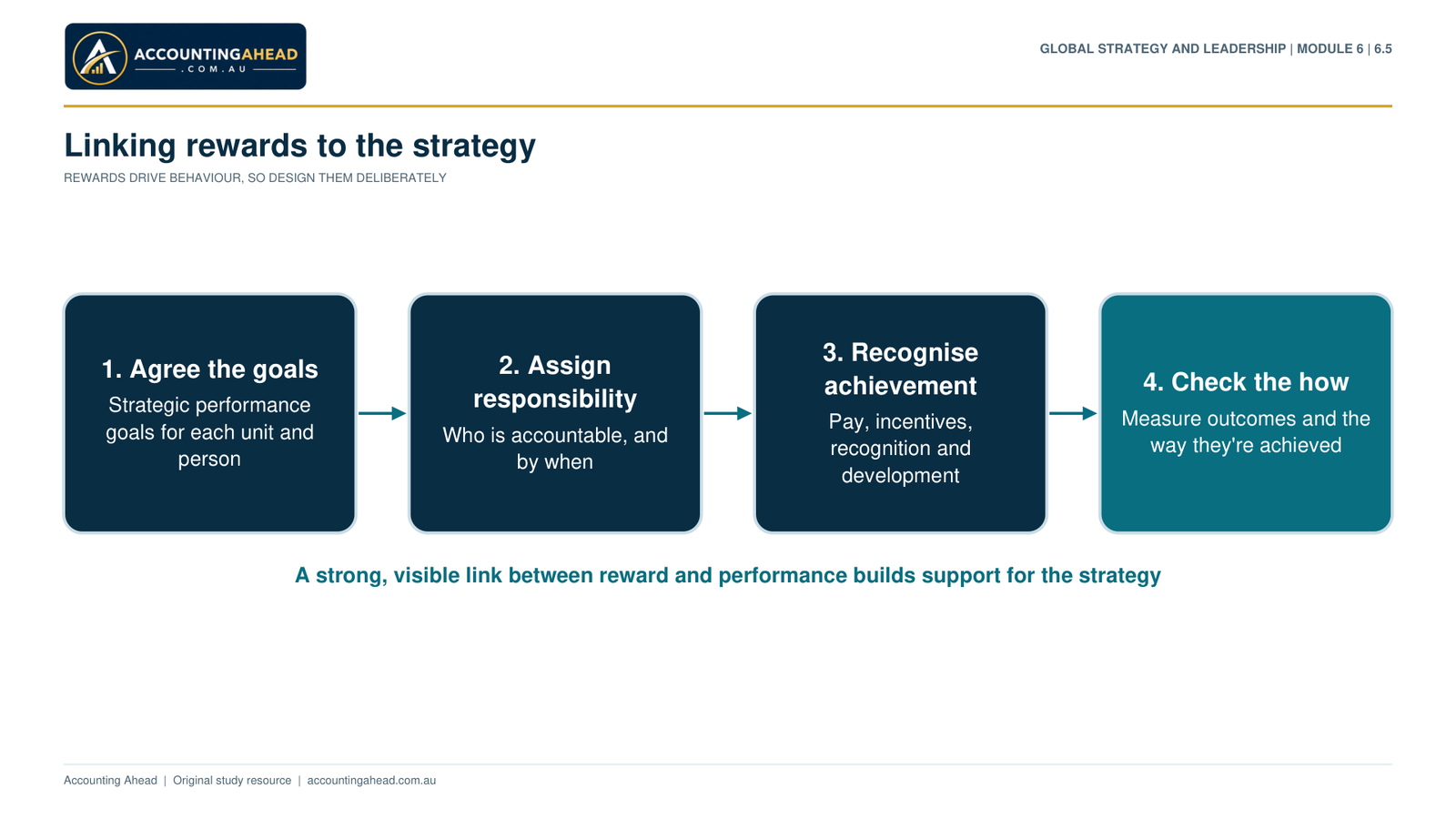
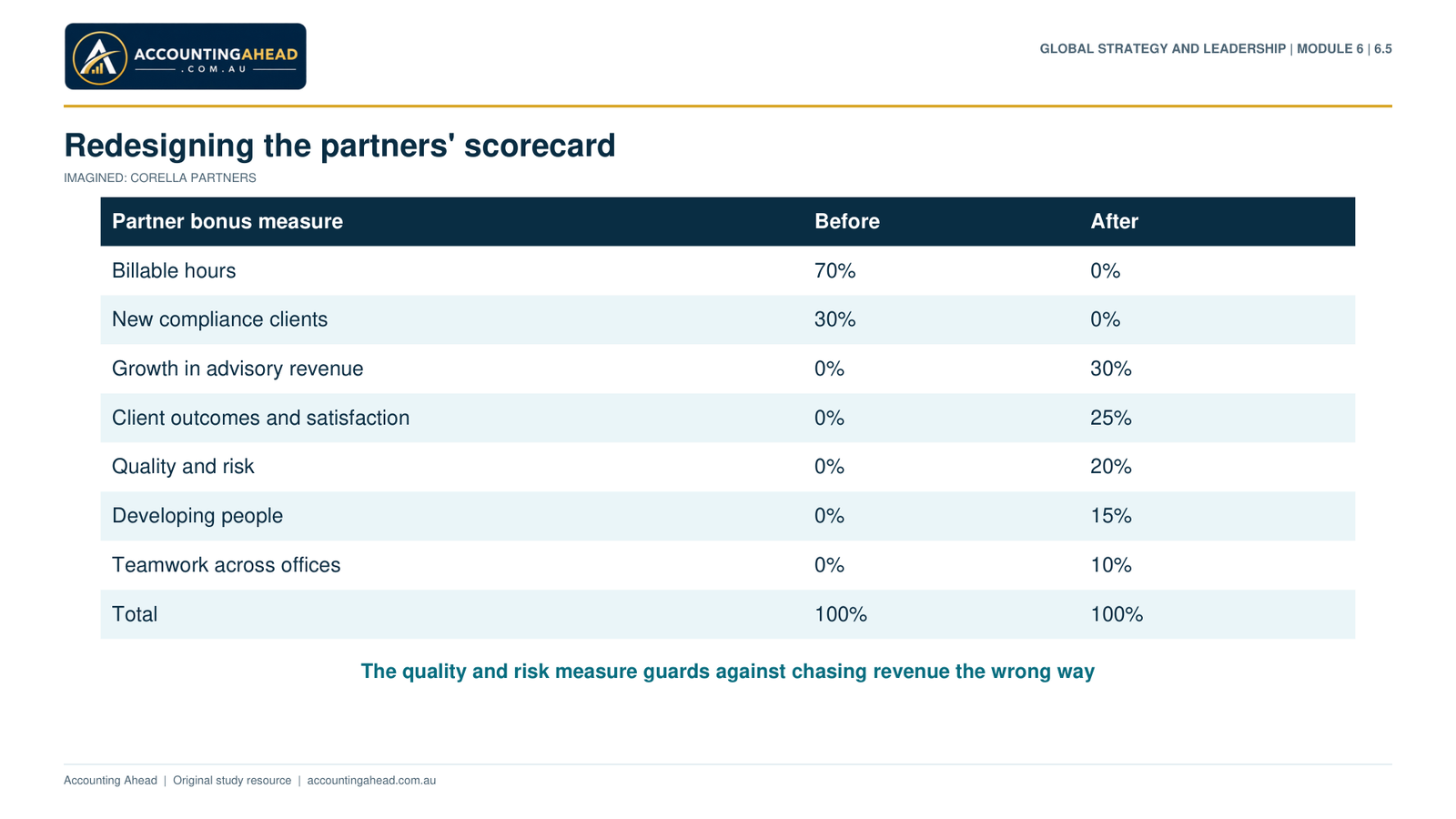
Part 6.5 · Measuring, Monitoring and Rewarding
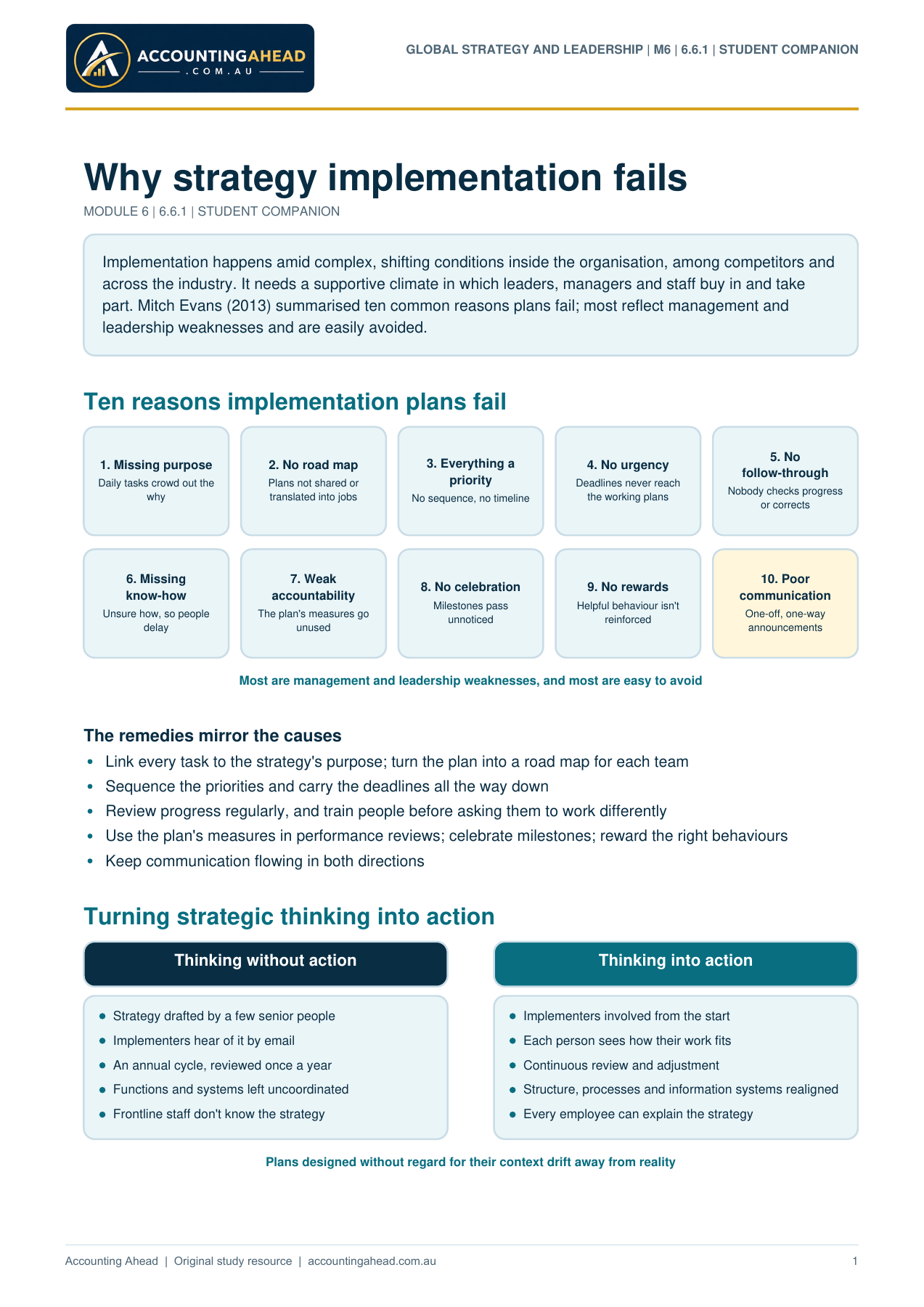
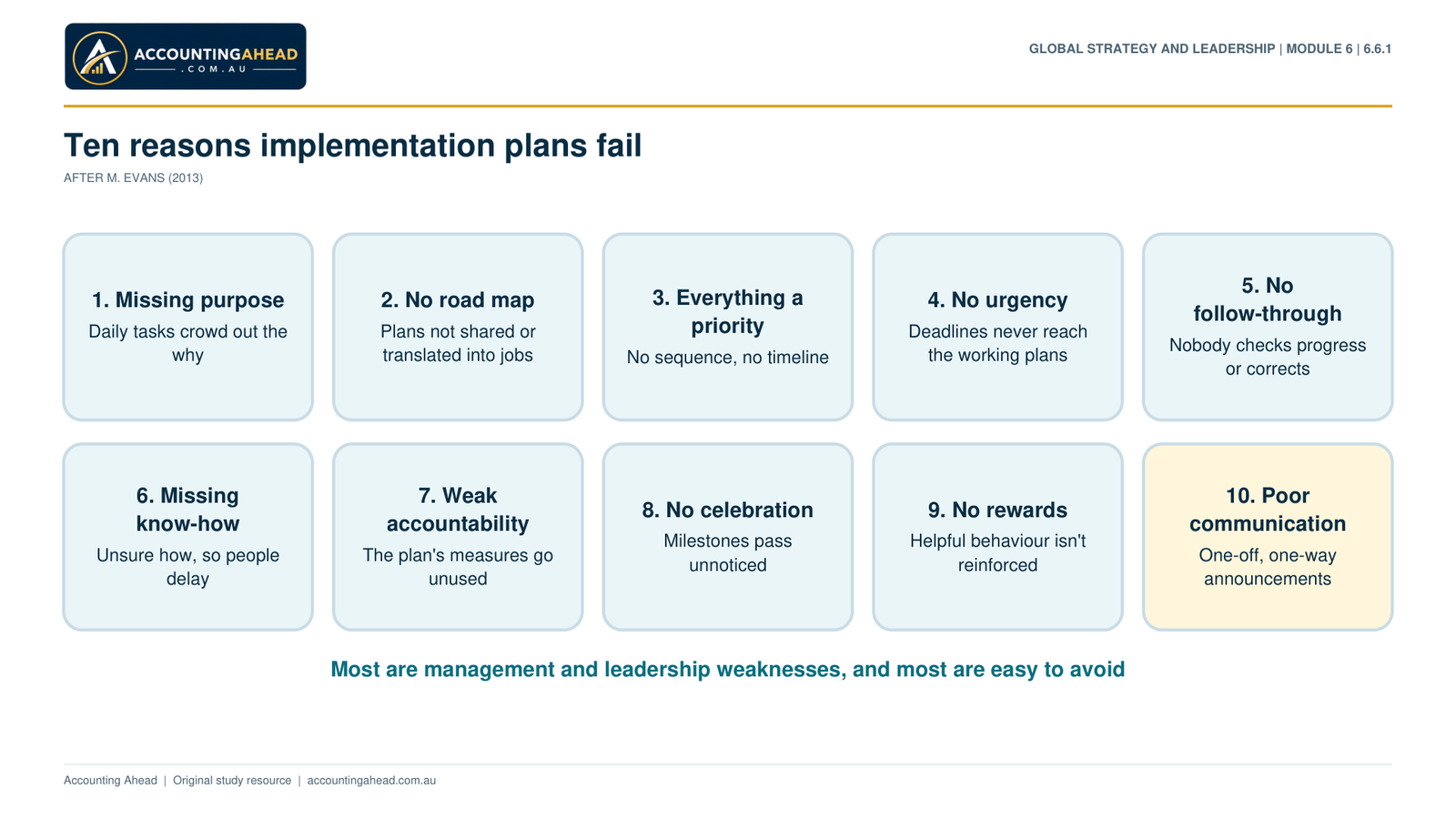
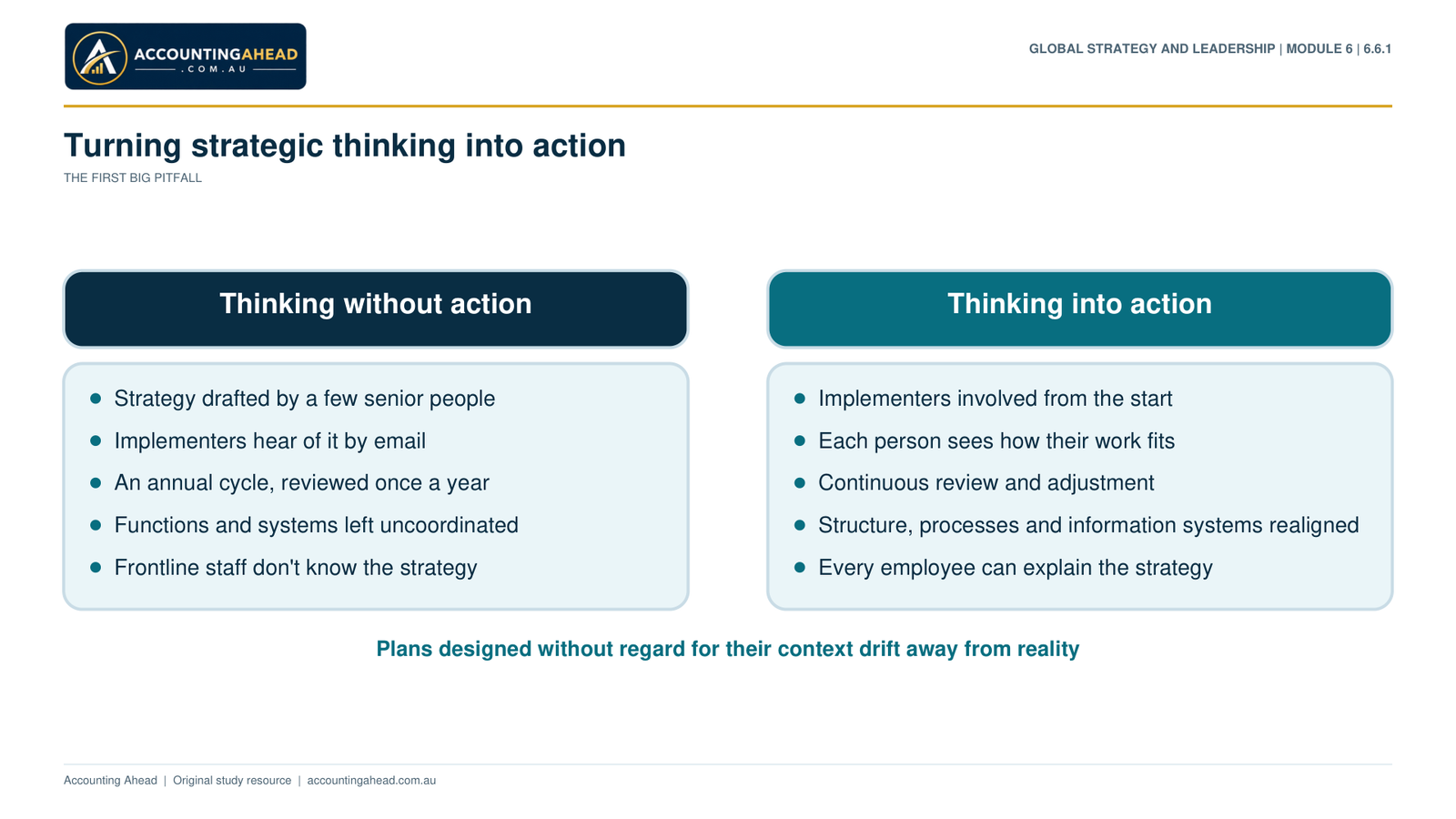
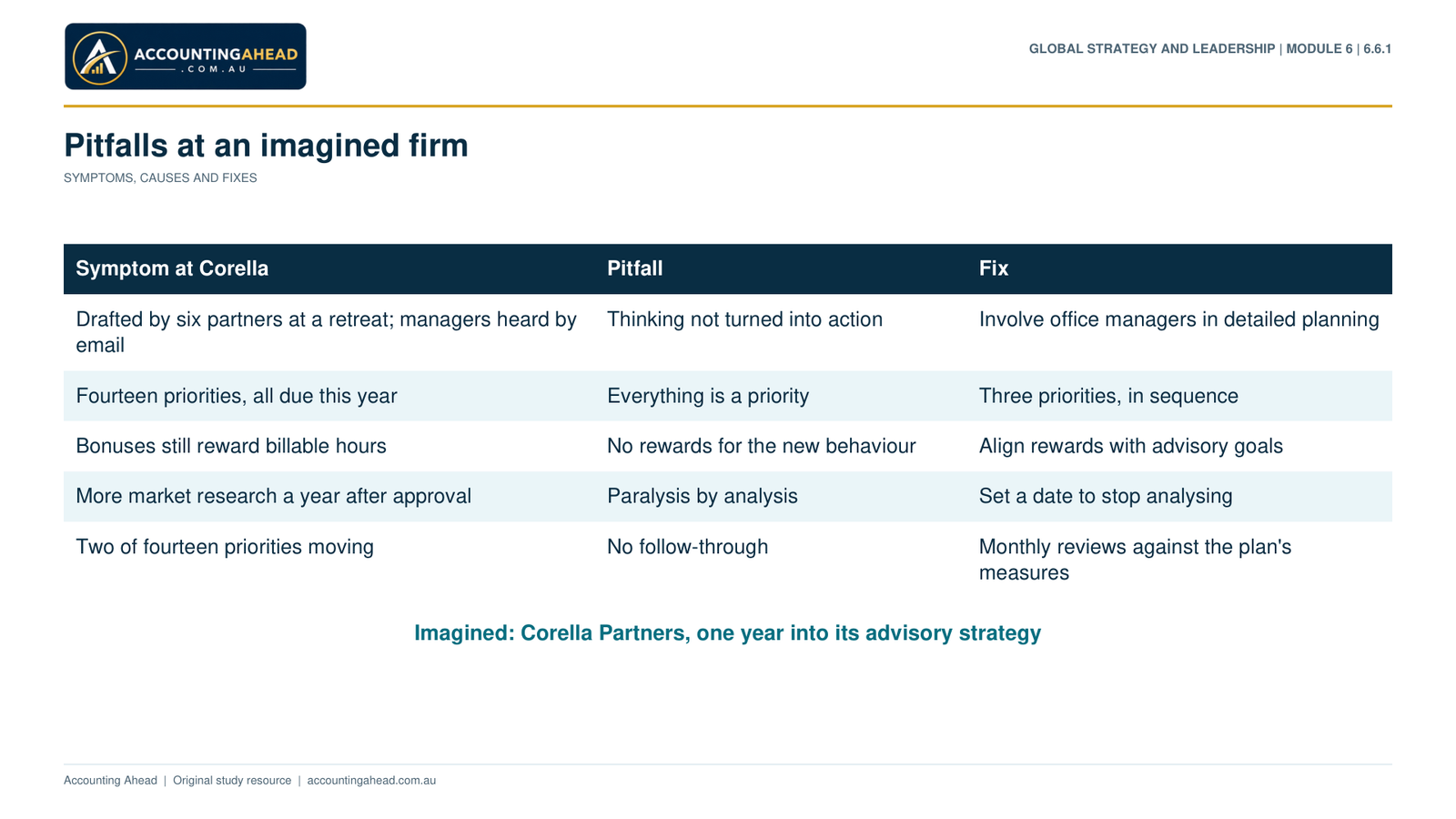
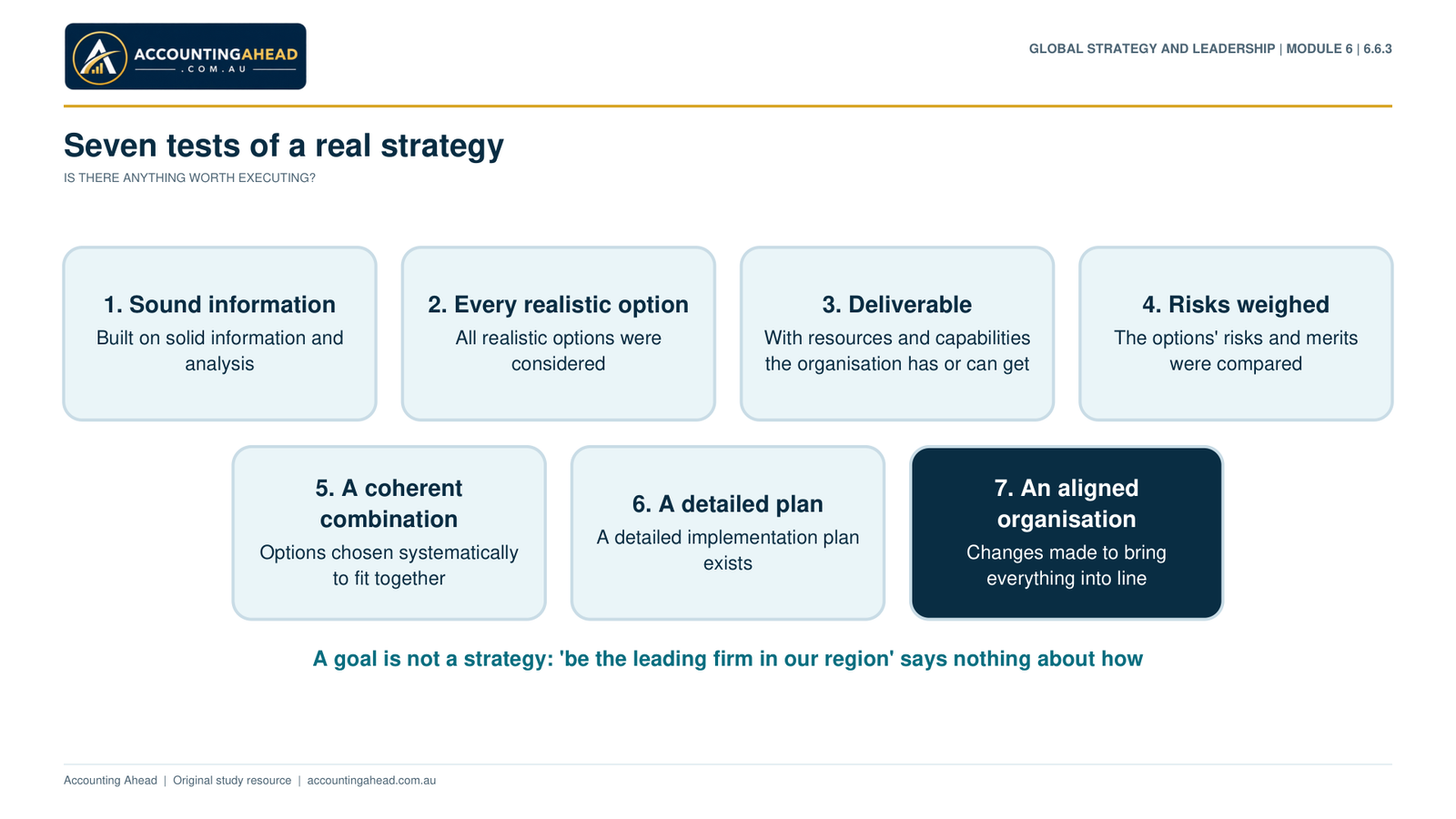
Part 6.6.1 · Why Strategy Implementation Fails
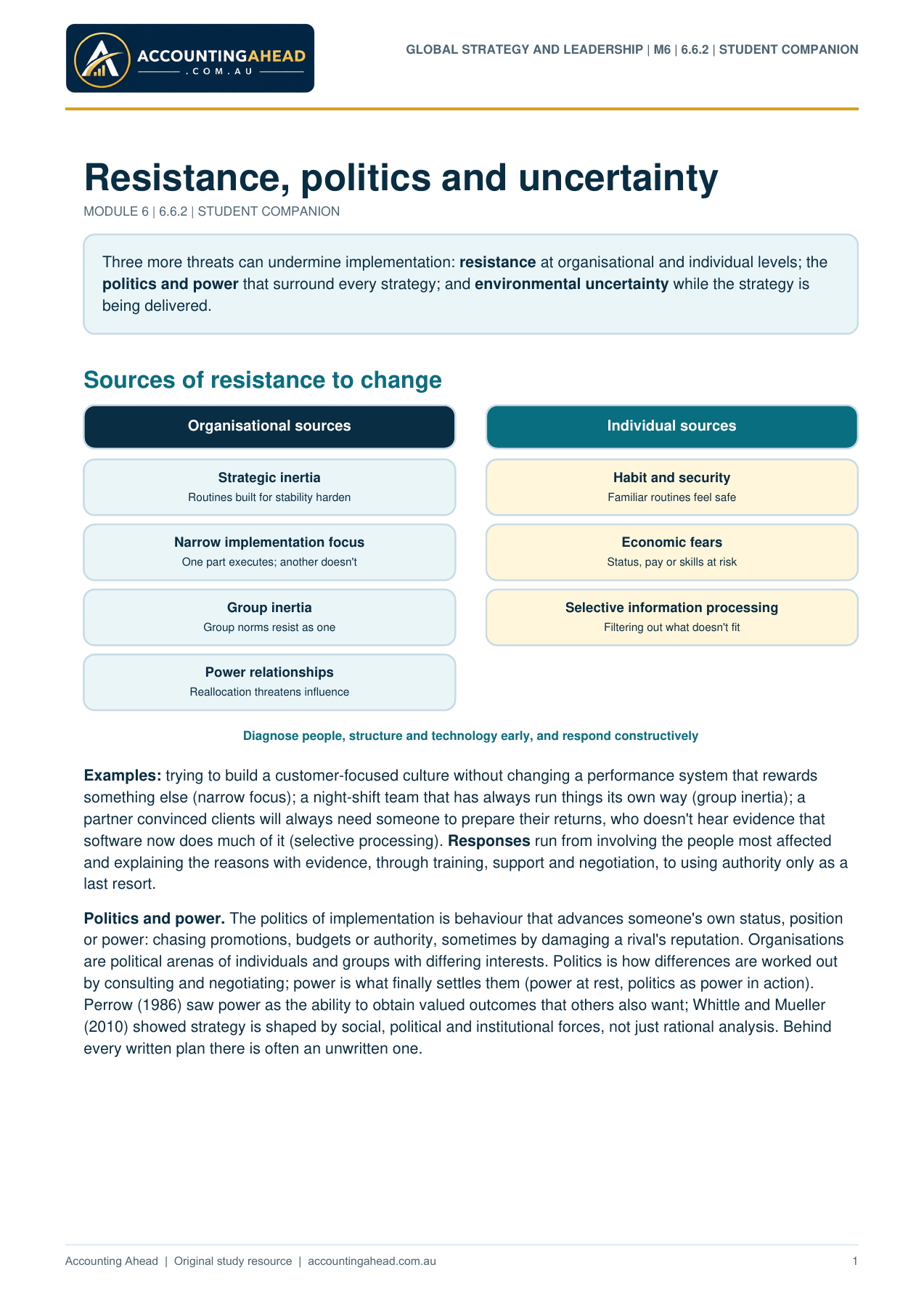
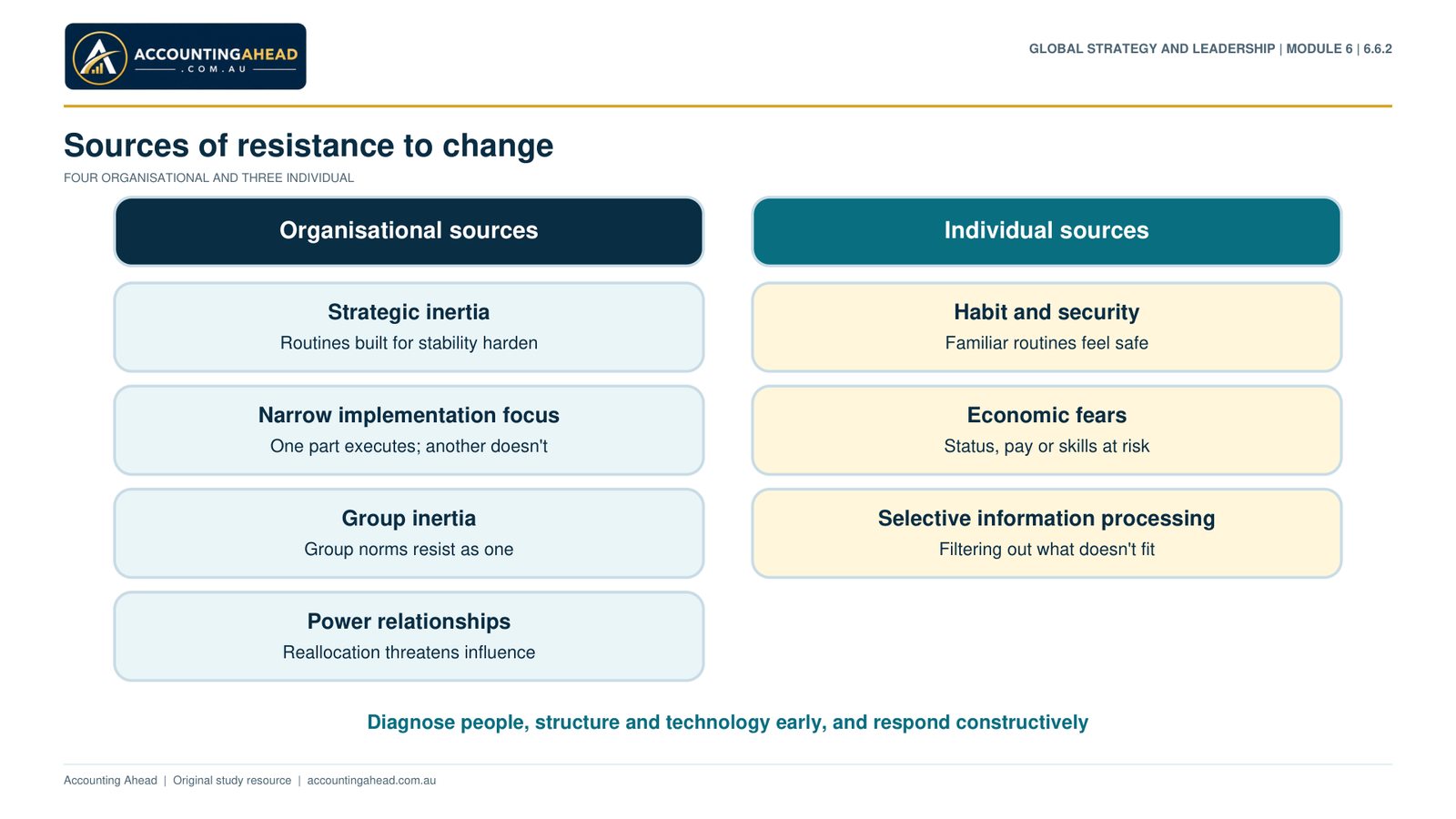
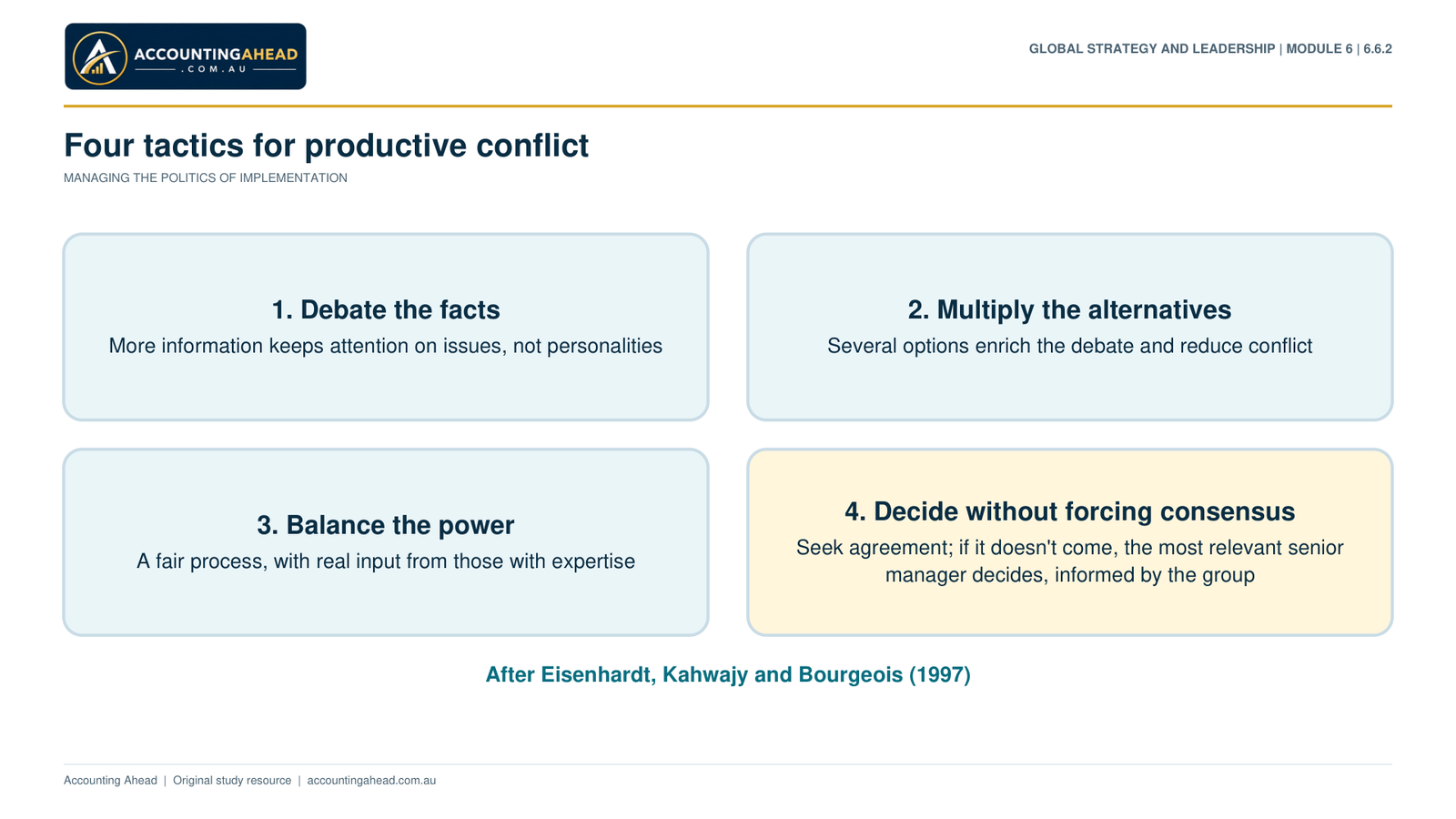
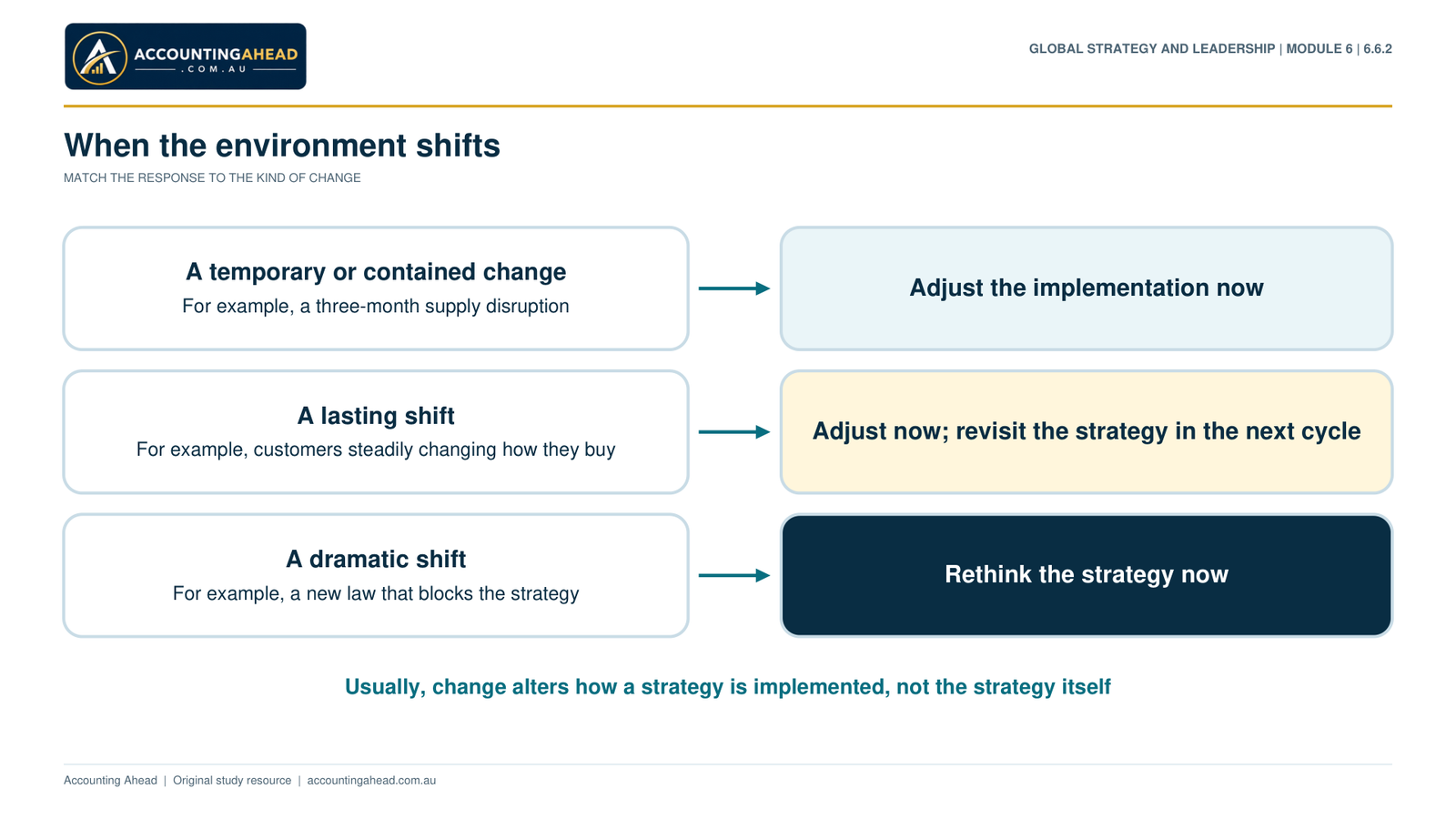
Part 6.6.2 · Resistance, Politics and Uncertainty
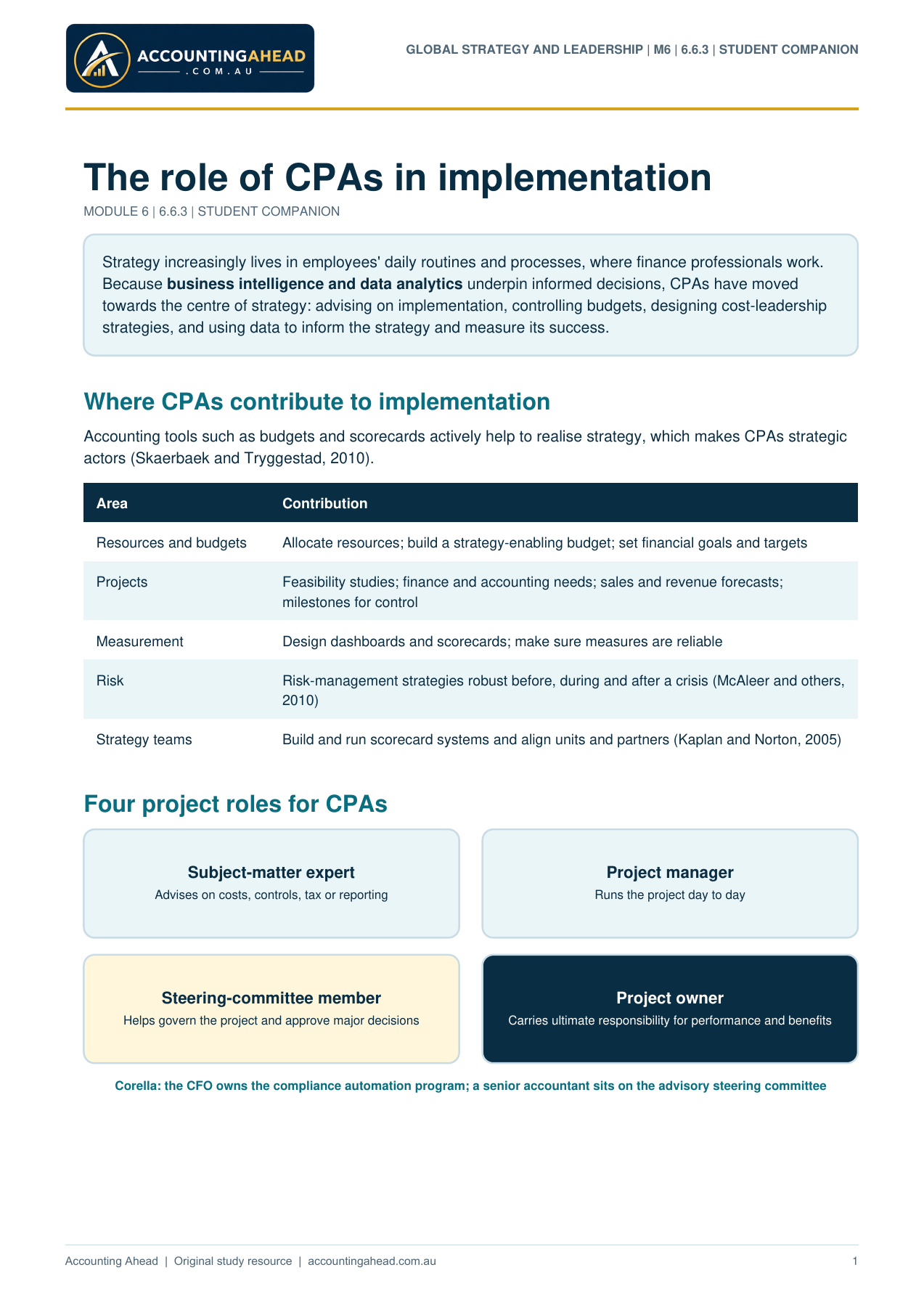
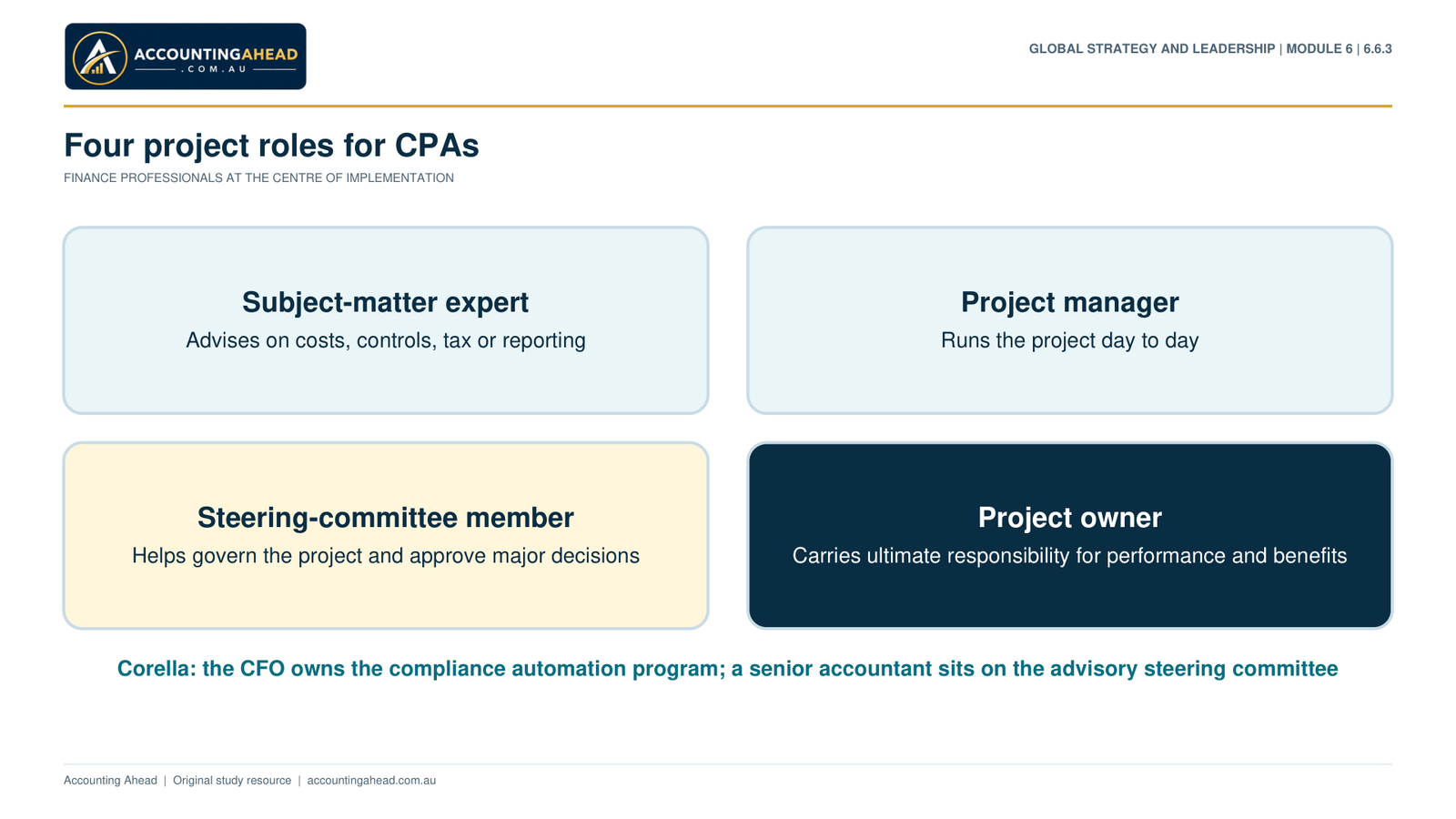
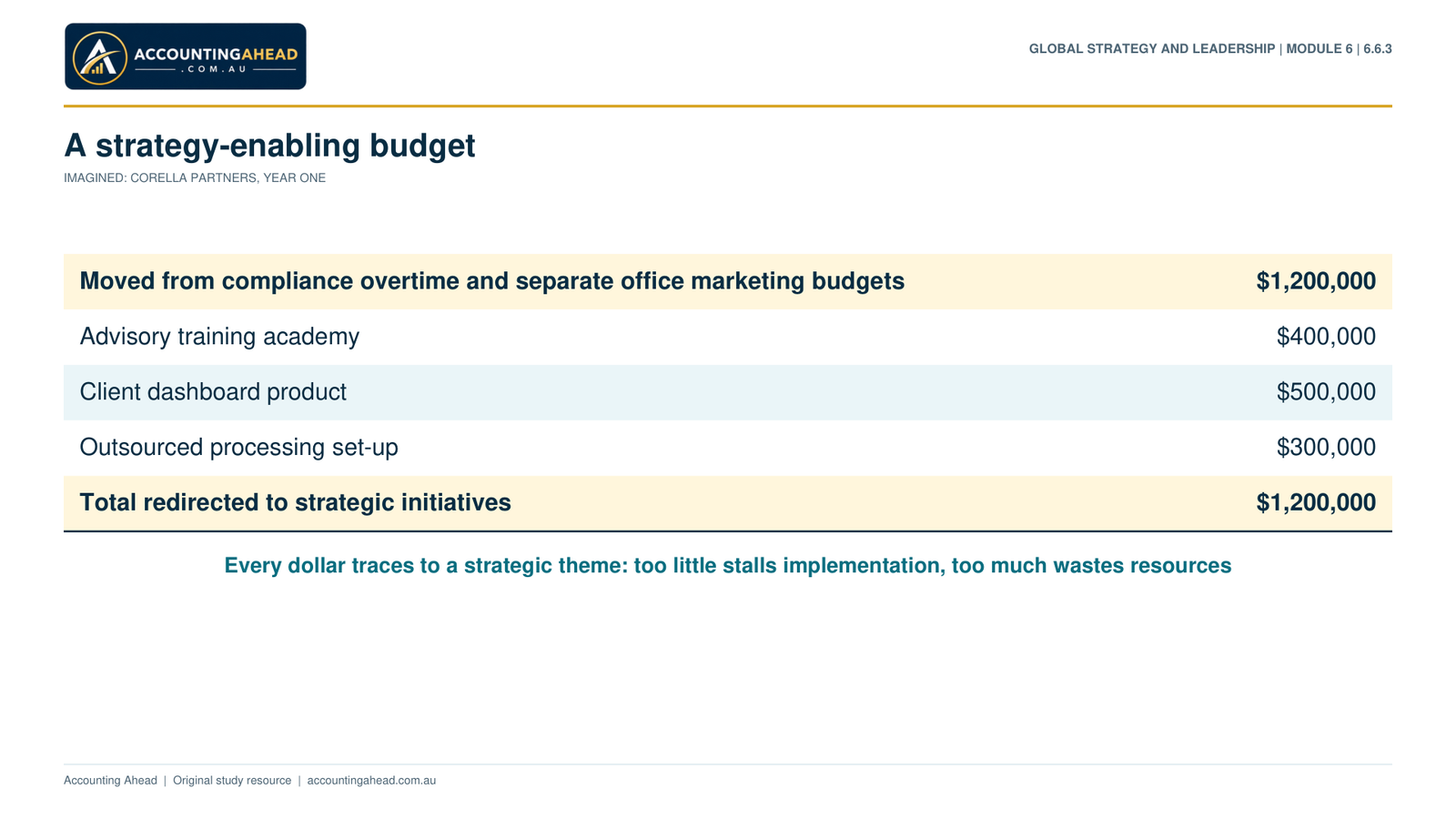
Part 6.6.3 · The Role of CPAs in Implementation
Module 7 · Adapting to new business models
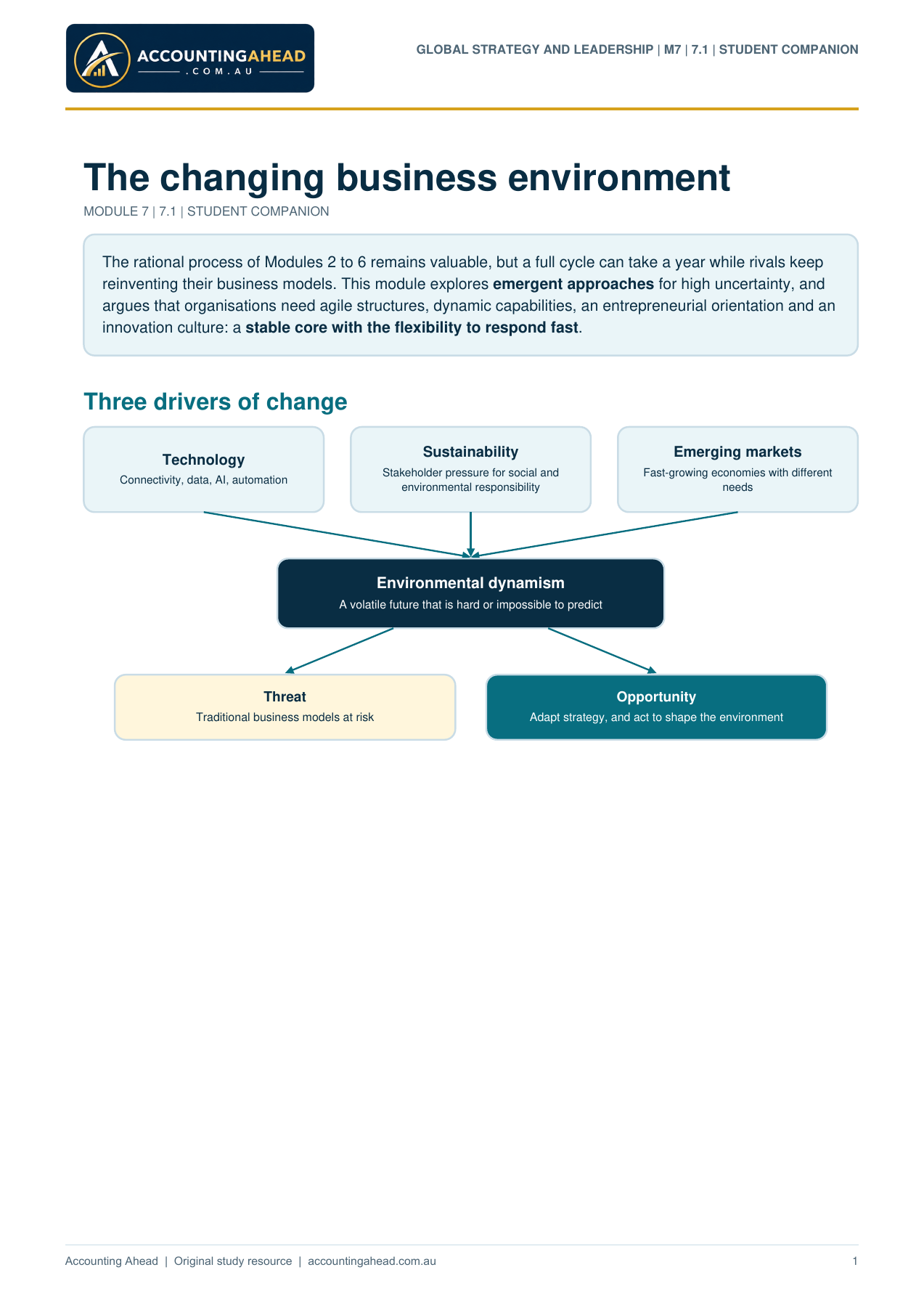
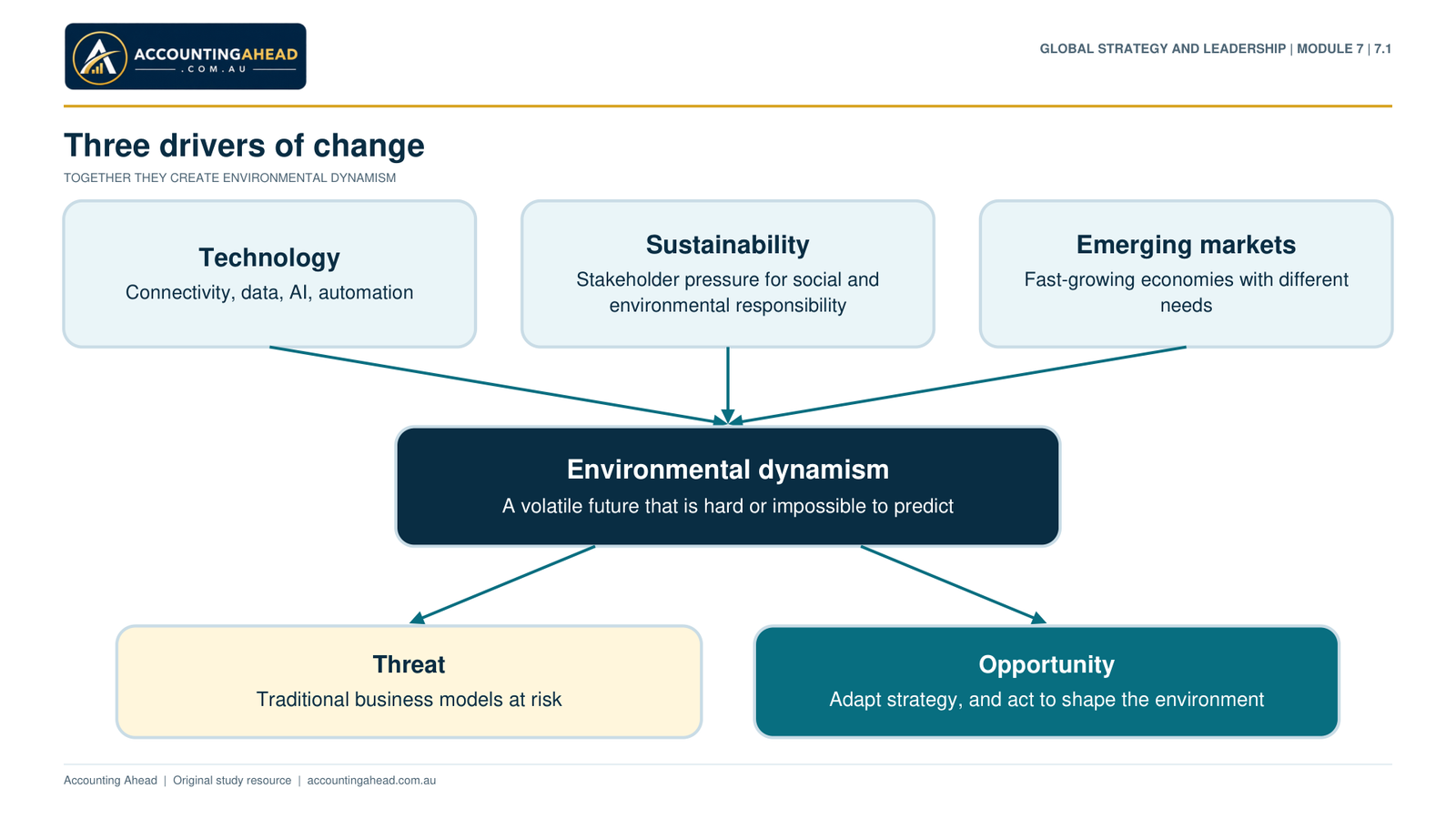
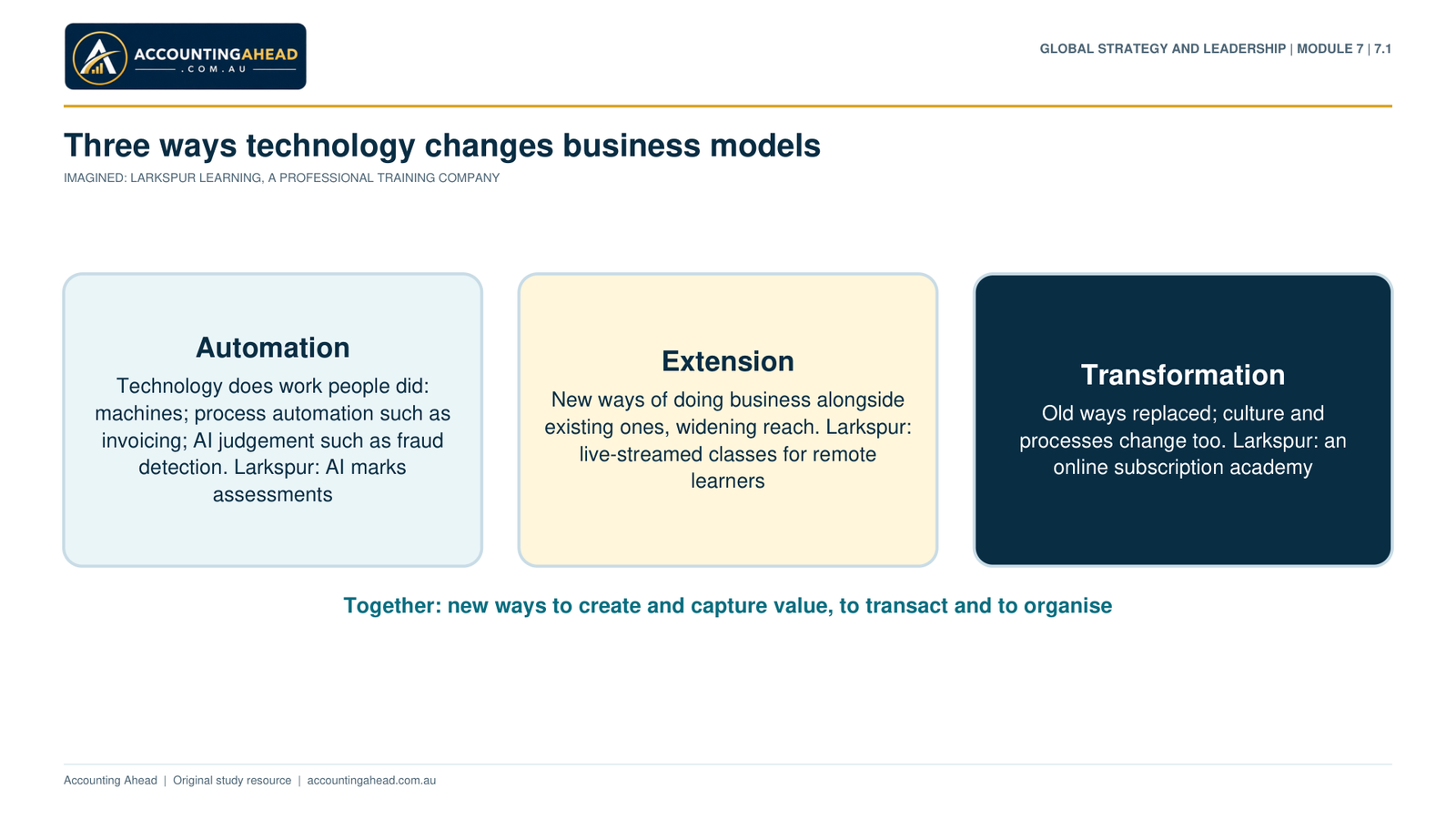
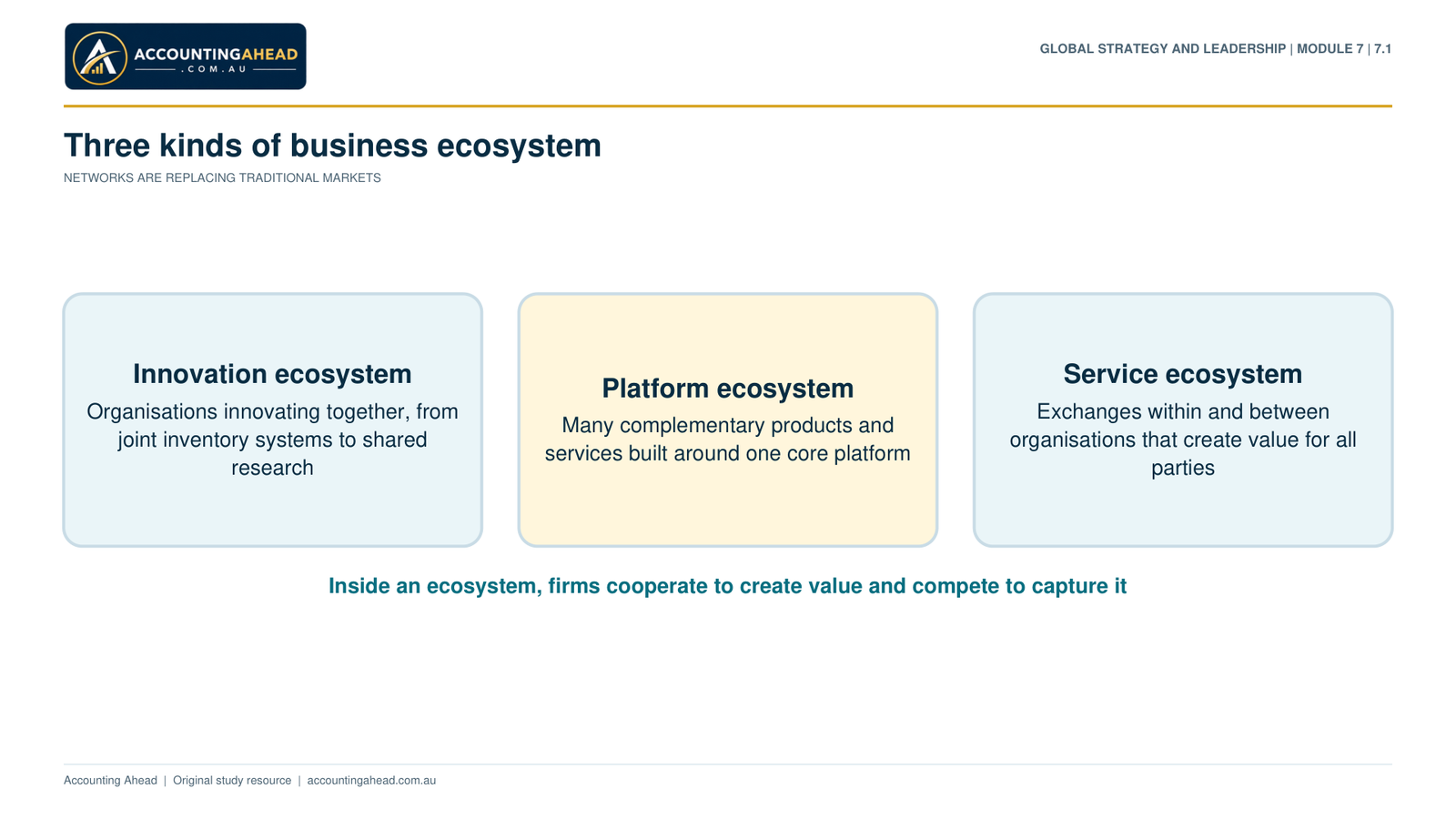
Part 7.1 · The Changing Business Environment
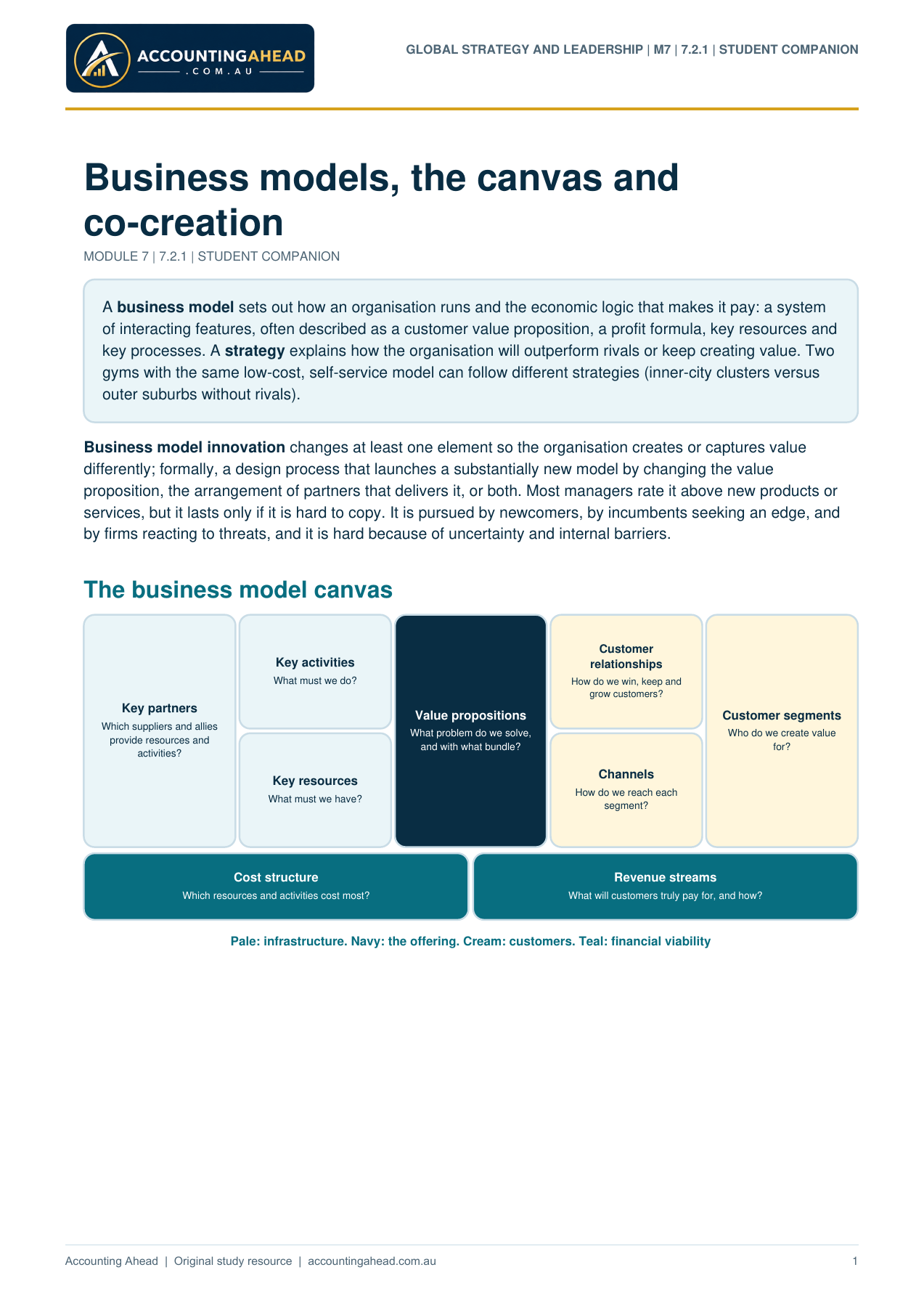
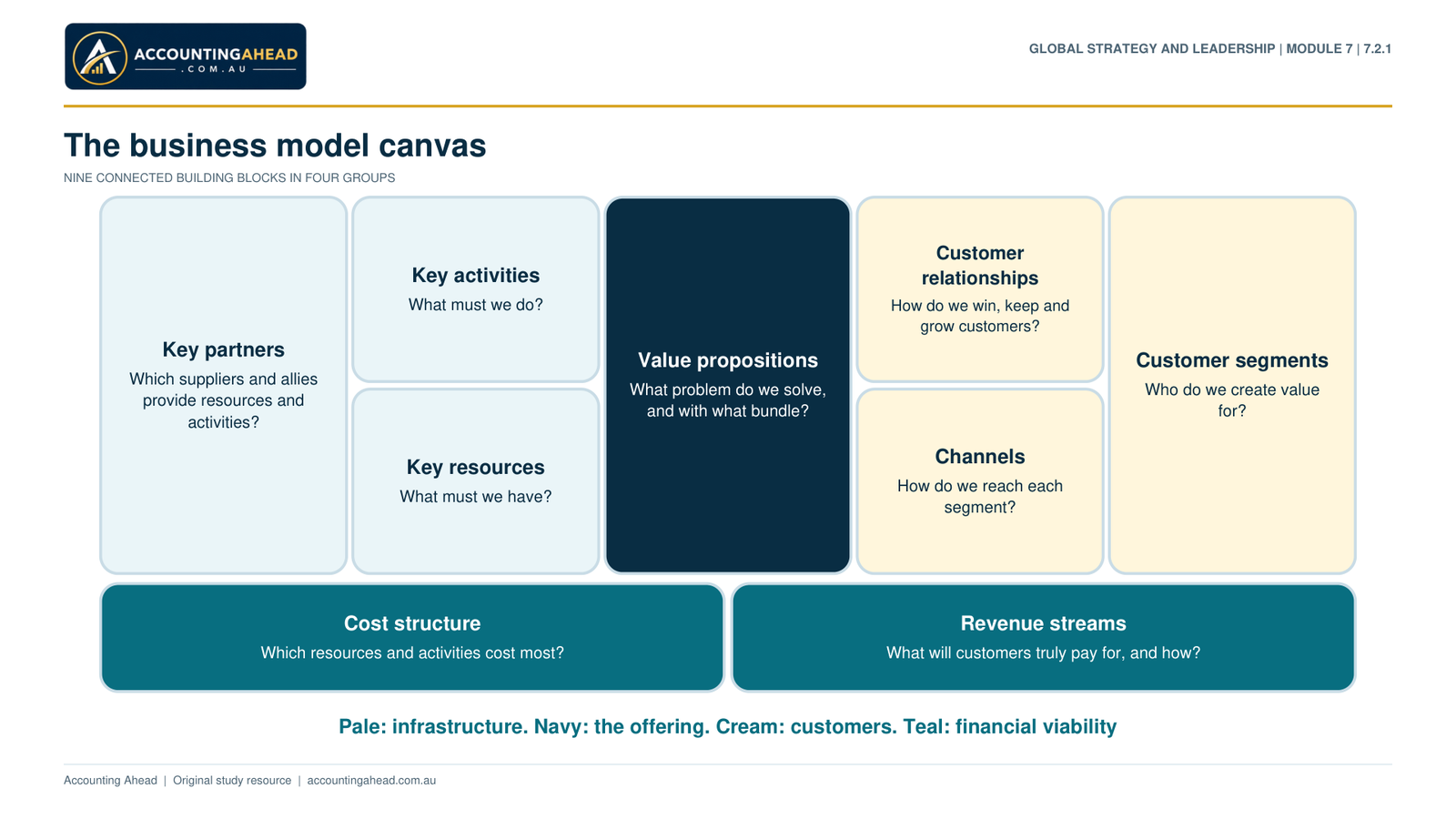
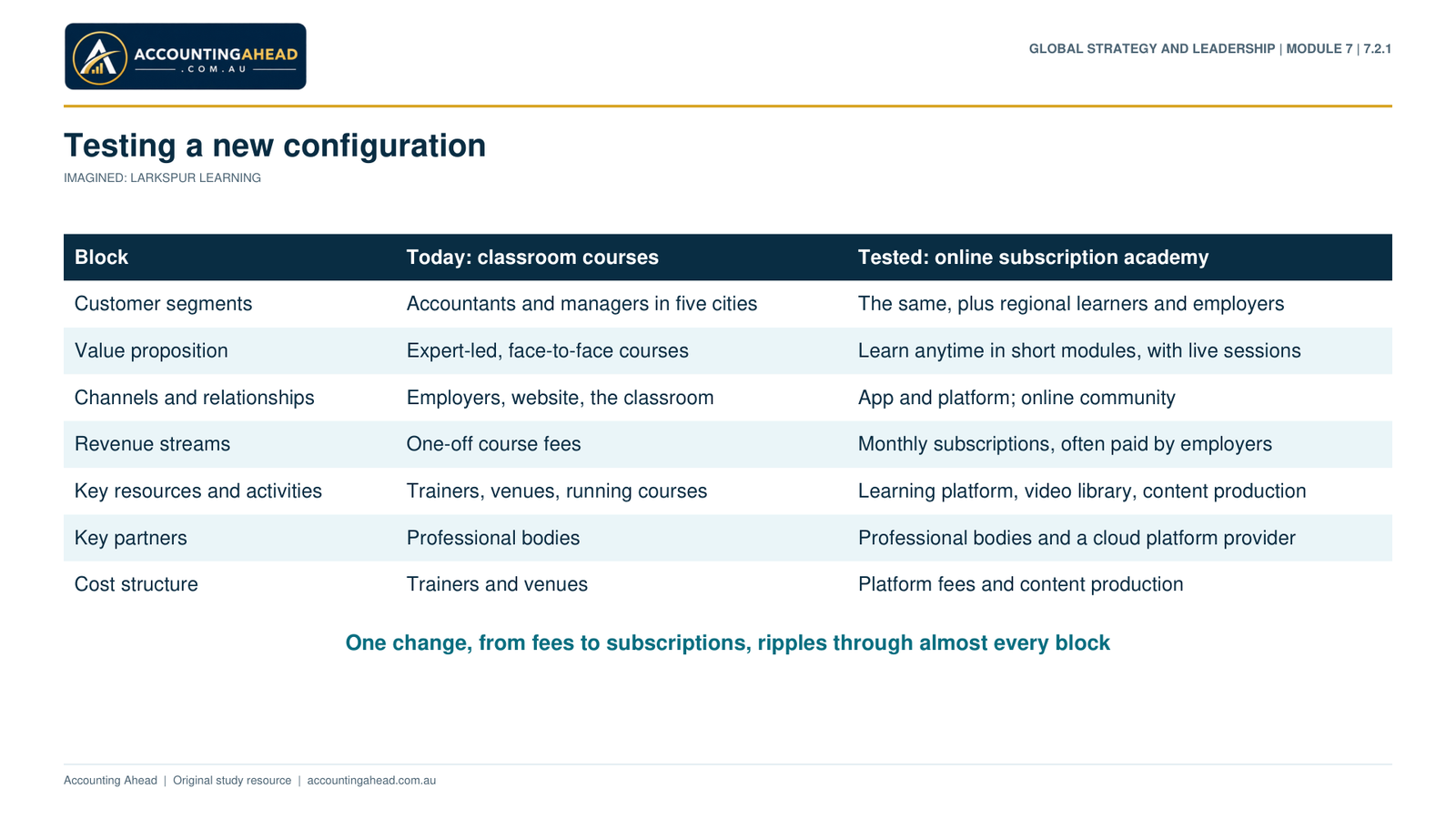
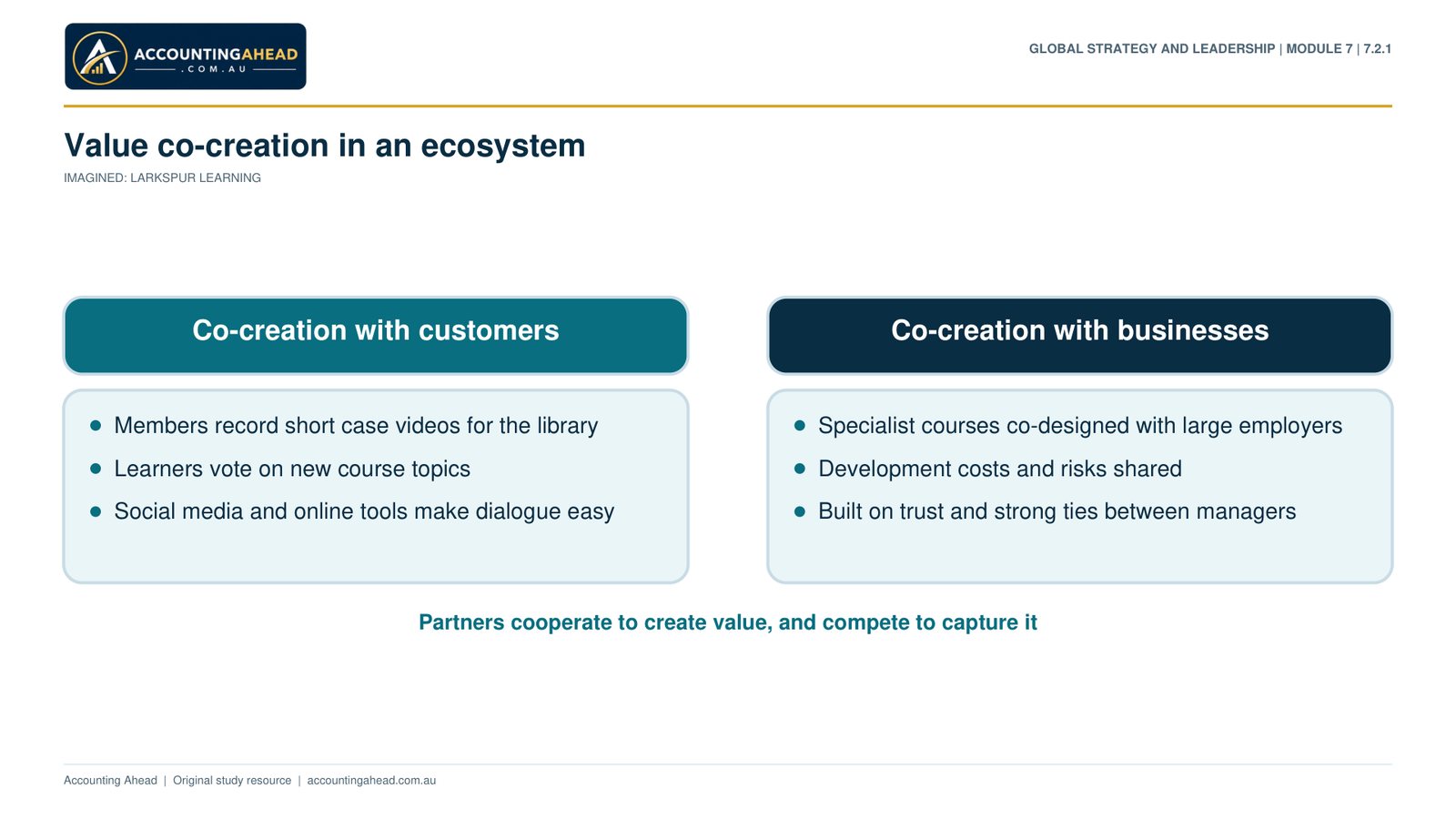
Part 7.2.1 · Business Models, the Canvas and Co-creation
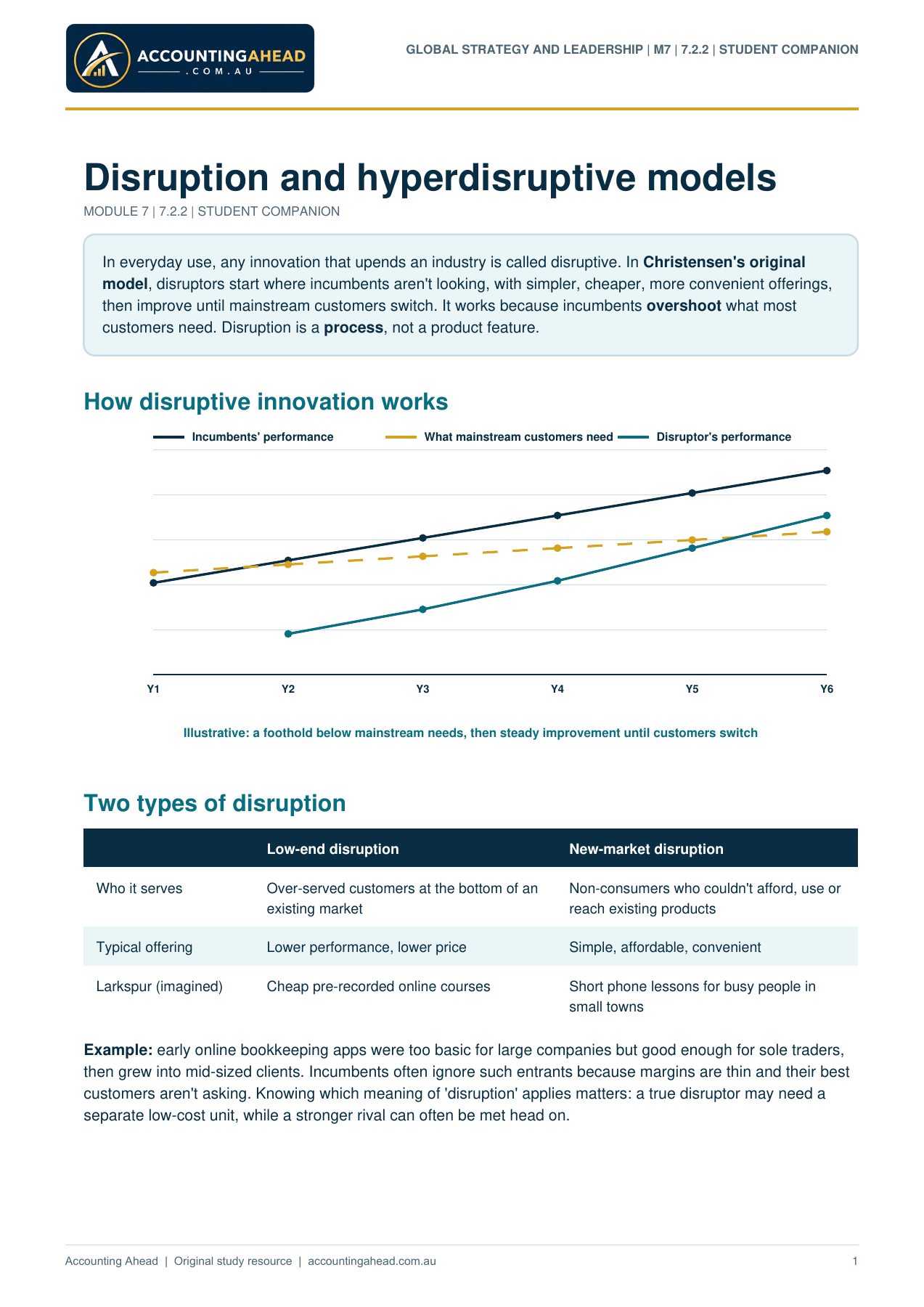
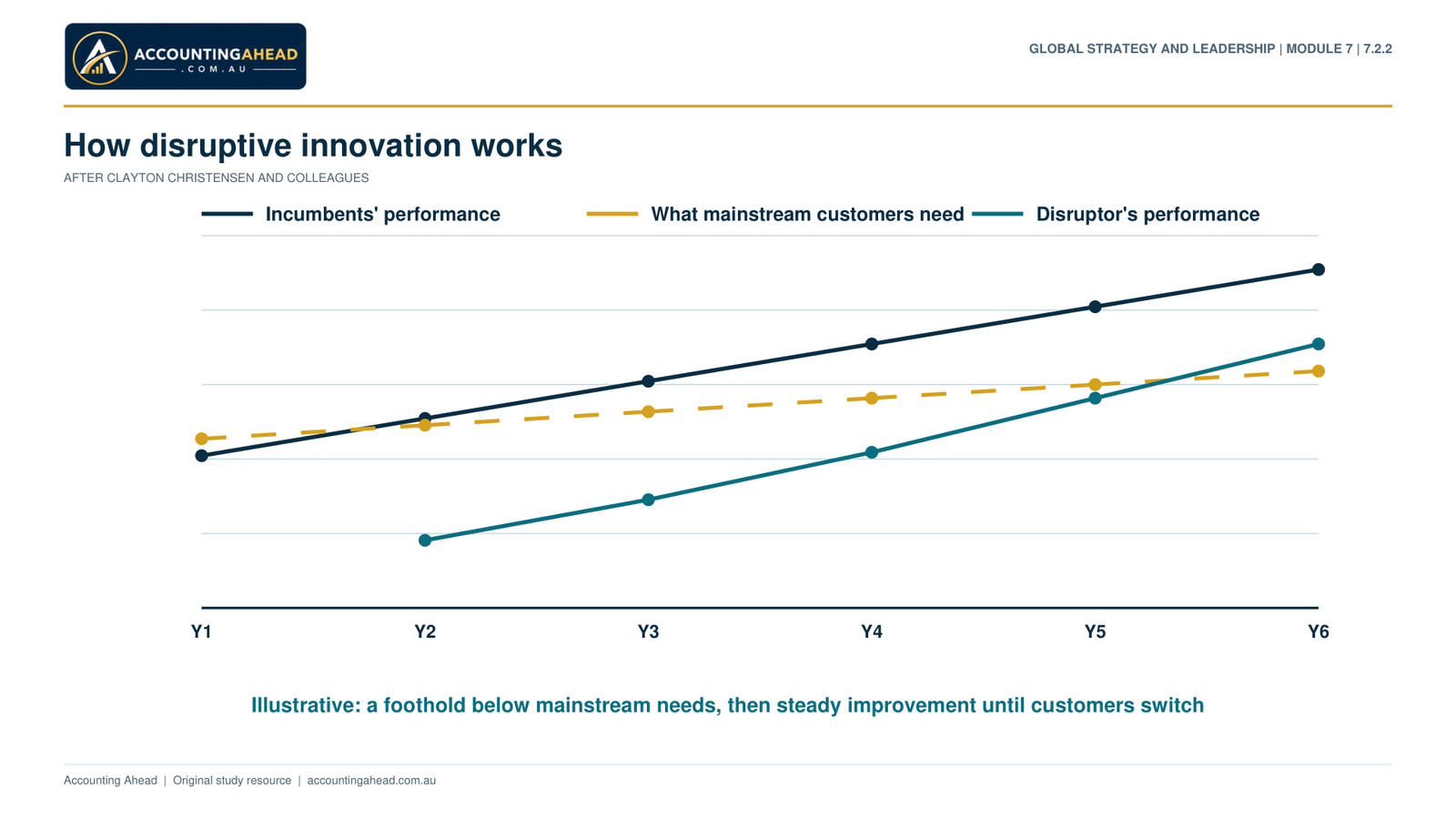
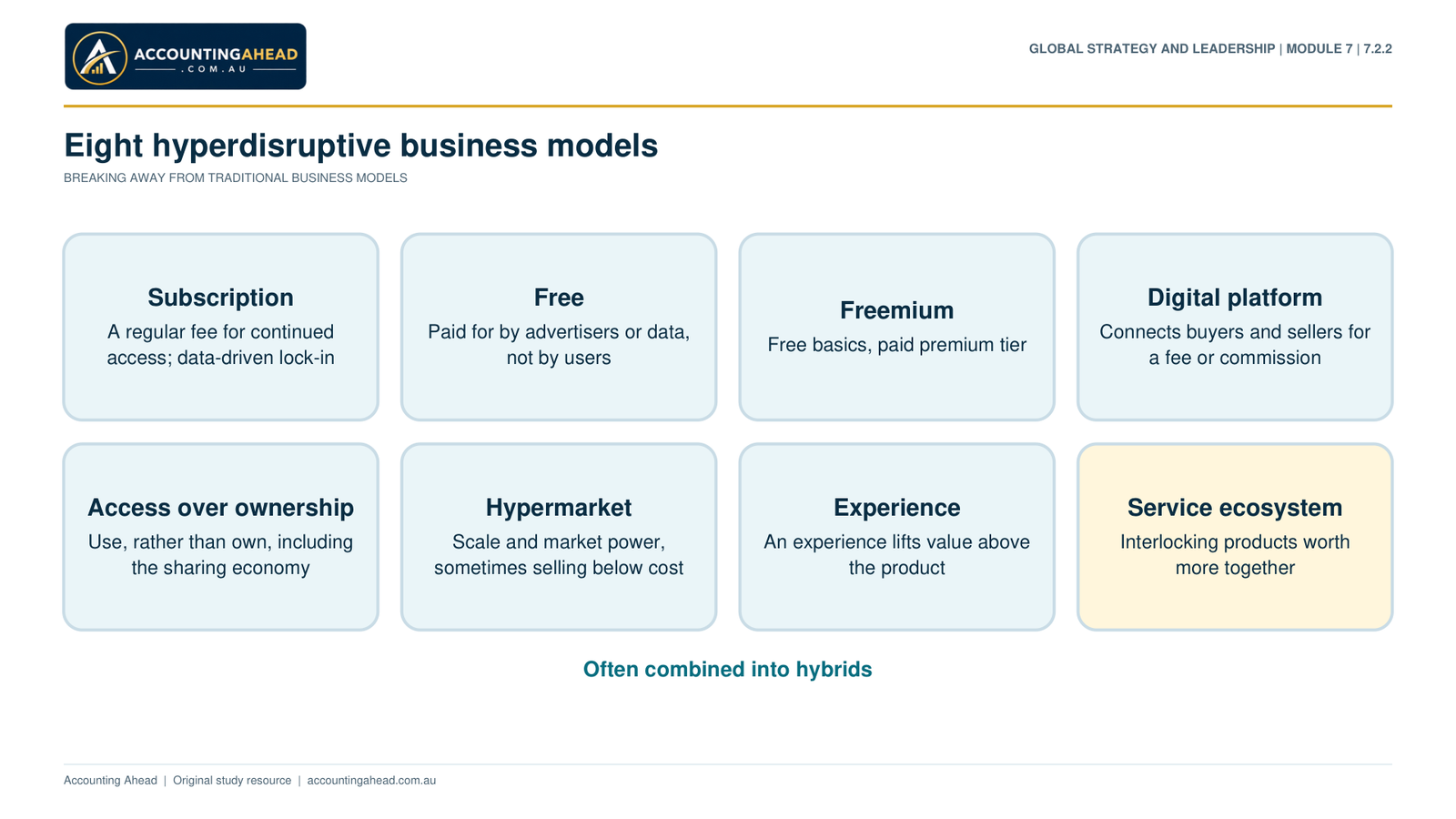
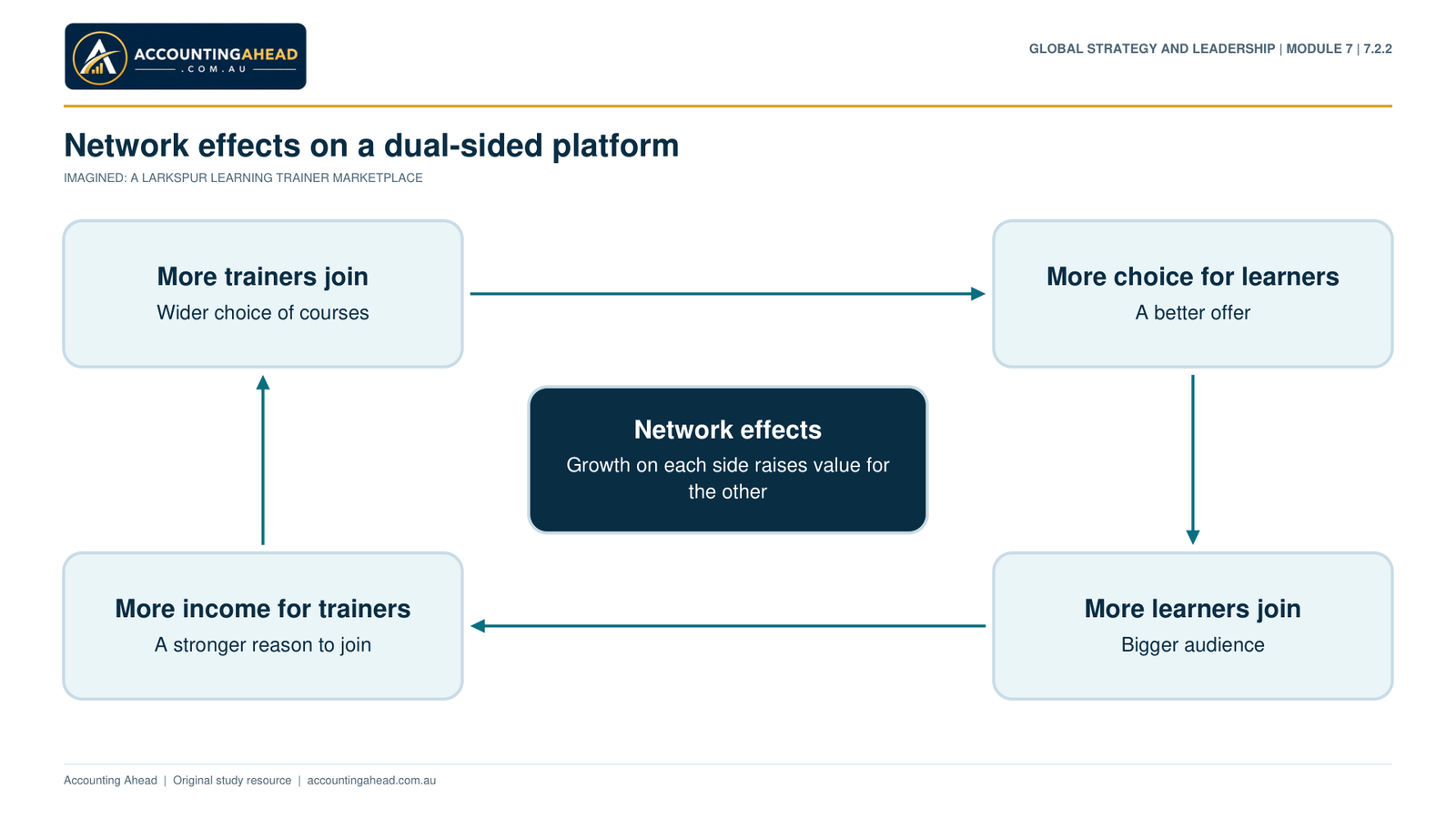
Part 7.2.2 · Disruption and Hyperdisruptive Models
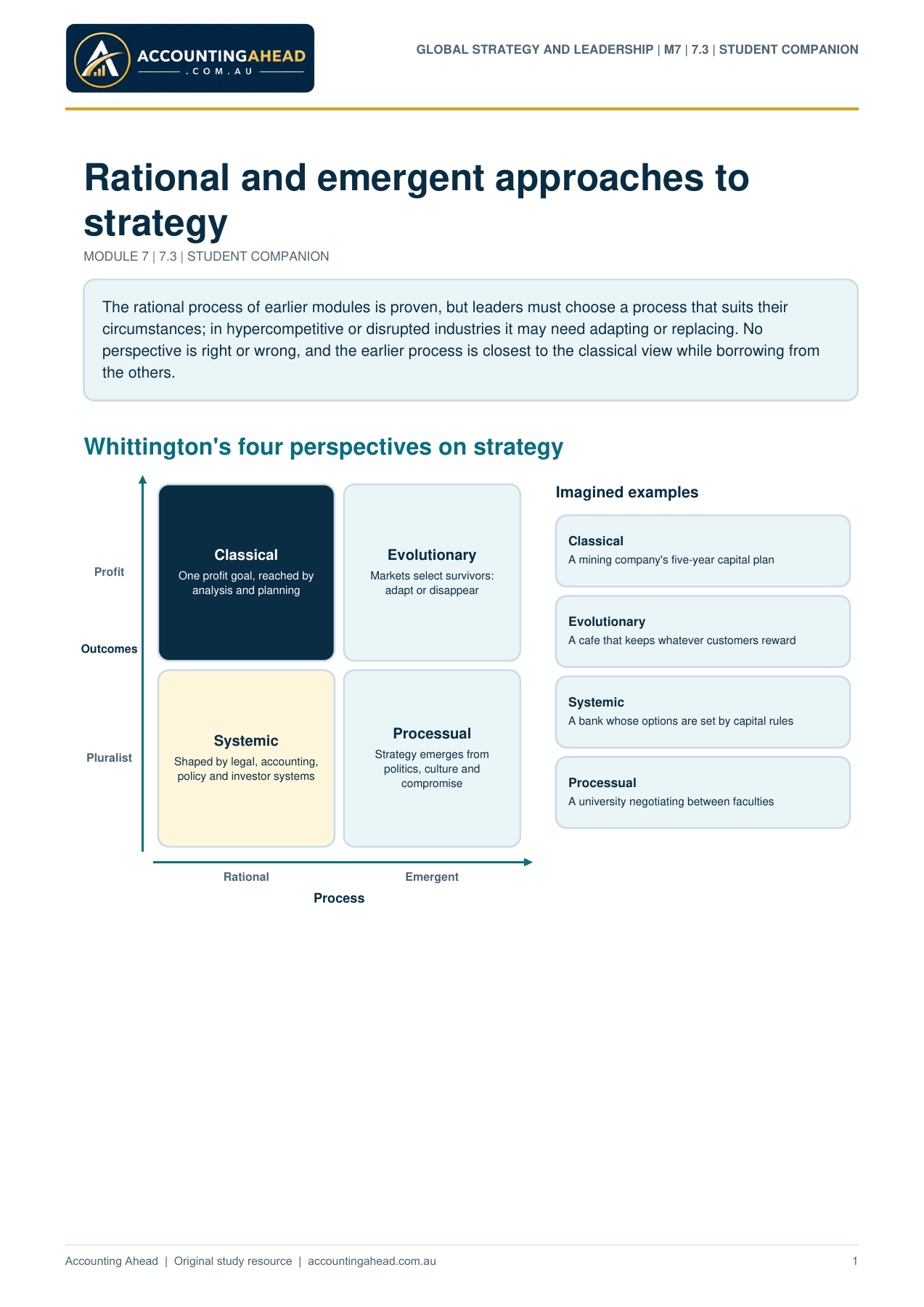
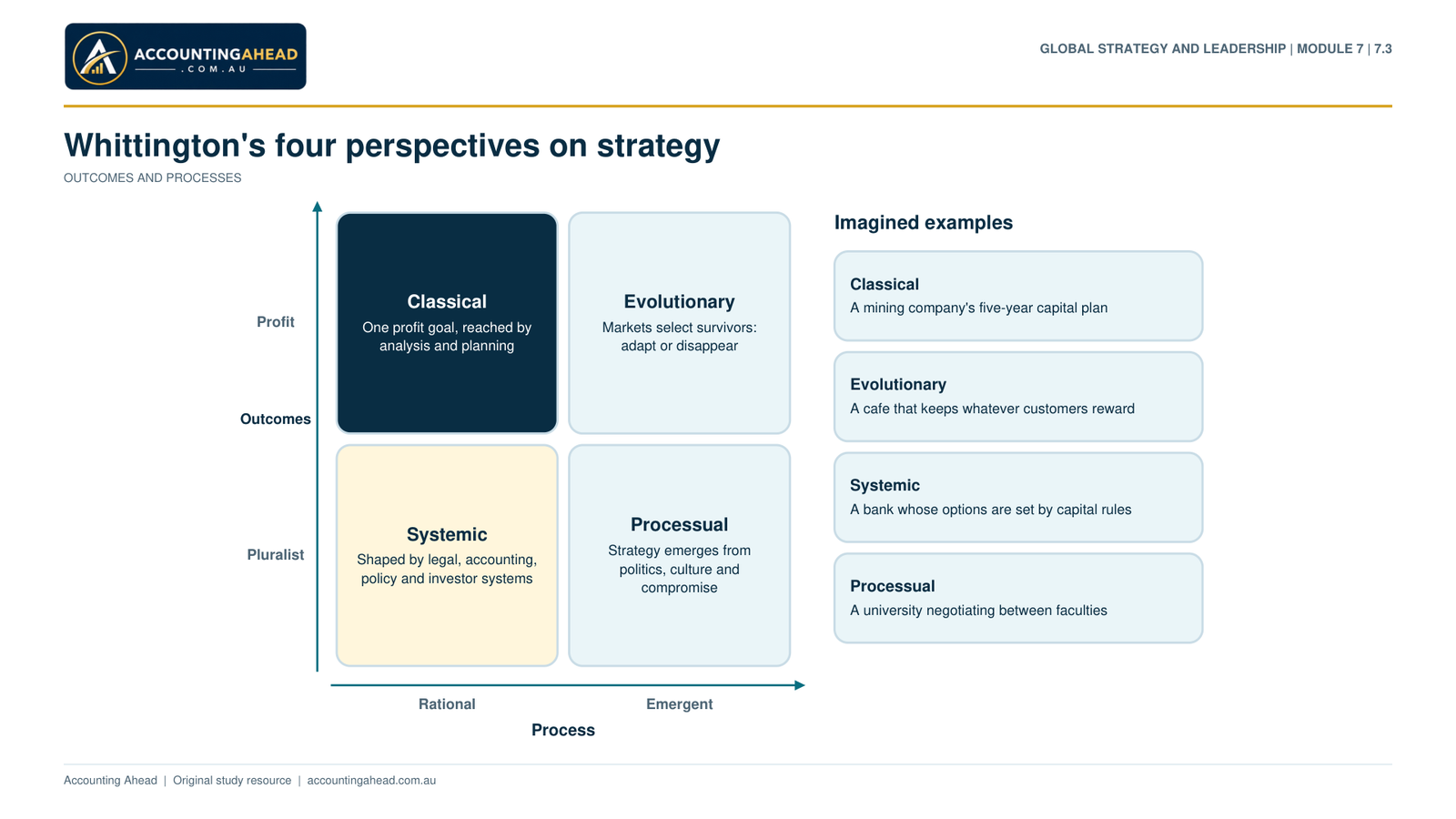
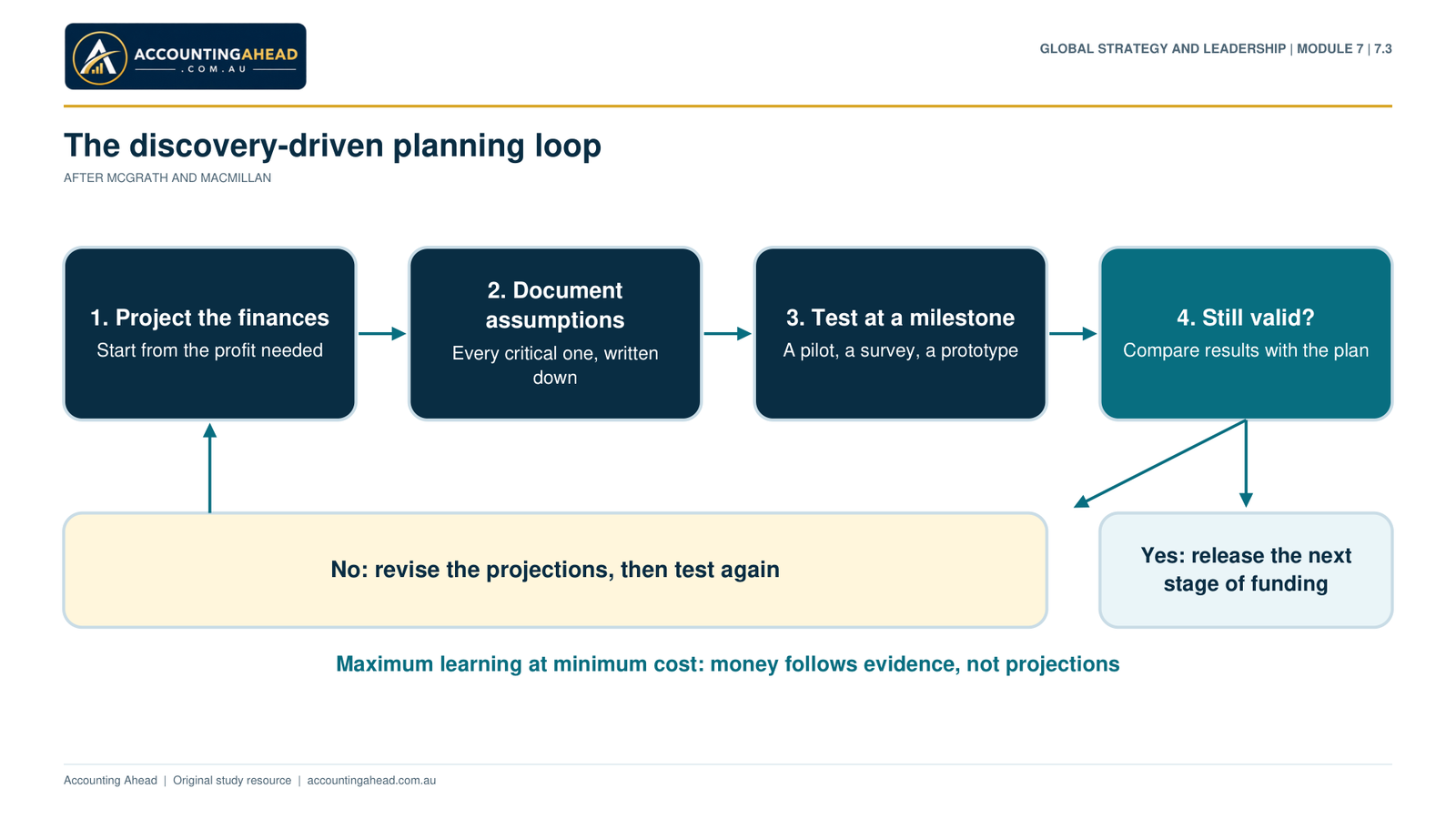
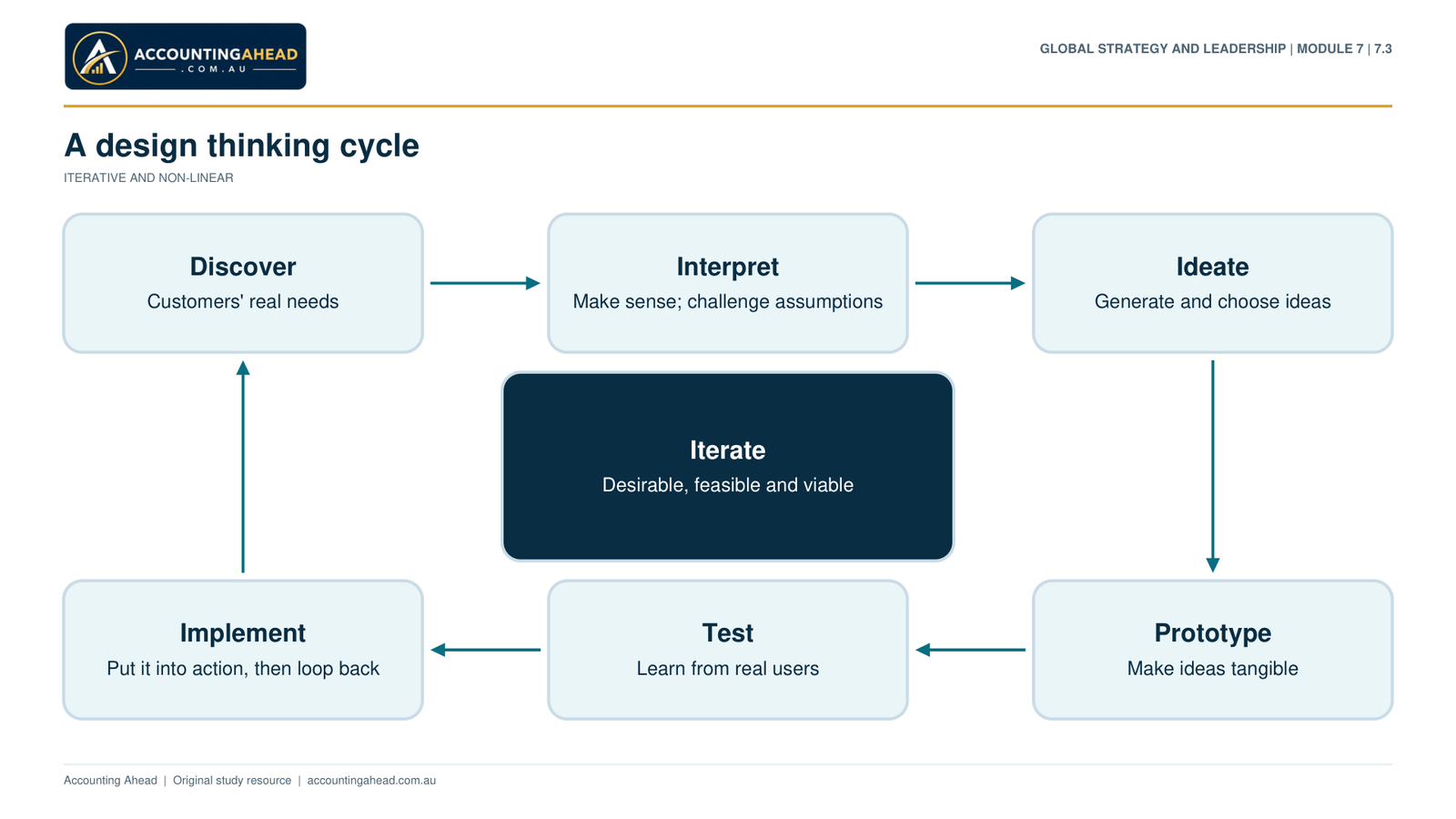
Part 7.3 · Rational and Emergent Approaches to Strategy
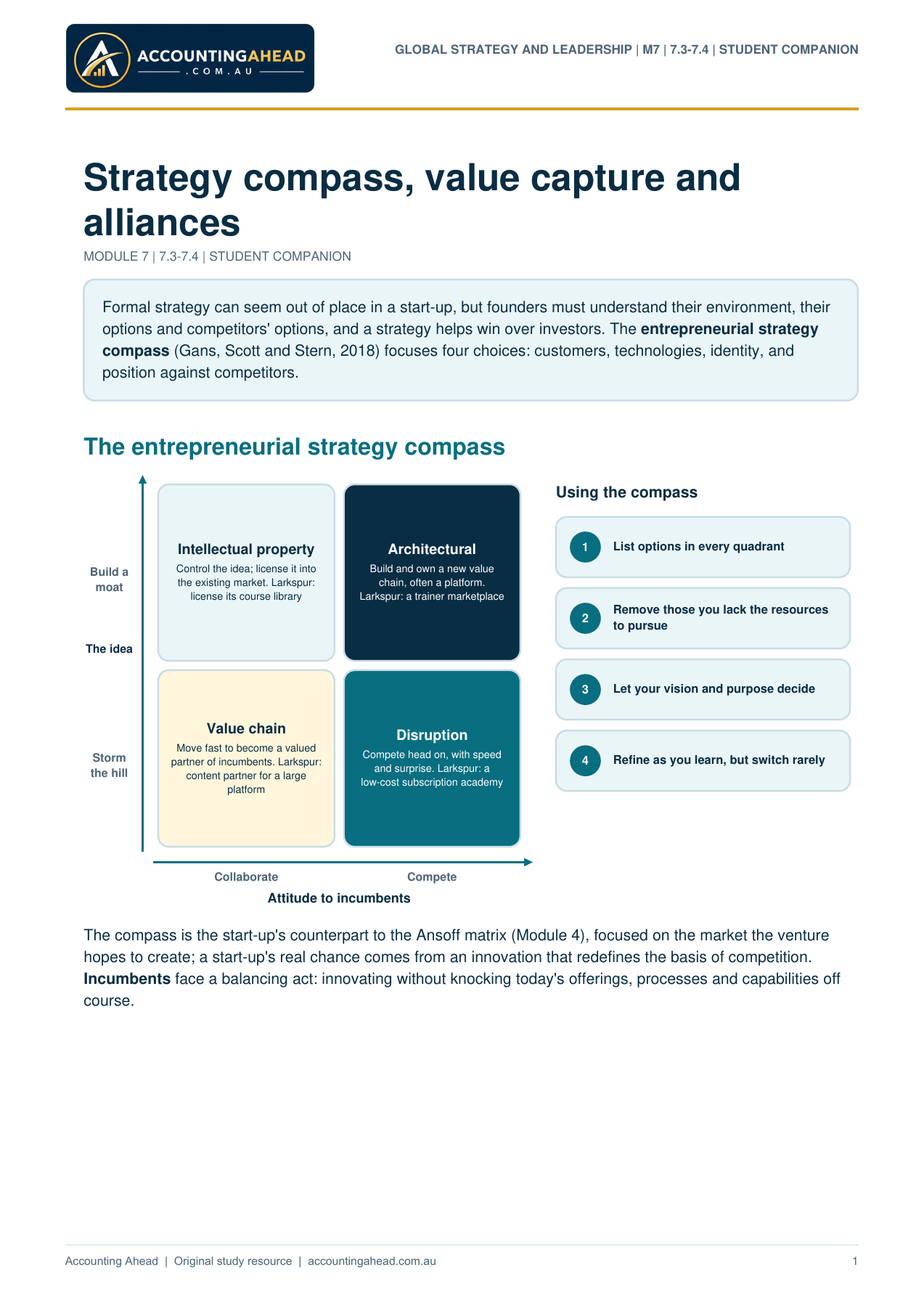
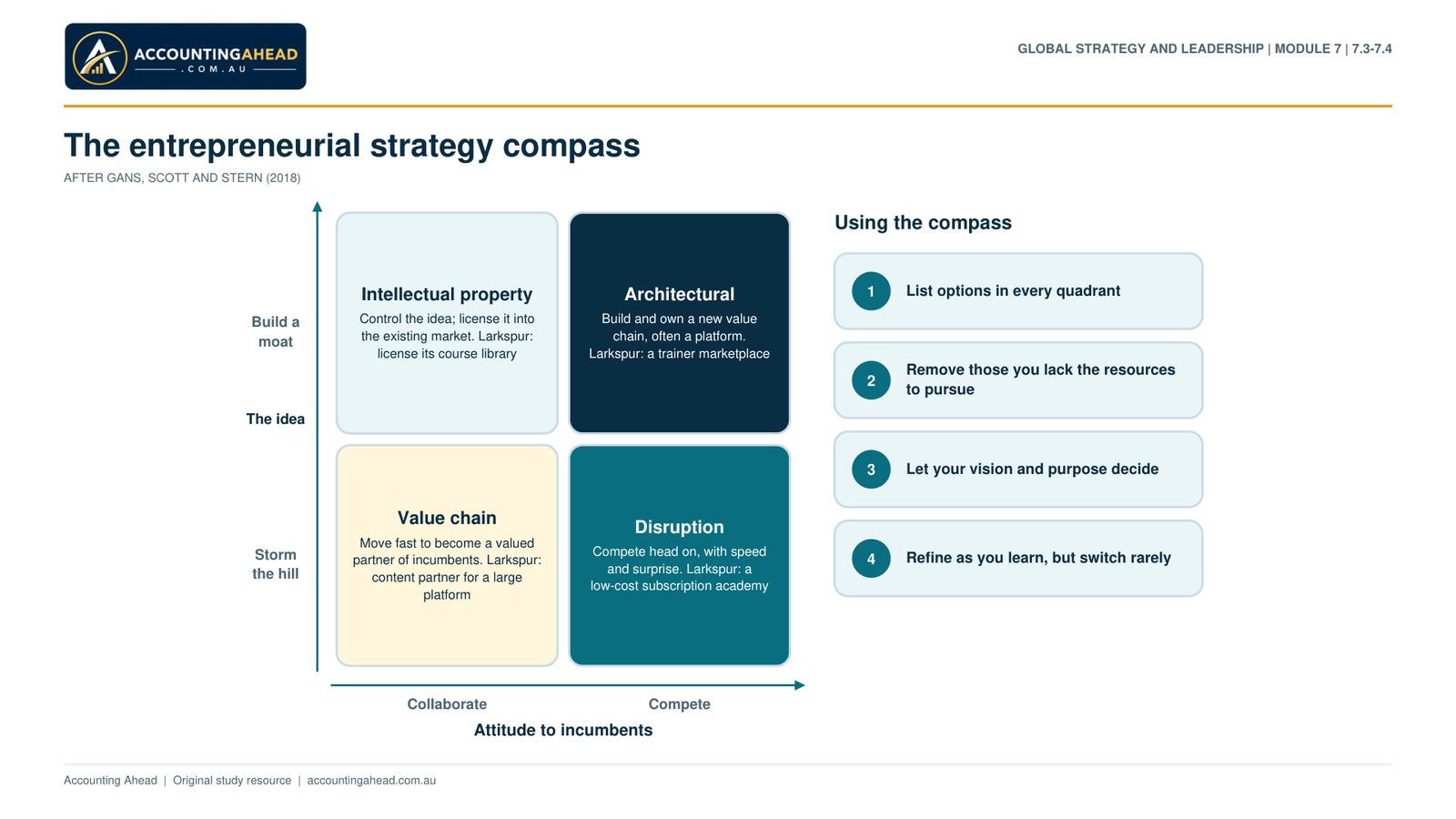
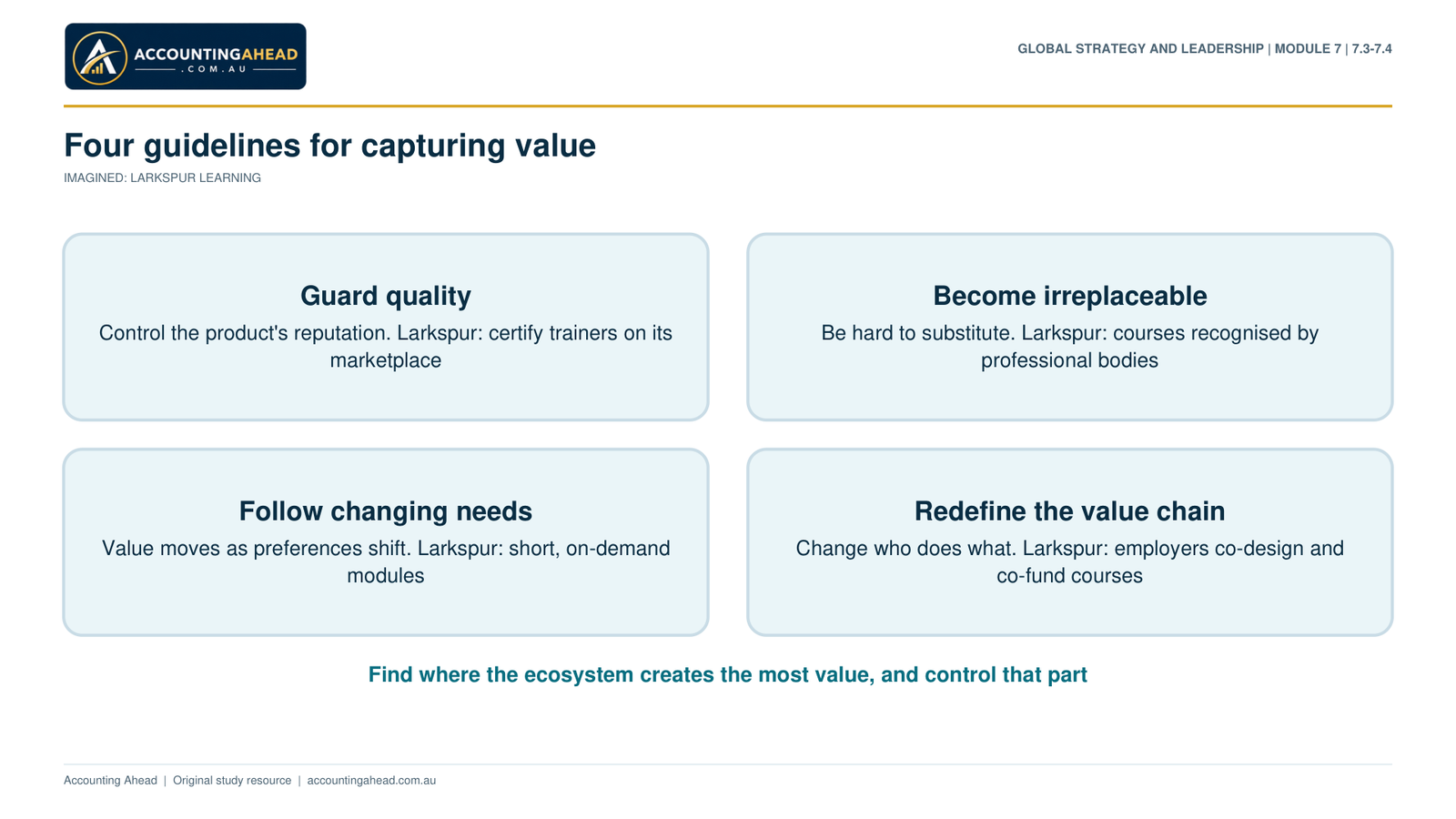
Part 7.3-7.4 · Strategy Compass, Value Capture and Alliances
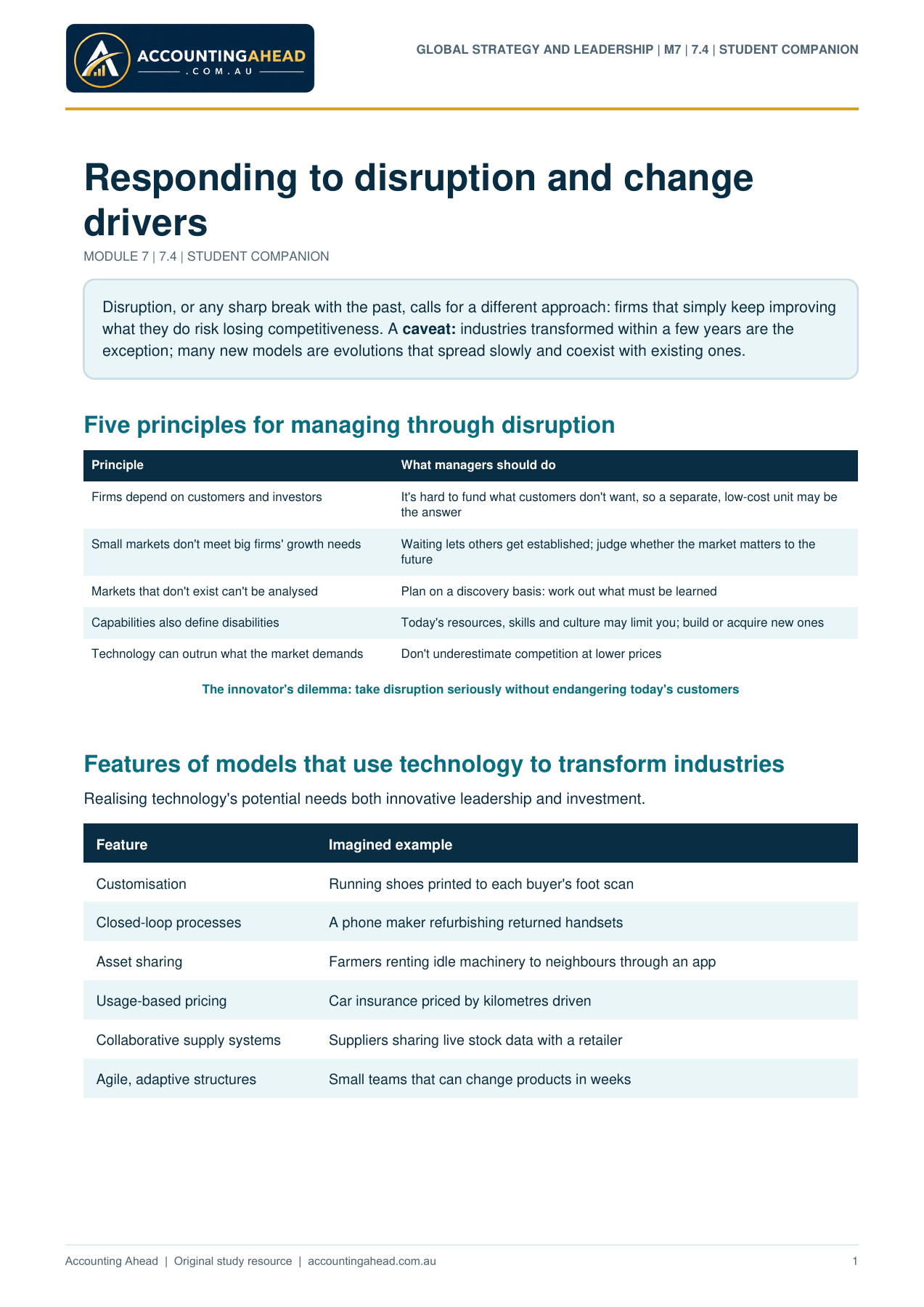
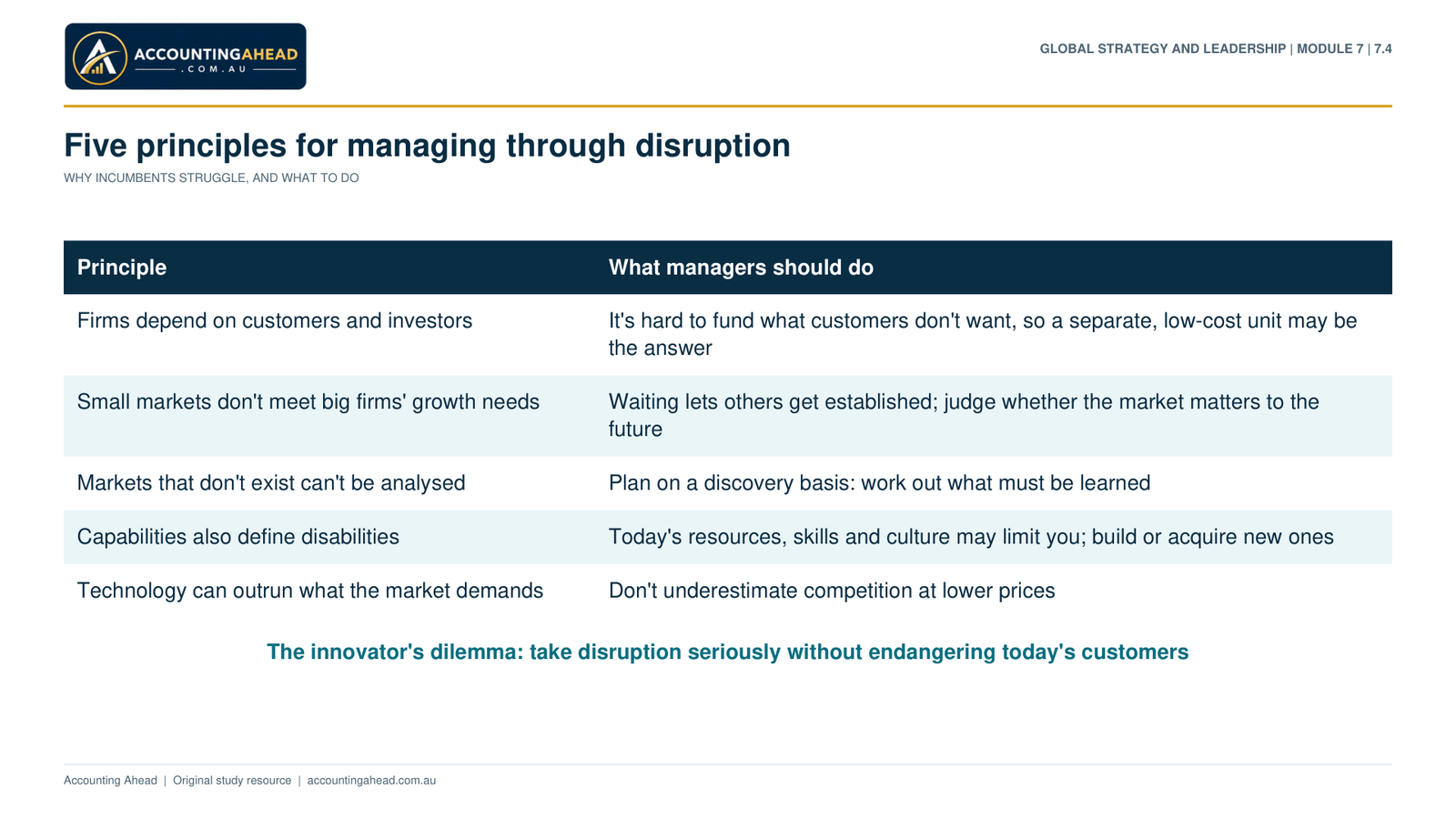
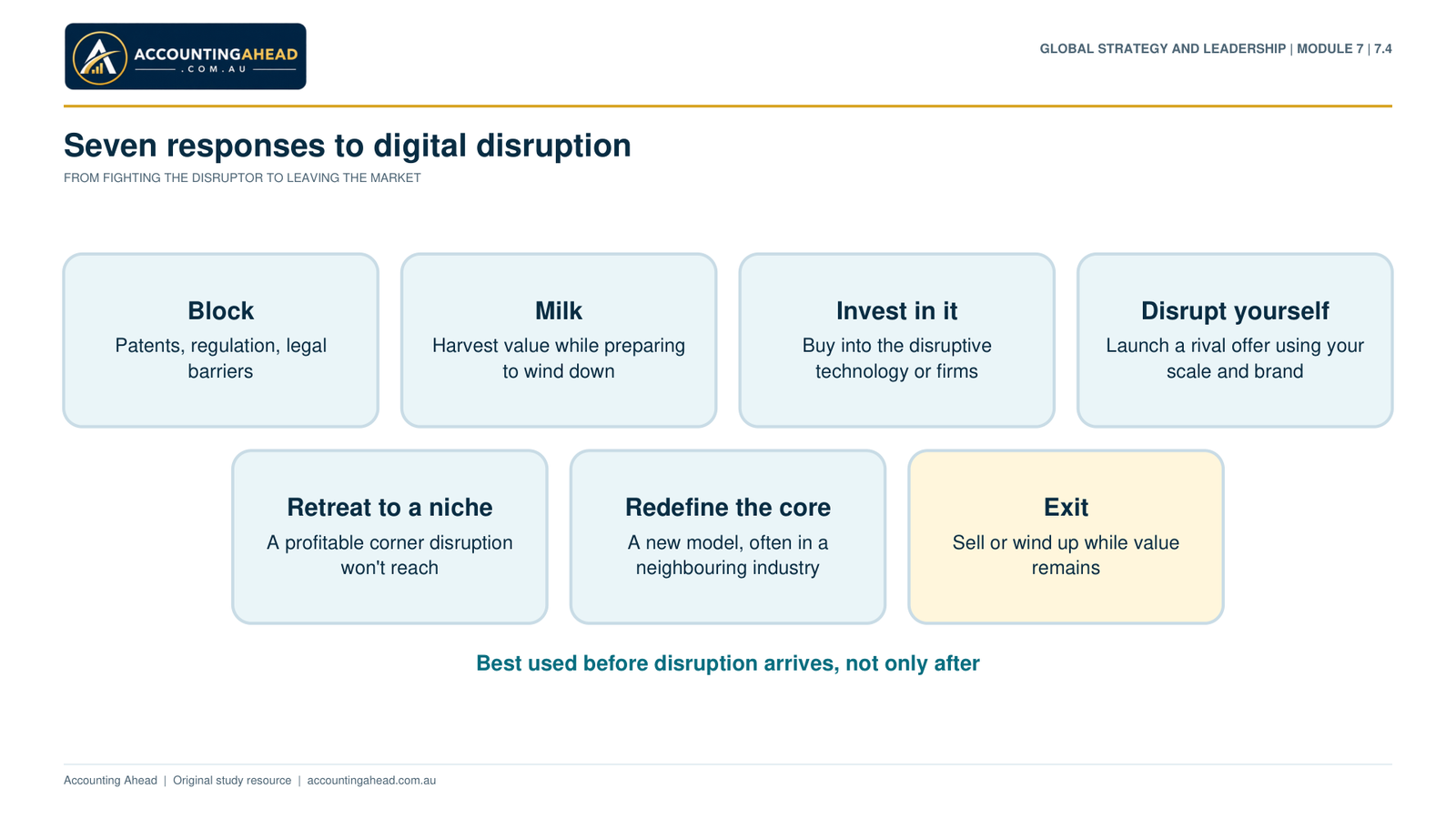
Part 7.4 · Responding to Disruption and Change Drivers
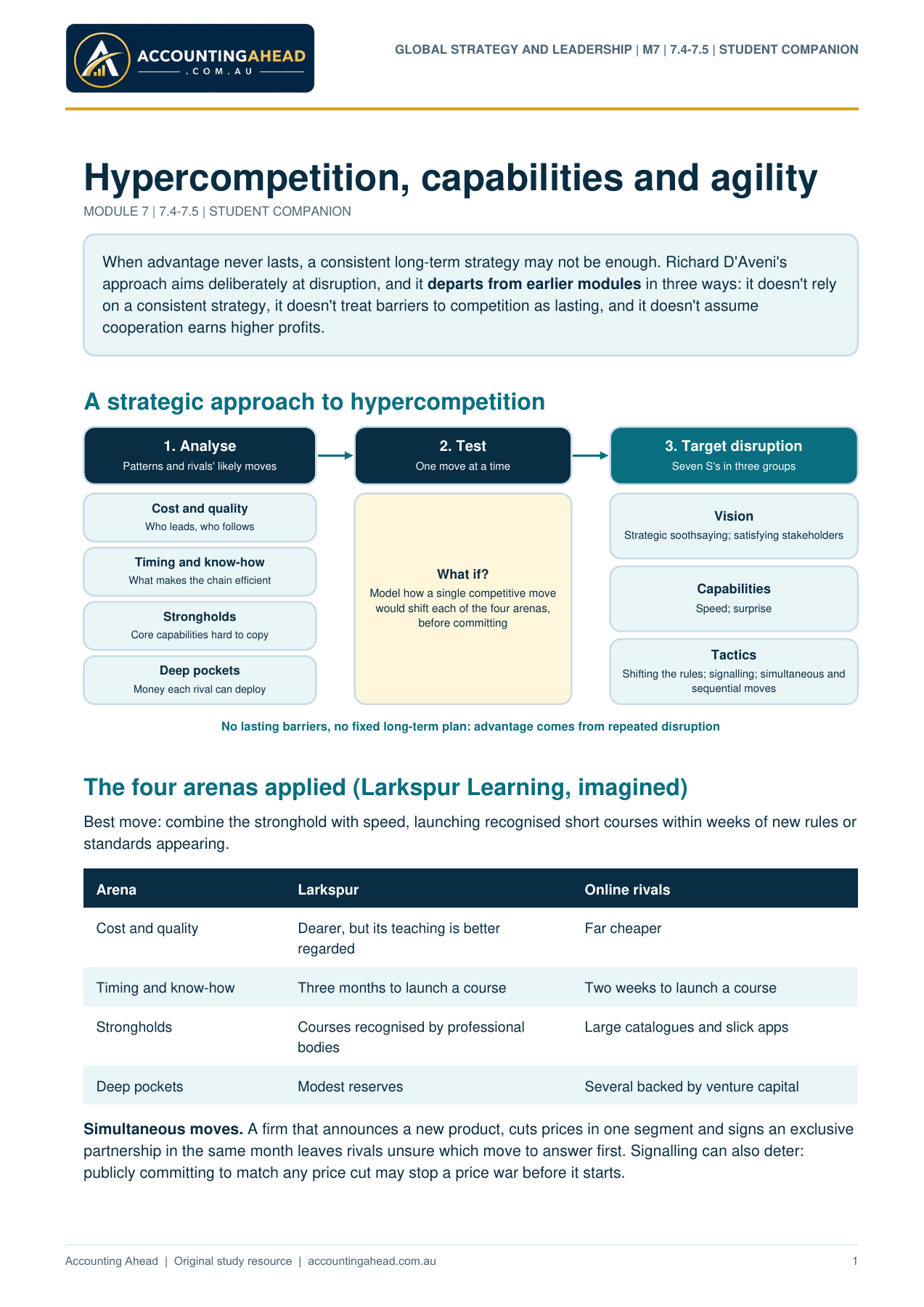
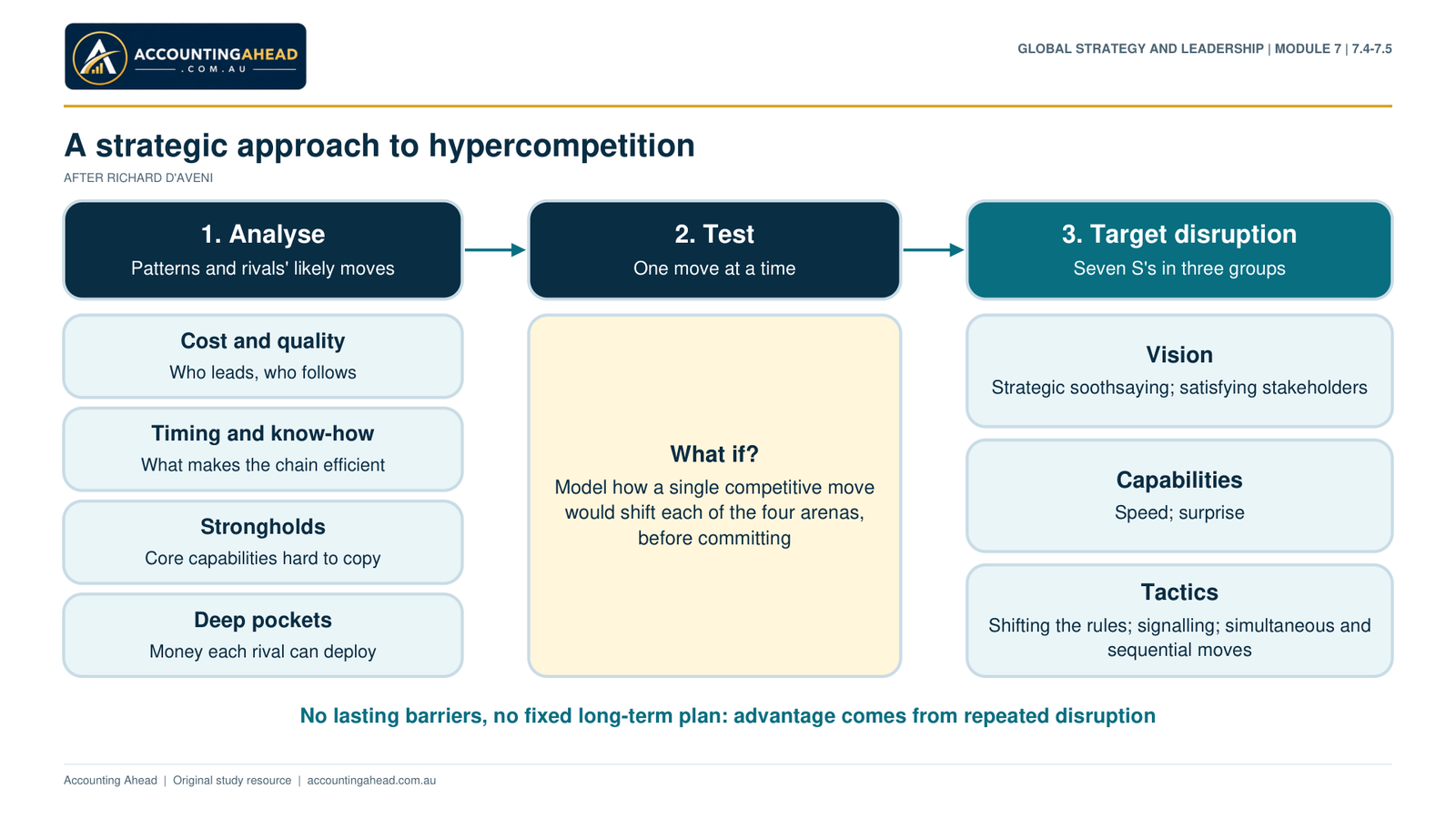
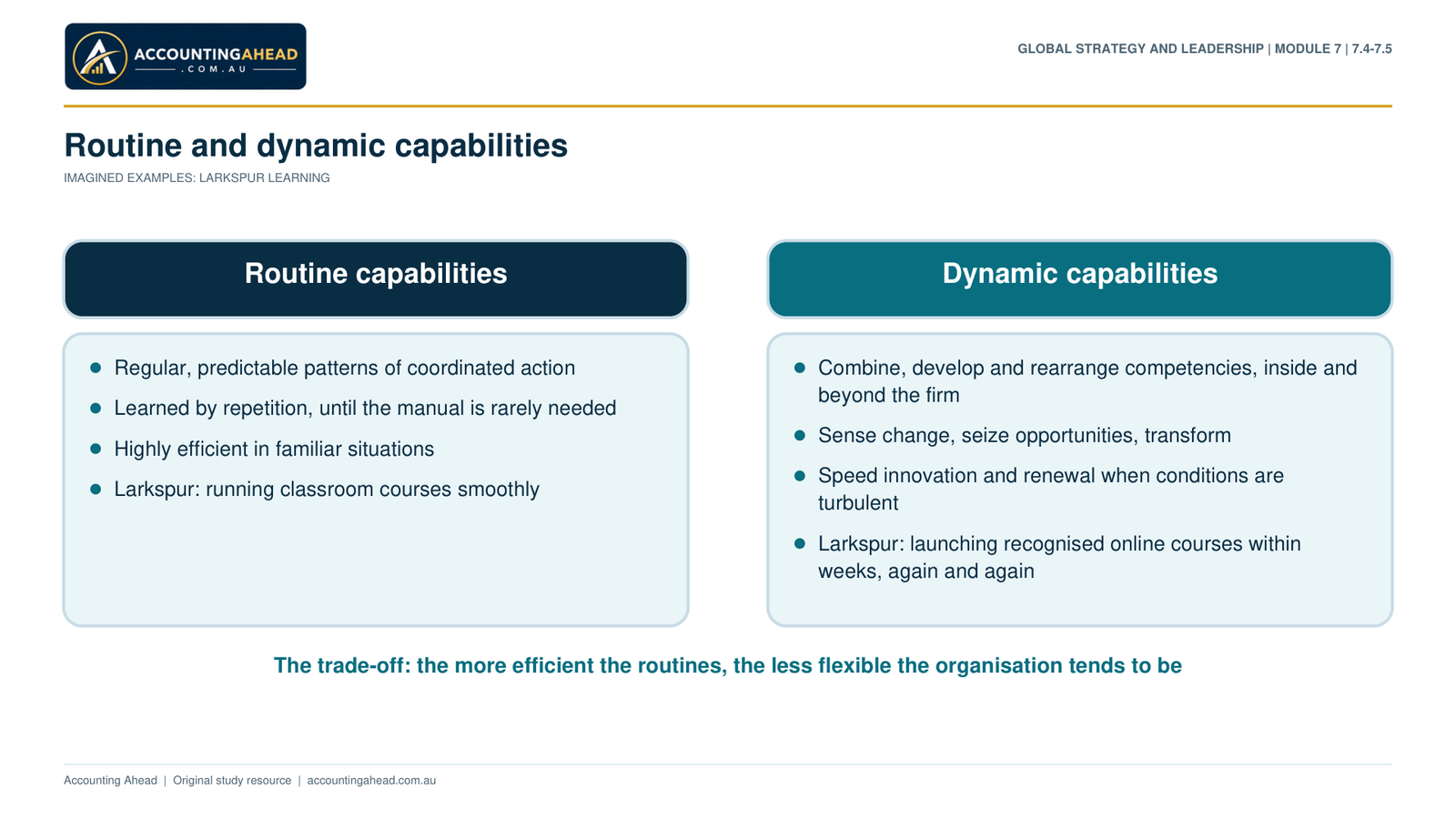
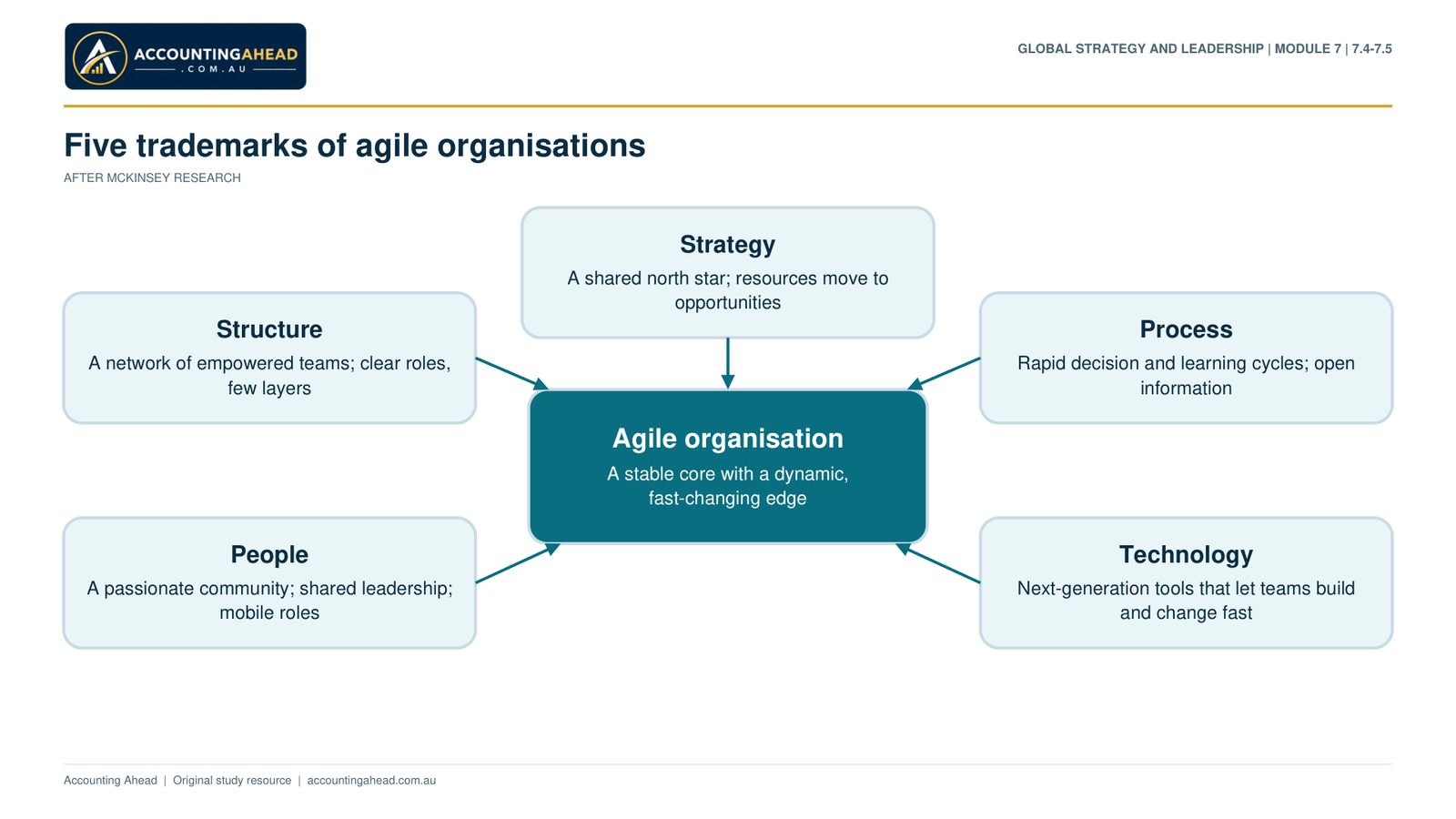
Part 7.4-7.5 · Hypercompetition, Capabilities and Agility
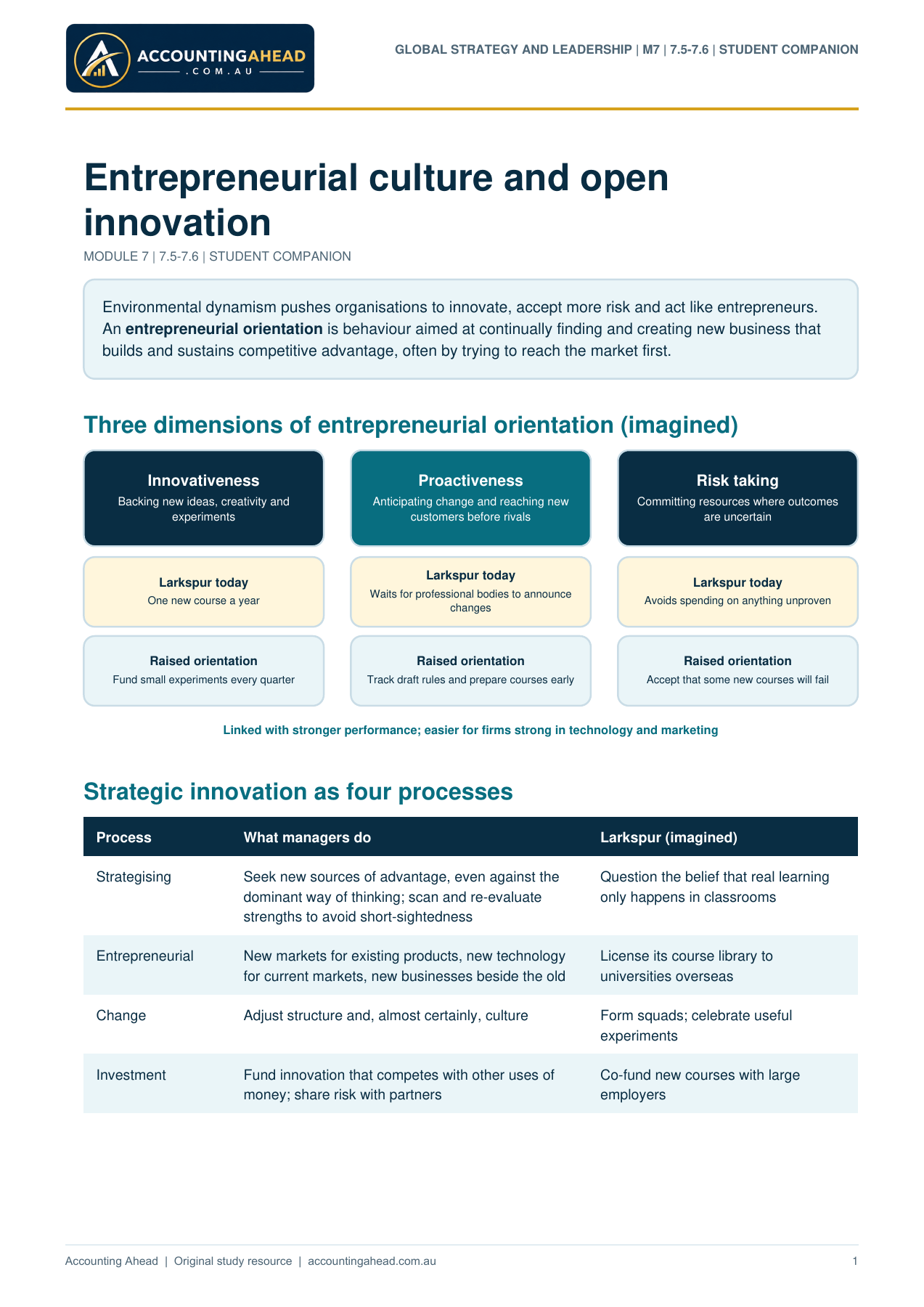
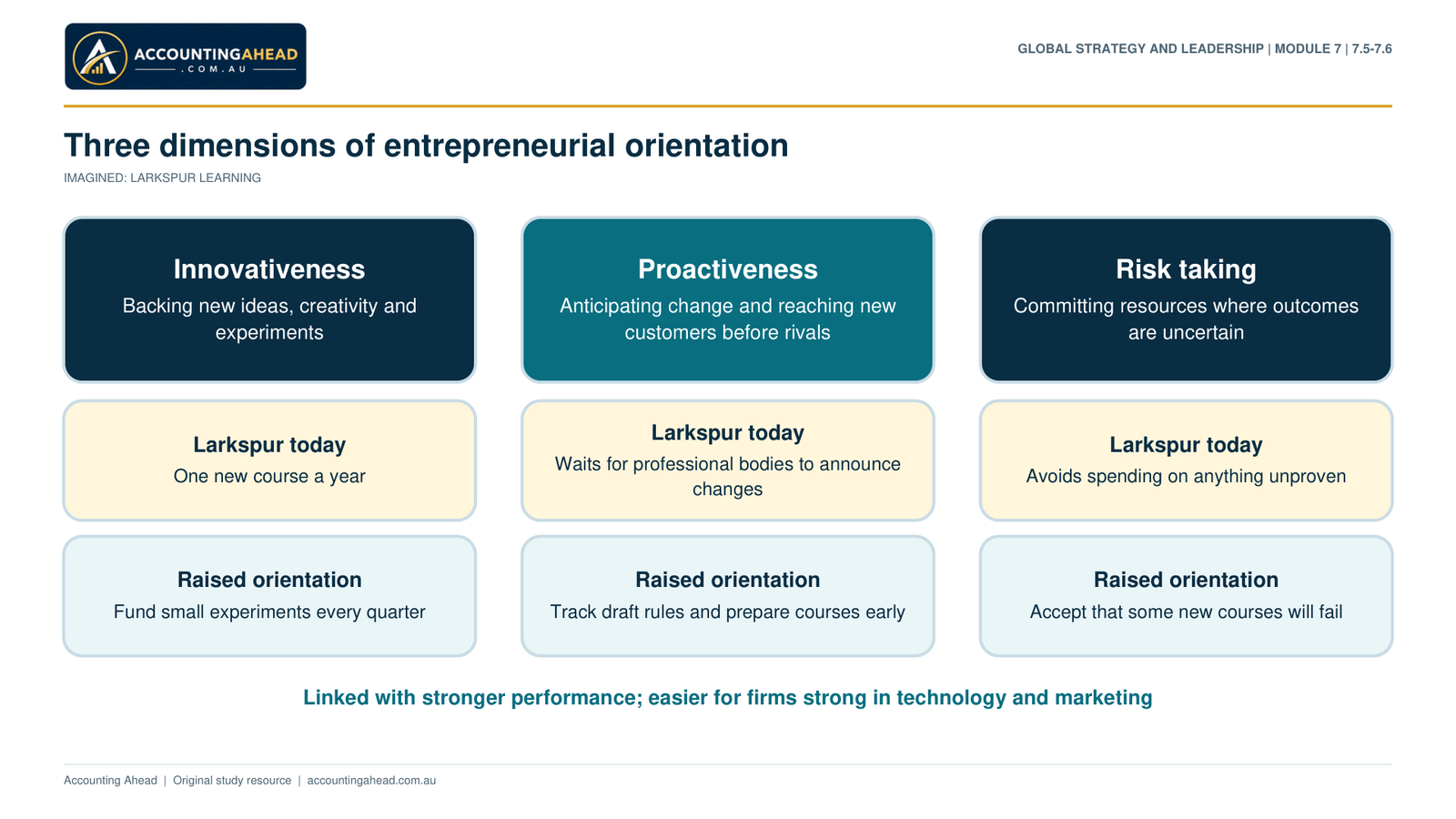
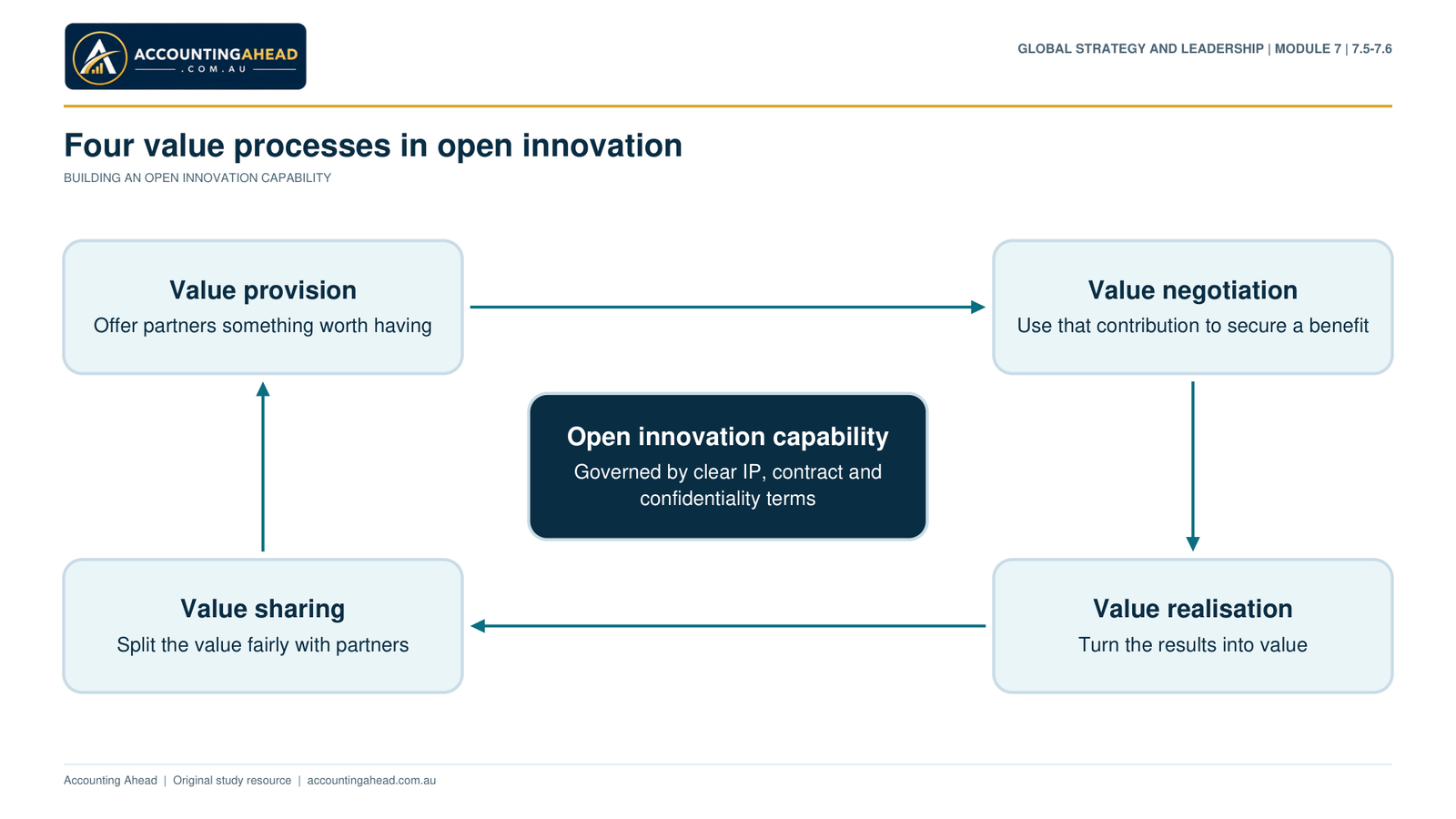
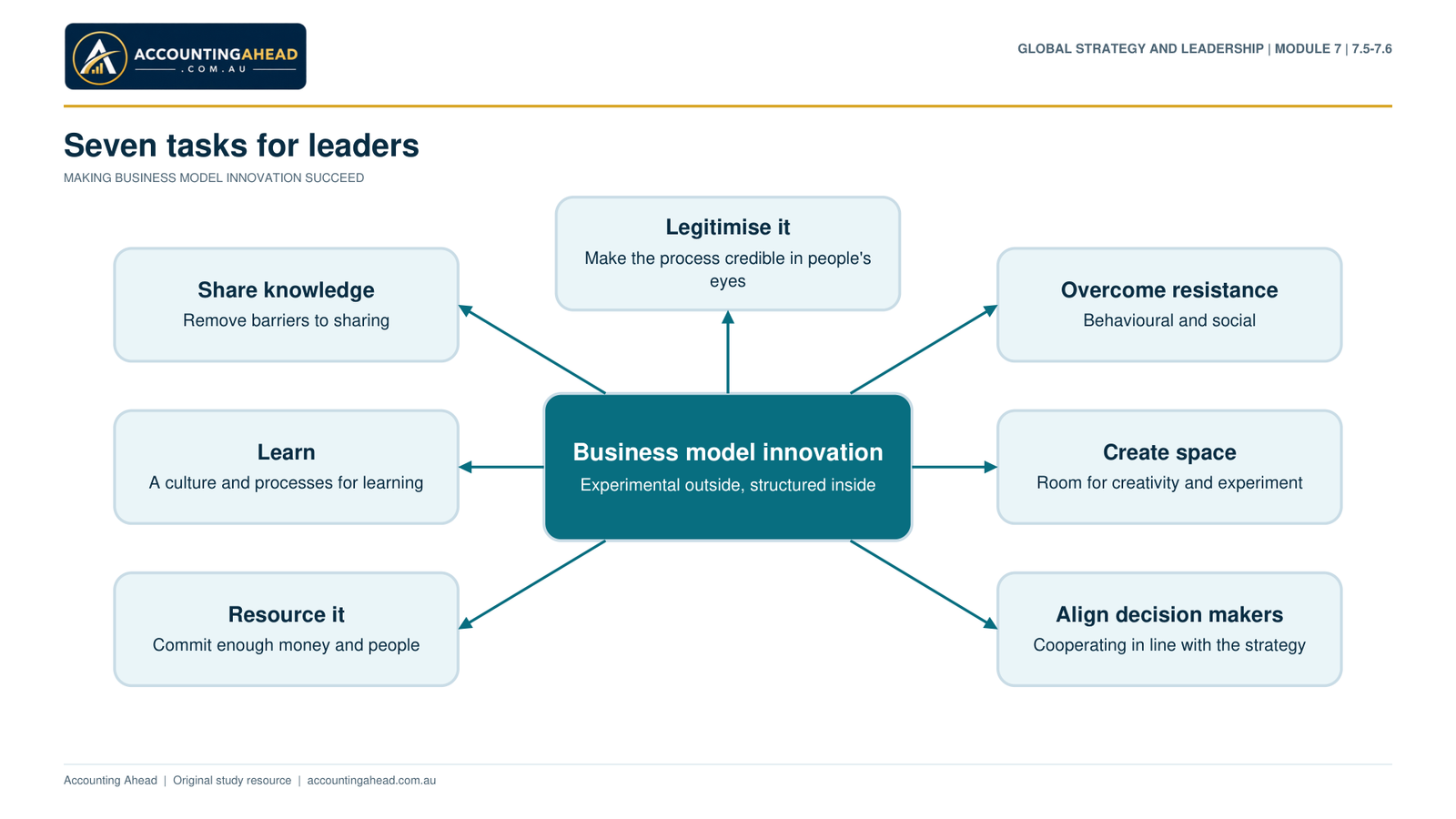
Part 7.5-7.6 · Entrepreneurial Culture and Open Innovation
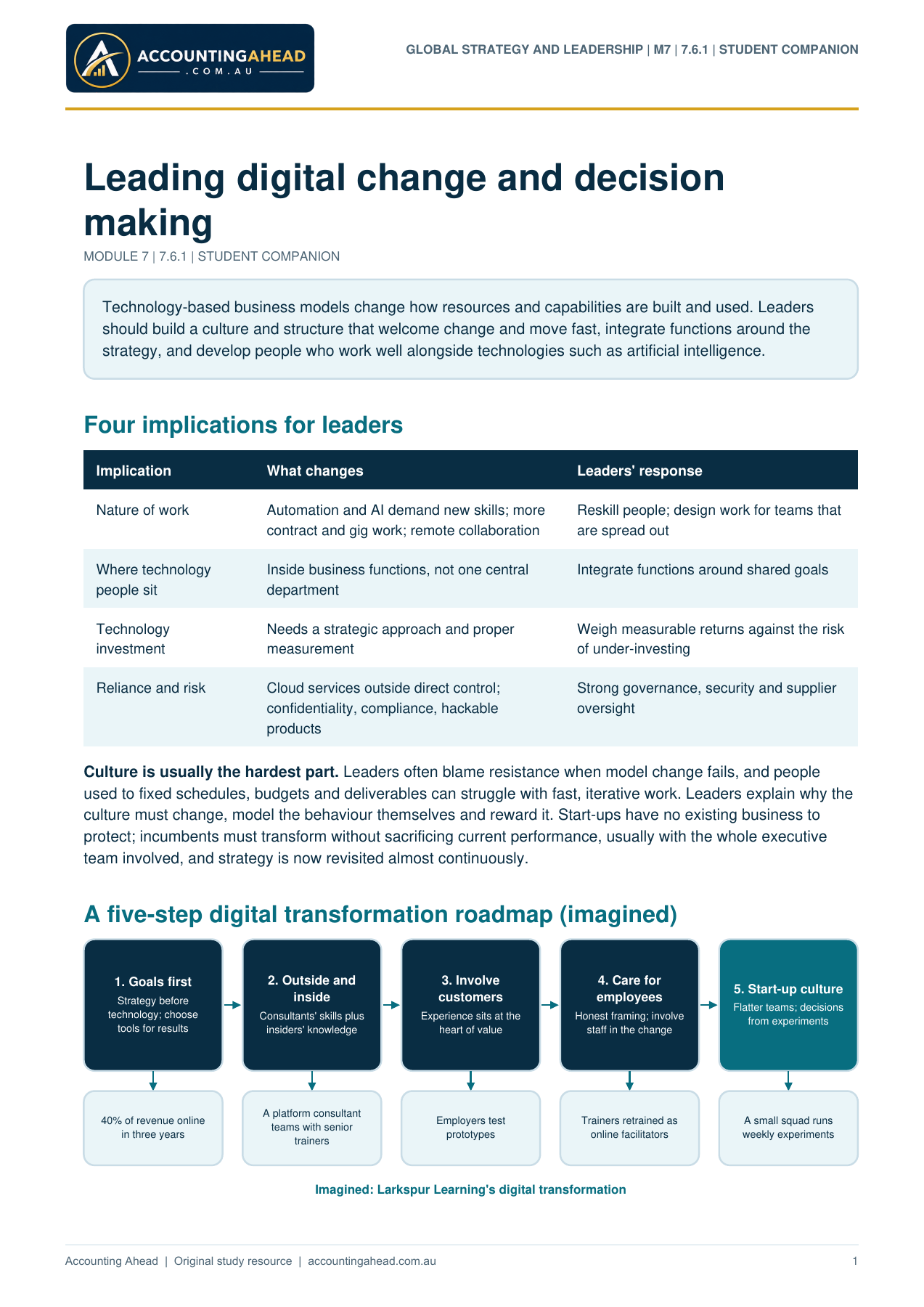
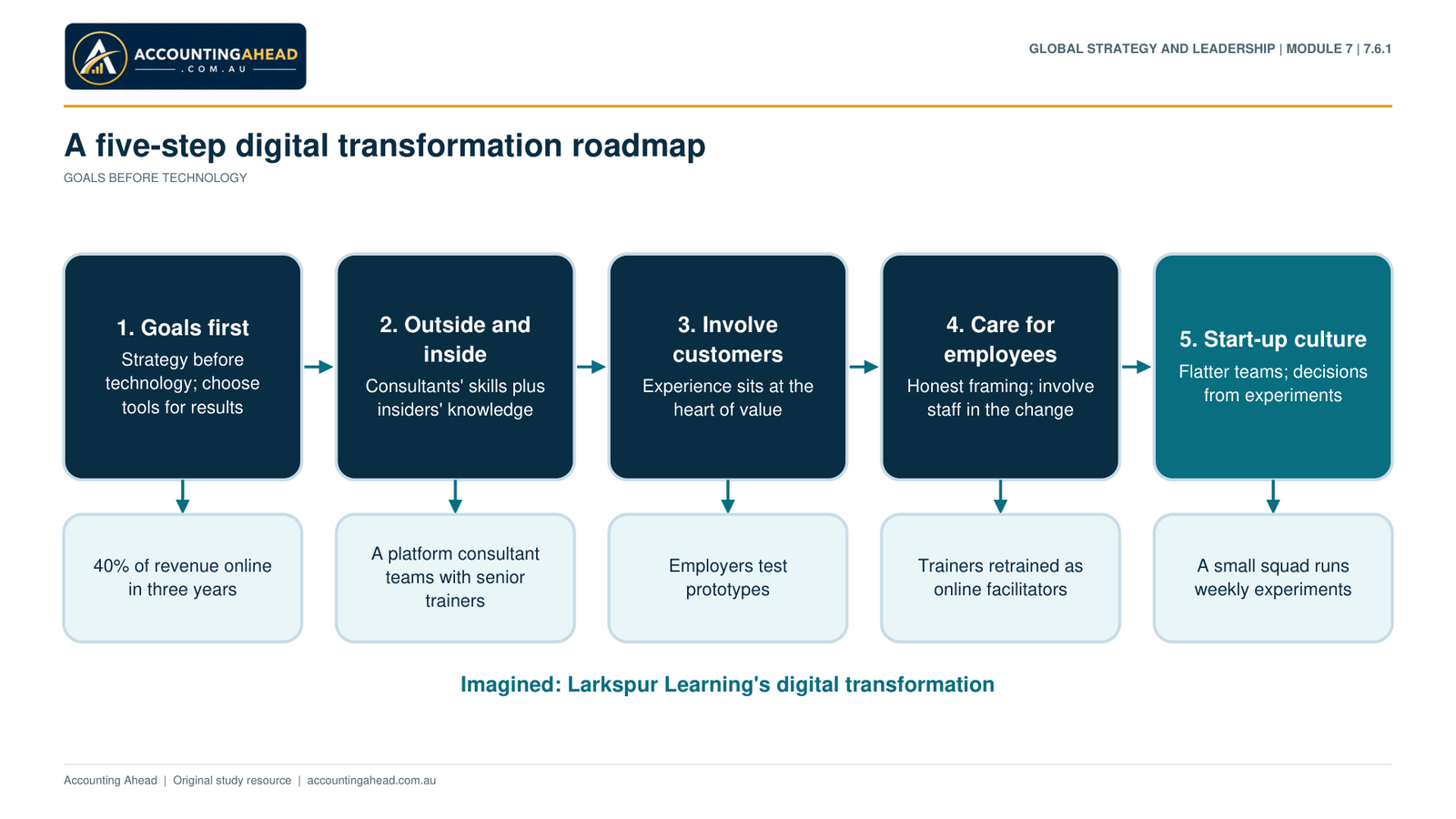
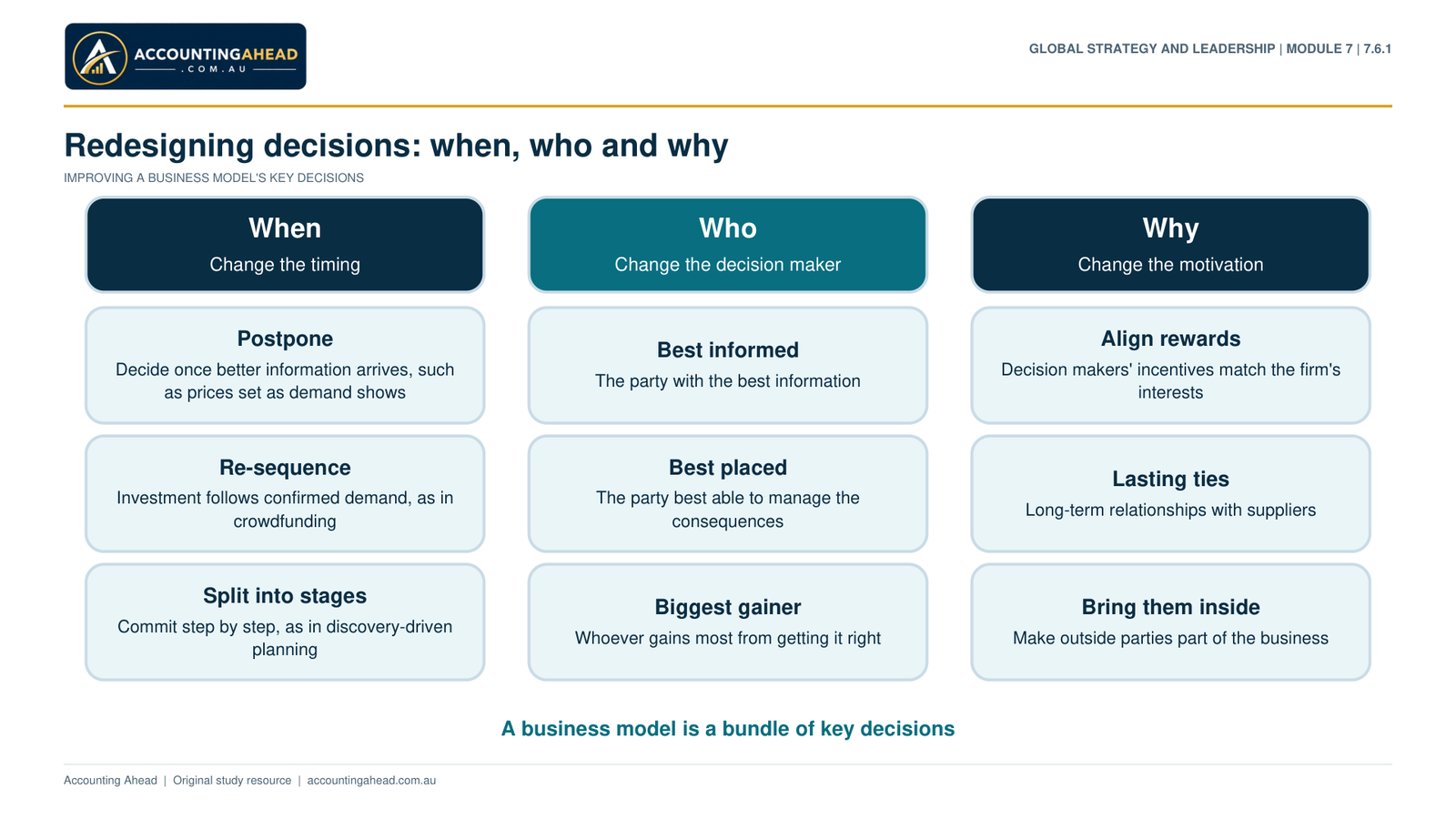
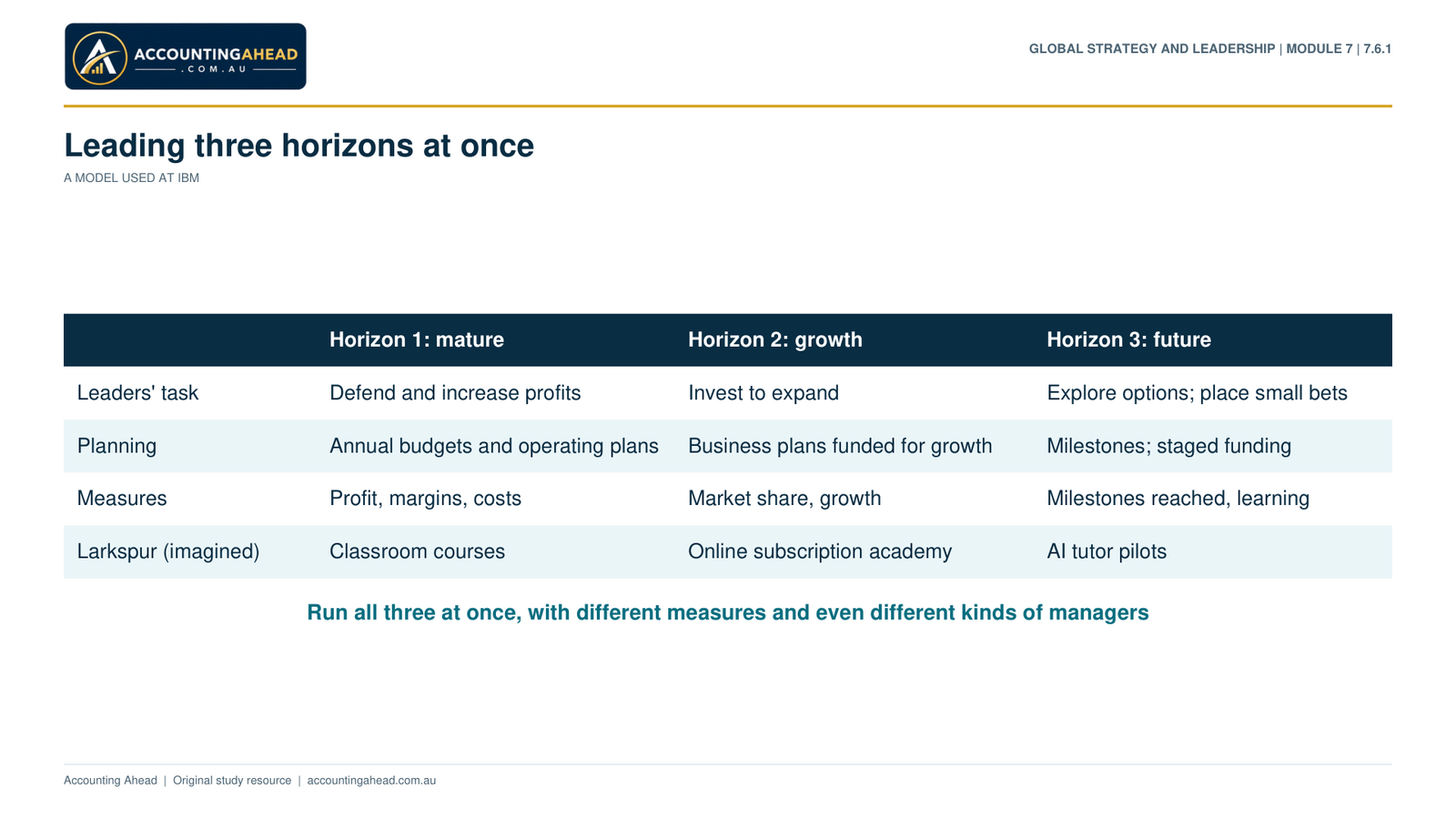
Part 7.6.1 · Leading Digital Change and Decision Making
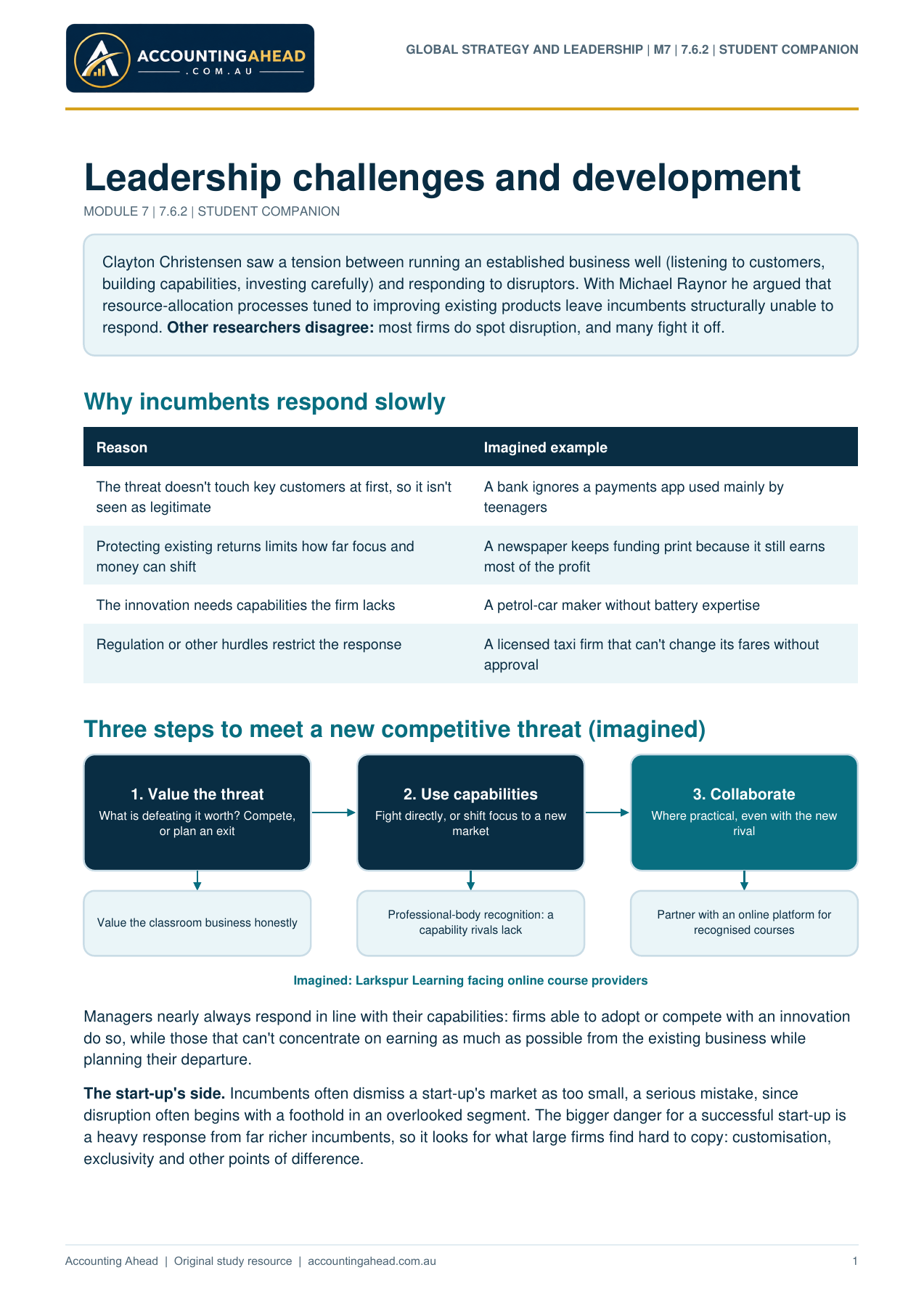
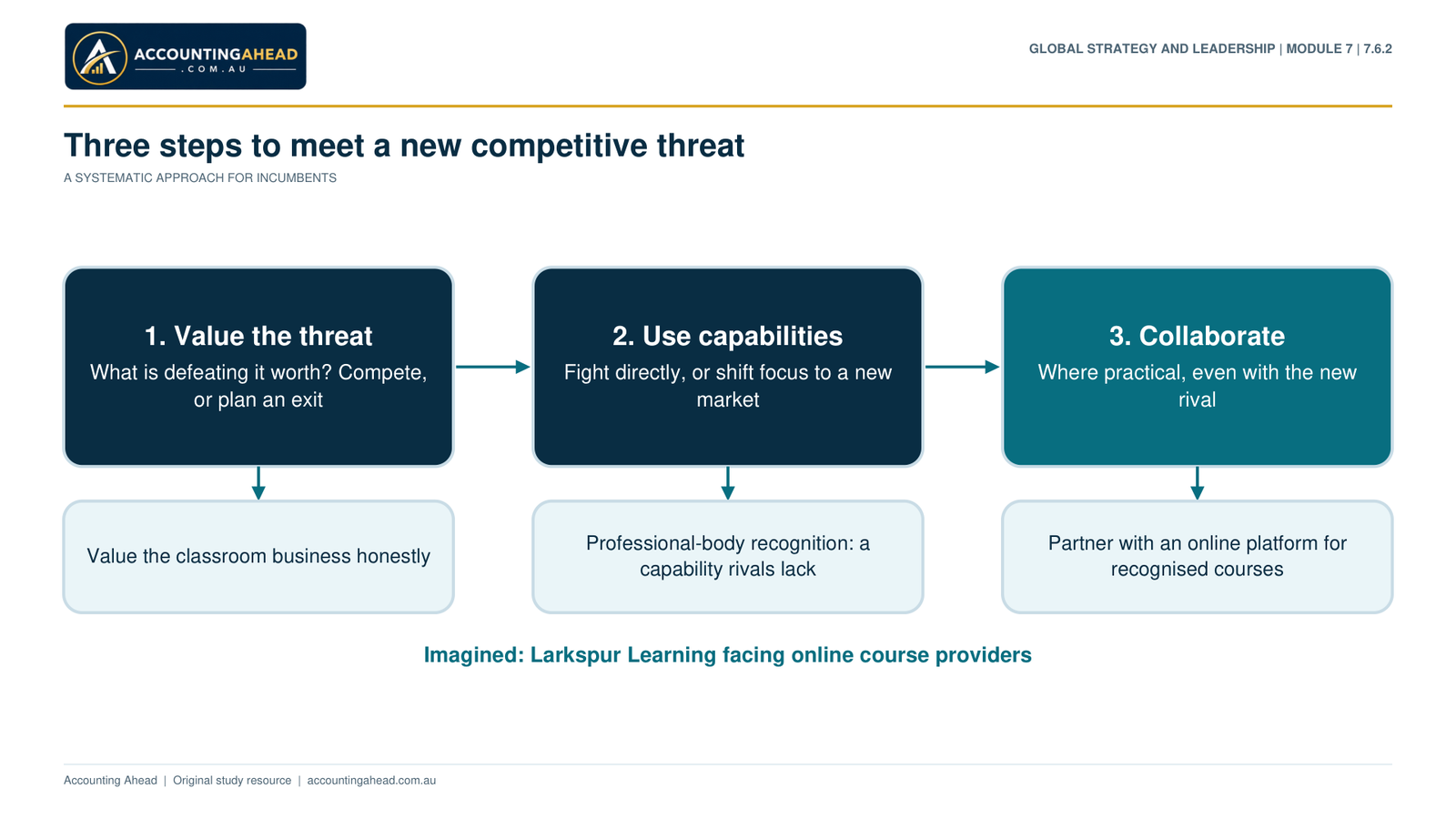
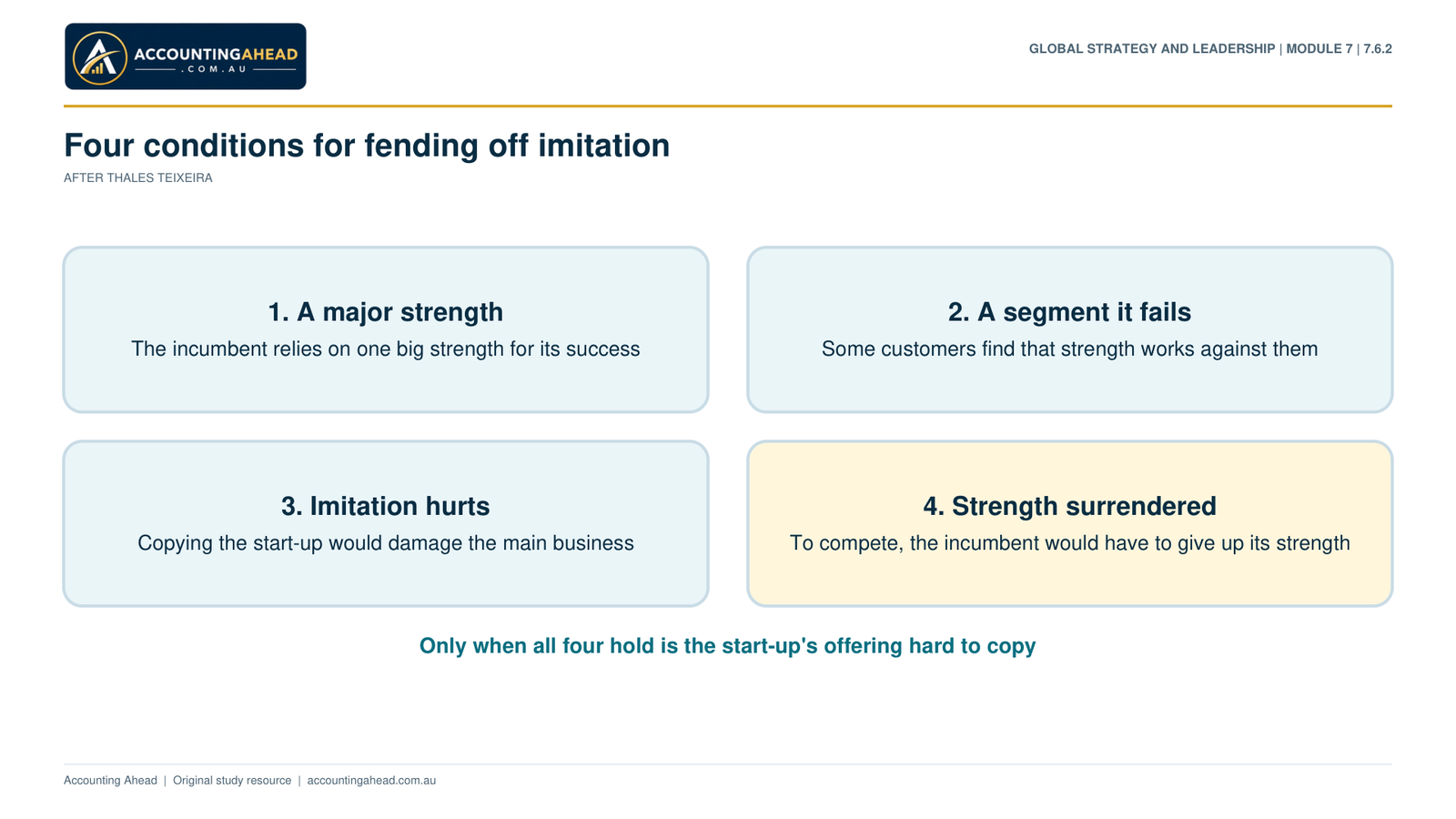
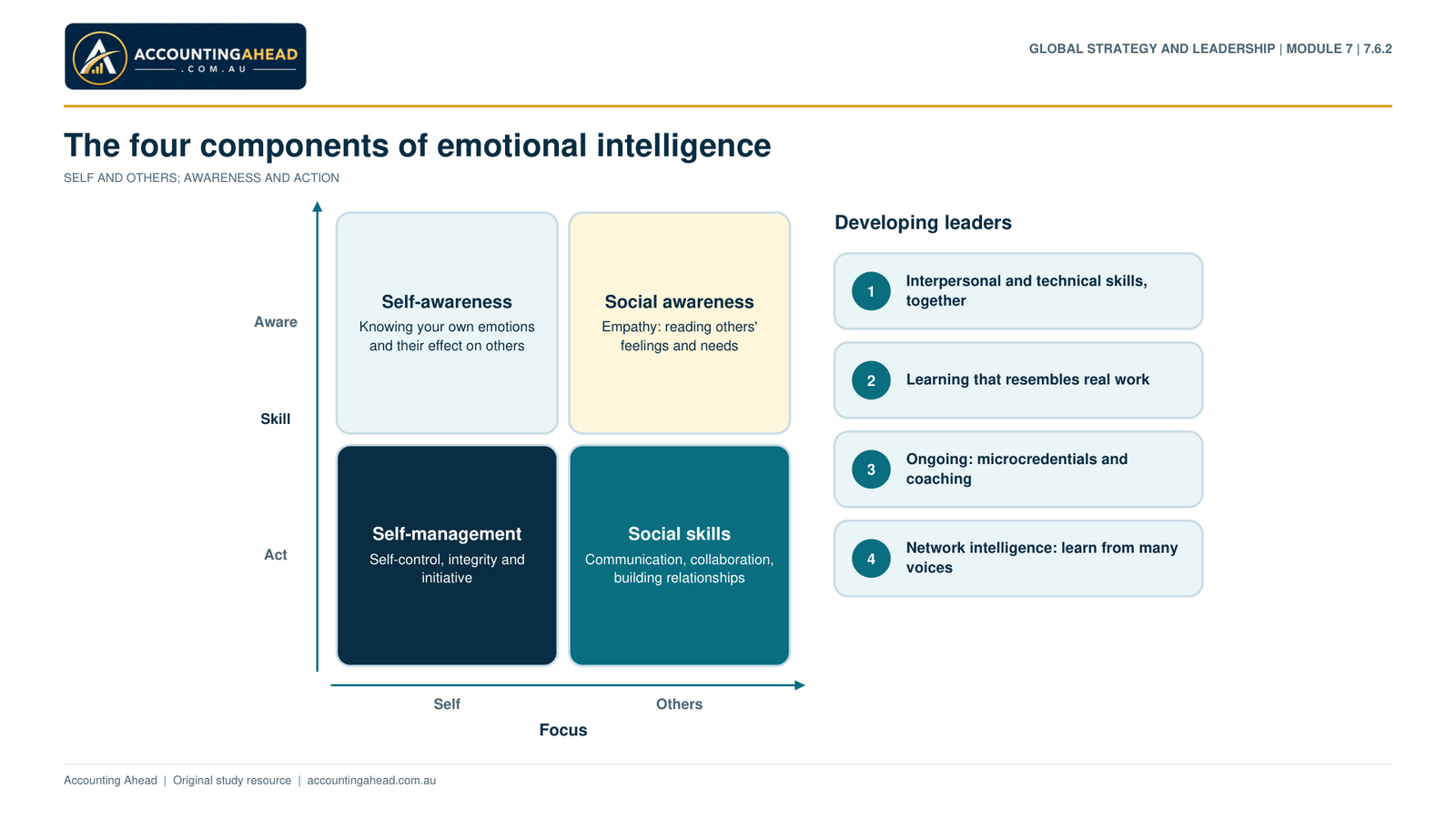
Part 7.6.2 · Leadership Challenges and Development